


American Flag Facts for Kids Printable: Read, Answer and Color
Grades 3–5 students read how the American flag grew from 13 stars to 50, answer 12 comprehension questions and color a full-page flag on a pole.


- Grades
- Grades 3–5, Elementary
- Pages
- 5
- File type
- Answer key
- Included


- Subject
- Social Studies, ELA, History, History: USA, Reading, Reading Comprehension
- Topic
- American Flag, American Flag activities
- Resource types
- Worksheets & Printables, Worksheets
- Answer key
- Included
About this resource
What's inside this resource
Thirteen stripes for the first colonies and a star for every state open a five-part reading on the American flag for grades 3–5. The passage follows the flag from the Continental Congress decision of June 14, 1777, through the 15-star, 15-stripe flag of the 1790s and the 1818 law that brought back 13 stripes, to the 50-star flag first flown on July 4, 1960. It also gives the meanings many people attach to red, white and blue, the nicknames Stars and Stripes and Old Glory, and five Flag Code rules for caring for the flag.
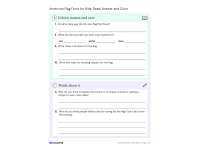
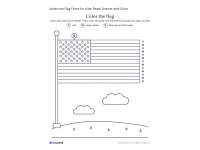
Twelve questions follow the order of the reading. Students answer ten recall questions in complete sentences, from how many stripes the flag has to two rules for showing respect, then answer two why questions: why Congress went back to 13 stripes, and why people follow care rules. A full-page flag on a pole, with R and W letters beside the stripes and a B over the union, is ready to color.
Answers come with sample responses for the why questions, a colored reference flag with its nine star rows and a teacher tip on where the color meanings come from.
Related resources
More resources teachers may find useful
24 related resources were found using this product's title, contributor, categories and tags.

In the classroom
Teaching tips & learning objectives

Learning objectives
- Explain what the 13 stripes and the 50 stars stand for.
- Describe how the flag changed between 1777 and 1960, including the 1818 law.
- Name the meanings many people give to red, white and blue.

Teaching tips
- Before part A, have students underline every year in the reading (1777, 1790s, 1818, 1959, 1960), as the teacher tip suggests.
- Point out that the color meanings are traditional rather than set by law; the reading traces them to the 1782 description of the Great Seal.
- For question 11, send students back to the reading section on how the flag grew, which explains why a stripe for every state would have made the stripes very thin.

Skills covered
- Reading informational text — students find dates, numbers and names in a five-section passage.
- Written comprehension — students answer ten recall questions in complete sentences on lined space.
- Explaining reasons — students answer two why questions, one using a fact from the reading.
Good to know
Questions teachers ask about this resource
How does the reading treat what the colors mean?
It says many people link red with courage, white with purity and blue with justice, and that these meanings were first written in 1782 to describe the Great Seal. The reading also notes that the flag laws never said what the colors mean.
Why did the flag once have 15 stripes?
Two new states joined in the 1790s, so the flag was given 15 stars and 15 stripes. With more states on the way, the 1818 law went back to 13 stripes and added one star for each state, a change question 11 asks students to explain.
What does the coloring page show?
A large flag on a tall pole above a hill, with R and W letters beside each of the 13 stripes and a B marker over the union of 50 stars. Students color the pole and the hill any way they like.

No reviews yet
Downloaded this resource? Tell other teachers how it went.
Resource details
Concepts & topics
Core concepts
 Core concepts
- American flag
- National symbols
- Thirteen colonies
- Flag Day
- Flag etiquette
 Topics
Explore more
Categories this resource belongs to
Explore related searches
More to explore
You may also like


