Fear of insects Social Story


- Grades
- Not Grade Specific
- Pages
- 20
- File type
- Preparation
- Print ready


- Subject
- Special Resources, Social Emotional Learning (SEL), Social Skills, Special Education Needs (SEN)
- Topic
- Insects, Fear
- Resource types
- Activities
- Preparation
- Print ready
About this resource
What's inside this resource
For children who experience intense fear or phobias related to insects, this social story resource provides supporting explanations and coping strategies. Specifically tailored for children on the autism spectrum who may struggle reading social cues, the story aims to logically address the reasons behind insect fears and equip children with skills to manage them.
Using a reassuring tone, the social story explains how most insects pose no real danger to humans, as many are so tiny compared to a person’s size. While some insects like bees can sting, the story gives facts about how insect stings rarely cause serious harm. It also highlights all the useful things insects do, like pollinating plants.
The second half of the story outlines constructive ways children can deal with insect fears when encountered. This includes techniques like staying calm, thinking logical thoughts about how small insects are, and reminding themselves that insects are useful to their earth.
By addressing both the emotional and reality-based sides of insect fears, this social story uses clear language and visuals to teach autistic children coping methods. It validates their feelings while also gently challenging catastrophic thinking. The final outcome is a set of strategies children can employ themselves when afraid, giving them skills, reassurance, and power to manage phobias.
These books should be used over and over to reinforce the point so I would suggest either putting the pages into a display book or laminating and binding them.
Clipart images courtesy of Kari Bolt Clip Art
Related resources
More resources teachers may find useful
24 related resources were found using this product's title, contributor, categories and tags.


In the classroom
Teaching tips & learning objectives

Learning objectives
Name the feeling — scared — and recognise it as something everyone experiences
Recall three reasons an insect is not a threat: it does not want to hurt me, it is much smaller than me, and it is frightened of me
Describe what insects do that is useful, from pollinating plants to being food for birds, fish and hedgehogs

Teaching tips
The story does not argue the child out of the fear at the start; it names it on page three and validates it on page five, so reading straight to the coping pages loses the sequence that makes it work
The middle stretch is factual — pollination, silk, honey, insects as food — so it can double as a short science read once the emotional pages have done their work
The phrase "Insects are friendly" is printed separately on its own page as something to repeat, which makes it the natural line to rehearse away from the book

Skills covered
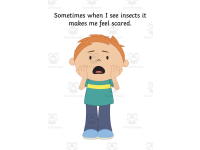
Naming an emotion — the story states "Sometimes when I see insects it makes me feel scared" in the child's own voice, giving the feeling a word.
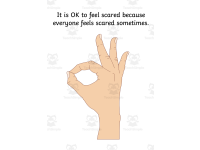
Normalising a fear — one page reads "It is OK to feel scared because everyone feels scared sometimes", separating the feeling from any fault.
Perspective taking — the story turns the fear around with "When insects see me they are scared of me."
Good to know
Questions teachers ask about this resource
Which coping strategies does the story name?
Four, all in the closing pages: trying not to run away or scream, speaking to someone about how you feel, taking deep breaths and staying calm, and repeating the phrase "Insects are friendly" to yourself. The last is printed on its own page so it can be rehearsed as a line.
Which insect facts does the story use?
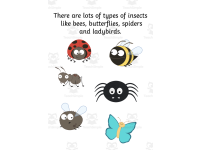
Four pages of them. Bees pollinate flowers and plants so new plants can grow; ladybirds and spiders eat smaller insects so there are not too many; birds, fish and hedgehogs need to eat bugs to live; and silkworms make silk while bees make honey.
Which spelling and vocabulary conventions does the story use?
British ones. The story says ladybirds rather than ladybugs, and hedgehogs appear among the animals that eat insects, which is a familiar creature in Britain and Ireland but not in North America — worth a word of introduction with a class that has not met one.

No reviews yet
Downloaded this resource? Tell other teachers how it went.
Resource details
Concepts & topics
Core concepts
 Core concepts
Social story
Fear and anxiety
Coping strategies
Insects
Emotional regulation
 Topics
Explore more
Categories this resource belongs to
Explore related searches
More to explore
You may also like