Mr. Birling Character Analysis – An Inspector Calls



About This Product
GCSE Literature: (6) 'An Inspector Calls' - The Characterisation of Mr. Arthur Birling
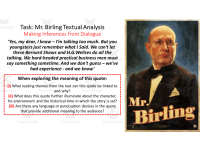
This interactive, comprehensive learning resource is suited for educators interested in exploring JB Priestley's timeless classic which boldly tackles critical themes such as class system and sexual bias. This product intriguingly centers its focus on the character of Mr. Arthur Birling.
In a post-modern society where conversations about social classes and privilege are prevalent, this text has detailed relevance. It's regarded as vital reading material amongst students across grades 9-12.
About the Resource:
- The history of its usage stretches over twenty years, having made multiple revisions until its current form(updated in 2021).
- The flexible layout allows it to serve as an essential teaching material, aid for online lessons, homework assignment guide or revision tool.
- A dynamic 20-slide PowerPoint presentation ensures engagement. The time allocation guideline estimates the total run-time at approximately ninety minutes.
Pedagogical Components:
- 'Ease-in' Starter Activity:To help break the ice and introduce students to the subject matter smoothly.
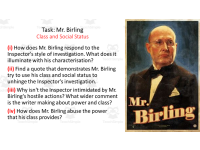
- Focus on Characterisation: A deep-dive into direct and indirect characterisation that fires up meaningful classroom discussions centered around uncovering Mr.Birling's complexities.
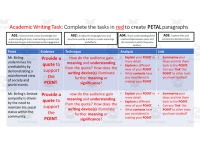
- Academic Writing Exercise:The inclusion of writing exercises nurtures advanced literacy competence whilst providing ample practice opportunities for students evident in their assignments submitted over time.
- Critical Vocabulary Exploration: Beyond comprehension levels, Students get to enlarge their vocabulary horizons through extension tasks - an essential literature learning mechanism at this educational level.
- Homework Assignment:This reinforcement tool reinforces the continuity of understanding subsequent to virtual meetings or in-class discussions.
- The wrapped-up plenary ensures all topics tackled within each lesson do not end with the closing bell but extend beyond it. The focus remains on pushing engagement instead of just ending a lesson.
In summary, resources like GCSE Literature: (6) 'An Inspector Calls' make knowledge transfer seamless, especially within Language Arts subtopics like Literature. The versatile formats contribute to making literature fun for mid-level high school students or those between Grade 9 and Grade 12. Consequently, these crucial literary discourses enliven the classroom environment whilst making learning culturally relevant for every student - nurturing future global citizens through education remains our vital end-goal.'
What's Included
1 PowerPoint with 20 ready to display slides
0 Reviews
Check out these other great products