



Safe & Unsafe Touch Cards – 20 Illustrated Visuals


- Grades
- Preschool–3, Elementary
- Pages
- 6
- File type
- Preparation
- Print ready


- Subject
- Special Resources, Social Skills
- Topic
- Safe and Unsafe Touch, Personal Boundaries
- Resource types
- Worksheets & Printables, Flashcards
- Preparation
- Print ready
Product description
From the author
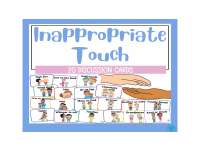
The Inappropriate Touch Cards provide a tangible way to teach children about safe and unsafe contact.
The 20 illustrated cards feature 10 types of touch and 10 people. Educators can use these visuals to spark discussions around appropriate boundaries and consent. Children learn to identify wanted and unwanted touch from various individuals. Cards depict contact like hugs, hand-holding, pats on the back, tickling, whispering, and kissing. People shown include parents, doctors, teachers, siblings, classmates, and strangers.
Discussion activities help children consider context, consent and boundaries; there is no fixed safe-person/touch pairing. The tangible cards make identification of unsafe touch concrete. Teachers can prompt perspective taking - "How might that touch make you feel?" This hands-on approach engages multiple learning styles. Cards build awareness of tricky situations and instill confidence in setting boundaries. They can be utilized one-on-one, in small counseling groups, or whole class.
The Inappropriate Touch Cards foster essential communication around personal safety and abuse prevention. Visual aids appeal to diverse learners. Sorting exercises provide an interactive way to reinforce concepts. The cards help children identify, discuss, and set physical boundaries with various individuals. This proactive resource gives students knowledge and language to recognize and report concerning touch. It’s an invaluable tool for equipping children with skills to stay safe.
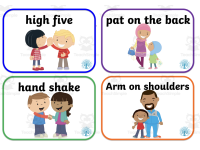
Set includes 10 cards with types of touch:
* high five
* Pat on the back
* hand shake
* Arm on shoulders
* Kiss
* hug
* Tickle
* Whisper in ear
* hold hands
* sit on lap
Also 10 people cards:
* Parents
* Doctor
* Teacher
* Stranger
* Sibling
* Grandparents
* Friend
* Classmate
* Aunt or uncle
* Family friend
Clipart images courtesy of Kari Bolt.
Related resources
More resources teachers may find useful
7 related resources were found using this product's title, contributor, categories and tags.

In the classroom
Teaching tips & learning objectives

Learning objectives
Name the types of touch and relationships shown on the cards.
Build language for expressing comfort, discomfort and personal boundaries.
Discuss how permission and context affect an interaction.

Teaching tips
Introduce the two card sets separately before discussing combinations.
Avoid labeling a touch safe or unsafe solely by the person’s relationship to a child.
Choose the Mom or Mum wording version needed for the class.

Skills covered
Touch-type vocabulary — ten illustrated cards name distinct physical touches such as handshake, hug, tickle, and sit on lap.
Relationship vocabulary — ten illustrated cards name categories of people such as parent, teacher, stranger, and family friend.
Boundary discussion — combining a touch card with a person card gives teachers a concrete discussion prompt for personal-safety conversations.
Good to know
Questions teachers ask about this resource
Are the American-spelling person cards a different set of people, or the same set relabeled?
The same ten person types appear in both spelling versions — only 'Mum' becomes 'Mom' in the American set; the other nine cards (Doctor, Teacher, Stranger, Brother or sister, Grandparents, Best friend, Classmate, Aunt or Uncle, Family friend) are identical.

No reviews yet
Downloaded this resource? Tell other teachers how it went.
Resource details
Concepts & topics
Core concepts
 Core concepts
Personal boundaries
Touch vocabulary
Permission and context
 Topics
Explore more
Categories this resource belongs to
Explore related searches
More to explore


