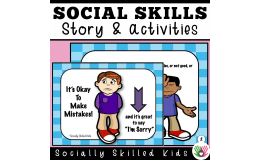
It’s OK to Make Mistakes Social Story


- Grades
- Not Grade Specific
- Pages
- 19
- File type
- Preparation
- Print ready


- Subject
- Special Education Needs (SEN), Social Skills
- Topic
- Making mistakes, Coping strategies
- Preparation
- Print ready
Product description
From the author
The It’s Okay to Make Mistakes social story delivers a reassuring message that normalizes and validates errors in learning. Making mistakes can cause anxiety for many children, especially those on the autism spectrum. This social narrative uses a patient tone and visuals to explain expected responses to mistakes at school. The story reassures children that everyone makes mistakes when learning new things. It emphasizes teacher support and provides tips for overcoming mistakes like asking for help, trying again, and thinking positively.
Social stories outline social rules and expectations in a concrete way children comprehend. This story offers a starting point for talking about frustration and trying again. It guides children to see mistakes as an opportunity to improve rather than a source of shame. Teachers, counselors, and parents can use this story to shape perspectives on academic challenges. Use its examples to practise a supportive response to mistakes. Provide the level of adult support each learner needs. This social narrative delivers a lesson essential for social-emotional health - we must allow ourselves and others to be imperfect. It models this outlook through reassurance and practical examples.
These books should be used over and over to reinforce the point so I would suggest either putting the pages into a display book or laminating and binding them.
Clipart images courtesy of Kari Bolt.
Related resources
More resources teachers may find useful
24 related resources were found using this product's title, contributor, categories and tags.


In the classroom
Teaching tips & learning objectives

Learning objectives
Recognise and name the frustration that follows getting an answer wrong, rather than acting on it
Repeat the reassurance that everyone makes mistakes sometimes and apply it to their own work
Choose one of four named responses to a mistake: positive self-talk, a neat crossing-out, an eraser and a retry, or asking the teacher for help

Teaching tips
Read together in a calm setting and revisit the story as needed.
Practice one strategy before expecting the child to use it independently.
Keep the story supportive rather than using it as a punishment.

Skills covered
Recognizing frustration
Using encouraging self-talk
Correcting an error and trying again

No reviews yet
Downloaded this resource? Tell other teachers how it went.
Resource details
Concepts & topics
Core concepts
 Core concepts
Social story
Making mistakes
Positive self-talk
Emotional regulation
Asking for help
 Topics
Explore related searches
More to explore