Juneteenth Worksheet: Understanding the Significance of Freedom Day!
- Grades
- Grade 5, Elementary
- Pages
- 6
- File type
- Answer key
- Included


- Subject
- ELA, Social Studies, Reading Comprehension, Reading, Vocabulary, Language Development, History
- Topic
- Juneteenth, Freedom Day
- Resource types
- Worksheets, Worksheets & Printables
- Answer key
- Included
Product description
From the author
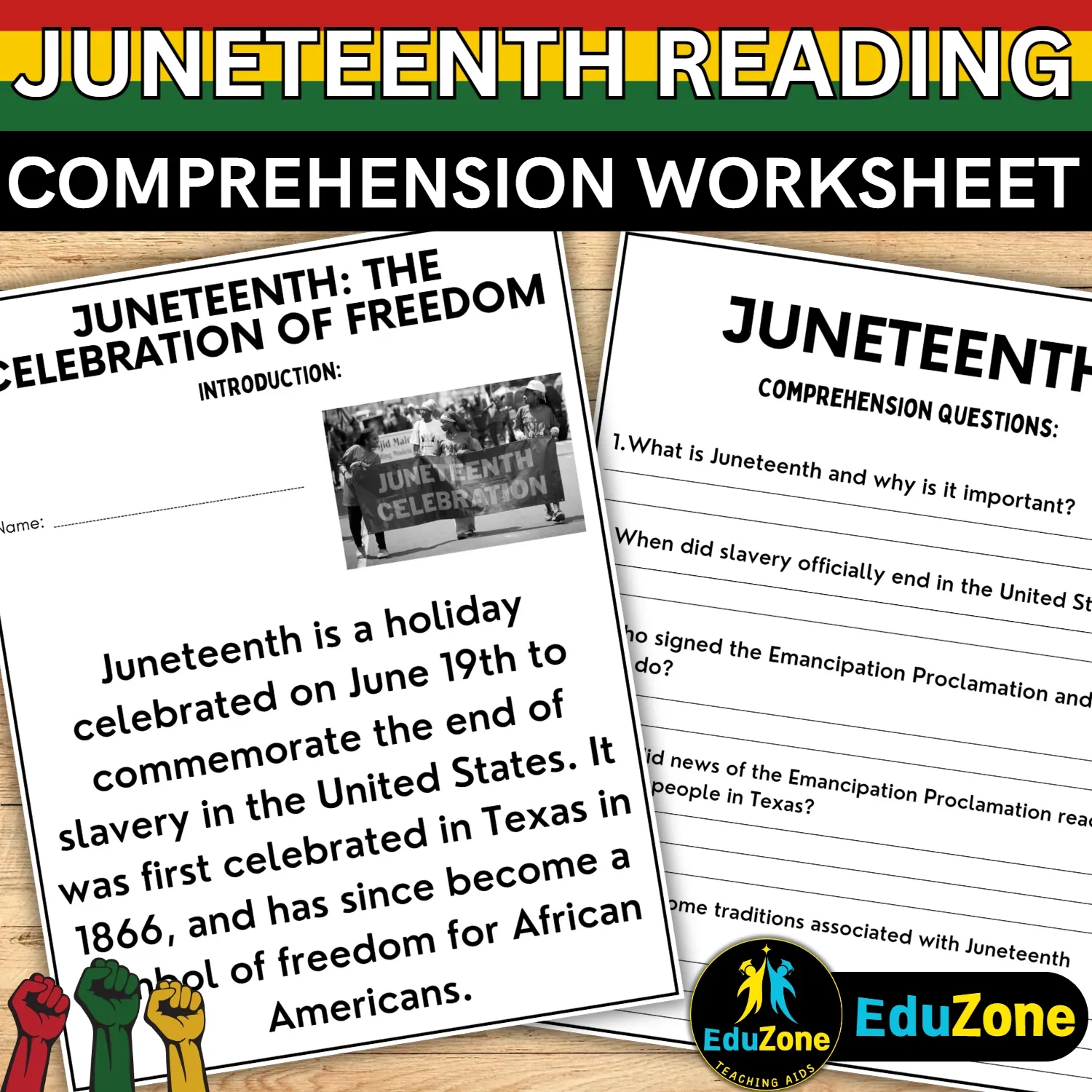
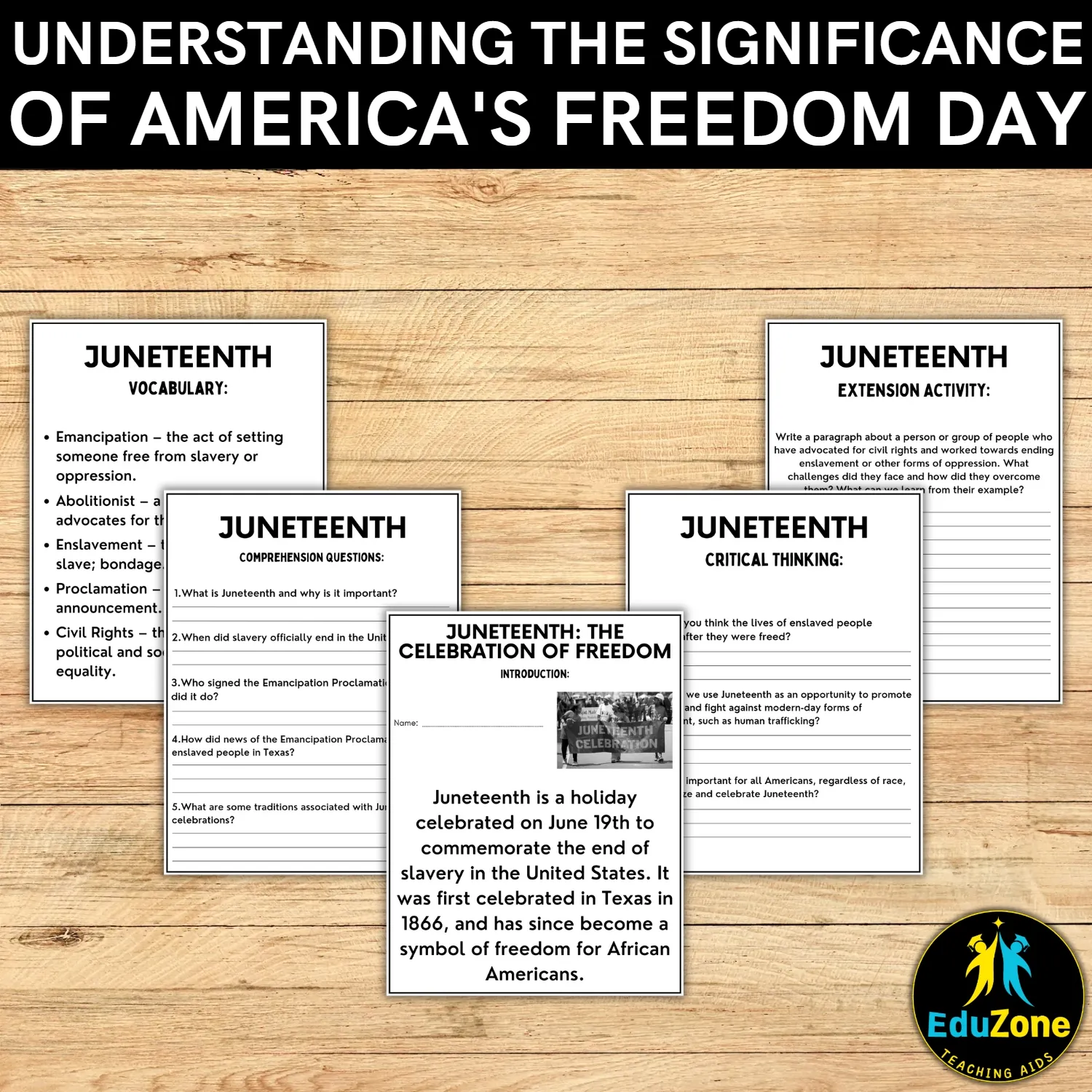
This six-page printable introduces Juneteenth through a short paragraph, five defined terms, five comprehension questions and three discussion prompts. An extension asks students to write about a civil rights advocate or group, and the final page supplies comprehension answers.
Use with grade 5 learners or adapt with reading and discussion support. Provide additional background information before assigning the questions: the brief introduction does not contain all the details students are asked to recall. Supply reference material for the civil-rights paragraph.
Related resources
More resources teachers may find useful
24 related resources were found using this product's title, contributor, categories and tags.

In the classroom
Teaching tips & learning objectives

Learning objectives
Explain what Juneteenth commemorates and why it is historically significant
Describe the relationship between the Emancipation Proclamation and the actual end of slavery in Texas
Write an informative paragraph profiling a historical or contemporary civil rights advocate

Teaching tips
Introduce the five vocabulary terms before the reading passage, since the passage and comprehension questions both assume familiarity with words like "emancipation" and "proclamation."
Use the three critical-thinking questions as a follow-up discussion after the comprehension questions are checked against the answer key, since they ask students to reason beyond the text rather than recall it.
Provide background teaching or a separate reading before the comprehension questions. The short introduction alone does not contain most of the answers.

Skills covered
Historical reading comprehension — students answer direct questions about the Emancipation Proclamation and the timeline that led to Juneteenth, such as how news of freedom took over two years to reach Texas.
Domain-specific vocabulary — students learn and apply terms including emancipation, abolitionist, enslavement, and proclamation in the context of U.S. history.
Critical thinking about historical impact — students reason about how the lives of newly freed people changed and how Juneteenth connects to civil rights today.
Good to know
Questions teachers ask about this resource
Does the worksheet explain why Juneteenth is celebrated on June 19th specifically?
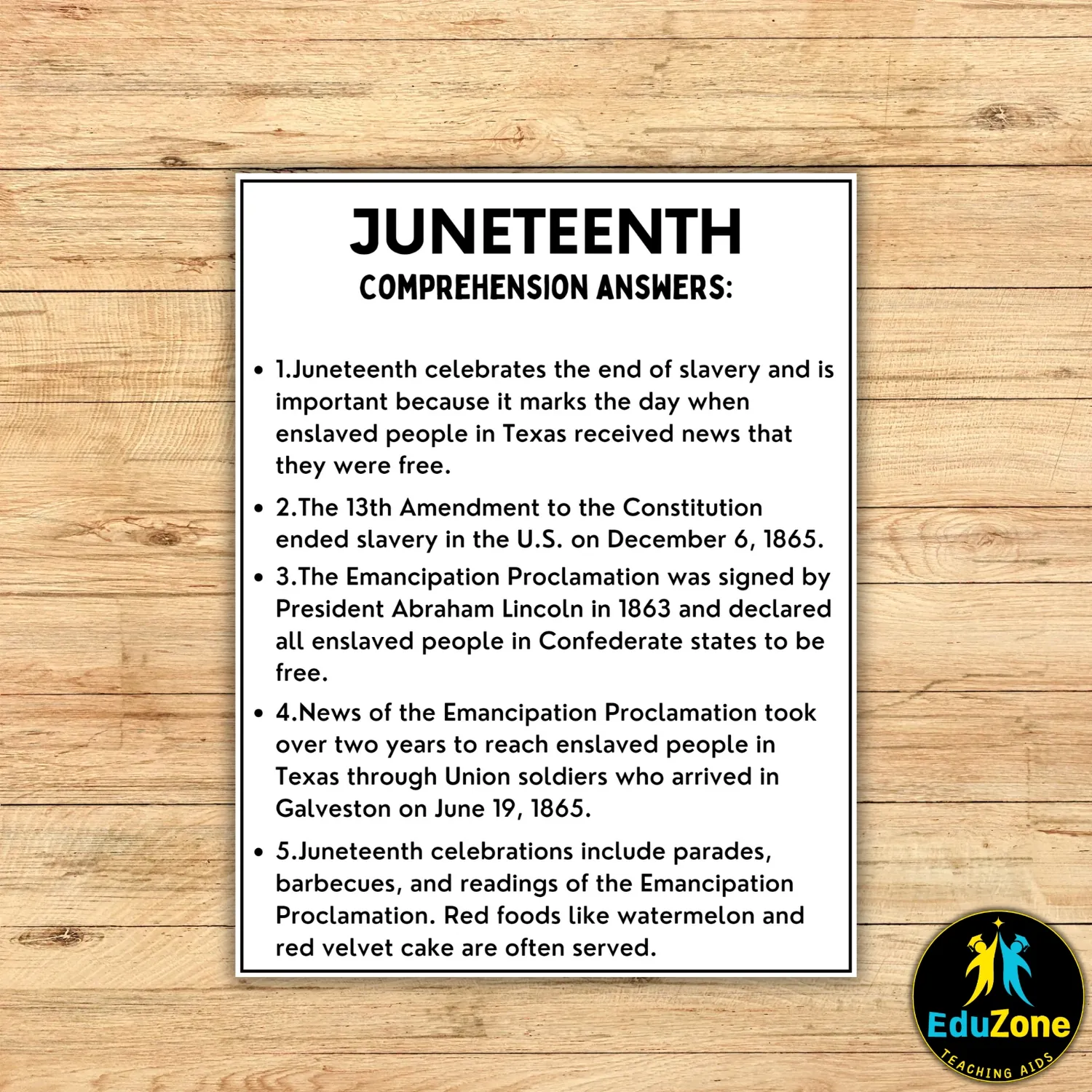
Yes — the worked answers explain that Union soldiers arrived in Galveston, Texas on June 19, 1865, more than two years after the Emancipation Proclamation, finally bringing news of freedom to enslaved people there.

No reviews yet
Downloaded this resource? Tell other teachers how it went.
Resource details
Concepts & topics
Core concepts
 Core concepts
Juneteenth
Emancipation Proclamation
Civil rights
13Th Amendment
 Topics
Explore more
Categories this resource belongs to
Explore related searches
More to explore
You may also like