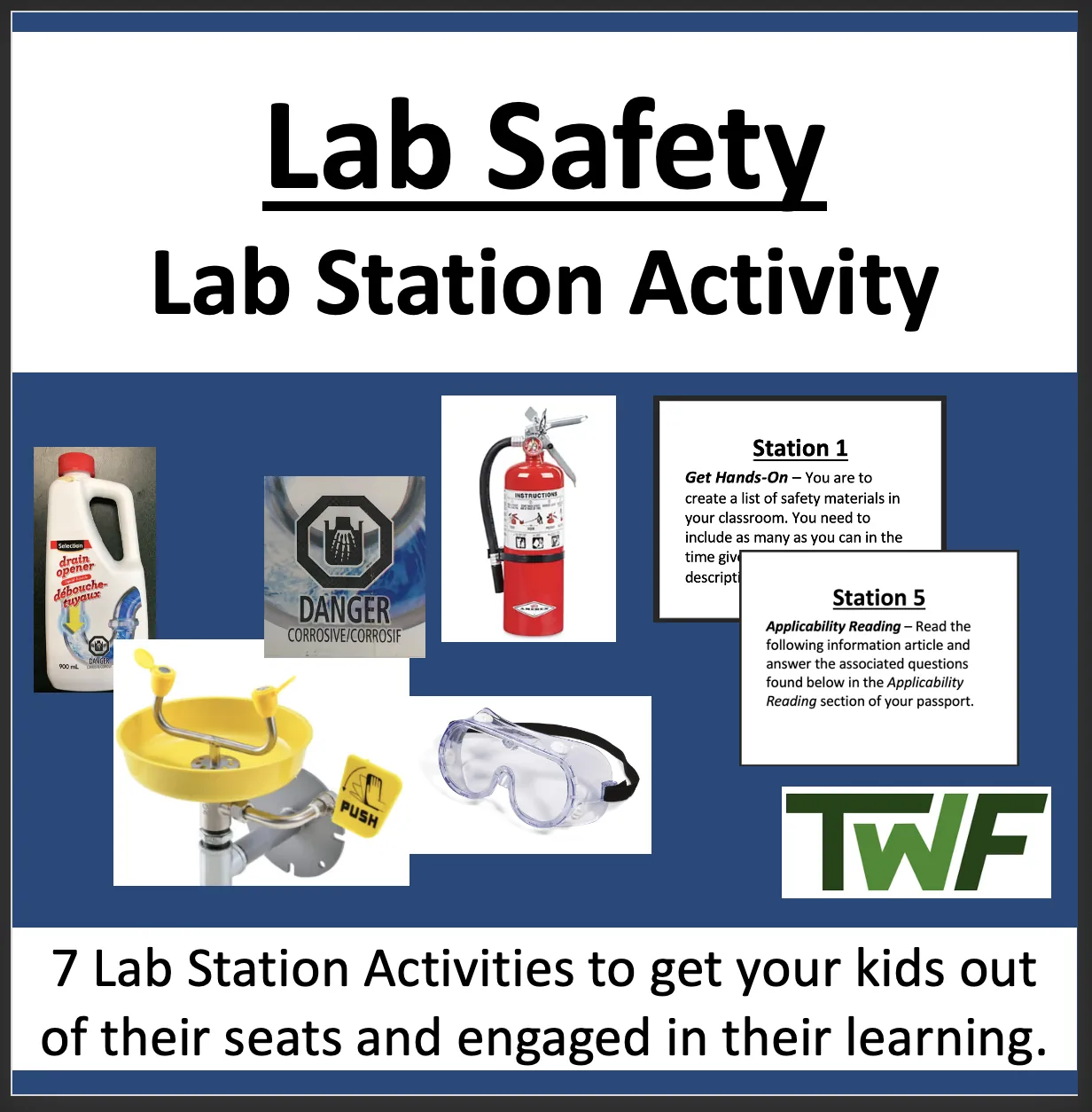
Lab Safety - Lab Station Activity
- Grades
- Grades 6–8, High School
- Pages
- 16
- File type
- Multiple File Types
- Answer key
- Included


- Subject
- Science
- Topic
- Lab safety, Science stations
- Resource types
- Activities, Worksheets
- Answer key
- Included
Product description
From the author
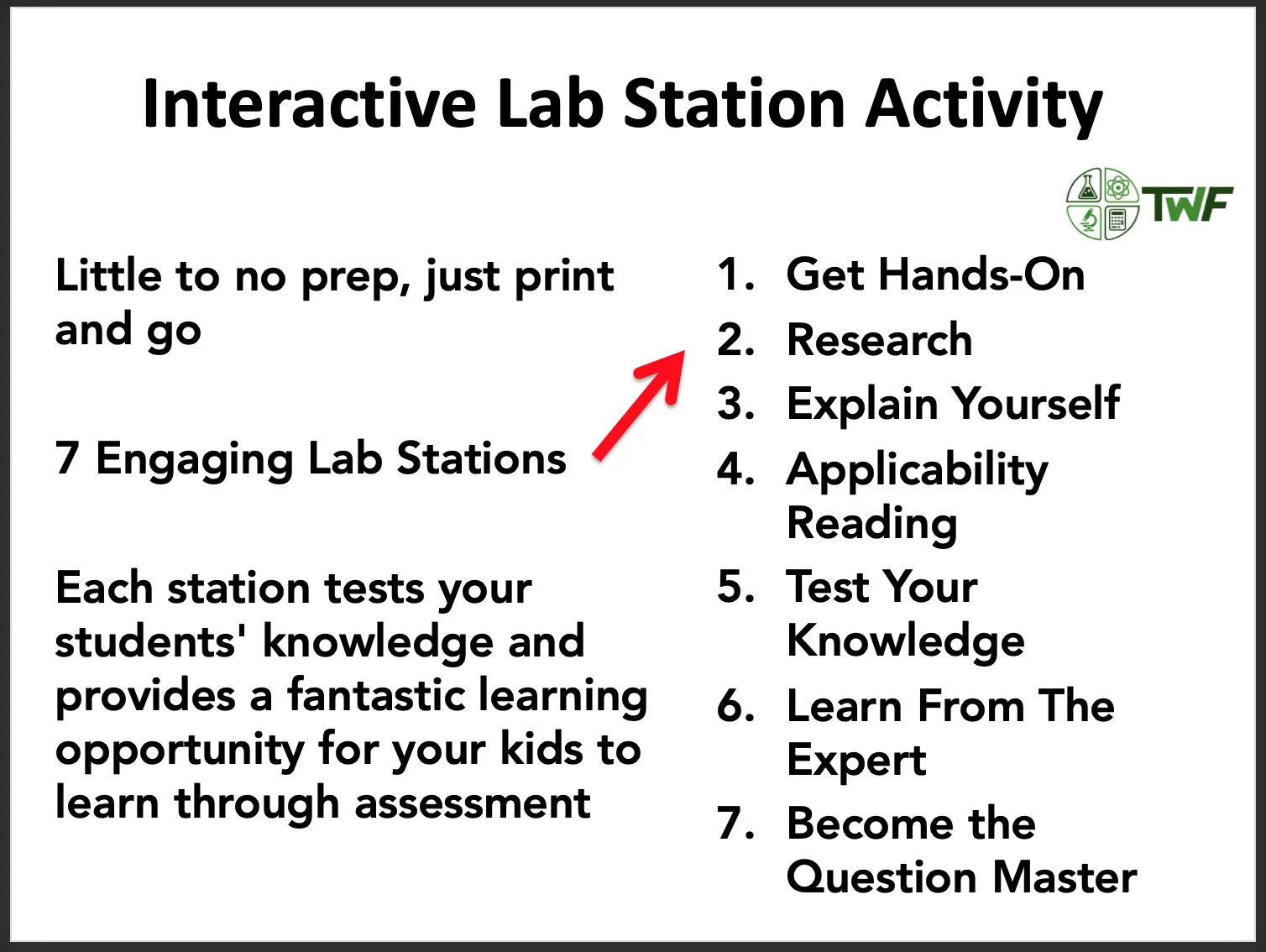
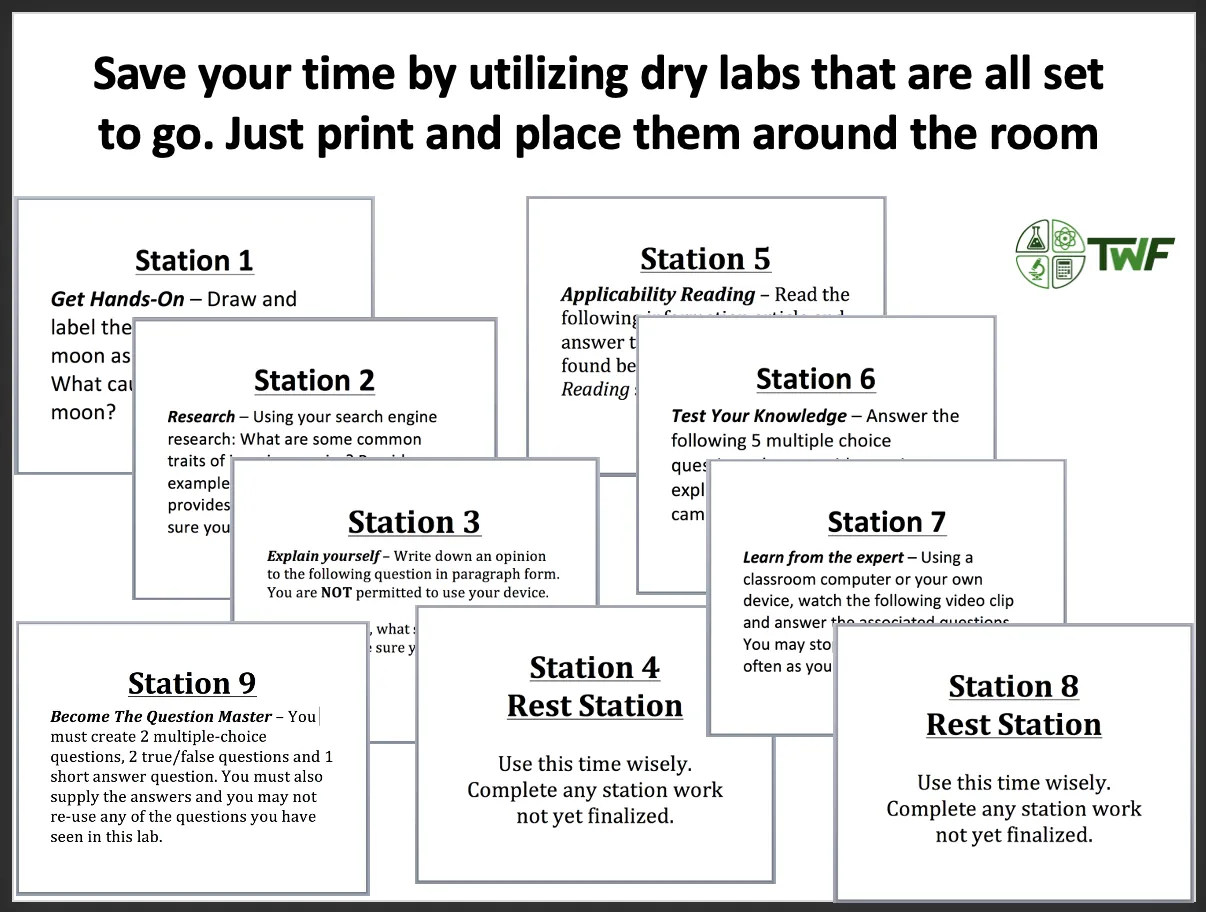
This lab-safety rotation has seven activity stations and two rest stations. Students list safety equipment, research a chemical-exposure scenario, write an opinion, read a case study, answer a quiz, watch a linked video and create questions. Editable Word files include station cards, a passport, teacher instructions, answer material and optional vocabulary puzzles. The focus is laboratory safety.
Related resources
More resources teachers may find useful
24 related resources were found using this product's title, contributor, categories and tags.


In the classroom
Teaching tips & learning objectives

Learning objectives
Students identify and describe the purpose of common lab safety equipment.
Students analyze a lab-safety case study to identify what caused an accident and how it was addressed.
Students compose original multiple-choice, true/false, and short-answer questions about lab safety.

Teaching tips
Print station materials and passports; seven activity stations plus two rest stations take roughly 54–63 minutes at the suggested 6–7 minutes each, before setup or transitions.
Provide internet access for research and the linked video. Keep answer pages separate from student copies.
Supply teacher-selected safety data sheets and school emergency procedures for the exposure research. Do not treat the case study’s advice to wait until evening for a physician as appropriate emergency guidance; sodium-hydroxide exposure requires immediate attention.

Skills covered
Lab safety equipment identification — students list classroom safety materials and describe their uses at the 'Get Hands-On' station.
Emergency-response research — students research the correct first-aid steps for hydrochloric acid exposure to the eyes and skin.
Question writing — at the final station, students author their own multiple-choice, true/false, and short-answer safety questions with answers.
Good to know
Questions teachers ask about this resource
What does the case-study reading station involve?
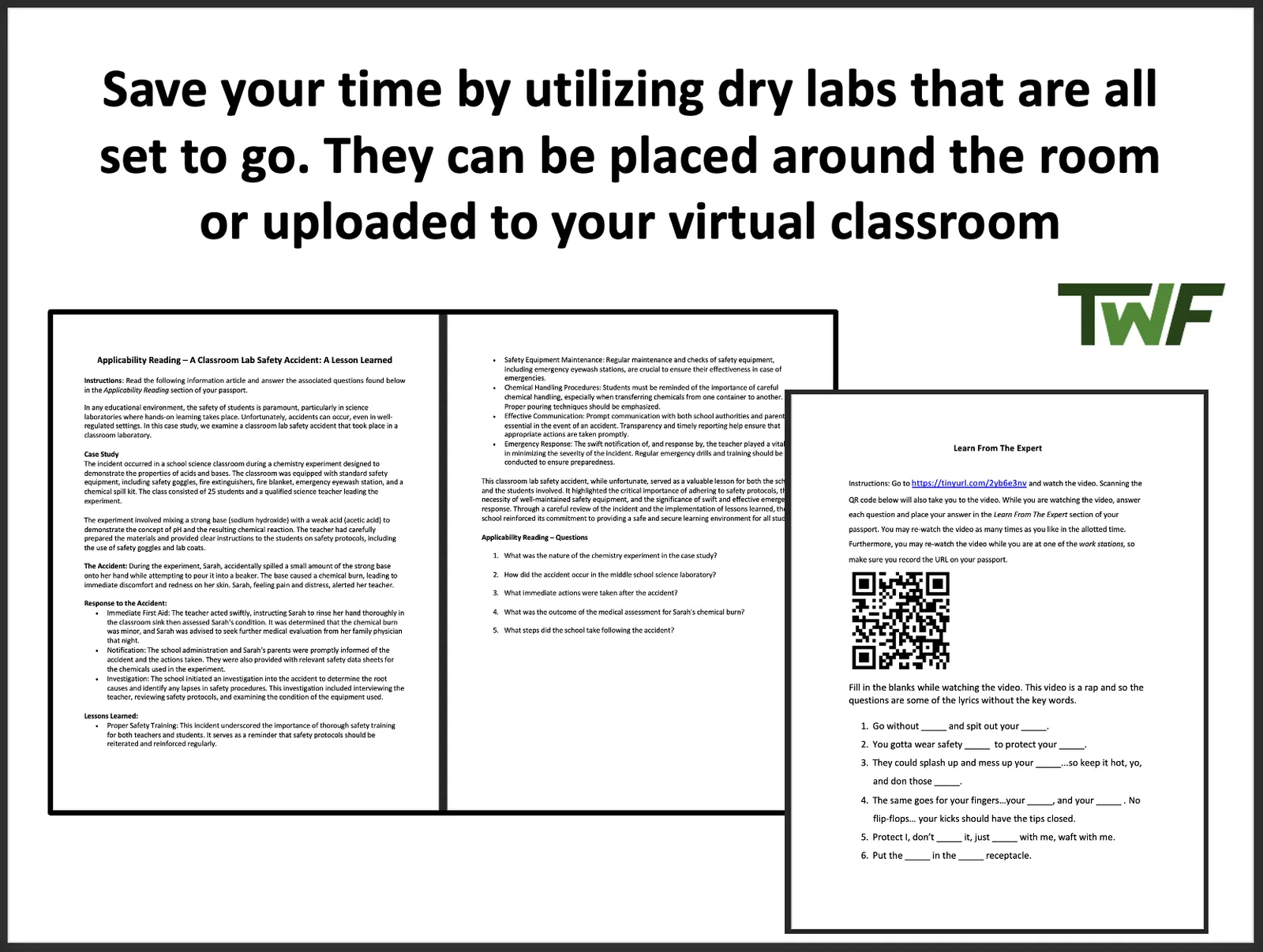
Students read an article about a classroom chemical-burn accident involving a student mixing a strong base and weak acid, then answer comprehension questions about its cause and the response, with worked answers provided for the discussion questions.
How does the video-based station work?
Students follow a link or scan a QR code to watch a safety-themed video (presented as a rap) and fill in blanked-out words from its lyrics as they watch, recording answers in their passport.

No reviews yet
Downloaded this resource? Tell other teachers how it went.
Resource details
Concepts & topics
Core concepts
 Core concepts
Lab safety equipment
Chemical exposure first aid
Classroom accident case study
Safety vocabulary
 Topics
Explore more
Categories this resource belongs to
Explore related searches
More to explore
You may also like