2,551 products added recently
Labs
Interactive Chemistry Quiz: GHS Symbols – Genially + PDF Version
Science, STEM, Chemistry, Physics, Life Sciences, Earth and Environmental Sciences, Technology, Basic Science, Biology, P.E. & Health, Homeschool Templates, Grade 6, 7, 8, 9, 10, 11, Teacher Tools, Experiments, Activities, Labs, Worksheets & Printables, Escape Room, Games, Presentations, Quizzes and Tests, Quizzes
Interactive Chemistry Quiz: GHS Symbols – Genially (+ PDF Version) Bring lab safety to life with this interactive quiz on the GHS (Globally Harmonized System) hazard symbols – perfect for middle and high school chemistry lessons. Whether you're starting the unit or wrapping up a safety review, this quiz adds variety, visual appeal, and a bit of fun to your lesson plan. You’ll get two versions of the quiz: – A PDF version that can be used digitally or printed (but it works not well) – A Genially link that leads to an animated, interactive version (includes sound – which can be muted) Both versions test students on the meanings of the various GHS symbols – from corrosive substances to environmental hazards. The quiz includes original clipart and my own glitter-animated GHS symbols to make the content more visually appealing without distracting from the important safety message. I usually use the Genially quiz for individual work in the computer lab or on tablets, so each student can go at their own pace. But it also works well as a station activity , a class-wide quiz , or even as homework , depending on your classroom setup. At the end of the PDF, you’ll find: A QR code to scan directly to the Genially A clickable link for browser access An iframe embed code , if you want to use it on your (non-commercial) learning platform Attention: The interactive PDF does not contain the full scope of the material. The quiz works. Unfortunately, the additional tasks do not. Using Genially is therefore recommended and much more motivating for the pupils. For the interactive quiz you need an internet connection and a terminal device. The quiz can be carried out with the whole class or as partner or individual work. I prefer individual work at each student's own pace. To get to the Genially link, either scan the QR code at the end of the document or click on the link button available there. You can also copy the iframe code and embed the Genially on a learning platform or other... The Genially can be used either at the beginning of the topic or as a backup. It is also worth using as a station in station work. The interactive version includes motivating sound effects , a self-paced structure , and a clear, age-appropriate design for grades 7–10. 📌 Important note : The Genially quiz is protected by copyright. It’s for your own classroom use only . Please don’t share the link or embed it outside a private, secure learning environment. Sharing with colleagues, online platforms, or social media is not permitted. I hope your students enjoy reviewing GHS symbols as much as mine do! – Heike from @Lernfitness Did You Know? I teach with a certified therapy dog, and together we create a positive and welcoming learning environment. 🐶
Author Lernfitness
Rating
Tags GHS, Science, Lab, Chemistry, Pictograms, Genially, Interactive, Lab Safety, Hazard Symbols, Individual Work
Easter Chemistry Bunting - Learn Chemical Elements with Festive Banner
STEM, Science, Chemistry, Physics, Life Sciences, Biology, Grade 6, 7, 8, 9, 10, 11, 12, Activities, Worksheets & Printables, Banners, Classroom Decor, Bulletin Boards, Door Decor, Posters, Word Walls, Labs, Experiments
Easter Chemistry Bunting A Fun & Educational Decoration for Your Science Classroom! 🐰🔬 I love decorating my classroom for different seasons, but I also want my decorations to be educational and useful. That’s why I created this Easter Chemistry Bunting—it brings a bit of spring energy into the classroom while helping students get familiar with the periodic table! Each pennant features an element symbol, name, and atomic number, so students see and recognize them every day—without even thinking about it. It’s such a simple way to reinforce learning while brightening up the room! 🌸 Why This Works So Well in Class ✔ No extra work for you – Just print, cut, and hang. ✔ Students see chemistry every day – Without pressure, they start recognizing elements naturally. ✔ Festive, but not distracting – A bit of color and seasonal fun, while still focused on learning. ✔ Perfect for any science room – Whether in a chemistry class, lab, or hallway, it works anywhere. ✔ Easy to use in lessons – You can even make it interactive with a classroom game! 📌 What’s Included? 📜 127 Printable Pennants – One for each element, showing: ✔ Symbol ✔ Name ✔ Atomic Number 🎨 Colorful, Easter-Themed Designs – Cheerful and bright, but still focused on learning. 🖨 Easy to Print & Adjust – Scale it to fit your classroom space. 📎 Two Hanging Options: ✔ String them together for a banner. ✔ Attach with fasteners for a flexible display. 💡 Ideas for Using It in Class 1️⃣ Print and cut the pennants. 2️⃣ Hang them up in your classroom, hallway, or science lab. 3️⃣ Use them for a quick challenge – Call out an atomic number, and students find the right pennant! 💡 Another idea: Assign an element to each student and have them share a fun fact about it. 🐣 Why Other Teachers Like It ✔ “Students actually look at it and ask about elements—great conversation starter!” ✔ “A simple way to make the classroom feel more engaging.” ✔ “No prep, looks great, and makes chemistry more visible every day.” 🔬 Bring Chemistry into Your Easter Decorations! Instead of just hanging up generic classroom decorations, why not make them meaningful? This bunting adds a touch of spring while keeping students engaged with science. 🚀 Try it out and see how it works in your classroom! 📍 Best wishes, Heike from Lernfitness Did You Know? I teach with a certified therapy dog, and together we create a positive and inspiring learning environment. 🐶✨
Author Lernfitness
Tags Chemistry, Lab, Biology, Laboratory Equipment, Lab Tools, Physics, Bunting, Pennant Banner, Classroom Banner, Chemical Elements
GHS Pictogram Clipart – Glitter Design for Chemistry Classrooms & Craf
Common Core, Science, STEM, Chemistry, Physics, Life Sciences, Earth and Environmental Sciences, Technology, Basic Science, Resources for Teachers, Homeschool Templates, Homeschool Curriculum, Grade 10, 11, 12, Classroom Decor, Bulletin Boards, Posters, Teacher Tools, Word Walls, Door Decor, Experiments, Activities, Labs, Worksheets & Printables
GHS Pictogram Cliparts Glitter Design for Chemistry Classrooms, Crafts and Materials PNG If you’ve ever found the standard GHS (Globally Harmonized System) pictograms a bit too plain or uninspiring for your teaching materials, you’re not alone. That’s exactly why I decided to redesign them with a fresh twist. These 18 cliparts—9 in portrait and 9 in landscape format—combine the clarity of the official hazard symbols with a visually striking glitter effect. The colors remain true to the original system (red border, black symbol), but the glitter gives them a unique and eye-catching feel. I created each of these cliparts by hand in Procreate, with the classroom in mind. They’re still clearly recognizable as hazard pictograms, but they add a touch of design that fits beautifully into worksheets, posters, or digital resources. Ways you might use these in your classroom or materials: – Labeling chemical containers in a more engaging way – Gluing into student chemistry notebooks to support safety topics – Decorating posters or bulletin boards about lab safety rules – Enhancing worksheets or lab instructions visually – Adding to PowerPoint, Keynote, or Genially presentations – Integrating into digital learning platforms or safety training resources – Using them in flashcards for visual reinforcement Since you’ll receive both portrait and landscape versions (in PNG format with transparent backgrounds), you can easily adjust them to your layout or format. Whether you're printing or working digitally, the designs remain sharp and flexible. These glitter-style symbols were made to support safety awareness while also respecting visual design preferences—especially for teachers or students who appreciate a bit more flair in their materials. Usage rights: You may use the cliparts both privately and commercially within educational content, as long as your own contribution is clearly visible. Please do not resell the graphics individually. Wishing you lots of creativity while designing your materials, – Heike from @Lernfitness Did You Know? I teach with a certified therapy dog, and together we create a positive and welcoming learning environment. 🐶
Author Lernfitness
Rating
Tags Teaching Materials, Classroom Decorations, Decorative Elements, Cliparts, Illustrations, GHS, Science, Lab, Chemistry, Pictograms
Easter Chemistry Bunting – Color, Decorate & Learn Chemical Elements
STEM, Science, Chemistry, Physics, Life Sciences, Biology, Grade 6, 7, 8, 9, 10, 11, 12, Activities, Worksheets & Printables, Banners, Classroom Decor, Bulletin Boards, Door Decor, Posters, Labs, Experiments, Drawing Templates & Outlines
Easter Chemistry Bunting A Creative Way to Learn the Periodic Table! 🐰🔬🎨 Every year, I like to add a bit of seasonal fun to my classroom. But instead of just decorating, why not make it educational too? That’s why I created this Easter-themed chemistry bunting—a simple but effective way to help students get familiar with the periodic table while being creative. Each pennant features an element’s symbol, name, and atomic number. Instead of memorizing, students color and decorate while naturally recognizing the elements they see every day. It’s low prep for you, fun for them, and adds a nice science-themed touch to your classroom! 🌟 What Makes This So Useful? ✔ Students are learning without even realizing it – They’ll see the elements daily, making them easier to remember. ✔ A great mix of science and creativity – Not just a decoration, but also an interactive classroom activity. ✔ No complicated prep – Just print, color, cut, and hang. ✔ Works for different ages – Ideal for chemistry, STEM, or general science. ✔ Perfect for individual or group work – Let students personalize their elements! 📌 What’s Included? 📜 127 Printable Pennants, featuring: ✔ All 118 main group elements ✔ Element name, symbol, and atomic number 🎨 Bonus: Extra Easter-Themed Pennants – Just for fun! 🖨 Black-and-White Format – Great for coloring and personalizing. 🎨 How to Use It 1️⃣ Print the pennants. 2️⃣ Let students color & decorate their element. 3️⃣ Cut them out and decide how to display them. 4️⃣ Hang them up – either as a bunting or pinned to the board. 💡 Try this: Assign each student an element and have them share one cool fact about it with the class! 🐣 Why Teachers Love It ✔ "I love that it gets students involved in decorating the classroom while reinforcing chemistry!" ✔ "They actually asked about elements while coloring – win-win!" ✔ "Easy to set up, fun, and looks great in my lab!" 🔬 A Simple Way to Make Chemistry Fun! Want to add some springtime energy to your science lessons without extra work? This bunting is an easy way to mix creativity with learning—perfect for chemistry labs, classrooms, and bulletin boards. 🚀 Print, color, and hang—it’s that easy! 📍 Best wishes, Heike from Lernfitness Did You Know? I teach with a certified therapy dog, and together we create a positive and inspiring learning environment. 🐶✨
Author Lernfitness
Tags Chemistry, Lab, Biology, Laboratory Equipment, Lab Tools, Physics, Bunting, Pennant Banner, Classroom Banner, Chemical Elements
Local Climate Action: Data-Driven Solutions for Teen Environmentalists
Earth and Environmental Sciences, Science, Earth Sciences, Environmental Science, Geology, Space, Life Sciences, Biology, Human Body, Nature & Plants, Homeschool Curriculum, Homeschool Templates, Grade 6, 9, 10, 11, 12, Lesson Plans, Teacher Tools, Workbooks, Worksheets & Printables, Centers, Activities, Experiments, Labs, Projects, Presentations
Equip and empower the next generation of climate leaders to act through data, tools, and projects that can be immediately applied in their own backyard. "Local Climate Action: Data-Driven Solutions for Teen Environmentalists" is a game-changing book that will empower high school students from climate observers to data-informed climate activists. This textbook written by Syed Hammad Rizvi connects climate knowledge around the world to practical solutions on a local level. By means of 45 chapters, teens are taught how to: Obtain and interpret local environment data with the help of easily accessible tools and sensors Integrate climate change impacts like urban heat islands, flood zones, or pollution hotspots Learn how to effectively disseminate your findings through the use of graphics, such as charts and Create and deliver youth-led projects on climate change that have tangible implications in the real world. Packed with practical examples, protocols, and ethics for a responsible climate response, this book turns classrooms and communities into living laboratories for climate resilience. It is a textbook and a toolkit that reaches beyond education by providing a means for empowerment and increasing awareness and knowledge for a climate-conscious population. Why Parents & Schools Love It: Practical and application-based: Goes beyond theory and projects that students can implement and have the potential for making a difference in the neighborhood community. This inculcates critical skills in data literacy, scientific inquiry, mapping, presentation, and project management skills which will benefit them in both school as well as in their future lives. Aligns with Curriculum: This can be easily incorporated into the curriculum of environmental science, geography, STEM education, and social studies. Youth Agency Enthusiast: This helps youth exercise leadership, representation, and partnership with the community for their benefit, enhancing their self-confidence. Engaging Youth Publication Lowdown Ethical & Inclusive: Emphasizes responsible data use, community science, & justice for our planet & our communities. Target Audience & Grade Level: Primary Audience: Grades: 9-12 Subjects: Environmental Science, Geography, STEM Education, Civics Education, Data Liter Target group: High school students, Eco-clubs, Project based learning initiatives, Homeschoolers, Climate advocacy groups for youths. Secondary Audience: Educators, Science Teachers, People involved in developing Curriculums. Those interested in Activity-based, ‘ Youth groups, libraries, and community centers running climate action projects. Copyright/Terms of Use This Book is copyrighted by Syed Hammad Rizvi. This material is intended only for personal and single-classroom use. This means you do not have the right to copy, distribute, and sell any part of this material. That is, you cannot place the material on the Internet where it could be downloaded by the public. If you want to share this resource among colleagues in your institution, you would need to purchase additional copies of this product through Teachsimple. Thank you for respecting this usage policy. This product has been shared among you happily by Syed Hammad Rizvi
Author Creative Book Store
Rating
Tags TeenEnvironmentalists, ClimateAction, DataLiteracy, STEMeducation, HighSchoolScience, ProjectBasedLearning, ClimateChangeEducation, YouthLeadership, EnvironmentalScience, TeacherResources
Biomimicry Bots: Designing Eco-Friendly Robots Inspired by Nature
Science, Earth and Environmental Sciences, Earth Sciences, Environmental Science, Geology, Life Sciences, Animals, Biology, Human Body, Insects, Grade 6, 7, 8, 9, 10, 11, 12, Activities, Experiments, Labs, Teacher Tools, Assessments, Diagrams, Lesson Plans, Rubrics, Workbooks, Worksheets & Printables
Biomimicry Bots: Designing Eco-Friendly Robots Inspired by Nature for a Sustainable Future 380-Page Comprehensive STEM Guide for Grades 8-12 | Robotics + Biomimicry + Environmental Science Curriculum Resource Unlock the future of green technology with this revolutionary 380-page educational tour de force! Authored by Syed Hammad Rizvi, Biomimicry Bots is the definitive interdisciplinary resource that empowers students to design sustainable, nature-inspired robots that address real-world environmental issues, ranging from ocean cleanup and reforestation to air quality sensing and biodiversity preservation. Ideal for advanced middle school and high school students (Grades 8-12, ages 13-18), robotics teams, STEM education, homeschoolers, and future engineers and environmental scientists. This book seamlessly integrates biology, engineering, programming fundamentals, sustainable materials, AI, swarm intelligence, soft robotics, and eco-design challenges to create a fun and interactive learning journey. With 100 expertly designed chapters, students will discover: Robotics basics (sensors, actuators, microcontrollers, programming) Nature’s brilliance (gecko adhesion, octopus arms, bird flight, insect colonies) Green materials (biodegradable plastics, self-healing materials, recycled composites) Practical applications (robotic fish, agricultural robots, disaster response drones) Eco-bot design activities with CAD and prototyping support Meets NGSS, IB, and AP Environmental Science curriculum standards. Perfect for robotics clubs (VEX, FIRST), science fairs, classroom instruction, or a full-semester course. Empower the next generation of eco-innovators now! Why Parents & Schools Adore It: Completely integrates with NGSS engineering design and Earth systems standards — administrators rave about it for its standards alignment. Teaches a true sustainability mindset, not just "build a robot" — parents are thrilled that their kids finally get why eco-design is important. 100 bite-sized chapters that are extremely teacher-friendly: assign 1-2 chapters a week or choose projects to avoid overwhelming kids. Very project-intensive with real-world applications (ocean cleanup robots, reforestation drones, and so on) — kids actually build portfolios that colleges care about. One of the only resources that combines cutting-edge robotics with environmental science — closes a huge gap in the curriculum. Target Audience (Based on Full Book Analysis) : Primary: Advanced STEM students in grades 8-12 (especially honors/AP level classes) Best Fit Classes/Courses: – Robotics/Engineering/Introduction to Engineering Design – Environmental Science/AP Environmental Science – Biology (ecology/biomimicry units) – Technology/Computer Science (Arduino, AI, programming fundamentals) – Gifted & Talented programs, Science Olympiad, FIRST Robotics, VEX teams – Homeschool co-ops emphasizing project-based learning Also great for teachers seeking a comprehensive year-long interdisciplinary curriculum (biology, physics, sustainability) Copyright/Terms of Use: This Book is copyrighted by Syed Hammad Rizvi. This resource is for personal and single classroom use only. You may not alter, redistribute, or sell any part of this resource. In other words, you may not put it on the Internet where it could be publicly found and downloaded. If you want to share this resource with colleagues, please purchase additional licenses from Teachsimple. Thank you for respecting these terms of use. This product is happily brought to you by Syed Hammad Rizvi
Author Creative Book Store
Rating
Tags BiomimicryBots, EcoFriendlyRobots, NatureInspiredRobotics, SustainableRobotics, BiomimicryEducation, STEMCurriculum, RoboticsForKids, HighSchoolSTEM, MiddleSchoolScience, EnvironmentalEngineering
Science Action Labs Water Science: Active Science with Water
, Grade 4, 5, 6, 7, 8, Labs, Experiments, Activities
Science Action Labs Water Science: Active Science with Water This enriching resource is designed primarily for students from grade 4 to grade 8, studying general science. It provides a hands-on approach that allows students to actively participate in conducting experiments and investigating various aspects of water. This method cultivates a deeper understanding and appreciation for this integral part of our life and environment. The resource comes in a convenient PDF format, consisting of 64 print-ready pages packed with diverse activities. These activities are designed not only to be educational but also stimulating, fostering excitement as learners explore the following topics: Exploring water pressure Examining buoyancy and surface tension Investigating weather impacts on water The dynamic nature of these resources triggers interest in students while enhancing their critical thinking skills through problem-solving scenarios provided by the experiments . Beyond just Textbooks Theory....Active Learning Alternative! This covers fundamental aspects that stimulate student inquiry about everything related to Hydroscience from natural weather phenomena to physical properties like buoyancy, breaks free from conventional passive learning methodologies. No Significant Prep Work Required! An added benefit? The clear directions accompanying the activities ensure that minimal preparation is necessary on part of the teacher - an important advantage when juggling busy schedules! In conclusion, Educators seeking versatile resources that encourage experiential learning will value investments like Science Action Labs Water Science: Active Science with Water. Its versatility enhances your teaching strategy, ensuring productive exploration time during your assigned science periods while ensuring practical learner experiences they won't soon forget! .
Author Classroom Complete Press
Tags Ice Cube Science, Chemistry Of Water, Water Conservation, Purifying Polluted Water, Science Labs
Science Action Labs Electricity & Magnetism
Science, Physics, Grade 4, 5, 6, 7, 8, Labs, Experiments, Activities
Science Action Labs Electricity & Magnetism A comprehensive teaching resource tailor-made for educators working with 4th to 8th grade students. This resource transmutes theoretical knowledge of electricity and magnetism into hands-on experiences. Contents The teaching toolkit contains: 64 ready-to-print pages: Neatly organized in a single PDF format. Detailed experiments : Students will construct an electroscope, generate their own electricity, put various magnets to test, evaluate magnetic potency and much more. Educational Value Theoretical and practical components balanced: This makes it an excellent tool for cultivating scientific curiosity among young learners while strengthening their understanding about electricity and magnetism. Can be used flexibly in various scenarios to meet specific pedagogical needs whether opted for group work or individual assignments; in-class activities or as homework supplements. Promotes physics literacy: Hands-on nature of the activities engages learners directly in scientific exploration. Cultivate future scientists by demystifying complex theories through first-hand experiences! Harnessing such stimulating resources contributes significantly towards building solid foundations today which will help them understand Physics' intricate wonders tomorrow.
Author Classroom Complete Press
Tags Science Labs, Electricity, Magnetism, Electromagnet Lab, Building An Electroscope
Periodic Table – Lab Station Activity
Science, Chemistry, Grade 9, 10, 11, 12, Labs, Experiments, Activities
This fully editable Lab Station Activity on the Periodic Table is meant to get your students out of their seats and engaged in the content. Each station not only offers a unique opportunity to test your students' knowledge (offer an opinion, answer questions based on a video or reading, draw, etc.), but also provides a fantastic learning opportunity where your kids are learning through assessment. Each station comes with a description card while some also contain more detailed instructions, a reading, questions to answer, etc. Students are equipped with a recording sheet (passport) to write their answers. There is almost no prep for you. Simply print the cards, lay them out around the room and you're all set. An answer key is also provided where applicable. This lab activity covers: - The Periodic Table - The History behind its creation ---------------------------------------------- Bonus Activities: To ensure your students don’t have any downtime between stations, your lab also includes a 10-word word scramble and word search, both with an answer key. You can use them as part of their mark, as a bonus so it’s not mandatory, etc. However you choose to use it, it will ensure that your students are always busy and never idle. Note: For stronger classes, I give the word scramble and for weaker ones, the word search. ----------------------------------------------- ---------------------------------------------- How do the Lab Stations work? Each station is specially designed to be a unique complement to the material while at the same time, provide a valuable learning experience. Below is an overview of how each station works. In your activity , each will be tailored to the specific content. Station 1: Get Hands-On – using their creative skills, students are required to draw or build. Station 2: Research – using a classroom computer or their own device, students must research a specific question/issue surrounding the topic. Station 3: Explain yourself – students write down an opinion to a question in paragraph form. Station 4: Rest Station - students can use this time to catch up on work they didn't have time to complete at a previous station or prepare themselves for an upcoming one. Station 5 - Applicability reading – students read a short passage from an article, website, etc. which directly connects the classroom content to a real life application. Station 6: Test your knowledge – students answer 5 multiple choice questions then provide a written explanation for how/why they came to their conclusions. Station 7: Learn from the expert – using a classroom computer or their own device, students must watch a short video clip and answer the associated questions. They may stop, rewind and restart as often as they like during the time frame. Station 8 - Rest Station. Station 9: Become the question master – Students must create 2 multiple-choice questions, 2 true/false questions and 1 short answer question. Students must also supply the answers. ------------------------------- You might also be interested in my other lab station activities Biology: • Cell and the Cell Theory • The Human Digestive System • The Circulatory System • The Human Respiratory System • Mitosis and the Cell Cycle • Cellular Respiration and Photosynthesis • Photosynthesis • Cancer: Cell Division Gone Wrong - Volume I • Cancer: Cell Division Gone Wrong - Volume II • Cell Membrane and Transport • Hearing and the Human Ear • The Human Eye • Genetic Material: DNA and RNA • The Nervous System • Energy Flow In Ecosystems Ecology and the Environment: • Ecosystems • The Classification of Living Things • Biodiversity and Invasive Species • The Carbon and Water Cycle • Climate Change • Photosynthesis • Cellular Respiration and Photosynthesis • Ecological Succession • Plant Sexual and Asexual Reproduction • Earth's Seasons • Interactions Within Ecosystems Physics: • Newton's Three Laws of Motion • Kinetic and Gravitational Potential Energy • Current Electricity and Circuit Diagrams • Static Electricity • Light Optics and the Production of Light • Sound, Sound Energy and Speed • One and Two-Dimensional Motion • Uniform Acceleration • How Planes Fly • Refraction • Friction • Energy and Its Forms • Density and Buoyancy Space Science: • The Life and Death of Stars • The Moon and its Phases • Life In Space • Our Solar System • Solar and Lunar Eclipse • Earth's Seasons • Asteroids, Comets and Meteors Chemistry: • Atomic Model, Notation and Atoms • Chemical Reactions and Balancing Equations • Molecular and Ionic Compounds • Physical and Chemical Properties & Changes • Acids, Bases, and Neutralization Reactions • The Periodic Table • Single and Double Displacement Reactions • Balancing Chemical Equations • Synthesis, Decomposition and Combustion Reactions • Atomic Theory, Atomic Structure and Isotopes • Types of Bonds and Intermolecular Forces • The Mole/Avogadro's Number • Density and Buoyancy These station cards are meant to be used as a lab activity but can also be utilized in a review task before a test or a quiz. Used either way, your students will love it! I know mine do and I'm telling you from first-hand experience as I've used this activity in my own class. Thank you for your interest in my products. If you have any questions, please send me an email - devon@teachwithfergy.com
Author Teach With Fergy
Tags Chemistry, Periodic Table, Elements, Metals, Lab Station, The Periodic Table Lab, The Periodic Table Lab Answers, Periodic Table Activities, Periodic Table Lab Answer Key
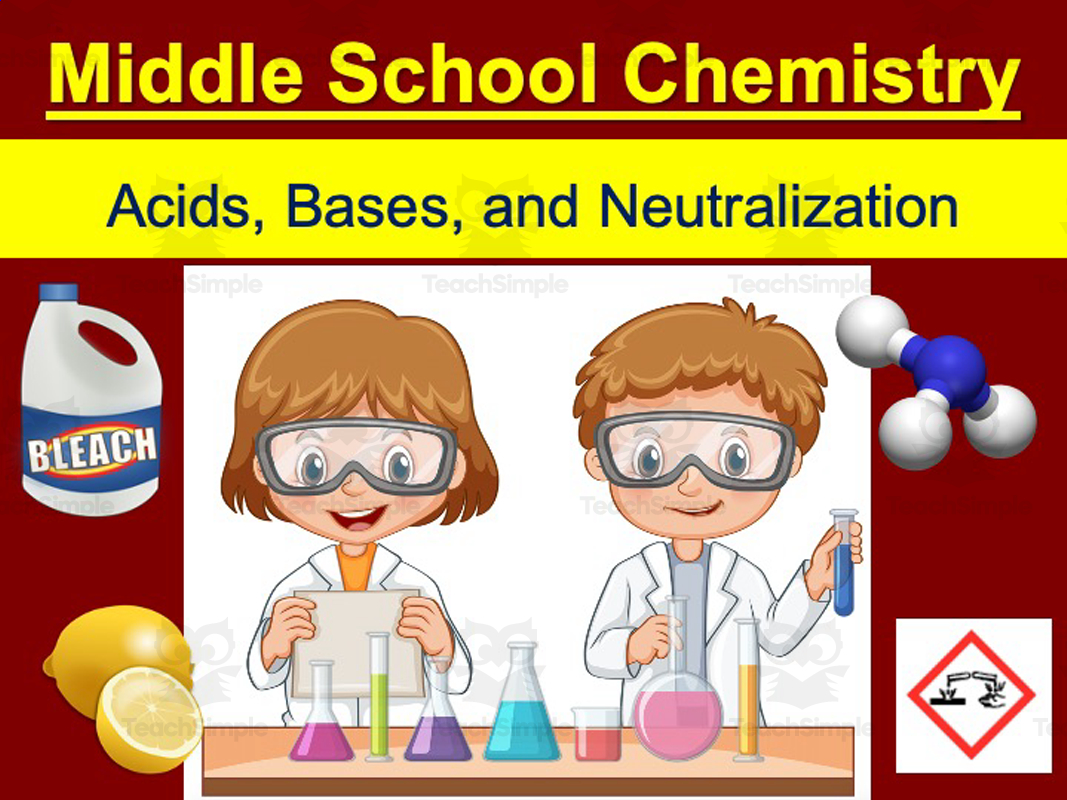
Acid-Base Neutralization Chemistry – Lab Station Activity
Science, Chemistry, Grade 9, 10, 11, Labs, Experiments, Activities
Acid-Base Neutralization Chemistry Lab Station Activity This interactive chemistry resource engages students in learning about acid-base reactions through a unique lab station format. Learners rotate between 9 stations, each offering a hands-on way to explore neutralization concepts. Activities range from drawing models to analyzing real-life videos and answering knowledge checks. The multiple learning formats reinforce comprehension while keeping students actively learning. This versatile resource works for whole class, small groups, or independent work. The engaging lab station approach promotes enjoyment of chemistry. An answer key provides guidance. Editable files allow customization for any high school grade level.
Author Teach With Fergy
Tags Acid, Base, Chemistry, Lab Station, Activity, Chemistry Lab Station, Station In Chemistry Lab, Acid And Bases Activities, Acid Base Labs Middle School, Acid Base Chemistry Labs, Acid And Base Activities, Acid Base Reactions Lab, Acid Base Lab Middle School
Ecological Succession – Lab Station Activity
Science, Life Sciences, Biology, Grade 6, 7, 8, 9, 10, Labs, Experiments, Activities
This fully editable Lab Station on Ecological Succession is meant to get your students out of their seats and engaged in the content. Each station not only offers a unique opportunity to test your students' knowledge (offer an opinion, answer questions based on a video or reading, draw, etc.), but also provides a fantastic learning opportunity where your kids are learning through assessment. Each station comes with a description card while some also contain more detailed instructions, a reading, questions to answer, etc. Students are equipped with a recording sheet (passport) to write their answers. There is almost no prep for you. Simply print the cards, lay them out around the room and you're all set. An answer key is also provided where applicable. This lab activity covers: - Primary Succession - Secondary Succession - The Role of Forest Fires in an Ecosystem - Pond Succession ---------------------------------------------- Bonus Activities: To ensure your students don’t have any downtime between stations, your lab also includes a 10-word word scramble and word search, both with an answer key. You can use them as part of their mark, as a bonus so it’s not mandatory, etc. However you choose to use it, it will ensure that your students are always busy and never idle. Note: For stronger classes, I give the word scramble and for weaker ones, the word search. ---------------------------------------------- How do the Lab Stations work? Each station is specially designed to be a unique complement to the material while at the same time, provide a valuable learning experience. Below is an overview of how each station works. In your activity , each will be tailored to the specific content. Station 1: Get Hands-On – using their creative skills, students are required to draw or build. Station 2: Research – using a classroom computer or their own device, students must research a specific question/issue surrounding the topic. Station 3: Explain yourself – students write down an opinion to a question in paragraph form. Station 4: Rest Station - students can use this time to catch up on work they didn't have time to complete at a previous station or prepare themselves for an upcoming one. Station 5 - Applicability reading – students read a short passage from an article, website, etc. which directly connects the classroom content to a real life application. Station 6: Test your knowledge – students answer 5 multiple choice questions then provide a written explanation for how/why they came to their conclusions. Station 7: Learn from the expert – using a classroom computer or their own device, students must watch a short video clip and answer the associated questions. They may stop, rewind and restart as often as they like during the time frame. Station 8 - Rest Station. Station 9: Become the question master – Students must create 2 multiple-choice questions, 2 true/false questions and 1 short answer question. Students must also supply the answers. ------------------------------- You might also be interested in my other lab station activities Ecology and the Environment: • Ecosystems • The Classification of Living Things • Biodiversity and Invasive Species • The Carbon and Water Cycle • Climate Change • Photosynthesis • Cellular Respiration and Photosynthesis • Ecological Succession • Plant Sexual and Asexual Reproduction • Earth's Seasons • Interactions Within Ecosystems Biology: • Cell and the Cell Theory • The Human Digestive System • The Circulatory System • The Human Respiratory System • Mitosis and the Cell Cycle • Cellular Respiration and Photosynthesis • Photosynthesis • Cancer: Cell Division Gone Wrong - Volume I • Cancer: Cell Division Gone Wrong - Volume II • Cell Membrane and Transport • Hearing and the Human Ear • The Human Eye • Genetic Material: DNA and RNA • The Nervous System • Energy Flow In Ecosystems Physics: • Newton's Three Laws of Motion • Kinetic and Gravitational Potential Energy • Current Electricity and Circuit Diagrams • Static Electricity • Light Optics and the Production of Light • Sound, Sound Energy and Speed • One and Two-Dimensional Motion • Uniform Acceleration • How Planes Fly • Refraction • Friction • Energy and Its Forms • Density and Buoyancy Space Science: • The Life and Death of Stars • The Moon and its Phases • Life In Space • Our Solar System • Solar and Lunar Eclipse • Earth's Seasons • Asteroids, Comets and Meteors Chemistry: • Atomic Model, Notation and Atoms • Chemical Reactions and Balancing Equations • Molecular and Ionic Compounds • Physical and Chemical Properties & Changes • Acids, Bases, and Neutralization Reactions • The Periodic Table • Single and Double Displacement Reactions • Balancing Chemical Equations • Synthesis, Decomposition and Combustion Reactions • Atomic Theory, Atomic Structure and Isotopes • Types of Bonds and Intermolecular Forces • The Mole/Avogadro's Number • Density and Buoyancy These station cards are meant to be used as a lab activity but can also be utilized in a review task before a test or a quiz. Used either way, your students will love it! I know mine do and I'm telling you from first-hand experience as I've used this activity in my own class. Thank you for your interest in my products. If you have any questions, please send me an email - devon@teachwithfergy.com
Author Teach With Fergy
Tags Forest, Fire, Ecosystem, Soil, Ecology, Ecological Succession Lesson Plan
Static Electricity – Lab Station Activity
Science, Physics, Grade 7, 8, 9, 10, Labs, Experiments, Activities
Static Electricity Lab Station Activity Bring static electricity concepts to life in your middle or high school science classroom. This interactive lab station activity allows students to engage with key physics concepts surrounding electrostatics, charging, and static electricity applications. Through nine unique stations, learners will conduct hands-on experiments, read applicability passages, watch expert videos, and more. The activity is designed to complement static electricity curriculum for grades 7-10. It requires almost no prep and includes detailed student sheets and answer keys. Extension activities like word scrambles and searches are also provided to maximize student engagement. Use this time-saving resource to create an immersive learning experience that will spark students' curiosity about the invisible world of static electricity.
Author Teach With Fergy
Tags Static, Electricity, Current, Charged, Lab Station, Static Lab, Electricity Activity, Static Electricity Activities, Static Word Scramble, Electrostatics Physics Lab Answers, Electricity Lab
Genotype and Phenotype – Lab Station Activity
Science, Life Sciences, Biology, Grade 8, 9, 10, 11, Labs, Experiments, Activities
Genotype and Phenotype Lab Station Activity This fully editable teaching resource for high school biology students focuses on concepts related to Genotypes and Phenotypes. These include: Dominance Co-dominance Incomplete dominance Single gene inheritance Punnett squares Sex linkage. The lab station activity comprises engaging reading assignments and questions that stimulate critical thinking. These can be performed individually or in small groups. The real-world relevance of the hands-on stations enhances the understanding of these biological concepts. The Eight Unique Stations: The teaching resource includes eight distinct stations that involve various tasks aimed at promoting independent thinking over mere memorization. To give an example, "The Get Hands-On station" requires students to draw or build something based on their knowledge, while "The Research" station has them using digital tools for further study. Other stations entail articulating opinions in writing on subject-related issues or developing multiple-choice and short-answer questions. Bonus Activities: Apart from the main tasks, we also provide two bonus activities: a word scramble and a word search. These serve as fillers during downtime between station transitions. Ease of Preparation for Instructors: All it takes is printing out cards and arranging them around your classroom. Where necessary, an answer key is provided making it easy for educators to assess student's performance. In Summary, The Genotype and Phenotype Lab Station Activity promotes immersive exploration of essential biological concepts. It nurtures skills such as critical thinking and creativity while promoting active student participation. This resource is aptly designed for grades 8 through 11 biology lessons.
Author Teach With Fergy
Tags Genotype, Phenotype, Lab Activity, Biology, Genetics
Static Electricity Experiments for Elementary School
Physics, Science, Grade 1, 2, 3, 4, 5, Labs, Experiments, Activities
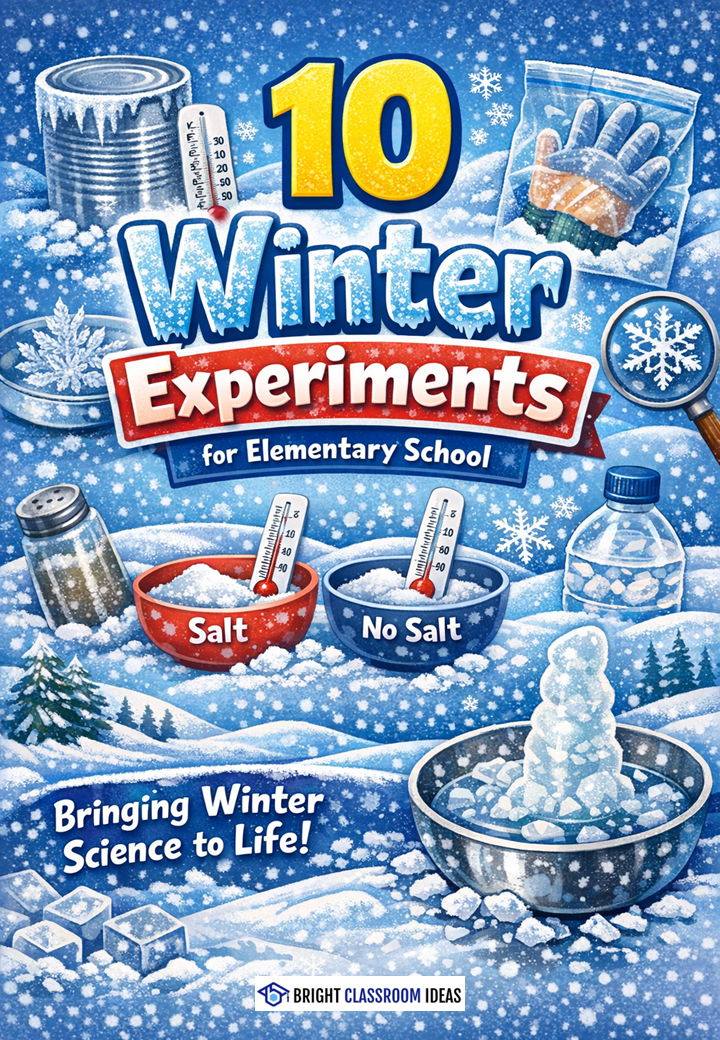
What is electrostatics, or static electricity? The buildup of electric charge on an object's surface is called static electricity, or electrostatics. This charge, which can be either positive or negative, is produced when a material's atoms acquire or lose electrons. When two objects rub against one another, electrons are transferred from one to the other, creating this static energy. As a result, one of the materials has a negative charge due to an excess of electrons, while the other material has a positive charge due to a lack of electrons. The feeling of a tiny electric shock after stepping on a rug and then contacting a metal surface is a typical example. Ten extremely basic and doable experiments that use or create static electricity are included in this useful e-book. Every experiment is safe and may be carried out using normal, commonplace items. Every experiment has comprehensive, step-by-step instructions. Lastly, each experiment is given a brief explanation so that elementary school pupils can understand it. Have fun exploring the marvels of static electricity through experimentation!
Author Bright Classroom Ideas Marketplace
Rating
Tags Static, Electricity, Experiment, Elementary, Science, Physics
Circulatory System – Lab Station Activity
Science, Life Sciences, Human Body, Grade 8, 9, 10, 11, Labs, Experiments, Activities
This fully editable Lab Station Activity on the Circulatory System is meant to get your kids out of their seats and engaged in the content. Each station not only offers a unique opportunity to test your students knowledge (offer an opinion, answer questions based on a video or reading, draw, etc.), but also provides a fantastic learning opportunity where your kids are learning through assessment. Each station comes with a description card while some also contain more detailed instructions, a reading, questions to answer, etc. Students are equipped with a recording sheet (passport) to write their answers. There is almost no prep for you. Simply print the cards, lay them out around the room and you're all set. An answer key is also provided where applicable. These station cards are meant to be used as a lab activity but can also be utilized in a review task before a test or a quiz. Used either way, your students will love it! I know mine do and I'm telling you from first-hand experience as I've used this activity in my own class, This lab activity covers: - Circulatory System - Circulatory System Disorders - Prevention of Cardiac Disorders ---------------------------------------------- Bonus Activities: To ensure your students don't have any downtime between stations, your lab also includes a 10-word word scramble and word search, both with an answer key. You can use them as part of their mark, as a bonus so it's not mandatory, etc. However you choose to use it, it will ensure that your students are always busy and never idle. Note: For stronger classes I give the word scramble and for weaker ones, the word search. ---------------------------------------------- How do the Lab Stations work? Each station is specially designed to be a unique complement to the material while at the same time, provide a valuable learning experience. Below is an overview of how each station works. In your activity , each will be tailored to the specific content. Station 1: Get Hands-On – using their creative skills, students are required to draw or build. Station 2: Research – using a classroom computer or their own device, students must research a specific question/issue surrounding the topic. Station 3: Explain yourself – students write down an opinion to a question in paragraph form. Station 4: Rest Station - students can use this time to catch up on work they didn't have time to complete at a previous station or prepare themselves for an upcoming one. Station 5 - Applicability reading – students read a short passage from an article, website, etc. which directly connects the classroom content to a real life application. Station 6: Test your knowledge – students answer 5 multiple choice questions then provide a written explanation for how/why they came to their conclusions. Station 7: Learn from the expert – using a classroom computer or their own device, students must watch a short video clip and answer the associated questions. They may stop, rewind and restart as often as they like during the time frame. Station 8 - Rest Station. Station 9: Become the question master – Students must create 2 multiple-choice questions, 2 true/false questions and 1 short answer question. Students must also supply the answers. ------------------------------- You might also be interested in my other lab station activities Physics: • Newton's Three Laws of Motion • Kinetic and Gravitational Potential Energy • Current Electricity and Circuit Diagrams • Static Electricity • Light Optics and the Production of Light • Sound, Sound Energy and Speed • One and Two-Dimensional Motion • Uniform Acceleration • How Planes Fly • Refraction • Friction • Energy and Its Forms • Density and Buoyancy • Electricity Production • Calculating Average Speed, Velocity, and Displacement • Mass, Volume, Density, & Buoyancy • Work and Energy • Renewable Energy • Plate Tectonics • The Rock Cycle • Natural Disasters • Pressure, Volume, and Temperature • Forces • Power • Liquids and Gases • Fossils and Geologic Time • Earthquakes and Volcanoes Coming Soon: - Work = F x d - Nonrenewable energy sources - Projectile Motion - Momentum, Conservation of Momentum and Impulse - The Doppler Effect and Supersonic Travel General Science: • The Scientific Method and Science Skills • The Different Types of Clouds • Meteorology Biology: • Cell and the Cell Theory • The Human Digestive System • The Circulatory System • The Human Respiratory System • Mitosis and the Cell Cycle • Cellular Respiration and Photosynthesis • Photosynthesis • Cancer: Cell Division Gone Wrong - Volume I • Cancer: Cell Division Gone Wrong - Volume II • Cell Membrane and Transport • Hearing and the Human Ear • The Human Eye • Genetic Material: DNA and RNA • The Nervous System • Energy Flow In Ecosystems • DNA Manipulation and GMOs • Transcription and Translation • Cellular Respiration • Thermoregulation • Proteins and Nucleic Acids • Mutations • Meiosis • DNA, Genes, Chromosomes, and Alleles • Genetic Disorders • Fats • Reproductive Technologies • Muscular and Skeletal System • Integumentary System Coming Soon: - Excretory system - Endocrine system - Carbohydrates and Lipids Chemistry: • Atomic Model, Notation and Atoms • Chemical Reactions and Balancing Equations • Molecular and Ionic Compounds • Physical and Chemical Properties & Changes • Acids, Bases, and Neutralization Reactions • The Periodic Table • Single and Double Displacement Reactions • Balancing Chemical Equations • Synthesis, Decomposition and Combustion Reactions • Atomic Theory, Atomic Structure and Isotopes • Types of Bonds and Intermolecular Forces • The Mole/Avogadro's Number • Density and Buoyancy • The Particle Theory and the Classification of Matter • Pure Substances and Mixtures • Solutions and Mechanical Mixtures Coming Soon: - Periodic table group properties Ecology and the Environment: • Ecosystems • The Classification of Living Things • Biodiversity and Invasive Species • The Carbon and Water Cycle • Climate Change • Photosynthesis • Cellular Respiration and Photosynthesis • Ecological Succession • Plant Sexual and Asexual Reproduction • Earth's Seasons • Interactions Within Ecosystems • Physical and Behavioral Adaptations Space Science: • The Life and Death of Stars • The Moon and its Phases • Life In Space • Our Solar System • Solar and Lunar Eclipse • Earth's Seasons • Asteroids, Comets and Meteors These station cards are meant to be used as a lab activity but can also be utilized in a review task before a test or a quiz. Used either way, your students will love it! I know mine do and I'm telling you from first-hand experience as I've used this activity in my own class. Thank you for your interest in my products. If you have any questions, please send me an email - devon@teachwithfergy.com
Author Teach With Fergy
Tags Circulatory, System, Body, Health, Lab Stations, Lab 11 The Circulatory System, Circulatory System Lesson Plans High School, Circulatory System Word Search Answer Key, Circulatory System Activities For Middle School
Science Action Labs Air Science
, Grade 1, 2, 3, Labs, Experiments, Activities
"Science Action Labs Air Science" An engaging approach to teaching air science for students in grades 1-3. Through hands-on simple experiments , students gain a solid foundation on the key concepts including that: Air is transparent Carries weight Exerts pressure and resistance Is composed of different gases. This learning resource contains various activities within its easy-to-use PDF file: Straightforward experimentation, scientific discourse and relatable poems. The opportunity for whole group discovery sessions, small group collaboration exercises or independent work. Including fun games throughout the program that adds a layer of friendly competition reinforcing kinesthetic learners' comprehension skills. Embedded periodic quizzes to measure student progress and reinforce acquired knowledge about air science. With "Science Action Labs Air Science", teaching about elements like air becomes an optimal practical perspective for primary grade levels. Note: Valuable tools need not be expensive components like extensive laboratory sets; sometimes it could be as simple as print-ready pages filled with creative ways to learn life's fundamental theories!</p+
Author Classroom Complete Press
Tags Science Labs, Air Science, Air Pressure, All About Oxygen, Science Experiments
Science Action Labs Sciencing: Learning About the Scientific Method
, Grade 4, 5, 6, 7, 8, Labs, Experiments, Activities
Science Action Labs Sciencing: Learning About The Scientific Method This exceptional teaching resource is designed specifically for grade 4-8 students, providing a unique approach to learn and explore science! 'Science Action Labs Sciencing' is perfect for involving your students practically in learning, making scientific concepts both comprehensible and exciting. The Focus: The Scientific Method The primary focus of this resource is on teaching the scientific method. It's a core skill beneficial for understanding and conducting real life scientific investigations. Importantly, the first step is nurturing observation skills - the fundamental step in becoming good scientists. The Importance of Communication In addition to hands-on experiments, it encourages clear articulation of observations and hypotheses—crucial traits in research-based science communication. Therefore, these exercises simulate authentic scientific inquiry scenes whether indoors or at homeschools. A Peek Inside: Activities & Exercises This PDF resource comprises 64 ready-to-use printable pages that include numerous fun-filled labs where children's imagination meet practical application. Kids indulge themselves with exciting activities like: Straw sciencing exercises Designing their own unique creatures Unravelling mysteries from indirect evidence just like true scientists would! Bonus Feature: Flexibility & Adaptability This resource not only accommodates individual reflection time but can also embrace group engagements through modifications. This allows students to collaboratively construct hypotheses based on shared observations - triggering critical thinking and teamwork! Note:These tasks make excellent homework assignments too! Pairing academic duties with scientifically charged puzzles boosts both interest level as well as comprehension! In conclusion,'Science Action Labs Sciencing: Learning About The Scientific Method' is centred around essential aspects of the science curriculum like observation skills training & hypothesis construction. In essence, it’s your tool to bring real-world science experience into classrooms, promoting an active student-centred learning environment per latest pedagogical principles! For those forward-thinking educators aiming for a rounded learning experience that combines theory with practical application - this resource checks all the right boxes!
Author Classroom Complete Press
Tags Science Labs, Action Labs, Scientific Method, Hypothesis Lab, Observing A Candle
Particle Theory and Matter Classification – Lab Station Activity
Science, Chemistry, Grade 8, 9, 10, 11, Labs, Experiments, Activities
This fully editable Lab Station on The Particle Theory and the Classification of Matter is meant to get your students out of their seats and engaged in the content. Each station not only offers a unique opportunity to test your students' knowledge (offer an opinion, answer questions based on a video or reading, draw, etc.), but also provides a fantastic learning opportunity where your kids are learning through assessment. Each station comes with a description card while some also contain more detailed instructions, a reading, questions to answer, etc. Students are equipped with a recording sheet (passport) to write their answers. There is almost no prep for you. Simply print the cards, lay them out around the room and you're all set. An answer key is also provided where applicable. This lab activity covers: - The particle theory - Matter classification - Mixtures --> Homogeneous (solutions) --> Heterogeneous (mechanical mixtures) - Pure substances --> Elements --> Compounds How do the Lab Stations work? Each station is specially designed to be a unique complement to the material while at the same time, provide a valuable learning experience. Below is an overview of how each station works. In your activity , each will be tailored to the specific content. Station 1: Get Hands-On – using their creative skills, students are required to draw or build. Station 2: Research – using a classroom computer or their own device, students must research a specific question/issue surrounding the topic. Station 3: Explain yourself – students write down an opinion to a question in paragraph form. Station 4: Rest Station - students can use this time to catch up on work they didn't have time to complete at a previous station or prepare themselves for an upcoming one. Station 5 - Applicability reading – students read a short passage from an article, website, etc. which directly connects the classroom content to a real life application. Station 6: Test your knowledge – students answer 5 multiple choice questions then provide a written explanation for how/why they came to their conclusions. Station 7: Learn from the expert – using a classroom computer or their own device, students must watch a short video clip and answer the associated questions. They may stop, rewind and restart as often as they like during the time frame. Station 8 - Rest Station. Station 9: Become the question master – Students must create 2 multiple-choice questions, 2 true/false questions and 1 short answer question. Students must also supply the answers. ------------------------------- You might also be interested in my other lab station activities Physics: • Newton's Three Laws of Motion • Kinetic and Gravitational Potential Energy • Current Electricity and Circuit Diagrams • Static Electricity • Light Optics and the Production of Light • Sound, Sound Energy and Speed • One and Two-Dimensional Motion • Uniform Acceleration • How Planes Fly • Refraction • Friction • Energy and Its Forms • Density and Buoyancy • Electricity Production Coming Soon: - Calculating average speed, velocity, and displacement - Work = F x d - Renewable energy sources - Nonrenewable energy sources Space Science: • The Life and Death of Stars • The Moon and its Phases • Life In Space • Our Solar System • Solar and Lunar Eclipse • Earth's Seasons • Asteroids, Comets and Meteors Ecology and the Environment: • Ecosystems • The Classification of Living Things • Biodiversity and Invasive Species • The Carbon and Water Cycle • Climate Change • Photosynthesis • Cellular Respiration and Photosynthesis • Ecological Succession • Plant Sexual and Asexual Reproduction • Earth's Seasons • Interactions Within Ecosystems Biology: • Cell and the Cell Theory • The Human Digestive System • The Circulatory System • The Human Respiratory System • Mitosis and the Cell Cycle • Cellular Respiration and Photosynthesis • Photosynthesis • Cancer: Cell Division Gone Wrong - Volume I • Cancer: Cell Division Gone Wrong - Volume II • Cell Membrane and Transport • Hearing and the Human Ear • The Human Eye • Genetic Material: DNA and RNA • The Nervous System • Energy Flow In Ecosystems Coming Soon: - Excretory system - Endocrine system Chemistry: • Atomic Model, Notation and Atoms • Chemical Reactions and Balancing Equations • Molecular and Ionic Compounds • Physical and Chemical Properties & Changes • Acids, Bases, and Neutralization Reactions • The Periodic Table • Single and Double Displacement Reactions • Balancing Chemical Equations • Synthesis, Decomposition and Combustion Reactions • Atomic Theory, Atomic Structure and Isotopes • Types of Bonds and Intermolecular Forces • The Mole/Avogadro's Number • Density and Buoyancy • The Particle Theory and the Classification of Matter Coming Soon: - Counting atoms - Periodic table group properties These station cards are meant to be used as a lab activity but can also be utilized in a review task before a test or a quiz. Used either way, your students will love it! I know mine do and I'm telling you from first-hand experience as I've used this activity in my own class. Thank you for your interest in my products. If you have any questions, please send me an email - devon@teachwithfergy.com
Author Teach With Fergy
Tags Particles, Classification, Matter, Lab Station, Chemistry
Science Action Labs Water Science
, Grade 1, 2, 3, Labs, Experiments, Activities
Science Action Labs Water Science: An Interactive Teaching Resource Designed to inspire a sense of curiosity and the importance of water in life, this resource is tailored for Grade 1 through Grade 3 students. It aligns with science curriculum guidelines while also catering to the natural interests of children at these grade levels. Hands-On Learning Experiences The product is centered around hands-on learning experiences which allow students to explore different characteristics of water. Students conduct various experiments such as exploring water's presence in living organisms, its ability to dissolve substances and evaporate under certain conditions. Promoting Engagement Through Challenges and Competition Challenges: Learning is enhanced through challenges that make it more engaging. Competition: The teaching material encourages competition through game-based activities, prompting critical thinking abilities by presenting problem-solving situations. An Integrated Approach Toward Evaluation The integrated quizzes serve as both comprehension checks and reinforcement tools following each topic covered given their design rooted around learned content. A Convenient All-in-One Product A single bundled PDF file containing 64 printable pages makes this bundle convenient for teachers or homeschool parents looking for easy-to-use teaching materials. Whether assigning individual worksheets as homework assignments or using them collectively for small group activities in the classroom – flexibility is key. Simply print when needed! Cultivating Environmental Awareness & Teamwork Ethics Early On. While touching upon subjects like environmental sustainability subtly through its contents- it promotes awareness about non-renewable resources among young learners whilst instilling teamwork ethics via group activities. In Conclusion,this product serves beyond merely fulfilling the curriculum by progressively steering towards experiential learning - a quintessential development in today’s evolving education system.
Author Classroom Complete Press
Tags Science Labs, Demonstrations, Water Science, Review Quiz, Water Molecules
Nervous System – Lab Station Activity
Science, Life Sciences, Biology, Grade 8, 9, 10, 11, 12, Labs, Experiments, Activities
This fully editable Lab Station on The Nervous System is meant to get your students out of their seats and engaged in the content. Each station not only offers a unique opportunity to test your students knowledge (offer an opinion, answer questions based on a video or reading, draw, etc.), but also provides a fantastic learning opportunity where your kids are learning through assessment. Each station comes with a description card while some also contain more detailed instructions, a reading, questions to answer, etc. Students are equipped with a recording sheet (passport) to write their answers. There is almost no prep for you. Simply print the cards, lay them out around the room and you're all set. An answer key is also provided where applicable. This lab activity covers: - Structure, Parts and Functions of the Nervous System - Structure, Types and Functions of the Neuron - Reflex Arc - Nerve Signal Transmission and Action Potential - The Schwann Cell and Action Potential - Sodium-Potassium Pump - Neurotransmitters and its Functions ---------------------------------------------- Bonus Activities: To ensure your students don’t have any downtime between stations, your lab also includes a 10-word word scramble and word search, both with an answer key. You can use them as part of their mark, as a bonus so it’s not mandatory, etc. However you choose to use it, it will ensure that your students are always busy and never idle. Note: For stronger classes, I give the word scramble and for weaker ones, the word search. ----------------------------------------------- How do the Lab Stations work? Each station is specially designed to be a unique complement to the material while at the same time, provide a valuable learning experience. Below is an overview of how each station works. In your activity , each will be tailored to the specific content. Station 1: Get Hands-On – using their creative skills, students are required to draw or build. Station 2: Research – using a classroom computer or their own device, students must research a specific question/issue surrounding the topic. Station 3: Explain yourself – students write down an opinion to a question in paragraph form. Station 4: Rest Station - students can use this time to catch up on work they didn't have time to complete at a previous station or prepare themselves for an upcoming one. Station 5 - Applicability reading – students read a short passage from an article, website, etc. which directly connects the classroom content to a real life application. Station 6: Test your knowledge – students answer 5 multiple choice questions then provide a written explanation for how/why they came to their conclusion. Station 7: Learn from the expert – using a classroom computer or their own device, students must watch a short video clip and answer the associated questions. They may stop, rewind and restart as often as they like during the time frame. Station 8 - Rest Station. Station 9: Become the question master – Students must create 2 multiple-choice questions, 2 true/false questions and 1 short answer question. Students must also supply the answers. ------------------------------- You might also be interested in my other lab station activities Biology: • Cell and the Cell Theory • The Human Digestive System • The Circulatory System • The Human Respiratory System • Mitosis and the Cell Cycle • Cellular Respiration and Photosynthesis • Photosynthesis • Cancer: Cell Division Gone Wrong - Volume I • Cancer: Cell Division Gone Wrong - Volume II • Cell Membrane and Transport • Hearing and the Human Ear • The Human Eye • Genetic Material: DNA and RNA • The Nervous System • Energy Flow In Ecosystems Ecology and the Environment: • Ecosystems • The Classification of Living Things • Biodiversity and Invasive Species • The Carbon and Water Cycle • Climate Change • Photosynthesis • Cellular Respiration and Photosynthesis • Ecological Succession • Plant Sexual and Asexual Reproduction • Earth's Seasons • Interactions Within Ecosystems Physics: • Newton's Three Laws of Motion • Kinetic and Gravitational Potential Energy • Current Electricity and Circuit Diagrams • Static Electricity • Light Optics and the Production of Light • Sound, Sound Energy and Speed • One and Two-Dimensional Motion • Uniform Acceleration • How Planes Fly • Refraction • Friction • Energy and Its Forms • Density and Buoyancy Space Science: • The Life and Death of Stars • The Moon and its Phases • Life In Space • Our Solar System • Solar and Lunar Eclipse • Earth's Seasons • Asteroids, Comets and Meteors Chemistry: • Atomic Model, Notation and Atoms • Chemical Reactions and Balancing Equations • Molecular and Ionic Compounds • Physical and Chemical Properties & Changes • Acids, Bases, and Neutralization Reactions • The Periodic Table • Single and Double Displacement Reactions • Balancing Chemical Equations • Synthesis, Decomposition and Combustion Reactions • Atomic Theory, Atomic Structure and Isotopes • Types of Bonds and Intermolecular Forces • The Mole/Avogadro's Number • Density and Buoyancy These station cards are meant to be used as a lab activity but can also be utilized in a review task before a test or a quiz. Used either way, your students will love it! I know mine do and I'm telling you from first-hand experience as I've used this activity in my own class. Thank you for your interest in my products. If you have any questions, please send me an email - devon@teachwithfergy.com
Author Teach With Fergy
Tags Nervous, System, Neurons, Disorders, Lab Station, Nervous System Activity, Nervous System Lab, Nervous System Activities, Nervous System Activities Middle School
Fossils and Geologic Time – Lab Station Activity
Science, Earth and Environmental Sciences, Grade 8, 9, 10, 11, 12, Labs, Experiments, Activities
Fossils and the Geologic Time Scale - Lab Station Activity Bring the fossil record to life in your middle or high school science classroom with this engaging lab activity. Students will rotate through 9 stations to analyze fossils, date rocks, explore timescales, and more. The self-guided format allows them to work at their own pace while answering questions, watching videos, doing research, and getting creative. Topics span fossilization, radiometric dating, rock strata, the La Brea Tar Pits, and major boundaries in Earth's history. This customizable resource includes reading passages, comprehension questions, creative prompts, and bonus vocabulary builders to maximize the learning potential. Students will love moving freely around the classroom as they dive into hands-on archaeology.
Author Teach With Fergy
Tags Fossils, Fossilization, Rock, Strata, Lab Station, Photosynthesis And Cellular Respiration Word Search Answer Key, Geological Timeline Activity Answer Key, Geologic Time Word Search Answer Key, Geologic Time Activity, Geologic Time Scale Activity Middle School, Geologic Time Scale Activity High School, Geologic Time Line Activity
Work and Energy – Lab Station Activity
Science, Physics, Grade 8, 9, 10, 11, Labs, Experiments, Activities
Work and Energy - Lab Station Activity An engaging teaching resource designed for high school physics students that focuses primarily on work, energy, forces, and friction. Its main goal is to facilitate active learning through interactive tasks. Activity Overview This resource offers a lab activity comprising multiple stations. Each station presents different testing methods such as: Answering questions drawn from readings or videos. Sharing personal opinions on specific topical issues. Diagram creation activities. The aim is to introduce students to different approaches to understanding and applying key concepts related to work and energy. Included Activities: 'Research tasks': Utilizing devices or classroom computers for data gathering. 'Written expression': Elucidating thoughts on theoretical issues via written communication. 'Connect-the-Dot Readings': Merging theoretical concepts with practical real-life situations. 'Test Your Knowledge': A mixture of multiple-choice questions with requests for written explanations justifying the chosen answers. To maximize class time efficiency, bonus word search or word scramble tasks have also been included which could serve as an additional source of marks when properly utilized. The ultimate objective ensuring every student finds something beneficial during the lesson without idle moments. Ease of Preparation: The resources are ready-to-use – simply print the cards provided in the download pack, place them around the classroom strategically for task initiation. An answer key provided within this package facilitates easy assessment. Value Beyond the Lab: The station cards extend beyond just lab activities – they can also be used as study materials before tests or quizzes to stimulate students' interest and improve retention and overall performance. Summary In a nutshell, for educators seeking versatile resources that focus not only on content, but on delivery methods that cater to all types of learners, Work and Energy - Lab Station Activity is certainly a resource worth considering.
Author Teach With Fergy
Tags Work, Energy, Forces, Friction, Lab Activity, Work Power And Energy Lab
Science Action Labs Earth Science
Science, Earth and Environmental Sciences, Earth Sciences, Grade 1, 2, 3, Labs, Experiments, Activities
Science Action Labs Earth Science A practical teaching resource, Science Action Labs Earth Science, aims to stimulate the natural curiosity of young learners and expose them to the marvels of our planet. It emphasizes exploration and discovery through hands-on activities that deepen 1st to 3rd graders' understanding of Earth science concepts. About The Resource: The material encompasses 64 printable PDF pages. The pages are rich with diverse experiments and activities focusing on key subjects such as continents, earthquakes, Earth's air, water, soil as well as its motion and layers. The flexibility of these activities is extensive. You can either carry out whole group sessions or assign small group tasks each with distinct exercises that foster teamwork and creativity among students. Bonus Feature: The added review quizzes serve as effective tools for progress assessment letting educators evaluate student comprehension levels on newly learnt topics with ease. Versatile Application: This educational tool’s versatility makes it perfect for structured class lessons or homework assignments while also offering potential enhancements to an existing earth science curriculum. Its flexible usage fosters increased engagement levels leading to improved academic performance over time. Ease Of Access: You can readily access this resource kit in PDF format which offers convenient dissemination without compromising quality. In Summation... This pragmatic approach offered by our earth science exploration kit bridges knowledge acquisition with actual hands-on experiences delivering a holistic learning journey. This integrated learning experience could spark potential Geologists or Meteorologists within your class paving the way towards creating scientific explorers one lab activity at a time.
Author Classroom Complete Press
Tags Science Labs, Earth Sciences, Art Challenge, Flying Into Space, Moon Facts
Science Action Labs Insects: Hands-On Science Activities Ready for Student Use
Science, Life Sciences, Insects, Grade 1, 2, 3, Labs, Experiments, Activities
Science Action Labs Insects: Hands-On Science Activities Ready for Student Use This interactive science activity kit offers a riveting method of teaching elementary students, specifically those in grades 1 through 3, about the fascinating world of insects. This comprehensive resource unravels various aspects about different insects and their life cycles under a simple yet informative light. Dynamic Learning Experience The unique experience integrates demonstrations and experiments into lessons. Activites include: Writing poetry about bugs Holding grasshopper jumping contests Constructing honeycombs from scratch Guide characters C.D., Allie, and Orbit are presented throughout for systematic knowledge acquisition that renders comprehension easier for young learners. A Teacher-Friendly Resource with Different Implementations This rich-resource comes packed with 64 printable pages tailored to beginner scientists' needs. It's an excellent tool for educators introducing insects at primary grade level either through individual study or group studies within classrooms. The buzzing environment at our feet opens up wonders beyond any storybook ever could relay about mother nature's intricate designs. Truly, the learning journey into the insect kingdom ties closely with fun for enhanced learner engagement together with Science Action Labs Insects teachings on these vital players in nature's ecological dance.</p
Author Classroom Complete Press
Tags Science Action Lab, Insects, Hands-on, Science Activities