search
user.png
vertical menu

Point of View Graphic Organizer for Literary Devices

Point of View Graphic Organizer for Literary Devices preview

Look Inside · 10 pages

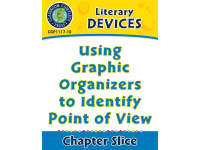
Cover of Literary Devices: Using Graphic Organizers to Identify Point of View, labeled Chapter Slice
Front cover of the point-of-view chapter slice
Critical thinking reference chart lists six Bloom's Taxonomy levels, with chapter 10 highlighted
Critical thinking skills reference for the chapter
Reading assessment rubric defines six levels from Pre-Reader to Exceptional Reader and prompts next steps
Reading assessment rubric for student responses
Teacher guide explains reading passages, before- and after-reading activities, writing tasks, and answer keys
Teacher guide to the resource's organization
Teacher reference explains Bloom's six thinking levels and defines literary terms, including point of view
Bloom's Taxonomy guide and literary vocabulary
Before-reading activity pairs six true-or-false statements with questions about a cat's point of view
Before-reading questions and cat poem analysis
Reading passage explains first- and third-person narration and introduces two point-of-view organizers
Point-of-view reading passage introducing organizers
After-reading activity uses a turkey's Thanksgiving poem to complete a literary point-of-view spider
After-reading poem and point-of-view organizer
Writing tasks 1 and 2 ask students to analyze two favorite characters and write a supported character sketch
Writing tasks 1–2: characterization and a sketch
Writing tasks 3 and 4 prompt a childhood setting story and a plot inspired by a girl with a giant catfish
Writing tasks 3–4: setting and plot
Attributes
Grades

Grade 5, 6, 7, 8

File

PDF

Editable
No
Rating
Add To Collection
Add to collection Add to collection

About This Product

"Literary Devices: Using Graphic Organizers to Identify Point of View" - A Dynamic Lesson Plan

Tailored for educators, this resource focuses on teaching students about the fascinating interplay between language and storytelling. It is particularly useful for grades 5 through 8, fitting seamlessly within Language Arts curricula.

The tool introduces learners to the intense world beneath mesmerizing tales—the Literary Devices. These include critical components like:

  • Characterization
  • Setting
  • Plot
  • Theme, and more...
The value in this resource lies in its emphasis on identifying Point of View in literature via grade-specific activities utilizing graphic organizers.

User-friendly Definitions and Practice Opportunities-

Apart from providing simple definitions for key terminologies, it offers repeated practice opportunities to bolster understanding.

Bloom's Taxonomy Model Adherence-

The content adheres strictly to the Bloom's Taxonomy model ensuring high quality and educational validity making it usable in both public schools or homeschools alike. It could be used with whole class cohorts or smaller study groups; not forgetting homework assignments either.

Tying narrations together with age-appropriate learning activities enable young scholars to understand storytelling better while appreciating creativity; they also build critical analysis skills tackling diverse literary forms encouraging exploration that growth-seeking academic minds desire. Thus whether you aim at arming young minds for expansive literary studies or just inspire a deep affection toward classic/modern Literature - 'Literary Devices: Using Organizers Identify Point of View' could be an indispensable addition to your teaching toolkit.

What's Included

Contains 1 Product File

0 Reviews

Explore related searches
you may also like...

Check out these other great products