Locomotor Skills Rubric Bundle
- Grades
- Not Grade Specific
- Pages
- 15
- File type
- Preparation
- Print ready


- Subject
- P.E. & Health, Physical Education
- Topic
- Locomotor skills, Formative assessment
- Resource types
- Rubrics
- Preparation
- Print ready
Product description
From the author
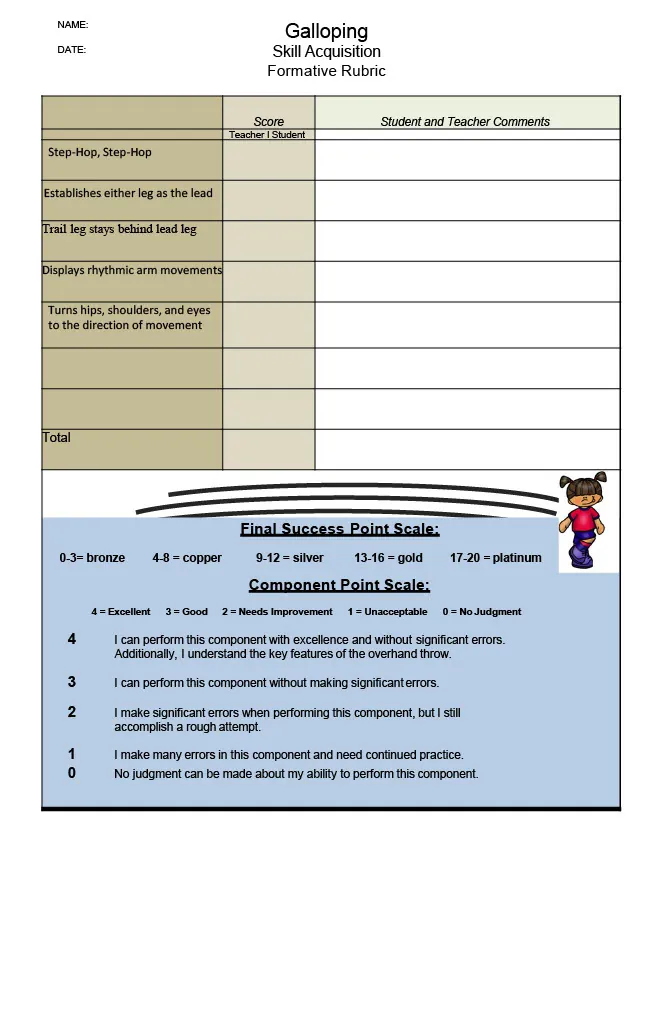
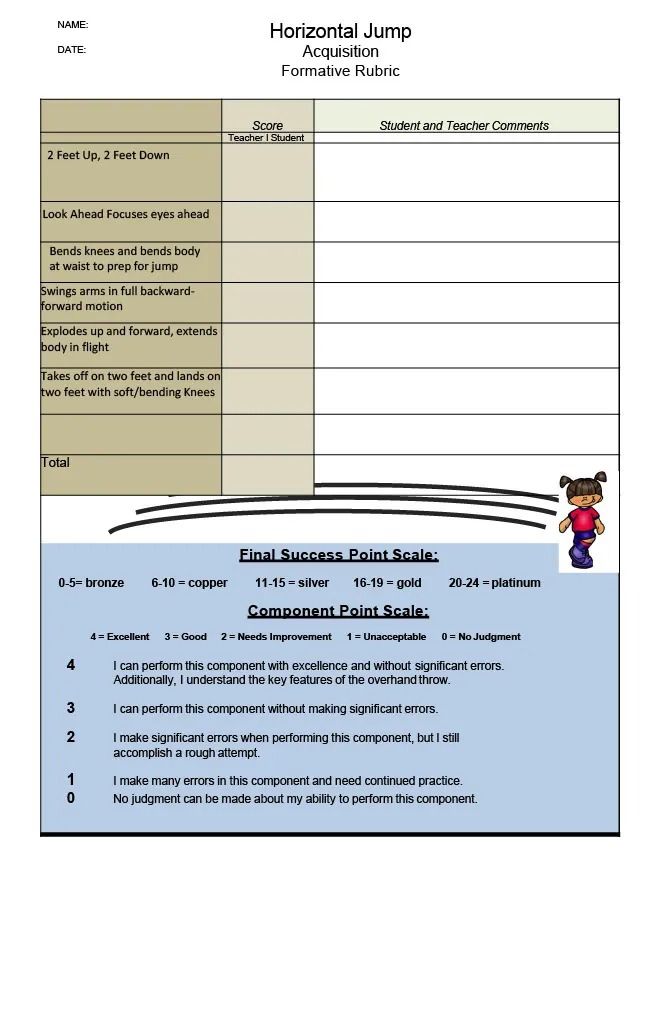
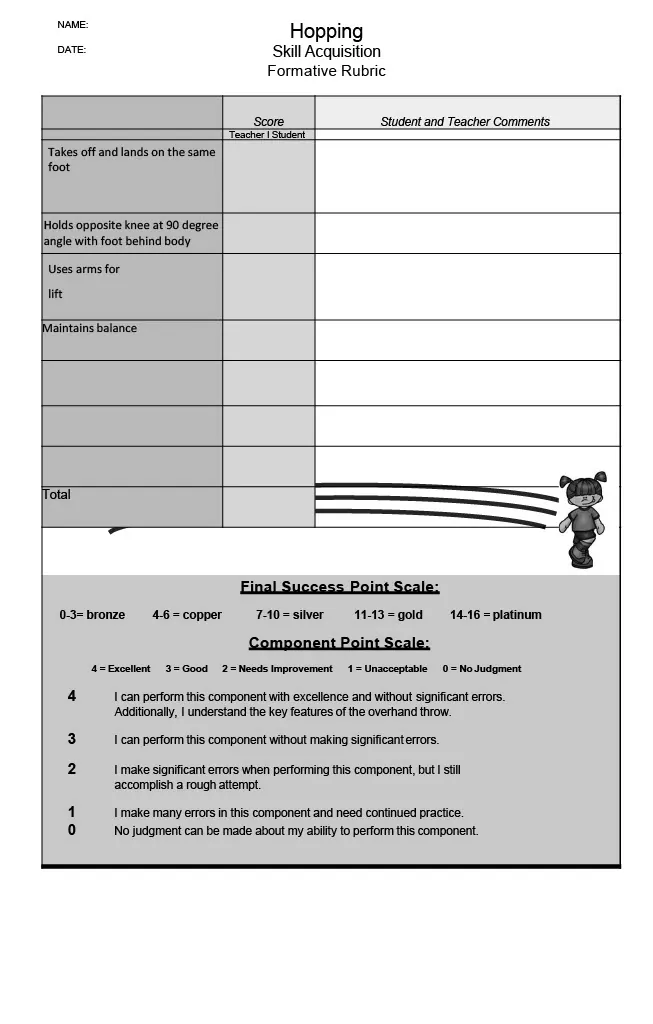
Assess running, leaping, galloping, side-sliding, hopping, horizontal jumping and skipping with seven locomotor-skill rubrics. Each includes movement cues, separate student and teacher score columns, comments and skill-specific total bands.
The 15-page PDF supplies color and black-and-white versions plus a one-page guide to organizing practice stations and a coaching area. Use the criteria to discuss one movement component and revisit it after practice.
Related resources
More resources teachers may find useful
24 related resources were found using this product's title, contributor, categories and tags.
In the classroom
Teaching tips & learning objectives

Learning objectives
- Recognize observable components of a locomotor skill.
- Use a 0–4 scale to record a self-assessment.
- Compare feedback across repeated practice of the same skill.

Teaching tips
- Introduce the criteria for one skill before observing students.
- Discuss a difference between the student’s rating and your observation.
- Choose one component for feedback and revisit it after practice.

Skills covered
Student self-assessment — learners rate their performance against the rubric’s movement criteria.
Good to know
Questions teachers ask about this resource
Can I compare totals across different skills?
The rubrics have different numbers of components and different total-score bands. Compare a student’s progress within the same skill instead of treating different skill totals as equivalent.

No reviews yet
Downloaded this resource? Tell other teachers how it went.
Resource details
Concepts & topics
Core concepts
 Core concepts
Physical education
Locomotor skills
Rubrics
Formative assessment
Self-assessment
 Topics
Explore more
Categories this resource belongs to
Explore related searches
More to explore
You may also like