Material vs Non-Material Culture – Acadian Reading
- Grades
- Grades 5–8
- Pages
- 4
- File type
- Preparation
- Print ready


- Subject
- Social Studies
- Topic
- Material culture, Non-material culture
- Resource types
- Activities, Worksheets
- Preparation
- Print ready
- Standards
- W.5.8
Product description
From the author
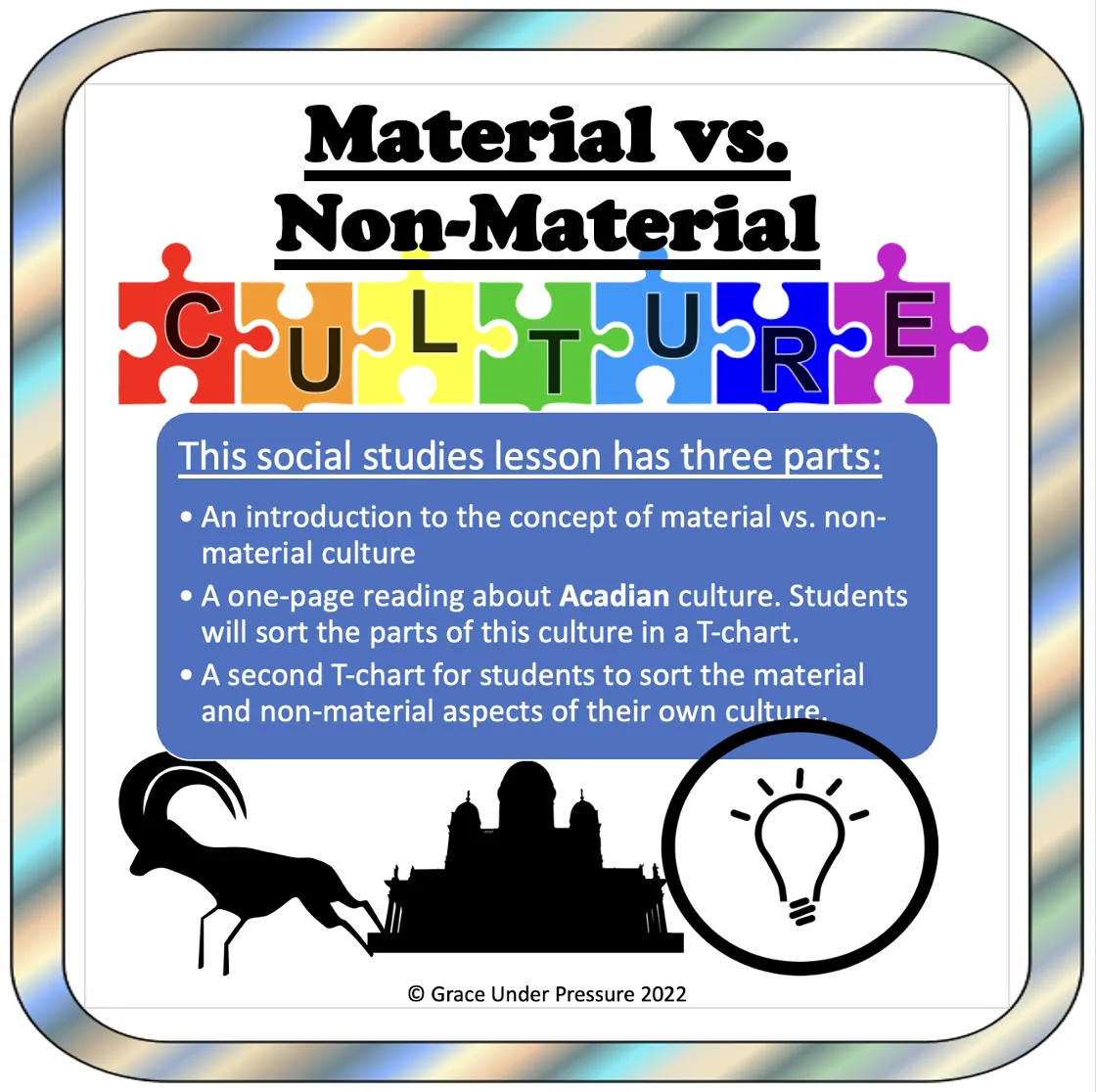
This middle school social studies lesson has three parts to help teach your students the difference between material and non-material culture.
1) An introduction to the concept of material vs. non-material culture
2) A one-page reading about Acadian culture. Students will sort the parts of this culture in a T-chart.
3) A second T-chart for students to sort the material and non-material aspects of their own culture.
How to Use:
Teach your students the difference between material and non-material culture.
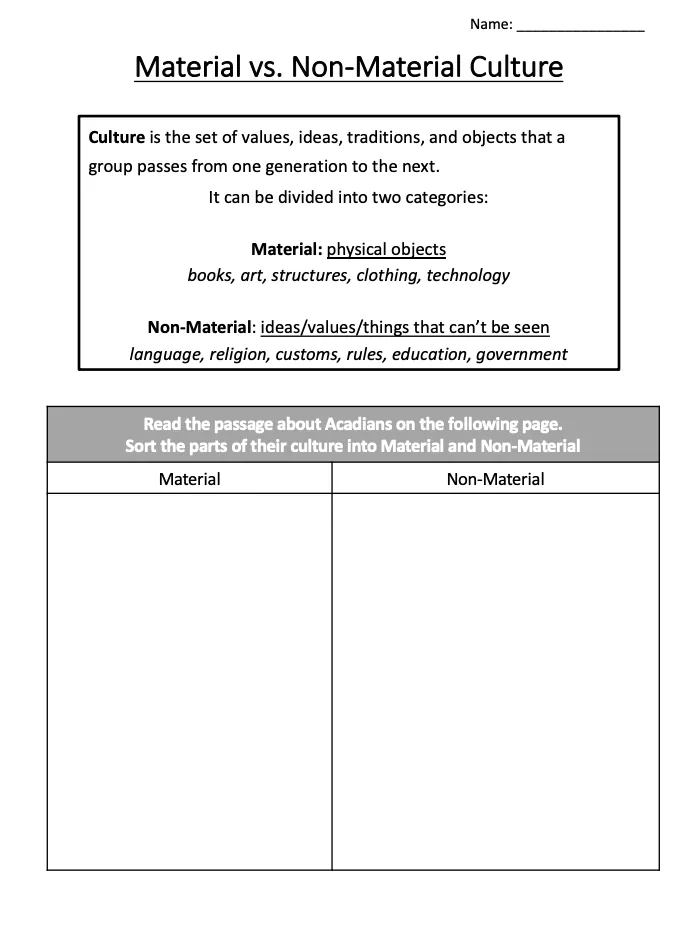
Culture is the set of values, ideas, traditions, and objects that a group passes from one generation to the next.
It can be divided into two categories:
Material: physical objects, books, art, structures, clothing, technology
Non-Material: ideas/values/things that can’t be seen, language, religion, customs, rules, education, government
Brainstorm aspects of culture on the board and sort them into the two categories.
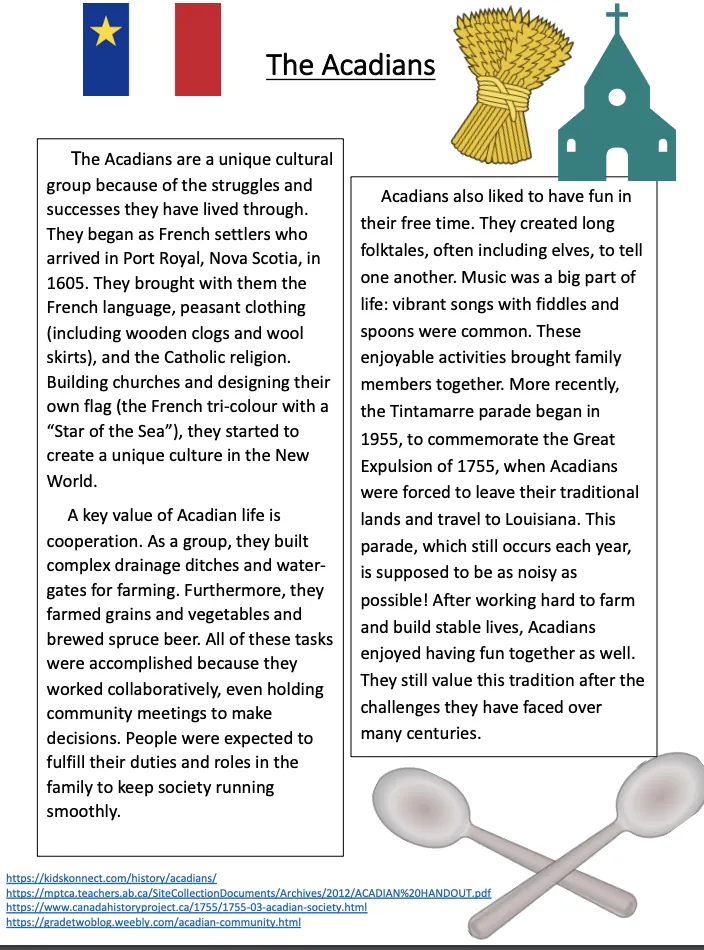
Students read the one-page passage about Acadian culture and sort the parts that are material and non-material onto their T-chart. They could do this independently or in small groups.
Share the results as a class. Notice if any parts of culture are hard to categorize in this way.
Then students think about their own culture and sort aspects of it into material and non-material culture. This could become the basis for a paragraph or short essay assignment.
Grades to Use With:
This assignment is designed for students in the middle grades (5-8) or high school special education classrooms.
Standards:
CCSSW.5.8
Recall relevant information from experiences or gather relevant information from print and digital sources; summarize or paraphrase information in notes and finished work, and provide a list of sources.
Related resources
More resources teachers may find useful
24 related resources were found using this product's title, contributor, categories and tags.


In the classroom
Teaching tips & learning objectives

Learning objectives
Define material culture and non-material culture and identify examples of each
Sort specific details from an informational reading passage into material and non-material categories
Apply the material/non-material framework to analyze one's own culture

Teaching tips
Review the material/non-material definitions and examples on page 2 before assigning the Acadian reading, since the sorting task depends on that framework
Have students underline or highlight material and non-material details directly in the Acadian passage before transferring them to the T-chart
Use the second, personal T-chart as a follow-up discussion or homework extension once the guided Acadian example is complete

Skills covered
Categorization of textual details — students sort specific facts from the Acadian passage into material and non-material categories.
Informational reading comprehension — students read a nonfiction passage about Acadian history and culture.
Cultural self-analysis — students apply the material/non-material framework to examine their own culture.

No reviews yet
Downloaded this resource? Tell other teachers how it went.
Curriculum
Standards, concepts & topics
Standards
 Standards
- W.5.8
Core concepts
 Core concepts
Material vs. non-material culture
Acadian history
T-chart categorization
 Topics
Explore more
Categories this resource belongs to
Explore related searches
More to explore
You may also like