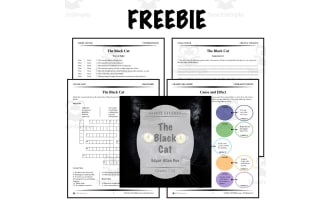
Novel Study: Generic Activities


- Grades
- Grades 6–10
- Pages
- 19
- File type
- Multiple File Types
- Answer key
- Included


- Subject
- ELA, Reading Comprehension
- Topic
- Novel study, Literature companion
- Resource types
- Worksheets, Novel Studies
- Answer key
- Included
- Standards
- RL.7.3
Product description
From the author
Select response pages for the novel your class is reading. The 19-page PDF includes context clues, word choice, symbolism, mood and tone, figurative language, Answer–Proof–Explain responses, inference, question writing, character traits and change, punctuation, foreshadowing and a favorite-scene movie project.
A punctuation answer page is provided; responses tied to your chosen novel vary. The packet also includes six JPG preview/example images and one PNG. Supply the novel and any craft or recording materials needed for the project.
Related resources
More resources teachers may find useful
24 related resources were found using this product's title, contributor, categories and tags.


In the classroom
Teaching tips & learning objectives

Learning objectives
Student can apply context-clue strategies (synonym, antonym, inference, definition, example) to define unfamiliar words in a novel.
Student can identify and create examples of figurative language (simile, metaphor, onomatopoeia, alliteration, idiom, hyperbole) from a novel.
Student can track how a character changes over the course of a novel and support the change with textual evidence.

Teaching tips
Keep this packet on hand as a rotating center or sub-plan activity, selecting prompts that suit the novel and the skill being taught.
Use the logo-identification warm-up before assigning the symbolism task, since it primes students with a familiar, low-stakes example of 'reading' a symbol before applying the skill to their novel.
Assign the punctuation-editing page independently of the novel-specific pages, using its generic sentences and answer key first, then returning to the novel-based example-finding section.

Skills covered
Context-clue strategy application — students use the synonym/antonym/inference/definition/example method to define unfamiliar words from their current novel.
Figurative-language identification — students locate simile, metaphor, onomatopoeia, alliteration, idiom, and hyperbole examples in their text and then compose their own.
Symbolism analysis — students first identify well-known company logos, then transfer that pattern-recognition skill to find and explain a symbol within their novel.

No reviews yet
Downloaded this resource? Tell other teachers how it went.
Curriculum
Standards, concepts & topics
Standards
 Standards
- RL.7.3
Core concepts
 Core concepts
Figurative language
Context clues
Symbolism
Character analysis
Inferencing
 Topics
Explore more
Categories this resource belongs to
Explore related searches
More to explore
You may also like