Poster: Annotating Text
- Grades
- Grades 4–8
- File type
- Preparation
- Print ready


- Subject
- ELA, Reading
- Topic
- Annotating text, Close reading
- Resource types
- Posters
- Preparation
- Print ready
Product description
From the author
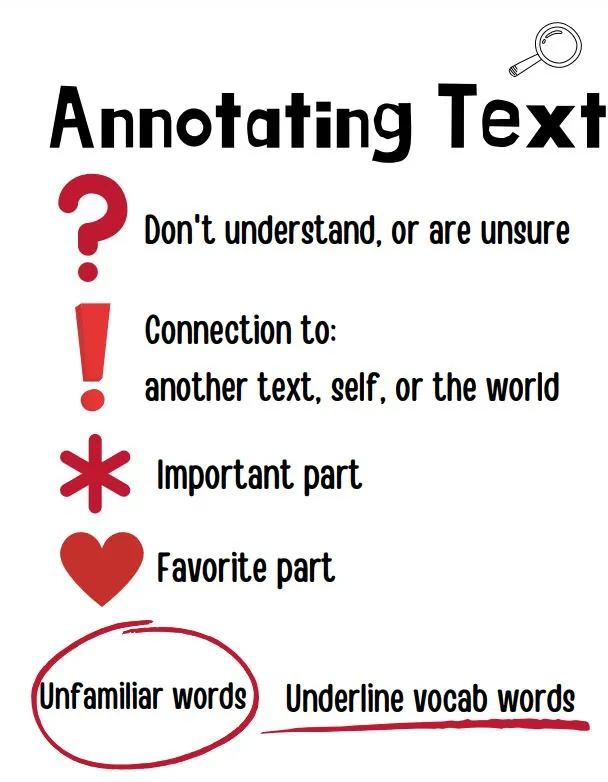
Poster: Annotating Text is a vital teaching asset catered towards aiding students, primarily those within grades 3 to 6, in performing close reading and marking of various texts. By presenting six accessible and recognizable symbols, students are taught valuable skills for understanding complex textual content.
This poster tackles an integral part of the Language Arts curriculum which involves Reading and Writing.
The resource can be used during group sessions or as a reference guide during homework or independent learning periods.
The simplistic design featuring crucial symbols related to key annotation methods promotes engagement while simplifying complex textual interpretations for young learners.
Availability & Usage Recommendations :
You can conveniently download this resource as a single-page PDF file. It's recommended to use colored printing for better visibility. Perfect for traditional classroom settings or homeschooling environments display.
Poster: Annotating Text, offers educators a flexible tool that boosts their pupil's reading comprehension abilities — pivotal for academic success particularly in the critical reading sector; thus paving the way for more diligent and confident learners able to interact with varying text genres essential at all levels of scholastic disciplines.
This resource is a great one to have in your class and it is ready to print and use!
Related resources
More resources teachers may find useful
24 related resources were found using this product's title, contributor, categories and tags.


In the classroom
Teaching tips & learning objectives

Learning objectives
Apply a consistent set of annotation marks to flag connections, important or favorite parts, points of confusion, and unfamiliar vocabulary while reading a text.
Use annotation as an active-reading strategy that captures a reader's in-the-moment thinking rather than waiting until after reading to respond.

Teaching tips
Model each of the six marks on a shared class text before asking students to annotate independently, since the poster itself gives only the symbol key, not a worked example.
Post as a visible wall reference during independent reading time so students can check the meaning of a mark without a personal copy at every desk.
For library books or other texts students can't write in directly, pair this poster with sticky notes or a separate annotation log using the same six marks.

Skills covered
Close reading / text annotation — students apply a consistent set of marks to flag connections, important or favorite parts, confusion, and unfamiliar vocabulary directly on a text.
Reading self-monitoring — the 'Don't understand, or are unsure' mark specifically prompts students to flag their own comprehension breakdowns as they read, rather than reading past them.

No reviews yet
Downloaded this resource? Tell other teachers how it went.
Resource details
Concepts & topics
Core concepts
 Core concepts
Close reading
Text annotation
Reading self-monitoring
 Topics
Explore more
Categories this resource belongs to
Explore related searches
More to explore
You may also like