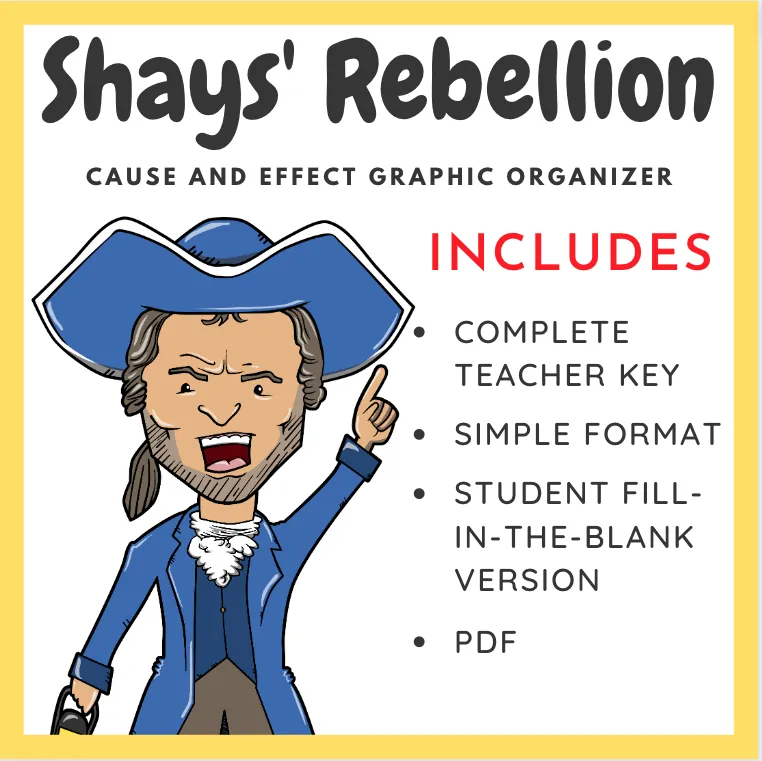
Shays' Rebellion – Cause and Effect Organizer
- Grades
- Grades 7–10
- Pages
- 2
- File type
- Answer key
- Included


- Subject
- Social Studies, History: USA
- Topic
- Shays' Rebellion, Cause and effect
- Resource types
- Graphic Organizers
- Answer key
- Included
Product description
From the author
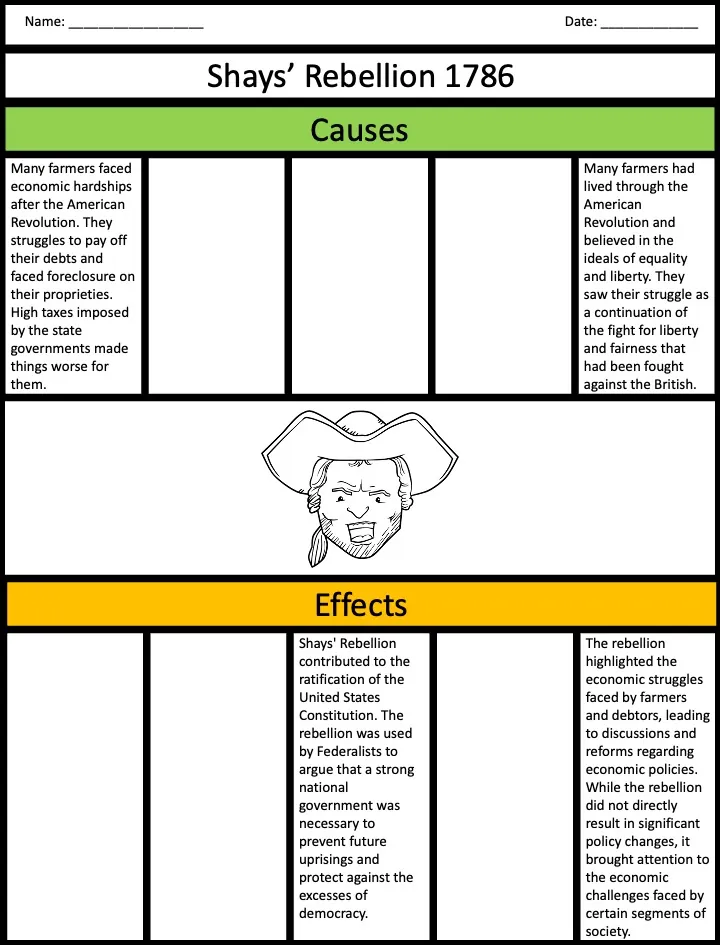
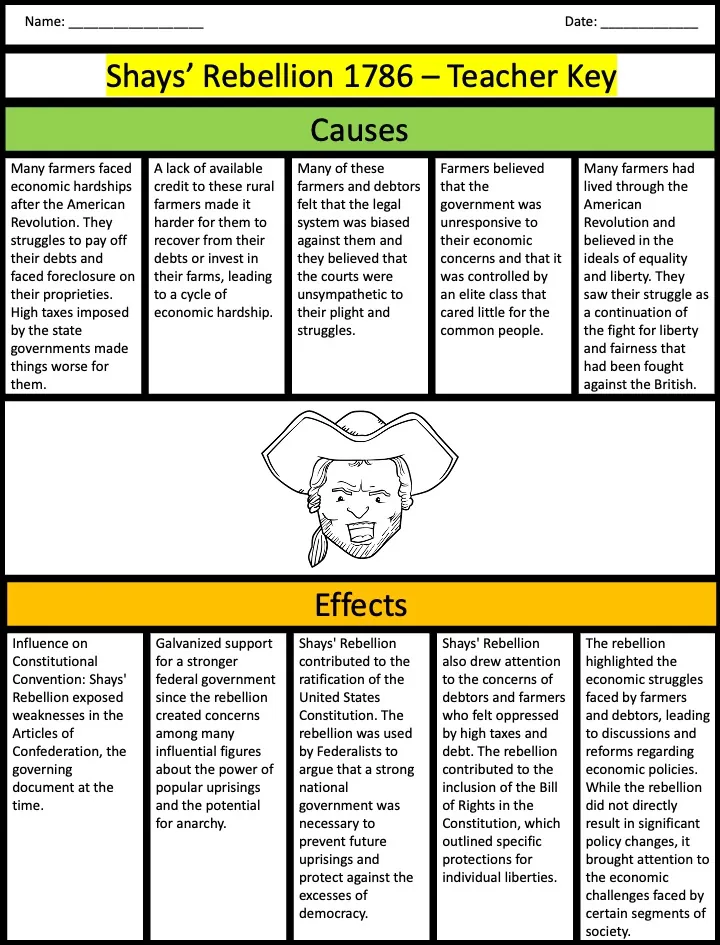
Shays' Rebellion was primarily caused by a combination of economic and political factors that created discontent and frustration among farmers and debtors in Massachusetts.
Shays' Rebellion was their response to these challenges and their attempt to address their grievances against the state government and the economic system. Overall, Shays' Rebellion had far-reaching effects on the United States. It played a pivotal role in shaping the movement towards a stronger federal government, the ratification of the Constitution, and the protection of individual rights. It also brought attention to economic grievances and contributed to discussions on economic policies.
Teacher-prepared notes show students what is important and how ideas relate, and offer a model for how students should take notes themselves (Marzano et al., 2001). These teacher-created notes will help your students grasp the major causes and effects of Shays' Rebellion in 1786. The notes come with a student version and a completed teacher version. These notes work well as a supplement to class readings!
Thumbnail clipart credit: By Prince Padania (highly recommended).
Related resources
More resources teachers may find useful
24 related resources were found using this product's title, contributor, categories and tags.


In the classroom
Teaching tips & learning objectives

Learning objectives
Identify economic causes of Shays’ Rebellion
Discuss the rebellion’s connection with debates about national government
Distinguish causes from consequences

Teaching tips
Use the shorter chart to introduce the main ideas.
Discuss additional details from the expanded version alongside a reading on the Articles of Confederation.

Skills covered
Cause-and-effect reasoning — students distinguish economic and ideological causes from constitutional and social effects while completing the organizer.
Historical significance analysis — students connect a local uprising to a larger event, the ratification of the U.S. Constitution.

No reviews yet
Downloaded this resource? Tell other teachers how it went.
Resource details
Concepts & topics
Core concepts
 Core concepts
Shays' Rebellion
Cause and effect
U.S. Constitution
Articles of Confederation
 Topics
Explore more
Categories this resource belongs to
Explore related searches
More to explore
You may also like