Sorting Activity: Around the Home - Non-Identical items


- Grades
- Preschool–2, Elementary
- Pages
- 33
- File type
- Preparation
- Print ready


- Subject
- Life Studies, Special Education Needs (SEN), Special Resources, Speech Therapy, Life Skills
- Topic
- Household objects, Non-identical matching
- Resource types
- Activities, Task Cards, Worksheets & Printables
- Preparation
- Print ready
Product description
From the author
Introducing Sorting Around The Home activity -
This activity aims to help young learners understand the concept of sorting common items that belong in the home.
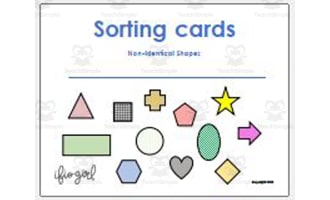
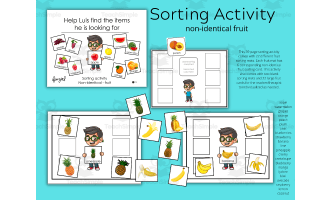
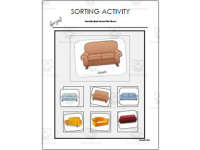
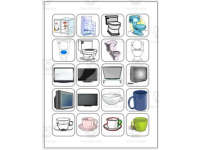
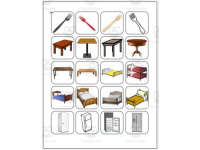
The activity involves a set of cards with pictures of various household items, such as a bed, couch, glass, cup, refrigerator, television, table, fork, spoon, bathtub, chair. Each sorting card has a picture of an item in the home For example "bed" - the learner is given 6 individual cards of that same object but not identical and ask to sort or group.
This activity can be conducted individually or in a group setting, allowing learners to learn from each other and collaborate as they work through the sorting process. It is also a fun and engaging way for learners to develop their sorting skills, which can have practical applications and helps to develop their cognitive skills, communication skills, and creativity.
The pictures in this activity are large and clear of distractions which is helpful for the learner who struggles with visual attention. It was also created so the teacher/therapist could easily rearrange the sorting pictures to adapt to various learners. It can also be used with a learner and his/her communication device. "show me bed" "what is this?" "find the spoon". So many ways this activity can be adapted to your needs.
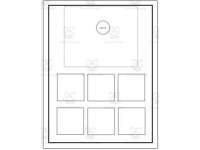
This activity is easy to assemble and to create - Print all pages and laminate. Velcro the sorting mats and the individual sorting cards. This activity can be coil bound or three hole punched and placed in a binder or used with book rings for many years of teaching and learning.
• Binder activity
• File folder activity
• Coil bound activity book
• Or task cards
Happy teaching-
I'll Figure It Out
IFIO girl
Related resources
More resources teachers may find useful
24 related resources were found using this product's title, contributor, categories and tags.
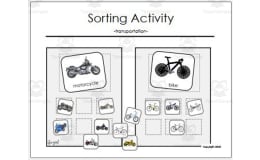
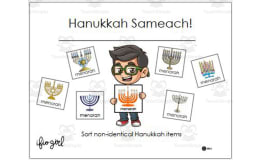
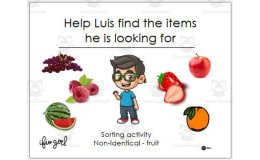
In the classroom
Teaching tips & learning objectives

Learning objectives
Sort visually varied household pictures by object category
Distinguish categories such as couch and chair or spoon and fork

Teaching tips
Choose one of the four assembly formats — binder, file folder, coil-bound book, or table task cards — based on how the activity will be used.
Laminate all picture and sorting cards before attaching Velcro, placing the soft side of the dots on the activity pages and the rough side on the cards and pictures, per the file's own instructions.
Introduce a small selection of categories first, then rearrange the loose cards for different learners.

Skills covered
Category recognition: group different-looking examples of the same household object
Visual discrimination: distinguish selected household categories
Card placement: attach prepared picture cards to a sorting mat
Good to know
Questions teachers ask about this resource
How can teachers set this sorting activity up in the classroom?
A binder activity, a file folder activity, a coil-bound activity book, or loose table task cards — the teacher can choose whichever format suits the classroom.

No reviews yet
Downloaded this resource? Tell other teachers how it went.
Resource details
Concepts & topics
Core concepts
 Core concepts
Non-identical object sorting
Visual discrimination
Household item categories
 Topics
Explore more
Categories this resource belongs to
Explore related searches
More to explore
You may also like