Recursive Graphic Organiser

- File type
- Preparation
- Print ready


- Subject
- Algebra, Maths
- Topic
- Algebra Graphic Organizer, Calculus Graphic Organizers
- Resource types
- Graphic Organizers
- Preparation
- Print ready
From the author
About this resource
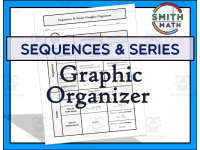
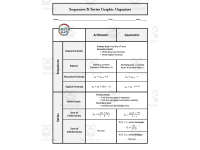
If you are a secondary school maths teacher, finding resources that best serve for your students is of the utmost importance! This is a Sequences and Series Graphic Organiser that is filled with purposeful information that your students can put to use right away.
Graphic organisers have always been a great way to organise information, so these are no exception! There is 1 sheet included. All you have to do is print and go. This is a completed graphic organiser.
Information included on the Sequences & Series Graphic Organiser:
--There are two columns: Arithmetic & Geometric
--There are two rows: Sequences & Series
--Each row has sub-rows.
Within sequences, you have sequence goals, pattern, recursive formula, and explicit formula.
Within series, you have series goals, sum of finite series, and sum of infinite series.
This graphic organiser can be printed and distributed to students at the start of this unit. It serves as a great reference point for them.
I hope you enjoy!
Here are similar resources for you to enjoy:
https://teachsimple.com/product/arkansas-river-float-activity
https://teachsimple.com/product/fill-the-tank-activity
https://teachsimple.com/product/algebra-2-word-wall
https://teachsimple.com/product/intro-to-calculus-word-wall
You can visit my storefront here: https://teachsimple.com/contributor/smith-math
I can be contacted for questions and concerns at smithmathtpt@gmail.com.
Related resources
More resources teachers may find useful
More resources on the same subject and topic.



In the classroom
Teaching tips & learning objectives

Learning objectives
Identify whether a sequence is arithmetic (common difference) or geometric (common ratio) using the pattern row
Write the recursive and explicit formula for a given arithmetic or geometric sequence using the chart as a reference
Determine whether an infinite geometric series converges or diverges by comparing its ratio to 1

Teaching tips
Distribute the chart at the start of a sequences-and-series unit as a standing reference rather than a worksheet, since all formulas are already filled in
Have students annotate their own worked examples next to each formula row to connect the abstract notation to practice problems
Pair the infinite-series convergence condition (r < 1 vs r ≥ 1) with a short set of practice items, since the chart states the rule but does not include practice problems

Skills covered
Sequence classification — students distinguish arithmetic from geometric sequences by their common difference or common ratio pattern.
Formula application — students use the recursive and explicit formulas provided to generate or extend sequence terms.
Series summation — students apply the finite-series sum formulas for both arithmetic and geometric series.
Convergence reasoning — students use the stated r < 1 / r ≥ 1 rule to determine whether an infinite geometric series converges.

No reviews yet
Downloaded this resource? Tell other teachers how it went.
Resource details
Concepts & topics
Core concepts
 Core concepts
Arithmetic sequences
Geometric sequences
Series summation
Convergence
 Topics
Explore more
Categories this resource belongs to
Explore related searches


More to explore