



3,911 products added recently
Page 6 - Guided Reading Activity
Enhance your guided reading sessions with activities that support students at various reading levels. This collection provides structured resources, including question prompts, discussion guides, and comprehension exercises. By incorporating these guided reading activities into your lessons, you can facilitate deeper understanding and encourage critical thinking among your students.

 Show filters


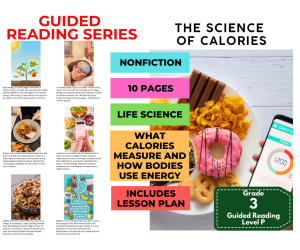
The Science of Calories: Guided Reading Level P with Lesson Plan
ELA, Resources for Teachers, Reading Comprehension, Reading, Science, Life Sciences, Health, P.E. & Health, Physics, Language Development, Grade 2, 3, 4, Worksheets & Printables, Worksheets, Teacher Tools, Centers, Activities, Literacy Readers, Quizzes, Quizzes and Tests, Assessments, Lesson Plans
This The Science of Calories (level p) guided reading book with lesson plan includes: Guided Reading Color Label (front cover x1) This is a quick way to match the book’s demands to what students can generally handle.. The overall goal is to use the level/color to pick books for several smaller groups. To qualify for a certain level, a student is expected to read a book from that level with about 90–94% accuracy. If a student is consistently accurate and understands, move up a level. If the student is struggling at that level, drop down and add more support. Each student will improve at completely different rates, but it is generally one of the best ways to check progress across the class. DOWNLOAD THE CATALOG TO VIEW ALL GUIDED READING BOOKS AVAILABLE (SORTED LEVELS A-Z) Pre-Reading Question (x1) Teacher asks the prompt aloud, can be while showing the cover or first page. Students share what they already know, or make educated guesses from the cover. Prompt them to use the target vocabulary. Write some of their responses on the board to look back at during the reading. Vocabulary Words (x5) Introduce the five words, best doing it one at a time. Start by saying it, while students repeat and then see if anyone knows what it means before reading further. Read through the meaning and try to briefly connect each word to a picture or gesture so it’s meaningful. Ask students to flip through the book pages and point to where they see each of the vocabulary words. While reading the book pause upon coming across one of the vocab words or read the sentence twice to make sure students understand the word has appeared. Optional: Ask students to raise hands whenever they see/hear one of the new words. Guided Reading Pages (x10) Check the book snapshot (below) for: primary topic - do you need to prep extra reading or intro materials on this? what is taught best - decide on 1-2 bullets to focus on, use the prompt or words provided here for best results. learning goals - what you are checking for students to be able to do after the session, elicit answers using prompts or words provided. key vocabulary (see section above). questions overview - so you know what is coming up and if you need to prep extra materials to assist understanding. Run the lesson You may have already looked at a few of the pages together, but you can show them some of the pictures again first to set meaning. Depending on how much time you have and how familiar your students are with guided reading class, you may want to read the book aloud first with the group first. Students whisper or partner read, while you listen in. If time, do it as a group, one student reading a page each. Use the guided page’s prompts to coach: “Check the picture / does it make sense?” “Point under the words / try the first sound” “Reread the sentence smoothly”. Try to focus more on one student per session (rotating every time), so you can work out if they are ready to move up or need to move down a level. Comprehension Questions (back cover x3) This is your way to check that students didn’t just say the words, but actually understood the text. First, let students answer by pointing to the page/picture and saying a short sentence. After any answer, follow with: “Show me where you found that in the text.” In bigger groups, have partners answer first (10–20 seconds), then call on 2–3 students to share. Differentiation tips: Emerging speakers/struggling readers: oral + pointing On-level: oral in a full sentence Higher: one written sentence or draw + label Book Snapshot Title: The Science of Calories Genre: Nonfiction (informational science text) Subject: Science (Nutrition/Human Body) Primary Topic: What calories measure and how bodies use energy Estimated Guided Reading Level (A–Z): P What This Book Teaches Best Defines energy as what living things need to survive and function, and connects energy to everyday examples like cars and lamps. Explains that a calorie measures energy in food (not weight or size) and describes it as a scientific unit of measurement. Shows how most energy starts with the sun , and how plants use photosynthesis to turn light into chemical energy stored in plant parts. Describes how the human body uses energy all the time (even during rest or sleep) to power the heart, lungs, and brain. Explains how food energy is released through digestion , how activity increases energy demand, and how extra calories may be stored as body fat. Learning Goals Explain what energy is and why living things need it. Describe what a calorie measures according to the text. Explain how plants get energy from the sun and where that energy is stored in a plant. Describe how digestion helps the body unlock energy from food. Describe how physical activity changes the body’s need for calories. Explain what happens when more calories are consumed than the body needs for daily activities. Key Vocabulary From the Text measurement — finding out how much of something there is. photosynthesis — plants use sunlight to make chemical energy. digestion — the process that unlocks energy in food. intestines — long tubes that help finish breaking down food. converted — changed from one form into another. Discussion Prompts Pre-reading question: What do you think calories tell us about the food we eat? Comprehension questions: What does the book say a calorie measures? Comprehension questions: How does the book explain that plants capture and store energy from the sun? Comprehension questions: What does the book say happens when a person consumes more calories than needed for daily activities? Printing Tips 1. Best Printing Method (Recommended) “Booklet” Printing (Best if Available) If your printer or PDF viewer supports Booklet Printing , use this. Settings to use: Print mode: Booklet Paper size: Letter or A4 (either works) Orientation: Landscape Print on both sides: Yes Flip on: Short edge Scaling: Fit to printable area Booklet subset: First test: Front sides only Then: Back sides only This will automatically: Pair pages correctly Put the cover on the outside Align everything for folding After printing, fold in half and staple along the spine . 2. If “Booklet” Printing Is NOT Available You can still print this correctly with manual duplex printing . Step-by-step: Open the PDF. Choose Print . Set: Orientation: Landscape Pages per sheet: 1 Print on both sides: Yes Flip on: Short edge Print all pages . Because each PDF page already contains two facing book pages, the result will still fold cleanly into a book. Thousands of Cored Education products are included with your TeachSimple membership. Download links and encyclopedia index available here.
Author Cored Education
Rating
Tags Reading Comprehension, Reading Passages, Reading, Guided Reading, Guided Reading Lesson Plan, Guided Reading Activity, Pre-reading, Science Lesson Plans, Life Science, Health

Second Grade Reading Comprehension - Don't Let the Pigeon Stay up Late
ELA, Children’s Literature, Literature, Language Development, Reading Comprehension, Reading, Creative Writing, Writing, Community Building, Resources for Teachers, Kindergarten, Preschool, Grade 1, 2, Centers, Activities, Read Alouds, Lesson Plans, Teacher Tools, Writing Prompts, Worksheets & Printables, Novel Studies
Mo Willems is the author of the Pigeon book series. The books contain large amounts of vocabulary designed for k-2nd graders. However, the pictures are so simple and adorable, they can be enjoyed by people of all ages. I adore this series so much that i have collected all of them despite that my son is almost 20 years old. As a result, I created the first of what I hope to be a series of reading comprehension and guided reading activity packs to make learning more fun for early elementary students as well as special education students and those with special needs in the areas of speech and communication. The book, "Don't Let the Pigeon Stay up Late," is required reading in order for students to complete all of the activities. It is available for purchase at Amazon and at Mo Willems own website. You can also find it at your local library to check out. Students will practice reading and learn about grammar, spelling, and increase vocabulary. Activities include: Open-ended questions, writing prompts, based on the text in the book. Sight word recognition activities 32 Spelling Words 32 Vocabulary Words Alphabetization Fill-in-the-Blank Drawing And More Students will be given the opportunity to search for: 14 CVC words found in the book 14 nouns found in the book 18 sight words found in the book Great for: Reading Centers Literature Centers Guided Reading Read aloud activities Practicing Social and Emotional Skills Pigeon books are written so that the reader is directly being spoken to by the Pigeon. Such fun books! Answer key is included, pdf downloadable, printable file. 15 pages Table of contents is included. Links for further activities beyond this guided reading project are also included.
Author Homeschooling Dietitian Mom
Tags Guided Reading, Reading Comprehension, Early Reading, Second Grade Reading Comprehension, 2nd Grade Reading Comprehension, Reading Strategies

Egypt The Gift of the Nile: Guided Reading Level R with Lesson Plan
ELA, Resources for Teachers, Reading Comprehension, Reading, Science, Geography, Social Studies, History, Earth and Environmental Sciences, Technology, Grade 3, 4, 5, Worksheets & Printables, Worksheets, Teacher Tools, Centers, Activities, Literacy Readers, Quizzes, Quizzes and Tests, Assessments, Lesson Plans
This Egypt: The Gift of the Nile (level r) guided reading book with lesson plan includes: Guided Reading Color Label (front cover x1) This is a quick way to match the book’s demands to what students can generally handle.. The overall goal is to use the level/color to pick books for several smaller groups. To qualify for a certain level, a student is expected to read a book from that level with about 90–94% accuracy. If a student is consistently accurate and understands, move up a level. If the student is struggling at that level, drop down and add more support. Each student will improve at completely different rates, but it is generally one of the best ways to check progress across the class. DOWNLOAD THE CATALOG TO VIEW ALL GUIDED READING BOOKS AVAILABLE (SORTED LEVELS A-Z) Pre-Reading Question (x1) Teacher asks the prompt aloud, can be while showing the cover or first page. Students share what they already know, or make educated guesses from the cover. Prompt them to use the target vocabulary. Write some of their responses on the board to look back at during the reading. Vocabulary Words (x5) Introduce the five words, best doing it one at a time. Start by saying it, while students repeat and then see if anyone knows what it means before reading further. Read through the meaning and try to briefly connect each word to a picture or gesture so it’s meaningful. Ask students to flip through the book pages and point to where they see each of the vocabulary words. While reading the book pause upon coming across one of the vocab words or read the sentence twice to make sure students understand the word has appeared. Optional: Ask students to raise hands whenever they see/hear one of the new words. Guided Reading Pages (x10) Check the book snapshot (below) for: primary topic - do you need to prep extra reading or intro materials on this? what is taught best - decide on 1-2 bullets to focus on, use the prompt or words provided here for best results. learning goals - what you are checking for students to be able to do after the session, elicit answers using prompts or words provided. key vocabulary (see section above). questions overview - so you know what is coming up and if you need to prep extra materials to assist understanding. Run the lesson You may have already looked at a few of the pages together, but you can show them some of the pictures again first to set meaning. Depending on how much time you have and how familiar your students are with guided reading class, you may want to read the book aloud first with the group first. Students whisper or partner read, while you listen in. If time, do it as a group, one student reading a page each. Use the guided page’s prompts to coach: “Check the picture / does it make sense?” “Point under the words / try the first sound” “Reread the sentence smoothly”. Try to focus more on one student per session (rotating every time), so you can work out if they are ready to move up or need to move down a level. Comprehension Questions (back cover x3) This is your way to check that students didn’t just say the words, but actually understood the text. First, let students answer by pointing to the page/picture and saying a short sentence. After any answer, follow with: “Show me where you found that in the text.” In bigger groups, have partners answer first (10–20 seconds), then call on 2–3 students to share. Differentiation tips: Emerging speakers/struggling readers: oral + pointing On-level: oral in a full sentence Higher: one written sentence or draw + label Book Snapshot Title: Egypt: The Gift of the Nile Genre: Nonfiction Subject: Social Studies (Geography/History) Primary Topic: How the Nile shaped ancient and modern Egypt Estimated Guided Reading Level (A–Z): R What This Book Teaches Best How Egypt’s desert environment (Sahara Desert, little rain) made a single water source essential for a thriving civilization. Why the Nile River’s yearly floods mattered, including how receding water left fertile silt for growing food. Major symbols of ancient Egypt and what the text says they were for or represented (Great Pyramid of Giza; Great Sphinx). Key beliefs and systems of ancient Egypt, including pharaohs, the afterlife, hieroglyphics, and mummification. Connections between past and present by describing modern Cairo, the Suez Canal, tourism, and archaeologists’ discoveries. Learning Goals Students will describe Egypt’s location and explain how the Sahara Desert affects the land. Students will explain how Nile floods helped farmers grow food by using the text’s details about silt. Students will identify what the Great Pyramid of Giza was built for and describe one detail about its construction. Students will describe how ancient Egyptians recorded history and managed government using hieroglyphics and scribes. Students will explain why mummification was developed and describe what the text says happened during the process. Students will describe two details that show Egypt is a modern nation today (for example, Cairo and the Suez Canal). Key Vocabulary From the Text receded — moved back after being higher. silt — rich dark soil left by water. monumental — very large and important. hieroglyphics — picture symbols used as a writing system. mummification — preserving a body by drying and wrapping. Discussion Prompts Pre-reading question: How might a river help people live and farm in a desert place? Comprehension questions: What did the Nile River’s floods leave behind when the water receded, and why did that help farmers? Comprehension questions: What does the text say the Great Pyramid of Giza was built for? Comprehension questions: What two details from the text show Egypt is a modern nation today? Printing Tips 1. Best Printing Method (Recommended) “Booklet” Printing (Best if Available) If your printer or PDF viewer supports Booklet Printing , use this. Settings to use: Print mode: Booklet Paper size: Letter or A4 (either works) Orientation: Landscape Print on both sides: Yes Flip on: Short edge Scaling: Fit to printable area Booklet subset: First test: Front sides only Then: Back sides only This will automatically: Pair pages correctly Put the cover on the outside Align everything for folding After printing, fold in half and staple along the spine . 2. If “Booklet” Printing Is NOT Available You can still print this correctly with manual duplex printing . Step-by-step: Open the PDF. Choose Print . Set: Orientation: Landscape Pages per sheet: 1 Print on both sides: Yes Flip on: Short edge Print all pages . Because each PDF page already contains two facing book pages, the result will still fold cleanly into a book. Thousands of Cored Education products are included with your TeachSimple membership. Download links and encyclopedia index available here.
Author Cored Education
Rating
Tags Reading Comprehension, Reading Passages, Reading, Guided Reading, Guided Reading Lesson Plan, Guided Reading Activity, Pre-reading, Social Studies, Geography, History
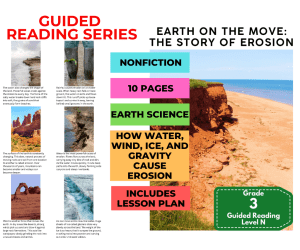
The Story of Erosion: Guided Reading Level N with Lesson Plan
ELA, Resources for Teachers, Reading Comprehension, Reading, Science, Language Development, Pre-Reading, Earth and Environmental Sciences, Geography, Social Studies, Grade 2, 3, 4, Worksheets & Printables, Worksheets, Teacher Tools, Centers, Activities, Literacy Readers, Quizzes, Quizzes and Tests, Assessments, Lesson Plans
This The Story of Erosion (level n) guided reading book with lesson plan includes: Guided Reading Color Label (front cover x1) This is a quick way to match the book’s demands to what students can generally handle.. The overall goal is to use the level/color to pick books for several smaller groups. To qualify for a certain level, a student is expected to read a book from that level with about 90–94% accuracy. If a student is consistently accurate and understands, move up a level. If the student is struggling at that level, drop down and add more support. Each student will improve at completely different rates, but it is generally one of the best ways to check progress across the class. DOWNLOAD THE CATALOG TO VIEW ALL GUIDED READING BOOKS AVAILABLE (SORTED LEVELS A-Z) Pre-Reading Question (x1) Teacher asks the prompt aloud, can be while showing the cover or first page. Students share what they already know, or make educated guesses from the cover. Prompt them to use the target vocabulary. Write some of their responses on the board to look back at during the reading. Vocabulary Words (x5) Introduce the five words, best doing it one at a time. Start by saying it, while students repeat and then see if anyone knows what it means before reading further. Read through the meaning and try to briefly connect each word to a picture or gesture so it’s meaningful. Ask students to flip through the book pages and point to where they see each of the vocabulary words. While reading the book pause upon coming across one of the vocab words or read the sentence twice to make sure students understand the word has appeared. Optional: Ask students to raise hands whenever they see/hear one of the new words. Guided Reading Pages (x10) Check the book snapshot (below) for: primary topic - do you need to prep extra reading or intro materials on this? what is taught best - decide on 1-2 bullets to focus on, use the prompt or words provided here for best results. learning goals - what you are checking for students to be able to do after the session, elicit answers using prompts or words provided. key vocabulary (see section above). questions overview - so you know what is coming up and if you need to prep extra materials to assist understanding. Run the lesson You may have already looked at a few of the pages together, but you can show them some of the pictures again first to set meaning. Depending on how much time you have and how familiar your students are with guided reading class, you may want to read the book aloud first with the group first. Students whisper or partner read, while you listen in. If time, do it as a group, one student reading a page each. Use the guided page’s prompts to coach: “Check the picture / does it make sense?” “Point under the words / try the first sound” “Reread the sentence smoothly”. Try to focus more on one student per session (rotating every time), so you can work out if they are ready to move up or need to move down a level. Comprehension Questions (back cover x3) This is your way to check that students didn’t just say the words, but actually understood the text. First, let students answer by pointing to the page/picture and saying a short sentence. After any answer, follow with: “Show me where you found that in the text.” In bigger groups, have partners answer first (10–20 seconds), then call on 2–3 students to share. Differentiation tips: Emerging speakers/struggling readers: oral + pointing On-level: oral in a full sentence Higher: one written sentence or draw + label Book Snapshot Title: Earth on the Move: The Story of Erosion Genre: Nonfiction (informational text) Subject: Life Science / Earth Science Primary Topic: How water, wind, ice, and gravity cause erosion Estimated Guided Reading Level (A–Z): N What This Book Teaches Best Defines erosion as a slow, natural process that moves rocks and soil from one place to another. Compares different forces of erosion (water, ocean waves, rainfall/runoff, wind, ice/glaciers, gravity) using clear examples. Explains cause and effect in Earth changes , such as rivers cutting deep paths that form canyons and riverbanks over time. Shows that erosion can break down land in one place and build new land in another , including how a river can form a delta where it meets the ocean. Highlights ways nature can slow erosion , including how plant roots hold soil in place. Learning Goals Students can define erosion using details from the text. Students can identify water as the most powerful cause of erosion described in the book. Students can explain how rivers, waves, and rainfall/runoff change land over time. Students can describe how wind, glaciers, and gravity move or reshape rock and soil. Students can explain how plants help prevent erosion from happening too quickly. Students can describe how a delta forms when a river drops sand and soil at the ocean. Key Vocabulary From the Text erosion — moving rock and soil from one place to another. shoreline — where land meets the ocean. runoff — rainwater that flows downhill over the ground. glaciers — huge sheets of ice moving slowly across land. delta — land formed when a river drops sand and soil. Discussion Prompts Pre-reading question: What are some ways land might change over a long time? Comprehension questions: How does the book describe erosion and what it moves? Comprehension questions: What does fast-moving river water do to the earth, according to the text? Comprehension questions: How do the roots of trees and grasses help stop erosion from happening too quickly? Printing Tips 1. Best Printing Method (Recommended) “Booklet” Printing (Best if Available) If your printer or PDF viewer supports Booklet Printing , use this. Settings to use: Print mode: Booklet Paper size: Letter or A4 (either works) Orientation: Landscape Print on both sides: Yes Flip on: Short edge Scaling: Fit to printable area Booklet subset: First test: Front sides only Then: Back sides only This will automatically: Pair pages correctly Put the cover on the outside Align everything for folding After printing, fold in half and staple along the spine . 2. If “Booklet” Printing Is NOT Available You can still print this correctly with manual duplex printing . Step-by-step: Open the PDF. Choose Print . Set: Orientation: Landscape Pages per sheet: 1 Print on both sides: Yes Flip on: Short edge Print all pages . Because each PDF page already contains two facing book pages, the result will still fold cleanly into a book. Thousands of Cored Education products are included with your TeachSimple membership. Download links and encyclopedia index available here.
Author Cored Education
Rating
Tags Reading Comprehension, Reading Passages, Reading, Guided Reading, Guided Reading Lesson Plan, Guided Reading Activity, Pre-reading, Science Lesson Plans, Earth Science, Geography
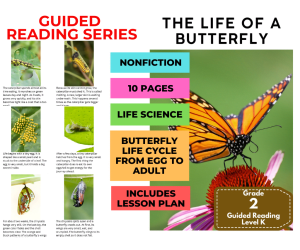
Guided Reading Level K - The Life of a Butterfly (with Lesson Plan)
ELA, Resources for Teachers, Reading Comprehension, Reading, Pre-Reading, Language Development, Insects, Life Sciences, Science, Vocabulary, Grade 1, 2, 3, Worksheets & Printables, Worksheets, Teacher Tools, Centers, Activities, Literacy Readers, Quizzes, Quizzes and Tests, Assessments
This Guided Reading Book - The Life of a Butterfly (Level K) with lesson plan includes: Guided Reading Color Label (front cover x1) This is a quick way to match the book’s demands to what students can generally handle.. The overall goal is to use the level/color to pick books for several smaller groups. To qualify for a certain level, a student is expected to read a book from that level with about 90–94% accuracy. If a student is consistently accurate and understands, move up a level. If the student is struggling at that level, drop down and add more support. Each student will improve at completely different rates, but it is generally one of the best ways to check progress across the class. DOWNLOAD THE CATALOG TO VIEW ALL GUIDED READING BOOKS AVAILABLE (SORTED LEVELS A-Z) Pre-Reading Question (x1) Teacher asks the prompt aloud, can be while showing the cover or first page. Students share what they already know, or make educated guesses from the cover. Prompt them to use the target vocabulary. Write some of their responses on the board to look back at during the reading. Vocabulary Words (x5) Introduce the five words, best doing it one at a time. Start by saying it, while students repeat and then see if anyone knows what it means before reading further. Read through the meaning and try to briefly connect each word to a picture or gesture so it’s meaningful. Ask students to flip through the book pages and point to where they see each of the vocabulary words. While reading the book pause upon coming across one of the vocab words or read the sentence twice to make sure students understand the word has appeared. Optional: Ask students to raise hands whenever they see/hear one of the new words. Guided Reading Pages (x10) Check the book snapshot (below) for: primary topic - do you need to prep extra reading or intro materials on this? what is taught best - decide on 1-2 bullets to focus on, use the prompt or words provided here for best results. learning goals - what you are checking for students to be able to do after the session, elicit answers using prompts or words provided. key vocabulary (see section above). questions overview - so you know what is coming up and if you need to prep extra materials to assist understanding. Run the lesson You may have already looked at a few of the pages together, but you can show them some of the pictures again first to set meaning. Depending on how much time you have and how familiar your students are with guided reading class, you may want to read the book aloud first with the group first. Students whisper or partner read, while you listen in. If time, do it as a group, one student reading a page each. Use the guided page’s prompts to coach: “Check the picture / does it make sense?” “Point under the words / try the first sound” “Reread the sentence smoothly”. Try to focus more on one student per session (rotating every time), so you can work out if they are ready to move up or need to move down a level. Comprehension Questions (back cover x3) This is your way to check that students didn’t just say the words, but actually understood the text. First, let students answer by pointing to the page/picture and saying a short sentence. After any answer, follow with: “Show me where you found that in the text.” In bigger groups, have partners answer first (10–20 seconds), then call on 2–3 students to share. Differentiation tips: Emerging speakers/struggling readers: oral + pointing On-level: oral in a full sentence Higher: one written sentence or draw + label Book Snapshot Title: The Life of a Butterfly Genre: Nonfiction (informational) Subject: Life Science Primary Topic: Butterfly life cycle from egg to adult Estimated Guided Reading Level (A–Z): K What This Book Teaches Best Explains the butterfly’s life cycle in order, beginning with a tiny egg and ending with an adult butterfly ready to fly. Describes how a caterpillar eats, grows quickly, and molts because its skin cannot grow. Introduces the chrysalis as the hard shell a caterpillar is inside while it changes. Describes what happens when the butterfly comes out, including how its wings change as they dry and become strong. Connects the butterfly’s feeding to plants by explaining it drinks nectar and helps flowers grow. Learning Goals Students can describe where the butterfly’s life begins, using details from the text. Students can explain why a caterpillar must shed its skin, according to the book. Students can describe what a chrysalis is and what happens inside it, using text details. Students can retell key events from the egg stage through the butterfly flying, in the correct order. Students can describe what the butterfly does to make its wings expand, dry, and become strong. Students can explain what the book says the butterfly drinks and how it helps flowers grow. Key Vocabulary From the Text underside — the bottom part of something. hatches — comes out of an egg. molting — shedding old skin so a new one can show. chrysalis — the hard shell a caterpillar is inside while it changes. nectar — sweet liquid in flowers that some insects drink. Discussion Prompts Pre-reading question: What changes do you think happen as a caterpillar becomes a butterfly? Comprehension questions: Where does the book say the butterfly’s life begins? Why does the caterpillar have to shed its skin, according to the text? What does the butterfly do while it waits for its wings to become strong? Printing Tips 1. Best Printing Method (Recommended) “Booklet” Printing (Best if Available) If your printer or PDF viewer supports Booklet Printing , use this. Settings to use: Print mode: Booklet Paper size: Letter or A4 (either works) Orientation: Landscape Print on both sides: Yes Flip on: Short edge Scaling: Fit to printable area Booklet subset: First test: Front sides only Then: Back sides only This will automatically: Pair pages correctly Put the cover on the outside Align everything for folding After printing, fold in half and staple along the spine . 2. If “Booklet” Printing Is NOT Available You can still print this correctly with manual duplex printing . Step-by-step: Open the PDF. Choose Print . Set: Orientation: Landscape Pages per sheet: 1 Print on both sides: Yes Flip on: Short edge Print all pages . Because each PDF page already contains two facing book pages, the result will still fold cleanly into a book. Thousands of Cored Education products are included with your TeachSimple membership. Download links and encyclopedia index available here.
Author Cored Education
Rating
Tags Reading Comprehension, Reading Passages, Reading, Guided Reading, Guided Reading Lesson Plan, Guided Reading Activity, Pre-reading, Vocabulary, Science Lesson Plans, Insects
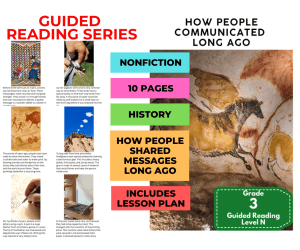
Guided Reading Level N - How People Communicated (with Lesson Plan)
ELA, Resources for Teachers, Reading Comprehension, Reading, Science, Pre-Reading, Language Development, Technology, History, Social Studies, Grade 2, 3, 4, Worksheets & Printables, Worksheets, Teacher Tools, Centers, Activities, Literacy Readers, Quizzes, Quizzes and Tests, Assessments
This Guided Reading Book - How People Communicated (Level N) with lesson plan includes: Guided Reading Color Label (front cover x1) This is a quick way to match the book’s demands to what students can generally handle.. The overall goal is to use the level/color to pick books for several smaller groups. To qualify for a certain level, a student is expected to read a book from that level with about 90–94% accuracy. If a student is consistently accurate and understands, move up a level. If the student is struggling at that level, drop down and add more support. Each student will improve at completely different rates, but it is generally one of the best ways to check progress across the class. DOWNLOAD THE CATALOG TO VIEW ALL GUIDED READING BOOKS AVAILABLE (SORTED LEVELS A-Z) Pre-Reading Question (x1) Teacher asks the prompt aloud, can be while showing the cover or first page. Students share what they already know, or make educated guesses from the cover. Prompt them to use the target vocabulary. Write some of their responses on the board to look back at during the reading. Vocabulary Words (x5) Introduce the five words, best doing it one at a time. Start by saying it, while students repeat and then see if anyone knows what it means before reading further. Read through the meaning and try to briefly connect each word to a picture or gesture so it’s meaningful. Ask students to flip through the book pages and point to where they see each of the vocabulary words. While reading the book pause upon coming across one of the vocab words or read the sentence twice to make sure students understand the word has appeared. Optional: Ask students to raise hands whenever they see/hear one of the new words. Guided Reading Pages (x10) Check the book snapshot (below) for: primary topic - do you need to prep extra reading or intro materials on this? what is taught best - decide on 1-2 bullets to focus on, use the prompt or words provided here for best results. learning goals - what you are checking for students to be able to do after the session, elicit answers using prompts or words provided. key vocabulary (see section above). questions overview - so you know what is coming up and if you need to prep extra materials to assist understanding. Run the lesson You may have already looked at a few of the pages together, but you can show them some of the pictures again first to set meaning. Depending on how much time you have and how familiar your students are with guided reading class, you may want to read the book aloud first with the group first. Students whisper or partner read, while you listen in. If time, do it as a group, one student reading a page each. Use the guided page’s prompts to coach: “Check the picture / does it make sense?” “Point under the words / try the first sound” “Reread the sentence smoothly”. Try to focus more on one student per session (rotating every time), so you can work out if they are ready to move up or need to move down a level. Comprehension Questions (back cover x3) This is your way to check that students didn’t just say the words, but actually understood the text. First, let students answer by pointing to the page/picture and saying a short sentence. After any answer, follow with: “Show me where you found that in the text.” In bigger groups, have partners answer first (10–20 seconds), then call on 2–3 students to share. Differentiation tips: Emerging speakers/struggling readers: oral + pointing On-level: oral in a full sentence Higher: one written sentence or draw + label Book Snapshot Title: How People Communicated Long Ago Genre: Nonfiction (Informational) Subject: Social Studies (Past and Present) / Reading Primary Topic: How people shared messages long ago Estimated Guided Reading Level (A–Z): N What This Book Teaches Best How people shared information long ago using cave wall paintings made from crushed rocks and water. How messengers (runners) delivered spoken messages or wooden tablets across forests and mountains. Different tools for sending messages, including carrier pigeons , letters , and the printing press for making many copies quickly. How inventions changed communication over time—from telegraph (Morse code) to telephone to near-instant messages today. Quality check note: One page includes text about firefighters’ turnout gear that does not match the book’s communication topic, and the vocabulary list includes firefighter terms (“protective,” “turnout”). Learning Goals Students will describe at least three ways people communicated long ago using details from the text. Students will explain how carrier pigeons carried letters according to the text. Students will describe how the printing press changed how books were made. Students will explain how the telegraph sent messages and name “Morse code” as described. Students will compare older communication methods to today’s communication described in the book. Key Vocabulary From the Text messengers — people who carry messages or news. invention — something new created for the first time. telegraph — machine that sent messages using electricity. envelope — paper cover that holds a letter. instantly — right away, with almost no waiting. Discussion Prompts Pre-reading question: What are some ways people might share information when they are far apart? Comprehension questions: How did people use cave walls to share information thousands of years ago? What did carrier pigeons carry, and where was it attached? According to the text, how can a message travel around the world today in just a few seconds? Printing Tips 1. Best Printing Method (Recommended) “Booklet” Printing (Best if Available) If your printer or PDF viewer supports Booklet Printing , use this. Settings to use: Print mode: Booklet Paper size: Letter or A4 (either works) Orientation: Landscape Print on both sides: Yes Flip on: Short edge Scaling: Fit to printable area Booklet subset: First test: Front sides only Then: Back sides only This will automatically: Pair pages correctly Put the cover on the outside Align everything for folding After printing, fold in half and staple along the spine . 2. If “Booklet” Printing Is NOT Available You can still print this correctly with manual duplex printing . Step-by-step: Open the PDF. Choose Print . Set: Orientation: Landscape Pages per sheet: 1 Print on both sides: Yes Flip on: Short edge Print all pages . Because each PDF page already contains two facing book pages, the result will still fold cleanly into a book. Thousands of Cored Education products are included with your TeachSimple membership. Download links and encyclopedia index available here.
Author Cored Education
Rating
Tags Reading Comprehension, Reading Passages, Reading, Guided Reading, Guided Reading Lesson Plan, Guided Reading Activity, Pre-reading, Vocabulary, History Lesson Plans, Technology
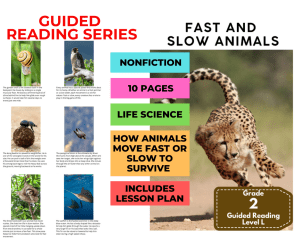
Guided Reading Level L - Fast and Slow Animals (with Lesson Plan)
ELA, Resources for Teachers, Reading Comprehension, Reading, Pre-Reading, Language Development, Life Sciences, Science, Vocabulary, Animals, Grade 1, 2, 3, Worksheets & Printables, Worksheets, Teacher Tools, Centers, Activities, Literacy Readers, Quizzes, Quizzes and Tests, Assessments
This Guided Reading Book - Fast and Slow Animals (Level L) with lesson plan includes: Guided Reading Color Label (front cover x1) This is a quick way to match the book’s demands to what students can generally handle.. The overall goal is to use the level/color to pick books for several smaller groups. To qualify for a certain level, a student is expected to read a book from that level with about 90–94% accuracy. If a student is consistently accurate and understands, move up a level. If the student is struggling at that level, drop down and add more support. Each student will improve at completely different rates, but it is generally one of the best ways to check progress across the class. DOWNLOAD THE CATALOG TO VIEW ALL GUIDED READING BOOKS AVAILABLE (SORTED LEVELS A-Z) Pre-Reading Question (x1) Teacher asks the prompt aloud, can be while showing the cover or first page. Students share what they already know, or make educated guesses from the cover. Prompt them to use the target vocabulary. Write some of their responses on the board to look back at during the reading. Vocabulary Words (x5) Introduce the five words, best doing it one at a time. Start by saying it, while students repeat and then see if anyone knows what it means before reading further. Read through the meaning and try to briefly connect each word to a picture or gesture so it’s meaningful. Ask students to flip through the book pages and point to where they see each of the vocabulary words. While reading the book pause upon coming across one of the vocab words or read the sentence twice to make sure students understand the word has appeared. Optional: Ask students to raise hands whenever they see/hear one of the new words. Guided Reading Pages (x10) Check the book snapshot (below) for: primary topic - do you need to prep extra reading or intro materials on this? what is taught best - decide on 1-2 bullets to focus on, use the prompt or words provided here for best results. learning goals - what you are checking for students to be able to do after the session, elicit answers using prompts or words provided. key vocabulary (see section above). questions overview - so you know what is coming up and if you need to prep extra materials to assist understanding. Run the lesson You may have already looked at a few of the pages together, but you can show them some of the pictures again first to set meaning. Depending on how much time you have and how familiar your students are with guided reading class, you may want to read the book aloud first with the group first. Students whisper or partner read, while you listen in. If time, do it as a group, one student reading a page each. Use the guided page’s prompts to coach: “Check the picture / does it make sense?” “Point under the words / try the first sound” “Reread the sentence smoothly”. Try to focus more on one student per session (rotating every time), so you can work out if they are ready to move up or need to move down a level. Comprehension Questions (back cover x3) This is your way to check that students didn’t just say the words, but actually understood the text. First, let students answer by pointing to the page/picture and saying a short sentence. After any answer, follow with: “Show me where you found that in the text.” In bigger groups, have partners answer first (10–20 seconds), then call on 2–3 students to share. Differentiation tips: Emerging speakers/struggling readers: oral + pointing On-level: oral in a full sentence Higher: one written sentence or draw + label Book Snapshot Title: Fast and Slow Animals Genre: Nonfiction (informational) Subject: Science (Animals) / Reading Primary Topic: How animals move fast or slow to survive Estimated Guided Reading Level (A–Z): L What This Book Teaches Best Fast and slow movement are both important for survival in the wild. Animals have body parts that help them move in special ways (like a cheetah’s tail helping with balance on sharp turns). Animals move fast or slow depending on what works best in their homes and habitats. Readers learn examples of different kinds of movement (running, jumping, swimming, flying/diving, sliding). The text uses comparisons to help readers understand animal abilities (like jumping “over a whole house”). Learning Goals Students will explain why both fast and slow movement can help animals survive. Students will describe how the cheetah uses its tail while running and turning. Students will identify how different animals move (run, jump, swim, dive, slide) using details from the text. Students will explain how an animal’s body parts support its movement (legs, feet, fin, wings, foot). Students will compare two animals from the book and tell how their movement helps them. Key Vocabulary From the Text participate — take part in something. record-breaking — faster or better than before. muscular — having strong muscles. predators — animals that hunt other animals for food. shimmering — shining with a soft, flickering light. Discussion Prompts Pre-reading question: How could moving fast or moving slowly help an animal survive where it lives? Comprehension questions: Why does the book say both fast and slow ways of moving are important in the wild? What helps the garden snail glide over rough surfaces? Which animal in the book is “the fastest swimmer,” and what helps it glide through the water? Printing Tips 1. Best Printing Method (Recommended) “Booklet” Printing (Best if Available) If your printer or PDF viewer supports Booklet Printing , use this. Settings to use: Print mode: Booklet Paper size: Letter or A4 (either works) Orientation: Landscape Print on both sides: Yes Flip on: Short edge Scaling: Fit to printable area Booklet subset: First test: Front sides only Then: Back sides only This will automatically: Pair pages correctly Put the cover on the outside Align everything for folding After printing, fold in half and staple along the spine . 2. If “Booklet” Printing Is NOT Available You can still print this correctly with manual duplex printing . Step-by-step: Open the PDF. Choose Print . Set: Orientation: Landscape Pages per sheet: 1 Print on both sides: Yes Flip on: Short edge Print all pages . Because each PDF page already contains two facing book pages, the result will still fold cleanly into a book. Thousands of Cored Education products are included with your TeachSimple membership. Download links and encyclopedia index available here.
Author Cored Education
Rating
Tags Reading Comprehension, Reading Passages, Reading, Guided Reading, Guided Reading Lesson Plan, Guided Reading Activity, Pre-reading, Vocabulary, Life Science, Animals
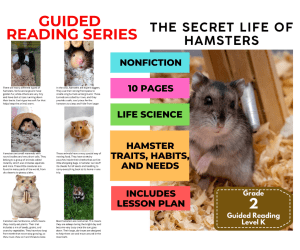
Guided Reading Level K - Secret Life of Hamsters (with Lesson Plan)
ELA, Resources for Teachers, Reading Comprehension, Reading, Pre-Reading, Language Development, Life Sciences, Science, Vocabulary, Animals, Grade 1, 2, 3, Worksheets & Printables, Worksheets, Teacher Tools, Centers, Activities, Literacy Readers, Quizzes, Quizzes and Tests, Assessments
This Guided Reading Book - The Secret Life of Hamsters (Level K) with lesson plan includes: Guided Reading Color Label (front cover x1) This is a quick way to match the book’s demands to what students can generally handle.. The overall goal is to use the level/color to pick books for several smaller groups. To qualify for a certain level, a student is expected to read a book from that level with about 90–94% accuracy. If a student is consistently accurate and understands, move up a level. If the student is struggling at that level, drop down and add more support. Each student will improve at completely different rates, but it is generally one of the best ways to check progress across the class. DOWNLOAD THE CATALOG TO VIEW ALL GUIDED READING BOOKS AVAILABLE (SORTED LEVELS A-Z) Pre-Reading Question (x1) Teacher asks the prompt aloud, can be while showing the cover or first page. Students share what they already know, or make educated guesses from the cover. Prompt them to use the target vocabulary. Write some of their responses on the board to look back at during the reading. Vocabulary Words (x5) Introduce the five words, best doing it one at a time. Start by saying it, while students repeat and then see if anyone knows what it means before reading further. Read through the meaning and try to briefly connect each word to a picture or gesture so it’s meaningful. Ask students to flip through the book pages and point to where they see each of the vocabulary words. While reading the book pause upon coming across one of the vocab words or read the sentence twice to make sure students understand the word has appeared. Optional: Ask students to raise hands whenever they see/hear one of the new words. Guided Reading Pages (x10) Check the book snapshot (below) for: primary topic - do you need to prep extra reading or intro materials on this? what is taught best - decide on 1-2 bullets to focus on, use the prompt or words provided here for best results. learning goals - what you are checking for students to be able to do after the session, elicit answers using prompts or words provided. key vocabulary (see section above). questions overview - so you know what is coming up and if you need to prep extra materials to assist understanding. Run the lesson You may have already looked at a few of the pages together, but you can show them some of the pictures again first to set meaning. Depending on how much time you have and how familiar your students are with guided reading class, you may want to read the book aloud first with the group first. Students whisper or partner read, while you listen in. If time, do it as a group, one student reading a page each. Use the guided page’s prompts to coach: “Check the picture / does it make sense?” “Point under the words / try the first sound” “Reread the sentence smoothly”. Try to focus more on one student per session (rotating every time), so you can work out if they are ready to move up or need to move down a level. Comprehension Questions (back cover x3) This is your way to check that students didn’t just say the words, but actually understood the text. First, let students answer by pointing to the page/picture and saying a short sentence. After any answer, follow with: “Show me where you found that in the text.” In bigger groups, have partners answer first (10–20 seconds), then call on 2–3 students to share. Differentiation tips: Emerging speakers/struggling readers: oral + pointing On-level: oral in a full sentence Higher: one written sentence or draw + label Book Snapshot Title: The Secret Life of Hamsters Genre: Nonfiction (informational) Subject: Life Science Primary Topic: Hamster traits, habits, and needs Estimated Guided Reading Level (A–Z): K What This Book Teaches Best Explains what hamsters are and what animal group they belong to (small mammals; rodents). Describes how hamsters move and store food using cheek pouches. Teaches how hamsters stay safe in the wild by digging underground burrows to sleep and hide. Explains eating habits and body needs (herbivores; teeth that keep growing and must be worn down). Describes nighttime behavior and care routines (nocturnal; exercise, grooming, sand-bathing, resting after activity). Learning Goals Identify what group of animals hamsters belong to using details from the text. Describe how cheek pouches help hamsters carry items back to their home. Explain how burrows help hamsters stay safe and what they are used for. Describe what hamsters eat and what “herbivores” means in the book. Explain why hamsters need to chew on hard things, according to the text. Describe one way hamsters stay clean and one way they rest after a busy night. Key Vocabulary From the Text rodents — animals in the same group as mice and squirrels. pouches — stretchy pockets that can hold things. burrows — underground tunnels where an animal can sleep and hide. herbivores — animals that mostly eat plants. nocturnal — awake at night and asleep during the day. Discussion Prompts Pre-reading question: How do you think a hamster stays safe and gets what it needs when it is awake at night? Comprehension questions: According to the text, what group of animals do hamsters belong to? How do cheek pouches help a hamster carry things back home? Why does the text say hamsters need to chew on hard things? Printing Tips 1. Best Printing Method (Recommended) “Booklet” Printing (Best if Available) If your printer or PDF viewer supports Booklet Printing , use this. Settings to use: Print mode: Booklet Paper size: Letter or A4 (either works) Orientation: Landscape Print on both sides: Yes Flip on: Short edge Scaling: Fit to printable area Booklet subset: First test: Front sides only Then: Back sides only This will automatically: Pair pages correctly Put the cover on the outside Align everything for folding After printing, fold in half and staple along the spine . 2. If “Booklet” Printing Is NOT Available You can still print this correctly with manual duplex printing . Step-by-step: Open the PDF. Choose Print . Set: Orientation: Landscape Pages per sheet: 1 Print on both sides: Yes Flip on: Short edge Print all pages . Because each PDF page already contains two facing book pages, the result will still fold cleanly into a book. Thousands of Cored Education products are included with your TeachSimple membership. Download links and encyclopedia index available here.
Author Cored Education
Rating
Tags Reading Comprehension, Reading Passages, Reading, Guided Reading, Guided Reading Lesson Plan, Guided Reading Activity, Pre-reading, Vocabulary, Science Lesson Plans, Animals

Whole Body Listening Activities | Posters, Worksheets & Mini Reader
Reading, ELA, Writing, Science, Social Emotional Learning (SEL), Special Resources, Kindergarten, Preschool, Grade 1, 2, Worksheets & Printables, Teacher Tools, Activities
Help young learners understand that good listening is something they do with more than just their ears. This Whole Body Listening resource gives Preschool through 2nd Grade students clear visual reminders, hands-on practice, and simple reading and writing activities for building active listening and self-regulation skills. Students explore what whole body listening can look like in different classroom moments using easy-to-understand visuals and age-appropriate language. The resource combines display posters, guided practice, sorting and drawing activities, scenario-based thinking, and a student mini reader for repeated review. What's Included 1 premium full-color cover 1 teacher quick-start page 1 whole body listening overview poster 7 individual listening-skill posters 6 student practice worksheets 6-page black-and-white mini reader 1 premium thank-you page Skills Developed Active listening Attention and self-regulation Social awareness Following directions Identifying helpful listening behaviors Speaking and listening vocabulary Reading simple informational text Drawing and writing about classroom expectations Perfect For Back-to-school routines Morning meetings SEL lessons Classroom expectations Whole-group instruction Small groups School counseling Social skills practice Reading and writing connections Independent review Why Teachers Love It The consistent visuals make whole body listening easy for young children to understand and revisit. Black-and-white interior pages are printer-friendly, while the variety of posters, practice activities, and mini reader pages supports repeated instruction without repeating the same task. Simply print the posters for classroom display, introduce one listening skill at a time, and use the student pages and mini reader to reinforce the learning. Bring active listening, classroom readiness, and social-emotional learning together with this Whole Body Listening resource designed especially for Preschool, Kindergarten, 1st Grade, and 2nd Grade classrooms.
Author TeachTrend Studio
Rating
Tags Posters, Worksheets, Printables, Social Skills, Visual Supports, Guided Reading Books

Reading Comprehension - Spiders - Creepy Crawlies or Masterpieces?
Animals, Life Sciences, Science, Insects, Research, Reading, ELA, Reading Comprehension, Middle School, High School, Elementary, Homeschool Resources, Writing Prompts, Worksheets & Printables, Projects, Activities
Spiders, scientifically known as "arachnids," are fascinating to many people, especially kids. And there are so many different kinds. I learned a lot while creating this reading comprehension activities pack. Kids will read the article (link provided to the article inside product) and answer the questions. Many of the questions are fill in the blank, some are multiple choice, some true/false. There are also multiple essay question, writing prompts. And a bonus section for motivated students to look at what the Bible says about living things. Students will be given the opportunity to choose which side they are on regarding evolution vs creation, without judgment. They will be required to research and support the side they choose in their essays. Answer keys are included for the objective questions. The product is simple: 31 questions, including multiple choice, true/false, plus two short writing prompt type questions, one of which is partly subjective, but requires a thoughtful answer. Extra credit questions are included. 33 vocabulary words - can be used to increase student comprehension, increase scientific vocabulary, and can be used for alphabetizing and/or spelling tests. 8 Bible verse references - Bible as literature is an allowed subject in the public schools. Also, just looking up verses and drawing your own conclusions should align with standards. This activity is optional, of course. One bonus activity for students to write their thoughts on the 8 Bible verses. Two essay questions, one considered a "challenge." Can be used for extra motivated students or students who are trying to improve their grade. Of course, any writing a student does will build your writing fluency, especially when writing is done in a variety of fields, including, science, history, literature, etc. Answer keys for objective questions. My products are never grade specific, because students are at different levels even when they are at he same grade level in school. Probably 4th through high school would be the most appropriate. Product is downloadable, printable pdf.
Author Homeschooling Dietitian Mom
Tags Reading Comprehension Assessment, Reading Comprehension, Biology Projects, Guided Reading Activity, Science Projects, Inferencing Activities, Reading Strategies, Short Writing Prompts, Basic Science Lesson Plans
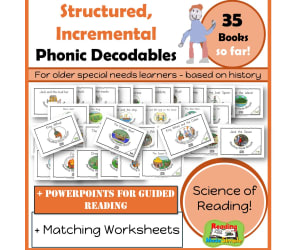
Phonic Reading Scheme: Fully Incremental For All Abilities GROWING SET
Special Resources, ELA, Special Education Needs (SEN), Language Development, Phonics, Reading, Homeschool Curriculum, Kindergarten, Literacy Readers, Teacher Tools, Games, Activities, Flashcards, Worksheets & Printables, Worksheets
A pack of 35 Phonic reading books with matching PowerPoints and workbooks to support learning. This is an incremental phonics reading scheme with a difference. Introducing just 10 words in each phonics family, the words are repeated from book to book, giving even those with very poor word recall the chance to learn to read fluently without having to decode every word. Ideal for dyslexics, or those suspected of being dyslexic and all children with a special need. These reading books make the pupil feel safe - they have already met every word introduced in the stories. They have the skills to read them themselves. This is empowering and confidence-building. You can view the first CK pack with a set of 30+ supporting activities and games FREE here. The books cover these sounds and must be taught in this order: CK; OO; SH; CH; ND/NT; NK; TH; NG; AR; OR; A-E; I-E, O-R, U-E, AI, EA, OA, IGH Rationale: It has long been proven that teaching children to decode is a powerful tool for teaching reading, as opposed to the Look and Say method. However, this has led to a proliferation of reading books that throw as many words with a shared phonics sound into a book as possible, not realising that some children with very poor word recall find it hard to recognise words when they see them again without much repetition. To combat this problem, while we recognise that, technically, once a child has been taught a new sound s/he can sound out many words with that new sound, when it comes to reading fluently a child needs a core set of words in each family that they can recognise, which can act as a launch pad as they gain confidence. These books have been designed accordingly. For each sound family, just 10 words are studied with the help of the workbooks and are then repeated throughout the books, each book building on the vocabulary that has already been learned, repeating it and including it in new phrases as new sounds are learned. As the programme progresses, new sounds from the learned families are incorporated to widen vocabulary, while taking care to maintain fluency. The books are designed to limit guessing (though most children will try and guess, which must be avoided at all costs). Pluses of this phonics reading programme Easy to print Cheap to buy compared with expensive reading schemes They are just as effective as the best reading programmes out there, and more importantly, they have been tried and tested on real children with severe difficulties and proven to work if the child is taught as outlined. Aligned with the aims and objectives of LETRS and the Science of Reading. They work! My pupils tell me if they don't work, so I re-edit them and try them before I put them out for the general public. Introduces most high-frequency words in the phonics family to which they belong, and gradually introduces genuine, non-decodable sight words into the text without causing overload or throwing the child off course. What is included? Each book is 12/16/20 pages long, with minimal colour pictures to make printing cheaper and to help tell the story when words are minimal Each book comes with a matching PowerPoint, making it suitable for online teaching, for private tutors, parents, classroom assistants, etc... All books come with supporting activities and games - 100s of worksheets! Scope and Sequence included I am writing a new book regularly, so this pack will quickly grow!
Author Lilibette's Resources
Rating
Tags Phonics Intervention, Homeschool Reading, Phonic Reading Scheme, Decodable Readers, Home School, Decodable Reading Books, Guided Reading, Phonics Readers, Literacy Activities

Colorful Classroom Decor - Funky Hip Modern 70s Bookmarks
Home Economics, Life Studies, Community Building, Resources for Teachers, Social Skills, Special Resources, Reading, ELA, Graphic Arts, Creative Arts, Not Grade Specific, Homeschool Resources, Bulletin Boards, Classroom Decor, Door Decor, Crafts, Activities, Centers, Projects
Beautiful 2” x 6” standard size bookmarks with 1970s colors and designs. Colorful bookmarks that are unique like these funky, hip, modern 70s style bookmarks are a great way to encourage reading, especially in your more creative students. Printing the bookmarks, cutting them, and folding them, if you choose to make them double-sided, are also great ways to practice fine motor skills. These bookmarks are truly unique and there are 20 different designs. These bookmarks can be printed and cut for one-sided or folded for double-sided versions. Printing them on cardstock will make them last longer. You can also decorate them further by punching a hole in the top and adding a matching ribbon or other ephemera. You can also laminate them for an even longer lasting product. Bookmarks make great gifts, especially for those who love to read and for those who are highly creative. These bookmarks can be used as a creative way to encourage student interaction and as part of a unique themed center for reading. You could also use the theme as a starting point for historical study of the unique styles of the 1970s. If you are teaching a unit on the history of this time period, these bookmarks will add interest to the study. You could also choose to use these in a study on the iconic art of the 70s. And because the colors are so vibrant, you can also use these to decorate your classroom bulletin board or door or other, involving the students in the process. Decorating a room is considered a family and consumer science activity and also interior design. Two double-sided bookmarks per page, total 10 pages of unique bookmarks, pdf, downloadable, printable file. #history #socialstudies #culture #1970s #colorfulclassroomdecor #readingstrategies #guidedreading
Author Homeschooling Dietitian Mom
Tags Colorful Classroom Decor, Template, Bookmarks For Reading, Reading Strategies, Guided Reading, Reading, Arts And Crafts, Arts And Craft Activities, Teacher Appreciation Day Crafts