



5,723 products added recently
Page 154 - Newest Teaching Resources

 Show filters

Science Mega Bundle: 3 Topics-in-1 Complete Teaching Kit for Grade 1-4
Science, Basic Science, Earth and Environmental Sciences, Grade 1, 2, 3, 4, Worksheets & Printables, Lesson Plans, Teacher Tools, Presentations, Templates, Quizzes and Tests, Classroom Decor
🌿 Science Mega Bundle: Plants, Animals & Habitats Make science teaching simple and engaging with this MEGA bundle covering three key topics: Parts of the Plant, Animal Adaptations, and Exploring Habitats. It helps students learn how living things grow, survive, and interact with their environment. Each topic includes: ✔ Editable PowerPoint Lesson with Assessment ✔ Editable Lesson Plan ✔ Worksheets (no prep) with Answer Key ✔ Classroom Posters Best For: Grade 1–4, Homeschooling, Tutoring How to Use: Use as full lessons or small activities for classroom, online, or independent learning. Use slides for teaching, worksheets for practice, and posters for classroom display. Differentiate tasks based on learner ability. Perfect For: Grade 1–4, Homeschooling, Tutoring Aligned with early primary science learning on living things and environments. Format: PDF, PNG, Editable PowerPoint, and lesson plans. Number of Pages: 50+ resources total. Tags #ScienceBundle #PrimaryScience #PlantsandAnimals #Habitats #NoPrepLessons 📥 Instant Download after purchase.
Author Pinay Digitals
Rating
Tags #PrimaryScience, #ScienceMegaBundle, #TeachingResources, #DigitalTeachingTools, #NoPrepResources, #ScienceWorksheets, #ElementaryScience, #TeacherCreatedResources, #HomeschoolScience
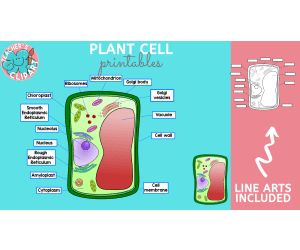
Plant Cell Clipart Diagram - Labeled and Blank Diagrams - Science Grap
Science, Life Sciences, Biology, Grade 1, 2, 3, 4, 5, 6, 7, Activities, Classroom Decor
Teaching or creating plant biology resources just got easier! This complete Plant Cell Clipart Set is perfect for teacher-authors and educators who need accurate, versatile, and clean science graphics. Create worksheets for TeachersPayTeachers, digital slides for Google Classroom, or printables for your own middle or high school biology lessons? These high-resolution visuals are ready to drop right into your projects. This set is more than just basic clipart - it has fully labeled diagrams, blank diagrams for student practice, bright full-color graphics, and crisp black and white line art to save your printer ink. What You Receive in This Download: Full Color Plant Cell Diagram - Bright, Detailed, Perfect for Anchor Charts, Posters, Digital Presentations. Black & White Line Art Version: These clean, crisp outlines are great for ink-friendly printing, student coloring activities, or old-school worksheets. Textured Labeled Versions (Color & B&W): Demonstrates clear indicators of cell wall, cell membrane, nucleus, cytoplasm, vacuole, chloroplasts, and mitochondria. Blank Diagram Versions (Color & B&W) Same exact layout, but pointer lines are blanked out. Great for quizzes, guided notes, label-the-cell assessments. Technical Details & Terms of Use: High-Resolution Files All images are saved at 300 DPI as PNG files with transparent backgrounds for incredibly sharp resizing and layering.
Author Teacher's Clipart
Rating
Tags Plant Cell, Animal Cell, Organelles, Cellular Structure, Biology, Animal Cell In Spanish, Interactive Plant And Animal Cell

Goal Setting & Financial Independence Planners
Economics, Social Studies, Math, Statistics, Money, Order Of Operations, ELA, Reading, Strategies, Reading Comprehension, Life Skills, Grade 6, 7, 8, 9, 10, 11, 12, Teacher Tools, Assessments, Lesson Plans, Quizzes and Tests, Quizzes, Tests, Worksheets & Printables, Workbooks, Worksheets, Word Searches
With "Goal Setting & Financial Independence: The Architect's Blueprint", you will turn your students from passive consumers to future architects of their own financial success. Unlike most personal finance worksheets, this curriculum is designed specifically for high school and advanced middle school (Grades 8-11) students and provides them with the respect and knowledge necessary to thrive in today's economy. Say goodbye to condescending advice and oversimplified budgeting. The Curriculum explores the psychology of wealth, the mathematics of compound interest, and the strategic frameworks of top-level corporate strategists and investors. Budgeting as you know it is redefined as Strategic Resource Allocation, and students learn how to be the Chief Financial Officer (CFO) of their own life. Your students will get to create real-world cases, work through 10 detailed worksheets and find themselves on the road to implementing action plans that will help them achieve their goals. Subjects Discussed Are: The Psychology of Creating Goals and Identifying Habits Time-Money Relationship: The Impact of Compounding(72) Budgeting for Success through the Zero-Based Method Learning About Your Paycheck (Gross vs Net Income), FICA Tax/Withholdings/W-4? Difference between Good and Bad Debt, Credit, Amortization Teenage Investing: Roth Individual Retirement Accounts (IRAs), Index Funds & Dollar Cost Averaging (DCA) Evaluating Career and College Return on Investment Asymmetrical Risk - How to Build Human Capital through Entrepreneurship. TEENS AND THE FIRE MOVEMENT - Financially Independent Retire Early. This resource provides : educators with a comprehensive curriculum complete with four chapters covering the key principles of Personal Finance, Financial Literacy and Basic Money Management as well as a Student Workbook containing ten worksheets designed to allow students to create their own personal financial blueprint through multiple scenarios, calculations and reflection questions. The Teacher Resources (Visual Aids) are designed to provide educators with visual representations of the key topics covered in each of the four chapters so that the students can better understand these concepts through the use of anchor charts and an Answer Key for all objective type questions, along with a grading rubric for the subjective type questions. This resource can be used in various academic settings including: Personal Finance Classes/Electives, Economics Classes, Life Skills, Career Readiness Courses and Homeschool Co-Ops. This resource has been created to allow educators to design a complete instructional program that will give students the most valuable lesson they will ever learn and that is how to achieve Financial Independence. Keywords: Financial literacy; Personal Finance; High School; Middle School; Life Skills; Economics; Investing for Teens; Budgeting Worksheet; Goal Setting; Compound Interest; FIRE Movement; Career Readiness; College ROI; Digital resource; Printable; PDF; Curriculum; Homeschool; Case Study Method. Educational Benefits For Parents And Schools-Alike: More Than Just Basics: They will not only learn how to balance a check book, but will also learn about many other advanced financial strategies and 21st Century Financial Concepts relating to Investments, Career Return on Investment Analysis, and the Psychology of Wealth Building. Rigorous & Respectful; Curriculum uses behavioral economics and psychology to build a sophisticated vocabulary with a work related context, assumes that teenagers are intelligent individuals and builds and creates a database of excited students. Turn Key: Provides a detailed curriculum and 10 student assignment work sheets; Free Power Point Presentation; Student Manual; Teacher Manual; Complete Answer Key; complete Grading Rubric The "do-it-yourself" or upload method provides zero prep time for the instructor. Action-oriented & Practical: Students learn all of the aspects of financial literacy through case studies and hands-on experience with developing and developing their own personal goals, personal budgets, and long-term financial plans. Based on the analysis done : on the stated criteria, the cover lists the suggested audience to be Grades 8-11. This is an accurate portrayal of the grades as they apply to target audience. Grades 8 and 9: The concepts of goal-setting, identity-based habits, zero-based (simple) budgeting, and receiving a first paycheck all apply directly to this age group and may provide challenges (some, yet, not many); however, the material has enough scaffolding (additional content and/or support) to be very effective. Grades 10 and 11: This represents the best fit. These students are considering securing part-time employment, intending to save money for an automobile, or making major decisions concerning attending college or entering into the workforce. The worksheets provided on the topics "ROI (Return on Investment) Comparison of College vs. Career," "Dynamics of Debt," and Roth IRA will be extremely relevant and pertinent to these students. High School teachers of Personal Finance, Economics, and Life Skills. Instructors of Career and Technical Education (CTE). Parents who choose to home school and desire to use the material as a strong, legitimate financial curriculum. Middle School teachers of students that are classified as advanced or are placed into gifted programs. Terms of Use and Copyright: This book is copyrighted by Syed Hammad Rizvi. It is intended for use only by the individual or a single school classroom. No part of this resource may be altered, re-distributed or resold. In other words, you cannot post on the internet in a public place so that it can be found and downloaded. If you would like to share this resource with colleagues, please purchase additional licenses from Teachsimple to do so. Thank you for abiding by our terms of use. Syed Hammad Rizvi, thanks for bringing your amazing product.
Author Creative Book Store
Rating
Tags FinancialLiteracy, PersonalFinance, HighSchoolTeacher, LifeSkills, Investing, Budgeting, TeacherResources, FinancialEducation, Economics, CareerReadiness

Lazarus Bible Story Lapbook Project Grade 3 4 5 ELA ELL
ELA, Literature, Reading, Grade 3, 4, 5, Centers, Activities, Worksheets & Printables, Worksheets, Writing Prompts, Projects, Coloring Pages
Let your learners explore the inspiring tale of Lazarus with this Lazarus Lapbook Project! Made for Grade 4, 5 and 6 students, homeschoolers, and EFL / ESL learners, this special project is a definite treasure for your reading classes and Bible school lessons What’s Included: 3 Lazarus Differentiated Reading Passages (Easy, Average, Hard) 3 Lazarus Lapbook Covers to choose from 2 Lazarus Name Pages (Individual & Group Options) 1 Lazarus Inner Overlap Page 2 Lazarus Story Summary Page Options 1 Lazarus Story Message Page (Lesson & Moral Reflection) 1 Lazarus Story Sequence Pocket 6 Lazarus Story Sequence Photocards 3 Lazarus Story Sequencing Activity Options (Easy / Average / Hard) – 6 sequence cards per level 6 Lazarus Story Retell Cards 1 Lazarus Character Traits Fold 1 Lazarus Story Setting Fold 1 Lazarus Story Rating Page 1 Lazarus Prayer Response Fold (Faith-based reflection) Created to make the learning experience interactive in a more meaningful way, this resource aims to develop reading comprehension skills and in-depth literary analysis through fun hands-on learning activities. It builds important skills such as sequencing, retelling, and critical thinking while reinforcing Christian values like kindness, mercy, and compassion. The differentiated activities make it perfect for mixed-ability classrooms as well as EFL/ESL learners, making sure that all students can participate meaningfully. It is also a perfect addition to Bible study units, Christian school classrooms, homeschool learning, and integrated ELA lessons.
Author It's Teacher L
Rating
Tags Reading, Mini Book, Sequencing, Writing, Reading Comprehension, ELA, ELL, Bible Stories, Sunday School

ESL Vocabulary Flashcards - Food & Cooking - Pictures
ELA, Language Development, ESL, Vocabulary, Not Grade Specific, Middle School, High School, Adult Education, Worksheets & Printables, Flashcards, Worksheets
ESL Vocabulary Flashcards - Food & Cooking - Pictures This high quality English language teaching resource is designed for students learning English as a second or foreign language . It includes 10 printable PDF pages featuring vocabulary flashcards and worksheets centered around the theme of "Food & Cooking" This ESL Vocabulary Flashcards on "Food & Cooking" Worksheets Activity can be ideal for Beginner level ESL - EFL - TESOL learners, including newcomers and English language learners of all ages. 🌟 What's Included? In this ESL Vocabulary Flashcards Activity on " Food & Cooking ", there are provided: ✅ 100 Printable Flashcards (100 Printable PDF worksheets) ✅ Essential vocabulary and phrases in English ✅ Engaging icons and emojis on select flashcards to support comprehension and vocabulary retention (not all flashcards) 🏫 Who Can Benefit from This Resource? 📌 Beginner ESL - EFL students looking to improve their English vocabulary 📌 Newcomers & English Language Learners (ESL - EFL - TESOL -TEFL) in schools, tutoring sessions, or self-study 📌 Teachers and tutors looking for fun and engaging vocabulary building activities 📌 Language centers, homeschool educators, and ESL programs 🎯 How Does this ESL Teaching Resource Help you and your Students? ✨ Strengthens essential English communication skills ✨ Provides English vocabulary (ESL - EFL - TESOL - TEFL) for better understanding ✨ Encourages engaging learning with printable flashcards that can be used in various ESL - EFL (English Second or Foreign Language) class activities Whether you're an ESL teacher or an English tutor these ESL Vocabulary Flashcards on " Food & Cooking " are a valuable and fun resource to improve basic conversation skills in English. Start learning today and make English introductions simple, engaging, and effective ! ESL with Alan is a Teaching Resources Store whose aim is to help English as a Second or foreign Language (ESL EFL TESOL) Teachers, Educators and Tutors around the world (be it online or offline) to achieve their teaching objectives while creating an enjoyable and stimulating learning environment. Learning is fun, So should English! Always If you want to browse more of my ESL, EFL, TESOL Teaching Resources, click here right ESL with Alan!
Author Learning with Alan
Rating
Tags ESL, English Second Language, English, Vocabulary, Flashcards, Food, Cooking, Activity, Worksheets, Printable

The Prodigal Son Bible Story Lapbook Project Grade 3 4 5 ELA ELL
ELA, Literature, Reading, Grade 3, 4, 5, Centers, Activities, Worksheets & Printables, Worksheets, Writing Prompts, Projects, Coloring Pages
Make learning fun but more purposeful with this classic Bible story The Prodigal Son through this The Prodigal Son Lapbook Project! This special project is a definite treasure for your reading classes and Bible school lessons made for Grade 4, 5 and 6 students, homeschoolers, and EFL / ESL learners What’s Inside: 3 The Prodigal Son Differentiated Reading Passages (Easy, Average, Hard) 3 The Prodigal Son Lapbook Covers to choose from 2 The Prodigal Son Name Pages (Individual & Group Options) 1 The Prodigal Son Inner Overlap Page 2 The Prodigal Son Story Summary Page Options 1 The Prodigal Son Story Message Page (Lesson & Moral Reflection) 1 The Prodigal Son Story Sequence Pocket 6 The Prodigal Son Story Sequence Photocards 3 The Prodigal Son Story Sequencing Activity Options (Easy / Average / Hard) – 6 sequence cards per level 6 The Prodigal Son Story Retell Cards 1 The Prodigal Son Character Traits Fold 1 The Prodigal Son Story Setting Fold 1 The Prodigal Son Story Rating Page 1 The Prodigal Son Prayer Response Fold (Faith-based reflection) This set inspires reading comprehension skills and in-depth literary analysis through fun hands-on learning activities that encourages learners stay actively engaged in the lesson. It builds important skills such as sequencing, retelling, and critical thinking while reinforcing Christian values like kindness, mercy, and compassion. The differentiated activities make it perfect for mixed-ability classrooms as well as EFL/ESL learners, making sure that all students can participate meaningfully. It is also a perfect addition to Bible study units, Christian school classrooms, homeschool learning, and integrated ELA lessons.
Author It's Teacher L
Rating
Tags Reading, Mini Book, Sequencing, Writing, Reading Comprehension, ELA, ELL, Bible Stories, Sunday School

modal verbs of deduction and speculation worksheet
Grammar, Language Development, ELA, Not Grade Specific, Worksheets & Printables
Introduction If you’re teaching modal verbs of deduction and speculation and your students are having a hard time knowing when to use must, might, could, and can’t, this resource was made to give them extra practice in a simple and clear way. I created these exercises after noticing that many students understand the meaning of the modal verbs but still struggle when using them in real sentences and conversations. So the goal here is just to give them enough repetition to feel more confident. Objective: Students will practice and reinforce their understanding of modal verbs of deduction and speculation by working through a variety of straightforward grammar activities. What’s Included: 6 no-prep grammar exercise sections Practice with must, might, could, and can’t A mix of activities such as: fill in the blanks sentence rewriting dialogue completion true or false error correction multiple choice questions Answer key included Grades / Ages: Best suited for middle school, high school, or ESL / EFL learners Implementation Format: Printable PDF Non-editable Easy to print and use for classwork, homework, or review Works well for independent practice or whole-class activities
Author MultiLingual Grammar Lab
Rating
Tags Modal Verbs Of Deduction And Speculation , Worksheet
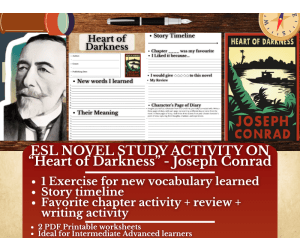
ESL Novel Study Worksheets - Heart of Darkness - Joseph Conrad
ELA, Language Development, ESL, Vocabulary, Literature, Writing, Creative Writing, Formal Writing, Grade 7, 8, 9, 10, 11, 12, Worksheets & Printables, Writing Prompts, Worksheets
ESL Novel Study Worksheets - Heart of Darkness - Joseph Conrad This ESL - EFL - TESOL (English Second or Foreign Language) teaching resource is a comprehensive novel study worksheet activity (2 printable PDF pages; Worksheets) focused on the novel "Heart of Darkness" (1899 novella by British Polish author Joseph Conrad - Colonialism). This Novel Study worksheets on "Heart of Darkness" (1899 novella by British Polish author Joseph Conrad - Colonialism) is tailored for middle and high school ESL students (7th – 12th grade) and provide a variety of thought provoking and language building activities. Whether you're teaching English as a Second Language (ESL), English as a Foreign Language (EFL), or in a TESOL context, this resource is classroom-ready and easy to use. Within this ESL Novel Study on "Heart of Darkness" (2 printable PDF worksheets pages), English Second or Foreign Language (ESL - EFL - TESOL - TEFL) teachers can find the following activities: General information activity (author, genre, publishing date) Vocabulary building section – new words from the novel 1 Story timeline Personal reflection on a favorite chapter Student novel review and rating Creative writing task : pretending being a character you personally liked and writing 3 diary pages for 3 scenes as if you were this character This English Second or Foreign Language (ESL - EFL) Novel Study Activity Worksheets on the "Heart of Darkness" (1899 novella by British Polish author Joseph Conrad - Colonialism) can be ideal for learners from 7th grade to 12th grade to study this Novel (middle school + High School Students + Adult learners + University Students) ESL with Alan is a high-quality ESL teaching resources that inspire both teachers and students. Our goal is to make learning English fun, interactive, and meaningful. Discover more English Second or Foreign Language activities by visiting our store – because learning English should always be fun! If you want to browse more of my English Language and Literature Novel Study Activity Teaching Resources, click here ESL with Alan!
Author Learning with Alan
Rating
Tags ESL, English, English Second Language, Novel Study, Literature, Africa, Colonialism, Joseph Conrad, Writing Activity, Vocabulary
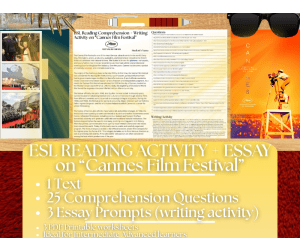
ESL Reading Comprehension + Writing Activity - Cannes Film Festival
ELA, Language Development, ESL, Vocabulary, Reading, Reading Comprehension, Writing, Creative Writing, Formal Writing, Grade 7, 8, 9, 10, 11, 12, Worksheets & Printables, Worksheets, Writing Prompts
ESL Reading Comprehension + Writing Activity Worksheets - Cannes Film Festival This ESL - EFL Teaching Resource on "Cannes Film Festival" (3 PDF Worksheets Slides; Reading Comprehension + Writing Activity) can be ideal to improve Language skills in English. Ideal students for this ESL EFL TESOL Reading + Writing Activity are Foreign Students at middle and High School (7th - 12th Grade; teens) . Newcomers or any ESL Learner is also more than suitable for this ESL - EFL - TESOL - TEFL (English as a Second or Foreign Language) Activity on "Cannes Film Festival" (Film Festival in France - origins, background, history and evolution + program + juries + prizes + impact and legacy). This Teaching Educational Resource Product can also be ideal for ESL EFL TESOL Centers worldwide or any English second language tutor. Intermediate Advanced English as a Second or Foreign Language (ESL - EFL - TESOL - TEFL) learners are suitable for this ESL EFL TESOL Teaching Resource on "Cannes Film Festival" (Worksheet; 3 PDF Printable slides) In this English Second or Foreign Language (ESL - EFL - TESOL - TEFL) Reading Comprehension + Essay Writing Activity Worksheet on "Cannes Film Festival" (Film Festival in France - origins, background, history and evolution + program + juries + prizes + impact and legacy), the following ESL - EFL - TESOL - TEFL (English Second or Foreign Language) activities are included: 1 text on "Cannes Film Festival" (Film Festival in France - origins, background, history and evolution + program + juries + prizes + impact and legacy) 25 Comprehension Questions related to the previous text on "Cannes Film Festival" (with related space where students can answer to this text's comprehension questions) 2 essay prompts for a writing activity on "Cannes Film Festival" (writing an essay on your own personal opinion on the Cannes Film Festival and whether you already follow it + writing an essay on another Film Festival; describing it and comparing it to Cannes Film Festival in France + pretending to be a Film star, film director, fan or film journalist and to attend Cannes Film Festival and to write a page of diary on your imaginary experience) This ESL - EFL - TESOL - TEFL (English Second or Foreign Language) Teaching Resource Reading + Writing Activity (essay prompts) on "Cannes Film Festival" (Film Festival in France - origins, background, history and evolution + program + juries + prizes + impact and legacy) is great for Intermediate Advanced English as a second or foreign language learners (ESL- EFL - TESOL - TEFL). This English Second Language Worksheet on "Cannes Film Festival" (Film Festival in France - origins, background, history and evolution + program + juries + prizes + impact and legacy) aims to train and Reading Comprehension + Writing Skills. "Learning with Alan" is a teaching resources store that aims to provide high quality teaching resources and educational materials for ESL EFL TESOL (English Second or Foreign Language) teachers, tutors and educators. It aims to support teachers, educators, and tutors in both online and offline environments, helping them achieve their teaching goals while creating a fun, stimulating atmosphere for learning English. Always remember: learning is fun, and so is English! If you want to find more ESL - EFL - TESOL - TEFL (English Second or Foreign Language) Teaching Resources and Educational Material click here Learning with Alan!
Author Learning with Alan
Rating
Tags ESL, English, English Second Language, Reading Comprehension, Writing Activity, Film, France, Cannes, Worksheets, Printable

The Good Samaritan Bible Story Lapbook Project Grade 1 2 3 ELA ELL
ELA, Literature, Reading, Grade 3, 4, 5, Centers, Activities, Worksheets & Printables, Worksheets, Writing Prompts, Projects, Coloring Pages
Give your students a more meaningful learning experience with this classic Bible story The Good Samaritan in this The Good Samaritan Lapbook Project! Created for Grade 4, 5 and 6 students, homeschoolers, and EFL / ESL learners, this special project will definitely be part of your reading classes and or Bible school lessons for many years to come! What’s Included: 3 The Good Samaritan Differentiated Reading Passages (Easy, Average, Hard) 3 The Good Samaritan Lapbook Covers to choose from 2 The Good Samaritan Name Pages (Individual & Group Options) 1 The Good Samaritan Inner Overlap Page 2 The Good SamaritanStory Summary Page Options 1 The Good Samaritan Story Message Page (Lesson & Moral Reflection) 1 The Good Samaritan Story Sequence Pocket 6 The Good Samaritan Story Sequence Photocards 3 The Good Samaritan Story Sequencing Activity Options (Easy / Average / Hard) – 6 sequence cards per level 6 The Good Samaritan Story Retell Cards 1 The Good Samaritan Character Traits Fold 1 The Good Samaritan Story Setting Fold 1 The Good Samaritan Story Rating Page 1 The Good Samaritan Prayer Response Fold (Faith-based reflection) This project encourages reading comprehension and literary analysis through fun hands-on learning activities that help learners stay actively engaged in the lesson. It builds important skills such as sequencing, retelling, and critical thinking while reinforcing Christian values like kindness, mercy, and compassion. The differentiated activities make it perfect for mixed-ability classrooms as well as EFL/ESL learners, making sure that all students can participate meaningfully. It is also a perfect addition to Bible study units, Christian school classrooms, homeschool learning, and integrated ELA lessons.
Author It's Teacher L
Rating
Tags Reading, Mini Book, Sequencing, Writing, Reading Comprehension, ELA, ELL, Bible Stories, Sunday School

The Good Samaritan Bible Story Foldable Mini Book Grade 1 2 3 ELA ELL
ELA, Literature, Reading, Grade 3, 4, 5, Centers, Activities, Worksheets & Printables, Worksheets, Writing Prompts
Provide a fun learning but also more meaningful lesson with this classic Bible story The Good Samaritan in this The Good Samaritan Foldable Mini Book Set! Created for Grade 1, 2, 3 and 4 students, homeschoolers, and EFL / ESL learners, this special story is a sure hit to your reading class and Bible lessons. This resource contains the following: 1. The Good Samaritan Colored mini-book 2. The Good Samaritan Black and white mini-book with story tracing activities 3. The Good Samaritan Picture-fill mini-book for sequencing test or exercise 4. The Good Samaritan Black and white mini-book for story re-tell and writing exercise 5. The Good Samaritan Blank mini-book pages for story re-tell, writing and drawing exercises 6. The Good Samaritan Mini BookSample lesson plan This set has 3 paper sizes of each mini book for you to choose from, flexible for your classroom needs. And with the five different mini-books to choose from, the possibilities for learning and exploration is endless! This activity can be used to supplement reading lessons, writing exercises, and a perfect assessment tool that can easily be a perfect addition to your students’ portfolio and open house events.
Author It's Teacher L
Rating
Tags Reading, Mini Book, Sequencing, Writing, Reading Comprehension, ELA, ELL, Bible Stories, Sunday School

The Lost Coin Bible Story Foldable Mini Book Grade 1 2 3 ELA ELL
ELA, Literature, Reading, Grade 3, 4, 5, Centers, Activities, Worksheets & Printables, Worksheets, Writing Prompts
Give your students a fun but more meaningful learning experience with this classic Bible story The Lost Coin in this The Lost Coin Foldable Mini Book Set! Created for Grade 1, 2, 3 and 4 students, homeschoolers, and EFL / ESL learners, this special story is a sure hit to your reading class and Bible lessons. This resource contains the following: 1. The Lost Coin Colored mini-book 2. The Lost Coin Black and white mini-book with story tracing activities 3. The Lost Coin Picture-fill mini-book for sequencing test or exercise 4. The Lost Coin Black and white mini-book for story re-tell and writing exercise 5. The Lost Coin Blank mini-book pages for story re-tell, writing and drawing exercises 6. The Lost Coin Mini Book Sample lesson plan This set has 3 paper sizes of each mini book for you to choose from, flexible for your classroom needs. And with the five different mini-books to choose from, the possibilities for learning and exploration is endless! This activity can be used to supplement reading lessons, writing exercises, and a perfect assessment tool that can easily be a perfect addition to your students’ portfolio and open house events.
Author It's Teacher L
Rating
Tags Reading, Mini Book, Sequencing, Writing, Reading Comprehension, ELA, ELL, Bible Stories, Sunday School

Peter’s Travels Bible Story Foldable Mini Book Grade 1 2 3 ELA ELL
ELA, Literature, Reading, Grade 3, 4, 5, Centers, Activities, Worksheets & Printables, Worksheets, Writing Prompts
Create a fun and meaningful day at school with your learners through this Peter’s Travels Foldable Mini Book Set! Designed for Grade 1, 2, 3 and 4 students, homeschoolers, and EFL / ESL learners, this enchanting story will surely captivate your budding readers. This Peter’s Travels Mini Book set contains the following: 1. Peter’s Travels Colored mini-book 2. Peter’s Travels Black and white mini-book with story tracing activities 3. Peter’s Travels Picture-fill mini-book for sequencing test or exercise 4. Peter’s Travels Black and white mini-book for story re-tell and writing exercise 5. Peter’s Travels Blank mini-book pages for story re-tell, writing and drawing exercises 6. Peter’s Travels Mini Books Sample lesson plan Also, this set is created in 3 paper sizes for you to choose for your classroom needs. The five different mini-books present more possibilities for learning and exploration that are perfect for your reading classes and reading centers. This activity can be used to supplement reading lessons, writing exercises, and a perfect assessment tool that can easily be a perfect addition to your students’ portfolio and open house events. Make learning about this Bible story more memorable and creative with this Peter’s Travels Foldable Mini Book Set!
Author It's Teacher L
Rating
Tags Reading, Mini Book, Sequencing, Writing, Reading Comprehension, ELA, ELL, Bible Stories, Sunday School

Paul and Silas Bible Story Foldable Mini Book Grade 1 2 3 ELA ELL
ELA, Literature, Reading, Grade 3, 4, 5, Centers, Activities, Worksheets & Printables, Worksheets, Writing Prompts
Explore the story of Paul and Silas but with deep meanings and intentions through this Paul and Silas Foldable Mini Book Set! Designed for Grade 1, 2, 3 and 4 students, homeschoolers, and EFL / ESL learners, this resource is a sure winner to your reading class and reading centers. This pack contains the following: 1. Paul and Silas Colored mini-book 2. Paul and Silas Black and white mini-book with story tracing activities 3. Paul and Silas Picture-fill mini-book for sequencing test or exercise 4. Paul and Silas Black and white mini-book for story re-tell and writing exercise 5. Paul and Silas Blank mini-book pages for story re-tell, writing and drawing exercises 6. Paul and Silas Mini Book Sample lesson plan The mini books are presented in 3 paper sizes to give more freedom to choose what suites your needs. With the five different mini-books to choose from, the possibilities for learning and exploration is endless! This activity can be used to supplement reading lessons, writing exercises, and a perfect assessment tool that can easily be a perfect addition to your students’ portfolio.
Author It's Teacher L
Rating
Tags Reading, Mini Book, Sequencing, Writing, Reading Comprehension, ELA, ELL, Bible Stories, Sunday School
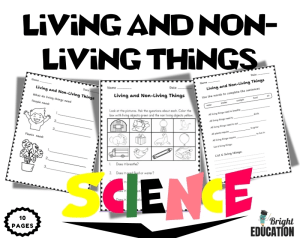
Living and Non-Living Things – Science Review Activity
Nature & Plants, Life Sciences, Science, Earth Sciences, Earth and Environmental Sciences, Grade 2, 3, 4, Quizzes and Tests, Teacher Tools
Review basic science concepts with this living and non-living things activity pack. Designed for elementary students, this resource includes printable worksheets and review activities focused on identifying and classifying living and non-living things. Students examine different objects, animals, and plants while practicing how to distinguish between living and non-living categories. The activities focus on characteristics such as growth, movement, food needs, and reproduction through structured science exercises. This resource includes a variety of activity formats that allow students to practice classification, observation, and vocabulary skills in a consistent way. The worksheets are organized for classroom lessons, review sessions, centers, or independent work. Ideal for science instruction, review activities, or introductory life science lessons, this no-prep resource can be used across multiple elementary grade levels. What’s Included: Living and non-living classification worksheets Sorting and matching activities Science vocabulary practice pages Printable review exercises Student-friendly worksheet layouts Ideal For: Science lessons and review Life science activities Independent or small group work Classroom centers and homework Classroom or homeschool use Provide students with structured science review activities using these printable living and non-living things worksheets.
Author Bright Education
Rating
Tags Living And Non-living Things, Science , Homework
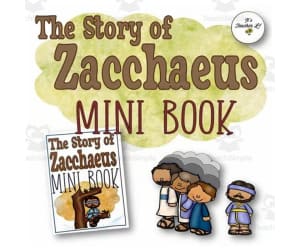
Zacchaeus Bible Story Foldable Mini Book Grade 1 2 3 ELA ELL
ELA, Literature, Reading, Grade 3, 4, 5, Centers, Activities, Worksheets & Printables, Worksheets, Writing Prompts
Encourage devotion through this purposeful learning tool Zacchaeus Foldable Mini Book Set! Crafted for Grade 1, 2, 3 and 4 students, homeschoolers, and EFL / ESL learners, this resource is a sure winner to your reading class and reading centers. This pack contains the following: 1. Zacchaeus Colored mini-book 2. Zacchaeus Black and white mini-book with story tracing activities 3. Zacchaeus Picture-fill mini-book for sequencing test or exercise 4. Zacchaeus Black and white mini-book for story re-tell and writing exercise 5. Zacchaeus Blank mini-book pages for story re-tell, writing and drawing exercises 6. Zacchaeus Mini Books Sample lesson plan Each mini book is presented in 3 paper sizes to give more freedom to choose what suites your needs. With the five different mini-books to choose from, the possibilities for learning and exploration is endless! This activity can be used to supplement reading lessons, writing exercises, and a perfect assessment tool that can easily be a perfect addition to your students’ portfolio.
Author It's Teacher L
Rating
Tags Reading, Mini Book, Sequencing, Writing, Reading Comprehension, ELA, ELL, Bible Stories, Sunday School

ESL Vocabulary Flashcards - Shopping & Money - Pictures
ELA, Language Development, ESL, Vocabulary, Not Grade Specific, High School, Middle School, Adult Education, Worksheets & Printables, Flashcards, Worksheets
ESL Vocabulary Flashcards - Shopping & Money - Pictures This high quality English language teaching resource is designed for students learning English as a second or foreign language . It includes 4 printable PDF pages featuring vocabulary flashcards and worksheets centered around the theme of "Shopping & Money" This ESL Vocabulary Flashcards on "Shopping & Money" Worksheets Activity can be ideal for Beginner level ESL - EFL - TESOL learners, including newcomers and English language learners of all ages. 🌟 What's Included? In this ESL Vocabulary Flashcards Activity on " Shopping & Money ", there are provided: ✅ 38 Printable Flashcards (4 Printable PDF worksheets) ✅ Essential vocabulary and phrases in English ✅ Engaging icons and emojis on select flashcards to support comprehension and vocabulary retention (not all flashcards) 🏫 Who Can Benefit from This Resource? 📌 Beginner ESL - EFL students looking to improve their English vocabulary 📌 Newcomers & English Language Learners (ESL - EFL - TESOL -TEFL) in schools, tutoring sessions, or self-study 📌 Teachers and tutors looking for fun and engaging vocabulary building activities 📌 Language centers, homeschool educators, and ESL programs 🎯 How Does this ESL Teaching Resource Help you and your Students? ✨ Strengthens essential English communication skills ✨ Provides English vocabulary (ESL - EFL - TESOL - TEFL) for better understanding ✨ Encourages engaging learning with printable flashcards that can be used in various ESL - EFL (English Second or Foreign Language) class activities Whether you're an ESL teacher or an English tutor these ESL Vocabulary Flashcards on " Shopping & Money " are a valuable and fun resource to improve basic conversation skills in English. Start learning today and make English introductions simple, engaging, and effective ! ESL with Alan is a Teaching Resources Store whose aim is to help English as a Second or foreign Language (ESL EFL TESOL) Teachers, Educators and Tutors around the world (be it online or offline) to achieve their teaching objectives while creating an enjoyable and stimulating learning environment. Learning is fun, So should English! Always If you want to browse more of my ESL, EFL, TESOL Teaching Resources, click here right ESL with Alan!
Author Learning with Alan
Rating
Tags ESL, English Second Language, English, Flashcards, Vocabulary, Shopping, Money, Worksheets, Printable, Activity

ADHD Planner for Adults & Students Book
Life Studies, Coaching, P.E. & Health, Health, Mental Health, Physical Education, Mindfulness, Psychology, Social Studies, Sociology, Homeschool Curriculum, Homeschool Templates, Grade 9, 10, 11, 12, Teacher Tools, Assessments, Lesson Plans, Outlines, Rubrics, Workbooks, Worksheets & Printables, Activities, Projects, Centers
Are you or your students having trouble focusing, overcoming chronic procrastination, or coping with too many things to do in a day? Traditional planners do not address issues associated with non-neurotypical brains and depend on willpower and strict timelines. This comprehensive 402 page guide is designed specifically for university (college) students and upper level academic learners ages 18-40, as well as early to mid-career professionals. The workbook provides a framework to serve as an external brain to help those with executive dysfunction bypass structural issues associated with ADHD in adulthood. The 90 chapters of this digital planner provide actionable items to create a bridge between psychological validation and implementation. The content goes beyond stereotypical childhood limitations associated with ADHD in order to show the complexities that adult ADHD presents in a fast paced world. THE CONTENTS OF THIS 402-PAGES INCLUDE: --> The How Your Brain Works: In-depth analysis of dopamine/norepinephrine pathways to help you understand why your concentration is affected; replaces the shameful feelings you might have been carrying with science-based self-compassion. --> Overcoming Time Blindness: Simple strategies to help you accomplish your tasks; including variations on the Pomodoro Technique, different tracking formats for estimating time, and methods to schedule time effectively. --> Advanced Academic Tools: New strategies to use when taking notes using the Cornell Method, as well as ways to improve your active textbook reading, to assist in breaking down long-term essays, and ways to perform well during exams. --> Achieving Professional Mastery: Methods for dealing with distractions at work, gaining control over the multitude of emails in your inbox, advocating for yourself if you are on the receiving end of workplace accommodation requests, and preparing for an annual work performance review. --> Regulating Your Emotions And Lifestyle: New ways to help cope if you experience rejection sensitive dysphoria (RSD), experience intense/quickly changing emotions, or if you cannot get enough sleep and/or do not have control over your finances. --> The Digital Work Space: An evaluation of digital task managers, tools that help limit distractions, mind map software, and ways to automate tasks. WHO CAN USE THIS TECHNOLOGY: Higher Education: It can be even helpful for students with their independent research as they pursue their undergraduate, graduate, and doctoral degrees. College Readiness: High school seniors will transition beautifully from a structured environment at home to being in a college setting. Career Starters: Neurodivergent adults will do well using this technology as they begin their careers. Coaches/Educators: This technology is a simple plug-and-play manual for academic special education departments at high schools and for resource centres at universities, as well as for executive ADHD coaching clients. DIGITAL DOWNLOAD CONSISTS OF: *) 1 High-Quality / Professionally Categorised PDF Book (402 Pages) *) Complete Table of Contents for easy access between sections *) Chapters that can be printed or chapters that can be displayed on Digital Format Develop Your Executive Functioning Skills so you can Create Your Own Predictable Success System. Keywords: ADHD Planner, Adult ADHD Worksheet, Executive Functioning Tools, College Student Organisation, ADHD Time Management, Stop Procrastinating, Neurodivergent Planner, PDF Digital Planner, TPT Digital Download. Why is This Program Loved by Schools/Parents: *) Bridges Autonomy Transition: Secondary schools and parents appreciate the program's direct support for students transitioning from a structured high school setting to a self-governed postsecondary setting, teaching students how to construct their own pathway. *) Evidence-Based / Science-Supported: The Manual does not provide a lot of general or "try your best" advice (versus cognitive-behaviorally-based principles, pre-frontal cortex functions, and structured note-taking frameworks such as the Cornell Method) and is therefore a trusted and credible resource by educational institutions. *) Removes Internalized Education Shame: Educators appreciate how the Manual shifts the conversation from labeling a less than stellar student "unmotivated" or "lazy" to understanding structural executive dysfunctions and promotes healthy self-compassion. *) More than just a Calendar / One Tool for Life Readiness: Schools and parents appreciate that it is more than just a calendar; The Manual addresses all of the holistic issues that impact us in our daily lives (financial management, workplace boundaries, annotating a text, sleep hygiene). Who Should Use This Book? The Target Audiences : Additional Considerations: Your Focus, Language Level, and Intent – Determine the Most Appropriate Audiences for Your Classes’ Students Your Comprehensive Reading of the Manuscript will provide a good understanding of the Architectural Focus (the Functional Purpose and Functionality of the Building) and Language Level (written communication used), in addition to the Objective of Each Chapter. *Your Primary Target Audience will be Students in University/College and Adult Learners: Both Undergraduate and Graduate Students will find most of the Information available in Chapters 1-7 (College Lectures, Academic Writing, Searching for Information (Research Rubrics), and Effective Communication in the Workplace) useful for students 18 years of age through 40 years of age. *Your Secondary Target Audience consists of High School (Grade 11 & 12). The Focus of this section should be primarily on “College Readiness” (support for students with special needs), “Transition Planning for Special Education,” and “Support for Executive Functioning” (tools that students can use after they graduate) as most high school teachers and counselors are looking to support students with special needs (neurodiversity) in their transition from high school to post-secondary education. Copyright and Terms of Use : Syed Hammad Rizvi's Copyrighted Book - Personal Usage Only - May Not be Modified, Distributed or Sold in Any Way by Anyone, Including You, Once You Have Downloaded It. Sharing this resource with Colleagues: Please Purchase Additional Licences Through Teachsimple! Thank You for Your Cooperation with These Terms of Use! Brought to You By Syed Hammad Rizvi
Author Creative Book Store
Rating
Tags ADHDPlanner, ADHDDigitalPlanner, AdultADHDWorkbook, ADHDPlannerPDF, NeurodivergentPlanner, ADHDJournal, DigitalPlannerPDF, PrintableADHDPlanner, NeurospicyPlanner, ADHDOrganization

Saul Becomes Paul Bible Story Foldable Mini Book Grade 1 2 3 ELA ELL
ELA, Literature, Reading, Grade 3, 4, 5, Centers, Activities, Worksheets & Printables, Worksheets, Writing Prompts
Make learning fun but more meaningful with this classic Bible story of when Saul became Paul in this Saul Becomes Paul Foldable Mini Book Set! Created for Grade 1, 2, 3 and 4 students, homeschoolers, and EFL / ESL learners, this amazing story of Saul Becomes Paul is a sure hit to your reading class and Bible lessons. This resource contains the following: 1. Saul Becomes Paul Colored mini-book 2. Saul Becomes Paul Black and white mini-book with story tracing activities 3. Saul Becomes Paul Picture-fill mini-book for sequencing test or exercise 4. Saul Becomes Paul Black and white mini-book for story re-tell and writing exercise 5. Saul Becomes Paul Blank mini-book pages for story re-tell, writing and drawing exercises 6. Saul Becomes Paul Mini Book Sample lesson plan This set is made in 3 paper sizes to give more freedom to choose what suites your needs. With five different mini-books to choose from, the possibilities for learning and exploration is endless! This activity can be used to supplement reading lessons, writing exercises, and a perfect assessment tool that can easily be a perfect addition to your students’ portfolio. Make learning about this Bible story more memorable and creative with this Saul Becomes Paul Foldable Mini Book Set!
Author It's Teacher L
Rating
Tags Reading, Mini Book, Sequencing, Writing, Reading Comprehension, ELA, ELL, Bible Stories, Sunday School
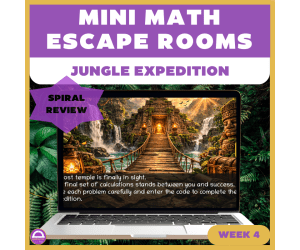
6th Grade Math Spiral Review Escape Room Week 4
Math, Grade 5, 6, 7, Worksheets, Worksheets & Printables, Teacher Tools, Activities, Escape Room
Reinforce important 6th grade math skills all week long as your students join these Themed Mini Math Escape Rooms! This activity comes with 5 digital escape room missions that can be used as your weekly spiral review! (Each mission takes about 8-10 minutes to complete.) They make great warm-ups, bell work, early finisher activities, review, or sub plans. Every day feels like a new adventure instead of just another worksheet! Each mini escape room gives students the same skills to practice all week with different problems each day. Students know what to expect, but are never bored! In WEEK 4, students will practice: ✔ Factors & Multiples ✔ Greatest Common Factor (GCF) and Least Common Multiple (LCM) ✔ Simplifying Fractions ✔ Area of Rectangles ✔ Estimation The format is simple, consistent, and easy for students to understand. Each day, they will answer 5 math questions, one from each skill listed above. Then they will take the first number from each answer to create a 5-digit code. When the code is correct, they can move on to the next challenge! This digital, self-checking format gives students immediate feedback and autonomy. Because the procedure stays the same all 5 days, students become independent with the activity, and there is little to no explanation needed after they understand how to make the code! Less prep for you, and smoother transitions. What’s Included: ⭐ 5 digital mini escape room missions (Day 1–Day 5) ⭐ Printable worksheets with matching problems for every mission ⭐ Answer Keys and Codes ⭐ Teacher Directions ⭐ Student Directions ⭐ Consistent Daily Routine Assign the mini escape rooms with individual devices, project them to complete together as a class, assign them during distance learning, or use the printable worksheets in a paper-only classroom! No student accounts are needed to use these online escape rooms! If you're looking for a simple way to engage your students while practicing basic math skills every day, these Mini Math Escape Rooms are the perfect solution!
Author Matemaths
Rating
Tags Matemaths, Worksheet, Word Problems, Decimals, Spiral Review, Warm Up, Exit Ticket
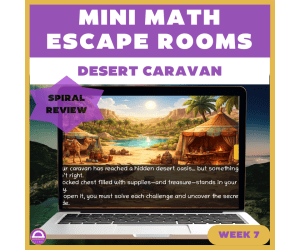
6th Grade Math Spiral Review Escape Room Week 7
Math, Grade 5, 6, 7, Worksheets, Worksheets & Printables, Teacher Tools, Activities, Escape Room
Turn your daily math warm-up into a desert caravan journey with this set of 6th grade Mini Math Escape Rooms. Students will cross burning sands, hunt for treasure, dodge deadly scorpions, topple statues, and survive five missions to make it across the desert! This resource includes 5 mini (one for each day of the week) digital escape room missions for your students to use as spiral review. Each mission should take about 8-10 minutes for a total of no more than 50 minutes of use per week. Each day, students solve five math problems, gather five numbers that correspond to their answers, and enter the numbers in a code to solve the mission. The code is self-checking! Week 7 covers the following skills: ✔ Percents of a Number ✔ Fraction to Percent Conversions ✔ Percent to Fraction Conversions ✔ Decimal to Percent Conversions ✔ Percent Increase and Decrease ✔ Percent Word Problems (including finding the whole) The same skill sets are spiraled through all five days using different problems each day. The missions follow a simple routine: ⭐ Students solve 5 math problems, ⭐ Each problem is focused on one skill set, ⭐ Students take the first digit of each answer, ⭐ The digits create a 5-digit code, ⭐ The correct code completes the mission! Because the format is exactly the same for each day, students will quickly understand the expectations and be able to complete each mission independently as a math warm-up with little direction from the teacher. What’s Included: ⭐ 5 digital mini escape room missions (Day 1-Day 5) ⭐ Printable paper worksheets with the same problems for all five missions ⭐ Answer keys and codes ⭐ Teacher directions ⭐ Student Instructions ⭐ Consistent formats for ease of use! The mini escape rooms are perfect for: ✔ Bell ringers or warm-ups ✔ End of class review ✔ Early finisher activities ✔ Independent practice ✔ Sub plans They can be completed whole-class if displayed on a screen, independently on devices for distance learning, or on paper in a print classroom with limited technology. No student accounts are required! If you are looking for a way to spice up daily spiral math review in your classroom, these mini escape rooms are for you!
Author Matemaths
Rating
Tags Matemaths, Worksheet, Word Problems, Decimals, Spiral Review, Warm Up, Exit Ticket
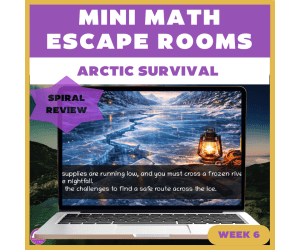
6th Grade Math Spiral Review Escape Room Week 6
Math, Grade 5, 6, 7, Worksheets, Worksheets & Printables, Teacher Tools, Activities, Escape Room
Are your students ready to survive the Arctic and escape all 5 missions? Make daily math review a fun adventure with an Arctic survival theme using this Math Escape Room resource for 6th grade! Students will travel through the freezing temperatures and tundra of the Arctic as they complete math problems and unlock clues to survive each mission. WHAT'S INCLUDED? This resource contains 5 mini digital escape room activities, one for each day of the week. They are designed to be quick spiral review activities that students will look forward to! Each mission takes about 8–10 minutes to complete, making them ideal for warm–ups, bell ringers, review days, early finisher activities, or emergency sub plans! Students will solve five math problems each day, collect a digit from each answer, and use the digits to create a code. Entering the correct code allows them to succeed in the mission and move on in their Arctic survival journey! The self–checking answer format keeps students on task and engaged. In Week 6, the following 6th grade math skills are targeted: ✔ Comparing Integers ✔ Integer Addition ✔ Absolute Value ✔ Coordinate Plane (Quadrant I) ✔ Word Problems The same five skill areas spiral throughout the week using different problems each day. The simple, consistent format is as follows: ⭐ Students solve 5 math problems ⭐ Each problem targets one skill area ⭐ Students take the first digit of each answer ⭐ The digits form a 5-digit code ⭐ The correct code completes the mission Because the routine stays the same all week, students will be comfortable with what to do. The first day you use the activity, there are directions for them to read, but little explanation will be necessary for the following activities. What’s Included: ⭐ 5 digital mini escape room missions (Day 1–Day 5) ⭐ Printable worksheets with matching problems for each mission ⭐ Complete answer keys and numeric codes ⭐ Teacher instructions ⭐ Student instructions ⭐ Consistent layouts for simple classroom use These activities work well in a variety of learning environments and are compatible with: ✔ Whole–class display ✔ Individual student devices ✔ Distance learning ✔ Paper–based classrooms No student accounts are required. If you are looking for a super low–prep, engaging routine for spiral review to reinforce key 6th grade sixth grade math skills, this set of Arctic survival mini escape rooms is the perfect addition to your classroom.
Author Matemaths
Rating
Tags Matemaths, Worksheet, Word Problems, Decimals, Spiral Review, Warm Up, Exit Ticket
6th Grade Math Spiral Review Escape Room Week 5
Math, Grade 5, 6, 7, Worksheets, Worksheets & Printables, Teacher Tools, Activities, Escape Room
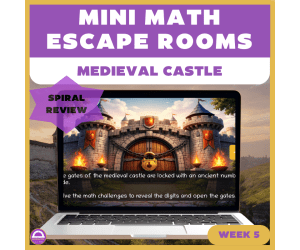
Inject daily math review with a sense of adventure using this Medieval Castle-themed set of Mini Math Escape Rooms for 6th grade! Packaged as a week of quick spiral review, this resource contains 5 mini escape room missions that reinforce valuable math skills as students break into locked doors, dungeon chambers, and wizard lairs in the castle. Each “mission” takes about 8–10 minutes to complete, so they are perfect for keeping up with daily review without devoting a huge chunk of class time! Students will work out math problems, identify digits from their answers, and use the digits to unlock numeric codes that "break open" each day's mission. The format is straightforward, self-checking, and highly engaging, students will forget they're even doing math work! Week 5 focuses on the following 6th grade math skills: ✔ Ratios Using Tables ✔ Unit Rates ✔ Fraction Multiplication ✔ Decimal Division ✔ Order of Operations The same 5 skill areas are covered throughout the week, using different problems each day. This spiral review allows students to really gain accuracy, speed, and independence with these math skills. Each mission follows the same simple routine: ⭐ Students answer 5 math questions ⭐ Each question targets one skill ⭐ Students take the first digit from each answer ⭐ The digits generate a 5-digit code ⭐ The correct code breaks into the locked area of the Castle! Since the structure is identical each of the 5 days, students will quickly learn the routine and be able to implement the math skills independently with little explanation or assistance from the teacher. This makes the missions perfect for busy transition times or days when you just need something simple! What’s Included: ⭐ 5 digital mini escape room missions (Day 1–Day 5) ⭐ Printable worksheets with corresponding problems for every mission ⭐ Complete answer keys and codes ⭐ Teacher Directions ⭐ Student Directions ⭐ Consistent formatting for easy implementation These interactive mini missions are versatile and can be used in a number of classroom settings! They make excellent: ✔ Bell ringers or warm-ups ✔ End-of-class review ✔ Early finisher activities ✔ Emergency sub plans ✔ Independent practice This resource is designed to work for both technology-based and paper-based classrooms! No student accounts are required, and the missions can be used in a whole-class format (interactive whiteboard), completed by each student on a device, assigned during distance learning, or completed using just the printable worksheets. If you are looking for a fun, predictable, and low-prep way to implement daily math review in your classroom, the Medieval Castle Mini Escape Rooms are for you!
Author Matemaths
Rating
Tags Matemaths, Worksheet, Word Problems, Decimals, Spiral Review, Warm Up, Exit Ticket

Feelings & Emotions Flashcards | Printable Cards for Kids
Vocabulary, Language Development, ELA, Not Grade Specific, Flashcards, Worksheets & Printables
These printable Feelings & Emotions Flashcards are a fun way to help children recognize, understand, and talk about emotions through appealing cards and colorful visuals. The set includes 10 different emotions with expressive character illustrations that make it easier for children to recognize feelings and talk about them naturally. I wanted the cards to feel visually engaging and easy for kids to use during class activities or small group work. The cards are large, clear, and simple to prepare. Just print, laminate if you’d like, and cut them out. This resource is for: • classroom activities • homeschooling • ESL and EFL lessons • speech therapy support • social-emotional learning activities • vocabulary practice • communication games • small group work • learning centers The words used: happy, sad, angry, tired, scared, hungry, cold, bored, hot, thirsty The cards also work well for preschool, kindergarten, and early elementary students who are still learning how to describe feelings and communicate emotions. Although these cards can easily be adapted for different ages and learning levels. What's included: • PDF format • 5 printable pages • 2 cards per page • ready to print and use • suitable for classroom and home learning The flashcards can be used in different ways depending on your students’ level. Some children simply match the emotions, while others use the cards for speaking prompts, describing situations, or short discussions about feelings. This resource works well for classrooms, homeschool settings, learning centers, and one-on-one activities.
Author English with Rita
Rating
Tags Flashcards, Vocabulary Flashcards, Printable Cards, Feelings Flashcards, Emotion Learning, Classroom Use, Social Emotional Learning, SEL Activities, Vocabulary Building, Feelings And Emotions