resources by type
resources by grade
resources by subject
other resources

4,017 products added recently

Back To School Lesson Plans

Ease your students into the new academic year with back-to-school lesson plans designed to build community and set expectations. These activities promote teamwork, establish routines, and help students feel comfortable. Implement these plans to create a positive start and foster a supportive classroom environment.

Relevant
alt down
Any Time
alt down
filter by
alt down
All File Types
alt down
filter nav Show filters
Sort by: Relevant
CLEAR
resources by type
Activities
down arrow
Classroom Decor
down arrow
Teacher Tools
up arrow
Anchor Charts
Assessments
Charts
DBQ's
Diagrams
Graphic Organizers
Lesson Plans
Literacy Readers
Outlines
Presentations
Quizzes and Tests
down arrow
Rubrics
Templates
Worksheets & Printables
down arrow
resources by grade
Early Learning
down arrow
Pre-K
down arrow
Elementary
down arrow
Middle School
down arrow
High School
down arrow
Adult Education
Not Grade Specific
resources by subject
Creative Arts
down arrow
ELA
down arrow
Holiday & Seasonal
up arrow
Holidays
up arrow
100'S Day
4th of July
April Fools
Arbor Day
Back To School
Birthdays
Black History Month
Chinese New Year
Christmas
Cinco De Mayo
Columbus Day
Earth Day
Easter
Election Day
End Of Year
Father's Day
Graduation
Grandparent's Day
Halloween
Hanukkah
Hispanic Heritage Month
Indigenous Peoples Day
Kwanzaa
Labor Day
Leap Day
Memorial Day
Martin Luther King Day
Mother's Day
New Year's Day
Pi Day
President's Day
St. Patrick's Day
Pride Month
Teacher Appreciation Day
Thanksgiving
Valentine's Day
Veteran's Day
Women's History
Months
down arrow
Seasons
down arrow
Life Studies
down arrow
Math
down arrow
P.E. & Health
down arrow
Social Studies
down arrow
Special Resources
down arrow
Science
down arrow
Foreign Languages
down arrow
Resources for Teachers
down arrow
other resources
Common Core
Homeschool Resources
down arrow
Montessori
Research
STEM
Year-Long Personal Finance Curriculum | Grades 3-5 | Unit 6

Year-Long Personal Finance Curriculum | Grades 3-5 | Unit 6
Finance, Life Studies, Money, Math, Back To School, Holidays, Holiday & Seasonal, Spring, Seasons, Grade 3, 4, 5, Lesson Plans, Teacher Tools, Worksheets & Printables

Personal Finance Unit 6: Giving | Grades 3–5 Make financial literacy meaningful with a real-world Giving unit focused on donations, community service, responsible choices, and financial responsibility toward others. This 64-page Giving unit helps students connect money decisions with generosity, service, ethics, and measurable impact. Please note: This listing includes the Unit 6 student book only . The included teacher resources and bonus materials support the complete six-unit, 30-week Personal Finance curriculum . 📦 What’s Included Student Resource – Unit 6: Giving 64-page student book 5 weeks of instruction Week 26: Donations Week 27: Community Service Week 28: Responsible Choices Week 29: The Class Giving Campaign Week 30: My Personal Finance Portfolio Original reading passages Comprehension questions Vocabulary practice Financial math Real graph analysis Realistic financial scenarios Application activities Evidence-based writing Weekly reviews Go Further challenge activities Student self-assessments Unit completion reflection Every week uses a consistent instructional rhythm, making the resource easy for students to follow and teachers to plan. Each week includes an opener, reading passage, comprehension, vocabulary, financial math, graph analysis, scenario, application activity, writing, and review. 💰 How It Works in the Classroom This financial literacy unit is designed for approximately one hour of instruction plus independent work each week . Students move from learning about giving to applying those ideas through increasingly authentic projects. Week 26: Giving Money That Actually Helps Students learn how to make thoughtful donation decisions. They explore: Nonprofits and charities Donations Overhead Missions Impact How donations are distributed Questions to ask before donating Why low overhead does not automatically mean better results Students also complete a Charity Evaluation Worksheet , researching two organizations and making a recommendation with reasoning. Week 27: Giving Time Instead of Money Students discover that giving does not always mean giving money. They learn about: Volunteer time Community service Skill matching Commitment In-kind contributions Reliability Identifying real community needs Students create a Service Project Planner that identifies a need, matches team skills, creates a five-step plan, and measures the result. Week 28: Money and Responsibility Students connect personal financial decisions with their effects on themselves and others. Topics include: Responsibility Integrity Consequences Stewardship Fairness Balance The save, spend, give framework Ethical decision-making Students consider how small financial choices can build responsible habits over time. Week 29: The Class Giving Campaign Students put their learning into action with a real classroom fundraising project. The Class Giving Campaign has students: Choose a cause Set a goal Create a budget Build a timeline Track collections Calculate progress Consider costs Determine net proceeds Measure impact Report results honestly The Giving Campaign Packet includes a cause statement, goal and timeline, budget, daily collection log, progress graph, and final report . Week 30: My Personal Finance Portfolio The unit concludes with a capstone that brings learning from the entire curriculum together. Students: Synthesize learning from all six units Create a personal financial plan Use evidence to support their choices Write a goal statement Reflect on their learning Present and defend their plan to an audience The final week focuses on applying financial knowledge beyond the classroom. 🎯 Standards & Learning Goals Students will learn to: Explain what nonprofits and charities do. Evaluate organizations using specific questions. Calculate how donations are distributed. Understand the value of volunteer time. Match personal skills with community needs. Plan a service project. Connect financial choices with consequences. Apply an ethical test to financial decisions. Explain the save, spend, give framework. Plan and manage a classroom giving campaign. Track fundraising results accurately. Calculate net proceeds. Measure and report impact honestly. Synthesize personal finance learning. Create a financial plan supported by evidence. Present and defend a financial plan. Standards alignment includes CEE Spending 6.9–6.11, Jump$tart 3–5 Financial Decision Making 5–7, CCSS.ELA.RI.5.9, CCSS.ELA.W.5.1, CCSS.ELA.W.5.7, CCSS.MATH.5.NBT.B.7, and CCSS.ELA.SL.5.4 across the unit. ⭐ Why Teachers Love It ⭐ Real-world financial literacy: Students explore generosity, service, responsibility, and decision-making through realistic situations. ⭐ Meaningful math practice: Students work with percentages, donation amounts, volunteer-hour values, fundraising totals, budgets, and progress. ⭐ Reading and writing integration: Financial concepts are paired with comprehension questions and evidence-based writing. ⭐ Hands-on learning: Students don't just read about giving. They plan evaluations, service projects, campaigns, and financial plans. ⭐ Critical-thinking practice: Students evaluate impact rather than simply assuming the most emotional or lowest-cost option is best. ⭐ Built-in project work: Weeks 27, 29, and 30 provide opportunities for students to plan, create, measure, reflect, and present. ⭐ Consistent weekly structure: Students know what to expect while teachers get a predictable instructional routine. ⭐ Strong vocabulary development: Students work with terms such as donation, nonprofit, impact, volunteer, reliability, responsibility, integrity, campaign, transparency, and portfolio . ✨ Give Students a Bigger Picture of Financial Responsibility Financial literacy is about more than earning, saving, and spending. This Giving unit helps students understand that financial choices can affect other people and the wider community. From evaluating charities to planning a service project, running a classroom giving campaign, and creating a personal finance portfolio, students finish Unit 6 with practical opportunities to give thoughtfully, act responsibly, and use evidence to make financial decisions .

Author Bright Classroom Ideas Marketplace

Rating

Tags Finance, Financial Literacy, Mony, Yearlong, Curriculum, Full Year

Grade 3 Digital Citizenship Yearlong Curriculum | 36 Weekly Lessons

Grade 3 Digital Citizenship Yearlong Curriculum | 36 Weekly Lessons
Back To School, Holidays, Holiday & Seasonal, August, Months, September, Fall, Seasons, Technology, Science, Grade 3, Lesson Plans, Teacher Tools, Worksheets & Printables

Grade 3 Digital Citizenship Curriculum | Yearlong Digital Citizenship Lessons, Internet Safety, Online Research, Worksheets, Slides & Assessments Prepare your students to become smart, responsible digital citizens with this comprehensive Grade 3 Digital Citizenship Curriculum ! Designed as a complete 36-week digital citizenship program , this ready-to-teach resource helps students move beyond basic internet safety by developing critical research skills, evaluating online information, protecting their digital footprint, communicating professionally online, understanding copyright, and collaborating responsibly in digital spaces. With engaging lessons, interactive projects, assessments, printable resources, and presentation slides, you'll have everything you need for an entire year of meaningful digital citizenship instruction. What's Included This complete yearlong curriculum includes: ⭐ 36 complete weekly digital citizenship lessons ⭐ Comprehensive teacher lesson plans with scripted instruction ⭐ Student workbook with over 230 printable pages ⭐ Weekly student reflection journal ⭐ Approximately 240 presentation slides with built-in teaching notes ⭐ 140+ printable no-prep worksheets ⭐ 36 weekly exit tickets ⭐ 16 standards-aligned quizzes ⭐ 10 hands-on classroom projects with student-friendly rubrics ⭐ Complete answer keys ⭐ Teacher Planning & Assessment Pack with class record sheets, vocabulary references, skills progression, and reteach plans ⭐ Teacher Toolkit with assessment guidance, small-group instruction, classroom management tips, family communication, substitute plans, and year planning ⭐ Graphs, class charts, and progress trackers for visual learning and classroom discussions How It Works in the Classroom Every lesson follows a predictable weekly routine, making planning simple while helping students build confidence and independence. Each lesson includes: Bell ringer Teacher mini lesson Interactive presentation slides Student reading passage Guided notes Hands-on practice activities Partner discussions Real-world digital citizenship scenarios Independent application tasks Reflection journal writing Exit ticket Optional family connection Differentiation ideas Complete answer keys Perfect for: Classroom teachers Technology classes Computer labs Library and media centers STEM enrichment Homeschool programs Whole-group instruction Print or digital classrooms Standards & Learning Goals Students develop advanced digital citizenship skills through six engaging units: Unit 1 – Online Research Turning topics into focused research questions Keywords, synonyms, and search operators Skimming and scanning for relevant information Paraphrasing and note-taking Organizing research into outlines Unit 2 – Website Evaluation Evaluating websites using the Five W Questions Identifying author expertise Detecting bias and persuasion Checking publication dates and currency Comparing multiple online sources Unit 3 – Passwords & Email Basics Creating strong passwords Two-step verification Writing professional emails Email etiquette Recognizing phishing attempts Unit 4 – Digital Footprints & Cyberbullying Self-search and online reputation Privacy settings Cyberbullying case studies Documentation and reporting Responsible digital decision-making Unit 5 – Copyright & Creative Credit Copyright and fair use Creative Commons Giving proper credit Bibliographies Ethical use of digital media Unit 6 – Online Collaboration & Digital Balance Collaborative digital projects Shared documents Version history Digital teamwork Healthy technology balance Why Teachers Love It ❤️ Complete yearlong curriculum with no-prep lessons ❤️ Ready-to-use slides, worksheets, assessments, and answer keys ❤️ Strong emphasis on critical thinking and real-world application ❤️ Authentic digital citizenship scenarios that promote discussion and problem-solving ❤️ Built-in formative and summative assessments ❤️ Student reflection journals encourage meaningful self-assessment ❤️ Hands-on projects reinforce learning through collaboration and inquiry ❤️ Teacher planning tools simplify assessment, data tracking, and differentiation ❤️ Flexible enough for technology teachers, classroom teachers, media specialists, and homeschool educators ❤️ Saves hours of planning while providing engaging, standards-aligned instruction throughout the school year. Give Your Students the Digital Skills They Need to Thrive Today's learners need more than basic internet safety—they need the skills to research effectively, evaluate online information, communicate responsibly, protect their privacy, collaborate ethically, and make thoughtful digital decisions. This Grade 3 Digital Citizenship Curriculum provides a complete, engaging, and easy-to-teach solution that builds those essential skills all year long while saving you valuable planning time.

Author Bright Classroom Ideas Marketplace

Rating

Tags Digital, Citizenship, Yearlong, Curriculum, Full Year, Back To School, Technology

Year-Long Personal Finance Curriculum | Grades 6-8 | Unit 2

Year-Long Personal Finance Curriculum | Grades 6-8 | Unit 2
Back To School, Holidays, Holiday & Seasonal, Spring, Seasons, Finance, Life Studies, Money, Math, Grade 6, 7, 8, Lesson Plans, Teacher Tools, Worksheets & Printables

📘 Personal Finance Unit 2: Banking | Grades 6–8 Help middle school students understand what is really happening behind the banking tools they use every day. This Banking unit gives students practical experience with checking accounts, savings accounts, debit cards, mobile banking security, and choosing a financial institution. Designed as a 6-week financial literacy unit , students read, calculate, analyze data, complete realistic case studies, build spreadsheet models, write arguments, and finish with a full Banking Analysis Report . Please note: This listing includes the Unit 2 student book only . The included teacher resources and bonus materials support the complete six-unit, 30-week Personal Finance curriculum . 📦 What’s Included Student Unit 2: Banking — 86 Pages The student resource includes six complete weekly lessons covering Weeks 7–12. Each week follows the same eleven-part structure: Week opener with essential question and learning targets Original reading passage Comprehension and analysis Vocabulary in context 10 financial math problems Data graph and analysis Realistic case study Hands-on activity or simulation Spreadsheet modeling task Argument writing Weekly review and extension activities Six Weeks of Banking & Financial Literacy Instruction Week 7 — Checking Accounts: How a Checking Account Actually Works Students explore what happens between a card swipe and the money leaving an account. They learn to: Distinguish ledger balance from available balance Understand holds and settlement Analyze overdraft fees Reconcile an account register with a bank statement Compare checking account fee structures Identify discrepancies and potential fraud The hands-on Reconciliation Challenge produces a reconciled register, classified discrepancy list, and dispute note. Students also build a check register and reconciliation spreadsheet. Week 8 — Savings Accounts: Comparing Savings Accounts on the Numbers Students investigate how savings account choices affect financial outcomes. They practice: Distinguishing interest rate from APY Understanding compounding frequency Comparing savings products quantitatively Evaluating yield versus access Comparing high-yield savings accounts, CDs, and money market accounts Considering inflation and purchasing power Students complete a Savings Product Comparison and create a justified two-product allocation. The spreadsheet model includes APY calculations, compound growth, and fee-versus-interest comparisons. The data analysis page has students examine ten-year growth of $5,000 at different savings rates, making the long-term impact of account selection visually clear. Week 9 — Debit Cards: Debit Cards, Fraud, and Who Bears the Loss Students examine debit card transactions, fraud, liability, and the difference between authorization and settlement. Topics include: Debit card fraud Transaction liability EMV chips Tokenization Fraud reporting Statement monitoring The financial impact of unauthorized transactions The Fraud Response Simulation has students determine liability, calculate costs, prepare a dispute report, and design an account alert. The spreadsheet activity creates a transaction monitoring log. Week 10 — Mobile Banking: Security, Authentication, and Social Engineering Students investigate why many account compromises begin by targeting people rather than banking technology. They learn about: Multi-factor authentication Phishing Social engineering SIM swaps Passkeys Encryption Credential stuffing Account alerts Students identify realistic social engineering techniques and design a stronger account security configuration. Week 11 — Choosing a Bank: Evaluating Institutions on Total Cost Students learn that the cheapest-looking bank is not necessarily the cheapest choice. They compare: Banks Credit unions Neobanks Branch networks ATM networks Fee schedules Relationship pricing Switching costs Total cost of ownership Students complete an Institution Selection Investigation , calculating total annual costs, including forgone interest, testing what happens when overdrafts increase, and making a written recommendation. Week 12 — Unit Project: The Banking Analysis Report Students bring the unit together by producing a defensible recommendation about where a fictional household should bank. The project focuses on: Quantitative comparison Usage assumptions Sensitivity analysis Criteria weighting Evidence-based recommendations Communicating financial information to a non-expert audience Students complete a five-section banking analysis report and participate in a panel defense. The five report sections are: Executive summary Cost comparison Sensitivity analysis Recommendation Limitations 🎯 How It Works in the Classroom This financial literacy curriculum is designed to give students repeated practice with real-world financial reasoning. Students don't simply memorize banking vocabulary. They calculate costs, interpret graphs, investigate realistic scenarios, build spreadsheet models, evaluate trade-offs, and defend recommendations. Activities include: Reconciliation Challenge Savings Product Comparison Fraud Response Simulation Security Configuration Audit Institution Selection Investigation Banking Analysis and Panel Defense The consistent weekly structure makes implementation easier. Students become familiar with the routine while the content becomes progressively more sophisticated. 📚 Additional Teacher Resources The teacher resources correspond to the complete six-unit Grades 6–8 personal finance curriculum , rather than only Unit 2. They can support this Unit 2 student book as part of the larger program and include: Teacher Guide: 36 weekly lessons across six units Complete teaching notes Misconceptions and corrective moves Minute-by-minute lesson delivery Four-tier differentiation guidance Discussion prompts Answer notes Answer Key Unit Tests Vocabulary Cards Exit Tickets Progress Monitoring Forms Assessment Rubrics Parent Letters Editable Lesson Plans Games & Simulations Printable Posters Award Certificates So while the student resource in this listing is specifically Unit 2: Banking , the companion teacher materials are designed for use across the full six-unit curriculum . The year-at-a-glance organization places Banking in Weeks 7–12. 🎯 Standards & Learning Goals Throughout this Banking unit , students learn to: Explain how checking accounts work. Distinguish ledger and available balances. Understand holds, settlement, and posting order. Reconcile account records. Analyze banking fees quantitatively. Compare savings products using APY and other criteria. Understand compound growth and inflation. Evaluate debit card fraud and liability. Identify common digital banking security risks. Evaluate authentication methods. Recognize social engineering and phishing techniques. Compare financial institutions using total cost. Account for fees, forgone interest, and usage patterns. Use sensitivity analysis to test assumptions. Make evidence-based financial recommendations. Communicate financial analysis clearly to a non-expert audience. Standards alignment includes CEE Saving standards, Jump$tart 6–8 Financial Decision Making and Saving & Investing standards, and Common Core mathematics and ELA standards , including CCSS.MATH.6.NS.C.5, CCSS.MATH.7.RP.A.3, CCSS.MATH.7.EE.B.3, and CCSS.ELA.W.7.1. ⭐ Why Teachers Love It ⭐ Real-world banking skills: Students explore situations they may encounter as account holders. ⭐ Financial math built in: Every week includes ten problems requiring students to show their work. ⭐ Beyond worksheets: Students reconcile accounts, compare products, investigate fraud, audit security practices, and defend recommendations. ⭐ Strong critical thinking: Students must consider assumptions, trade-offs, costs, limitations, and changing circumstances. ⭐ Digital literacy included: Mobile banking security, authentication, credential stuffing, phishing, and social engineering are treated as financial literacy skills. ⭐ Spreadsheet practice: Students learn to build models using formulas instead of simply typing answers. ⭐ Authentic decision-making: Students don't just identify the "best" bank. They determine which institution fits a specific usage pattern. ⭐ Built-in assessment: Comprehension, financial math, data analysis, case studies, writing, weekly reviews, and a culminating project provide multiple ways to assess learning. ⭐ Easy to pair with the full curriculum: The student book focuses specifically on Unit 2, while the companion teacher resources support the complete six-unit program. 💡 Give Students Banking Skills They Can Actually Use Financial literacy for middle school should help students understand the systems behind everyday financial decisions. This Banking unit takes students from understanding a checking account to comparing savings products, responding to fraud, securing mobile accounts, evaluating institutions, and ultimately defending a banking recommendation. By the end of Unit 2, students have practiced not only how banking works , but how to analyze costs, question assumptions, protect their accounts, and make evidence-based financial decisions .

Author Bright Classroom Ideas Marketplace

Rating

Tags Finance, Financial Literacy, Curriculum, Yearlong, Full Year, Money

Back-to-School Icebreakers After Winter Break (for Elementary School)

Back-to-School Icebreakers After Winter Break (for Elementary School)
Back To School, Holidays, Holiday & Seasonal, New Year's Day, January, Months, Winter, Seasons, Grade 1, 2, 3, 4, 5, Lesson Plans, Teacher Tools, Worksheets & Printables

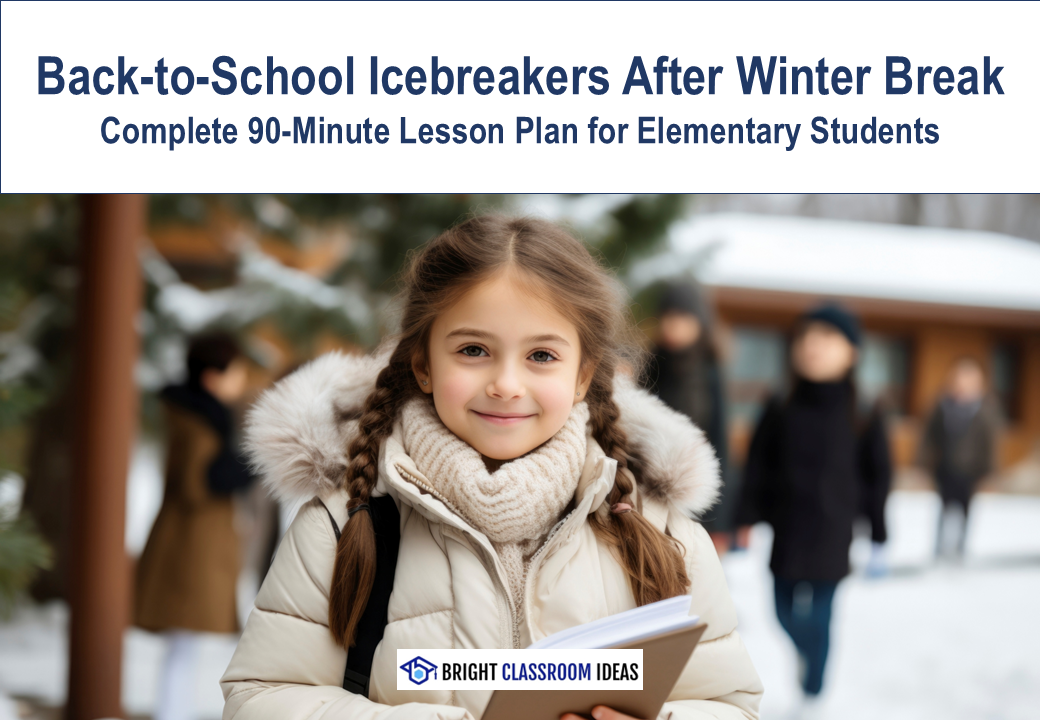
E Back-to-School Icebreakers After Winter Break (Grades 1–5) Ease your students back into the classroom with these Back-to-School Icebreakers After Winter Break ! This 90-minute SEL lesson plan helps elementary students reconnect, reflect, and set new goals — all while having fun. It’s low-prep, engaging, and perfect for easing post-break transitions with confidence and positivity. What’s Included Complete 90-minute lesson plan (K–5 adaptable) Printable student worksheet (BINGO, Snowball Toss, Goal Setting, and Reflection) Teacher directions with timing and differentiation tips Standards alignment with the CASEL SEL framework Materials list + optional extensions Answer key and reflection guide for teacher use How It Works in the Classroom This lesson is designed for a whole-group community-building session after winter break. Activities include: ❄️ Winter Break BINGO – fun icebreaker to get students talking ☃️ Snowball Toss & Share – write, toss, and guess classmates’ memories 🎯 New Year, New Goals – reflect and set achievable goals 💬 Two Truths and a Wish – share creatively with peers 🕸️ Class Connection Web – visualize classroom unity and empathy Use it during the first day back, morning meeting, or SEL block. Standards & Learning Goals Aligned with the CASEL SEL competencies : Self-Awareness & Self-Management Social Awareness & Relationship Skills Responsible Decision-Making Students will reconnect, express emotions, and set personal and academic goals for the new semester. Why Teachers Love It ✅ Completely low-prep — just print and go! ✅ Builds community and supports emotional transitions ✅ Engages all learners (includes differentiation tips for K–5) ✅ Encourages writing, speaking, and reflection ✅ Ideal for SEL lessons, morning meetings, or substitute plans Bring the joy back after winter break with this ready-to-use icebreaker lesson that helps your classroom start the new semester strong!

Author Bright Classroom Ideas Marketplace

Rating

Tags Back-to-school, Icebreaker, Winter, Activities, Lesson, Lesson Plan, Elementary

Year-Long Personal Finance Curriculum | Grades 3-5 | Unit 2

Year-Long Personal Finance Curriculum | Grades 3-5 | Unit 2
Back To School, Holidays, Holiday & Seasonal, Seasons, Finance, Life Studies, Money, Math, Grade 3, 4, 5, Lesson Plans, Teacher Tools, Worksheets & Printables

Personal Finance Curriculum | Unit 2: Saving | Grades 3–5 Help students build practical financial literacy skills for grades 3–5 with this engaging Unit 2 student resource focused on saving. Students explore savings accounts, interest, short-term goals, and long-term goals through reading, financial math, graphs, real-world scenarios, application activities, and writing. Please note: This listing includes the Unit 2 student book only . The included teacher resources and bonus materials support the complete six-unit, 30-week Personal Finance curriculum . 📦 What’s Included Student Resource — Unit 2: Saving 63-page student unit 5 weeks of instruction Week 6: Savings Accounts Week 7: Interest Week 8: Short-Term Goals Week 9: Long-Term Goals Week 10: Unit 2 Project Original weekly reading passages Comprehension questions Vocabulary practice Financial math Graph reading and analysis Realistic financial scenarios Application activities Evidence-based writing Weekly reviews and essential questions Each week follows the same instructional rhythm. Students read, practice vocabulary, solve financial math problems, analyze graphs, apply concepts to scenarios, complete an activity, and write about their learning. ⭐ Teacher Resources for the Full Curriculum The Teacher Guide supports all 30 weeks and all six units , rather than Unit 2 alone. It includes: 109-page Teacher Guide Week-by-week teaching notes 50–60 minute lesson pacing Misconceptions to watch for Four-level differentiation Standards alignment Assessment guidance Family engagement Materials lists 🎁 Bonus Resources for the Full 6-Unit Curriculum The accompanying bonus resources are designed to support the entire 30-week curriculum , including: Complete Answer Key for all 30 weeks Assessment Rubrics Six Unit Tests 180 Vocabulary Definition Cards 180 Word-Wall Cards 60 Exit Tickets Parent Letters and Family Glossary Progress Monitoring Forms Six Financial Literacy Games 12 Classroom Posters Award Certificates Editable Lesson Plans for all 30 weeks 🏫 How It Works in the Classroom Use the Unit 2 student resource for approximately five weeks of focused instruction on saving and financial goals. Unit 2 Topics Include: Savings Accounts Purpose and features of savings accounts Deposits and withdrawals Account balances Statements Deposit insurance Interest Interest Principal Interest rates Simple interest Compound interest APY Short-Term Savings Goals Specific savings goals Target amounts Deadlines Milestones Tracking progress Adjusting a savings plan Long-Term Savings Goals Planning for goals years away Regular contributions Time and growth Comparing savings strategies Adjusting plans when circumstances change Students also practice financial math throughout the unit. For example, Week 6 includes balance, deposit, withdrawal, and account-fee problems. Week 7 moves into simple and compound interest calculations. The graph activities add another layer of financial literacy. Students analyze savings balances over time and compare simple versus compound interest. 🎯 Standards & Learning Goals Students will: Explain the purpose and features of a savings account. Describe how deposits and withdrawals change an account balance. Explain what deposit insurance protects. Explain what interest is and why banks pay it. Calculate simple interest. Describe how compound interest differs from simple interest. Create specific, measurable short-term savings goals. Calculate the amount needed to reach a savings goal. Adjust savings plans when circumstances change. Build understanding of saving for goals that extend years into the future. Unit 2 includes alignment with CEE Saving 5.1–5.4, Jump$tart 3–5 Saving and Investing 1–4, and relevant Common Core math standards across the unit. 💛 Why Teachers Love It ⭐ Low-prep instruction: The student pages provide a clear weekly learning path. ⭐ More than worksheets: Students read, calculate, analyze, discuss, apply, and write. ⭐ Real-world connections: Saving concepts are presented through realistic financial situations. ⭐ Financial math is built in: Students work with balances, deposits, withdrawals, interest, savings goals, and long-term growth. ⭐ Strong visual learning: Students interpret real graphs connected directly to the week's financial concepts. ⭐ Practical application: Activities include an Account Register , Compound Interest Lab , and savings-goal planning activities. ⭐ Easy assessment: The larger curriculum includes answer keys, exit tickets, rubrics, tests, and progress-monitoring tools. ⭐ Teacher support extends across the full curriculum: The Teacher Guide and bonus resources are ready to support Units 1–6, even though this student listing provides Unit 2: Saving . ✨ Build Strong Saving Habits Through Financial Literacy Give students an age-appropriate introduction to saving, savings accounts, interest, compound growth, and financial goal-setting with a structured Unit 2 that connects financial concepts to math and real-life decisions. This resource is especially useful for teachers introducing a larger 30-week personal finance curriculum or teaching Unit 2 as a standalone financial literacy unit.

Author Bright Classroom Ideas Marketplace

Rating

Tags Yearlong, Finance, Curriculum, Financial Literacy, Full Year, Money

Year-Long Personal Finance Curriculum | Grades 6-8 | Unit 3

Year-Long Personal Finance Curriculum | Grades 6-8 | Unit 3
Back To School, Holidays, Holiday & Seasonal, Spring, Seasons, Finance, Life Studies, Money, Math, Grade 6, 7, 8, Lesson Plans, Teacher Tools, Worksheets & Printables

📘 Personal Finance Unit 3: Income | Grades 6–8 Help middle school students understand the real-world financial story behind income, careers, paychecks, and taxes . This Income unit moves beyond vocabulary, giving students opportunities to calculate, analyze, investigate, model, and make evidence-based financial decisions. Designed as a 6-week financial literacy unit , students explore career pathways, pay stubs, gross versus net income, taxes, tax filing, and the financial realities of comparing career offers. Please note: This listing includes the Unit 3 student book only . The included teacher resources and bonus materials support the complete six-unit, 30-week Personal Finance curriculum . 📦 What’s Included Student Unit 3: Income — 87 Pages The student resource includes six complete weekly lessons covering Weeks 13–18. Every week follows the same eleven-part structure: Week opener with essential question and learning targets Original reading passage Comprehension and analysis Vocabulary in context 10 financial math problems Data graph and analysis Realistic case study Hands-on activity or simulation Spreadsheet modeling task Argument writing Weekly review and extension activities Six Weeks of Income & Financial Literacy Instruction Week 13 — Careers: Career Pathways and the Return on Education Students learn to look beyond starting salary when evaluating career paths. They explore: Return on investment Payback period Opportunity cost Lifetime earnings Apprenticeships Credentials Labor markets Career growth over time Students complete a Career ROI Investigation , comparing three real careers and building a twenty-year earnings model. They also identify crossover points and consider non-financial factors that can affect a career decision. The spreadsheet activity reinforces the idea that financial models should use formulas rather than typed values. Students can change an assumption and see dependent calculations update. Week 14 — Paychecks: Reading a Pay Stub Line by Line Students learn how to actually read and check a paycheck. They practice: Understanding pay periods Comparing biweekly and semi-monthly pay Calculating hourly and salary income Calculating overtime Understanding commission Identifying pre-tax and post-tax deductions Understanding withholding Reading year-to-date totals Detecting payroll errors The Payroll Audit case study has students investigate a pay stub and determine whether the gross pay, FICA, net pay, and year-to-date figures are correct. Week 15 — Gross vs. Net Income: The Gap Between Earned and Received Students investigate why a salary offer is not the same as take-home pay. They learn about: Gross income Net income Taxable income Marginal tax rates Effective tax rates Standard deductions Tax brackets Take-home pay Students calculate net pay across different deduction scenarios and practice building a budget from net rather than gross income . The Gross to Net Modeling activity and spreadsheet calculator give students hands-on practice converting income into a realistic monthly picture. Week 16 — Taxes: What Taxes Fund and How They Are Structured Students explore how taxes work and how different taxes affect households. Topics include: Progressive taxes Regressive taxes Proportional taxes Sales taxes Property taxes Payroll taxes Public goods Tax incidence Students classify different taxes, examine government spending categories, and analyze who actually bears the economic burden of a tax. The Tax Incidence Investigation has students create a burden table, classify tax effects, and analyze distributional differences. Week 17 — Tax Filing: Forms, Filing, and Getting It Right Students learn what happens when income taxes are filed. They identify the purpose of: W-4 W-2 1099 Form 1040 Tax deductions Tax credits Refunds Filing status Students also determine whether withholding results in a refund or a balance due. The Return Simulation helps students understand how the pieces fit together instead of treating tax forms as disconnected paperwork. Students also compare the value of deductions and credits using actual calculations. Week 18 — Unit 3 Project: The Career and Income Analysis Students bring the entire unit together with a culminating career and income analysis. They learn to: Model gross salary through net monthly income Compare two employment offers Consider benefits and employer contributions Calculate total compensation Consider cost of living Identify break-even points State assumptions Make an evidence-based career recommendation The project asks students to look at the whole financial picture , rather than comparing salaries alone. 🎯 How It Works in the Classroom This financial literacy curriculum gives students repeated practice applying financial concepts to realistic decisions. Students don't simply memorize definitions. They calculate pay, investigate errors, analyze tax structures, build spreadsheet models, compare career paths, and defend recommendations. Activities include: Career ROI Investigation Payroll Audit Gross to Net Modeling Tax Incidence Investigation Return Simulation Career and Income Analysis / Offer Comparison Model The consistent weekly format makes the resource predictable for students and easier to implement for teachers. 📚 Additional Teacher Resources Important: The student resource in this listing is Unit 3: Income only . The companion teacher resources correspond to the complete six-unit Grades 6–8 curriculum , not just Unit 3. The full program includes Units 1–6: Financial Goals, Banking, Income, Credit, Investing, and Entrepreneurship. The teacher resources include: Teacher Guide with pacing, standards, weekly teaching notes, and differentiation Answer Key for all 36 weeks Assessment Rubrics Unit Tests Vocabulary Cards Exit Tickets Parent Letters Progress Monitoring Games & Simulations Printable Posters Certificates Editable Lesson Plans For Unit 3 specifically, the teacher materials provide week-by-week guidance for all six Income lessons, including lesson objectives, standards, vocabulary, misconceptions, activities, spreadsheet tasks, and pacing support. So teachers purchasing this listing receive the Unit 3 student book , while the companion teacher resources are designed to support the full six-unit curriculum . 🎯 Standards & Learning Goals Throughout this Income unit , students learn to: Compare career pathways using training costs and lifetime earnings. Calculate return on investment and payback periods. Understand opportunity cost. Evaluate career decisions using financial and non-financial factors. Read and analyze pay stubs. Calculate hourly, salary, overtime, and commission income. Understand pre-tax and post-tax deductions. Check year-to-date payroll information. Detect potential payroll errors. Distinguish gross income from net income. Explain marginal and effective tax rates. Build budgets using take-home pay. Classify taxes as progressive, proportional, or regressive. Analyze tax incidence and distributional effects. Explain how tax revenue supports public spending. Identify the purposes of common tax forms. Distinguish tax deductions from tax credits. Determine whether withholding produces a refund or balance due. Compare employment offers using total compensation. Consider benefits, employer matches, and cost of living. Present an evidence-based career recommendation. Standards alignment includes CEE Earning Income 4.1–4.5, Jump$tart 6–8 Employment and Income 1–5, CCSS.MATH.7.RP.A.3, CCSS.MATH.7.EE.B.3, CCSS.ELA.RI.7.3, CCSS.ELA.RI.7.9, and CCSS.ELA.W.7.1 . ⭐ Why Teachers Love It ⭐ Real-world financial literacy: Students explore income decisions they will eventually face as workers and taxpayers. ⭐ Financial math built in: Every week includes ten problems requiring students to show their work. ⭐ Authentic decision-making: Students investigate career ROI, audit paychecks, analyze taxes, and compare employment offers. ⭐ Spreadsheet practice: Students build models that use formulas and changing assumptions. ⭐ Strong critical thinking: Students analyze evidence, identify assumptions, evaluate trade-offs, and defend conclusions. ⭐ Career readiness: Students learn why starting salary alone does not tell the whole story. ⭐ Tax literacy: Students build practical understanding of withholding, tax brackets, deductions, credits, refunds, and common tax forms. ⭐ Built-in assessment: Reading, vocabulary, financial math, data analysis, case studies, writing, reviews, and a culminating project provide multiple assessment opportunities. ⭐ Consistent structure: Students know what to expect each week while the financial concepts become increasingly complex. ⭐ Part of a complete curriculum: The Unit 3 student resource can stand as its own six-week income unit while the companion teacher materials support the complete six-unit program. 💡 Help Students Understand the Real Value of a Paycheck Financial literacy for middle school should prepare students to understand more than a salary number. This Income unit helps students connect careers, paychecks, taxes, and take-home income. Students finish by comparing real financial factors and making a supported career recommendation. Instead of simply asking, “How much does this job pay?” , students learn to ask better questions: What will it cost to get there? What will I actually take home? What does the tax system do? And which offer makes the most financial sense?

Author Bright Classroom Ideas Marketplace

Rating

Tags Finance, Financial Literacy, Money, Yearlong, Curriculum, Full Year

Back to School Reading Comprehension bundle

Back to School Reading Comprehension bundle
ELA, Reading, Reading Comprehension, Holiday & Seasonal, Holidays, Back To School, First Day of School, Kindergarten, Preschool, Grade 1, 2, Worksheets & Printables, Teacher Tools, Assessments, Lesson Plans, Worksheets, Activities

This Back to School Reading Comprehension Bundle is your new best friend for those first few weeks of school. It’s packed with short, fun stories that early readers can actually read, and relate to. From lost lunchboxes to surprise filled backpacks, these stories cover the real life drama of the school day (well... the kind of drama a 6 year old might face). The best part? These stories do more than just get kids reading, they help them settle in, learn the rules, and see that school can be a pretty great place to be. Whether you're reading them together as a class, using them in small groups, or handing them to early finishers who ask, “What do I do now?”, they just work. Why you’ll love it: The stories are short, sweet, and actually make sense to your students. They cover real topics like nerves, friendship, and classroom rules (without sounding like a lecture). Each one comes with a few easy questions, no extra work for you. No prep needed. Just print, pass out, and teach like the rockstar you are. It’s reading with purpose... and a little fun, too. Enjoy!

Author Ponder Palette Plazza

Rating

Tags Reading, Reading Comprehension, Back To School, Back To School Reading, Back To School Activities, First Fay Of School Activities, Reading Centers

Shape Songs - Singing Shapes

Shape Songs - Singing Shapes
Math, Early Math, Shapes, ELA, Reading, Holiday & Seasonal, Holidays, Back To School, Kindergarten, Preschool, Grade 1, 2, 3, 4, 5, Worksheets & Printables, Worksheets, Teacher Tools, Lesson Plans, Activities, Songs, Centers, Classroom Decor, Posters

Shape Songs is a playful and engaging way to help young students learn about shapes through music. Each page features a short, catchy song focused on one specific shape. These songs use simple rhymes and clear language, making it easy for children to sing along and remember the names and features of shapes like circles, squares, triangles, and more. How to use this resource: Sing a new shape song each day during circle time. Use the pages as part of your math or geometry unit. Hang them on the wall as anchor charts or create a class songbook. Include them in your literacy centers for reading and singing practice. Send copies home so families can sing along too! Why teachers love it: Makes shape learning fun, active, and memorable. Great for visual and auditory learners. Encourages participation and boosts confidence. Requires no prep, just print and go! If you’re looking for a simple, fun way to bring music into your math lessons, Shape Songs is the perfect fit for your classroom. Pdf file includes 7 pages. Enjoy!

Author Ponder Palette Plazza

Rating

Tags Centers, Shapes, 2d Shapes, Back To School, Back To School Activities, Back To School Songs, Songs, Reading, Math Lessons, Shape Songs

KG Digital Citizenship Yearlong Curriculum | 36 Weekly Lessons

KG Digital Citizenship Yearlong Curriculum | 36 Weekly Lessons
Fall, Seasons, Holiday & Seasonal, August, Months, September, Back To School, Holidays, Technology, Science, Kindergarten, Lesson Plans, Teacher Tools, Worksheets & Printables

Kindergarten Digital Citizenship Curriculum | Yearlong Digital Citizenship Lessons, Internet Safety Activities, Technology Skills, Worksheets, Crafts, Slides & Assessments Introduce your youngest learners to the world of technology with this engaging Kindergarten Digital Citizenship Curriculum ! Designed as a complete 36-week digital citizenship program , this yearlong resource helps children build foundational technology skills while learning how to use devices safely, be kind online, protect personal information, develop healthy screen habits, and become responsible digital creators. With ready-to-teach lessons, hands-on crafts, printable activities, assessments, projects, interactive slides, and teacher resources, you'll have everything you need to teach digital citizenship with confidence all year long. What's Included This comprehensive curriculum provides everything you need for a full year of digital citizenship instruction: ⭐ 36 complete weekly digital citizenship lessons ⭐ Comprehensive teacher lesson plans with scripted instruction ⭐ Kindergarten student workbook with 120 printable pages ⭐ 180 presentation slides (5 slides per weekly lesson) ⭐ 80 no-prep printable worksheets ⭐ 20 hands-on crafts and classroom activities ⭐ 36 weekly exit tickets ⭐ 10 picture-based mini assessments (no reading required) ⭐ 6 engaging unit projects with rubrics and family notes ⭐ Complete answer keys ⭐ Graphs, class charts, and student tracking pages ⭐ Family connection activities throughout the curriculum ⭐ Print-and-go materials that work with or without classroom technology How It Works in the Classroom Every lesson follows the same predictable routine, helping young learners feel confident while making lesson planning simple for teachers. Lessons are designed for 45–60 minutes or can be divided into three 15–20 minute sessions throughout the week. The curriculum is entirely print-and-go and can be taught even if your classroom has only one shared device. Each weekly lesson includes: Bell ringer activity Teacher mini lesson Interactive presentation slides Shared reading passage Guided notes Hands-on practice activity Partner discussion Real-world technology scenario Independent activity Exit ticket Optional family connection Complete answer keys Perfect for: Kindergarten classrooms Technology and computer classes Library and media center lessons STEM enrichment Homeschool programs Whole-group instruction Print or digital classrooms Classrooms with one shared device or 1:1 technology Standards & Learning Goals Students develop essential technology and digital citizenship skills through six age-appropriate units: Unit 1 – My Technology World What technology is Devices around me Parts of a computer Using classroom technology Technology at home Technology scavenger hunt Unit 2 – Technology Rules Asking before touching devices Carrying devices safely Clean hands and device care Taking turns with technology Respecting classroom equipment Creating a class technology promise Unit 3 – Being Kind Online Kind digital communication Sharing in digital spaces Taking turns in online games Making good digital choices Recognizing feelings online Creating kindness projects Unit 4 – Staying Safe Trusted adults Private information Safe and unsafe online choices Asking for help Pop-ups and passwords Becoming a safety superhero Unit 5 – Healthy Screen Habits Taking screen breaks Moving your body Outdoor play Eye safety Healthy bedtime routines Creating a balanced day Unit 6 – Digital Creators Drawing with technology Taking photos Recording your voice Creating simple digital stories Sharing work safely Celebrating digital learning Why Teachers Love It ❤️ Complete yearlong curriculum with no-prep lessons ❤️ Developmentally appropriate for beginning technology users ❤️ Hands-on crafts and activities keep young learners engaged ❤️ Picture-based assessments require no independent reading ❤️ Consistent lesson format saves planning time ❤️ Includes slides, worksheets, crafts, projects, assessments, and answer keys in one bundle ❤️ Flexible for technology teachers, classroom teachers, media specialists, and homeschool educators ❤️ Works with or without student devices ❤️ Family connection activities encourage technology conversations at home ❤️ Builds confidence with technology while establishing safe and responsible digital habits from the very beginning. Give Your Young Learners a Strong Digital Foundation Digital citizenship starts long before students begin searching the internet independently. This Kindergarten Digital Citizenship Curriculum introduces essential technology concepts through engaging, age-appropriate lessons that help children safely explore technology, build healthy digital habits, practice kindness, and become confident digital learners. With a complete year of ready-to-use lessons, assessments, crafts, projects, and teacher resources, you'll save planning time while giving your students the skills they need for future success.

Author Bright Classroom Ideas Marketplace

Rating

Tags Digital, Citizenship, Media Literacy, Technology, Yearlong, Curriculum, Full Year

Back-to-School Icebreakers after Winter Break (for High School)

Back-to-School Icebreakers after Winter Break (for High School)
Back To School, Holidays, Holiday & Seasonal, First Day of School, New Year's Day, January, Months, Winter, Seasons, Grade 9, 10, 11, 12, Activities, Lesson Plans, Teacher Tools, Worksheets & Printables

Back-to-School After Winter Break: High School Reflection & Reset Lesson Kick off the new semester with this authentic, no-cheese icebreaker and reflection session designed specifically for high school students . This 90-minute resource helps teens transition from break to academic life through meaningful reflection, goal-setting, and genuine conversation. Perfect for advisory, homeroom, or SEL blocks! 💡 What’s Included Full 90-minute lesson plan (editable + teacher guide) Printable & digital student reflection worksheets Letter to Future Self activity (ready-to-use template) Socratic Seminar prompts on identity, purpose, and growth Goal-Setting Framework (SMART goals + reflection prompts) Classroom culture co-creation activity Differentiation guide for freshmen through seniors Optional brain breaks & discussion strategies 🏫 How It Works in the Classroom Use this after winter break to: Rebuild classroom community and reset expectations Guide students through honest, structured reflection Encourage goal-setting and accountability Facilitate meaningful conversations that foster belonging Transition from “break mode” back to productive learning No prep needed—just print or share the digital version and go! Ideal for advisory, homeroom, or SEL-focused classes. 🎯 Standards & Learning Goals Students will: Reflect critically on personal growth and experiences Set SMART goals for academic and personal success Practice metacognition and self-awareness Strengthen communication through Socratic dialogue Reconnect with peers and re-establish classroom norms ❤️ Why Teachers Love It Teachers say this resource is: “Real, not forced—high schoolers actually engage!” “A meaningful reset that builds trust and motivation.” “Perfect balance of structure and reflection.” This session creates a safe, reflective space that respects high schoolers’ maturity while rebuilding your classroom community after break. Help your students return refreshed, grounded, and ready to thrive this semester. Use this meaningful Back-to-School After Break Reflection to spark connection and focus from day one!

Author Bright Classroom Ideas Marketplace

Rating

Tags Back-to-school, Winter, Break, Icebreaker, Worksheet, Lesson, Plan, Activities, High School

Back to School Trace the Lines

Back to School Trace the Lines
Creative Arts, Fine Arts, Graphic Arts, Holiday & Seasonal, Holidays, Back To School, Months, August, September, First Day of School, Kindergarten, Preschool, Grade 1, 2, 3, Worksheets & Printables, Activities, Centers, Teacher Tools, Assessments, Lesson Plans

Get your students excited to return to the classroom with Back to School Trace the Lines ! This engaging resource is perfect for helping young learners build fine motor skills, hand-eye coordination, and pencil control at the start of the school year. Designed with fun, back-to-school themed illustrations, each page features dotted lines for students to trace, promoting early writing development in a stress-free and enjoyable way. Ideal for Pre-K, Kindergarten, and early elementary students, this resource can be used as a warm-up activity, independent work, or part of a morning routine. The variety of tracing patterns includes straight, curved, and zigzag lines, making it suitable for different learning stages and motor skill levels. Ways to Use: Morning work or bell-ringer activity Fine motor skills centers Early finisher activity Take-home practice Substitute teacher plans Occupational therapy sessions Advantages: Develops pencil grip and control Builds pre-writing and early handwriting skills Encourages focus and concentration Easy to prep, just print and go! Fun and engaging back-to-school themes Suitable for various learning levels and classroom settings Pdf file includes 6 pages. Enjoy!

Author Ponder Palette Plazza

Rating

Tags Trace, Tracing, Trace The Lines, Fine Motor Skills, Back To School, Back To School Activities, Back To School Worksheets, Fist Day Of School, First Week Of School

Word Families  - Spin and Color (at, ap, an)

Word Families - Spin and Color (at, ap, an)
ELA, Language Development, Phonics, Holiday & Seasonal, Holidays, Back To School, Last Day of School, Months, August, September, Kindergarten, Preschool, Grade 1, 2, 3, Worksheets & Printables, Activities, Centers, Teacher Tools, Assessments, Lesson Plans

Make learning word families fun and interactive with this Spin and Color activity! Designed especially for early readers, this hands-on resource helps students practice and reinforce common CVC word families: -at, -ap, and -an . Students use a paperclip and pencil to create a simple spinner. They spin, read the word family, and color a picture that belongs to that family. They keep spinning and coloring until all the pictures are colored, turning phonics practice into an exciting game! Ways to Use It: Literacy centers or phonics stations Morning work or independent seatwork Small group reinforcement Early finisher activity Homework or take-home practice Advantages: Builds word recognition and phonemic awareness Strengthens fine motor skills through coloring Encourages independence with clear, simple directions Engages visual and kinesthetic learners No prep, just print and go! This resource brings together learning and play, making it easier for students to grasp word families while enjoying the process. Great for Pre-K, Kindergarten, and 1st Grade classrooms, it’s a must-have tool for building foundational reading skills in a fun and effective way! Pdf file includes 2 pages. Enjoy!

Author Ponder Palette Plazza

Rating

Tags Word Families, Word Family, Cvc, Cvc Words, Phonics, Literacy, Literacy Centers, Back To School, Back To School Activities, September Activities

Get to Know Me – First Day of School Pack

Get to Know Me – First Day of School Pack
ELA, Language Development, Holiday & Seasonal, Holidays, Back To School, First Day of School, Months, August, ESL, Kindergarten, Preschool, Grade 1, 2, 3, 4, 5, Activities, Centers, Crafts, Teacher Tools, Assessments, Lesson Plans, Classroom Decor, Bulletin Boards

Make the first day of school meaningful and fun with the Get to Know Me activity pack! This resource is designed to help students open up, express themselves, and start building connections in the classroom. It includes a variety of engaging prompts and creative tasks that encourage students to share information about their interests, goals, and personalities. Ways to Use: First day or first week of school icebreaker Morning work or bell-ringer activity Partner or small group discussions Bulletin board or hallway display Portfolio or journal entry for the beginning of the year Great for substitute plans during the first week Advantages: Promotes student self-awareness and confidence Helps teachers quickly learn about their students Encourages classroom bonding and peer interaction Builds foundational social-emotional learning (SEL) skills Supports writing, drawing, and speaking activities Suitable for a wide range of grade levels Low-prep and adaptable for different classroom formats Whether used individually or shared with the class, this activity helps set a positive tone for the school year. Make your classroom a welcoming space from day one with this fun and thoughtful resource! PDF file includes 1 page. Enjoy!

Author Ponder Palette Plazza

Rating

Tags Back To School, Back To School Activities, Back To School Crafts, Back To School Craft, All About Me, First Day Of School, First Day Of School Activities

Fall Syllable Sorting

Fall Syllable Sorting
ELA, Language Development, ESL, Phonics, Holiday & Seasonal, Holidays, Back To School, First Day of School, Seasons, Fall, Kindergarten, Preschool, Grade 1, 2, 3, Activities, Centers, Teacher Tools, Assessments, Lesson Plans

Celebrate the start of the school year and the fall season with this engaging Fall Syllable Sort- Say It, Clap It, Sort It! ! This fun, hands-on resource helps young learners build essential phonological awareness skills by sorting fall-themed words based on the number of syllables. Students will say each word out loud, count the syllables, and sort it into the correct column, perfect for reinforcing early literacy in an interactive way. With vibrant fall vocabulary such as “pumpkin,” “acorn,” “leaves,” and “scarecrow,” this activity connects learning to seasonal themes that students love. Ideal for Pre-K, Kindergarten, and 1st Grade, the pages are easy to use and require no prep, simply print and go! Ways to Use: Fall-themed literacy or phonics centers Small group instruction or guided practice Independent morning work Homework or extra practice Early finisher activity Review or intervention tool Advantages: Strengthens syllable recognition and counting Promotes oral language development Enhances fall-related vocabulary Encourages hands-on learning with cut, sort, and glue tasks Supports fine motor skills and reading readiness Fun, seasonal theme that keeps students engaged Make phonics practice fun this fall with this easy-to-use activity! Pdf file includes 3 pages. Enjoy!

Author Ponder Palette Plazza

Rating

Tags Syllable, Syllables, Syllable Sorting, Back To School Activities, Autumn Activities, Fall Activities, Fall Literacy, Autumn Literacy, ELA, Phonics

Yearlong Personal Finance Curriculum | Grades 9-12 | Unit 1

Yearlong Personal Finance Curriculum | Grades 9-12 | Unit 1
Back To School, Holidays, Holiday & Seasonal, Spring, Seasons, Finance, Life Studies, Money, Math, Grade 9, 10, 11, 12, Lesson Plans, Teacher Tools, Worksheets & Printables

📚 Personal Finance Curriculum for Grades 9–12 | Unit 1 Student Book + Complete Teacher Resources Teach real-world personal finance to high school students with a complete, teacher-ready curriculum focused on budgeting and independent living. This high school personal finance curriculum combines structured weekly lessons, financial math, real-world case studies, data analysis, spreadsheet skills, writing, assessments, and a final independent living project. Important: This version includes the complete teacher resource collection for all six units , while the student component included is Unit 1: Budgeting . The teacher materials provide the framework and resources for the full 36-week course. 📦 What’s Included 👩‍🏫 Complete Teacher Resources 167-page Teacher Guide Weekly teaching notes for all 36 weeks Minute-by-minute lesson guidance Three pacing options Differentiation support Misconceptions and corrective moves Discussion prompts Standards alignment Answer notes and teaching guidance Bonus 01: Complete Answer Key Answers for all 36 weeks Comprehension Financial math Data analysis Case studies Reviews Guidance for open-ended responses Bonus 02: Assessment Rubrics Four-point rubrics for recurring task types Argument writing Financial math and reasoning Case studies Activities and investigations Spreadsheet models Unit projects and presentations Reflection journals Blank adaptable rubric Bonus 03: Unit Tests Six unit assessments Vocabulary Short answer Calculations Extended response Complete answer keys Bonus 04: Vocabulary Cards All 288 course terms Print-and-cut cards Definitions Week numbers Word-wall and review activities Bonus 05: Exit Tickets 72 total tickets Two per week Recall and reasoning questions Quick reteaching information Bonus 06: Parent Letters Course welcome letter One letter for each unit Family-friendly explanations No requests for students to disclose family finances Bonus 07: Progress Monitoring Forms Class mastery trackers Individual student records Standards tracking Small-group planning Family conference records Student goal monitoring Bonus 08: Games & Simulations Six unit-based activities Printable cards Student directions Debrief questions Classroom adaptations Unit 1 includes the First Year Out budgeting simulation Bonus 09: Printable Posters 12 classroom posters Key financial concepts Frequently used formulas and ideas Designed for color or black-and-white printing Bonus 10: Certificates Unit achievement awards General financial achievement awards Blank certificate option Bonus 11: Editable Lesson Plans Fillable PDF lesson plans Objectives, standards, and vocabulary already entered Editable pacing and grouping fields Unit planning pages Substitute plan page Reusable weekly template 👩‍🎓 Student Resource Included Student Unit 1: Budgeting — 100 pages Students receive the complete six-week Budgeting unit covering: Monthly budgets Living expenses Variable income Moving-out costs Emergency funds Runway Net worth Financial planning Independent living 🗓️ How It Works in the Classroom The high school personal finance curriculum uses the same eleven-part structure every week: Week opener Reading Comprehension Vocabulary in context Financial math Data analysis Case study Activity or investigation Spreadsheet skills Argument writing Review and extension This predictable structure helps students focus on the financial concepts instead of learning a new routine every week. The teacher guide also provides three pacing options for different schedules, including a one-hour weekly format, two-period format, and block schedule. 💰 Unit 1: Budgeting Week 1 — What Independence Actually Costs Students construct a complete monthly budget using researched figures. They distinguish fixed, variable, and discretionary expenses and calculate the gross income needed to support a standard of living. Week 2 — Budgeting on Income That Will Not Hold Still Students learn how to budget around variable income , using a baseline income and income floor rather than relying on an average. They also design a buffer system for irregular earnings. Week 3 — The Cost of Moving Out Students investigate the often-overlooked costs of becoming independent, including startup costs and one-time expenses. Week 4 — Runway: Surviving a Loss of Income Students explore emergency funds and calculate how long liquid savings can cover essential expenses. Week 5 — Net Worth and the Ten-Year View Students build a net worth statement and consider how assets, liabilities, and financial decisions affect their longer-term trajectory. Week 6 — The Independent Living Plan Students bring the unit together by creating a five-component independent living plan , documenting unexpected financial shocks, and defending their decisions to a panel. They also build a twelve-month spreadsheet model and stress-test the plan with a 20% income reduction. 🎯 Standards & Learning Goals Students learn to: Construct realistic monthly budgets. Research actual living expenses. Distinguish fixed, variable, and discretionary expenses. Calculate gross income from required net income. Budget using an income floor. Plan for variable or irregular income. Calculate startup and moving expenses. Calculate financial runway. Build a net worth statement. Analyze financial trade-offs. Identify assumptions and contingencies. Stress-test financial plans. Use spreadsheets to model financial scenarios. Support financial decisions with evidence. Defend a financial plan and address objections. Unit 1 aligns to CEE Spending 6.1–6.3 and Saving 5.1 , Jump$tart 9–12 Spending and Saving 1–4 , and CCSS.MATH.HSN.Q.A.1 . ⭐ Why Teachers Love It ⭐ Real-world financial literacy: Students work with realistic situations they may encounter soon after high school. ⭐ More than worksheets: Reading, math, data analysis, case studies, investigations, spreadsheets, and argument writing work together. ⭐ Built-in teacher support: The Teacher Guide provides weekly preparation, pacing, differentiation, misconceptions, and discussion guidance. ⭐ Easy assessment: Answer keys, rubrics, unit tests, exit tickets, and progress-monitoring tools are included. ⭐ Minimal guesswork: Objectives, standards, vocabulary, and lesson structures are already organized. ⭐ Strong critical thinking: Students are expected to explain their reasoning and identify the assumptions that could make their conclusions wrong. ⭐ Sensitive to student privacy: Scenarios use fictional households, and students are never required to reveal their family's financial circumstances. ⭐ Teacher resources for the full course: Even though the student book included here is Unit 1 , the teacher materials support the broader six-unit, 36-week personal finance curriculum. ✨ A Strong Start to High School Financial Literacy Give students a high school personal finance curriculum that treats them as capable financial decision-makers. Instead of simply memorizing definitions, students research costs, calculate what independence actually requires, analyze financial trade-offs, build spreadsheets, respond to unexpected events, and defend their decisions with evidence. Student Unit 1: Budgeting provides the six-week student experience, while the extensive teacher resource collection gives you the planning, assessment, differentiation, and classroom-support tools needed to teach with confidence.

Author Bright Classroom Ideas Marketplace

Rating

Tags Finance, Financial Literacy, Money, Yearlong, Curriculum, Full Year

Writing Activities - Back to School

Writing Activities - Back to School
ELA, Writing, Creative Writing, Holiday & Seasonal, Holidays, Back To School, First Day of School, Months, August, September, Kindergarten, Preschool, Grade 1, 2, 3, 4, 5, Worksheets & Printables, Worksheets, Teacher Tools, Assessments, Lesson Plans, Activities, Writing Prompts

This Writing Activities – Back to School resource is perfect for helping students ease into the school year while practicing both their writing and creative thinking skills. Each activity includes a clear instruction for students to read, followed by a fun task where they first draw their response and then write a short paragraph about it. This combination of drawing and writing encourages students to visualize their ideas before putting them into words, making it especially engaging for reluctant writers. The activities are themed around back to school topics such as summer memories, personal goals, favorite subjects, and “getting to know you” prompts. The resource is suitable for elementary classrooms and can be used in journals, as morning work, or for quick, low prep icebreakers. It’s a great way to assess writing skills early in the year while building a positive and creative classroom atmosphere. Ways to Use: First week of school icebreakers Morning work or bell ringers Journal writing Fast finisher activities Sub plans for the first weeks Advantages: Combines art and writing for engagement Encourages creativity and self-expression Helps assess early year writing skills Easy to prep and use Suitable for multiple grade levels Enjoy!

Author Ponder Palette Plazza

Rating

Tags Writing, Back To School, Back To School Activities, Back To School Writing, September Writing Activities, Writing Prompts, First Week Of School Activities

Letter P Puzzles - Beginning Sound

Letter P Puzzles - Beginning Sound
ELA, Language Development, ESL, Phonics, Holiday & Seasonal, Holidays, Back To School, Months, August, September, Kindergarten, Preschool, Grade 1, 2, 3, 4, 5, Worksheets & Printables, Activities, Centers, Games, Teacher Tools, Assessments, Lesson Plans

Help your little learners explore the letter P in a fun, hands-on way with this Letter P Puzzle activity! It’s perfect for preschool, pre-K, and kindergarten students who are learning to connect letters with sounds. Each puzzle comes with two pieces: one shows the uppercase and lowercase letter P, and the other has a matching picture and word, like “pencil.” Kids match the two pieces together while practicing letter recognition and beginning sounds. This activity is easy to prepare, just print, cut, and it’s ready to use. It works great for literacy centers, morning work, small groups, or as an independent task. As children complete each puzzle, they’re not just learning about the letter P, they’re also building early reading skills, boosting their vocabulary, and strengthening fine motor coordination. Use it for: Letter of the week activities Literacy centers Independent practice Small group instruction Why teachers love it: Helps kids recognize and connect letter sounds Simple, playful learning Encourages matching and vocabulary building No prep needed – just print and go (PDF format only) A fun, easy way to make the letter P stick! Enjoy!

Author Ponder Palette Plazza

Rating

Tags Beginning Sound, Beginning Sounds, Letter Puzzles, Letter P, Alphabet, Back To School, Back To School Activities, Phonics, Literacy Centers

Year-Long Personal Finance Curriculum | Grades 3-5 | Unit 5

Year-Long Personal Finance Curriculum | Grades 3-5 | Unit 5
Back To School, Holidays, Holiday & Seasonal, Spring, Seasons, Finance, Life Studies, Money, Math, Grade 3, 4, 5, Lesson Plans, Teacher Tools, Worksheets & Printables

Personal Finance Curriculum – Unit 5: Banking | Grades 3–5 Help students build practical financial literacy and banking skills for grades 3–5 with this engaging Unit 5 student book. Students explore how banks work, how debit cards process transactions, how to use ATMs safely, how to protect information through online banking, and how to operate a classroom bank. This 63-page Unit 5 student resource provides five weeks of structured lessons, covering banks, debit cards, ATMs, online banking, and a hands-on banking project. Please note: This listing includes the Unit 4 student book only . The included teacher resources and bonus materials support the complete six-unit, 30-week Personal Finance curriculum . 📦 What’s Included Student Resource – Unit 5: Banking 63-page student book 5 weeks of instruction Week 21: Banks Week 22: Debit Cards Week 23: ATMs Week 24: Online Banking Week 25: Unit 5 Project Original weekly reading passages Comprehension questions Vocabulary practice Financial math Graph and visual analysis Realistic financial scenarios Application activities Evidence-based writing Weekly reviews Go Further challenge activities Student self-assessments Each week follows a consistent instructional routine. Students read, practice vocabulary, solve financial math problems, analyze visuals, apply their learning, and write about the week's financial concept. 🏦 What Students Learn Week 21: What Banks Actually Do Students explore the purpose of banks and credit unions while learning how banking services connect savers and borrowers. Students learn about: Banks Credit unions Loans Account fees Tellers Branches Deposits Interest Common banking services Ways to avoid unnecessary fees The financial math practice includes annual account fees and interest comparisons. Students also complete a Bank Comparison Chart comparing institutions based on fees, rates, access, and services. Week 22: How a Debit Card Works Students look behind the scenes of a debit card transaction. Topics include: Debit cards vs. credit cards PINs Transactions Pending transactions Available balances Overdrafts Overdraft fees The steps of a debit card transaction Students complete a Transaction Ledger that requires them to process transactions, including holds, deposits, and an overdraft while maintaining a running balance. Week 23: Using an ATM Safely Students learn how ATMs work and how fees and safety risks can affect a withdrawal. Topics include: ATMs In-network vs. out-of-network machines ATM surcharges Receipts Skimmers Withdrawal fees Safe ATM habits Students practice calculating the true cost of an ATM withdrawal and consider ways to avoid unnecessary fees and protect their card information. Week 24: Banking on a Screen Students explore the convenience and responsibilities of online banking . They learn about: Online banking Passwords Two-factor authentication Account alerts Fraud Privacy Safe banking practices Recognizing fraudulent messages The learning targets specifically ask students to describe common online banking features, evaluate strong password practices, and recognize fraudulent messages and appropriate responses. Week 25: Run the Classroom Bank The final week brings the banking skills together in a hands-on classroom bank simulation . Students practice: Maintaining ledgers Applying interest Applying fees Checking records Auditing Reconciling accounts Following policies Providing customer service Reporting discrepancies Working accurately as a team The Classroom Bank Packet includes a policy sheet, five daily ledgers, an interest worksheet, an audit form, and a final reconciliation report. Students also write their own bank policy sheet, including interest rates, fees, minimum balances, hours, and a dispute process. 🏫 How It Works in the Classroom This financial literacy unit is designed around approximately one hour of instruction plus independent work each week. Every week includes a predictable learning sequence: 📖 Week opener with an essential question 🎯 Learning targets and vocabulary 📚 Original reading passage ✏️ Comprehension practice 🧠 Vocabulary activities 💰 Financial math 📊 Graph or visual analysis 📝 Realistic financial scenario 🔎 Application activity ✍️ Evidence-based writing ✅ Week review 🚀 Go Further challenge 📋 Student self-assessment The consistent structure makes it easy to use for whole-group instruction, partner work, independent practice, or a combination of formats. 🎯 Standards & Learning Goals Students will: Explain the basic functions of a bank. Compare banks and credit unions. Identify common account fees and ways to avoid them. Explain the difference between debit and credit. Describe the steps of a debit card transaction. Explain overdrafts and how to avoid them. Describe what an ATM does. Calculate the true cost of out-of-network withdrawals. Identify safe ATM practices. Describe common online banking features. Create and evaluate strong password practices. Recognize fraudulent messages. Understand basic privacy and account-security practices. Maintain accurate account records. Apply interest and fees correctly. Audit financial records. Reconcile records and identify discrepancies. Standards alignment includes CEE Saving 5.5–5.8, Jump$tart 3–5 Financial Decision Making 1–4, and applicable Common Core ELA and Math standards across the unit. 💛 Why Teachers Love It ⭐ Real-world financial literacy: Students learn banking concepts they can connect to everyday life. ⭐ Financial math built in: Students work with interest, fees, balances, percentages, transactions, and withdrawals. ⭐ Reading + writing integration: Every week combines financial concepts with comprehension and evidence-based writing. ⭐ Critical thinking: Students compare financial institutions, evaluate choices, identify risks, and explain their reasoning. ⭐ Practical skills: Students learn about debit cards, overdrafts, ATM safety, passwords, fraud, privacy, and account records. ⭐ Hands-on project: The Run the Classroom Bank project lets students apply multiple banking concepts in one extended simulation. ⭐ Predictable lesson format: Students know what comes next, while teachers have a consistent structure for planning. ⭐ Differentiation support: The accompanying curriculum materials provide adjustments for approaching, on-level, advanced, and multilingual learners. ⭐ Strong vocabulary development: Students repeatedly use banking terminology in matching activities, scenarios, math, and writing. ✨ Give Students Real-World Banking Skills Make financial literacy for grades 3–5 practical, meaningful, and connected to everyday decisions. From understanding what happens inside a bank to safely using an ATM and protecting information online, this banking unit helps students build foundational financial knowledge. Then, in the final week, students put those skills to work by running a classroom bank and practicing accuracy, teamwork, recordkeeping, and responsible financial decision-making.

Author Bright Classroom Ideas Marketplace

Rating

Tags Finance, Financial Literacy, Money, Yearlong, Curriculum, Full Year

Back-to-School Icebreakers After Winter Break - 3 Lesson Pack

Back-to-School Icebreakers After Winter Break - 3 Lesson Pack
January, Months, Holiday & Seasonal, Back To School, Holidays, Elementary, High School, Middle School, Homeschool Resources, Lesson Plans, Teacher Tools, Worksheets & Printables

Reset your classroom with confidence using this Back to School Icebreakers Bundle for After Winter Break . Designed for elementary, middle, and high school , this ready-to-use collection helps students reconnect, reflect, and refocus as they return in January. The bundle includes three differentiated resources , one for each grade band. Every set features structured icebreakers, guided reflection prompts, writing activities, discussion questions, and community-building tasks . Clear teacher directions make implementation simple and stress free. Students share winter break highlights, rebuild peer connections, and set academic and personal goals for the new semester. Activities encourage meaningful conversation while easing students back into routines. The structure keeps engagement high without overwhelming learners on the first day back. These lessons take little preparation and are ideal for January reset days, advising, homeroom, morning work, small group discussions, or SEL blocks. Simply print or assign digitally, then get started. Across all grade levels, students improve their writing reflection, goal-setting, speaking and listening abilities, and classroom cooperation. Realistic. suitable for the age of the child. community-oriented. A straightforward method for transforming post-break enthusiasm into constructive momentum for the upcoming months.

Author Bright Classroom Ideas Marketplace

Rating

Tags Back-to-school, Icebreaker, Winter, Break, January, Lesson, Plan, Worksheet

Tally Marks Counting 1 to 20 – Practice Worksheet

Tally Marks Counting 1 to 20 – Practice Worksheet
Holiday & Seasonal, Holidays, Back To School, Seasons, Fall, Early Math, Math, Basic Operations, Counting, Numbers, Kindergarten, Preschool, Grade 1, 2, 3, 4, 5, Worksheets & Printables, Worksheets, Activities, Centers, Teacher Tools, Assessments, Lesson Plans

Count Tallies - Tally Marks Practice is a fun and simple worksheet that helps young learners build their counting and number recognition skills. Students look at the tally marks, count them, and write the correct number. It’s a hands-on way to practice counting by 1s and 5s, and a great introduction to how tally marks work. I created this resource to make tally mark practice feel easy and enjoyable. It’s perfect for reinforcing early math concepts without overwhelming students. You can use it in a variety of ways, and since it’s no prep, it’s ready to go whenever you need it. Ways to use this resource: Morning work or quick warm up Math centers or small group time Independent seatwork Homework or take home review A quick check for understanding Why teachers love it: Helps kids count in groups of 5 Builds number writing confidence Easy to use, just print and go Great for visual learners Engaging and effective Best for kindergarten and first grade, but also helpful as review in second grade. It’s a small activity with big learning benefits! Enjoy!

Author Ponder Palette Plazza

Rating

Tags Tally Marks, Counting, Math, First Grade Math, Back To School, Back To School Math, Back To School Activities, Math Worksheets, Numbers

Year-Long Personal Finance Curriculum | Grades 6-8 | Unit 5

Year-Long Personal Finance Curriculum | Grades 6-8 | Unit 5
Back To School, Holidays, Holiday & Seasonal, Spring, Seasons, Finance, Life Studies, Money, Math, Grade 6, 7, 8, Lesson Plans, Teacher Tools, Worksheets & Printables

📈 Personal Finance Unit 5: Investing | Grades 6–8 Help middle school students build a practical understanding of investing and financial literacy through six weeks of reading, financial math, data analysis, realistic case studies, simulations, spreadsheet modeling, and argument writing. Students explore inflation, compound growth, stocks, bonds, mutual funds, fees, risk, diversification, and portfolio management. This Investing unit is designed to move students beyond memorizing vocabulary. They calculate, compare, model, defend decisions, and experience how investing choices can play out over time. Please note: This listing includes the Unit 5 student book only . The included teacher resources and bonus materials support the complete six-unit, 30-week Personal Finance curriculum . 📦 What’s Included Student Unit 5: Investing — 84 Pages This six-week financial literacy unit covers Weeks 25–30. Every week follows the same eleven-part structure: Week opener with essential question and learning targets Original reading passage Comprehension and analysis Vocabulary in context 10 financial math problems Data graph and analysis Realistic case study Hands-on activity or simulation Spreadsheet modeling task Argument writing Weekly review and extension activity Six Weeks of Investing Instruction Week 25 — Why Invest: Inflation, Time, and the Cost of Waiting Students discover why simply holding cash can have a cost. They explore: Inflation Purchasing power Real return Nominal return Compound growth Time horizon Rule of 72 Opportunity cost Students calculate inflation's effect on purchasing power, model compound growth, and investigate the financial cost of delaying investing. The Compounding and Inflation Lab has students build a forty-year model, adjust balances for inflation, compare starting ages, calculate the cost of ten-year delays, and test different return assumptions. Week 26 — Stocks: What a Share Actually Is Students learn that owning a stock means owning a share of a real business. They explore: Stocks Shareholders Dividends Capital gains Market capitalization Volatility Indexes Speculation Students calculate capital gains, dividend income, total return, market capitalization, percentage changes, and dividend yield. They also investigate why comparing investments by price change alone can be misleading. The Total Return Investigation has students rank investments by price change and then by total return. Students also examine volatility and explain why the rankings may change. Week 27 — Bonds: Lending Instead of Owning Students compare bonds and stocks by focusing on the fundamental difference between lending and ownership . They learn about: Bonds Issuers Face value Coupon rates Maturity Yield Credit ratings Default risk Students calculate coupon income and current yield while investigating the inverse relationship between interest rates and bond prices. The Bond Pricing Investigation includes a comparison table, rate-shock modeling, and recommendations based on investment horizons. The spreadsheet model calculates current yield and models what happens to bond prices when rates change. Week 28 — Mutual Funds: Funds, Fees, and Why Costs Compound Too Students investigate how pooled investments work and why seemingly small fees can have a major long-term impact. They explore: Mutual funds Index funds ETFs Expense ratios Active management Passive management Net asset value Benchmarks Students compare active and passive approaches and calculate the long-term cost of expense ratios. The financial math demonstrates how fees compound alongside investment growth. For example, students compare long-term results using different expense ratios and calculate the dollar impact of seemingly small annual fees. Week 29 — Risk & Diversification: Risk, Correlation, and Not Owning One Thing Students learn why diversification can reduce specific investment risk without eliminating all risk. They explore: Investment risk Specific risk Market risk Diversification Correlation Asset allocation Rebalancing Risk tolerance Students construct allocations matched to different time horizons and investigate how investments can behave differently during market shocks. The Portfolio Construction Simulation gives students three allocation scenarios, shock outcomes, and a rebalancing record. The spreadsheet model calculates portfolio drift and generates a rebalance action when drift exceeds five percentage points. Week 30 — Unit 5 Project: The Portfolio Simulation Students put the entire unit together in a Twelve-Round Portfolio Simulation . Students: Create an investment policy Build a portfolio around an objective and time horizon Respond to simulated market events Make decisions under pressure Track portfolio performance Compare results with a benchmark Calculate drawdown Calculate annualized return Explain which decisions contributed to results Reflect on hindsight bias and investment discipline The culminating deliverable includes an investment policy, twelve-round decision log, and attribution report . 🎯 How It Works in the Classroom This investing curriculum combines direct instruction with repeated opportunities for students to use financial information. Students read, calculate, interpret graphs, analyze realistic scenarios, build spreadsheet models, write arguments, and participate in simulations. Classroom activities include: Compounding and Inflation Lab Total Return Investigation Bond Pricing Investigation Fee Impact Investigation Portfolio Construction Simulation Twelve-Round Portfolio Simulation The consistent weekly structure makes the unit easy to navigate while gradually increasing the complexity of the financial decisions students analyze. 🎯 Standards & Learning Goals Across the unit, students learn to: Calculate the effect of inflation on purchasing power. Apply compound growth to long-horizon investing. Quantify the cost of delaying investing. Explain stock ownership, dividends, and capital gains. Calculate total investment return. Distinguish investing from speculation. Explain the structure and terms of bonds. Calculate coupon income and current yield. Explain why bond prices and interest rates move in opposite directions. Explain mutual funds, index funds, and ETFs. Calculate the long-term impact of expense ratios. Compare active and passive investment approaches. Distinguish specific risk from market risk. Explain how diversification reduces specific risk. Understand correlation and asset allocation. Construct allocations based on time horizon and risk tolerance. Understand rebalancing. Evaluate portfolio performance against a benchmark. Calculate drawdown and annualized return. Explain investment decisions using evidence and data. Recognize hindsight bias and the importance of following an investment policy. Standards addressed include CEE Investing 8.1–8.5 , Jump$tart 6–8 Saving and Investing 1–5 , and supporting CCSS.MATH.7.RP.A.3, CCSS.MATH.7.SP.C.5, CCSS.MATH.8.EE.A.1, and CCSS.ELA.W.7.1 . ⭐ Why Teachers Love It ⭐ Real-world investing concepts: Students learn ideas they can use to understand future financial decisions. ⭐ Financial math every week: Each week includes ten problems requiring students to show their work. ⭐ Investing becomes concrete: Students calculate actual returns, fees, bond yields, portfolio changes, and investment growth. ⭐ Strong spreadsheet practice: Students build models that respond when assumptions change. ⭐ Hands-on simulations: Students experience portfolio decisions instead of only reading about them. ⭐ Critical thinking: Students compare evidence, challenge assumptions, analyze risk, and defend financial decisions. ⭐ Diversification gets demonstrated: Students can see how different allocations behave during simulated market shocks. ⭐ Long-term thinking: Students examine how inflation, compound growth, fees, and time can dramatically change outcomes. ⭐ Built-in writing practice: Argument tasks require a clear position, evidence, calculations, vocabulary, and consideration of opposing viewpoints. ⭐ Culminating project: The Portfolio Simulation gives students a meaningful way to apply concepts from all six weeks. 💡 Help Students Think Like Investors Financial literacy for middle school should be more than learning definitions like stock , bond , or diversification . This Investing unit asks students to investigate the numbers behind those concepts. They see why time matters. They calculate how fees compound. They discover why bond prices can fall when rates rise. They compare total return instead of looking only at price changes. They test diversification through simulated market shocks. Finally, students must build and manage a portfolio, explain their decisions, compare their results with a benchmark, and evaluate what actually drove their performance. It's a complete middle school investing unit built around calculation, evidence, decision-making, and real-world financial reasoning.

Author Bright Classroom Ideas Marketplace

Rating

Tags Finance, Financial Literacy, Money, Curriculum, Yearlong, Full Year

Letter N Puzzles - Beginning Sound

Letter N Puzzles - Beginning Sound
ELA, Language Development, ESL, Phonics, Holiday & Seasonal, Holidays, Back To School, Months, September, August, Kindergarten, Preschool, Grade 1, 2, 3, 4, 5, Worksheets & Printables, Activities, Centers, Games, Teacher Tools, Assessments, Lesson Plans

Make learning the alphabet fun and hands-on with this Letter N Puzzle activity! Perfect for preschool, pre-K, and kindergarten students, this resource helps children recognize the letter Nn and connect it with a word and image that start with the same sound, like “N is for noodle.” Each puzzle has two pieces: one with the uppercase and lowercase letter “N,” and the other with a picture and the matching word. Kids simply match the two pieces, reinforcing their understanding of beginning sounds while building early phonics skills. This activity is simple to prepare and great for use in literacy centers, morning tubs, small groups, or even quiet, independent practice. It combines fun with learning and helps develop fine motor skills at the same time. Ways to Use: Letter of the week lessons Literacy and phonics centers Early finisher or morning work One-on-one or small group support Advantages: Builds letter recognition and sound awareness Encourages hands-on, active learning Strengthens matching and vocabulary skills Supports fine motor development No prep required – just print, cut, and go (PDF format only) A fun and easy way to help kids master the letter N!

Author Ponder Palette Plazza

Rating

Tags Beginning Sound, Beginning Sounds, Letter Puzzles, Alphabet, Back To School, Back To School Activities, Phonics, Literacy Centers, Letter N Puzzles

CVC Short o - Roll and Read Activity

CVC Short o - Roll and Read Activity
ELA, Language Development, ESL, Phonics, Pre-Reading, Reading, Holiday & Seasonal, Holidays, Back To School, First Day of School, Kindergarten, Preschool, Grade 1, 2, 3, Activities, Centers, Teacher Tools, Assessments, Lesson Plans

The CVC Short O – Roll and Read a Sentence Activity is a fun and interactive resource designed to help young readers practice reading CVC (consonant-vowel-consonant) short “o” words in simple sentences. Words like dog , log , pot , and box are woven into easy-to-read sentences that support fluency, decoding, and comprehension skills. Students roll a die, then read the sentence that corresponds to the number, adding a playful element to reading practice. This activity is ideal for Kindergarten, 1st Grade, and ESL learners. It can be used during literacy centers, small group instruction, or as a take-home activity. The clear sentence structure and familiar vocabulary help build confidence and reinforce short vowel sounds in context. Ways to Use: Use in small group reading lessons Add to literacy or word work centers Laminate for repeated classroom use Include in morning work or early finisher bins Send home for extra fluency practice Advantages: Reinforces short O vowel sound within sentences Boosts reading fluency and confidence Encourages repeated reading through fun and play Simple to prep, store, and use Supports independent and guided learning Pdf file includes 5 pages. Enjoy!

Author Ponder Palette Plazza

Rating

Tags Reading, Phonics, Phonics Activities, Cvc, Cvc Short O, Cvc Activities, Back To School, Back To School Activities, Literacy, Back To School Literacy

Short Vowels Activity - Back to School

Short Vowels Activity - Back to School
ELA, Language Development, ESL, Phonics, Spelling, Holiday & Seasonal, Holidays, Back To School, First Day of School, Kindergarten, Preschool, Grade 1, 2, 3, Activities, Centers, Teacher Tools, Assessments, Lesson Plans

The Short Vowels Activity – Back to School Edition is a fun and educational way to help students review and strengthen their short vowel skills at the start of the school year. In this engaging activity, students read simple sentences and fill in the blanks using the correct CVC (consonant-vowel-consonant) word. It’s designed to reinforce early reading, phonics, and word recognition, all while getting into the back-to-school spirit. This resource is perfect for Kindergarten, 1st Grade, and ESL learners who are practicing short vowel sounds (a, e, i, o, u). The school-themed sentences make the activity feel familiar and fun, helping students ease into the new year with confidence. Ways to Use: Literacy centers Independent or small group practice Morning work or early finisher task Homework or review activity Back-to-school assessments Advantages: Builds short vowel recognition and decoding skills Encourages sentence-level reading and comprehension Supports phonics instruction in a meaningful way Easy to prep and use, just print and go Great for reinforcing routines and reviewing key skills Pdf file includes pages. Enjoy!

Author Ponder Palette Plazza

Rating

Tags Vowels, Long And Short Vowels, Vowels Worksheets, Short Vowels, Viwels Activities, Short Vowels Activities, Back To School, Back To School Activities