



2,392 products added recently
Page 8 - 5th Grade Lesson Plans
Prepare your fifth graders for future challenges with lesson plans that promote higher-order thinking and mastery of key concepts. These resources encourage collaboration and in-depth exploration across subjects. Use them to guide your students toward readiness for middle school.

 Show filters


Where in the U.S.?
Social Studies, Geography, Grade 4, 5, 6, Teacher Tools, Lesson Plans
Where in the U.S. - A Powerful Educational Resource This digital toolkit, Where in the U.S., is specially designed to enhance students' understanding of American geography. It serves as a complete tool for educators and aids in laying a strong foundation for social studies in young minds. What Awaits Inside? Puzzles: Exciting interdisciplinary puzzles that require reasoning and understanding. Activities: Engaging activities built around geographical aspects of the United States. Quizzes: Comprehensive quizzes to reinforce knowledge and ensure effective learning. Versatility at its Best! The beauty of "Where in the U.S?" Included Resources A downloadable product file encompassing all necessary resources to aid interactivity during sessions. An elaborate answer key for immediate feedback and progress tracking. A detailed reference map aiding both instruction and assessment . The valuable features within 'Where in the U.S.', make every classroom session an immersive experience whilst boosting learners' critical thinking prowess – thus highlighting geography's vital place within education curriculums! .
Author Classroom Complete Press
Tags PDF

Multiply by "Six" Task Cards - Multiplication Task Cards
Math, Basic Operations, Early Math, Counting, Numbers, Multiplication and Division, Multiplication, Grade 1, 2, 3, 4, 5, Worksheets & Printables, Task Cards, Teacher Tools, Assessments, Lesson Plans, Quizzes and Tests, Centers, Activities
Ready to make multiplying by 6 feel less like a chore and more like a challenge? This set of 60 task cards is here to save the day! Perfect for building confidence and fluency with multiplication facts from 1 to 10, these cards are designed to keep students engaged while they master their 6-times tables. Ways to Use: Warm-Up Routine: Kick off math lessons with a few task cards to set the tone. Partner Practice: Students can team up and quiz each other for double the learning. Independent Work: Use the cards for quiet, focused practice during class. Interactive Games: Turn the task cards into relay races or scavenger hunts—because math can be fun! Quick Assessments: Use the cards for on-the-spot evaluations of progress. Advantages: Targeted Learning: Focuses solely on multiplying by 6 for step-by-step mastery. No Prep Needed: Simply print and use—easy for you, engaging for them. Fun & Flexible: Keeps students entertained while reinforcing essential skills. Versatile Use: Great for individuals, pairs, or whole-class activities. Boosts Confidence: Encourages students to tackle their 6-times tables without fear. Get these task cards and multiply the fun—by 6!
Author Ponder Palette Plazza
Tags Multiplication, Multiplication Worksheets, Multiplication Task Cards, Math Task Cards, Task Cards, Multiply By 6, Multiplication Activities, Math Activities

Global Warming CAUSES: Greenhouse Gases: Methane - FLASH-MAC
Science, Earth and Environmental Sciences, Environmental Science, Common Core, Grade 5, 6, 7, 8, Teacher Tools, Lesson Plans
Global Warming Causes: Greenhouse Gases Methane - FLASH-MAC Teaching Resource This resource is aimed at helping educators traverse the complex concept of global warming and the pivotal role that methane, a dominant greenhouse gas, plays within it. It is crafted specifically for students ranging from grade 5 to grade 8 making environmental science lessons all-embracing and riveting. Included Components: Amply descriptive reading material to facilitate intricate understanding of methane's involvement in global warming causes. 'Before you read' and 'after you read' questions designed to spur critical thinking among students. These encompass various levels of cognition as per Bloom's Taxonomy ensuring deep-rooted comprehension. Vocabulary flashcards , assisting in embedding new terminologies relevant to our topic of discussion. The offering stands out with its integration of enriching digital features like interactive exercises along with video and audio content, addressing diverse learning styles amongst pupils – thus creating an immersive learning experience. Furthermore, this teaching aid aligns strictly with Common Core State Standards exhibiting its capability in delivering education according to prescribed curriculum benchmarks. It can be conveniently incorporated for whole group teaching sessions or small-group discourses and also as engaging homework tasks – thus fitting into versatile teaching strategies. The FLASH-MAC product comes as a single file compatible only with Mac systems delivering age-appropriate content underpinned by compelling visual representations. To summarise, this unique product aptly fills significant gaps in environmental science education revolving around critical topics like global warming catering specifically for middle-grade learners.
Author Classroom Complete Press
Tags Software (Mac)
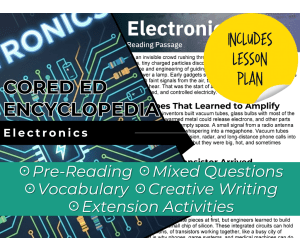
Electronics Reading Comprehension Passage - Cored Ed Encyclopedia
ELA, Reading Comprehension, Reading, Science, Technology, Pre-Reading, Language Development, Physics, Writing, Vocabulary, Grade 2, 3, 4, 5, Worksheets & Printables, Worksheets, Teacher Tools, Centers, Activities, Writing Prompts, Assessments, Quizzes and Tests, Quizzes, Lesson Plans
This electronics reading comprehension with lesson plan includes: Visualization (on the front cover) Start your lesson by taking a minute to think and share something about the topic. Read the script aloud (slowly), perhaps prepare some music or sound effects. Student close their eyes and let their imaginations wander. Students open their eyes, read the question aloud and give them a few minutes to complete. Ask a few students to share or keep answers until the end to compare with what they learn in the passage. Quick pause—thousands of Cored Education products are included with your TeachSimple membership. Download links and encyclopedia index available here. Pre-Reading Trivia Students will write down one thing they already know about the subject and then read five more facts and discuss. These facts are fun, and the students will enjoy learning about the subject before reading more. Give 1 minute for students to write what they already know (no pressure—best guess is fine). Read the five facts together. After each fact, do ask a student for their opinion, was it surprising? Set a purpose by asking students to highlight/underline one fact they want to learn more about during the reading. Reading Passage The text is a high-interest reading passage with set paragraphs, roughly three to four paragraphs long. It contains a variety of themes about the topic, anywhere from history to technology. The passage is between 250 and 350 words in length. First, ask students to look at the headings and see what they’ll learn about today. What do they know about the topic/heading? First read options: Teacher read-aloud (best for support). Partner reading (paragraph by paragraph). While reading, students underline important details, and vocabulary words they think may come up in the questions section. Mixed Questions The first question page contains four multiple-choice questions, each with a choice of four answers, and three written response questions that require a sentence or two from the student. Students complete the mcqs first independently, then review quickly as a class. For the 3 written responses, try to get students giving the answer with some form of evidence: “I think ___ because the text says ___.” If students get stuck, send them back to check the passage. Vocabulary Questions Practice seven key words from the text in this section across two activities. First section is scrambled words where students will unscramble three words given a clue for each. The second section is a word to meaning matching activity. Before starting, have some students read out words they underlined in the passage. Ask students to say the word and read aloud the sentence(s) around each word. Ask students to do scrambled words and the matching exercise in pairs then go through answers as a class. For the scrambled spelling task, get four pairs to come up to the board and write the words for extra practice with the other student reading out the clue. For the matching task, prompt students to give full sentences: “I matched ___ with ___ because ___.” Creative Writing In this question, the student will be required to write a five to eight sentence paragraph on a question related to the topic. Before starting, ask students write down 3 key ideas they are going to include in their piece. Ask students for ideas to share around the class to help those struggling. Pro writing expectations: 5–8 sentences At least 2 facts or details from the passage At least 2 vocabulary words from the previous page Students read their paragraphs while classmates listen for facts and vocabulary words. Extension Activities This page is optional for fast finishers or to take home. There are several activities, each one requiring a different skill. Do some, do none, do all, completely optional - but you will feel reassured knowing every possibility is planned for. Includes summary writting question and additional facts. Answer Key There are answers for the multiple-choice questions, written response questions have sample answers, vocabulary answers and if there is a summary question then a sample summary will be provided as well. Lesson Plan Included Customized lesson plan for this lesson is included. Lesson Snapshot Title: Electronics Genre: Nonfiction (Informational Text) Subject: Science (Technology/Physical Science) / Reading (Informational Text) Primary Topic: How electronics evolved to carry signals Estimated Guided Reading Level (A–Z): Q What This Lesson Teaches Best Defines electrons as tiny charged particles and explains that electronics guides them to carry a message (a “signal”), not just power devices. Traces a clear timeline of inventions : early radio parts → vacuum tubes → transistor (1947) → integrated circuits on silicon chips. Explains how devices can amplify signals (making a small signal stronger), using the vacuum tube and transistor examples. Shows how engineering changes over time led to smaller, more powerful technology , with chips holding millions (even billions) of transistors. Learning Goals Students will describe how electrons moving through wires can carry a message. Students will explain how vacuum tubes helped make radio signals stronger. Students will identify how the transistor differed from vacuum tubes (material used, size, and power use). Students will describe what integrated circuits are and why they allow devices to stay small. Students will summarize how electronics changed from early inventions to modern chips. Key Vocabulary From the Text electrons — tiny charged particles that move through wires. signal — a message carried through a device. vacuum — space with most air removed. transistor — a smaller part that can switch and amplify signals. semiconductor — a material used instead of a vacuum for a transistor. FULL CATALOG OF DOWNLOAD LINKS AND ENCYCLOPEDIA INDEX HERE
Author Cored Education
Rating
Tags Vocabulary, Reading Comprehension, Reading Passages, Lesson Plans, Ela Lesson Plans, Reading Comprehension Lesson Plans, Pre-reading, Science Lesson Plans, Technology, Physics

Properties of Matter: Mixtures and Solutions Gr. 5-8
Science, Physics, Grade 5, 6, 7, 8, Teacher Tools, Lesson Plans
Properties of Matter: Mixtures and Solutions Gr. 5-8 An all-encompassing educational resource ideal for both public school educators and homeschooling parents. This resource serves as an engaging teaching tool shedding light on quintessential science concepts associated with the properties of matter. Focused specifically on learners in grades 5 through 8, it elaborates not only what qualifies as matter but also the one that doesn’t while delving into finer details about their attributes & diversity. Going beyond mere theoretical text, this material explores concrete differences between mixtures and solutions. A Comprehensible Lesson Plan Lists intricate topics in simpler terms making them more comprehensible for middle school students. It deftly uses simplified language while incorporating familiar vocabulary to facilitate smoother & enjoyable learning experience around advanced scientific concepts. Interactive Learning Experience Beyond reading passages, this resource assures dynamic learning via multiple hands-on activities thus improving physical and chemical changes understanding around everyday objects enabling a concrete grasp over scientific principles. Packed with Experiments : Encourages active participation along with substantiating theoretical knowledge acquired. Comprehensive Learning Approach: Assures deeper comprehension & appreciation towards subject paving way for early interest towards STEM initiatives. In addition, color-coded mini posters included offer enriched visual representation facilitating knowledge retention, fulfilling State Standards requirements thereby assuring quality education. Also comes with detailed answer keys enabling enhanced evaluation capabilities ensuring consistent performance improvement alongside effective test-preparation strategy guidance. File type: PDF under Physical Science subcategory brings together different aspects of studying the properties of matter under one comprehensive module making your science sessions enlightening & productive. Seamless overlap of academic disciplines promises well-rounded education without compromising the fun aspect of learning thus promoting a lifelong love towards acquiring comprehensive knowledge. Summing Up Intended at helping learners comprehend complex science theories effortlessly without feeling overwhelmed by jargons, Properties of Matter: Mixtures and Solutions equips educators with appropriate tools to align teaching methodology as per contemporary pedagogical standards fostering success in the ever-evolving world of knowledge.
Author Classroom Complete Press
Tags PDF
India: Exploring Ancient Civilizations
Social Studies, History, History: Ancient, Grade 3, 4, 5, 6, Teacher Tools, Lesson Plans
India: Exploring Ancient Civilizations Teaching Resource This enriching resource, suitable for Grade 3 to 6 students, aims to captivate and enlighten on the ancient history of India. It provides a comprehensive material focusing on Social Studies, specifically Ancient History. Interesting Topics and Immersive Activities Students are encouraged to conduct research into these lost civilizations revealing intriguing aspects such as the emergence of written language. Learners can explore their creativity by creating jewelry artifacts or designing a coin reminiscent of that era. Further immersion activities introduce learners to writing poetry modelled after historical texts from Ancient India. Bonus Activity : Develop counting systems based on historical findings and participate in symbolic acts like wrapping up in traditional saree or turban attire. Nature-Conservative Task with Historical Context Create grocery bag bark pictures resonates with environmental consciousness while keeping within historical context. This is alongside other hands-on projects presented herein. Packaging and Content Delivery The product comes conveniently packaged as an easy-to-handle PDF allowing seamless integration into any curriculum plan regardless if it's for large classroom settings or small study groups. It also contains a total of 48-pages full with ready-to-print materials. An Effective Tool for Lesson Plan Preparation Educators preparing students through multi-faceted cultural exploration will find 'India: Exploring Ancient Civilizations' handy. It does not only stimulate curious minds but nurtures critical thinking among young learners, invites reflections towards our current society, stimulates comparison and analysis besides imbibing them with facts of an old civilization. Study sessions, be it whole-group or individualized homework assignments, this resource is adaptable thus giving educators the freedom to design educational approaches that accommodate specific student needs or preferences while maintaining rigorous learning engagement.
Author Classroom Complete Press
Tags Ancient, Civilizations, Exploring, India, Social Studies Lesson

Story Squares #2 for Grades 5-6: Multiple Learning Styles for Reading Comprehension
ELA, Reading, Reading Comprehension, Grade 5, 6, Teacher Tools, Lesson Plans
Story Squares #2 for Grades 5-6: Multiple Learning Styles for Reading Comprehension A dynamic teaching resource that bridges the gap between learning and fun in reading comprehension. Specifically designed for grades 5 and 6, this tool thinks outside the box, channeling students' multiple learning styles and tapping into their creativity. Understanding that not all children learn the same way, Story Squares goes beyond traditional comprehension approaches. It doesn't just help learners remember what they've read; it challenges them to connect deeply with the subject matter. Engages Language Arts skills Taps into Creative Arts abilities Harnesses Writing capabilities Incorporates Higher-Order Thinking processes. The integrated approach creates a robust learning experience centered around reading. Focused Classics: Makes comprehension tangible with its focus on five beloved children's classics: "Crash" "The Cay" "Walk Two Moons" "The Library Card" "Chasing Vermeer." For each of these timeless books, a story summary along with twenty activity options is provided to prompt student responses—inspiring diverse thinking avenues whilst elevating their grasp of literature. To further enhance educators' use of this resource in diverse settings, teacher hints are provided within the material. These helpful clues can guide educators to make each class engagement more effective and might serve as quick insights when grading student activities. Moreover, a grading rubric is included—an objectivity tool designed not just to assess but also feedback into improving students' comprehensive abilities over time. Glossary & Format: It also features a glossary of terms—a handy reference ensuring unfamiliar words become valuable additions to each student's vocabulary bank and promoting language expansion side by side improvement in comprehension skill level. With one product file presented in an easily accessible PDF format—Story Squares serves as an authentic course companion ideal for any Language arts module focused on comprehension. It paves a profound yet straightforward path towards the cultivation of well-rounded readers, enriched by an interactive learning process that leaves no stone unturned.
Author Classroom Complete Press
Tags PDF

Number & Operations: Multiplication & Division - Learn the Skill - FLASH-PC
Math, Multiplication and Division, Division, Common Core, Grade 3, 4, 5, Teacher Tools, Lesson Plans
Number & Operations: Multiplication & Division - Learn the Skill - FLASH-PC This is an educational tool designed to provide comprehensive instruction in multiplication and division for students in grades 3 to 5. Access a chapter mini that aligns with the curricula of Number and Operations. Strong focus on imparting practical knowledge, involving teaching multiplication and division employing real-world word problems. Serves as an extensive reservoir of mathematical tools and techniques that further strengthen students' analytical skills. Comes equipped with default English voice over instructions, aiding auditory learners effectively. Also includes Spanish voice-over options accommodating a wider student base. All content adheres to recognized educational standards such as: The Common Core State Standards (CCSS) The STEM initiatives with content written following National Council of Teachers of Mathematics guide (NCTM). Meticulously planned by experienced educators focusing on quality education while ensuring global relevance. Versatile Implementation: Serve as an enriching supplement for whole group instruction where everyone can learn together or within small groups where more focused attention can be paid towards grasping these math concepts deeply.. TCan also be allocated as homework assignments for reinforcing learned skills independently at home. This resource comprises one product file requiring a PC for operation; simplifying storage concerns making management easier alongside providing easy navigation during lessons. In essence, this valuable teaching resource fuels students' learning curiosity by offering hands-on experience with mathematical concepts yielding stronger proficiency ahead fulfilling their academic goals efficiently.
Author Classroom Complete Press
Tags Software (PC)
Number & Operations: Percentages with Fractions - MAC Software
Math, Percentages, Grade 3, 4, 5, Teacher Tools, Lesson Plans
Number & Operations: Percentages with Fractions - MAC Software The Number & Operations: Percentages with Fractions - MAC Software, is a substantial teaching resource crafted for grade 3, grade 4, and grade 5 teachers. This software provides teachers with tools to create captivating lessons on percentages within fractions under the larger umbrella of Number and Operations. Featuring curriculum-oriented content, this software streamlines the teaching process by offering: Pre- assessment materials Lesson plans, Real-world word problems, Timed drill activities. Interactive Games Element An essential function of this software is its set of interactive games—memory match game, board game, spinner game—that make learning pleasurable. These games cater to various classroom scenarios like whole group activities or small groups promoting collaborative problem-solving skills. Teachers can even assign these as homework tasks giving students chances to practically reinforce their theoretical understanding. Tangible Learning Aids & Math Tools The product also comes packed with printable materials that may serve multiple purposes—from classroom decors to tangible learning aids. It also contains math tools such as formula collaboratives or visual models assisting students decode complex mathematical concepts efficiently. Teacher's Guide:The number & operations: percentages with fractions - MAC Software also includes a comprehensive teacher guide providing end-to-end support in devising efficient lesson plans while ensuring alignment with the stipulated curriculum guidelines. Multilingual Compatibility Acknowledging multilingual classrooms' reality, English and Spanish voice-over options along-with text alternatives have been incorporated in the software broadening its use across diverse linguistic backgrounds. Innovative Feature : SMART Response assessment is an exceptional feature that provides immediate feedback on student’s progress enabling prompt interventions for better outcomes. Seamless Integration The product comes in a downloadable zip file format, MAC software. This ensures seamless assimilation with prevailing digital frameworks most schools are equipped with today. In consideration of the diversified educational landscape today—public school classrooms or homeschool set-ups —this product positions itself well within any modern educational setting embracing digital teaching solutions. So, if percentages within fractions are posing challenges to your students' progress in mathematics, this could be a promising inclusion in your teaching muscle.
Author Classroom Complete Press
Tags Numbers, Operations, Percentages, Fractions, Digital Math

Number & Operations: Decimals - Addition & Subtraction - Practice the Skill 1 - FLASH-MAC
Math, Decimals, Common Core, Grade 3, 4, 5, Teacher Tools, Lesson Plans
Number & Operations: Decimals - Addition & Subtraction - Practice the Skill 1 - FLASH-MAC This product is an all-encompassing teaching resource designed with grade 3, 4, and 5 educators in mind. It focuses on key mathematical concepts like number operations, particularly adding and subtracting decimals. The content adheres to the Common Core State Standards while observing NCTM guidelines. The tool contains practical skill activities crafted around timely drills effective for various teaching settings such as large group discussions or smaller study gatherings. These can also be assigned as homework tasks bolstering independent learning. Bilingual Focus:The program presents instructions by default in English both as voice over and text but it's also equipped with Spanish options making it suitable for classrooms emphasizing bilingual education. The software does not only cater to curriculum -based information – math tools are incorporated into the package to facilitate interactive learning experiences. This feature adds versatility meaning it could be used during individual study periods or even collaborative sessions where students assess these tools collectively. Affirming its convenience without compromising quality, all these offerings come packed in a software that works seamlessly on Mac devices extending its accessibility practically anywhere a computer is available – within homes or school properties. In addition to language choices; educators have room for personalization based on distinct requirements by customizing exercises foreseeing unique student levels therefore ensuring an inclusive educational experience that caters all learners regardless of their proficiency with decimals. In conclusion, Number & Operations: Decimals - Addition & Subtraction - Practice the Skill 1 presents itself as multifaceted tool embodied into a single FLASH-MAC application creating an engaging learning setting that aligns well with modern interactive educational methods while strictly adhering to widely acknowledged curriculum standards.
Author Classroom Complete Press
Tags Software (Mac)

Reducing Your Own Carbon Footprint: A Footprint On Your Dinner Plate Gr. 5-8
Science, Earth and Environmental Sciences, Environmental Science, Grade 5, 6, 7, 8, Teacher Tools, Lesson Plans
Reducing Your Own Carbon Footprint: A Footprint On Your Dinner Plate Gr. 5-8 Reducing Your Own Carbon Footprint: A Footprint On Your Dinner Plate Gr. 5-8 is an impactful teaching resource designed for grades 5 to 8. It guides students through the global issue of climate change, illustrating the human influences and their correlated environmental impacts. Main Features: Designed in consideration of Bloom's Taxonomy and STEAM initiatives An integrative blend of scientific theory and practical application A deep dive into the carbon footprints associated with our food consumption patterns The resource primes students with extensive information about the greenhouse effect - a critical background to comprehend how typical human actions can augment global warming. It then explores domestic energy use, specifically in kitchen scenarios. Kitchen to Farm Journey: New insights are explored about each step involved in transporting food from farm fields up to your dinner plates - pointing out every step that broadens carbon footprints along this journey. Sustainable Practices Discussion: Emphasizing contrasting methods used in sustainable agricultural practices versus conventional ones. Travel & Waste Management Components: A travel footprint calculator is included for students to compute their own travel-related carbon emission situations. An elaboration on waste management dynamics post-consumption stage also forms a key part of this resource, instilling an essential sense of responsibility in students beyond just safe disposal ethics. Creative Exercise for Community Eco-friendly Practices: Exploring feasible ways of embedding eco-friendly norms into community life encourages social contract development. This offers engaging group collaboration opportunities or homework assignments. Downloadable Resource: This teaching resource comes in a convenient downloadable PDF format. Loaded with 30 pages of printable material including graphic organizers , crossword puzzles, comprehension quizzes (with answer keys), and word searches, it makes the learning process interactive yet straightforward.
Author Classroom Complete Press
Tags Carbon Footprint, Agriculture, Environment, Graphic Organizers, Electricity

Reading Comprehension: Fact and Opinion
ELA, Reading, Reading Comprehension, Common Core, Grade 5, 6, 7, 8, Teacher Tools, Lesson Plans
Reading Comprehension: Fact and Opinion An instrumental teaching resource designed to enhance the reading and comprehension skills of children. This product primarily suits students in Grade 5 up to Grade 8, perfect for classroom educators, homeschooling parents, and caregivers. "Fact and Opinion" Chapter Slice The "Fact and Opinion" chapter slice is part of the broader "Reading Comprehension" instruction series focusing on a critical aspect of reading mastery - discerning facts from opinions. This technique forms a robust foundation for understanding various texts while equipping learners with essential communication skills. Vital Reading Acquisition Building Blocks Emphasized Context Clues Inference Understanding Main Idea Determination Framed with definitions of essential terms throughout the product file, learners get guidance as they practice what they learn in an intuitive manner using this user-friendly resource. Versatility The lesson plan's versatility allows for effective use in different settings. Whether educators wish to implement it during whole group instruction or small cluster learning sessions or even assign it as homework, they can custom-tailor its usage according to their needs. Bloom’s Taxonomy & Common Core State Standards Adherence Assessment Tools Framework alignment guaranteed with adherence to both Bloom's Taxonomy frameworks. Compliance with Common Core State Standards assures its relevance. Bookended by detailed lesson plans focusing specifically on Language Arts comprehension tailored explicitly around upper elementary- middle schoolers' requirements. ``` Delivered through one user-friendly PDF file – use Reading Comprehension: Fact and Opinion as an invaluable addition to your educational toolkit. ```
Author Classroom Complete Press
Tags PDF
Quit Copying Me! Mimicry in Nature: A Cross-Curricular Unit
Science, Life Sciences, Animals, Grade 5, 6, Teacher Tools, Lesson Plans
Quit Copying Me! Mimicry in Nature: A Cross-Curricular Unit This highly engaging teaching resource, designed specifically for 5th and 6th-grade educators, sheds light on the fascinating science of zoology. It especially focuses on how animals utilize incredible mimicry techniques and camouflage to trick other animals. An Informative Nonfiction Article The unit revolves around a factual nonfiction article that unveils the intricate details about these fascinating survival tactics. This content is perfect for whole group learning, projected onto a screen or printed out for smaller groups or individual study. Worksheets that Enhance Learning The package includes well-structured worksheets that not only reinforce subject knowledge but also enhance problem-solving skills. These can be assimilated into classroom exercises or given as homework assignments, providing the necessary flexibility for different instructional settings. Addition Activity Ideas To maintain student engagement throughout the study period, the unit has supplementary activities laid out. These serve to further enrich classroom discussions and forge a strong connection between new concepts learned about animal behaviour with previously studied topics in zoology. A Versatile Educational Resource "Quit Copying Me! Mimicry in Nature: A Cross-Curricular Unit", is ideal whether you are a public school teacher looking for innovative lesson plans or a homeschooler creating an immersive educational experience. It embodies theory aided by practical exercises creating an excellent approach to teach scientific concepts from various perspectives. Moreover, being an accessible seven-page PDF makes it exceptionally user-friendly regardless of your education environment. In Conclusion... This resource isn't limited to delivering lessons; it's designed to foster a learning atmosphere where learning naturally evolves out of the curiosity and intrigue sparked by nature's brilliant mimicry and camouflage. Embrace this unit into your curriculum plan and witness the transformation in your students' understanding of zoology.
Author Classroom Complete Press
Tags Science Lesson, Informational Text, Reading Passage, Graphic Organizer, Comprehension Questions
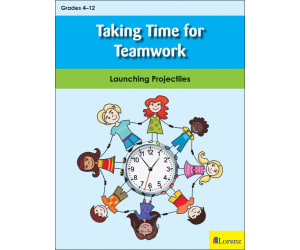
Taking Time for Teamwork: Projectile Launcher Challenges:
, Grade 4, 5, 6, 7, 8, 9, 10, 11, 12, Teacher Tools, Lesson Plans
Taking Time for Teamwork: Projectile Launcher Challenges Taking Time for Teamwork: Projectile Launcher Challenges is an educational resource particularly designed to foster teamwork and problem-solving among students. It serves as an engaging tool for educators to involve learners in enjoyable yet challenging activities that blend learning with entertainment. About the Product: Activities embedded in the resource stimulate critical thinking skills as students collectively work to complete tasks like creating catapults or contraptions that launch objects. The product provides a comprehensive list of supplies needed along with substantive teacher's notes, enabling smooth execution of lesson plans. Precisely explained testing and scoring goals make the assessment quicker and easier. Versatility & Accessibility: The resource caters to a broad range of grades, from 4th grade up till 12th grade, making it well-suited for multi-level educators including homeschooling tutors handling multiple grades simultaneously. Falling under "Other" subject categorization, it exhibits inherent flexibility enabling usage across diverse curricular areas making it widely appealing. All resources are conveniently bundled in a single PDF file facilitating easy download and print functionality ensuring efficient teaching methodologies without unnecessary administrative complications. Application of Activities: The implementation of activities could be done either as whole group assignments encouraging interactive learning experiences or as small group or individual tasks contributing varied styles of cognitive processing among different learners . Additionally these physical challenges can be converted into home assignments bridging school-home learning environment effectively. In Summary... Taking Time for Teamwork: Projectile Launcher Challenges, is much more than just educative entertainment. It amalgamates teamwork, problem-solving, and higher-level thinking into one wholesome teaching resource transforming traditional classrooms into interactive think-tanks, thereby stretching students' creative boundaries while also assessing their performance in a productive way.
Author Classroom Complete Press
Tags PDF

Xylophones Reading Comprehension Passage - Cored Ed Encyclopedia
ELA, Language Development, Reading Comprehension, Reading, Science, Physics, History, Social Studies, Music, Creative Arts, Grade 2, 3, 4, 5, Worksheets & Printables, Worksheets, Teacher Tools, Centers, Activities, Writing Prompts, Assessments, Quizzes and Tests, Quizzes, Lesson Plans
This xylophones reading comprehension with lesson plan includes: Visualization (on the front cover) Start your lesson by taking a minute to think and share something about the topic. Read the script aloud (slowly), perhaps prepare some music or sound effects. Student close their eyes and let their imaginations wander. Students open their eyes, read the question aloud and give them a few minutes to complete. Ask a few students to share or keep answers until the end to compare with what they learn in the passage. Quick pause—thousands of Cored Education products are included with your TeachSimple membership. Download links and encyclopedia index available here. Pre-Reading Trivia Students will write down one thing they already know about the subject and then read five more facts and discuss. These facts are fun, and the students will enjoy learning about the subject before reading more. Give 1 minute for students to write what they already know (no pressure—best guess is fine). Read the five facts together. After each fact, do ask a student for their opinion, was it surprising? Set a purpose by asking students to highlight/underline one fact they want to learn more about during the reading. Reading Passage The text is a high-interest reading passage with set paragraphs, roughly three to four paragraphs long. It contains a variety of themes about the topic, anywhere from history to technology. The passage is between 250 and 350 words in length. First, ask students to look at the headings and see what they’ll learn about today. What do they know about the topic/heading? First read options: Teacher read-aloud (best for support). Partner reading (paragraph by paragraph). While reading, students underline important details, and vocabulary words they think may come up in the questions section. Mixed Questions The first question page contains four multiple-choice questions, each with a choice of four answers, and three written response questions that require a sentence or two from the student. Students complete the mcqs first independently, then review quickly as a class. For the 3 written responses, try to get students giving the answer with some form of evidence: “I think ___ because the text says ___.” If students get stuck, send them back to check the passage. Vocabulary Questions Practice seven key words from the text in this section across two activities. First section is scrambled words where students will unscramble three words given a clue for each. The second section is a word to meaning matching activity. Before starting, have some students read out words they underlined in the passage. Ask students to say the word and read aloud the sentence(s) around each word. Ask students to do scrambled words and the matching exercise in pairs then go through answers as a class. For the scrambled spelling task, get four pairs to come up to the board and write the words for extra practice with the other student reading out the clue. For the matching task, prompt students to give full sentences: “I matched ___ with ___ because ___.” Creative Writing In this question, the student will be required to write a five to eight sentence paragraph on a question related to the topic. Before starting, ask students write down 3 key ideas they are going to include in their piece. Ask students for ideas to share around the class to help those struggling. Pro writing expectations: 5–8 sentences At least 2 facts or details from the passage At least 2 vocabulary words from the previous page Students read their paragraphs while classmates listen for facts and vocabulary words. Extension Activities This page is optional for fast finishers or to take home. There are several activities, each one requiring a different skill. Do some, do none, do all, completely optional - but you will feel reassured knowing every possibility is planned for. Includes summary writting question. Answer Key There are answers for the multiple-choice questions, written response questions have sample answers, vocabulary answers and if there is a summary question then a sample summary will be provided as well. Lesson Plan Included Customized lesson plan for this lesson is included. Lesson Snapshot Title: Xylophones Genre: Nonfiction (informational text) Subject: Music / Science of Sound (Informational Reading) Primary Topic: How xylophones make sound and their history Estimated Guided Reading Level (A–Z): Q Support pages present: Visualization prompt, pre-reading trivia, mixed questions, vocabulary activities, creative writing, extension activities, and an answer key. What This Lesson Teaches Best Explains how a xylophone’s “keys” are wooden bars that make notes when tapped with a mallet . Teaches the relationship between bar length and pitch (long bars = low sounds; short bars = high sounds). Shows a core sound concept: the wood vibrates to create the note, and resonators underneath help the sound carry. Builds historical understanding of xylophone-like instruments across Africa and Asia, including early designs using logs, pits, and gourds to boost sound. Connects music history and school use: the xylophone spread into Europe, appears in orchestras (including Camille Saint-Saëns and Danse Macabre), and is used in classrooms to learn melody and rhythm (including Orff-Schulwerk). Learning Goals Students will describe how tapping a bar with a mallet makes a xylophone note. Students will explain how bar length changes pitch using details from the text. Students will identify what resonators do and where they are located on some xylophones. Students will summarize how xylophone-like instruments were made long ago and how sound was boosted. Students will sequence key points in the xylophone’s timeline (early instruments, later written descriptions, and later orchestra use). Key Vocabulary From the Text resonators — tubes/shapes under bars that help sound carry. vibrates — shakes back and forth to make sound. documented — recorded in writing. orchestra — a large group of musicians playing together. octave — a set of notes from one pitch to next. FULL CATALOG OF DOWNLOAD LINKS AND ENCYCLOPEDIA INDEX HERE
Author Cored Education
Rating
Tags Vocabulary, Reading Comprehension, Reading Passages, Lesson Plans, Ela Lesson Plans, Reading Comprehension Lesson Plans, Pre-reading, History Lesson Plans, Physics, Music Lesson Plans

Properties of Matter: Physical Changes vs. Chemical Changes Gr. 5-8
Science, Physics, Grade 5, 6, 7, 8, Teacher Tools, Lesson Plans
Properties of Matter: Physical Changes vs. Chemical Changes Gr. 5-8 Properties of Matter: Physical Changes vs. Chemical Changes Gr. 5-8 is a top-notch teaching resource designed specifically for students in grades 5 to 8 studying the subject of physical science. This resource highlights: The definition and properties of matter. The difference between physical changes and chemical changes in matter. "Physical Changes vs. Chemical Changes" This chapter forms a crucial part from the broader lesson plan on "Properties of Matter". It uses interactive methods and hands-on activities to help students grasp complex concepts like mixtures and solutions. Through engaging experiments, reading passages with simplified vocabulary, this versatile teaching guide ease educators' task during whole-class instruction, homework assignments or even small group discussions among students fostering peer learning opportunities. Alignment with State Standards An important aspect of this guide is its alignment with State Standards ensuring complete coverage preparing your class well for assessments . Crafted as a ready PDF file easing curricula planning allowing easy incorporation into daily lesson plans. Inclusion of mini color posters functioning as effective visual aids heightening interest while facilitating quick review during test preparations. A handy answer key providing ready references enhancing productivity for teachers. Bloom's Taxonomy and STEM Initiatives: Not just an educational aid but a comprehensive guide helping learners grasp science theories simply promoting critical thinking skills preparing them inadvertently into future STEAM careers. "Properties of Matter: Physical Changes vs Chemical Changes Gr. 5-8" is not just an educational resource, but a guide ensuring learners grasp complex science theories in a simplified manner eventually sparking their interest and curiosity about the subject.
Author Classroom Complete Press
Tags PDF, Physical And Chemical Changes Lesson Plans, Physical Properties Of Matter 5th Grade, Physical And Chemical Changes Activities For 5th Grade, Properties Of Matter Activities 5th Grade, Physical And Chemical Changes And Properties Of Matter Worksheet Key

World Electoral Processes: The Legitimacy of Democratic Government Gr. 5-8
Social Studies, Government, Grade 5, 6, 7, 8, Teacher Tools, Lesson Plans
World Electoral Processes: The Legitimacy of Democratic Government Gr. 5-8 A pivotal teaching resource for educators, specifically designed to impart knowledge on global electoral systems. Aimed at fostering a comprehensive understanding of different types of governments, ranging from presidential and parliamentary to dictatorships. Suitable for students in grades five through eight, this learning material combines elements from social studies and government subjects seamlessly and in an engaging manner. Teaching Format: Useful for whole group discussions, small learning clusters or even as individual homework tasks ensuring learners' active involvement irrespective of class structure. Historical Context: Takes students back in time to understand the origins of voting systems and explores democratic governments questioning if all types genuinely represent people's opinions. Evaluation: Serves as a platform for comparison between presidential and parliamentary systems focusing primarily on legislative power dynamics. This comparison forms the basis for both factual education and critical thoughts about governance types crucial in global citizenship education. Diverse Learning Opportunity:Incorporates role-play exercises where students can simulate Parliament positions delivering statements on meaningful issues echoing real-life legislature sessions enhancing communication proficiency along with civic awareness. This Digital Resource presents more than just information consumption but drive deeper into history interpreting varied roles dictated often by military leaders providing contextual political mythology insights over geographies across different eras. Key Topics & Supplementary Tools Talks about suffrage discussing eligibility criteria necessary for citizens’ right to vote fostering consciousness about civil liberties forms including writing tasks progressively aligned with Bloom's Taxonomy improving cognitive mastery alongside promoting literacy development among pupils group-wise or individually allowing versatile usage opportunities conforming to State Standards concurrently. Included are additional components aimed at reinforcing concepts like Crosswords, worksheets -and-printables/word-searches">Word Searches , Quizzes and Comprehensions along with answer keys providing a complete and immersive learning experience. Ultimately, this world electoral processes study guide offers a multidimensional approach to understanding democratic legitimacy preparing students efficiently to explore global political landscapes.
Author Classroom Complete Press
Tags PDF

Galaxies & The Universe: Measuring Distance in the Universe - FLASH-PC
Science, Earth and Environmental Sciences, Space, Common Core, Grade 5, 6, 7, 8, Teacher Tools, Lesson Plans
The Galaxies & The Universe: Measuring Distance in the Universe - FLASH-PC An engaging teaching resource crafted to ignite astronomical curiosity within students. Perfect for grade levels 5 through 8, this digital tool presents a comprehensive approach towards studying galaxies and the Universe. Engaging Different Learning Styles Educators consistently strive to make science more appealing. This toolkit combines detailed reading material with practical learning activities, such as: Text Passages: Provides an in-depth explanation of complex concepts about distance measurement in astronomy. Interactive Exercises: Encourages inquiry-based learning before and after reading enhancing critical thinking skills. Beyond Traditional Teaching Tools This educational kit extends beyond traditional text-based information by incorporating dynamic elements like: Vocabulary flashcards , Interactive activities, Video clips showcasing celestial phenomena, Immersive audio segments, Educational Standards Alignment The Galaxies & The Universe: Measuring Distance in the Universe - FLASH-PC toolkit aligns impeccably with Common Core State Standards. It also embraces Bloom's Taxonomy principles of differentiated cognitive skill development. Versatile Classroom Application Suitable for diverse classroom scenarios— be it group lessons around computer screens within traditional settings or individualized comprehensive homework assignments at home. It’s your ticket into transforming your Astronomy teachings! Dare to take students' understanding beyond textbooks using this complete educational toolkit! Helping them discover our immeasurable universe—all while gaining valuable knowledge that will boost their performance in Science classes. And the best part—no additional software installation required. Perfect for modern educators desiring swift transitions between subjects or lesson plans.
Author Classroom Complete Press
Tags Software (PC)
I WONDER - How Did Mermaids Enchant Sailors | Animated Video Lesson
History, Social Studies, Common Core, Grade 4, 5, 6, 7, 8, 9, 10, Lesson Plans, Teacher Tools
Video Introduction An amazing video designed for the students to learn more about mythological creatures in different cultures. I WONDER - How Did Mermaids Enchant Sailors | Animated Video Lesson Mythology is full of wonders and spectacular stories. Ancient civilizations were trying to explore every aspect of life, while they search for new technologies, they wanted to believe in something big and can change the world, so they created mythical creatures and mythical stories. Let's hear about them! What do you know about these creatures? Cyclops, Centaurs, Selkies, Phoenix, Gnomes, Dragons, Gorgons, Orcs, Cerberus, Trolls, Minotaur, Griffins, Mermaids, Elves, Polyphemus, Pegasus, and Ogres. I WONDER - How Did Mermaids Enchant Sailors | Animated Video Lesson The video is perfect for encouraging the creativity skills for the students, while learning more about this fantastic mythical creature. I WONDER - How Did Mermaids Enchant Sailors | Animated Video Lesson This friendly designed video is suitable for students at school, homeschooling, and as a group activity. Format Available in MP4 format.
Author Educational Voice
Rating
Tags How Did Mermaids Enchant Sailors, How Did Mermaids Enchant Sailors Video, Mermaids Enchant Sailors, Mermaids Enchant Sailors Facts, Mermaids Enchant Sailors Video, Mermaids Enchant Sailors Video For Kids

Global Warming CAUSES: Greenhouse Gases: Nitrous Oxide - FLASH-MAC
Science, Earth and Environmental Sciences, Environmental Science, Common Core, Grade 5, 6, 7, 8, Teacher Tools, Lesson Plans
Global Warming CAUSES: Greenhouse Gases: Nitrous Oxide - FLASH-MAC The Global Warming CAUSES teaching resource, focusing on Greenhouse Gases and specifically Nitrous Oxide, offers enriching and engaging educational material for students in grades 5 through 8. This comprehensive resource delivers insights into environmental science within the framework of science subjects. Taking a deep dive into the root causes behind global warming, it centres around one of the pivotal greenhouse gases - nitrous oxide. It aids in fostering a fundamental understanding of this critical subject among young minds as part of their essential science curriculum . Educational Resources: This informative chapter mini equips educators with curriculum -based content in diverse formats like reading passages that have questions for students to ponder before and after they read. These reading tasks can create lively group discussions or serve as comprehension exercises for individual learners. To boost learning retention and allow learners to interact with concepts more dynamically, various interactive activities are incorporated into this package. The provided material encourages users discover new concepts at their own pace either individually or collaboratively thereby enhancing their knowledge retention capacity multiple folds. For vocabulary development regarding this key topic, flash cards are also made available helping visualize complex terms easily making them perfect for classroom study or homework assignment alike. In addition to printables that provide tactile reinforcement of lessons learned digitally; multimedia resources such as video content and audio undertones further make it more comprehensive by bringing auditory learners onboard ensuring learning is holistic yet easy & fun-filled! Educational Standards: Upholding the highest education standards, all content aligns seamlessly with the Common Core State Standards equipping educators with quality educational tools ensuring no compromises on student's learning outcomes. The depth level has been carefully curated according to Bloom’s Taxonomy thus creating an integrated learning resource that supports deep pan-curricular connections. A must-have tool designed meticulously considering how today's digital native students learn best – a tool where conventional academic rigour meets modern delivery methods! Be it science classes in traditional classrooms, virtual classrooms, or homeschooling setups, the FLASH-MAC resources equips educators with quality content enabling them to nurture next-generation leaders. Please note that this teaching resource requires a Mac software file type for efficient operation. Note: Only one product file is contained within this purchase.
Author Classroom Complete Press
Tags Software (Mac)

Climate Change: Effects: Sea Level Changes Gr. 5-8
Science, Earth and Environmental Sciences, Environmental Science, Grade 5, 6, 7, 8, Teacher Tools, Lesson Plans
Climate Change: Effects: Sea Level Changes Gr. 5-8 An exceptional teaching resource designed for middle school educators looking to provide comprehensive insight into climate change focusing primarily on sea level changes. Journey Through Time Students investigate how Ice Ages of the past influenced early humans and their migration patterns conducting hands-on experiments with homemade ice sheets to understand their effects on sea levels. Modeling Rising Sea Levels & Fostering Creativity Encourages creativity and critical thinking by enabling students to create their own models illustrating rising sea levels. Includes focused discussions on serious health concerns and economic challenges triggered by climate shifts - * mosquito-carrying diseases, heatstroke risks, pollution problems and unpredictable weather patterns affecting farming industries, etc. Promotes personalized learning through individual ecosystem studies emphasizing specific impacts of climate change. Bloom's Taxonomy & STEAM Initiatives Alignment: This learning module aligns with Bloom's Taxonomy as well as STEAM initiatives fostering problem-solving skills in conjunction with core knowledge building. The lesson includes unlocking activities such as crossword puzzles & word searches,... Increase engagement level , Elevate efficiency among learners from Grades 5 through 8, , Serve adaptability across both collaborative classroom settings or individual study environments seamlessly, . Lastly, the PDF formatted resource package comes bundled with a comprehensive answer key saving teachers' time when evaluating students' progress. Equip students for the future while unraveling our climate's history using Climate Change: Effects: Sea Level Changes Gr. 5-8.
Author Classroom Complete Press
Tags PDF
I WONDER - What Are Dragons | Animated Video Lesson
History, Social Studies, Common Core, Grade 4, 5, 6, 7, 8, 9, 10, Lesson Plans, Teacher Tools
Video Introduction An amazing video designed for the students to learn more about mythological creatures in different cultures. I WONDER - What Are Dragons | Animated Video Lesson Mythology is full of wonders and spectacular stories. Ancient civilizations were trying to explore every aspect of life, while they search for new technologies, they wanted to believe in something big and can change the world, so they created mythical creatures and mythical stories. Let's hear about them! What do you know about these creatures? Cyclops, Centaurs, Selkies, Phoenix, Gnomes, Dragons, Gorgons, Orcs, Cerberus, Trolls, Minotaur, Griffins, Mermaids, Elves, Polyphemus, Pegasus, and Ogres. I WONDER - What Are Dragons | Animated Video Lesson The video is perfect for encouraging the creativity skills for the students, while learning more about this fantastic mythical creature. I WONDER - What Are Dragons | Animated Video Lesson This friendly designed video is suitable for students at school, homeschooling, and as a group activity. Format Available in MP4 format.
Author Educational Voice
Rating
Tags What Are Dragons, What Are Dragons Video, Dragons, Dragons Facts, Dragons Video, Dragons Video For Kids, Dragons Facts For Kids, Mythology, Mythology Facts, Mythology Video

I WONDER - How Do Snakes Smell | Animated Video Lesson
STEM, Biology, Life Sciences, Science, Animals, Grade 1, 2, 3, 4, 5, 6, 7, 8, Lesson Plans, Teacher Tools
Video Introduction Animal kingdoms are full of fascinating wonders to learn. This video is designed for the students to learn more about animals in different countries. I WONDER - How Do Snakes Smell | Animated Video Lesson Do you like animals? what is your favorite one? Do you own a pet? If yes, tell us more about it, like what its name? And what do you like most about it? What are the animal kingdoms? Can you write down the characteristics of each animal class like mammals, birds, reptiles, amphibian, fish and mollusks. Do you know that some animals can sing, can you name any of them? What is the largest and the smallest mammal in the world? What is the largest and the smallest bird in the world? What is the largest and the smallest fish in the world? I WONDER - How Do Snakes Smell | Animated Video Lesson The video is perfect for encouraging the researching skills for the students, while learning more about these fantastic animals. I WONDER - How Do Snakes Smell | Animated Video Lesson This friendly designed video is suitable for students at school, homeschooling, and as a group activity. Format Available in MP4 format.
Author Educational Voice
Tags How Do Snakes Smell, How Do Snakes Smell Video, Snakes, Snake, Snakes Facts, Snakes Facts For Kids, Snakes Video, Snakes Video For Kids, Snake Facts, Snake Facts For Kids
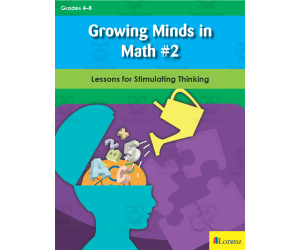
Growing Minds in Math #2: Lessons for Stimulating Thinking
, Grade 4, 5, 6, 7, 8, Teacher Tools, Lesson Plans
Growing Minds in Math #2: Lessons for Stimulating Thinking Growing Minds in Math #2 is a resource designed to nurture critical thinking skills through the lens of mathematics. This packet offers an innovative approach for educators, including those who are homeschooling their students or teaching in public schools. The focus of this resource is not only on math but also keenly emphasizes the development of advanced thinking abilities. The tasks featured within require students to engage with algebraic concepts, critically examine mathematical equations for errors, and explore diverse problem-solving methods. Unique Features This product stands apart because of its multi-level structure - each activity comes with several degrees of complexity. This approach paves the way for inclusive learning by accommodating a wide age range and various skill levels. Guidance provided to teachers within every lesson's framework simplifies the implementation process. The flexible implementation makes Growing Minds in Math #2 stand out among educational resources. Instant Integration into Classroom Scheme! The 11-page PDF document can be effectively utilized across different instructional settings like: Whole group instruction, Small group sessions, or as enriching homework assignments; all set and ready for immediate deployment into your classroom scheme! A Resource That Suits Age Group From Grade 4th till Grade8th Students! Makes theoretical knowledge & practical application balanced; making mathematical learning an interesting journey rather just another subject. In using Growing Minds in Math #2 lessons, you're cultivating more than just numbers sense – you’re planting seeds that empower pupils to think critically which goes beyond classroom doors producing lifelong learners! Optimize your instruction style now by adding this comprehensive tool specially curated keeping educators' needs at heart.
Author Classroom Complete Press
Tags Critical Thinking, Math Skill, Math Strategies, Thinking Skills, Teacher Guide