



2,282 products added recently
Page 82 - 5th Grade Lesson Plans
Prepare your fifth graders for future challenges with lesson plans that promote higher-order thinking and mastery of key concepts. These resources encourage collaboration and in-depth exploration across subjects. Use them to guide your students toward readiness for middle school.

 Show filters


Egypt The Gift of the Nile: Guided Reading Level R with Lesson Plan
ELA, Resources for Teachers, Reading Comprehension, Reading, Science, Geography, Social Studies, History, Earth and Environmental Sciences, Technology, Grade 3, 4, 5, Worksheets & Printables, Worksheets, Teacher Tools, Centers, Activities, Literacy Readers, Quizzes, Quizzes and Tests, Assessments, Lesson Plans
This Egypt: The Gift of the Nile (level r) guided reading book with lesson plan includes: Guided Reading Color Label (front cover x1) This is a quick way to match the book’s demands to what students can generally handle.. The overall goal is to use the level/color to pick books for several smaller groups. To qualify for a certain level, a student is expected to read a book from that level with about 90–94% accuracy. If a student is consistently accurate and understands, move up a level. If the student is struggling at that level, drop down and add more support. Each student will improve at completely different rates, but it is generally one of the best ways to check progress across the class. DOWNLOAD THE CATALOG TO VIEW ALL GUIDED READING BOOKS AVAILABLE (SORTED LEVELS A-Z) Pre-Reading Question (x1) Teacher asks the prompt aloud, can be while showing the cover or first page. Students share what they already know, or make educated guesses from the cover. Prompt them to use the target vocabulary. Write some of their responses on the board to look back at during the reading. Vocabulary Words (x5) Introduce the five words, best doing it one at a time. Start by saying it, while students repeat and then see if anyone knows what it means before reading further. Read through the meaning and try to briefly connect each word to a picture or gesture so it’s meaningful. Ask students to flip through the book pages and point to where they see each of the vocabulary words. While reading the book pause upon coming across one of the vocab words or read the sentence twice to make sure students understand the word has appeared. Optional: Ask students to raise hands whenever they see/hear one of the new words. Guided Reading Pages (x10) Check the book snapshot (below) for: primary topic - do you need to prep extra reading or intro materials on this? what is taught best - decide on 1-2 bullets to focus on, use the prompt or words provided here for best results. learning goals - what you are checking for students to be able to do after the session, elicit answers using prompts or words provided. key vocabulary (see section above). questions overview - so you know what is coming up and if you need to prep extra materials to assist understanding. Run the lesson You may have already looked at a few of the pages together, but you can show them some of the pictures again first to set meaning. Depending on how much time you have and how familiar your students are with guided reading class, you may want to read the book aloud first with the group first. Students whisper or partner read, while you listen in. If time, do it as a group, one student reading a page each. Use the guided page’s prompts to coach: “Check the picture / does it make sense?” “Point under the words / try the first sound” “Reread the sentence smoothly”. Try to focus more on one student per session (rotating every time), so you can work out if they are ready to move up or need to move down a level. Comprehension Questions (back cover x3) This is your way to check that students didn’t just say the words, but actually understood the text. First, let students answer by pointing to the page/picture and saying a short sentence. After any answer, follow with: “Show me where you found that in the text.” In bigger groups, have partners answer first (10–20 seconds), then call on 2–3 students to share. Differentiation tips: Emerging speakers/struggling readers: oral + pointing On-level: oral in a full sentence Higher: one written sentence or draw + label Book Snapshot Title: Egypt: The Gift of the Nile Genre: Nonfiction Subject: Social Studies (Geography/History) Primary Topic: How the Nile shaped ancient and modern Egypt Estimated Guided Reading Level (A–Z): R What This Book Teaches Best How Egypt’s desert environment (Sahara Desert, little rain) made a single water source essential for a thriving civilization. Why the Nile River’s yearly floods mattered, including how receding water left fertile silt for growing food. Major symbols of ancient Egypt and what the text says they were for or represented (Great Pyramid of Giza; Great Sphinx). Key beliefs and systems of ancient Egypt, including pharaohs, the afterlife, hieroglyphics, and mummification. Connections between past and present by describing modern Cairo, the Suez Canal, tourism, and archaeologists’ discoveries. Learning Goals Students will describe Egypt’s location and explain how the Sahara Desert affects the land. Students will explain how Nile floods helped farmers grow food by using the text’s details about silt. Students will identify what the Great Pyramid of Giza was built for and describe one detail about its construction. Students will describe how ancient Egyptians recorded history and managed government using hieroglyphics and scribes. Students will explain why mummification was developed and describe what the text says happened during the process. Students will describe two details that show Egypt is a modern nation today (for example, Cairo and the Suez Canal). Key Vocabulary From the Text receded — moved back after being higher. silt — rich dark soil left by water. monumental — very large and important. hieroglyphics — picture symbols used as a writing system. mummification — preserving a body by drying and wrapping. Discussion Prompts Pre-reading question: How might a river help people live and farm in a desert place? Comprehension questions: What did the Nile River’s floods leave behind when the water receded, and why did that help farmers? Comprehension questions: What does the text say the Great Pyramid of Giza was built for? Comprehension questions: What two details from the text show Egypt is a modern nation today? Printing Tips 1. Best Printing Method (Recommended) “Booklet” Printing (Best if Available) If your printer or PDF viewer supports Booklet Printing , use this. Settings to use: Print mode: Booklet Paper size: Letter or A4 (either works) Orientation: Landscape Print on both sides: Yes Flip on: Short edge Scaling: Fit to printable area Booklet subset: First test: Front sides only Then: Back sides only This will automatically: Pair pages correctly Put the cover on the outside Align everything for folding After printing, fold in half and staple along the spine . 2. If “Booklet” Printing Is NOT Available You can still print this correctly with manual duplex printing . Step-by-step: Open the PDF. Choose Print . Set: Orientation: Landscape Pages per sheet: 1 Print on both sides: Yes Flip on: Short edge Print all pages . Because each PDF page already contains two facing book pages, the result will still fold cleanly into a book. Thousands of Cored Education products are included with your TeachSimple membership. Download links and encyclopedia index available here.
Author Cored Education
Rating
Tags Reading Comprehension, Reading Passages, Reading, Guided Reading, Guided Reading Lesson Plan, Guided Reading Activity, Pre-reading, Social Studies, Geography, History

I WONDER - How Dangerous Are Greenhouse Gases | Animated Video Lesson
Environmental Science, Earth and Environmental Sciences, Science, Earth Sciences, Grade 4, 5, 6, 7, 8, 9, 10, Lesson Plans, Teacher Tools
Video Introduction An amazing video designed for the students to learn more about STEM. I WONDER - How Dangerous Are Greenhouse Gases | Animated Video Lesson Do you like STEM subjects? what is your favorite one? Have you ever tried to plant a seed? If yes, tell us more about it. Or have you ever tried to invent something? If yes, tell us more about it. And how do you think it will help us? Have you ever seen a microorganism under a microscope? What was it? And how it looked like? Mathematics is a marvelous subject. Let' sharpen our brains and solve some equations. Do you like timetable tricks? What is your favorite one? Do you know how to code? Have you ever created an app or a game before? If yes, how was it like? I WONDER - How Dangerous Are Greenhouse Gases | Animated Video Lesson The video is perfect for encouraging the researching skills for the students, while learning more about this fantastic topic. I WONDER - How Dangerous Are Greenhouse Gases | Animated Video Lesson This friendly designed video is suitable for students at school, homeschooling, and as a group activity. Format Available in MP4 format.
Author Educational Voice
Tags How Dangerous Are Greenhouse Gases, How Dangerous Are Greenhouse Gases Video, Greenhouse Gases, Greenhouse Gases Facts, Greenhouse Gases Facts For Kids, Greenhouse Gases Video, Greenhouse Gases Video For Kids

How to Write a Paragraph: Forms and Purposes of Paragraphs - FLASH-PC
ELA, Writing, Common Core, Grade 5, 6, 7, 8, Teacher Tools, Lesson Plans
The How to Write a Paragraph: Forms and Purposes of Paragraphs - FLASH-PC A meticulously designed teaching resource specifically crafted for Grade 5, 6, 7, and 8 students. This product boasts of numerous features tailored to augment understanding and skills regarding paragraph writing. Primary Features: Curriculum Based Content: Informative reading passages provide an in-depth exploration into the various aspects of paragraph writing. These are complemented by 'before you read' and 'after you read' questions designed to advance critical thinking while ensuring comprehensive lesson assimilation. Diverse Teaching Tools: Apart from text-based content, the product also offers printables for hands-on activities (vocabulary flashcards, graphic organizers, etc.) as well as interactive exercises all aimed at enhancing proficiency in language arts with a focus on writing skills. Globally Accepted Framework: The use of widely accepted educational frameworks such as the Common Core State Standards along with adherence to Blooms Taxonomy reaffirms our commitment towards providing holistic education. User-Friendly Format: The PC software format ensures straightforward usage encouraging self-paced learning among students. Suitable for whole-group lessons, small-group sessions or even homework assignments, this tool embodies versatility making it compatible with various teaching styles prevalent today. In essence, this isn't merely a resource for grasping how paragraphs are written — it aims at helping students understand their true forms and purposes essential in honing competent language art skills.
Author Classroom Complete Press
Tags Software (PC)
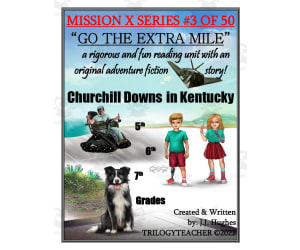
Fiction Adventure Story Unit: Churchill Downs in Kentucky
ELA, Reading, Grade 5, 6, 7, Lesson Plans, Teacher Tools
This is a Fiction Adventure Story Unit : Churchill Downs in Kentucky. It is #3 of 50 in the Mission X series. This is the perfect cross-curricular resource that allows students to explore reading, vocabulary, social studies, and science all at once. This bundle is packed with worksheets and activities that could be developed into a 2 or 3 week long unit . Directions are included for preparation and implementation.
Author TrilogyTeacher
Tags Fiction Story, Short Stories, Churchill Downs, Kentucky, Vocabulary
I WONDER - Why Do Reptiles Have Scales | Animated Video Lesson
STEM, Animals, Life Sciences, Science, Biology, Grade 1, 2, 3, 4, 5, 6, 7, 8, Lesson Plans, Teacher Tools
Video Introduction Animal kingdoms are full of fascinating wonders to learn. This video is designed for the students to learn more about animals in different countries. I WONDER - Why Do Reptiles Have Scales | Animated Video Lesson Do you like animals? what is your favorite one? Do you own a pet? If yes, tell us more about it, like what its name? And what do you like most about it? What are the animal kingdoms? Can you write down the characteristics of each animal class like mammals, birds, reptiles, amphibian, fish and mollusks. Do you know that some animals can sing, can you name any of them? What is the largest and the smallest mammal in the world? What is the largest and the smallest bird in the world? What is the largest and the smallest fish in the world? I WONDER - Why Do Reptiles Have Scales | Animated Video Lesson The video is perfect for encouraging the researching skills for the students, while learning more about these fantastic animals. I WONDER - Why Do Reptiles Have Scales | Animated Video Lesson This friendly designed video is suitable for students at school, homeschooling, and as a group activity. Format Available in MP4 format.
Author Educational Voice
Tags Why Do Reptiles Have Scales, Why Do Reptiles Have Scales Video, Reptiles Scales, Reptiles Scales Facts, Reptiles Scales Facts For Kids, Reptiles Scales Video, Reptiles Scales Video For Kids, Reptiles
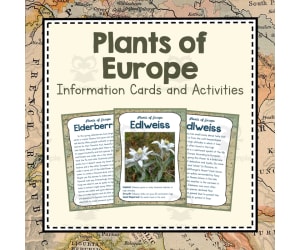
Plants of Europe | Europe Unit Study | Geography Bundle
Social Studies, Geography, Grade 3, 4, 5, 6, 7, Lesson Plans, Teacher Tools
Plants of Europe | Continent of Europe Unit Study | Geography Bundle An engaging teaching resource that combines the study of geography with botany, designed for education in both public school and homeschooling settings. This product provides a unique look into twelve different plants native to Europe. Ideal for grade levels 3 to 7, it's a versatile tool that contributes towards Social Studies and significantly enriches focus on Geography. Key Features: Each plant features its own double-sided card filled with information. Albeit the familiar Peppermint and Silver Birch tree, or intriguing species like Marshmallow and Queen Anne's Lace. The front side presents a vivid photograph alongside key details about the plant, while the back reveals fun facts. The collection includes resources such as a plant match worksheet and an adaptable plant report template for sharpening observational skills and inspiring written summaries or oral presentations . Included are mini pictures of all featured plants ready for display around your classroom map of Europe—a visual cue that enhances learning retention while enrichifying your educational space. This resource set can be implemented in various teaching methods, such as part of whole-group introductions or small group activities individually assigned. Multipurpose Usage: The cards are available in both US customary units as well as metric counterparts extending their usefulness across borders without language barriers—an inclusive design element showcasing its suitability as an international educators tool. The material is crafted for durable use—you have flexibility whether you decide to bind them into books or attach them together on book rings for easy circulation among students. In Conclusion: Plants of Europe | Continent of Europe Unit Study | Geography Bundle offers educators maximum possibilities within minimal pages, compressed neatly into one zip file for optimum convenience. This resource transforms the exploration of Europe into a impactful and memorable educational journey, generating enthusiasm among learners for studying the magical world of geography entwined intricately with the realm of plants.
Author Simply Schoolgirl
Tags Plants Of Europe, Continent Unit Study, Geography Bundle, Botany Education, European Species
I WONDER - What Is The Great Barrier Reef | Animated Video Lesson
Environmental Science, Earth and Environmental Sciences, Science, Grade 4, 5, 6, 7, 8, 9, 10, Lesson Plans, Teacher Tools
Video Introduction An amazing video designed for the students to learn more about STEM. I WONDER - What Is The Great Barrier Reef | Animated Video Lesson Do you like STEM subjects? what is your favorite one? Have you ever tried to plant a seed? If yes, tell us more about it. Or have you ever tried to invent something? If yes, tell us more about it. And how do you think it will help us? Have you ever seen a microorganism under a microscope? What was it? And how it looked like? Mathematics is a marvelous subject. Let' sharpen our brains and solve some equations. Do you like timetable tricks? What is your favorite one? Do you know how to code? Have you ever created an app or a game before? If yes, how was it like? I WONDER - What Is The Great Barrier Reef | Animated Video Lesson The video is perfect for encouraging the researching skills for the students, while learning more about this fantastic topic. I WONDER - What Is The Great Barrier Reef | Animated Video Lesson This friendly designed video is suitable for students at school, homeschooling, and as a group activity. Format Available in MP4 format.
Author Educational Voice
Tags What Is The Great Barrier Reef, What Is The Great Barrier Reef Video, The Great Barrier Reef, The Great Barrier Reef Facts, The Great Barrier Reef Video, The Great Barrier Reef Facts For Kids, Reef, Reefs

Insect Breeding | Animated Insect Video Lesson
Science, Life Sciences, Insects, Grade 3, 4, 5, 6, Lesson Plans, Teacher Tools
This animated science video lesson is all about insect breeding. Students will love this engaging and interactive video as they learn more about insects. This video serves as a great introduction or review video for your learners. This is a 13-minute science video lesson.
Author Educational Voice
Tags Insect, Breeding, Science Lesson, Science Video, Insect Lesson, Animated Breeding, Insect Animation, Bug Breeding

The Oregon Trail : Mini Unit
Social Studies, History, History: USA, Grade 4, 5, 6, 7, 8, Lesson Plans, Teacher Tools
The Oregon Trail : Mini Unit is a great resource to have students explore and learn about the topic. The materials included are designed to teach the story of the Oregon Trail. Reading material, questions, and activity sheets are provided for the following topics : Planning the journey. Transport. Supplies. Children on the trail. Obstacles. Dangers. Disasters. This unit contains all the files needed for students to explore the topic in detail and for them to show their knowledge at the end. Among the files included are: Presentations file includes information about the The Oregon Trail : Mini Unit Additionally, it presents 3 different options for students to demonstrate their knowledge in the topic. Each of the options are shown with instructions, hints and tips. The options are: A Guidebook project or a Dairy project. Worksheets file includes reading comprehension worksheets and also all necessary worksheets for students to engage in an activity where they need to choose the supplies they need but their wagon can only carry a maximum of 2400 pounds. If they try to carry any more than this then their wagon will probably break and their animals will be too tired. Separated material contains individual ready-to-print worksheets to be used throughout the unit.
Author Mr Gray History
Tags Oregon, Oregon Trail, Oregon Trail Unit, Lesson Plans On The Oregon Trail, Oregon Trail Lesson Plans, Oregon Trail Lesson Plans 5th Grade

Circulatory, Digestive & Reproductive Systems - Digital Lesson Plan Gr. 5-8 | MAC Software
Science, Life Sciences, Human Body, Grade 3, 4, 5, 6, 7, 8, Teacher Tools, Lesson Plans
The Circulatory, Digestive & Reproductive Systems - Digital Lesson Plan Gr. 5-8 | MAC Software A comprehensive and engaging teaching resource geared towards fostering an in-depth understanding of the human body's major systems among grade 5 to 8 students. Features: Highly interactive, easy-to-navigate design. An invigorating journey inside the human body for learners. Teaching Tool Topics: The journey of red blood cells traveling through veins and arteries. The mechanism by which the heart pumps blood throughout the body. An exploration of how ingested food is converted into energy by our bodies. A deep dive into the functions of kidneys and intestines in waste management within our system. A detailed education about each stage of human fetal development incrementally for understanding reproduction better. This learning pack also includesreading passages followed swiftly by interactive activities designed both before and after reading sections. Bonus feature: Multimedia support via videos and audio clips that complement textual instruction superbly well at just a click away. This software tool captures an exception blend of interdisciplinary knowledge technology-based learning methods for keeping students excited about learning complex scientific content; A vital asset for teachers educating Grade 3-8 learners focusing on Anatomy.
Author Classroom Complete Press
Tags Anatomy Lesson Plan, Science Lesson Plan, Digital Anatomy Lesson, Science Reading Passage, Reproductive Systems

Global Warming EFFECTS: Melting Ice Sheets - FLASH-MAC
Science, Earth and Environmental Sciences, Environmental Science, Common Core, Grade 5, 6, 7, 8, Teacher Tools, Lesson Plans
Global Warming EFFECTS: Melting Ice Sheets - FLASH-MAC An innovative teaching aid designed for grades 5 through 8 environmental science courses, offering interactive learning about the phenomenon of melting ice sheets due to global warming. Resourceful Reading Passages: Includes thought-provoking questions and useful printables . Vocabulary printables /flashcards">Flashcards : Enriches students' technical vocabulary power relating to global warming. Video Materials: Visually illustrates concepts for robust engagement with complex topics. Critical Thinking:Fosters an exploratory approach towards learning, adheres to Bloom's Taxonomy framework encouraging multi-dimensional critical thinking abilities. Note: You'll need Mac software operation access as it's specifically designed for Mac compatibility. This resource offers "an exploration-driven learning experience", centred on pressing ecological matters such as 'Global Warming'. It transforms the abstract concept of global warming effects into a tangible and relatable subject for young learners. Educational Alignment Aligned with 'Common Core State Standards' , this teaching tool ensures that students gain knowledge relevant within broader educational frameworks. An ideal resource ranging from whole-group instructional sessions to smaller task groups or even homework assignments.
Author Classroom Complete Press
Tags Software (Mac)

Climate Change: Causes: Global Warming Gr. 5-8
Science, Earth and Environmental Sciences, Environmental Science, Grade 5, 6, 7, 8, Teacher Tools, Lesson Plans
Climate Change: Causes: Global Warming Gr. 5-8 A comprehensive teaching resource designed to educate students about the science of our atmosphere and the impact of human actions on the Earth System. This material aims to provide an accurate, scientific perspective on climate change, thereby aiding learners in distinguishing fact from fiction. Atmospheric Layers & The Impact of Color On Radiation Absorption Lessons delving into the various layers of our atmosphere. An experiment examining how an object's color influences the amount of radiation it absorbs hence sparking discussion around climate change factors. The relationship between Rising Global Temperatures and Ocean Life This lesson plan encourages understanding repercussions rising global temperatures bear on Earth's oceans by demonstrating how interconnected all parts of nature are and why that necessitates care for every component. Carbon Cycle Modeling & Methane’s Residence Time Concept Overview This method promotes practical learning through creative means such as modeling their own carbon cycle while also elucidating concepts like methane’s residence time thus giving students a broader picture in combating climate change. Ozone and Human Health Connection Eudcation The essential link between ozone and human health is presented as an essential knowledge piece when nurturing mindful members of society who not only value personal health but also care about global well-being. Inclusive Activities, Quizzes And Answer Keys Creative activities: Crosswords Riddles Word searches hence making learning entertaining while reinforcing lesson objectives effectively. Inclusion of comprehension quizzes for evaluation purposes and answer keys to assist educators during instruction or grading duties. The 28 pages material tailored specifically for grades 5 through 8 under subjects Science (Environmental Science) come ready-to-print on one consolidated PDF. Suitable for whole group instruction, small study groups, related homework assignments, or science fair preparation process. Create an enriching interactive learning journey around global warming and climate change with this resource.
Author Classroom Complete Press
Tags Global Warming, Carbon Cycle, Atmosphere, Bacteria, Comprehension Questions

Blockchain for Beginners: High School Computer Science Guide Book
Technology, Science, Computer Science, Engineering, Special Education Needs (SEN), Special Resources, Coaching, Life Studies, Common Core, STEM, Grade 3, 4, 5, 9, 10, 11, 12, Activities, Teacher Tools, Assessments, Lesson Plans, Outlines, Rubrics, Worksheets & Printables, Workbooks, Writing Prompts, Drawing Templates & Outlines
Unleash the power of technology in the future with "Beginner Blockchain Explorations - Computer Science," a complete and novice-friendly guide on the blockchain, cryptographic, and decentralized system revolution. Written by Syed Hammad Rizvi, this 382-page educational text addresses basics such as centeralized vs. Decentralized systems, Distributed Ledgers, Hashing, Public Key Cryptography, and P2P Networking, progressing on to in-depth information on blockchain basics, blocks, transactions, UTXOs, wallets,Consensus models like Proof of Work & Proof of Stake, mining, and forking. Discover its applications in Bitcoin, Ethereum, Smart Contracts, DApps, NFTs, DeFI, Stable Coins, Supply Chain Management, Healthcare, Digital Identity, Voting Systems, Game Economies, Metaverse,Cross-Border Transactions, and Business Blockchain solutions. Advanced discussions include its scaling, security, regulation, sustainable or environmentally responsible use, quantum computing threats, interoperability, zero-knowledge, Web3, Artificial intelligence, and its future developments in Sharding and DePIN solutions. This educational book on computer science is perfect for class studies and lessons, instilling a critical mindset on its relevance in society, applications, prospects, and uses in our technological future. Greatly suitable for educational teachers, parents, and teenagers eager to learn about beginner-friendly cryptocurrency, blockchain explanation, Smart Contract guide, NFT guide, DeFI guide, Web3 guide, and Decentralized finance lessons. Why Parents/Schools Love It: Thorough and Age-Appropriate Curriculum Alignment: The course encompasses all the necessary computer science subject content, from the basics to the latest blockchain technology applications, and aligns with the high school computer science curriculum. Real World Application and Skills Development: Provides real-life applications of cryptography, smart contracts, DeFi, and other essential areas of cryptocurrency, without delving into complexities that would intimidate a beginner. Fosters Ethical and Critical Thinking: Deals with matters such as privacy, environmental impact, and regulation in a manner that promotes ethical and critical thinking. Engaging and Future-Proof Education: It covers applications related to gaming, healthcare, finance, and Web3. The topics are aimed at making learning an engaging process while equipping students with skills related to futuristic applications in the integration of blockchain. Aids to Self-Study or Class Discussion: Chapters are arranged in a well-structured sequence of increasing complexity to enable home-schooling, solo study, or class study. Target Students/Classes : After understanding the structure and content of this book, and analyzing its level of advancement, commencing from fundamental knowledge of digital fundamentals and cryptography and progressing onward towards more sophisticated applications such as DeFi, NFT, metaverse, quantum resistive securities, AI intersection, and more, this book can be deemed perfectly suitable for students in Grades 10-12, who are pursuing Computer Science as a subject in school. Additionally, this book may also be used as auxiliary educational content for advanced students of Grade 9 and introductory-level college courses related to blockchain and digital innovation, owing to its simplified descriptions and practical application-oriented content, apt for 15-18 years old youth interested in computer technology electives, STEM education, and home learning programs. Copyright/Terms Of Use : This Book was copyrighted by Syed Hammad Rizvi. This resource file is for your personal use and use in your classroom. You cannot reproduce or distribute this resource file. What this means is that you cannot put this resource file on the internet so that anyone with access to the internet may download a copy. You may share this resource with others at your school if you purchase additional licenses through Teachsimple. Thank you for abiding by these usage guidelines. This product comes very happily under the auspices of Syed Hammad Rizvi
Author Creative Book Store
Rating
Tags BlockchainForBeginners, BlockchainEducation, ComputerScienceBook, HighSchoolBlockchain, CryptocurrencyBasics, SmartContractsTutorial, NFTGuide, DeFiExplained, Web3Introduction, EthereumFundamentals
I WONDER - How Did Pangolins Get Their Name | Animated Video Lesson
STEM, Animals, Life Sciences, Science, Biology, Grade 1, 2, 3, 4, 5, 6, 7, 8, Lesson Plans, Teacher Tools
Video Introduction Animal kingdoms are full of fascinating wonders to learn. This video is designed for the students to learn more about animals in different countries. I WONDER - How Did Pangolins Get Their Name | Animated Video Lesson Do you like animals? what is your favorite one? Do you own a pet? If yes, tell us more about it, like what its name? And what do you like most about it? What are the animal kingdoms? Can you write down the characteristics of each animal class like mammals, birds, reptiles, amphibian, fish and mollusks. Do you know that some animals can sing, can you name any of them? What is the largest and the smallest mammal in the world? What is the largest and the smallest bird in the world? What is the largest and the smallest fish in the world? I WONDER - How Did Pangolins Get Their Name | Animated Video Lesson The video is perfect for encouraging the researching skills for the students, while learning more about these fantastic animals. I WONDER - How Did Pangolins Get Their Name | Animated Video Lesson This friendly designed video is suitable for students at school, homeschooling, and as a group activity. Format Available in MP4 format.
Author Educational Voice
Tags How Did Pangolins Get Their Name, How Did Pangolins Get Their Name Video, Pangolins, Pangolin, Pangolins Facts, Pangolins Facts For Kids, Pangolins Video, Pangolins Video For Kids

I WONDER - What Was The Most Famous School In Ancient Greece
History: Ancient, History, Social Studies, History: Europe, Grade 3, 4, 5, 6, 7, 8, 9, Lesson Plans, Teacher Tools
Video Introduction An amazing video designed for the students to learn more about history. I WONDER - What Was The Most Famous School In Ancient Greece | Animated Video Lesson Do you like history? Which topic do you really enjoy about history? Have you ever read an interesting fact about the Vikings? If yes, can you mention them? What do you like most about the Victorian era? Can you name all the Tudors? Have you ever wondered how people used to live in ancient Japan and ancient China? Do you know any interesting facts about ancient Egyptians and the Pharaohs? Have you ever visited South America? What do you know about Incas and Aztecs? Celtic culture was really one of a kind, can you name any of the places that Celts used to live in? Imagine yourself living during the ancient Roman empire, how your life will look like? Ancient Greece was an amazing place to live in. What do you know about ancient Greek life? I WONDER - What Was The Most Famous School In Ancient Greece | Animated Video Lesson The video is perfect for encouraging the researching skills for the students, while learning more about history. I WONDER - What Was The Most Famous School In Ancient Greece | Animated Video Lesson This friendly designed video is suitable for students at school, homeschooling, and as a group activity. Format Available in MP4 format.
Author Educational Voice
Tags What Was The Most Famous School In Ancient Greece, What Was The Most Famous School In Ancient Greece Video, The Most Famous School In Ancient Greece, The Most Famous School In Ancient Greece Video, The Most Famous School In Ancient Greece Facts

I WONDER - What Fish Live In The Amazon River | Animated Video Lesson
STEM, Biology, Life Sciences, Science, Animals, Grade 1, 2, 3, 4, 5, 6, 7, 8, Lesson Plans, Teacher Tools
Video Introduction Animal kingdoms are full of fascinating wonders to learn. This video is designed for the students to learn more about animals in different countries. I WONDER - What Fish Live In The Amazon River | Animated Video Lesson Do you like animals? what is your favorite one? Do you own a pet? If yes, tell us more about it, like what its name? And what do you like most about it? What are the animal kingdoms? Can you write down the characteristics of each animal class like mammals, birds, reptiles, amphibian, fish and mollusks. Do you know that some animals can sing, can you name any of them? What is the largest and the smallest mammal in the world? What is the largest and the smallest bird in the world? What is the largest and the smallest fish in the world? I WONDER - What Fish Live In The Amazon River | Animated Video Lesson The video is perfect for encouraging the researching skills for the students, while learning more about these fantastic animals. I WONDER - What Fish Live In The Amazon River | Animated Video Lesson This friendly designed video is suitable for students at school, homeschooling, and as a group activity. Format Available in MP4 format.
Author Educational Voice
Tags What Fish Live In The Amazon River, What Fish Live In The Amazon River Video, Fish, Fish Facts, Fish Video, Fish Video For Kids, Amazon River, Amazon River Facts, Amazon River Video
I WONDER - What Is An Internet Troll | Animated Video Lesson
Life Skills, Special Resources, Social Emotional Learning (SEL), Social Skills, Computer Science, Technology, Science, Grade 4, 5, 6, 7, 8, 9, 10, Lesson Plans, Teacher Tools
Video Introduction An amazing video designed for the students to learn more about social and soft skills in our daily life. I WONDER - What Is An Internet Troll | Animated Video Lesson Have you ever read about soft skills or social skills? If yes, can you tell us more about them? Body language is so important for us to learn about, as it teaches us how to deliver the correct message to the people we are talking to, and get the right message from the people who talk to us, by simply reading their body language. What do you know about etiquette? Do you know that every country has got its unique etiquette? What do you know about online etiquette? What is your strongest soft/social skill? Can you name other social or soft skills? Do you think we should be always nice to our friends and family? Do you think we should be kind with animals? Have you ever read about online etiquette? If yes, tell us more about it. What are the essential skills that we should have while dealing with people online? I WONDER - What Is An Internet Troll | Animated Video Lesson The video is perfect for encouraging the researching skills for the students, while learning more about these fantastic social and soft skills in our daily life. I WONDER - What Is An Internet Troll | Animated Video Lesson This friendly designed video is suitable for students at school, homeschooling, and as a group activity. Format Available in MP4 format.
Author Educational Voice
Rating
Tags What Is An Internet Troll, What Is An Internet Troll Video, Internet Troll, Internet Troll Facts, Internet Troll Video, Internet Troll Facts For Kids, Internet Troll Video For Kids, Troll, Trolls

Insects Reading Comprehension Passage - Cored Ed Encyclopedia
ELA, Reading Comprehension, Reading, Science, Pre-Reading, Language Development, Life Sciences, Insects, Earth and Environmental Sciences, Vocabulary, Grade 2, 3, 4, 5, Worksheets & Printables, Worksheets, Teacher Tools, Centers, Activities, Writing Prompts, Assessments, Quizzes and Tests, Quizzes, Lesson Plans
This Insects reading comprehension with lesson plan includes: Visualization (on the front cover) Start your lesson by taking a minute to think and share something about the topic. Read the script aloud (slowly), perhaps prepare some music or sound effects. Student close their eyes and let their imaginations wander. Students open their eyes, read the question aloud and give them a few minutes to complete. Ask a few students to share or keep answers until the end to compare with what they learn in the passage. Quick pause—thousands of Cored Education products are included with your TeachSimple membership. Download links and encyclopedia index available here. Pre-Reading Trivia Students will write down one thing they already know about the subject and then read five more facts and discuss. These facts are fun, and the students will enjoy learning about the subject before reading more. Give 1 minute for students to write what they already know (no pressure—best guess is fine). Read the five facts together. After each fact, do ask a student for their opinion, was it surprising? Set a purpose by asking students to highlight/underline one fact they want to learn more about during the reading. Reading Passage The text is a high-interest reading passage with set paragraphs, roughly three to four paragraphs long. It contains a variety of themes about the topic, anywhere from history to technology. The passage is between 250 and 350 words in length. First, ask students to look at the headings and see what they’ll learn about today. What do they know about the topic/heading? First read options: Teacher read-aloud (best for support). Partner reading (paragraph by paragraph). While reading, students underline important details, and vocabulary words they think may come up in the questions section. Mixed Questions The first question page contains four multiple-choice questions, each with a choice of four answers, and three written response questions that require a sentence or two from the student. Students complete the mcqs first independently, then review quickly as a class. For the 3 written responses, try to get students giving the answer with some form of evidence: “I think ___ because the text says ___.” If students get stuck, send them back to check the passage. Vocabulary Questions Practice seven key words from the text in this section across two activities. First section is scrambled words where students will unscramble three words given a clue for each. The second section is a word to meaning matching activity. Before starting, have some students read out words they underlined in the passage. Ask students to say the word and read aloud the sentence(s) around each word. Ask students to do scrambled words and the matching exercise in pairs then go through answers as a class. For the scrambled spelling task, get four pairs to come up to the board and write the words for extra practice with the other student reading out the clue. For the matching task, prompt students to give full sentences: “I matched ___ with ___ because ___.” Creative Writing In this question, the student will be required to write a five to eight sentence paragraph on a question related to the topic. Before starting, ask students write down 3 key ideas they are going to include in their piece. Ask students for ideas to share around the class to help those struggling. Pro writing expectations: 5–8 sentences At least 2 facts or details from the passage At least 2 vocabulary words from the previous page Students read their paragraphs while classmates listen for facts and vocabulary words. Extension Activities This page is optional for fast finishers or to take home. There are several activities, each one requiring a different skill. Do some, do none, do all, completely optional - but you will feel reassured knowing every possibility is planned for. Includes summary writting question and additional facts. Answer Key There are answers for the multiple-choice questions, written response questions have sample answers, vocabulary answers and if there is a summary question then a sample summary will be provided as well. Lesson Plan Included Customized lesson plan for this lesson is included. Lesson Snapshot Title: Insects Genre: Nonfiction (informational text) Subject: Reading (Informational Text) / Life Science Primary Topic: Insect body parts, growth, history, and study Estimated Guided Reading Level (A–Z): R What This Lesson Teaches Best Identifies core insect body parts and features (head, thorax, abdomen; six legs; antennae; compound eyes; many have wings). Explains how insects grow using an outside skeleton (exoskeleton) and why molting is needed as they get bigger. Describes butterfly life stages as an example of changing shape in stages (egg, caterpillar, chrysalis, winged adult). Connects insects to deep time and evidence from fossils (oldest known flying insects in the Carboniferous Period; many species today). Introduces how people study and classify insects over time (Aristotle, Carl Linnaeus, and modern entomology). Learning Goals Students will identify the three main insect body parts and describe what each part includes. Students will explain why insects must molt as they grow, using the idea of an exoskeleton. Students will describe the butterfly’s life stages in order, using details from the passage. Students will explain what fossils reveal about early flying insects and how insect groups changed over time. Students will define entomology and describe tools scientists use to study insects. Key Vocabulary From the Text thorax — middle body part where legs attach. abdomen — back body section behind the thorax. antennae — feelers that taste the air. exoskeleton — hard outer coat that works like a skeleton. entomology — the study of insects. FULL CATALOG OF DOWNLOAD LINKS AND ENCYCLOPEDIA INDEX HERE
Author Cored Education
Rating
Tags Vocabulary, Reading Comprehension, Reading Passages, Lesson Plans, Ela Lesson Plans, Reading Comprehension Lesson Plans, Pre-reading, Science Lesson Plans, Life Science, Insects

Persian Gulf War (1990-1991): Saddam Hussein Gr. 5-8
Social Studies, History, History: USA, Grade 5, 6, 7, 8, Teacher Tools, Lesson Plans
The Persian Gulf War (1990-1991): Saddam Hussein Gr. 5-8 is a robust teaching resource conceived to bolster middle school Social Studies and US History curriculums. This guide, filled with key information, concentrates on the pivotal events prior to, during, and after Operation Desert Storm — illuminating the contentious historical period that took place between 1990-91. Under the section titled "Saddam Hussein Gr. 5-8", it explores Saddam Hussein's life journey, his involvement with the Baath Party and his ascension as Iraq's ruler. It delivers students an in-depth look into one of history's most notorious figures while propelling them to formulate their own perspectives through supervised research activities. This resource enhances each student's studying process by fusing creativity alongside knowledge acquisition via appealing hands-on activities such as: Designing comic strips Drawing posters Apart from these artistic tasks, comprehension is promoted using crosswords and word searches adding an element of entertainment while reinforcing material taught. Included within this package is a detailed map activity focusing on Iraq and Kuwait which amplifies students' geographic cognition — essential when examining regions affected by war. Moreover, it sheds light on U.S-led undertakings in Desert Shield and Desert Storm — enriching students’ understanding of contemporary warfare strategies. In addition, learners are encouraged to investigate beneath-the-surface variables like oil extraction motivations that triggered Iraq’s invasion of Kuwait – nurturing critical thinking aptitudes alongside gaining geopolitical insights. This comprehensive material has tremendous potential across varied contexts namely full classrooms or small study groups; beneficial for self-study or easily integrated into homeschool schedules for Grades 5 through 8. It encapsulates a total of twenty-seven ready-to-print pages, conveniently provided in a user-friendly PDF layout. The Persian Gulf War (1990-1991): Saddam Hussein Gr. 5-8 aligns with state standards, conforms to Bloom's Taxonomy learning model and comprises a complete quiz with an answer key for effective, student-friendly progress evaluation.
Author Classroom Complete Press
Tags Social Studies, Saddam Hussein, Workbook, Reading Passages, Social Studies Assessment
I WONDER - What Is The Federal Reserve | Animated Video Lesson
History: USA, History, Social Studies, Finance, Life Studies, Money, Math, Grade 4, 5, 6, 7, 8, 9, 10, Lesson Plans, Teacher Tools
Video Introduction An amazing video designed for the students to learn more about history. I WONDER - What Is The Federal Reserve | Animated Video Lesson Let's use our time machine and trave though time till we get to the ancient world where life began! Have you ever thought about how did ancient Greeks, Romans, Egyptians and even the Viking and Celts use to shower? And how did these amazing civilizations build iconic buildings and invented things that we still use till today like toothpaste? Do you know who was the first king and queen in the world? Which countries they ruled? Who is the most fascinating person lived on Earth? Tell us more about him/her. I WONDER - What Is The Federal Reserve | Animated Video Lesson The video is perfect for encouraging the researching skills for the students, while learning more about history. I WONDER - What Is The Federal Reserve | Animated Video Lesson This friendly designed video is suitable for students at school, homeschooling, and as a group activity. Format Available in MP4 format.
Author Educational Voice
Rating
Tags What Is The Federal Reserve, Federal Reserve, Federal Reserve Facts, Federal Reserve Video, Federal Reserve Facts For Kids, Federal Reserve Video For Kids, United States, Dollar, Dollar Facts
I WONDER - How Big Were The Pteranodon's Wings | Animated Video Lesson
History: Ancient, History, Social Studies, History: World, Animals, Life Sciences, Science, Grade 4, 5, 6, 7, 8, 9, 10, Lesson Plans, Teacher Tools
Video Introduction An amazing video designed for the students to learn more about dinosaurs in different countries. I WONDER - How Big Were The Pteranodon's Wings | Animated Video Lesson Do you like dinosaurs? what is your favorite one? Do you own a pet? If yes, tell us more about it, like what its name? And what do you like most about it? Do you think that your pet has been evolved from a dinosaur? Can you write down the characteristics of your favourite dinosaur like it's shape, their rivals, where did it use to live and what was their favourite food? What is the largest and the smallest dinosaur that ever found? Why is the T-rex is so famous? Have you ever read any interesting facts about it? Can you name any of the carnivores or herbivores dinosaurs? I WONDER - How Big Were The Pteranodon's Wings | Animated Video Lesson The video is perfect for encouraging the researching skills for the students, while learning more about dinosaurs. I WONDER - How Big Were The Pteranodon's Wings | Animated Video Lesson This friendly designed video is suitable for students at school, homeschooling, and as a group activity. Format Available in MP4 format.
Author Educational Voice
Rating
Tags How Big Were The Pteranodon's Wings, How Big Were The Pteranodon's Wings Video, Pteranodon's Wings, Pteranodon's Wings Facts, Pteranodon's Wings Video, Pteranodon's Wings Video For Kids, Pteranodon's Wings Facts For Kids
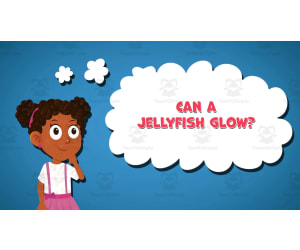
I WONDER - Can A Jellyfish Glow | Animated Video Lesson
STEM, Animals, Life Sciences, Science, Biology, Grade 1, 2, 3, 4, 5, 6, 7, 8, Lesson Plans, Teacher Tools
Video Introduction Animal kingdoms are full of fascinating wonders to learn. This video is designed for the students to learn more about animals in different countries. I WONDER - Can A Jellyfish Glow | Animated Video Lesson Do you like animals? what is your favorite one? Do you own a pet? If yes, tell us more about it, like what its name? And what do you like most about it? What are the animal kingdoms? Can you write down the characteristics of each animal class like mammals, birds, reptiles, amphibian, fish and mollusks. Do you know that some animals can sing, can you name any of them? What is the largest and the smallest mammal in the world? What is the largest and the smallest bird in the world? What is the largest and the smallest fish in the world? I WONDER - Can A Jellyfish Glow | Animated Video Lesson The video is perfect for encouraging the researching skills for the students, while learning more about these fantastic animals. I WONDER - Can A Jellyfish Glow | Animated Video Lesson This friendly designed video is suitable for students at school, homeschooling, and as a group activity. Format Available in MP4 format.
Author Educational Voice
Tags Can A Jellyfish Glow, Can A Jellyfish Glow Video, Jellyfish, Jellyfish Video, Jellyfish Facts, Jellyfish Facts For Kids, Jellyfish Video For Kids, Fishh, Glowing Jellyfish, Glowing Jellyfish Facts

I WONDER - How Big Is Sao Paulo | Animated Video Lesson
Geography, Social Studies, Grade 3, 4, 5, 6, 7, 8, 9, Lesson Plans, Teacher Tools
Video Introduction An amazing video designed for the students to learn more about famous places in different countries. I WONDER - How Big Is Sao Paulo | Animated Video Lesson What do you know about this place? Do you know in which part of the world it is? Have you ever visited this place? If yes, can you tell us more about your adventure, and what do you like the most about this place? Do you like reading about Geography? What is your favorite country in the whole world? If you are going on a trip where it will be? Which country? What you are going to see there? Does this country has a famous place to visit? I WONDER - How Big Is Sao Paulo | Animated Video Lesson The activity is perfect for encouraging the researching skills for the students, while learning more about this fantastic place. I WONDER - How Big Is Sao Paulo | Animated Video Lesson This friendly designed video is suitable for students at school, homeschooling, and as a group activity. Format Available in MP4 format.
Author Educational Voice
Tags How Big Is Sao Paulo, How Big Is Sao Paulo Video, Sao Paulo, Sao Paulo Facts, Sao Paulo Facts For Kids, Sao Paulo Video, Sao Paulo Video For Kids, Brazil, Brazil Facts, Brazil Video

I WONDER - What Does The Urinary System Do | Animated Video Lesson
Human Body, Life Sciences, Science, Biology, STEM, Grade 4, 5, 6, 7, 8, 9, 10, Lesson Plans, Teacher Tools
Video Overview The human body is full of fascinating wonders to learn. This video is created to help the students recognize the anatomy and the job of the human body. I WONDER - What Does The Urinary System Do | Animated Video Lesson Every part and organ in our human body is vital so let's see how important they are. Have you ever imagined how we look like if we didn't have a skeleton? Did you know that because we have our amazing muscles we can stand! Do you know how many teeth do we have? Have you ever wondered about the food journey inside our body? Can you name all the glands in our body? Why do we have skin? Our nervous system is really good at sending signals. Can you tell us more about it? Are you really good at Mathematics, painting, or any other thing? You should really thank your brain about it! The famous five senses are really doing a great work? Can you explain how every sense works? I WONDER - What Does The Urinary System Do | Animated Video Lesson The video is perfect for encouraging the researching skills for the students, while learning more about our fantastic human body. I WONDER - What Does The Urinary System Do | Animated Video Lesson This friendly designed video is suitable for students at school, homeschooling, and as a group activity. Format Available in MP4 format.
Author Educational Voice
Tags What Does The Urinary System Do, What Does The Urinary System Do Video, Urinary System, Urinary System Facts, Urinary System Facts For Kids, Urinary System Video, Urinary System Video For Kids