resources by type
resources by grade
resources by subject
other resources

2,891 products added recently

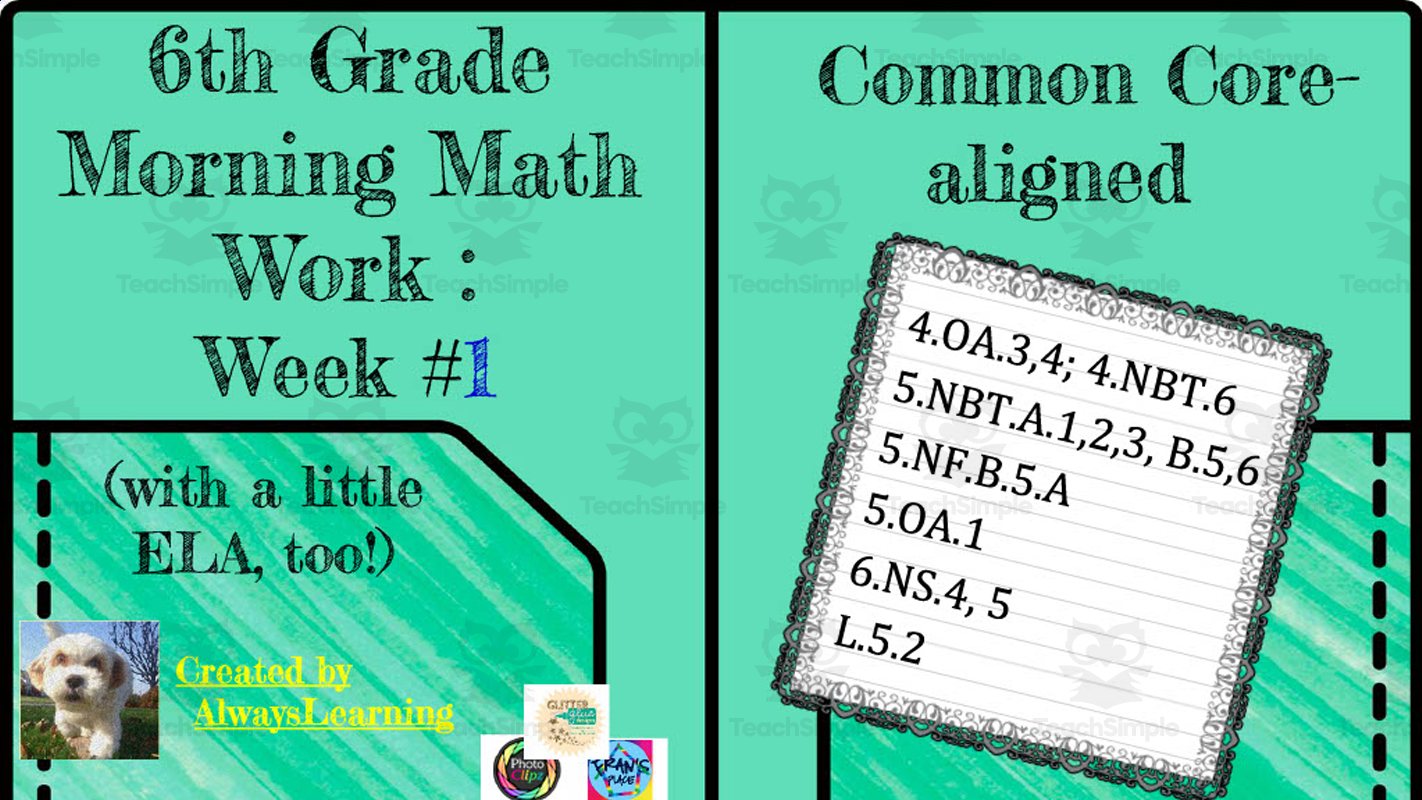
6th Grade Math Workbook

Relevant
alt down
Any Time
alt down
filter by
alt down
All File Types
alt down
filter nav Show filters
Sort by: Relevant
CLEAR
resources by type
Activities
down arrow
Classroom Decor
down arrow
Teacher Tools
down arrow
Worksheets & Printables
up arrow
Drawing Templates & Outlines
Flashcards
Novel Studies
Parts of and Anatomy of
Task Cards
Word Problems
Writing Prompts
Worksheets
down arrow
Workbooks
resources by grade
Early Learning
down arrow
Pre-K
down arrow
Elementary
down arrow
Middle School
up arrow
Grade 6
Grade 7
Grade 8
High School
down arrow
Adult Education
Not Grade Specific
resources by subject
Creative Arts
down arrow
ELA
down arrow
Holiday & Seasonal
down arrow
Life Studies
down arrow
Math
up arrow
Addition and Subtraction
down arrow
Algebra
down arrow
Calculus
down arrow
Trigonometry
Decimals
Early Math
down arrow
Fractions
Geometry
Graphing
Measurements
Money
Multiplication and Division
down arrow
Number Lines
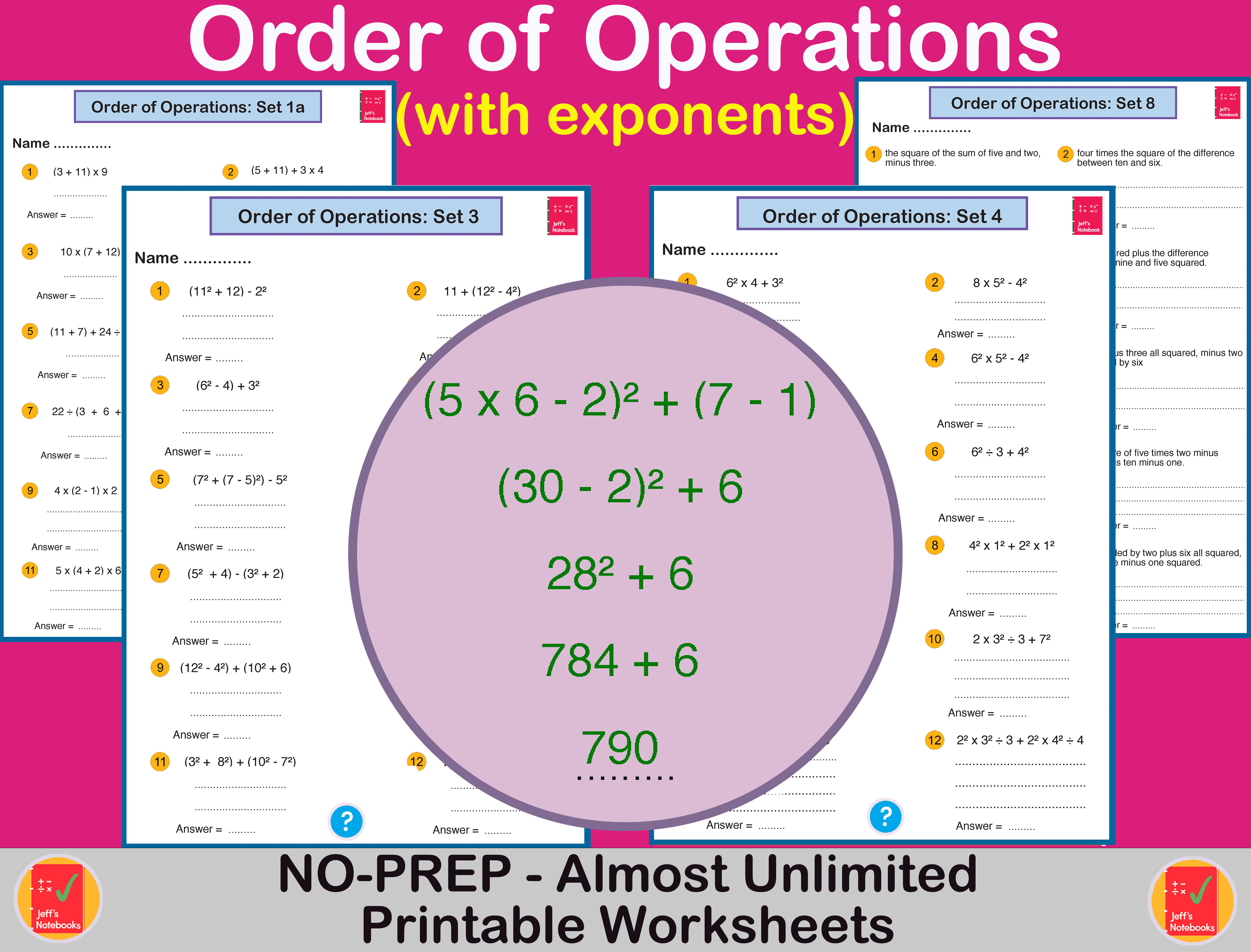
Order of Operations
Percentages
Statistics
Time
P.E. & Health
down arrow
Social Studies
down arrow
Special Resources
down arrow
Science
down arrow
Foreign Languages
down arrow
Resources for Teachers
down arrow
other resources
Common Core
Homeschool Resources
down arrow
Montessori
Research
STEM
Human Body and Golden Ratio PowerPoint and Study Guide

Human Body and Golden Ratio PowerPoint and Study Guide
Math, Grade 4, 5, 6, 7, 8, Projects, Activities, Presentations, Teacher Tools, Quizzes and Tests, Rubrics, Workbooks, Worksheets & Printables

Introduction to the Golden Ratio and the Human Body PowerPoint and Study Guide Lesson The Golden Ratio, or Phi, and the Human Body is a unique math PowerPoint exploration of the human body and Leonardo da Vinci's famous Vitruvian Man drawing. Academic connections are made with math, art and history. Another famous name for the Golden Ratio is the divine proportion, a proportion of beauty found throughout nature, science, art, and architecture. This lesson can be completed in one or two classes depending on how long teachers want to spend on projects. Learners will become enthralled by the idea of how math can be beautiful and learn to treat it like a treasure hunt by looking for the golden ration everywhere around them in art, nature and even their own bodies! Go down as many learning rabbit holes with NatureGlo's MathArt Library Golden Ratio and Human Body page. On this page you'll get videos, project ideas and curated website links. Enjoy the exploration! Student Objectives Students will: Complete the PowerPoint lesson Complete the study guide for the lesson. Watch the curated educational videos from the MathArt Virtual Library Website. Complete the journal in the study guide including a drawing with written descriptions. Complete the quiz. Choose and do a chosen project. Order, Outline and Steps Read the Quick Start guide that comes with the curriculum. Go through the PowerPoint lesson with the students. Students complete the study guide during or after the PowerPoint lesson. Students select and complete a chosen projects about the topic. Grades & Ages Grades 4 - 8 Ages 10 - 14 Implementation Format PowerPoint Study guide Use of Internet Activities Projects Answer Key - INCLUDED Number of Pages - 33 File Types - PowerPoint and PDF files Length of Lesson - At least one lesson, or, optionally two or more lessons

Author NatureGlo's eScience

Rating

Tags Golden Ratio, Human Body, Divine Proportion, Math Activities, Math Projects, Leonardo Da Vinci

Investing Fundamentals & Compound Interest Practice Pack

Investing Fundamentals & Compound Interest Practice Pack
Math, Money, Statistics, Measurements, Order Of Operations, Trigonometry, Time, Multiplication and Division, Division, Multiplication, Grade 6, 7, 8, 9, 10, 11, 12, Worksheets & Printables, Workbooks, Worksheets, Word Searches, Teacher Tools, Lesson Plans, Quizzes and Tests, Quizzes, Tests, Assessments

Complete Set: Compound Interest Practice Pack. With this no-preparation, complete unit, you’ll transform your students’ passive consumption of investments into sound capital allocation. Looking for something more than just a “piggy bank” way to teach your students about finances? The curriculum is designed specifically to teach students how and why they can create wealth through investing. It breaks down stocks and stock markets into simple components, demonstrates how inflation erodes purchasing power without anyone being aware, and mathematically proves the power of compounding through real-life practice examples. Students will develop a firm understanding of investing based upon the learning experiences included in this program, which can be used for multiple subject areas including Math, Economics, Personal Finance, and Life Skills. This is an excellent resource for several weeks of instruction on investment literacy as it provides all of the necessary ingredients (theory, practice, and case studies) to achieve successful learning outcomes. WHAT WILL YOU FIND IN THIS 32-PAGE PACK? PHASE ONE: Core content and theory – This section includes a 9-page “student textbook” that communicates the foundational concepts using academic terminology, generalized real-world analogies where applicable. Covers the following topics: The reality of inflation; the asset classes (i.e., stocks, bonds reals); the difference between simple versus compound interest; the Rule of 72; risk and diversification; behavioral finance (e.g., loss aversion, fear-of-missing-out [FOMO]); and dollar-cost-averaging. PHASE TWO: Student workbook (10 sheets) - A total of 13 pages worth of rigorous practice questions. Starting with simple terminology and building to an increasingly sophisticated portfolio synthesis. Worksheet #1 – The anatomy of an investment. Worksheet #2 –The time-value-of-money and inflation. Worksheet #3 – Simple versus compound interest. Worksheet #4 – The compound-interest formula in action. Worksheet #5 – The Rule of 72. Worksheet #6 – Risk, reward, and volatility. Worksheet #7 – Stock-market mechanics. Worksheet #8 – Mutual funds and ETFs. Worksheet #9 – The impact of time (early vs. late). Worksheet #10 – Building your first portfolio. PHASE THREE: Visual and teacher resources – Everything you need to properly teach and support your students on the curriculum. 3 impactful pedagogical visuals that can be projected and/or printed relating to compound interest, asset classes, and the Rule of 72. Complete, step-by-step Teacher’s Answer Key covering all ten questions in the workbook. Sound implementation guide for Teachers, including module pacing, instructional notes, and other valuable insights related to “expected cognitive friction points.” This isn't simply a lesson plan; This is an entire educational program that will teach young people to have real financial intelligence. Key Terms: Teach Teenagers How to Invest, Compound Interest Project, Financial Literacy Curriculum, Personal Financial Literacy Unit, Stock Market For Kids, Middle School Math, High School Economics, Homeschooling, No Preparation Needed (Print and Go), Digital Learning, and Money Management. Why Do Parents and Schools Appreciate It? Provides Life-Long Knowledge: This unit provides students with the knowledge and skills needed to understand investing, create wealth, and achieve financial stability beyond what they learned in textbooks. Total Unit; No Additional Preparation Needed: This is a complete curriculum with everything needed, including theory, worksheets, visuals, answer keys, and a teacher guide! By using this complete package, more than 10-20 hours of planning can be saved by teachers. Real Comprehension: By combining theory with real-life examples and thorough practice, this unit gives students the knowledge they need to know how to calculate for financial growth and what risks are associated with financial growth rather than just memorizing formulas to solve for financial growth. Engaging as well as Challenging: The language in this unit is challenging, but when students use the step-by-step format and apply these concepts to real-life examples (like comparing two different investors), students will find these topics very interesting and easy to understand. Target Student Audience Assessment: A comprehensive assessment of the material's content and language, mathematical difficulty, etc.: Grade Level of Main Target Audience: 8 - 10 grades. Although the PDF shows 7-9 grades, the vocabulary/academic terminology in the document is more suitable to eighth (8th) & ninth (9th) graders (as opposed to seventh (7th) graders). The level of math skills required to understand this material would be appropriate for eleventh (11th) and twelfth (12th) graders as an introductory course to economics or mathematics. Additional Targeted Audiences: Gifted and Talented Middle School Students (6-7 grades) High School Economics or Personal Finance Electives (11-12th grades) - Use This Material As An Introductory Unit Parents Who Homeschool Their Children With A Curriculum Focused On Life Skills Or Financial Literacy This Product has been copyrighted by Syed Hammad Rizvi. You may only use this Resource in your Personal Use, and only in a Single Classroom. This means you cannot alter, redistribute, or sell it. In other words, you cannot put this Resource on the Internet, where others can access and download it permanently or temporarily. If you would like to share this Resource with your colleagues, please purchase additional licenses from Teachsimple. Thank you for your understanding, and thank you for complying with these terms of use. Syed Hammad Rizvi is pleased to provide this Product to you.

Author Creative Book Store

Rating

Tags FinancialLiteracy, CompoundInterest, Investing, PersonalFinance, StockMarket, WealthBuilding, MoneyManagement, InvestingForBeginners, RuleOf72, TimeValueOfMoney

Smart Shopping & Consumer Decision-Making Scenarios

Smart Shopping & Consumer Decision-Making Scenarios
Social Studies, Economics, Special Resources, Life Skills, Resources for Teachers, Classroom Management, Community Building, Research, Math, Money, Grade 6, 7, 8, 9, 10, 11, 12, Worksheets & Printables, Workbooks, Worksheets, Word Searches, Teacher Tools, Assessments, Lesson Plans, Quizzes and Tests, Quizzes, Tests

Today’s students need to have the skills to be critical thinkers and smart consumers in this digital world! This complete and ready-to-teach Financial Literacy unit goes into more detail than just budgeting; it investigates the reasons we purchase things. Students will learn about how advertisements and marketing strategies are designed to influence our impulse purchases, as well as identify any cognitive biases they may experience while shopping online or in stores. This 42-page unit will give any teacher a wealth of material for their high school or advanced middle school level classes in Economics, Personal Finance, Life Skills, or Business. This unit will help students develop practical skills that will allow them to make effective purchasing decisions and turn them from passive consumers to financially literate decisions makers throughout their lives! WHAT IS CONTAINED IN THIS UNITS BUNDLE? Resource Features Three (3) Holiday-Themed Sections: PART I - Instructional Guide and Student Reference Comprehensive, in-depth look at the basic principles of modern-day consumerism. This section was designed for you to use as an instructional tool or to provide to your students as a reading resource. Topics include: 1) The Psychological Aspects of Sales (Anchoring, Artificial Scarcity, Decoy Pricing) 2) Determining the Value of Products (Cost-Per-Use vs. Selling Price and Identifying Brand Taxes) 3) Digital Grocery Shopping (Unmasking the effects of Surveillance Capitalism, Hyper-Targeted Advertising, and Social Media Influencer Marketing) 4) The Mathematics of Selling (Identification of risks associated with frictionless transactions and using models of subscription services and Buy Now, Pay Later (BNPL) services for consumers). PART II - Engaging Student Workbook with 10 hands-on activities Hands-on, applicable worksheets that allow students to apply what they have learned through real-world situations. The activities include: 1) The Mathematics of Value (Unit Pricing and Effect of Shrinkflation) 2) Advertising Architecture and Cognitive Bias 3) Navigating the Trick of Discounting (Buy One, Get One Quantity versus Percent Off) 4) Opportunity Cost and Compounding Interest 5) Digital Literacy: E-Commerce Reviews Audit 6) Subscription Economics and Micropayments 7) Total Cost of Ownership (TCO) 8) Brand Premiums, Peer Influence, and Social Currency 9) Ethical Consumption and Lifecycle of Fast Fashion 10) Capstone Project: A final project-based learning activity that requires students to take everything they have learned and create a complete buying decision for two laptops, using all their newly gained knowledge. Section 3: Easy to Locate Teacher Resources, Visual Aids, and Scaffolded Worksheets - Everything a Teacher Needs to Effectively Teach and Save Time in Preparation Visual Aids to Assist in Instruction: A set of three powerful visual aids for The Five-Stage Consumer Decision Model, The Value vs. Durability Matrix, and A Deconstruction of Marketing Manipulation. Detailed Answers to All Workbook Questions: Complete answer guide with explanations for all workbook problems. Assessment Rubric for the Grading of Worksheets: Detailed, criteria-based rubrics included with the grading of each worksheet as well as the final capstone project. These teacher aids are: Appropriate for High School Personal Finance, Economics, or Business Classes Appropriate for Middle School (7-8) Life Skills/Financial Literacy Units Suitable for Use as Homeschool Curriculum Materials A Natural Fit for Real World Math Application and Critical Thinking Practice Centers This material will help prepare your students for a lifetime of financially responsible decisions – download this must-have, captivating and timely resource today! What Parents/Schools Appreciate About It: Provides Real-Life Financial Armor: Well-designed, contemporary education develops essential key consumer driven skills to successfully navigate our high tech digital marketplace, including: the psychology of consumerism incl. the influence of social media marketing; optimism; impulse buying; subscriptions and renewal traps. Critical Thinking Development, Not Just Mathematics: The curriculum includes both Consumer Psychology - to help students understand why they might feel pressure to purchase something and Independent Decision-Making Skills - so they can make rational, independent decisions. Complete Ready to Use Package: The Unit includes everything you need for a complete unit to teach money management, including: teacher's guide; student's worksheets; capstone project; visual examples, answer keys with rubrics; and will save you at least 20+ hours of planning. Very Engaging and Relevant: The Unit's teaching examples include video games, sneaker releases, fast fashion retail, and social media influencers that will connect with teenagers and keep their attention. The intended audience for this material is: Due to the advanced vocabulary that is used (pedagogical methodology, cognitive infrastructure, asymmetrical information) as well as the entirety of the concepts themselves. Primary Target: High School Students (Grades 9-12): this resource would fit in perfectly with classes such as Personal Finance, Economics, Business and Marketing, and Life Skills Secondary Target: Advanced Middle School Students (Grades 7-8): The concepts will be developmentally appropriate for this age group; however, they may require more teacher support and scaffolding to fully understand the theoretical aspects. The workbook will be perfectly developed to match their experience. Terms of Use/Copyright: This book is copyrighted by Syed Hammad Rizvi and may only be used for personal use and in your own classroom. You cannot modify, redistribute or sell this resource. In other words, you cannot upload this document to a website that anyone could find and download. If you wish to share this resource with other teachers, then you will need to purchase a different license through Teachsimple to do so. Thank you for your cooperation with these terms of use. This product was created with great joy by Syed Hammad Rizvi.

Author Creative Book Store

Rating

Tags FinancialLiteracy, PersonalFinance, LifeSkills, Economics, MoneyManagement, TeachersOfInstagram, Homeschool, CriticalThinking, ConsumerMath, SmartShopping

Fractions, Decimals, and Percents Printable Workbook

Fractions, Decimals, and Percents Printable Workbook
Math, Fractions, Grade 5, 6, 7, Workbooks, Worksheets & Printables

Reviewed, evaluated, edited, and written by teaching professionals, this Complex Math: Fractions, Decimals & Percents digital workbook implements current teaching strategies and aligns with grade-level standards to teach math concepts and applications. With the ability to print the pages over and over, your child can complete the activities again and again until the skills have been mastered. Includes: • Parent Tips: to provide valuable background information and other ideas for teaching • Hands-On Activities and Challenges to make learning new skills fun Teach your child about: • Sets • Fractions and Like Fractions • Least Common Multiplier/Lowest Common Denominator • Adding, Subtracting, Multiplying and Dividing Fractions • Mean, Median and Mode • Probability and Reasonableness • Power, Base Numbers and Exponents • Square, Square Root, and Cube • Converting Fractions to Percents

Author Twin Sisters Digital Media

Tags Fractions, Decimals, Percents, Denominator, Multiple

Goal Setting & Financial Independence Planners

Goal Setting & Financial Independence Planners
Economics, Social Studies, Math, Statistics, Money, Order Of Operations, ELA, Reading, Strategies, Reading Comprehension, Grade 6, 7, 8, 9, 10, 11, 12, Teacher Tools, Assessments, Lesson Plans, Quizzes and Tests, Quizzes, Tests, Worksheets & Printables, Workbooks, Worksheets, Word Searches

With "Goal Setting & Financial Independence: The Architect's Blueprint", you will turn your students from passive consumers to future architects of their own financial success. Unlike most personal finance worksheets, this curriculum is designed specifically for high school and advanced middle school (Grades 8-11) students and provides them with the respect and knowledge necessary to thrive in today's economy. Say goodbye to condescending advice and oversimplified budgeting. The Curriculum explores the psychology of wealth, the mathematics of compound interest, and the strategic frameworks of top-level corporate strategists and investors. Budgeting as you know it is redefined as Strategic Resource Allocation, and students learn how to be the Chief Financial Officer (CFO) of their own life. Your students will get to create real-world cases, work through 10 detailed worksheets and find themselves on the road to implementing action plans that will help them achieve their goals. Subjects Discussed Are: The Psychology of Creating Goals and Identifying Habits Time-Money Relationship: The Impact of Compounding(72) Budgeting for Success through the Zero-Based Method Learning About Your Paycheck (Gross vs Net Income), FICA Tax/Withholdings/W-4? Difference between Good and Bad Debt, Credit, Amortization Teenage Investing: Roth Individual Retirement Accounts (IRAs), Index Funds & Dollar Cost Averaging (DCA) Evaluating Career and College Return on Investment Asymmetrical Risk - How to Build Human Capital through Entrepreneurship. TEENS AND THE FIRE MOVEMENT - Financially Independent Retire Early. This resource provides : educators with a comprehensive curriculum complete with four chapters covering the key principles of Personal Finance, Financial Literacy and Basic Money Management as well as a Student Workbook containing ten worksheets designed to allow students to create their own personal financial blueprint through multiple scenarios, calculations and reflection questions. The Teacher Resources (Visual Aids) are designed to provide educators with visual representations of the key topics covered in each of the four chapters so that the students can better understand these concepts through the use of anchor charts and an Answer Key for all objective type questions, along with a grading rubric for the subjective type questions. This resource can be used in various academic settings including: Personal Finance Classes/Electives, Economics Classes, Life Skills, Career Readiness Courses and Homeschool Co-Ops. This resource has been created to allow educators to design a complete instructional program that will give students the most valuable lesson they will ever learn and that is how to achieve Financial Independence. Keywords: Financial literacy; Personal Finance; High School; Middle School; Life Skills; Economics; Investing for Teens; Budgeting Worksheet; Goal Setting; Compound Interest; FIRE Movement; Career Readiness; College ROI; Digital resource; Printable; PDF; Curriculum; Homeschool; Case Study Method. Educational Benefits For Parents And Schools-Alike: More Than Just Basics: They will not only learn how to balance a check book, but will also learn about many other advanced financial strategies and 21st Century Financial Concepts relating to Investments, Career Return on Investment Analysis, and the Psychology of Wealth Building. Rigorous & Respectful; Curriculum uses behavioral economics and psychology to build a sophisticated vocabulary with a work related context, assumes that teenagers are intelligent individuals and builds and creates a database of excited students. Turn Key: Provides a detailed curriculum and 10 student assignment work sheets; Free Power Point Presentation; Student Manual; Teacher Manual; Complete Answer Key; complete Grading Rubric The "do-it-yourself" or upload method provides zero prep time for the instructor. Action-oriented & Practical: Students learn all of the aspects of financial literacy through case studies and hands-on experience with developing and developing their own personal goals, personal budgets, and long-term financial plans. Based on the analysis done : on the stated criteria, the cover lists the suggested audience to be Grades 8-11. This is an accurate portrayal of the grades as they apply to target audience. Grades 8 and 9: The concepts of goal-setting, identity-based habits, zero-based (simple) budgeting, and receiving a first paycheck all apply directly to this age group and may provide challenges (some, yet, not many); however, the material has enough scaffolding (additional content and/or support) to be very effective. Grades 10 and 11: This represents the best fit. These students are considering securing part-time employment, intending to save money for an automobile, or making major decisions concerning attending college or entering into the workforce. The worksheets provided on the topics "ROI (Return on Investment) Comparison of College vs. Career," "Dynamics of Debt," and Roth IRA will be extremely relevant and pertinent to these students. High School teachers of Personal Finance, Economics, and Life Skills. Instructors of Career and Technical Education (CTE). Parents who choose to home school and desire to use the material as a strong, legitimate financial curriculum. Middle School teachers of students that are classified as advanced or are placed into gifted programs. Terms of Use and Copyright: This book is copyrighted by Syed Hammad Rizvi. It is intended for use only by the individual or a single school classroom. No part of this resource may be altered, re-distributed or resold. In other words, you cannot post on the internet in a public place so that it can be found and downloaded. If you would like to share this resource with colleagues, please purchase additional licenses from Teachsimple to do so. Thank you for abiding by our terms of use. Syed Hammad Rizvi, thanks for bringing your amazing product.

Author Creative Book Store

Rating

Tags FinancialLiteracy, PersonalFinance, HighSchoolTeacher, LifeSkills, Investing, Budgeting, TeacherResources, FinancialEducation, Economics, CareerReadiness

5th Grade Summer Review or Practice Math Workbook

5th Grade Summer Review or Practice Math Workbook
Math, Fractions, Graphing, Multiplication and Division, Order Of Operations, Addition and Subtraction, Algebra, Grade 4, 5, 6, Worksheets & Printables, Workbooks, Word Problems, Worksheets

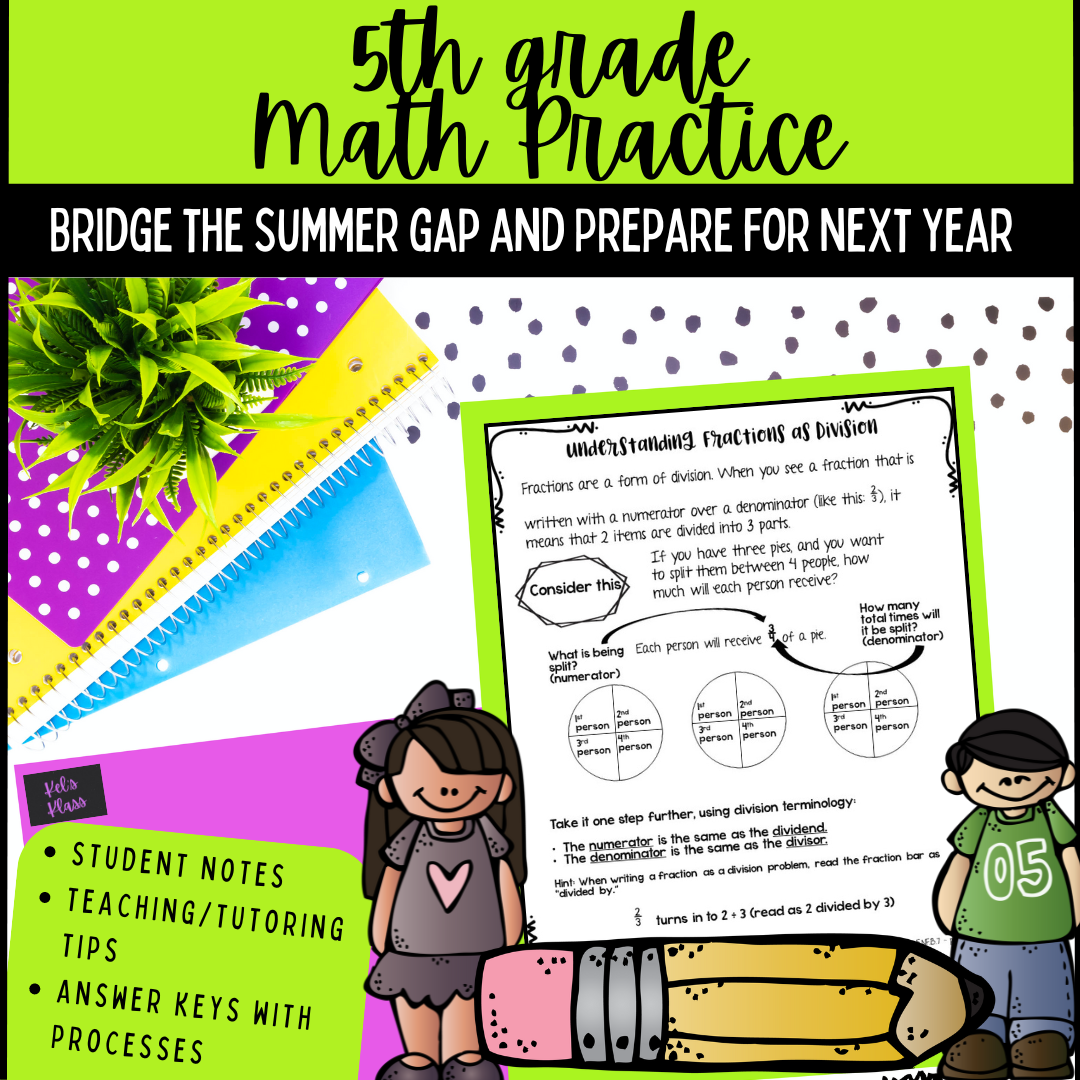
Keep your students engaged and confident in math all summer long with this 5th Grade Summer Math Review Packet ! Designed to prevent the summer slide , this resource provides targeted practice on 20 essential 5th grade Common Core math skills —all identified as challenging concepts that lay the foundation for 6th-grade success . What’s Included? ✅ Teaching or note sheets for each skill ✅ Practice worksheets for reinforcement ✅ Detailed answer keys with step-by-step solutions ✅ Pre-review pages for select skills to refresh prior knowledge ✅ Teaching & tutoring tips for parents and educators Math Skills Covered: Multiply 2-digit numbers by 3-digit numbers Divide 4-digit numbers by 2-digit numbers Add, subtract, multiply, and divide whole numbers: word problems Evaluate numerical expressions with parentheses Convert decimals between standard and expanded form using fractions Compare decimal numbers (Ordering decimals included) Add and subtract decimals: word problems Multiply a decimal by a power of ten Multiply money amounts: multi-step word problems Divide by decimals Understand fractions as division: word problems Add and subtract fractions with unlike denominators: word problems Multiply two fractions Divide unit fractions and whole numbers: word problems Add, subtract, multiply, and divide mixed numbers Graph points from a table Multi-step problems with customary unit conversions Describe relationships among quadrilaterals Volume of compound figures Create and interpret line plots with fractions This packet is easily formatted to print and bind for a summer workbook or could be used individually in tutoring sessions or summer school lessons, as review worksheets. Practice could also help those that are skipping a grade in math, to ensure understanding of concepts that may be missed in the transition. Tags: 5th grade math review, summer math packet, prevent summer slide, 5th to 6th grade math transition, common core math worksheets, math tutoring resources, printable math workbook, summer school math activities, fractions and decimals practice, multiplication and division word problems

Author Kel's Klass

Tags 5th Grade Math Review, 5th Grade Summer Math Packet, Prevent Summer Slide, 5th To 6th Grade Math Transition, Common Core Math Worksheets, Math Tutoring Worksheets, Summer School Math Workbook, Adding And Subtracting Fractions, Multiplication And Division Practice

Taxes & Paychecks – Real-World Simulation Sheets

Taxes & Paychecks – Real-World Simulation Sheets
Social Skills, Special Resources, Life Skills, Social Emotional Learning (SEL), Social Studies, Economics, Math, Money, Measurements, STEM, Grade 6, 7, 8, 9, 10, 11, 12, Workbooks, Worksheets & Printables, Worksheets, Teacher Tools, Quizzes and Tests, Quizzes, Tests, Literacy Readers, Lesson Plans, Word Searches

Get Ready To Unlock Real Life Know How In Finance By Teaching Students About Taxes Made Simple, Paychecks, And Managerial.Learn and Use Your Skills In The Real World Without Hosting A Class In Your Community With This All-Encompassing Feature Rich Tax And Paycheck Unit. Do you ever just wish to bring in Real Life Math, teach students valuable life long skills, make it relatable, and teach students about the relationship between abstract developement of numbers versus actual application of numbers in the real world? If you do; THIS IS the complete all-inclusive, no prep repititive unit that you needed to discover to teach your middle schoolers all about taxes, paychecks; found out that you CAN earn money with this comprehensive written unit. How can we make something that seems overwhelming and complicated, easier, and more enjoyable? By using an engaging and student centered material to inform and educate your students about understanding their actual earnings (Net Pay) before they get their first paycheck. This will help your middle school students view their paychecks as an indication of successful involvement within the work force against societal standards of financial obligation by then being empowered after having deliuered when they felt more discouraged previously. This is the ultimate teaching plan; a tried and true, 5-day-lesson plan that is intended to sufficiently prepare your students for their future by creating an opportunity for them to be able to view themselves as successful in the world of finance and less anxious about obtaining those same values. This product will benefit students in grades 6-9 who are studying math (especially for applying percentages/real-world scenarios), financial literacy, life skills and/or career exploration, civics and economics (to comprehend how tax money works within society), and in cooperative homeschool environments. Including the 34-page (pdf only) detailed phase one: core content and theory guide which explains the differences and similarities between gross and net, overtime, FICA, federal and state taxes and voluntary deductions. You’ll want to use this as part of teacher preparation materials or to supplement any students who are classified as advanced readers. Phase 2: Workbook for Students (10 Workbooks) Workbooks from 1 to 10 will provide instructions and examples for answering the following: 1. Understanding the structure of a paycheck (Worksheet #1). 2. Finding gross pay for various given situations (Worksheet #2). 3. All about FICA (the intergenerational contractual agreement) (Worksheet #3). 4. What to expect on your federal and state income tax return (Worksheet #4). 5. What the deduction from your paycheck is, to whom you can give it, and the effect of giving (Worksheet #5). 6. Bringing everything together to calculate the net pay for the paycheck (Worksheet #6). 7. What effect sales tax has on the consumer (Worksheet #7). 8. The basics of how property taxes impact local communities (Worksheet #8). 9. Understanding Form W-4 and Form W-2 (Worksheet #9). 10. Understanding the basics of the consumer and their role in the economy (Worksheet 10). Phase 3: Teaching Resources & Visuals High contrast visuals in black and white that can be printed and used are; diagrams of the paycheck pipeline, the anatomy of a paycheck, and where the taxes are sent. Also, a complete answer key will give the teacher all of the answers and how to create them from the 10 workbooks. Lastly, there will be a full guide for implementation by the teacher that includes the pacing guide (5 days), daily lesson objectives, daily lesson activities, weekly lesson discussion prompts, and how to differentiate lessons for children needing scaffolding or extensions. Allow your students to have the knowledge necessary to make a successful transition into their adult lives at home and in the community. Download this print and go unit today to help your students become knowledgeable, confident participants in the economy! Why Schools/Parents Especially Like It : Building Real-Life Skills - This program teaches students a real-world, practical skill that they will use starting the day they receive their first paycheck, laying the groundwork for a lifetime of future financial success. Connecting Civics & Math - This project successfully connects important math concepts (percentages) with key civics lessons that teach students how taxes are used to support the communities they live in, making learning much more effective and relevant to students. Comprehensive & No Preparation - This program is a complete unit that is ready to use; including the lesson plan, student worksheets, visuals, answer keys and 5-day lesson plans teachers will have more time to plan for other subjects. Empowering & Reducing Students’ Anxiety - The confusion caused by the amount of information presented on pay stubs and issues related to deductions is replaced by clarity and control over their finances with an understanding of what many of those deductions mean, allowing them to view themselves as part of and contributing to our economy. Promoting Critical Thinking - Students will build critical thinking skills through discussions about capstone simulations and ethics (i.e., considering progressive taxation), as well as developing the ability to analyze and evaluate many complex financial situations beyond basic computation. Mainly: - Middle School Math: Excellent resource for %'s and decimals; includes real-life problems. - Pre-Algebra or Consumer Math in HS (9th grade): Great introduction or summary. - Financial Literacy in HS or MS: Core unit of any financial literacy curriculum. - Life Skills/Career Readiness: Essential info for every student getting ready to work. - Civics/Economics: Excellent connection between personal finance and how government/public services are funded. Terms of Service/Copyright: Copyright is with Syed Hammad Rizvi. All rights reserved. If used in the classroom, this resource can only be used once per teacher. There is no sharing, alteration, distribution or selling of any portion of this resource. For example, you may not post this resource on the internet for others to view and download. If you wish to share this resource with colleagues, please order additional licenses at Teachsimple. Thank you for adhering to the above terms of use. This product is proudly created by Syed Hammad Rizvi.

Author Creative Book Store

Rating

Tags FinancialLiteracy, RealWorldMath, LifeSkills, UnderstandingTaxes, Paycheck, ConsumerMath, PersonalFinance, Economics, MathLesson, Civics

Math Fact Fluency Mastery Sheets

Math Fact Fluency Mastery Sheets
Math, Addition and Subtraction, Addition, Subtraction, Algebra, Calculus, Decimals, Fractions, Measurements, Multiplication and Division, Grade 1, 2, 3, 4, 5, 6, 7, 8, Worksheets & Printables, Workbooks, Worksheets, Writing Prompts, Word Searches, Teacher Tools, Assessments, Lesson Plans, Graphic Organizers, Presentations

The Math Facts Fluency Mastery Sheets-PRO (Professional Edition) is a complete (53 page) digital PDF resource that includes a variety of structured worksheets, instructional strategies, visual aids, & answer keys to help students build automaticity in addition, subtraction, multiplication, and division. This Professional Edition of the Math Facts Fluency Mastery Sheets were specifically designed to help students practice math fact fluency from basic facts (0-5) to advanced operations (6-12) including, regrouping; fact families; mixed operations; & timed drills. The Math Facts Fluency Mastery Sheets have been specifically designed to provide scaffolded modules that allow students to progress from concrete to abstract materials. Included are: number lines, arrays, part-part-whole diagrams; multiplication tables; and real-world word problems all of which support Elementary Math Standards. Finally, each of the 53 pages includes a baseline assessment; progress monitoring chart; implementation instructions for parents/teachers; and full answer keys to make grading easy. The Math Facts Fluency Mastery Sheets provide an ideal way to provide students with 5-10 minutes daily of deliberate practice for increasing their math fluency, eliminating finger counting, reducing cognitive load while preparing them for multi-digit math, fractions, and algebra. The Math Facts Fluency Mastery Sheets are perfect for use in the classroom, homeschooling; tutoring; & intervention groups in order to increase students' confidence in math and speed through deliberate practice. Why Parents and Schools Appreciate It Tested Method With No Guesswork – The clear mastery pattern, leveled practice exercises, timed benchmarks and answer keys enable teachers and parents to assess children's progress in minutes with absolutely no preparation. Fast Pain-Free Confidence – All kids can go from counting on fingers to having graduated to automatic recall in 5 to 10 minutes a day therefore reducing 'math anxiety' and allowing their brain to be focused on solving word problems or doing advanced maths Multi-Sensory Visual Aids – Abstract mathematics become concrete with the aid of using arrays, number lines, fact family charts, and other concrete models making it easier for visual learners, ESL students/learners, and students in the Special Education Program. Flexible Usage – Used in the classroom, homeschool, tutor (school breaks), summer review etc., has parent implementation ideas along with ability to track data for the benefit of school administration. Professional Quality – 53 pages of printable resources inclusive of strategies to enhance student learning outcomes that will be visible in report cards and standardized tests. Target Audience of the Resource (Based on a Study of the Complete Resource) : A resource that targets students in Grade 1–4 grades. (Most aligned to students in grades 2–3.) Addition Fundamentals (0 to 5) + Advanced Addition (6 to 12) + Addition Basics (0 to 5). Used by kindergarten/first grade students through second grade. Advanced Subtraction (up to four-digit regrouping) + Multiplication Foundations (0 to 5) . Used by second and third grade students. Multiplication Mastery (6 to 12) + Division Basics (1 through to 5) + Division Mastery (6 through to 12) + Mixed Operations Used by students in fourth and fifth grades. Therefore, it can be used to remediate fourth-grade students or to enrich first-grade students, but since this early mastery resource is based on developing fact fluency, it is ideally positioned for students in second or third grades. Copyright/Terms of Use This book was published copyright owned by Syed Hammad Rizvi for personal/single classroom use only; any alteration, redistribution or sale of this resource in any format including digital would constitute an infringement of copyright law. You are welcome to use this resource in your own classroom, but cannot share with another teacher unless you purchase additional rights through Teachsimple. Thank you for honoring these terms of use! Syed Hammad Rizvi is happy to provide this resource.

Author Creative Book Store

Rating

Tags MathFactFluency, MathFluency, ElementaryMath, MathWorksheets, MathMastery, AdditionSubtractionMultiplicationDivision, TimedMathDrills, MathFacts, FactFamilies, MathFactFluencyWorksheets

Money Management – Budgeting & Saving Worksheets

Money Management – Budgeting & Saving Worksheets
Math, Money, Statistics, Early Math, Numbers, Addition and Subtraction, Addition, Subtraction, Measurements, STEM, Homeschool Curriculum, Homeschool Templates, Grade 4, 5, 6, 7, 8, Worksheets & Printables, Workbooks, Worksheets, Word Searches, Teacher Tools, Assessments, Lesson Plans, Quizzes and Tests, Quizzes, Tests

Are you ready to go further than just a simple "piggy" bank lesson and actually give your students the skills they need for the real world? This complete, integrated Money Management Unit is filled with lots of tools to develop your students into well-rounded, professional "Young Scholars" by learning how to use the basic concepts of applied microeconomics in creative ways that meet the unique developmental abilities of both upper elementary and middle school students. The Money Management Unit is not a pack of worksheets; it is a full set of easy-preparation teaching materials that will help you develop a lasting understanding of financial literacy within your students. By using a structured, three-phase approach, this resource will help students gain a better understanding of the more complicated topics related to making good choices when it comes to spending or saving money through the use of opportunity cost; and will give them all the tools they need to manage the way they spend or save their money, from using an allowance to saving up for something they want to buy (zero‐based budget). WHAT'S AVAILABLE IN THIS SET OF 33 PAGES OF MATERIAL: PHASE 1: The Textbook: Applied Microeconomics for Young Scholars: A comprehensive but user-friendly resource for learning about many topics related to economics. The textbook covers the following topics: Income and Outflow: What is an allowance? What is entrepreneurship (using the example of a lemonade stand)? What's the difference between Needs and Wants? Budgeting Strategies: How do you use a "Zero-Based Budget" and the Spend, Save, and Share Approach? The Psychology of Saving: Delayed gratification, SMART goal setting, and the math of compound interest. The Economics of Choice: Understanding opportunity cost and consumer traps (e.g., Gamified Value in in-app purchases). PHASE 2: Student Workbook (10 Rigorous Worksheets): Worksheets which reinforce the concepts presented in the Textbook. Students are provided an opportunity to practice through hands-on activities in the areas of: Analyzing Revenue and Expenditures Making Decisions about Needs versus Wants Creating and Balancing a Ledger Calculating Savings Goals and Timelines Evaluating Opportunity Cost Recording Daily Transactions Understanding Emergency Funds and Unit Pricing Final Project: Create a Budget from Scratch! Phase 3: Teacher Resources (Visual Aids & Answer Key) 3 Visual Aids That Are Clear & Easy To Use! Perfect on a smart board or printed poster style (or printed out as handouts), these three docs provide simple visuals of how to create a budget, set goals and make impulse purchases so that students can see their financial decisions. An Answer Key Containing All Calculations & Rationale Is Ready For Use! A full key has been created for each of the ten worksheets so grading each student work will be easy. These two items can be used by any classroom and a great teaching resource to provide math centres, economics unit, life skills classes or by parents who want to give their child an early advantage through financial literacy. Why do Parents/Schools love: - The unit not only gives students the mechanics of counting money but explores how to think about money by teaching about core economic principles (opportunity cost, behavioral economics). - The entire unit is in one PDF file and provides a full resource package (textbook, 10 worksheets, various visual aids and full answer key). All materials are ready to print and teach - no planning time is wasted! - Students will have exposure to real-world experiences that will help them to connect abstract concepts to their everyday life through relatable case studies and scenarios such as saving for sneakers, managing their allowance & avoiding getting trapped in the arcade. - The psychology behind financial decisions is addressed and students are provided with tools for delayed gratification, goal setting (S.M.A.R.T.) and impulse control which will serve them throughout their lives. - The unit provides a wide range of options that can be tailored for any type of student. The rigor of the lesson is appropriate for gifted programs while the clear structure and answer key provides a high level of support for whole-group lessons or independent learning. Target Market (Student Classes): Based on the content's terminology ("applied microeconomics", "cognitive architecture") and concepts addressed, the following target audiences should be: Primary Target Market: Students in 5th and 6th Grade. The material is abstract in nature and at the appropriate developmental stage of maturation for these grades, as addressed in the Introductory Section provided in the PDF. Secondary Target Market: Gifted students in 4th Grade who are capable of handling advanced concepts and vocabulary. The material will provide them with a challenge while stimulating their interest. Tertiary Target Market: Students in 7th and 8th Grade that have never received an introduction to or have already been remediated in Financial Literacy concepts. The unit provides excellent foundational material for students enrolled in Life Skills and/or Economics courses. Niche Target Market: Families who homeschool their children and desire to use an academic, complete, and structured Financial Literacy Curriculum. Copyright / Terms of Use: This Book is the intellectual property of Syed Hammad Rizvi and all rights are reserved. This resource is intended for private use and only in single classroom settings. You may not create any modifications to this resource, redistribute it or sell any part of it. Additionally, you may not make this resource available on a publicly accessible internet website. If you are interested in sharing this resource with your colleagues please be sure to purchase additional licenses from Teachsimple . Thank you for helping to protect the terms of use stated above. This resource has been produced by Syed Hammad Rizvi, who takes great pleasure in providing this resource to teachers!

Author Creative Book Store

Rating

Tags FinancialLiteracy, MoneyManagement, PersonalFinance, Budgeting, SavingMoney, Economics, TeachingMoney, MoneySkills, FinanceForKids, BudgetingForKids

Shapes and Spaces Activity Book 3 - Challenging Level

Shapes and Spaces Activity Book 3 - Challenging Level
Math, Geometry, Grade 5, 6, 7, Workbooks, Worksheets & Printables

The Shapes and Spaces - Activity Book is a 48-page download intended for 10+ year olds. Children will learn spatial language and concepts related to shapes, symmetry and so much more with this activity book. They will get to enjoy activities such as completing traversable networks, tessellations, and properties of shapes.

Author Ready-Ed Publications

Tags Rotational Symmetry, Prisms Worksheet, Tangram Pictures, Rectangular Prism, Challenging Math

Mathematics Binder Covers – Templates for Classroom Use

Mathematics Binder Covers – Templates for Classroom Use
Science, STEM, Basic Science, Special Resources, Montessori, Classroom Management, Resources for Teachers, Math, Physics, Technology, Homeschool Templates, Grade 6, 7, 8, 9, Worksheets, Worksheets & Printables, Teacher Tools, Projects, Activities, Workbooks, Drawing Templates & Outlines, Templates, Graphic Organizers, Classroom Decor

Mathematics Binder Covers – Templates for Classroom Use Organize your Math handouts, notes, and units with visual clarity Simple and flexible templates to help organize your Mathematics materials In my math classes, it can be a challenge to keep things organized - especially when it comes to multiple units, lab notes, worksheets and review materials. To make it easier for my students and myself, I designed these simple binder sleeves. There are 12 different pages. The covers have a clean, colorful blob layout that is friendly but not distracting. I usually print them out and use them as cover sheets or as dividers in folders for students or teachers. They also work well for digital learning environments, e.g. as section covers in PDF files or on classroom platforms. I like that the color scheme allows students to quickly find what they are looking for, and it brings a little more structure to a subject that is often riddled with formulas and technical terms. When used as cover sheets, students can choose their favorite color for their cover sheet. This resource is handy - and has saved me a lot of time in lesson preparation and follow-up. What’s included: 12 math-themed cover pages different colors zu choose as a cover sheet as a divider between the individual Mathematics topics I've printed these on colored paper for my own binder and also used them digitally in student notebooks. Works well for both teacher organization and student-facing materials. 📍 Best wishes, Heike from Lernfitness Math teacher (Chemistry teacher, Biology teacher) in Germany Did You Know? I teach with a certified therapy dog, and together we create a positive and inspiring learning environment. 🐶✨

Author Lernfitness

Rating

Tags Science, STEM, Binder, Cover Sheet, Template, Organizer, Organize, GoodNotes, Mathematics, Math

Match The Shape - Hands on Activity Book

Match The Shape - Hands on Activity Book
Special Resources, Special Education Needs (SEN), Speech Therapy, Math, Early Math, Kindergarten, Preschool, Grade 1, 2, 3, 4, 5, 6, Workbooks, Worksheets & Printables

The "Match the Shapes" activity book is an interactive and fun educational tool designed for young children who are learning about shapes. The activity book comes in a downloadable format that can be easily assembled by the parent or educator, following the included instructions. The activity book consists of nine pages, each featuring a different shape, such as a square, circle, triangle, rectangle, and more. The learner is then presented with a group of nine different shapes and asked to choose the one that matches the shape on the page. The shapes are laminated and have Velcro attached to the back for easy attachment to the book. Once the learner selects the correct shape, they can then place it onto the corresponding page in the book which is also laminated. This hands-on activity helps the child develop their problem-solving skills, fine motor skills, and visual discrimination abilities. Teaching matching shapes is an essential skill for young children to learn as it is the foundation for more complex concepts such as pattern recognition, geometry, and spatial reasoning. By mastering this basic skill, children can gain confidence in their abilities and develop a solid foundation for future learning. "Match the Shapes" activity book is an educational tool that provides an engaging and interactive way for young children to learn about shapes. By helping children develop their matching skills, this activity book can set them up for future success. Follow the directions included in the download. Set your printer to print landscape. Laminate all pages and cut on dotted lines as well as cut out all the individual shape cards. Velcro where there is a velcro symbol. This book can be coil bound or three hole punched and placed in a binder or used with binder rings. IFIO girl I'll Figure It Out

Author IFIO girl - I'll Figure It Out

Tags Early Learner, ABLLS R Section B, Task Based Learning, Hands On Learning, Visual Discrimination, Fine Motor Skills, Occupational Therapy, Autism, Discrete Trial Training, Independent Work

Real World Financial Literacy Pack

Real World Financial Literacy Pack
Math, Money, Statistics, Time, Mental Health, P.E. & Health, Mindfulness, Research, Resources for Teachers, Classroom Management, Grade 6, 7, 8, 9, 10, 11, 12, Assessments, Teacher Tools, Lesson Plans, Outlines, Presentations, Worksheets & Printables, Workbooks, Worksheets, Word Searches

The Real-World Financial Literacy Pack Professional Edition is an extensive educational resource that contains 14 detailed financial worksheets and modules within its 52-page scope. The financial resource covers essential financial management skills such as financial goal setting using the SMART system, understanding paychecks and deductions, the 50/30/20 budgeting system, the difference between wants and needs, daily expense management, banking and ledger balancing, credit score explanations, debt management strategies such as the debt snowball and avalanche methods, compound interest, emergency savings, smart grocery shopping using unit pricing, apartment move-in cost calculators, automobile purchase vs. lease comparisons, and net worth statements. The financial resource is suitable for developing financial independence and is geared toward interactive classroom and homeschooling environments, progressing from basic financial management skills to complex decision-making strategies for financial success. Unleash vital high school financial literacy knowledge with the Real-World Financial Literacy Pack Professional Edition – a 52-page PDF package of 14 printable worksheets covering budgeting, managing debt, credit scores, compound interest, emergency savings, grocery shopping techniques, cost of apartments, cost of cars (loans vs. leases), and net worth calculations. Ideal for high school educators, homeschooling parents, and teachers looking for exciting personal finance activities, life skills learning, and money management instruction. This SEO-optimized digital product includes step-by-step instructions, calculation tools, self-assessment activities, and visual charts to teach high school students vital budgeting tips, debt relief techniques, credit building knowledge, and wealth creation skills. Improve financial freedom for your students, avoid debt traps, and ready them for adulthood with these classroom-ready, homeschool-friendly financial literacy worksheets. Why Parents/Schools Love It: Practical Life Skills Focus: Engages students with real-world topics like budgeting, debt, and credit in an interactive worksheet style that prepares young people for independent living. Comprehensive Coverage: Offers 14 modules with examples, calculations, and visuals, making it an exhaustive curriculum that can cover personal finance classes or homeschooling. Easy Implementation: Includes printable, ready-to-use resources with easy-to-follow instructions that even parents without financial knowledge can follow. Fosters Financial Independence: Encourages responsible practices like goal setting, expense tracking, and smart shopping that can help young adults avoid debt in the future. Adaptable for All Learners: Suitable for high school students with different learning abilities, including thought-provoking questions that stimulate critical thinking. Target Student Classes: From the comprehensive analysis of the PDF, the various terms such as "high school students," "adolescence to early adulthood," and the examples provided that are suitable for teens who are getting ready for college, part-time jobs, or living on their own (such as saving for prom, college, paychecks, loans, etc.) indicate that the target classes for the provided material are high school students in grades 9-12, ages 14-18 years old. The material provided assumes that the reader knows basic math skills but has no prior financial knowledge, thus eliminating the possibility of using the material for middle school students or college-level classes. Copyright/Terms of Use: This Book was copyrighted by Syed Hammad Rizvi. This resource is for personal and single classroom use only. You shall not reproduce, redistribute, or sell in any manner any part of this resource. This means that you shall not place it on the Internet in such a way that it can be found and downloaded by anyone. If you wish to share it with your colleagues, you can buy additional licenses from Teachsimple. Thank you for your understanding. This product is happily brought to you by Syed Hammad Rizvi

Author Creative Book Store

Rating

Tags FinancialLiteracy, PersonalFinance, BudgetingTips, MoneyManagement, HighSchoolFinance, HomeschoolResources, TeacherTools, FinancialEducation, DebtManagement, CreditScoreTips

Decimals, Measurement, and Geometry Printable Workbook

Decimals, Measurement, and Geometry Printable Workbook
Math, Measurements, Grade 5, 6, 7, Workbooks, Worksheets & Printables

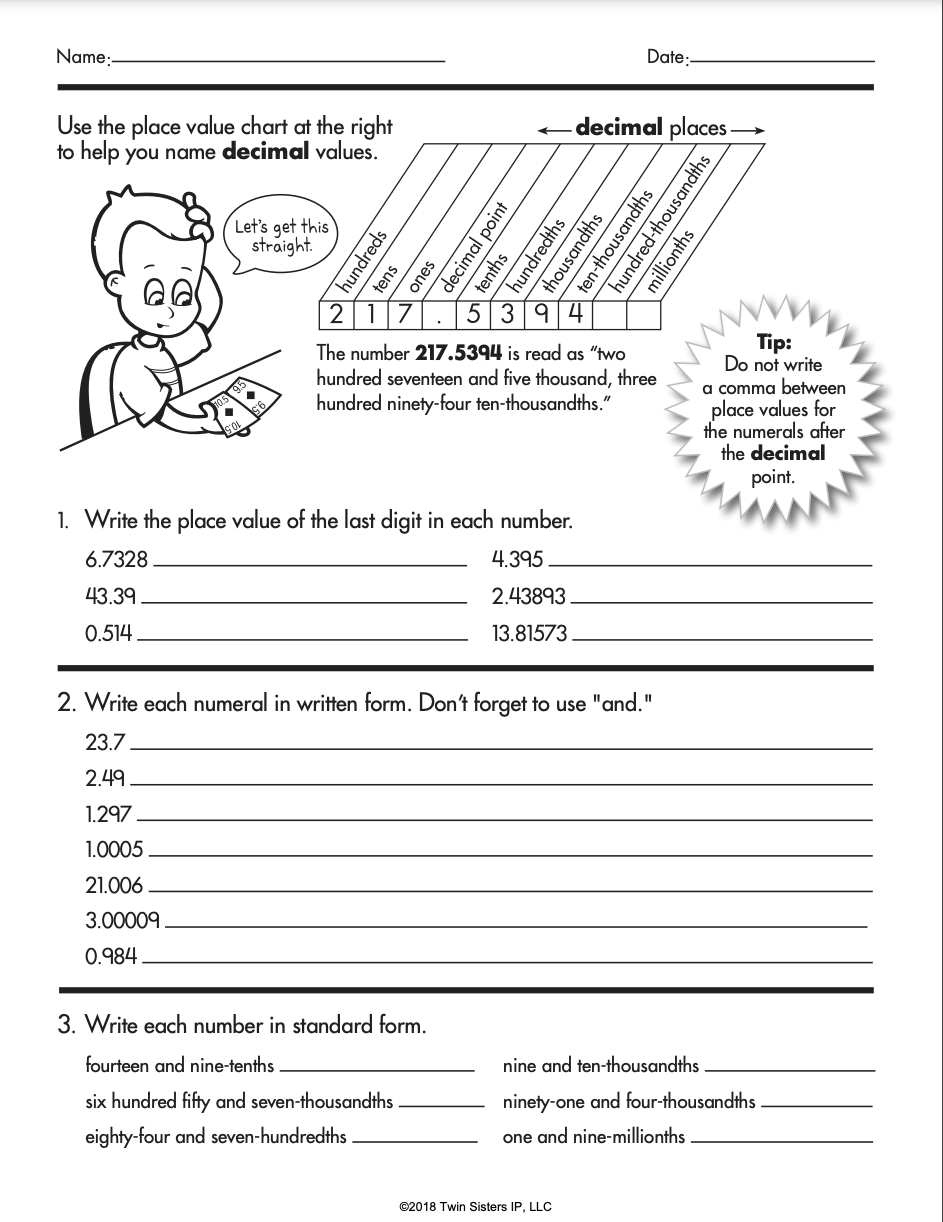
Reviewed, evaluated, edited, and creatively written by teaching professionals, this Complex Math: Decimals, Measurement & Geometry digital workbook implements current teaching strategies and aligns with grade-level standards to teach math concepts and applications. With the ability to print the pages over and over, your child can complete the activities again and again until the skills have been mastered. Includes: • Parent Tips: to provide valuable background information and other ideas for teaching • Hands-On Activities and Challenges: to make practicing new skills fun Teach your child about: • Decimal Values and Places • Fractions and Decimals • Percents • Adding and Subtracting Decimals • Multiplying and Dividing Decimals • Measuring Length, Liquid, and Weight • Linear Measurements • Geometric Terms

Author Twin Sisters Digital Media

Tags Decimals, Measurement, Geometry, Fraction, Percent