2,812 products added recently
Page 35 - 2nd Grade Worksheets
Provide your second graders with worksheets that promote growth in literacy, numeracy, and critical thinking. These resources align with curriculum standards and offer engaging activities. Incorporate them to strengthen understanding and encourage enthusiasm for learning.
Secret Code Words
ELA, Language Development, Spelling, Preschool, Grade 1, 2, 3, Worksheets & Printables, Worksheets
This resource is a Secret Code Words Packet. These activities are self-directed and will engage your students in a meaningful, independent activity while you spend time with another small group. As an extension, students can use the secret code to write messages to their friends, create their own lists of words, or practice their spelling words. The worksheets in this set help kids practice: - letter recognition - handwriting - phonics - reading - spelling - sight word recognition - hand-eye coordination - independence There are 28 worksheets and 2 secret codes (1 for uppercase and 1 for lowercase).
Author Monaco Lane Curriculum for Early Literacy
Tags ABC Scramble, Secret Code Words, Spelling Worksheets, Vowels, Sight Words, Secret Code Words For Help, Secret Code Words For Friends, Secret Number Codes For Words, Simple Secret Codes, Secret Word Codes
i-e Phonic Worksheets for Special Needs
Special Resources, ELA, Language Development, Phonics, Reading, Spelling, Kindergarten, Preschool, Grade 1, 2, Worksheets & Printables, Worksheets, Activities, Games
This is a pack of 12 phonic worksheets for the Long Vowel I-E (as in tie and ride) specially designed for those with special needs, including those with dyslexia or who may be suspected of being dyslexic but will work equally well with young learners in Kindergarten/EYFS/Y1. A pack of 12 I-E worksheets with a variety of exercises to help build phonemic awareness and reading fluency. These sheets are LETRS and UK GOV requirements aligned. These worksheets also align with the most popular phonic programmes, including RWI and Letters and Sounds. What is included? 12 worksheets for the sound I-E taking pupils from hearing the sounds in words to reading and spelling them at word and sentence level. all following my special method devised as I privately tutor children of all ages with profound special needs. Your phonics lessons covered! Tracking, fluency triangles, spelling, reading, games, comprehension exercises....and more! Who are these worksheets for? I have written them for pupils who struggle with processing information - especially sounds. This includes children who are DYSLEXIC or have ANY other kind of processing disorder. Such children may have failed with other methods of teaching phonics. Such pupils need activities that: ·are highly structured - one tiny step at a time building on the one before using only a limited number of words to start with and only using words that the child has already learnt to sound out, with no nasty surprises. ·Have only a little on each pageas these pupils tire easily. What makes these worksheets special? I have a powerful three-step process which I use with my special needs pupils, which is worked out over the course of the 12 worksheets: 1. See it!where we focus on becoming aware of the new sound in words. This involves first hearing the new sound in words and then seeing it in words (tracking). 2. Sound-it-out!Having learnt to see the new sound in words, we learn to sound out these words to read and write them. We begin by usingsound-it-out boxesfor reading and spelling which help the child to segment the word prior to blending the sounds together. Once the child can read and write individual words, we work on fluency by building familiarity with the common words in the new sound family. Once the child can sound the words out to read and spell confidently, we move on to recognising them/using them in longer reading and dictation passages, as soon as the child is able. I provide 2 reading passages with comprehension exercises and one dictation passage, with a page in the workbook dedicated to it, with room for a picture, which again cements understanding. 3. Write it! Incorporated into the above two steps, we constantly write the new sound. This adds a multi-sensory dimension to our work - we see with our eyes, we sound it with our mouth parts and voice, and then we move by writing. All three steps work together to help the child feel in control of his/her learning and to become a successful, confident learner. We finish each sound with a dictation which culminates our work before we move on to the next sound. I try to give the dictation a week after we finish the work on the EA sound to act as revision. The dictation: Read this passage to your pupil, who should write it. Have the child read his/her work and check for errors. Make sure the writing is completely accurate before saying the child has finished, including full stops and capital letters correctly used. Flashcards are included of some common I-E words. What is included? 1 PDF with flashcards and 12 I-E worksheets
Author Lilibette's Resources
Tags Split Digraph A-e, Silent E, Magic E, Phonic Worksheets, Special Needs, Phonic Games, Print N Play Phonic Game, I-e Worksheets, Split Digraph I-e, Phonics I-e
Subject-Verb Agreement Sample - Grades 1-2 Grammar (Docs)
ELA, Language Development, ESL, Grammar, Common Core, Resources for Teachers, Grade 1, 2, Teacher Tools, Assessments, Tests, Quizzes and Tests, Worksheets, Worksheets & Printables, Centers, Activities
Subject-Verb Agreement - 1 Sample Lesson ELA MCQS Overview: In this series of lessons, students will embark on an engaging exploration of the grammar skills that bring our language to life. These lessons are designed to help students identify, understand, and effectively use language arts skills in their writing and speech. Used with the free supplementary materials available for all topics, each lesson builds on the last, offering a mix of direct instruction, interactive group activities, and independent practice. Through fun and creative tasks, students will learn how to recognize grammar in sentences, understand their role in sentences and use them to enhance their own writing and speech. Subject-Verb Agreement Overview: Includes: Intro to Subject-Verb Agreement Match Subject to Verb Match Verb to Subject Additional Practice Docs Version This is the Docs editable and fillable version. This download is available in GOOGLE Docs, GOOGLE Forms, GOOGLE Slides. PDF, PPT, WORD, check the links below for more details. FULL CATALOG OF DOWNLOAD LINKS HERE Grade 1/2 Links: Capitalization and Punctuation Google Docs Google Forms Google Slides PDF PPT Word Free Supplementary Materials Pack Adjectives Google Docs Google Forms Google Slides PDF PPT Word Free Supplementary Materials Pack Nouns Google Docs Google Forms Google Slides PDF PPT Word Free Supplementary Materials Pack Pronouns Google Docs Google Forms Google Slides PDF PPT Word Free Supplementary Materials Pack Verbs Google Docs Google Forms Google Slides PDF PPT Word Free Supplementary Materials Pack Prefixes & Suffixes Google Docs Google Forms Google Slides PDF PPT Word Free Supplementary Materials Pack Sentence Structure Google Docs Google Forms Google Slides PDF PPT Word Free Supplementary Materials Pack Subject-Verb Agreement Google Docs Google Forms Google Slides PDF PPT Word Free Supplementary Materials Pack ELA Review Questions Overview Questions have three answer choices. There are a handful of pictures on each test for aesthetic purposes, as well as a review sheet covering most of the topics covered in the product. Introduction or Example Sheet Each topic will include an introduction or example sheet to go through first with your students. Full Answer Keys Full answer keys and sample responses are provided so no matter how busy you are, you know you're covered! In the Supplementary Pack Interactive Ice Breakers: Fun, hands-on activities that get students thinking about adjectives right from the start. Guided Practice: Teacher-led exercises that reinforce the day’s lesson, ensuring students can confidently identify and use adjectives. Group and Partner Tasks: Collaborative activities that allow students to work together to solve problems, categorize adjectives, and create descriptive sentences. Independent Worksheets: Structured worksheets that provide individual practice and help solidify understanding of key concepts. Exit Tasks: Quick, reflective activities at the end of each lesson that assess understanding and encourage students to apply what they’ve learned. For similar downloads and other frees, do check out Cored Group on TeachSimple.
Author Cored Education
Tags Elementary, Reading, Comprehension, Vocabulary, Answers, Ccss, Common Core, Spelling, Writing, Digital Centers
11 WORKSHEETS OF ADDITION 0 to 10 | Missing the Numbers
Math, Addition and Subtraction, Addition, Preschool, Grade 1, 2, 3, Worksheets & Printables, Worksheets
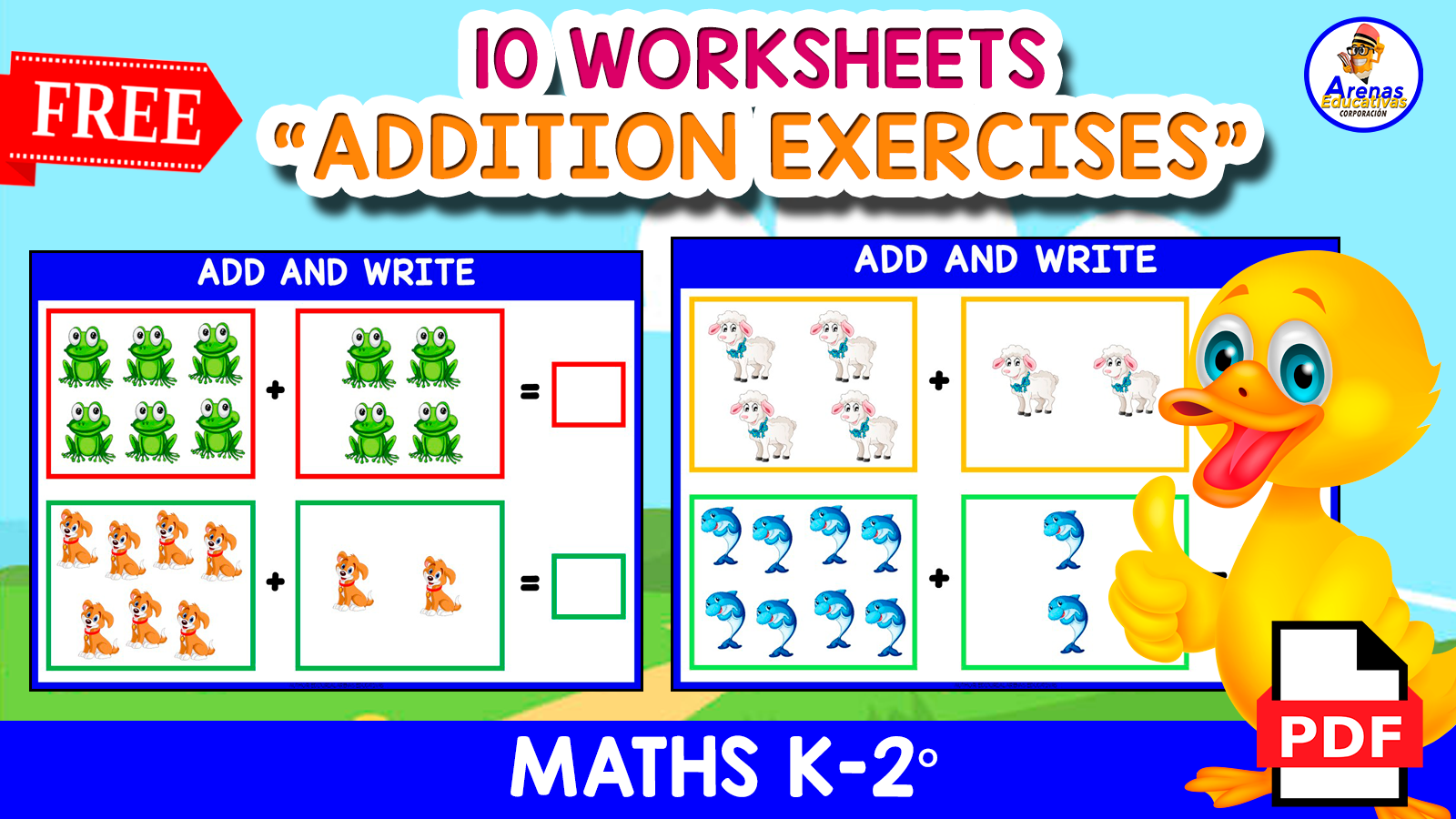
Worksheets have multiple benefits in the classroom because they allow students to complete their learning. We can use these worksheets during class, afterwards (as an evaluation) or even send it home as homework. That's why on this occasion I bring you this fantastic worksheet on additions from 0 to 10 so that your students can practice and perform mental calculations and find the number they need. 1. What is the name of this document? The name of this educational document is "11 worksheets on additions from 0 to 10, with spaces to fill in the missing numbers from the additions" 2. What topic will you address in this resource? The topic to be addressed in these worksheets is the sum from 0 to 10. 3. Do I need some extra elements to apply it? Yes, your children will need a pencil and eraser to do the sums. 4. Is it in color or black and white? This document is available in black and white so that it is much better for you to print and save many resources. 5. Is this resource free or do I have to pay to use it? This document is paid. 6. How many pages make up this educational resource? This document contains 11 fabulous pages ready to be printed. 7. Do you have an attached answer key? It does not contain an attached answer key. 8. For what ages is it recommended? These worksheets are recommended for children from 7 to 9 years old who are already capable of doing additions. 9. Who is the author of this document? The author of this educational document is EDITORIAL ARENAS EDUCATIVAS. 10. In what area of knowledge can it be applied? You can apply these worksheets in the area of mathematics for children. 11. Should I apply it individually or in groups in my class? You can apply these chips individually. 12. What size and format is this resource in? These sheets are available in PDF format, A4 size.
Author EDITORIAL LAURA EDUCA
Tags Addition Worksheets, Addition Exercises, Addition For Kids, Addition Games
SEL Flashcards for Social Emotional Learning with SEL Coloring Pages
Special Resources, Life Skills, Social Emotional Learning (SEL), Social Skills, Special Education Needs (SEN), Speech Therapy, Preschool, Kindergarten, Grade 1, 2, 3, Activities, Centers, Games, Worksheets & Printables, Flashcards, Worksheets, Coloring Pages
In this SEL product, you will get SEL Flashcards for Social Emotional Learning. You will also get SEL coloring pages because there are two different pages of emotions/feelings. Both pages have a black and white version and a color version. The black and white version allows your students to color their own faces and images. The emotions listed are; happy, sad, silly, proud, shy confused, scared, excited, angry, tired, loving, sick, disgusted, cry, jealous, disappointed. These flashcards can be used for so many purposes. I have used these flashcards for Go Fish games where the students have to ask for a certain feeling. You will need to make two copies of the colored emotions poster to make this game work. If a student asks for "angry" and the student they asked has it, that student give the card to the one who asked and that student places the match down on the table and names a time they felt angry. I have also used this resource for memory games. You would, again, make two copies of each emotion. Then you would mix up the cards and place them face down (I would highly recommend cardstock) in a random order. Students then would choose two cards and reveal the emotion cards. If they are a match, then the student can share when they have felt that way. If it is not a match, they would place the cards face down again the the next student would take a turn. This is a fun and interactive game but also helps students discuss their feelings in a non-threatening way. This resource can be used as a whole class activity where students color their flashcards and then cut them out. They can randomly pick a card and name a time they felt that way. This can also be used as a center activity for Go Fish or Memory (as I described above). The ways to use these Emotion SEL Flashcards are endless!
Author Jennifer Moyer Taylor
Tags SEL Flashcards, SEL Coloring Pages, Games, Social Emotional Learning, School Counseling, SEL, Social Skills, Emotions, Feelings, Sel Activities
America Through the Centuries: 1900s Lapboook / Interactive Notebook - EBOOK
Social Studies, History, History: USA, Preschool, Grade 1, 2, 3, 4, 5, 6, 7, 8, Worksheets & Printables, Worksheets
America Through the Centuries: 1900s Lapbook / Interactive Notebook - EBOOK An educational resource designed for a comprehensive study into American history of the 1900s. The focus is major historical events, impactful personalities, and relevant inventions from this era. Product Highlights: Insight into food habits, clothing trends, and housing styles prevalent during this period Inclusive study guide with clear instructions and templates A flexible teaching aid that can supplement other history curriculums or work independently Suited for K-8th grade learners, offering educators flexibility in modifying content complexity according to their learner's maturity level and requirements. Use Cases: Can be used for full-class group discussions, In small focused group studies or, As an intriguing homework assignment. About the Format: The 103-page PDF format file is easy to download and print. The instructions provided are straightforward. Coverage: The World Wars I & II, The Great Depression,the Vietnam War among others are incorporated within these pages. Significant historical characters represented; ranging from Woodrow Wilson through Joseph MacCarthy onto Martin Luther King Jr., "Transforming learning about American history from a monotonous mugging up routine into experiential knowledge exploration!" +
Author Knowledge Box Central
Tags American History, 1900s, Interactive Learning, Lapbook, Famous Personalities
Printable Warm-Up Writing Journal for 2nd 3rd 4th 5th Grade CYCLE 4
ELA, Writing, Creative Writing, Grammar, Grade 2, 3, 4, 5, Worksheets, Worksheets & Printables
Ready to get your learners working in a more gentle on-ramp to your class time? Maybe your homeschool already includes instruction, but a gentle warm-up to your learners' writing instruction is a great way to keep them motivated to learn more! This is CYCLE 4 of the Warm-Up Writing Journal! With 45 MORE engaging prompts in varied formats, this easy-to-print journal makes adding writing into class or your homeschool day easy. Simply print out the numbered pages, and have students decorate the cover to their liking. Then, bind the pages with a stapler or a hole punch and yarn. Learners are able to write directly on the page, illustrate when asked to, and check their work for capitalization, spelling, and punctuation errors. Objective: Provide done-for-you writing prompts for 2nd-5th graders. Encourage self-editing with included editing checklists. Formats: Printable PDF was designed with easy, ink-saving printing in mind. Print 2 pages per sheet, and choose 2-sided printing to save both ink and paper! Grades: 2nd, 3rd, 4th, 5th Variations: This is the third cycle of the Warm-Up Writing Journal. This resource will soon be available in multiple variations (referred to as "cycles") for a year-long writing resource! What you'll get: This resource contains a 49 page PDF that includes: Journal cover which students can personalize Instructions Bonus STEAM extension ideas Editing checklists on each page Variety of formats to motivate learners Printable certificate of completion What people are saying: "Fun writing prompts. They really encouraged my child to keep writing beyond the first simple sentence! Great resource. Thank you!" -Jessica P. Looking for more English resources? Be sure to check out my debate activities, critical thinking games, and vocabulary lessons and games on Teach Simple! Topics include: -Narrative Writing Matrix Activities -"Bigger & Better" debate -"I Have, Who Has" card game and vocabulary lesson on: food & drink, weather & landforms, numbers, colors, and patterns, Christmas, calendar , and school & classroom vocabulary. Got a request? Feel free to get in touch on socials @melissaisteaching . Happy teaching!
Author Melissa Is Teaching
Tags Writing, Homeschool, Writing Fluency, Writing Stamina, Daily Writing, Writing Prompts, Editing, Printable Writing, Writing Workbook, Warm Up Writing
Guided Reading Level N - The Power of the Team (with Lesson Plan)
ELA, Resources for Teachers, Reading Comprehension, Reading, Language Development, P.E. & Health, Sports, Social Emotional Learning (SEL), Special Resources, Physical Education, Grade 2, 3, 4, Worksheets & Printables, Worksheets, Teacher Tools, Centers, Activities, Literacy Readers, Quizzes, Quizzes and Tests, Assessments
This Guided Reading Book - The Power of the Team (Level N) with lesson plan includes: Guided Reading Color Label (front cover x1) This is a quick way to match the book’s demands to what students can generally handle.. The overall goal is to use the level/color to pick books for several smaller groups. To qualify for a certain level, a student is expected to read a book from that level with about 90–94% accuracy. If a student is consistently accurate and understands, move up a level. If the student is struggling at that level, drop down and add more support. Each student will improve at completely different rates, but it is generally one of the best ways to check progress across the class. DOWNLOAD THE CATALOG TO VIEW ALL GUIDED READING BOOKS AVAILABLE (SORTED LEVELS A-Z) Pre-Reading Question (x1) Teacher asks the prompt aloud, can be while showing the cover or first page. Students share what they already know, or make educated guesses from the cover. Prompt them to use the target vocabulary. Write some of their responses on the board to look back at during the reading. Vocabulary Words (x5) Introduce the five words, best doing it one at a time. Start by saying it, while students repeat and then see if anyone knows what it means before reading further. Read through the meaning and try to briefly connect each word to a picture or gesture so it’s meaningful. Ask students to flip through the book pages and point to where they see each of the vocabulary words. While reading the book pause upon coming across one of the vocab words or read the sentence twice to make sure students understand the word has appeared. Optional: Ask students to raise hands whenever they see/hear one of the new words. Guided Reading Pages (x10) Check the book snapshot (below) for: primary topic - do you need to prep extra reading or intro materials on this? what is taught best - decide on 1-2 bullets to focus on, use the prompt or words provided here for best results. learning goals - what you are checking for students to be able to do after the session, elicit answers using prompts or words provided. key vocabulary (see section above). questions overview - so you know what is coming up and if you need to prep extra materials to assist understanding. Run the lesson You may have already looked at a few of the pages together, but you can show them some of the pictures again first to set meaning. Depending on how much time you have and how familiar your students are with guided reading class, you may want to read the book aloud first with the group first. Students whisper or partner read, while you listen in. If time, do it as a group, one student reading a page each. Use the guided page’s prompts to coach: “Check the picture / does it make sense?” “Point under the words / try the first sound” “Reread the sentence smoothly”. Try to focus more on one student per session (rotating every time), so you can work out if they are ready to move up or need to move down a level. Comprehension Questions (back cover x3) This is your way to check that students didn’t just say the words, but actually understood the text. First, let students answer by pointing to the page/picture and saying a short sentence. After any answer, follow with: “Show me where you found that in the text.” In bigger groups, have partners answer first (10–20 seconds), then call on 2–3 students to share. Differentiation tips: Emerging speakers/struggling readers: oral + pointing On-level: oral in a full sentence Higher: one written sentence or draw + label Book Snapshot Title: The Power of the Team Genre: Nonfiction (informational) Subject: SEL / Physical Education / Reading Primary Topic: Teamwork skills that help teams succeed Estimated Guided Reading Level (A–Z): N What This Book Teaches Best Teamwork and shared goals: Teamwork happens when people work together to reach a common goal and play “for the whole group.” Communication in fast-paced play: Players use loud voices or hand signals to share information so everyone knows what to do next. Trust and cooperation through passing: Passing the ball (or puck) makes it harder for the other team to take it and shows teammates trust each other. Support and encouragement: Teammates help each other after mistakes and keep spirits high when things get difficult. Planning, practice, and coordination: Teams use strategy, practice together, and coordinate timing (like passing a relay baton) to perform smoothly. Learning Goals Students will explain what teamwork is and what it helps a team reach, using details from the text. Students will describe how communication helps a team during a fast-paced game. Students will explain why passing is important and what it shows about trust on a team. Students will describe ways teammates support one another with encouragement when someone struggles or makes a mistake. Students will explain how strategy and practice help a team work “like a single machine.” Students will describe how coordination and shared defense help teams succeed. Key Vocabulary From the Text cooperation — working together to reach a goal. vital — very important. encouragement — kind support that helps someone keep trying. strategy — a plan for the best way to play. coordination — moving and working together at the right time. Discussion Prompts Pre-reading question: How can working together help a team do better in a sport? Comprehension questions: What does the text say teamwork helps a group of people reach? According to the text, what do players use to share information during a fast-paced game? What does the text say teamwork teaches people how to be in every game they play? Printing Tips 1. Best Printing Method (Recommended) “Booklet” Printing (Best if Available) If your printer or PDF viewer supports Booklet Printing , use this. Settings to use: Print mode: Booklet Paper size: Letter or A4 (either works) Orientation: Landscape Print on both sides: Yes Flip on: Short edge Scaling: Fit to printable area Booklet subset: First test: Front sides only Then: Back sides only This will automatically: Pair pages correctly Put the cover on the outside Align everything for folding After printing, fold in half and staple along the spine . 2. If “Booklet” Printing Is NOT Available You can still print this correctly with manual duplex printing . Step-by-step: Open the PDF. Choose Print . Set: Orientation: Landscape Pages per sheet: 1 Print on both sides: Yes Flip on: Short edge Print all pages . Because each PDF page already contains two facing book pages, the result will still fold cleanly into a book. Thousands of Cored Education products are included with your TeachSimple membership. Download links and encyclopedia index available here.
Author Cored Education
Rating
Tags Reading Comprehension, Reading Passages, Reading, Guided Reading, Guided Reading Lesson Plan, Guided Reading Activity, Pre-reading, Vocabulary, Sports, P.e. Lesson Plans
Practise Writing Stories ‘Zoggy In The Sun’ (4-7 years)
ELA, Writing, Grade 1, 2, Worksheets & Printables, Worksheets
Practise Writing Stories ‘Zoggy In The Sun’ (4-7 years) Practise Writing Stories ‘Zoggy In The Sun’ (4-7 years) is a powerful teaching resource explicitly designed to enhance the writing skills of children in their early primary years. This significant tool focuses on the core areas of language arts, making learning fun and interactive. About the Resource Aimed at Grade 1 and Grade 2 pupils, this resource is primarily a set of worksheets centered around dialogue and picturesque prompts. It encourages kids to: Express their thoughts more articulately Engage in discussion about a given picture Promote sentence construction using visual stimuli and suggested words Skill Development This teaching tool has been designed keeping in mind the ability of children between 4-7 years old. It helps them express their views creatively while gradually mastering grammar rules and building up vocabulary over time. Ease-of-use & Flexibility The activities are presented in an easy-to-follow PDF format with ten pages full of fun-filled exercises. Thanks to its accessible design, it can be used effectively for both whole group activities as well small groups or homeschoolers. "Practise Writing Stories 'Zoggy In The Sun' (4-7 years) is effective regardless whether your child taking first steps towards reading or looking into revising his knowledge comprehensively through writing exercises."</b
Author Guinea Pig Education
Tags Interactive Learning, Language Arts, Sentence Construction, Vocabulary Building, Teaching Resource, Zoggy
3D Shapes Booklet
Math, Geometry, Grade 2, 3, 4, 5, Worksheets & Printables, Worksheets
3D Shapes Booklet. 65-page PDF file. When students begin to learn about shapes, it opens up a whole new world to math that many of our students come to love. Geometry is filled with so many components that we have to take our time as we introduce and review them all! This is a 3D Shapes Booklet that will give your math students a fun way to learn and review 3D shapes. What You Get: This 3D Shapes Booklet is a 65-page PDF complete with a variety of options to choose from to meet your classroom’s needs. Part 1 consists of the mini booklet that can be printed two-sided or single sided. The booklet’s cover page is offered in color or black and white. Part 2 consists of the answers to each page in the booklet. How To Implement The 3D Shapes Booklet: Directions are included for how to print the 3D Shapes Booklet printed for your students. Students will name the shape, find symmetry, identify angles and so much more. This is a great math activity to be implemented when students have begun their 3D shapes unit or are at the end of the unit . You’ll have to be sure to carve time out for students to complete their booklets. I hope you enjoy! Here are links to similar resources in my store: Nonfiction Animal Report Poster Template Earth Day Craft Activity 2D and 3D Shapes Assessment Communities Mega Bundle Nonfiction Text Features Writing Packet Four Corners Ice Breaker Game Check Out More Resources from My Store: A Traveling Maestra
Author CraftEdPrints
Tags Math Book, Math Activity, Geometry Printable, Shapes Booklet, 3D Shapes, Shapes Activity, Shape Attributes, Types Of Shapes, Independent Activity, 3d Shapes Booklet
Playing Nicely With My Friends | Social Skills Story and Activity
Special Resources, Social Skills, Preschool, Kindergarten, Grade 1, 2, 3, Worksheets & Printables, Worksheets
Some children struggle to understand what are/are not appropriate or nice behaviors to engage in while playing. These children may need to be explicitly taught the difference between playing nicely, and not… This Social Skills Story and Activity will help you teach and support your students in the important skill of playing nicely with their friends.
Author Socially Skilled Kids
Tags Social Story, Social Skills, Playing, Friendship, Behavior, Playing Nicely
Reading Comprehension on Position and Motion of Objects (Google Drive)
ELA, Reading, Reading Comprehension, Common Core, ESL, Language Development, Vocabulary, Physics, Science, Grade 2, 3, 4, Worksheets, Worksheets & Printables, Assessments, Teacher Tools, Tests, Quizzes and Tests
Reading Passages on Position and Motion of Objects for Physical Science Position and Motion of Objects: Reading Passages Physical Science incorporates science literacy seamlessly into your teaching plans. The pack not only facilitates learning in crucial scientific domains but also offers an engaging variety of questions to reinforce comprehension. Focused on essential topics like motion, forces, and sound, these passages serve as a dual-purpose educational tool. By integrating this resource, you'll be able to tackle key scientific concepts while also honing your students' reading skills. The diverse set of questions that follow each passage—spanning multiple-choice, analytical, and more—provide a comprehensive approach to understanding both the text and the scientific principles it covers. What's inside? Part 2 - Position & Motion of Objects. Reading Passage 1: Position, Distance, and Motion Reading Passage 2: Pushing and Pulling Forces Reading Passage 3: Sound, Hearing, and Force Reading Passage 4: Characteristics of Sound Product Info: 23 PAGES (Docs Version: US English with Answer) & 4 FORMS (Self-Grading) 112 SLIDES Teaching Duration: 2 Weeks Science Reading Comprehension Outline: Targeted for students in 3rd and 4th grades, these reading passages are enhanced with illustrations and graphs to elucidate critical points. Each lesson aligns with the Common Core State Standards, allowing you to integrate science reading practice effortlessly, knowing that minimal preparation is needed on your part. Each passage comes with a variety of questions in different formats, including multiple-choice formats, data analysis, and fill-in-the-blanks. The topics covered strike a balance between engaging content and core curriculum-based science subjects. Versatile in application, these lessons are suitable for a variety of settings such as whole-class instruction, morning activities, independent desk work, small group discussions, contingency plans for substitute teachers, homework assignments, or even special holiday-themed tasks. FULL CATALOG OF DOWNLOAD LINKS HERE Grade 3/4 Links: Physical Science Part 1 - Properties of Objects and Materials Google Docs/Slides/Forms PDF PPT Word Free Supplementary Pack Accompanying Videos Physical Science Part 2 - Position and Motion of Objects Google Docs/Slides/Forms PDF PPT Word Free Supplementary Pack Accompanying Videos Physical Science Part 3 - Light, Heat, Electricity, Magnetism Google Docs/Slides/Forms PDF PPT Word Free Supplementary Pack Accompanying Videos Life Science Part 1 - Characteristics of Organisms Google Docs/Slides/Forms PDF PPT Word Free Supplementary Pack Accompanying Videos Life Science Part 2 - Life Cycles of Organisms Google Docs/Slides/Forms PDF PPT Word Free Supplementary Pack Accompanying Videos Life Science Part 3 - Organisms and Environments Google Docs/Slides/Forms PDF PPT Word Free Supplementary Pack Accompanying Videos Earth Science Part 1 - Properties of Earth Materials Google Docs/Slides/Forms PDF PPT Word Free Supplementary Pack Accompanying Videos Earth Science Part 2 - Changes in the Earth and Sky Google Docs/Slides/Forms PDF PPT Word Free Supplementary Pack Accompanying Videos Earth Science Part 3 - Objects in the Sky Google Docs/Slides/Forms PDF PPT Word Free Supplementary Pack Accompanying Videos For similar products and other frees, do check out Cored Group on TeachSimple .
Author Cored Education
Rating
Tags Science, Elementary, Reading, Comprehension, Vocabulary, Physics, Physical Science, Reading Comprehension Assessments, Science Assessments, Vocabulary Assessments
Math Practice Simplified E - Multiplication
Math, Multiplication and Division, Division, Grade 2, 3, 4, Worksheets & Printables, Worksheets
This mathematics-based resource is designed for grades 2-4. It’s imperative for students to have a strong foundation in basic math skills. This resource provides activities to develop students’ ability to multiply basic number combinations. Students will multiply numbers made up of 2 and 3 digits. Starting with multiplication of numbers with 1 digit, this resource increases in difficulty as the student progresses through the unit. This resource is perfect to prepare students to succeed on standardized tests . An answer key is included. Aligned to National Council of Teachers of Mathematics (NCTM) Standards.
Author Classroom Complete Press
Tags Math, Mathematics, Multiplication, Regrouping, Primary Concepts, Primary, Elementary, Drills, Answer, Answer Key
Adjectives Worksheet
ELA, Grammar, Grade 2, 3, 4, Worksheets & Printables, Worksheets
Do you want to review adjectives with your second, third, or fourth graders? This product would be perfect. It's simple, to the point, and won't take up too much class time. It's set up so you can have a quick lesson and review on what an adjective is. This product is great for a quick review, or you could use it as a mini assessment . Students will be given fifteen sentences. They have to circle the adjective. To help reinforce the concept they also have to underline and draw an arrow to the noun that the adjective is describing. There may be more than one in a sentence. Recognizing where adjectives are in a sentence will help students with their own writing. When reviewing adjectives it's important to remind students that adding adjectives to their writing really helps the reader visualize what they're trying to say. This activity also helps students recognize adjectives that may not be used as often. This activity is also great to leave with substitutes!
Author Life with 5 Boys
Tags Adjectives, Adjectives Practice, Adjectives Assessment
1st 100 Fry Sight Words Worksheets & Activities, #31-40, SET 5
ELA, Reading, Language Development, Spelling, Writing, Preschool, Grade 1, 2, Worksheets & Printables, Worksheets
1st 100 Fry Sight Words Worksheets & Activities, #31-40, SET 5 This resource Includes Sight Words Worksheets for 10 words (31-40) of 1st 100 Fry Sight words list. These Worksheets are NO PREP, fun and engaging worksheets, perfect for sight words recognition, sight words practice and revision. These worksheets include 8 unique activities for each Sight Word. These activities are fun and will motivate kids to ace their Sight words. The activities included are - Trace the word Write the word Color / Decorate the Sight Word Find it ( Circle the Sight Word ) Words Included - but, not, what, all, were, we, when, your, can, said These Worksheets are easy to use and can be used for different purpose, such as morning work, Sight Words Book etc. These can be used for individual work, group work, or at Homeschool. This is a must have resource to teach students sight words while having fun. The 8 activities included motivate kids to learn their sight words and give them more practice by repetition. Activities like coloring is fun and engaging for kids and they will also learn the word in the process. While as activities like tracing and writing will develop their fine motor skills and reinforce the sight word spelling and vocabulary with repetition. These Worksheets are No Prep & easy to use, perfect for Sight Words Recognition. These Worksheets are also perfect for Sight Words Assessment . Teachers can test the kid's knowledge of sight words while reinforcing them with these simple Worksheets. Download it today and let your kids ace their Sight Words while having Fun. You Will Receive 1 PDF 10 Pages 8.5" x 11" (U.S. Letter Size) You may also like - 1st 100 Fry Sight Words Worksheets, SET 5 # 1 to 10 1st 100 Fry Sight Words Worksheets, SET 5 # 11 to 20 1st 100 Fry Sight Words Worksheets, SET 5 # 21 to 30 1st 100 Fry Sight Words Worksheets, SET 5 # 31 to 40 1st 100 Fry Sight Words Worksheets, SET 5 # 41 to 50 1st 100 Fry Sight Words Worksheets, SET 5 # 51 to 60 1st 100 Fry Sight Words Worksheets, SET 5 # 61 to 70 1st 100 Fry Sight Words Worksheets, SET 5 # 71 to 80 1st 100 Fry Sight Words Worksheets, SET 5 # 81 to 90 1st 100 Fry Sight Words Worksheets, SET 5 # 91 to 100
Author TeacherYouWant
Tags Sight Words , Sight Words Practice, Fry's First 100, Sight Words Activites, Fry Sight Words, First Grade, Kindergarten, Pre-k, Second Grade, 31-40
I can count by 8's to 100 or 120
Math, Addition and Subtraction, Addition, Multiplication and Division, Division, Numbers, Preschool, Grade 1, 2, 3, 4, 5, Worksheets & Printables, Worksheets
I Can Count by 8's to 100 or 120 Young mathematicians can further their understanding and enjoyment of skip counting with this interactive 'I Can Count By 8’s to 100 or 120' worksheet! Learners practice skip counting by 8's using a 100 or 120 chart to highlight the numbers that are eight numbers apart. They will find and highlight the numbers 8, 16, 24, 32, and so on. Skip counting less common numbers like 8 strengthens number sense and reveals number patterns that lay a foundation for learning multiplication. Using a highlighter to mark each number in the sequence creates a helpful visual aid. This activity introduces repeated addition and equal groups of numbers - core concepts for grasping multiplication. Educators can implement this resource in whole or small groups and assign it to individuals, encouraging students as they gain confidence counting up by 8's.
Author Primary 206 Mix
Tags Counting By 8, Skip Count By 8, 100 Chart, 120 Chart, Multiples Of 8, How To Count By 8 Chart, Skip Count By 8 Chart, How To Skip Count By 8, 8's Chart, Count By 8s
Consonant Blends Worksheets and Puzzles - Part 2
ELA, Language Development, Phonics, Preschool, Grade 1, 2, 3, Worksheets & Printables, Worksheets
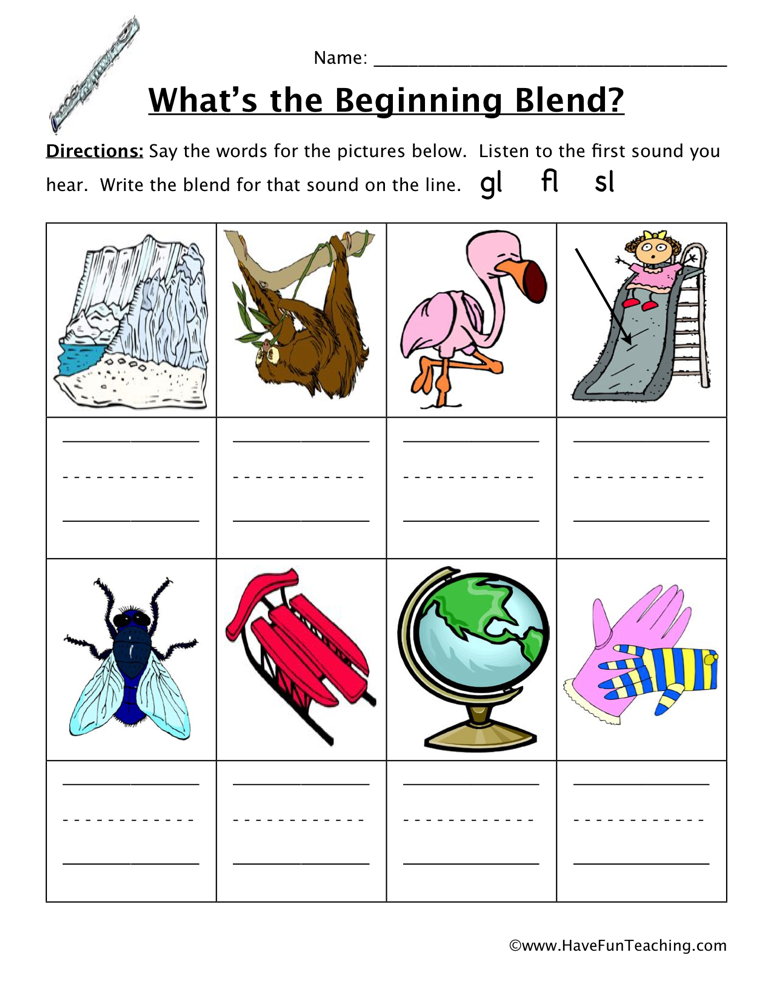
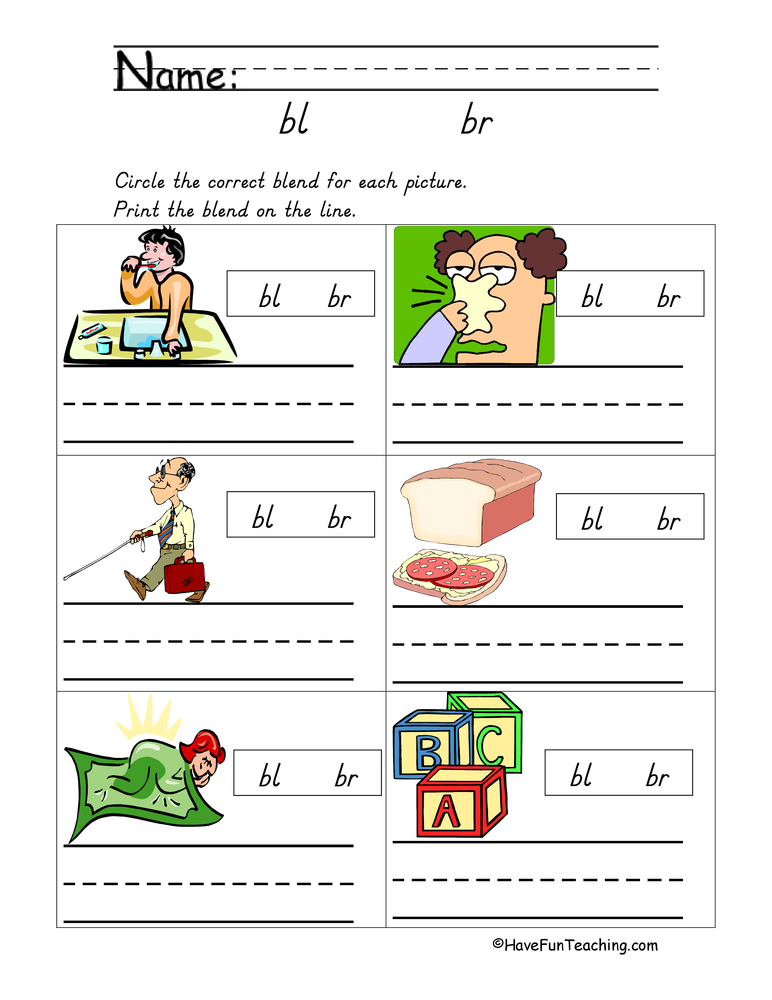
This resource is a set of Consonant Blends Worksheets and Puzzles - Part 2. These puzzles and word building worksheets will help students learn to read and spell CCVCC, CVCCC and CCCVC words. All you have to do is print and go.
Author Top Notch Teaching
Tags Consonant Blends, Puzzles, Literacy Center, Phonics, Digraphs
Loving the Earth: Coloring Pages
Creative Arts, Art, Graphic Arts, Preschool, Kindergarten, Grade 1, 2, 3, Coloring Pages, Worksheets, Worksheets & Printables
Loving the Earth: Coloring Pages This resource is ideated primarily for educators in public schools and homeschooling contexts. Meant for children from preschool up to grade 3. It consists of environmentally themed fun filled pages that integrates art and environmental education. Key Features: 19 ingeniously designed activity pages combining dot-to-dot puzzles with coloring activities. Each page contains a unique animal theme promoting variety and novelty (e.g., penguins, frogs, bears, wolves etc.) Easily accessible PDF format allowing unlimited printouts for practice and repetition. The activities encourage creativity, improve hand-eye coordination, and promote motor skill development while also making learning about our earth fun! . In essence,"Loving the Earth: Coloring Pages" can be likened to a mini-encyclopedia embodied in vibrant graphical art forms. These unique coloring pages are not just valuable as an early introduction to artistic pursuits but also pivotal in igniting their curiosity about our beautiful world — potentially nurturing environmental consciousness among future generations!
Author Twin Sisters Digital Media
Tags Earth, Coloring Pages, Education, Animals, Environmental Consciousness
Wordless Books | Differentiated ELL Book Writing Fun
ELA, Writing, Creative Writing, Preschool, Grade 1, 2, Worksheets & Printables, Worksheets
This resource will be so fun for all your students, especially your ELL students. Sometimes students struggle with reading and writing or simply need a new creative way to write. These wordless books will provide students with just that. There are 13 different themes such as snakes, puppies, and weather. There are 2 colorful pictures per page with space for students to write. They may use all of the pictures within the theme or just a few to develop their story.
Author Kindergarten Cafe
Tags Wordless Books, Creative Writing, ELL Writing, Differentiated, Book Writing, Ell Book, Wordless Book Printables, Ell Books
Water Reading Comprehension Passage - Cored Ed Encyclopedia
ELA, Language Development, Reading Comprehension, Reading, Pre-Reading, Science, Technology, Physics, Earth and Environmental Sciences, Earth Sciences, Grade 2, 3, 4, 5, Worksheets & Printables, Worksheets, Teacher Tools, Centers, Activities, Writing Prompts, Assessments, Quizzes and Tests, Quizzes, Lesson Plans
This water reading comprehension with lesson plan includes: Visualization (on the front cover) Start your lesson by taking a minute to think and share something about the topic. Read the script aloud (slowly), perhaps prepare some music or sound effects. Student close their eyes and let their imaginations wander. Students open their eyes, read the question aloud and give them a few minutes to complete. Ask a few students to share or keep answers until the end to compare with what they learn in the passage. Quick pause—thousands of Cored Education products are included with your TeachSimple membership. Download links and encyclopedia index available here. Pre-Reading Trivia Students will write down one thing they already know about the subject and then read five more facts and discuss. These facts are fun, and the students will enjoy learning about the subject before reading more. Give 1 minute for students to write what they already know (no pressure—best guess is fine). Read the five facts together. After each fact, do ask a student for their opinion, was it surprising? Set a purpose by asking students to highlight/underline one fact they want to learn more about during the reading. Reading Passage The text is a high-interest reading passage with set paragraphs, roughly three to four paragraphs long. It contains a variety of themes about the topic, anywhere from history to technology. The passage is between 250 and 350 words in length. First, ask students to look at the headings and see what they’ll learn about today. What do they know about the topic/heading? First read options: Teacher read-aloud (best for support). Partner reading (paragraph by paragraph). While reading, students underline important details, and vocabulary words they think may come up in the questions section. Mixed Questions The first question page contains four multiple-choice questions, each with a choice of four answers, and three written response questions that require a sentence or two from the student. Students complete the mcqs first independently, then review quickly as a class. For the 3 written responses, try to get students giving the answer with some form of evidence: “I think ___ because the text says ___.” If students get stuck, send them back to check the passage. Vocabulary Questions Practice seven key words from the text in this section across two activities. First section is scrambled words where students will unscramble three words given a clue for each. The second section is a word to meaning matching activity. Before starting, have some students read out words they underlined in the passage. Ask students to say the word and read aloud the sentence(s) around each word. Ask students to do scrambled words and the matching exercise in pairs then go through answers as a class. For the scrambled spelling task, get four pairs to come up to the board and write the words for extra practice with the other student reading out the clue. For the matching task, prompt students to give full sentences: “I matched ___ with ___ because ___.” Creative Writing In this question, the student will be required to write a five to eight sentence paragraph on a question related to the topic. Before starting, ask students write down 3 key ideas they are going to include in their piece. Ask students for ideas to share around the class to help those struggling. Pro writing expectations: 5–8 sentences At least 2 facts or details from the passage At least 2 vocabulary words from the previous page Students read their paragraphs while classmates listen for facts and vocabulary words. Extension Activities This page is optional for fast finishers or to take home. There are several activities, each one requiring a different skill. Do some, do none, do all, completely optional - but you will feel reassured knowing every possibility is planned for. Includes summary writting question. Answer Key There are answers for the multiple-choice questions, written response questions have sample answers, vocabulary answers and if there is a summary question then a sample summary will be provided as well. Lesson Plan Included Customized lesson plan for this lesson is included. Lesson Snapshot Title: Water Genre: Nonfiction (informational text) Subject: Science (Earth & Physical Science) / Informational Reading Primary Topic: Water cycle, where water is found, and H₂O Estimated Guided Reading Level (A–Z): R What This Lesson Teaches Best Explains how water changes state and moves around Earth (puddle → vapor → clouds → rain/snow). Builds background knowledge about where Earth’s water is found (oceans, glaciers/ice caps, lakes/rivers, underground aquifers, air as vapor). Introduces key science ideas about what water is made of (hydrogen + oxygen; water as a compound; H₂O; molecule). Highlights an important property of water: when it freezes, it expands and floats , allowing fish to swim below lake ice. Connects science to real life by describing how people move and clean water (pipes, filters, treatment) and why keeping water clean matters. Learning Goals Students will explain what happens to some puddle water when it shrinks in the sun. Students will describe at least three places water is found on Earth or in living things, using details from the text. Students will identify what scientists learned in the late 1700s about what water is made from. Students will explain why ice can float on liquid water, based on the passage. Students will describe one way people make water safer to drink that is stated in the text. Key Vocabulary From the Text vapor — water as an invisible gas in the air. glaciers — large masses of ice that store fresh water. aquifers — underground places where water is stored. compound — something made from two different gases joined together. molecule — a tiny particle that makes up water (H₂O). FULL CATALOG OF DOWNLOAD LINKS AND ENCYCLOPEDIA INDEX HERE
Author Cored Education
Rating
Tags Vocabulary, Reading Comprehension, Reading Passages, Lesson Plans, Ela Lesson Plans, Reading Comprehension Lesson Plans, Pre-reading, Science Lesson Plans, Technology, Earth Science
Little Red Riding Hood QAR Sort
ELA, Reading, Reading Comprehension, Grade 1, 2, Worksheets & Printables, Worksheets
This resource is a Little Red Riding Hood QAR Sort. This activity sorts questions across 4 different categories. Students can use the fairytale to answer questions on the worksheet . Answer key included.
Author Literacy Life
Tags Comprehension, Asking Questions, Fairytales, Literacy Center, Reading
Spell Words With 'oi', 'oy’ & Silent ‘ou’: Learn To Spell With Phonic
ELA, Language Development, Spelling, Grade 2, 3, 4, 5, Worksheets & Printables, Worksheets
This resource includes: 1. 'What Is That Noise?' Learn To Spell Words With 'oi' and 'oy' Read and write the ridiculous 'oi' and 'oy' rhymes. Read and write the 'oi' and 'oy' words. Complete the spelling test. 2. A Famous Cousin From The Country Teaches The Sound Silent 'ou'. Read and write the ridiculous rhyme, containing silent 'ou' words. A series of work packs to teach and reinforce phonic sounds. If the child knows phonics - the initial blends, ending blends and the 44 middle sounds, he or she will be able to use them as a tool to break down words to spell them. In this series, there are 22 challenges or work packs to collect, each one featuring a different phonic sound. Our cute, quirky character, Zoggy, a spelling genius from Zen, helps present the challenges. The pages are a fun way to learn to spell, including: cute cartoons, ridiculous phonic rhymes and practise phonic spelling tests. The child/ren can work through the packs with a teacher or parent. The packs comply with the National Curriculum.
Author Guinea Pig Education
Tags Spelling, Phonics, Oi Sound, Oy Sound, Silent Ou, Words With Oi Oy, Oi Oy, Words Containing Oi, Words That Have Oy, Oi Or Oy
Jets Reading Comprehension Passage - Cored Ed Encyclopedia
ELA, Language Development, Resources for Teachers, Reading Comprehension, Reading, Pre-Reading, Science, Technology, Writing, Strategies, Grade 2, 3, 4, 5, Worksheets & Printables, Worksheets, Teacher Tools, Centers, Activities, Writing Prompts, Assessments, Tests, Quizzes and Tests, Quizzes
This jets reading comprehension contains the following: Visualize on the Cover (Teacher Read Aloud Script) Start your lesson by taking a few moments to visualize the topic and share thoughts or feelings about it. Pre-Reading Trivia Students will write down one thing they already know about the subject and then read five more facts and discuss. These facts are fun, and the students will enjoy learning about the subject before reading more. Reading Passage The text is a high-interest reading passage with set paragraphs, roughly three to four paragraphs long. It contains a variety of themes about the topic, anywhere from history to technology. The passage is between 250 and 350 words in length. Mixed Questions The first question page contains four multiple-choice questions, each with a choice of four answers, and three written response questions that require a sentence or two from the student. Vocabulary Questions Practice seven key words from the text in this section across two activities. First section is scrambled words where students will unscramble three words given a clue for each. The second section is a word to meaning matching activity. Creative Writing In this question, the student will be required to write a five to eight sentence paragraph on a question related to the topic. Extension Activities This page is optional for fast finishers or to take home. There are several activities, each one requiring a different skill. Do some, do none, do all, completely optional - but you will feel reassured knowing every possibility is planned for. Answer Key There are answers for the multiple-choice questions, written response questions have sample answers, vocabulary answers and if there is a summary question then a sample summary will be provided as well. FULL CATALOG OF DOWNLOAD LINKS AND ENCYCLOPEDIA INDEX HERE Lesson Snapshot Title: Jets Genre: Nonfiction (Informational Text) Subject: Science & Technology / Reading (Informational Text) Primary Topic: How jets move, engine parts, and high flight Estimated Guided Reading Level (A–Z): Q What This Lesson Teaches Best Explains the big idea behind jets using an action-and-reaction example (like a blown-up balloon zipping across a room). Describes how a jet engine makes thrust by pulling air in, squeezing it, heating it, and blasting it out the back. Builds technical understanding of engine parts and jobs (inlet, compressor, turbine, exhaust nozzle). Connects jet flight to conditions in the sky (air is thinner and smoother high above clouds; contrails can form when water vapour freezes). Adds brief history context about early jet-engine work and the first turbojet-powered flight date and plane name. Learning Goals Explain how a jet airplane is pushed forward when air or hot gas rushes out the back. Describe what happens inside a jet engine from the inlet to the exhaust nozzle. Identify the jobs of the compressor and turbine using details from the passage. Retell key history details about early jet designs and the first turbojet-powered flight mentioned. Describe what the air is like high above clouds and how that relates to jet travel. Explain how contrails can form according to the text. Key Vocabulary From the Text inlet — the front opening where air is pulled in. compressor — a part that squeezes air so it is packed tight. turbine — a wheel that takes energy from rushing gas. thrust — the push that moves an airplane forward. contrails — white lines that can form when water vapour freezes. Cored Ed Encyclopedia Overview The Cored Ed Encyclopedia is a weekly series of lessons that you can pick up and use right away. These short readings fit into whatever time you have available. Each one includes a warm-up, a reading, and a set of questions, but it’s flexible — you can do just the reading, the full lesson, or skip the writing section if you need to. Each lesson focuses on a single topic so students don’t get lost. The writing is clear but never childish, making it perfect for grades two through five. Topics range from animals and science to history, inventions, and everyday things. No matter the level of the student, everyone should take away at least one new idea or fact from each lesson. The materials are easy to print, easy to explain, and require no setup. They work well for whole-class teaching, partner work, or independent study.
Author Cored Education
Rating
Tags Vocabulary, Spelling, Reading Comprehension, Reading Passages, Reading, Creative Writing, Reading Strategies, Writing Prompts, Technology, Jets
Number Talks: All about numbers 1-10
Math, Numbers, Kindergarten, Preschool, Grade 1, 2, Worksheets & Printables, Worksheets
Number Talks: All about numbers 1-10 The resource, Number Talks: All about numbers 1-10, provides a specialized tool to help teachers foster number sense among students. Primarily targeted at preschoolers to second grade learners, this resource zeroes in on the fundamental understanding of numbers one through ten via various engaging mathematical activities. Incorporating 31 pages of structured lessons and workouts, students are invited to choose a number between one and ten. They then engage in the learning process by: Dotting their chosen number Writing it down Tallying it up Drawing pictures that match with their selected numeral. This fosters recognition of numerical symbols while associating them with respective quantities. The PDF worksheets included in this package stimulate conscientious exploration of each individual number for enhanced understanding—the process involves coloring specific squares associated with each numeral and locating it on an easy-to-understand visual tool - a number line. Ten-frame set up (provided for both 10 units and expanded onto 20) Learners are directed towards matching numerals with representative blocks filled onto these frames—a fun way for kids to visually comprehend how numbers grouping are based on tens or twenties. Addition exercises within ‘ten’: Innovative tasks ask students to circle exactly quantified groups of dots before adding them up—a creative approach that builds familiarity with early addition strategies. Note:Detailed tasks prompt learners to fill empty ten-frames based on given numerals which reinforces skills like counting forward from certain benchmarks instead of starting from ‘one’ every time—an essential strategy for efficient computation in later stages of mathematical learning. Whether implemented across large groups in classroom settings, used as enriching homework assignments or adapted for deep dives during small group tutorials—Number Talks offers diverse ways to assist young mathematicians understanding the logic behind numbers.
Author K-5 Treasures
Tags Number Sense, Numerical Symbols, Dotting Practice, Ten Frames, Addition Strategies