resources by type
resources by grade
resources by subject
other resources

3,947 products added recently

Page 21 - Worksheets

Enhance your classroom with a wide array of worksheets covering various subjects and grade levels. These resources offer engaging activities to reinforce lessons, assess understanding, and provide extra practice. Utilize them to supplement your curriculum and support student learning effectively.

Relevant
alt down
Any Time
alt down
filter by
alt down
All File Types
alt down
filter nav Show filters
Sort by: Relevant
CLEAR
resources by type
Activities
down arrow
Classroom Decor
down arrow
Teacher Tools
down arrow
Worksheets & Printables
up arrow
Drawing Templates & Outlines
Flashcards
Novel Studies
Parts of and Anatomy of
Task Cards
Word Problems
Writing Prompts
Worksheets
up arrow
Coloring Pages
Crosswords Puzzles
Dot To Dots
Mazes
Word Searches
Workbooks
resources by grade
Early Learning
down arrow
Pre-K
down arrow
Elementary
down arrow
Middle School
down arrow
High School
down arrow
Adult Education
Not Grade Specific
resources by subject
Creative Arts
down arrow
ELA
down arrow
Holiday & Seasonal
down arrow
Life Studies
down arrow
Math
down arrow
P.E. & Health
down arrow
Social Studies
down arrow
Special Resources
down arrow
Science
down arrow
Foreign Languages
down arrow
Resources for Teachers
down arrow
other resources
Common Core
Homeschool Resources
down arrow
Montessori
Research
STEM
Literary Devices: Word Search - FLASH-MAC

Literary Devices: Word Search - FLASH-MAC
ELA, Literature, Grade 5, 6, 7, 8, Word Searches, Worksheets, Worksheets & Printables

Literary Devices: Word Search - FLASH-MAC A uniquely designed educator's resource that expertly combines learning and play. This game-type educational tool targets students in Grades 5 through 8 with the intent of enhancing their mastery over Literary Devices. An interesting word search puzzle embeds core vocabulary words, featuring: 17 essential Literary Device vocabulary words Focused vocab acquisition to enhance comprehension The interactive and engaging nature of a word search Versatility: Whether it's reinforcing individual understanding or used as homework assignments, facilitated in small group sessions fostering teamwork, or even integrated into diverse teaching methodologies – this learning tool can do it all! Compatibility & Convenience: Literary Devices: Word Search - FLASH-MAC is Mac-system compatible, offering seamless execution for teachers incorporating it into their lesson plans both offline and online. Innovative Home Education Tool: An innovative approach for home educators managing multiple grade levels. Makes complex material more digestible without overwhelming learners. In conclusion, blending fun entertainment with quality education focused on boosting vital language arts knowledge – the Literary Devices: Word Search - FLASH-MAC secures its position as a valuable addition in any teaching toolkit aimed at enriching classroom engagement either physically or virtually. .

Author Classroom Complete Press

Tags Software (Mac)

Calming Animal Coloring Pages – 20 Mandalas

Calming Animal Coloring Pages – 20 Mandalas
P.E. & Health, Yoga, Preschool, Kindergarten, Grade 1, 2, Coloring Pages, Worksheets, Worksheets & Printables

Calming Coloring Pages for Kids - Animals is a coloring resource that includes 20 mandala-inspired animal designs for young students to color. The calming effects of coloring can help students relax and self-regulate. These pages feature simple yet engaging designs with animals incorporated into symmetrical patterns. Suitable for independent or structured coloring activities in small groups or whole class, this resource promotes focus and calmness. With various levels of detail, children ages 2+ will enjoy coloring these pages. The set comes with a Parent-Teacher Guide that gives tips, suggestions, and information about the benefits of mindful coloring. Use this as a calming activity , transition, or brain break to help students relieve stress.

Author Kids Yoga Stories

Rating

Tags Kids Yoga Stories, Calming Coloring , Animal Coloring, Mandala-inspired Coloring, Calming Coloring Sheet, Calm Coloring Sheets, Calming Coloring Pages, Calming Color Pages

SEL Presentation-The Core Four

SEL Presentation-The Core Four
Special Resources, Social Emotional Learning (SEL), Social Skills, Special Education Needs (SEN), Life Skills, Kindergarten, Preschool, Grade 1, 2, Worksheets & Printables, Worksheets, Teacher Tools, Lesson Plans, Presentations

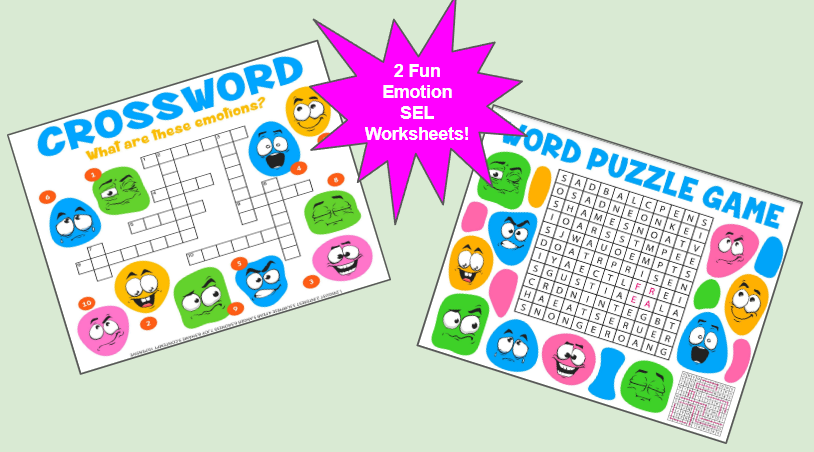
In this SEL presentation, students will learn about the "core four" as a way to figure out how someone else is feeling. This is the building block of empathy and understanding how someone is feeling. This product has a 12 slide Google Slides Presentation with the last 4 slides as handouts and activities for the lesson plan. Students will understand that the core four is looking at the key 4 body parts; the eyes, eyebrows, mouth and hands. They will analyze 4 pictures of real people and guess how they are feeling based on the core four. After they analyze the real children, they will play a game of charades with partners or in groups. There are 6 different emotions to act out-each have an emoji as well as the feeling word. No reading is required. Then there are 2 extension SEL worksheets. One is identifying what people are feeling in a picture, they will circle the feeling word and write down which part of the core four helped them figure it out. The next handout is a fun Find the 9 Differences in an emoji picture. The answer is on the following slide. This lesson is good for pre-k, kindergarten, first and second grades. If you are interested in more SEL products, please feel free to visit my SEL store here: https://teachsimple.com/contributor/jennifer-moyer-taylor For more products teaching students about feelings, emotions and SEL skills, check out these products: https://teachsimple.com/product/guess-the-emotion-sel-game (This is a fun lesson kind of like the game Cranium where students get to use play dough, writing, charades or talking to give clues about what feeling card they get.) https://teachsimple.com/product/betsy-the-top-banana-boom-cards-a-story-about-cliques-plus-task-cards-on-excluding-and-including-others-with-audio-plus-extension-activity (This is a combination Boom Cards activity as well as a fruit salad activity to discuss inclusivity with others.) https://teachsimple.com/product/sel-flashcards-for-social-emotional-learning-with-sel-coloring-pages (social emotional flashcards showcasing 16 different feelings. They are black and white as well as in color so students could color them in themselves. You can play memory, go Fish and other games with these flashcards.)

Author Jennifer Moyer Taylor

Tags SEL Presentation, Feelings, Emotions, Sel, Social Emotional Learning, School Counseling, Sen, Special Education Needs, Social Skills

Reading Comprehension: Properties of Earth Materials (Google Drive)

Reading Comprehension: Properties of Earth Materials (Google Drive)
Science, Earth and Environmental Sciences, Earth Sciences, Common Core, ESL, Language Development, ELA, Vocabulary, Reading Comprehension, Reading, Grade 2, 3, 4, Centers, Activities, Assessments, Teacher Tools, Presentations, Tests, Quizzes and Tests, Diagrams, Worksheets, Worksheets & Printables

Reading Comprehension: Properties of Earth Materials for Earth Science Properties of Earth Materials: Reading Passages Earth Science: Enhance your teaching arsenal with these captivating science reading lessons. Aligned with the Common Core State Standards (CCSS) and encompassing high-interest topics paired with diverse question types, these materials make introducing your students to science reading a breeze. With most of the groundwork laid out for you, delve into fascinating subjects such as minerals, the rock cycle, and fossils, ensuring an enriching and streamlined educational experience. What's inside? Part 1 - Properties of Earth Materials Reading Passage 1: Earth Science and Earth Materials Reading Passage 2: Earth Materials and Their Uses Reading Passage 3: Minerals Reading Passage 4: Rocks and the Rock Cycle Reading Passage 5: Soils Reading Passage 6: Fossils Product Info: 35 PAGES (Docs Version: US English with Answers) 6 FORMS (Self-Grading) 170 SLIDES Teaching Duration: 2 Weeks Science Reading Comprehension Outline: Targeted for students in 3rd and 4th grades, these reading passages are enhanced with illustrations and graphs to elucidate critical points. Each lesson aligns with the Common Core State Standards, allowing you to integrate science reading practice effortlessly, knowing that minimal preparation is needed on your part. Each passage comes with a variety of questions in different formats, including multiple-choice formats, data analysis, and fill-in-the-blanks. The topics covered strike a balance between engaging content and core curriculum-based science subjects. Versatile in application, these lessons are suitable for a variety of settings such as whole-class instruction, morning activities, independent desk work, small group discussions, contingency plans for substitute teachers, homework assignments, or even special holiday-themed tasks. FULL CATALOG OF DOWNLOAD LINKS HERE Grade 3/4 Links: Physical Science Part 1 - Properties of Objects and Materials Google Docs/Slides/Forms PDF PPT Word Free Supplementary Pack Accompanying Videos Physical Science Part 2 - Position and Motion of Objects Google Docs/Slides/Forms PDF PPT Word Free Supplementary Pack Accompanying Videos Physical Science Part 3 - Light, Heat, Electricity, Magnetism Google Docs/Slides/Forms PDF PPT Word Free Supplementary Pack Accompanying Videos Life Science Part 1 - Characteristics of Organisms Google Docs/Slides/Forms PDF PPT Word Free Supplementary Pack Accompanying Videos Life Science Part 2 - Life Cycles of Organisms Google Docs/Slides/Forms PDF PPT Word Free Supplementary Pack Accompanying Videos Life Science Part 3 - Organisms and Environments Google Docs/Slides/Forms PDF PPT Word Free Supplementary Pack Accompanying Videos Earth Science Part 1 - Properties of Earth Materials Google Docs/Slides/Forms PDF PPT Word Free Supplementary Pack Accompanying Videos Earth Science Part 2 - Changes in the Earth and Sky Google Docs/Slides/Forms PDF PPT Word Free Supplementary Pack Accompanying Videos Earth Science Part 3 - Objects in the Sky Google Docs/Slides/Forms PDF PPT Word Free Supplementary Pack Accompanying Videos For similar products and other frees, do check out Cored Group on TeachSimple .

Author Cored Education

Rating

Tags Science, Elementary, Reading, Comprehension, Vocabulary, Science Assessments, Reading Comprehension Assessments, Vocabulary Assessments, Earth Science, Self Assessment

Research Organizer & Essay Assignment: John F. Kennedy

Research Organizer & Essay Assignment: John F. Kennedy
Social Studies, ELA, History, History: USA, Writing, Grade 8, 9, 10, 11, 12, Activities, Projects, Worksheets & Printables, Worksheets

Research Organizer & Essay Assignment: John F. Kennedy Discover the life of John F. Kennedy, one of America's most captivating presidents. This 6-page resource guides students through researching JFK and crafting an informative essay. It includes: - A scaffolded essay assignment with step-by-step instructions for researching, drafting, revising with peer feedback, and submitting a 5-paragraph essay on JFK's life. - An editable rubric (Google Sheet link provided) tied to Common Core ELA standards for assessing essays - A 2-page biography research and note-taking worksheet to gather facts and sources on JFK - An essay outline worksheet to organize research into an essay structure The resource can be used as a complete lesson or integrated into parts of a broader unit for grades 8-11. Concise directions and supportive materials make assigning and assessing student work straightforward. Allow students to dive deep into Kennedy's prolific life with this engaging activity.

Author The Language of Educational Art, LLC

Tags Essay, Rubric, Research, Notetaking, Outlining

6th Grade Math Spiral Review Escape Room Week 2 Day 5

6th Grade Math Spiral Review Escape Room Week 2 Day 5
Math, Grade 5, 6, 7, Worksheets, Worksheets & Printables, Teacher Tools, Activities, Escape Room

Are you searching for a way to keep previous skills fresh in 6th grade math, but don’t have the time to prep activities for your class? Looking for a dependable daily spiral warm up to incorporate in your routine? Then look no further, Mini Math Escape Room - Mission 5. This digital review activity is self checking and intended to be a spiral review or warm up that can last approximately 10 minutes. Students will be held accountable for showing their understanding of previously learned skills while completing a small goal. Instead of finishing a regular worksheet, they are completing a mini escape room! The structure in each mission is the same, but with different problems to solve and a different code to unlock. Here is how it works, students must solve 5 math problems on one interactive page. They must use the first digit of each answer to create a 5 digit code. If the correct code is entered, the mission is complete and they will be congratulated. If an incorrect code is entered, nothing happens and students are encouraged to go back and analyze their work to try to improve. This escape room is self-checking but doesn't require teacher feedback! Skills covered in this review include 6th grade level concepts that are important to expose students to repeatedly: Greatest Common Factor (GCF) Adding fractions with unlike denominators Finding percent of a number Solving one-step equations Unit conversions These skills are repeated and spiraled throughout missions, as to help students continue to remember them instead of forgetting after a test at the end of the unit! Included in your purchase: 1 mini digital math escape room (Mission 5) 5 math problems on one interactive page A printable worksheet version Answer key and final code This mini escape room activity works perfectly as a daily warm up or bell ringer, end of the day review, for early finishers, or as a sub plan in a pinch! Since it is no prep and self checking, you can easily assign it without notice. If you're searching for a simple and effective way to incorporate daily math practice and review in your classroom without overwhelming students, assign Mission 5 in your classroom!

Author Matemaths

Rating

Tags Matemaths, Guided Notes, Worksheet, Word Problems, Decimals

Sailing Reading Comprehension Passage - Cored Ed Encyclopedia

Sailing Reading Comprehension Passage - Cored Ed Encyclopedia
ELA, Language Development, Reading Comprehension, Reading, Pre-Reading, Science, Writing, Engineering, Technology, Physics, Grade 2, 3, 4, 5, Worksheets & Printables, Worksheets, Teacher Tools, Centers, Activities, Writing Prompts, Assessments, Quizzes and Tests, Quizzes, Lesson Plans

This sailing reading comprehension includes: Visualization (on the front cover) Start your lesson by taking a minute to think and share something about the topic. Read the script aloud (slowly), perhaps prepare some music or sound effects. Student close their eyes and let their imaginations wander. Students open their eyes, read the question aloud and give them a few minutes to complete. Ask a few students to share or keep answers until the end to compare with what they learn in the passage. Quick pause—thousands of Cored Education products are included with your TeachSimple membership. Download links and encyclopedia index available here. Pre-Reading Trivia Students will write down one thing they already know about the subject and then read five more facts and discuss. These facts are fun, and the students will enjoy learning about the subject before reading more. Give 1 minute for students to write what they already know (no pressure—best guess is fine). Read the five facts together. After each fact, do ask a student for their opinion, was it surprising? Set a purpose by asking students to highlight/underline one fact they want to learn more about during the reading. Reading Passage The text is a high-interest reading passage with set paragraphs, roughly three to four paragraphs long. It contains a variety of themes about the topic, anywhere from history to technology. The passage is between 250 and 350 words in length. First, ask students to look at the headings and see what they’ll learn about today. What do they know about the topic/heading? First read options: Teacher read-aloud (best for support). Partner reading (paragraph by paragraph). While reading, students underline important details, and vocabulary words they think may come up in the questions section. Mixed Questions The first question page contains four multiple-choice questions, each with a choice of four answers, and three written response questions that require a sentence or two from the student. Students complete the mcqs first independently, then review quickly as a class. For the 3 written responses, try to get students giving the answer with some form of evidence: “I think ___ because the text says ___.” If students get stuck, send them back to check the passage. Vocabulary Questions Practice seven key words from the text in this section across two activities. First section is scrambled words where students will unscramble three words given a clue for each. The second section is a word to meaning matching activity. Before starting, have some students read out words they underlined in the passage. Ask students to say the word and read aloud the sentence(s) around each word. Ask students to do scrambled words and the matching exercise in pairs then go through answers as a class. For the scrambled spelling task, get four pairs to come up to the board and write the words for extra practice with the other student reading out the clue. For the matching task, prompt students to give full sentences: “I matched ___ with ___ because ___.” Creative Writing In this question, the student will be required to write a five to eight sentence paragraph on a question related to the topic. Before starting, ask students write down 3 key ideas they are going to include in their piece. Ask students for ideas to share around the class to help those struggling. Pro writing expectations: 5–8 sentences At least 2 facts or details from the passage At least 2 vocabulary words from the previous page Students read their paragraphs while classmates listen for facts and vocabulary words. Extension Activities This page is optional for fast finishers or to take home. There are several activities, each one requiring a different skill. Do some, do none, do all, completely optional - but you will feel reassured knowing every possibility is planned for. Includes summary writting question. Answer Key There are answers for the multiple-choice questions, written response questions have sample answers, vocabulary answers and if there is a summary question then a sample summary will be provided as well. Lesson Plan Included Customized lesson plan for this lesson is included. Lesson Snapshot Title: Sailing Genre: Nonfiction (informational passage) Subject: Science (Forces & motion) / Social Studies (history of travel) Primary Topic: How wind powers boats and changed travel Estimated Guided Reading Level (A–Z): R What This Lesson Teaches Best How wind pushing on a sail can move a boat without rowing (sail as a “wind catcher” and cloth billowing). How sailing helped people travel farther and move supplies, from early boats to tall ships, including examples from Egypt, the Roman world, and Austronesian sailors. Key sailing concepts that affect movement and direction, including “points of sail,” the “no-go zone,” and zigzagging turns called tacks. How boat parts help sailing work: the sail pulling forward and the keel and rudder helping resist sliding sideways. How technology changed sailing’s role (steam engines replacing sails for many working ships) and how wind is being used again on some cargo ships to save fuel. Learning Goals Explain how wind pressing on a sail can move a boat forward. Describe how sailing grew from river boats to ships that carried people, tools, and food across seas. Identify why sailors use tacks and what the “no-go zone” means in the passage. Describe how the keel and rudder help a sailboat resist sliding sideways. Explain how sailing changed in the late 1800s and how wind is being used again today. Key Vocabulary From the Text hull — the main body of a boat. keel — a strong part that helps stop sliding sideways. rudder — a part that helps steer the boat. tacks — zigzag turns used to move into wind. cargo — goods carried on a ship. FULL CATALOG OF DOWNLOAD LINKS AND ENCYCLOPEDIA INDEX HERE

Author Cored Education

Rating

Tags Vocabulary, Reading Comprehension, Reading Passages, Reading, Creative Writing, Reading Strategies, Writing Prompts, Lesson Plans, Sailing, Engineering

Present Tense Sample: Grammar Grades 3-4 (Google Docs)
Free Download

Present Tense Sample: Grammar Grades 3-4 (Google Docs)
ELA, Language Development, ESL, Grammar, Common Core, Resources for Teachers, Grade 3, 4, Worksheets & Printables, Worksheets, Quizzes and Tests, Teacher Tools, Tests, Assessments, Centers, Activities

Present Tense Sample Lesson ELA MCQS Overview: In this series of lessons, students will embark on an engaging journey to explore the grammar skills that make our language vibrant and expressive. These lessons are crafted to help students identify, comprehend, and effectively apply language arts skills in both writing and speech. Accompanied by free supplementary materials available for all topics, each lesson builds on the previous one, offering a balanced mix of direct instruction, interactive group activities, and independent practice. Through fun and creative tasks, students will learn to recognize grammar within sentences, understand their function, and use them to enrich their own writing and speech. Present Tense Overview: Includes: Present Simple Present Continuous Present Perfect Mistake Finding Docs Version This is the Docs editable and fillable version. This download is available in GOOGLE Docs, GOOGLE Forms, GOOGLE Slides. PDF, PPT, WORD, check the links below for more details. FULL CATALOG OF DOWNLOAD LINKS HERE Grade 3/4 Links: Adjectives Google Docs Google Forms Google Slides PDF PPT Word Free Supplementary Materials Pack Adverbs Google Docs Google Forms Google Slides PDF PPT Word Free Supplementary Materials Pack Conjunctions Google Docs Google Forms Google Slides PDF PPT Word Free Supplementary Materials Pack Nouns Google Docs Google Forms Google Slides PDF PPT Word Free Supplementary Materials Pack Pronouns Google Docs Google Forms Google Slides PDF PPT Word Free Supplementary Materials Pack Verbs Google Docs Google Forms Google Slides PDF PPT Word Free Supplementary Materials Pack Sentence Structure Google Docs Google Forms Google Slides PDF PPT Word Free Supplementary Materials Pack Present Tense Google Docs Google Forms Google Slides PDF PPT Word Free Supplementary Materials Pack Past Tense Google Docs Google Forms Google Slides PDF PPT Word Free Supplementary Materials Pack Future Tense Google Docs Google Forms Google Slides PDF PPT Word Free Supplementary Materials Pack Context Clues Google Docs Google Forms Google Slides PDF PPT Word Free Supplementary Materials Pack Defining Words Google Docs Google Forms Google Slides PDF PPT Word Free Supplementary Materials Pack Fill the Blanks Google Docs Google Forms Google Slides PDF PPT Word Free Supplementary Materials Pack Homophones Google Docs Google Forms Google Slides PDF PPT Word Free Supplementary Materials Pack Synonyms Google Docs Google Forms Google Slides PDF PPT Word Free Supplementary Materials Pack ELA Review Questions Overview Questions have three answer choices. There are a handful of pictures on each test for aesthetic purposes, as well as a review sheet covering most of the topics covered in the product. Introduction or Example Sheet Each topic will include an introduction or example sheet to go through first with your students. Full Answer Keys Full answer keys and sample responses are provided so no matter how busy you are, you know you're covered! In the Supplementary Pack Interactive Ice Breakers: Fun, hands-on activities that get students thinking about adjectives right from the start. Guided Practice: Teacher-led exercises that reinforce the day’s lesson, ensuring students can confidently identify and use adjectives. Group and Partner Tasks: Collaborative activities that allow students to work together to solve problems, categorize adjectives, and create descriptive sentences. Independent Worksheets: Structured worksheets that provide individual practice and help solidify understanding of key concepts. Exit Tasks: Quick, reflective activities at the end of each lesson that assess understanding and encourage students to apply what they’ve learned. For similar downloads and other frees, do check out Cored Group on TeachSimple.

Author Cored Education

Tags Elementary, Answers, Ccss, Common Core, Grammar, Tests, Test Prep, Assessment, Grade 3, Grade 4

Adjectives Practice Questions - Grammar Grade 5-6 (Fillable PDF)

Adjectives Practice Questions - Grammar Grade 5-6 (Fillable PDF)
ELA, Language Development, ESL, Grammar, Common Core, Resources for Teachers, Grade 5, 6, 7, Worksheets & Printables, Worksheets, Quizzes and Tests, Teacher Tools, Tests, Assessments

Adjectives Grammar Practice MCQS Snapshot Title: Parts of Speech: Adjectives Practice Worksheets Grade 5-6 Genre: Instructional Nonfiction / Grammar Workbook Subject: Reading Primary Topic: Identifying and comparing adjectives in sentences What This Teaches Best Teaching adjective types named in the review sheet, including descriptive, demonstrative, quantitative, predicative, and interrogative adjectives. Helping students find adjectives inside complete sentences rather than isolated word lists. Building skill with comparative and superlative forms such as brighter and brightest. Reinforcing grammar knowledge through repeated multiple-choice sentence practice. Supporting self-checking with a separate answers section listed in the contents. Learning Goals Students will identify adjectives that describe nouns or pronouns. Students will distinguish among descriptive, demonstrative, quantitative, predicative, and interrogative adjectives. Students will choose accurate comparative and superlative adjective forms. Students will explain how an adjective adds detail to a sentence. Students will locate adjectives in sentence-level grammar practice. Key Vocabulary descriptive — tells what something is like. demonstrative — points out which one. quantitative — tells how many or how much. predicative — comes after a linking verb. interrogative — asks a question about a noun. Adjectives Overview: Includes: Demonstrative Adjectives Quantitative Adjectives Predicative Adjectives Interrogative Adjectives Degrees of Comparison FILLABLE PDF VERSION Worksheet-style pages, but with type-in answer boxes so students can complete and save their work digitally. Other versions are available in the links list below or in the full catalog. FULL CATALOG OF DOWNLOAD LINKS HERE ELA Review Questions Overview Each set of review questions includes three answer choices. Each test also features a few pictures to keep the pages visually appealing, along with a review sheet that covers most of the skills and concepts included in the resource. Introduction or Example Sheet Every topic comes with an introduction or example sheet that you can go over with your students before they begin. Full Answer Keys Complete answer keys and sample responses are included, so you have everything you need ready to go. In the Supplementary Pack Interactive Ice Breakers Fun warm-up activities help introduce key ELA skills, including quick capitalization fixes and punctuation challenges. Guided Practice Teacher-led activities give students structured support as they review grammar and punctuation rules and practice applying them in sentences. Group and Partner Tasks Students work together to edit sentences, correct capitalization, and improve punctuation through discussion and teamwork. Independent Worksheets Focused worksheets give students the chance to practice on their own and build confidence with the skills they’ve learned. Exit Tasks Quick end-of-lesson activities help students reflect on their learning and apply their skills in writing and editing. For More Like This For similar resources and free downloads, visit Cored Group on TeachSimple.

Author Cored Education

Rating

Tags Elementary, Answers, Ccss, Common Core, Grammar, Tests, Test Prep, Assessment, Grade 5, Grade 6

Sentence Structure Practice - Grade 3-4 Grammar Presentable PDF

Sentence Structure Practice - Grade 3-4 Grammar Presentable PDF
ELA, Language Development, ESL, Grammar, Common Core, Resources for Teachers, Grade 3, 4, Worksheets & Printables, Worksheets, Quizzes and Tests, Teacher Tools, Tests, Assessments

Sentence Structure Grammar Practice MCQS Snapshot Title: Sentence Structure Genre: Nonfiction / Educational Workbook Subject: Language Arts Primary Topic: Identifying sentence types and complete thoughts This workbook contains a review sheet, five practice worksheets, and answer keys focused on complete sentences, fragments, run-ons, and sentence types for Grades 3–4. What This Teaches Best Explains what makes a complete sentence: a subject, a verb, and a complete thought. Teaches the difference between complete sentences and sentence fragments. Builds recognition of declarative, imperative, interrogative, and exclamatory sentences. Strengthens punctuation knowledge through end-mark and error-correction practice. Gives students practice spotting and fixing run-on sentences. These teaching strengths come from the review sheet and the later worksheets on fragments, run-ons, and punctuation. Learning Goals Students will identify the subject and verb in a complete sentence. Students will explain the difference between a complete sentence and a fragment. Students will classify sentences as declarative, imperative, interrogative, or exclamatory. Students will choose correct end punctuation for different sentence types. Students will recognize run-on sentences and tell how they should be corrected. Students will sort examples as complete sentences, fragments, or run-ons. These goals align with the review-sheet definitions and the worksheet practice tasks. Key Vocabulary From the Text subject — who or what the sentence is about verb — the action word in a sentence fragment — an incomplete sentence interrogative — a sentence that asks a question exclamatory — a sentence that shows strong feeling All five words appear in the review sheet text. Common Core Alignment L.2.1f — Produce, expand, and rearrange complete simple and compound sentences. L.4.1f — Produce complete sentences, recognizing and correcting inappropriate fragments and run-ons. Sentence Structure Overview: Includes: Declarative Sentences lnterroative Sentences Exclamatory Sentences Imperative Sentences Sentence Fragments End Punctuation PRESENTABLE PDF VERSION Run it like a slide show straight from a PDF, with no PowerPoint or extra software needed, just open, project, and teach. Other versions are available in the links list below or in the full catalog. FULL CATALOG OF DOWNLOAD LINKS HERE For similar downloads and other frees, do check out Cored Group on TeachSimple.

Author Cored Education

Rating

Tags Elementary, Answers, Ccss, Common Core, Grammar, Tests, Test Prep, Assessment, Grade 3, Grade 4

El carnaval de los animales – Differentiated Leporello (Spanish)

El carnaval de los animales – Differentiated Leporello (Spanish)
Music, Creative Arts, Grade 1, 2, 3, 4, 5, Crafts, Activities, Projects, Worksheets & Printables, Worksheets

El carnaval de los animales – Differentiated Leporello (Spanish Resource) Language of material: Spanish Grade level: Grades 1–4, inclusive settings Subject areas: Music, literacy, creative arts This Spanish-language resource is based on The Carnival of the Animals by Camille Saint-Saëns. It provides a differentiated printable leporello booklet (accordion-style mini-book) that helps students engage with classical music in a hands-on and meaningful way. The material includes four different formats: A black-and-white version for students to color while listening to the music A version where students cut out image-text strips and paste them in the correct place A cloze version, where students complete missing parts of the text using a word bank All three versions are also provided in color for extra visual support This resource is designed for elementary students and also works well in inclusive or bilingual classrooms . It combines music, reading, and fine motor practice in one engaging activity. No prior knowledge of music theory is required, making it accessible for all learners. Learning goals include: Listening closely to classical music Identifying instruments and matching them with animals Reading and writing in Spanish Improving fine motor coordination (cutting, folding, gluing) Encouraging creativity and structure at the same time Teachers can use this resource after playing the music in class or as part of a cross-curricular unit on animals, instruments, or composers. It can also be used as independent work, pair activity, or for centers. The leporello format offers a creative way to document what students have learned in a personalized way. No preparation is needed. Just print, cut, fold, and use. Idioma del material: Español Nivel educativo: 1.º a 4.º de Primaria, educación inclusiva Áreas temáticas: Música, lectoescritura, artes creativas Este recurso en español está basado en El carnaval de los animales de Camille Saint-Saëns. Ofrece un librito tipo leporello (acordeón) para imprimir, que permite a los alumnos interactuar activamente con la música clásica. El material incluye cuatro versiones: Versión en blanco y negro para colorear mientras se escucha la música Versión con tiras de imagen y texto para recortar y pegar Versión de completar texto con banco de palabras Todas también disponibles en versión a color Objetivos de aprendizaje: Escuchar y comprender música clásica Relacionar instrumentos musicales con animales Leer y escribir en español Desarrollar la motricidad fina Trabajar la creatividad en una estructura clara Ideal tras una actividad auditiva o en proyectos interdisciplinarios. Solo hay que imprimir, recortar y montar. No se requiere preparación adicional. Best Wishes, Doreen Blumhagen - Die Relitante

Author Die Relitante

Rating

Tags Carnival Of The Animals, Composer Study, Camille Saint-Saëns, Elementary Music, Classical Music For Kids, Listening Activity, Music Booklet, Differentiated Learning, Music Worksheets

Basic Climate Change Causes & Everyday Action Worksheets

Basic Climate Change Causes & Everyday Action Worksheets
Science, Earth and Environmental Sciences, Earth Sciences, Environmental Science, Geology, Space, Life Sciences, Human Body, Nature & Plants, Biology, Homeschool Curriculum, Homeschool Templates, Grade 2, 3, 4, 5, Worksheets & Printables, Workbooks, Worksheets, Word Searches, Teacher Tools, Assessments, Lesson Plans, Quizzes and Tests, Quizzes, Tests

Introducing Climate Change Worksheets for Grades 2-4! This incredible resource is a completely packaged bundle that can just be printed out and used. It includes the following areas of focus to help you teach students about climate change: Greenhouse Effect Carbon Footprint Fossil Fuels Deforestation Ocean Acidification Albedo Feedback Loops How to take action and make a difference. In addition, there is lots of great information that is presented in age-appropriate science language and style, using easily relatable analogies and examples, plus hands-on activities. The Climate Change Worksheets for Grades 2-4 bundle contains 38 pages and can be used for: Elementary science lessons Homeschooling Social-Emotional Learning (SEL) integration Substitute teacher plans The Climate Change Worksheets for Grades 2-4 bundle is composed of three phases: Phase 1: Core theory chapters will be presented using Constructivist Climate Pedagogy (e.g., no fear-based stories, only empowerment and agency). Phase 2: Ten interactive student worksheets (filling in the blank, analyzing scenarios, brainstorming, using math to solve real-life problems, becoming carbon detectives/energy vampires, making compost, becoming 3Rs experts, transforming our transportation systems, culminating with Climate Action Pledge). Phase 3: A high-contrast visual aid (examples: the Greenhouse Effect Diagram, the Chain of Climate Change Flowchart, the Everyday Action Plan Matrix) and the Teacher Answer Key to assist you in easy grading and differentiation. The resources are designed to meet the NGSS and will help your students build a STEM vocabulary (examples: anthropogenic, albedo, positive feedback, etc.), while also developing their resilience as environmental stewards. The Climate Change Worksheets for Grades 2-4 bundle is low-prep/high-impact and is suitable for Elementary Science, Environmental Education, or Cross-Curricular teaching resources for Grades 2-4. When you purchase these resources, you will receive an instant digital download of the PDF for easy use and printing. What makes it a hit for Parents and Schools: Kid-friendly yet Scientifically Accurate: Uses correct terms and real mechanics, no ‘bad pollution’ oversimplifications, while also using a solution-focused & empowering language to prevent eco-anxiety among young learners Zero Prep, Ready to Implement: Complete Teaching Answer Key + Printable Worksheets + Gorgeous Images = Instant Lesson Plans save Teachers dozens of hours to prepare lessons Action Oriented and Positive: Each of the day to day Habits measure up to the knowledge gained, turning it into Action Confidence and Real-world Skills kids can use at Home Cross Curriculum for Success: Merges Science, Mathematics, Writing, Critical Thinking and Social Emotional Learning (SEL), perfect for meeting multiple standards within one engaging unit Proven Winner in Classrooms and at Home: High contrast illustrations will produce high quality prints, Worksheets will work for whole group, small group or independent usage and the pledge and activity pages foster meaningful conversation among families or school-wide. Intended Users/Grades: This resource was designed in a way that is very clear to understand and has been age-appropriate scaffolding for Grades 2 - 4 (ages 7 - 10) or early elementary students. It is appropriate for: General Education Classrooms (science OR integrated social studies/SEL block) Homeschool families who want a rigorous but accessible resource for climate literacy Special Education or Neuro-inclusion settings (clear visuals, concrete examples, not too many overwhelming elements or data) After School Programs, Environmental Clubs, or Scout Troops Substitute Teacher Plans or Emergency Substitute Teacher Folders The pedagogy introduced throughout the curriculum does not teach about abstract world doom, but rather supports the grounding of concepts through “backyard” observation and personal agency of children. Therefore, it is considered to be developmentally appropriate for concrete operational thinkers at this age group. Copyright & Terms of Use This book is copyrighted to Syed Hammad Rizvi. The contents of this book are only permitted for private, single classroom use. The contents of this book may not be modified, re-distributed or sold. Essentially, the contents of this book cannot be posted on a website where others could find them and download them. If you want to share these resources with your colleagues, you must purchase additional licenses from Teachsimple. Thank you for honoring our terms of use. This resource was created by Syed Hammad Rizvi.

Author Creative Book Store

Rating

Tags ClimateChangeWorksheets, GreenhouseEffect, CarbonFootprint, ElementaryScience, Grades2To4, ClimateActionForKids, EverydayClimateAction, ClimateChangeForKids, NoEcoAnxiety, ActionOrientedScience

Essential English - Grade 2

Essential English - Grade 2
ELA, Grammar, Grade 2, Worksheets & Printables, Worksheets

Essential English - Grade 2 An incredibly valuable teaching resource crafted meticulously for Grade 2 educators and homeschoolers. This product focuses extensively on the foundational elements of the English language, aimed to boost both written and oral communication skills in students. Description As a part of the broader Essential English series, spanning grades 1-8, this particular edition expounds specifically on key language arts concepts tailored for Grade 2 level. It comprises 55 carefully curated pages featuring pictures and words to facilitate effective learning and understanding. Grade-Appropriate Guidelines Incorporated This resource aids students in identifying different components of sentences such as subjects and predicates. Verb tenses —a critical attribute for constructing meaningful sentences— are also covered extensively to deepen understanding. In addition to recognizing adjectives, mastering the use of adverbs is included ensuring that children grasp essential grammar norms at an early age. The material includes knowledge about capitalization rules along with instruction about commas as necessary Grammar rules . Digital Format Advantage The convenient digital format features a single ready-to-print PDF containing all instructional material across its broad span of 64 pages making it easily accessible at any time. Ideal Use cases: Digest during whole group actives or guided sessions, Employ them during center activities, Earmark as relevant homework assignments aiding extended learning beyond school hours. Simplified Assessments: Sentence construction exercises paired with handy answer keys make assessment straightforward thereby streamlining your teaching process. The Essential English - Grade 2 is indeed indispensable when it comes to grounding firm language arts roots among young learners combining ease-of-use due advantageously designed digital format, making it a pivotal educational tool encapsulating core English language arts concepts.

Author Classroom Complete Press

Tags Grammar Worksheets, Declarative Sentences, Proper Nouns, Homophones, Filling Out Forms

Types of Pronouns Google Slides & Practice Worksheets  ESL EFL Grammar

Types of Pronouns Google Slides & Practice Worksheets ESL EFL Grammar
ELA, ESL, Language Development, Grammar, Grade 1, 2, 3, 4, Worksheets, Worksheets & Printables, Centers, Activities, Lesson Plans, Teacher Tools

Types of Pronouns Google Slides & Practice Worksheets for 1st, 2nd, 3rd, and 4th Grades (ESL EFL Grammar Activities) Make grammar lessons more engaging and easier to understand with this interactive Types of Pronouns resource. I created this lesson to help students learn the seven types of pronouns through clear explanations, visual learning, example sentences, practice activities, and fun grammar exercises. The combination of teaching slides, worksheets, and comic-style learning helps students build confidence while improving grammar and sentence-writing skills. This resource is ideal for elementary classrooms , homeschool learning, ESL/EFL instruction, grammar review, and intervention support. It can be used across K-5 grades depending on student ability levels and learning needs . What’s inside? This grammar resource includes: * Teaching slides for the 7 types of pronouns * Simple and student-friendly definitions for all the pronoun types * Example sentences for each pronoun type are also included * A fun comic strip to make grammar more memorable and engaging * Pronouns practice worksheets are also in this presentation * Answer key is also included for easy grading Interactive and easy to follow slide presentation format The 7 types of pronouns covered in this set are: * Personal Pronouns * Possessive Pronouns * Reflexive Pronouns * Demonstrative Pronouns * Interrogative Pronouns * Relative Pronouns * Indefinite Pronouns Grade Levels This resource is best suited for: * Grades K-5 * 1st Grade, 2nd Grade, 3rd Grade, 4th Grade, and 5th Grade students * Homeschool learners * ESL and EFL students * Grammar intervention groups * English language support lessons ESL / EFL Levels This resource works well for: * A1 Beginner ESL/EFL learners * A2 Elementary English learners * Early B1 students needing grammar review and extra practice Resource features: * No prep resource - simply open the slides and teach * Paperless grammar activity * Kid-friendly and visually engaging format * Clear and easy to understand explanations * Helps students learn pronouns in a fun and interactive way * Great for both classroom teaching and online learning * Environment-friendly digital resource Ways to use this resource: This pronouns lesson can be used for: * Whole-class grammar instruction * Online teaching and virtual learning * Grammar centers * Independent practice * Small group ESL/EFL instruction * Homeschool language arts lessons * Morning work and grammar review * Intervention and reteaching support How will this resource help your students? Students will learn how to identify and use different types of pronouns correctly while strengthening grammar and sentence-writing skills. The practice activities encourage active participation and help students apply what they learn in meaningful ways. This resource also helps teachers and homeschool educators save planning time with a ready to use grammar lesson that includes instruction, examples, student practice, and answer keys all in one place. Common Core Standards * CCSS.ELA-LITERACY.L.1.1.D - Use personal, possessive, and indefinite pronouns * CCSS.ELA-LITERACY.L.3.1.F - Ensure subject-verb and pronoun-antecedent agreement * CCSS.ELA-LITERACY.L.4.1.A - Use relative pronouns (who, whose, whom, which, that) * CCSS.ELA-LITERACY.L.4.1.B - Form and use progressive verb tenses and correct sentence structures * CCSS.ELA-LITERACY.L.5.1 - Demonstrate command of standard English grammar and usage when writing or speaking types of pronouns, pronouns practice, pronouns worksheets, grammar slides, ESL grammar activities, EFL grammar practice, pronouns lesson, elementary grammar, grammar activities for kids, Google Slides grammar lesson, pronouns unit, language arts resource, homeschool grammar, pronouns activities, parts of speech practice

Author FlashKart

Rating

Tags Pronouns, Grammar, Presentation Slides, ESL, EFL, ELA, No Prep, Language Arts, Paperless Resource, Grammar Presentation

Notion Template Architecture & Logic Design

Notion Template Architecture & Logic Design
Science, Technology, Computer Science, Engineering, Special Resources, Life Skills, Social Emotional Learning (SEL), Special Education Needs (SEN), STEM, Social Skills, Homeschool Curriculum, Homeschool Templates, Grade 9, 10, 11, 12, Worksheets & Printables, Workbooks, Worksheets, Word Searches, Writing Prompts, Teacher Tools, Quizzes and Tests, Quizzes, Tests, Lesson Plans

Unlock the Blueprint to Building and Selling Six-Figure Notion Templates! Are you ready to transform your Notion skills from a hobby into a profitable business? Do you want to stop creating simple, aesthetic templates and start engineering powerful, high-value operating systems that clients and customers will pay a premium for? Introducing Notion Template Architecture & Logic Design: The Architect's Workbook. This is not just another template. It’s a complete, 43-page university-level curriculum designed to turn you into a professional Notion system architect. We teach you the "Paper-First Abstraction" methodology used by top-tier developers to design robust, scalable, and highly marketable digital ecosystems before writing a single line of code. Go Beyond Aesthetics. Master the Architecture. In the competitive digital marketplace, the difference between a $15 template and a $150 enterprise-grade system is its invisible architecture. This guide gives you the keys to that architecture. Inside This Comprehensive Workbook, You Will Master: Relational Database Design: Learn to normalize your data, eliminate redundancy, and build an interconnected "Hub-and-Spoke" model that is both powerful and efficient. Advanced Formula & Logic: Move beyond simple functions. Master Formula 2.0 to create dynamic progress bars, automated status updates, and resilient logic that anticipates user error. Frictionless User Experience (UX): Discover the art of "Interface Abstraction." Learn to build clean, intuitive dashboards that hide complex backends, reduce cognitive load, and delight your users. Strategic Commercialization: It’s not enough to build a great system. You have to sell it. We walk you through productization, creating a frictionless onboarding experience, and solving the "Empty State Paradox" that confuses new buyers. What's Included: Part 1: The Core Concepts: 4 chapters of deep-dive theory on architecture, logic, UX, and commercialization. Part 2: The Architect's Workbook: 10 detailed worksheets with over 100 guided questions to blueprint your entire Notion system—from market validation to monetization strategy. Part 3: Teacher's Guide & Answer Key: Includes visual diagrams and a complete answer key with detailed "Academic Rationale" to ensure you deeply understand the why behind every architectural decision. This is for you if you are: An aspiring Notion creator ready to go pro. A freelancer building custom systems for clients. An entrepreneur wanting to sell high-ticket digital products. A student of business or technology looking for a practical, real-world guide to system design. Stop guessing. Start engineering. Download the Notion Template Architect's Workbook and build the foundation for your premium template business today! Keywords for SEO: Notion Template, Notion Guide, Notion for Business, Advanced Notion, Notion Formula, Notion Database, Notion UX, Sell Notion Templates, Build Notion Templates, Digital Product, Notion Course, Notion Workbook, Low-Code, Systems Design, Relational Database. Why Parents/Schools Love It: Builds Real-World Skills: Goes beyond software commands to teach fundamental, high-income skills in system architecture, database design, and user experience—all within a popular, practical tool. Prevents Costly Mistakes: The "Paper-First" workbook methodology forces structured planning, saving countless hours of rebuilding and debugging convoluted templates, leading to a better final product. Complete Curriculum-in-a-Box: With theory, practical worksheets, visual aids, and a comprehensive answer key with rationale, it's a perfect resource for self-study or as a ready-to-use textbook for a business or tech course. Unlocks a Business Model: It doesn't just teach you how to use a tool; it provides a complete blueprint for creating and selling high-value digital products, outlining a clear path to generating revenue. Target Audience: This PDF is not for beginners or casual Notion users . The content is advanced, dense, and assumes a desire to professionalize. target: Aspiring & Intermediate Notion Template Creators: Individuals who have made simple templates but want to learn the architecture required to build and sell premium, high-ticket ($50 - $200+) systems. Freelancers & Consultants: Professionals who build custom Notion workspaces for clients. This workbook will help them standardize their process, build more robust systems, and justify higher project fees. Digital Product Entrepreneurs: People in the digital product space who want to add high-value Notion templates to their product ecosystem. Higher Education Students (College/University): This could be an excellent resource for a "mini-course" or a practical project in courses related to: Business Information Systems Database Management (as a practical, low-code introduction) Entrepreneurship & Digital Product Creation User Experience (UX) Design Copyright/Terms of Use: This Book was copyrighted by Syed Hammad Rizvi. This resource is for personal and single classroom use only. You may not alter, redistribute, or sell any part of this resource. In other words, you may not put it on the Internet where it could be publicly found and downloaded. If you want to share this resource with colleagues, please purchase additional licenses from Teachsimple. Thank you for respecting these terms of use. This product is happily brought to you by Syed Hammad Rizvi

Author Creative Book Store

Rating

Tags Notion, Productivity, DigitalProduct, SmallBusiness, Entrepreneur, Workflow, Organization, BusinessTools, DigitalDownload, EBook

Fun Capybara Activity Mats & Brain Break Activities

Fun Capybara Activity Mats & Brain Break Activities
Special Resources, Social Emotional Learning (SEL), Elementary, Worksheets & Printables, Worksheets, Coloring Pages, Mazes, Word Searches, Games, Activities

Do your students love capybaras as much as my students do? In this resource, there are 10 different activities with the theme of capybaras. There are 2 resources that are both in color and black and white for options. There are two Find The Differences, 3 different activity mats, three coloring pages, a weekly planner and an "I spy" activity mat. These are great for brain breaks, calm down centers, centers, parties, etc. This resource is good for kindergarten, first, second, third, and fourth. For more SEL resources and fun stuff for students, please check out my store here: https://teachsimple.com/contributor/jennifer-moyer-taylor You may enjoy checking out my other fun resources here: https://teachsimple.com/product/20-hidden-objects-and-find-the-differences-puzzles-and-games (20 different puzzles and games for brain breaks and calm down activities. There are puzzles and games for different seasons.) https://teachsimple.com/product/unwind-your-mind-sel-activity-mats (Unwind Your Mind activity mats for brain breaks and calming activities. These are a great "lunch bunch and group resource.) https://teachsimple.com/product/fall-and-winter-holiday-and-seasonal-word-searches (Fall and winter word searches. There is a word search for Halloween, Christmas, Labor Day, Thanksgiving (fall), Valentine's day and Back To School. These are great for early finishers, back to school, Winter and fall classroom parties, group centers, etc.) https://teachsimple.com/product/2-sel-cute-coloring-pages-and-sel-posters (2 cute coloring pages-a sloth and a camera image. Great for mindfulness coloring, calm down corners, etc.) https://teachsimple.com/product/back-to-school-personalized-sel-bookmarks (Back to school bookmarks. You can personalize these with each student's name on it-they could be greeted on the first day of school with these personalized bookmarks and then color them.) https://teachsimple.com/product/a-to-z-coping-skills-and-calming-techniques-sel-posters (2 SEL, social emotional learning posters. One is an A to Z coping skills poster. The other one is Calming Down techniques for kids. There are 12 different calming down strategies.) https://teachsimple.com/product/all-about-me-tee-back-to-school-sel-coloring-pages (All About Me Tee for the first days of school. These are also great for getting to know you activities. There is one for younger students and one for older students. This would be great for bulletin boards.)

Author Jennifer Moyer Taylor

Rating

Tags Capybara, Activity Mats, Coloring Pages, Brain Breaks, Calm Down Corners, Mindfulness, Puzzles, Word Search, Fun Stuff, Sel

Powered Neuro-Inclusive Micro-Learning Strategy Cards for Diverse

Powered Neuro-Inclusive Micro-Learning Strategy Cards for Diverse
Science, Technology, Computer Science, Engineering, Special Resources, Social Emotional Learning (SEL), Special Education Needs (SEN), STEM, Life Skills, ELA, Grade 2, 3, 4, 5, 9, 10, 11, 12, Worksheets & Printables, Flashcards, Parts of and Anatomy of, Word Problems, Workbooks, Worksheets, Writing Prompts, Teacher Tools, Assessments, Lesson Plans

Unlocks the future of inclusive education with this 49-page ultimate resource: "AI-Powered Neuro-Inclusive Micro-Learning Strategy Cards for Diverse Classrooms (Ready!)" – an innovative and educator-recommended resource that disrupts and transforms K-12 educational strategies for the better. This downloadable pdf resource pushes the boundaries of neuro-inclusive education practices, micro-learning best practices, and responsible AI applications, covering all theoretical aspects of neuro-inclusive educational practices, micro-learning best practices, AI applications, and a lot more with its profound evidence-based resources on UDL, Cognitive Load Factors, and Constructivist concepts, with actual demonstration cases from elementary and high school levels, strategy card templates for creative development on worksheets and ethics of AI applications for educational environments, all crafted together for optimal cognitive engagement and minimizing educational barriers for effective personalized cognitive educational development. Perfect for special education resources, differentiated resources for personalized educational practices, and educational management tools, this SEO-optimized resource for educators helps and enables all educators for preparation of balanced cognitive educational morsels for enhanced cognitive engagements, motivation, and academic achievement for students across diverse K-12 educational environments. Keywords: Neuro-inclusive educational practices for classrooms, AI-based educational resources for classrooms, Micro-learning for neuro-diverse students, K-12 Neuro-inclusive educational practices, UDL resources for classrooms. Why Parents/Schools Love It: Personalized and Inclusive Strategy: Enables teachers to provide personalized education support for neurodiverse students, making them less frustrated and more confident using bite-sized and adjustable strategies such as tools for students with ADHD or autistic students. Time-Saving AI Integration: “Ethical AI capabilities offer real-time analytics, personalized content, and feedback loops that ease the instructor’s workload and help enhance outcomes in a K-12 classroom.” Results That Speak for Themselves: Proven on the evidence-based frameworks of UDL and Cognitive Load Theory, as well as illustrated cases of 20% or greater retention and engagement rates, there is no doubt that it helps students significantly. Versatile & Ready to Use: Comes with strategy cards, worksheets, & writing prompts that teachers can print out for instant use in their classrooms, thus being very useful in encouraging motivation, managing cognitive overload, & ensuring equitable education. Future-Proof Designs: equipped with ethical AI tools and frameworks that protect consumer and individual rights to privacy and mitigate biases, to ready and prepare learners for a technology-driven and worldwide environment while focusing on teaching and learning. Targeted Classes/Students : After thoroughly evaluating the entire 49-page PDF file, which contains information on foundational theory (Chapters 1-3), the design and execution of strategy cards (Chapter 4), worksheets for practice, ethical issues, case studies, and advanced topics, it is clear that the guide is designed for use in K-12 education environments. It applies to all grade levels, Kindergarten through 12th grade, with a focus on neurodiverse students. Specific suggestions are included for: Elementary School Students (Grades K-5): Underlying concepts may target fractions, reading comprehension, or social-emotional control, with examples such as Northwood Elementary focusing on ADHD, Dyslexia, and Autistic students during grades 3-5. Designed specifically for students who profit from visual supports and time-dosing assistance with their learning and attention. Middle School Students (6-8): Focuses on executive functioning assistance, multi-step task planning (ecosystems lesson for instance), AI-powered modifications for ESL, anxious, gifted students. Case examples, like Summit Ridge Middle School, discuss differentiating for students with learning disabilities. High School Students(9-12): Focuses on difficult topics in geometry proofs, formulas for volume, and abstract ideas, using micro-learning for dyscalculia, slow processing, and high-functioning autism. Examples include Emerald High School’s geometry in the 9th grade, which emphasize challenging concepts. Copyright/Terms of Use : This Book was copyrighted by Syed Hammad Rizvi. This document or textbook is exclusively for non-commercial personal and classroom use only. You are not allowed to copy, distribute, or sell any portion of this document or textbook through the Internet for public download. If you would like to share this resource with others in your workplace, please purchase additional licenses from Teachsimple. We appreciate your respect for these guidelines for use. This product is proudly brought to you by Syed Hammad Rizvi

Author Creative Book Store

Rating

Tags NeuroInclusiveEducation, AIPoweredLearning, MicroLearningStrategies, K12InclusivePedagogy, NeurodiversityInClassrooms, UDLPrinciples, CognitiveLoadTheory, EthicalAIInEducation, ADHDTeachingTools, DyslexiaSupportResources

Guided Reading Level L - Fast and Slow Animals (with Lesson Plan)

Guided Reading Level L - Fast and Slow Animals (with Lesson Plan)
ELA, Resources for Teachers, Reading Comprehension, Reading, Pre-Reading, Language Development, Life Sciences, Science, Vocabulary, Animals, Grade 1, 2, 3, Worksheets & Printables, Worksheets, Teacher Tools, Centers, Activities, Literacy Readers, Quizzes, Quizzes and Tests, Assessments

This Guided Reading Book - Fast and Slow Animals (Level L) with lesson plan includes: Guided Reading Color Label (front cover x1) This is a quick way to match the book’s demands to what students can generally handle.. The overall goal is to use the level/color to pick books for several smaller groups. To qualify for a certain level, a student is expected to read a book from that level with about 90–94% accuracy. If a student is consistently accurate and understands, move up a level. If the student is struggling at that level, drop down and add more support. Each student will improve at completely different rates, but it is generally one of the best ways to check progress across the class. DOWNLOAD THE CATALOG TO VIEW ALL GUIDED READING BOOKS AVAILABLE (SORTED LEVELS A-Z) Pre-Reading Question (x1) Teacher asks the prompt aloud, can be while showing the cover or first page. Students share what they already know, or make educated guesses from the cover. Prompt them to use the target vocabulary. Write some of their responses on the board to look back at during the reading. Vocabulary Words (x5) Introduce the five words, best doing it one at a time. Start by saying it, while students repeat and then see if anyone knows what it means before reading further. Read through the meaning and try to briefly connect each word to a picture or gesture so it’s meaningful. Ask students to flip through the book pages and point to where they see each of the vocabulary words. While reading the book pause upon coming across one of the vocab words or read the sentence twice to make sure students understand the word has appeared. Optional: Ask students to raise hands whenever they see/hear one of the new words. Guided Reading Pages (x10) Check the book snapshot (below) for: primary topic - do you need to prep extra reading or intro materials on this? what is taught best - decide on 1-2 bullets to focus on, use the prompt or words provided here for best results. learning goals - what you are checking for students to be able to do after the session, elicit answers using prompts or words provided. key vocabulary (see section above). questions overview - so you know what is coming up and if you need to prep extra materials to assist understanding. Run the lesson You may have already looked at a few of the pages together, but you can show them some of the pictures again first to set meaning. Depending on how much time you have and how familiar your students are with guided reading class, you may want to read the book aloud first with the group first. Students whisper or partner read, while you listen in. If time, do it as a group, one student reading a page each. Use the guided page’s prompts to coach: “Check the picture / does it make sense?” “Point under the words / try the first sound” “Reread the sentence smoothly”. Try to focus more on one student per session (rotating every time), so you can work out if they are ready to move up or need to move down a level. Comprehension Questions (back cover x3) This is your way to check that students didn’t just say the words, but actually understood the text. First, let students answer by pointing to the page/picture and saying a short sentence. After any answer, follow with: “Show me where you found that in the text.” In bigger groups, have partners answer first (10–20 seconds), then call on 2–3 students to share. Differentiation tips: Emerging speakers/struggling readers: oral + pointing On-level: oral in a full sentence Higher: one written sentence or draw + label Book Snapshot Title: Fast and Slow Animals Genre: Nonfiction (informational) Subject: Science (Animals) / Reading Primary Topic: How animals move fast or slow to survive Estimated Guided Reading Level (A–Z): L What This Book Teaches Best Fast and slow movement are both important for survival in the wild. Animals have body parts that help them move in special ways (like a cheetah’s tail helping with balance on sharp turns). Animals move fast or slow depending on what works best in their homes and habitats. Readers learn examples of different kinds of movement (running, jumping, swimming, flying/diving, sliding). The text uses comparisons to help readers understand animal abilities (like jumping “over a whole house”). Learning Goals Students will explain why both fast and slow movement can help animals survive. Students will describe how the cheetah uses its tail while running and turning. Students will identify how different animals move (run, jump, swim, dive, slide) using details from the text. Students will explain how an animal’s body parts support its movement (legs, feet, fin, wings, foot). Students will compare two animals from the book and tell how their movement helps them. Key Vocabulary From the Text participate — take part in something. record-breaking — faster or better than before. muscular — having strong muscles. predators — animals that hunt other animals for food. shimmering — shining with a soft, flickering light. Discussion Prompts Pre-reading question: How could moving fast or moving slowly help an animal survive where it lives? Comprehension questions: Why does the book say both fast and slow ways of moving are important in the wild? What helps the garden snail glide over rough surfaces? Which animal in the book is “the fastest swimmer,” and what helps it glide through the water? Printing Tips 1. Best Printing Method (Recommended) “Booklet” Printing (Best if Available) If your printer or PDF viewer supports Booklet Printing , use this. Settings to use: Print mode: Booklet Paper size: Letter or A4 (either works) Orientation: Landscape Print on both sides: Yes Flip on: Short edge Scaling: Fit to printable area Booklet subset: First test: Front sides only Then: Back sides only This will automatically: Pair pages correctly Put the cover on the outside Align everything for folding After printing, fold in half and staple along the spine . 2. If “Booklet” Printing Is NOT Available You can still print this correctly with manual duplex printing . Step-by-step: Open the PDF. Choose Print . Set: Orientation: Landscape Pages per sheet: 1 Print on both sides: Yes Flip on: Short edge Print all pages . Because each PDF page already contains two facing book pages, the result will still fold cleanly into a book. Thousands of Cored Education products are included with your TeachSimple membership. Download links and encyclopedia index available here.

Author Cored Education

Rating

Tags Reading Comprehension, Reading Passages, Reading, Guided Reading, Guided Reading Lesson Plan, Guided Reading Activity, Pre-reading, Vocabulary, Life Science, Animals

Health | 3rd Grade Unit 2: Growth and Development

Health | 3rd Grade Unit 2: Growth and Development
P.E. & Health, Life Studies, Physical Education, Health, Special Resources, Life Skills, Social Emotional Learning (SEL), Social Skills, Grade 3, Teacher Tools, Lesson Plans, Worksheets & Printables, Worksheets

This 3rd Grade Health Unit focuses on Growth and Development and is essential to help students with their health and wellness. There are seven units in all taught in 3rd grade that focus on health. These units include: Unit 1 that focuses on Personal Health and Wellness Unit 2 that focuses on Growth and Development Unit 3 teaches students about Nutrition and Physical Activity and how to eat right and stay active Unit 4 that helps students with Substance Use and Abuse and how to avoid bad substances Unit 5 that will teach students about Injury/ Violence Prevention Control and Safety Unit 6 that covers what happened during Covid and how to protect themselves while learning about Prevention/Control of Disease Unit 7 discusses our environment and how to help save our planet with Environmental Consumer Health These units all about health can be taught out of order. They are only numbered for your convenience. At the end of each unit, there is an assessment to test students’ understanding. Through using this Health 3rd Grade Unit 2: Growth and Development, students will be able to study and learn about body organs, our body systems, and their emotional and physical features. Included in this 3rd Grade Health Unit are the following: In this unit, students will learn about several different organs in the body including: brain, lungs, heart, liver, kidneys, and the small and large intestines. They will find a worksheet with a blank body and label all these parts after reading about these vital organs. Students will also learn about the many different body systems we have which include: skeletal and nervous systems, circulatory system, digestive system, respiratory system, muscular system, and learn about our skin and hair. They will assemble in order how these systems look in a body as they compile a book. They will also label each system after looking a drawings. They will explore the emotional and physical features of people when they are sad, surprised, happy, etc. Lastly, they will compare their physical features to other classmates and come to understand how our genes are all different. This unit meets Common Core Standards. It is 13 pages of fun engaging activities! At the end of the unit, there is an assessment to check for understanding. There are seven units that cover all the health requirements for 3rd grade. Here are the links to other health units:

Author K-5 Treasures

Rating

Tags Health Unit, Personal Health, Healthy Goals, Unhealthy Choices, Health Activities, Physical Goals, Health Goals, Health And Wellness, 3rd Grade Health, Third Grade Health

Zacchaeus Bible Story Lapbook Project Grade 3 4 5 ELA ELL

Zacchaeus Bible Story Lapbook Project Grade 3 4 5 ELA ELL
ELA, Literature, Reading, Grade 3, 4, 5, Centers, Activities, Worksheets & Printables, Worksheets, Writing Prompts, Projects, Coloring Pages

Inspire meaningful learning practice through this Zacchaeus Lapbook Project! Designed for Grade 4, 5 and 6 students, homeschoolers, and EFL / ESL learners, this special project is an amazing tool for your reading classes and Bible school lessons. What’s Inside: 3 Zacchaeus Differentiated Reading Passages (Easy, Average, Hard) 3 Zacchaeus Lapbook Covers to choose from 2 Zacchaeus Name Pages (Individual & Group Options) 1 Zacchaeus Inner Overlap Page 2 Zacchaeus Story Summary Page Options 1 Zacchaeus Story Message Page (Lesson & Moral Reflection) 1 Zacchaeus Story Sequence Pocket 6 Zacchaeus Story Sequence Photocards 3 Zacchaeus Story Sequencing Activity Options (Easy / Average / Hard) – 6 sequence cards per level 6 Zacchaeus Story Retell Cards 1 Zacchaeus Character Traits Fold 1 Zacchaeus Story Setting Fold 1 Zacchaeus Story Rating Page 1 Zacchaeus Prayer Response Fold (Faith-based reflection) This set is perfect for reading comprehension and in-depth literary analysis through deliberate and hands-on learning activities that encourages learners stay actively engaged in the lesson. It builds important skills such as sequencing, retelling, and critical thinking while reinforcing Christian values like kindness, mercy, and compassion. The differentiated activities make it perfect for mixed-ability classrooms as well as EFL/ESL learners, making sure that all students can participate meaningfully. It is also a perfect addition to Bible study units, Christian school classrooms, homeschool learning, and integrated ELA lessons.

Author It's Teacher L

Rating

Tags Reading, Mini Book, Sequencing, Writing, Reading Comprehension, ELA, ELL, Bible Stories, Sunday School

Daring Donna Does Decimals (9-12 years)

Daring Donna Does Decimals (9-12 years)
Math, Decimals, Grade 4, 5, 6, Worksheets & Printables, Worksheets

Daring Donna Does Decimals (9-12 years) Daring Donna Does Decimals is an innovative teaching resource specifically designed for students in grades 4 through 6. It aims to help these young learners effectively understand and master decimal numbers. This unique material employs humor and a story-driven approach to enhance understanding. Students will get introduced to engaging cartoon characters like Daring Donna, Felicity Factor, and Max Multiple. The Primary Goal of this Resource: To assist students in correlating fractions with decimals effectively. Besides the essential concept mentioned above, it also ingrains knowledge about ordering decimals. Teaches fundamental arithmetic operations such as addition, subtraction, multiplication, and division on decimal numbers. This tool transforms the idea of learning mathematics into an enjoyable adventure by blending fun into primary numeracy skills. Educator's Guide: Teachers or parents are provided with five enriching exercise pages complemented by answers offering prompt feedback for continual progression. This integration ensures educators can assess a student’s comprehension related to decimal concepts more straightforwardly. Versatility: Daring Donna Does Decimals is versatile; whether you're homeschooling or looking for additional resources in the classroom setting, this tool fits right in! The PDF format allows easy accessibility across devices making it perfect during class or small group activities even homework assignments! In brief: this exceptional resource combining education with entertainment makes challenging subjects less daunting but adds excitement on their colorful journey called 'learning'!</p

Author Guinea Pig Education

Tags Decimal Numbers, Fractions, Arithmetic Operations, Math Practice, Interactive Learning

The Lost Coin Bible Story Foldable Mini Book Grade 1 2 3 ELA ELL

The Lost Coin Bible Story Foldable Mini Book Grade 1 2 3 ELA ELL
ELA, Literature, Reading, Grade 3, 4, 5, Centers, Activities, Worksheets & Printables, Worksheets, Writing Prompts

Give your students a fun but more meaningful learning experience with this classic Bible story The Lost Coin in this The Lost Coin Foldable Mini Book Set! Created for Grade 1, 2, 3 and 4 students, homeschoolers, and EFL / ESL learners, this special story is a sure hit to your reading class and Bible lessons. This resource contains the following: 1. The Lost Coin Colored mini-book 2. The Lost Coin Black and white mini-book with story tracing activities 3. The Lost Coin Picture-fill mini-book for sequencing test or exercise 4. The Lost Coin Black and white mini-book for story re-tell and writing exercise 5. The Lost Coin Blank mini-book pages for story re-tell, writing and drawing exercises 6. The Lost Coin Mini Book Sample lesson plan This set has 3 paper sizes of each mini book for you to choose from, flexible for your classroom needs. And with the five different mini-books to choose from, the possibilities for learning and exploration is endless! This activity can be used to supplement reading lessons, writing exercises, and a perfect assessment tool that can easily be a perfect addition to your students’ portfolio and open house events.

Author It's Teacher L

Rating

Tags Reading, Mini Book, Sequencing, Writing, Reading Comprehension, ELA, ELL, Bible Stories, Sunday School

Learning Problem Solving: Growth Mindset Gr. 3-8+

Learning Problem Solving: Growth Mindset Gr. 3-8+
Special Resources, Life Skills, Grade 3, 4, 5, 6, 7, 8, Worksheets & Printables, Worksheets

"Learning Problem Solving: Growth Mindset Gr. 3-8+": A Comprehensive Teaching Resource The featured teaching resource, "Learning Problem Solving: Growth Mindset Gr. 3-8+," is specifically designed to equip students with the vital skills of problem-solving and creative thinking that are crucial in a modern world. Education professionals striving to cultivate capable thinkers in their classrooms will find this resource highly valuable. Grade Appropriateness: Consisting of comprehensive materials for Grades 3 through 8. Digital Accessibility: Comes in a versatile PDF format, accommodating diverse learning approaches for whole group instruction or small dedicated workgroups. Role-Playing Scenarios: Stimulates engagement, encourages participation and fosters empathy—all essential components of successful problem-solving and opportunities for creativity. Dedicated Worksheets: Standalone reproducible worksheets consolidate information learned during lessons—an asset for teachers who operate under the premise that worksheet aids consolidate information learned during lessons. Technological Literacy: The integration of technology supplements critical thinking while promoting growth mindset—an area where this resource shines exceptionally bright. Incorporation of Art Projects :An innovative approach that bolsters teamwork capabilities whilst honing creative skills within students—making it an irresistible blend for visual learners who relish expressing their knowledge imaginatively. In conclusion—this teaching aid does not merely focus on imparting theoretical wisdom but devises ways about how information can be practically harnessed into usable intelligence creating lifelong problem solvers! Redefining Classroom Learning This manual transcends traditional classroom boundaries—it goes beyond solely academic confines by ingeniously incorporating practical activities and art projects into its curriculum. A Growth Mindset Approach "Learning Problem Solving: Growth Mindset Gr. 3-8+" teaches students not what to think, but how to think!

Author Classroom Complete Press

Tags PDF

The New Timetable: Lots Of Writing Tasks To Complete (9-13 years)

The New Timetable: Lots Of Writing Tasks To Complete (9-13 years)
ELA, Writing, Grade 4, 5, 6, Worksheets & Printables, Worksheets

Teaching Resource Review: The New Timetable The New Timetable: Lots Of Writing Tasks To Complete (9-13 years) superbly combines education and creativity. This resource is ideal for 4th to 6th-grade students in various educational settings, including public schools and homeschools, aiming primarily at enriching language arts through an emphasis on writing skills improvement. 'The New Timetable' encourages creative thinking and enhances writing abilities via a myriad of innovative tasks centered on 'The New Timetable'. The initial student engagement includes creating a structured, humorous recount from the first-person perspective. Additional comprehension questions reinforce understanding while fostering critical thinking abilities. Beyond textual analysis, this product nurtures interpersonal skills by prompting students to interview their peers from 'class seven', thereby improving perspective-taking capabilities. In teaching persuasive techniques, the activities include replying in written form showcasing varying parental viewpoints. Creativity Aspects: The most notable feature involves designing 'The Virtual Headteacher Experience.' Herein children create their unique school environment plus timetable - an activity that encourages imagination while subtly developing leadership roles familiarity. Dynamic not static learning material: E This resource stands out as it fuses instructions with practical examples rather than serving as mere worksheets. Learners get theoretical awareness reinforced by practical applications – making it dynamic in nature as opposed to typical static study materials. User-friendly PDF Format: This learning tool is available in a hassle-free PDF format thus provident accessibility at any time or location preferred by educators; eliminating reliance on physical copies or special reader tools. Concluding Remarks: This resource, while best employed in a group setting, exhibits natural versatility as these tasks can be transferred to various settings, like small groups or even assigned as individual homework; thereby appealing to diverse learning needs and environments.

Author Guinea Pig Education

Tags Teaching Resource, Writing Skills, Language Arts, Creativity, Instructional Material