



3,906 products added recently
Page 95 - Worksheets
Enhance your classroom with a wide array of worksheets covering various subjects and grade levels. These resources offer engaging activities to reinforce lessons, assess understanding, and provide extra practice. Utilize them to supplement your curriculum and support student learning effectively.

 Show filters


Oklahoma WebQuest Printable Book
Social Studies, Geography, Grade 4, 5, 6, 7, 8, Worksheets, Worksheets & Printables
Oklahoma WebQuest Printable Book: An Educational Companion The Oklahoma WebQuest Printable Book is a valuable teaching resource, meticulously designed for students in grades 4 through 8 to foster deep understanding of their state. This compact, portable book can be utilized during field trips, outings, drives and regular school days. More Than Just Facts This pedagogical device is not merely about fact-learning—it's also about acquiring vital research skills. Students will get the chance to perform online investigations regarding their state using concise language and reliable online sources. The purpose of this exercise isn't only to expand their knowledge of Oklahoma but to bolster their internet proficiency as well. Paperwork That Builds Knowledge The printable book features ten pages ready for students' input plus additional blank ones that they can fill out with any intriguing findings they uncover during their research. Various sections cover a range of topics: The most populous city in Oklahoma, State capital, Native species such as the state bird and flower, Historical indigenous tribes that resided in the region, Borders shared with neighboring states, Oklahoma nicknames, and Natural resources available within the state boundaries. This hands-on approach helps create an engaging learning experience encouraging student participation; students use maps while gathering other key facts about Oklahoma. A Unique Research Tool In addition to being a comprehensive tool offering myriad facts about Oklahoma, each physical page contains two identical printed pages whilst teachers only need cut centrally before arranging them into easily accessible sections for scholars accumulating data into distinct books. Note: The booklet can simply be stapled together once completed. Gaining Useful Experience Armed with this guidebook as an integral part of your teaching toolkit, students attain foundational research experiences that'll spur confidence when delving into more profound studies in the future. They will navigate their path to discovery about their homeland while honing important skills, and in turn compiling an intriguing dossier on Oklahoma—a rewarding personal accomplishment! An answer key is included for teacher's convenience as well.
Author Soumara Siddiqui
Tags Oklahoma, WebQuest, Printable Book, Research Skills, State Factsheets

Career Readiness Skills: Jasmine Complete a Job Application
Special Resources, Life Studies, Social Emotional Learning (SEL), Special Education Needs (SEN), Speech Therapy, Life Skills, Grade 10, 11, 12, Activities, Worksheets & Printables, Worksheets
In Jasmine Complete a Job Application, Jackson helps Jasmine complete each area of a basic job application. The use of this Career Readiness resource will allow students to engage in the following: • The story discusses what to include in the personal information section. • How to fill out the references section of a job application. • Tips for completing the previous employment section. • What to put for the "position applied for" and the "reason for leaving". • The interactive dialog and questions engage learners and reinforce their understanding of the story and the concepts. • The real-world examples, and age-appropriate visual aids, such as illustrations and diagrams , make this conversational story an excellent resource for teaching social narratives. • This social narrative's simple and direct language sets clear expectations, making it ideal for high school students and adults with intellectual disabilities. The story includes seven (7) reading comprehension questions and answers to reinforce and measure the student's understanding of the Career Readiness contained in the story! This life skills story will assist high school students and young adults in developing the necessary independent living skills to become more independent at school, at home, and in their communities. This story is designed to be used by special education teachers, occupational therapists, speech therapists, ABA therapists, registered behavior technicians (RBT), parents, supported living coaches, and life skills teachers to teach their students valuable life skills. In addition to interactive instruction, this resource is ideal for hands-on and community-based learning, defining, setting, and measuring IEP goals. Related Products for Developing Employment Skills 25 Tips for a Successful First Day at Work How to Fill Out a Job Application How to Write Your First Resume How to Prepare for a Job Interview How to Read a Basic Pay Stub Engage your special education class with this highly interactive High School Career Readiness Story! It's printable , easy to use, and ready to hand out! A PDF file with six (6) pages.
Author Adulting Life Skills Resources
Tags Adulting On The Spectrum, Community-Based Instruction, Summer Life Skills Activities, Resource For Job Coaches, Special Education Teachers, Employment Related For High School Students, Career Exploration For High School Students

Spring Addition & Subtraction Practice Worksheet
Math, Numbers, Preschool, Kindergarten, Grade 1, Worksheets & Printables, Worksheets
A Spring-themed worksheet to help your students practice addition and subtraction with numbers 1-10.
Author Cherry Workshop
Tags Addition, Subtraction, Spring, Numbers, Math

Daily Morning Work for November
, Grade 2, 3, Worksheets & Printables, Worksheets
This is a Daily Morning Work for November. There are 18 worksheets included that are great review practice for math and language arts. Students will tell time, practice spelling and handwriting, correct sentences and so much more.
Author Our Strange Class
Tags Morning Work, Math Spiral, November, Telling Time, Grammar Review

Hamburgers Reading Comprehension Passage - Cored Ed Encyclopedia
ELA, Language Development, Resources for Teachers, Reading Comprehension, Reading, Pre-Reading, Writing, Strategies, History, Social Studies, Grade 2, 3, 4, 5, Worksheets & Printables, Worksheets, Teacher Tools, Centers, Activities, Writing Prompts, Assessments, Tests, Quizzes and Tests, Quizzes
This hamburgers reading comprehension contains the following: Pre-Reading Trivia Students will write down one thing they already know about the subject and then read five more facts and discuss. These facts are fun, and the students will enjoy learning about the subject before reading more. COMPANION VIDEO NOW AVAILABLE (EMBEDDED AFTER PREVIEW PICTURES IN PRODUCT DESCRIPTION) Reading Passage The text is a high-interest reading passage with set paragraphs, roughly three to four paragraphs long. It contains a variety of themes about the topic, anywhere from history to technology. The passage is between 250 and 350 words in length. Mixed Questions The first question page contains four multiple-choice questions, each with a choice of four answers, and three written response questions that require a sentence or two from the student. Creative Writing In this question, the student will be required to write a five to eight sentence paragraph on a question related to the topic. Extension Activities This page is optional for fast finishers. If there are five to ten minutes left at the end of the lesson, the student can choose one of three activities, each one requiring a different skill. Answer Key There are answers for the multiple-choice questions and three written response questions have sample answers. FULL CATALOG OF DOWNLOAD LINKS AND ENCYCLOPEDIA INDEX HERE Lesson Snapshot Title: Hamburgers Genre: Nonfiction (informational passage) Subject: Reading (Informational Text) Primary Topic: What hamburgers are and where they came from Estimated Guided Reading Level (A–Z): M Support pages included: Pre-reading trivia; mixed questions + short responses; creative writing prompt; extension activities; answer key; QR/index page. QA notes on support pages: Some support content adds details not stated in the passage (e.g., “kill harmful germs” explanation for 160°F; “food trucks/home kitchens/cookouts” as burger locations). What This Lesson Teaches Best Defines what a hamburger is by describing key parts (bun/roll, patty, toppings like lettuce, tomato, onion, sauces). Explains why fully cooking ground beef matters and names a specific safe temperature (160°F) and a tool cooks use (food thermometer). Uses text features (section headings) to organize information into categories (what it is, what makes it a burger, where it came from). Introduces variation within a category by listing different patty types (chicken, turkey, fish, bean, veggie) and different buns/toppings. Gives a brief origin/history explanation (Hamburg connection, 1890s newspaper ads, early 1900s popularity, 1904 St. Louis World’s Fair). Learning Goals Students can describe the basic parts of a hamburger using details from the text. Students can explain why the patty is the “star” of a burger according to the passage. Students can identify the temperature the USDA says ground beef should reach (160°F). Students can give examples of different kinds of burgers and buns named in the text. Students can describe where the name “hamburger” connects to and summarize key history details (1890s, early 1900s, 1904 fair). Key Vocabulary From the Text sizzling — making a hot cooking sound. patty — a shaped, cooked piece of ground meat (or other foods). thermometer — a tool that measures temperature. historians — people who study and write about the past. advertised — shown to people to promote something for sale. Cored Ed Encyclopedia Overview The Cored Ed Encyclopedia is a weekly series of lessons that you can pick up and use right away. These short readings fit into whatever time you have available. Each one includes a warm-up, a reading, and a set of questions, but it’s flexible — you can do just the reading, the full lesson, or skip the writing section if you need to. Each lesson focuses on a single topic so students don’t get lost. The writing is clear but never childish, making it perfect for grades two through five. Topics range from animals and science to history, inventions, and everyday things. No matter the level of the student, everyone should take away at least one new idea or fact from each lesson. The materials are easy to print, easy to explain, and require no setup. They work well for whole-class teaching, partner work, or independent study.
Author Cored Education
Rating
Tags Vocabulary, Spelling, Reading Comprehension, Reading Passages, Reading, Creative Writing, Reading Strategies, Writing Prompts, History, Hamburgers

Guided Reading Level M - Hidden World of Viruses (with Lesson Plan)
ELA, Resources for Teachers, Reading Comprehension, Reading, Science, Life Sciences, Health, P.E. & Health, Pre-Reading, Language Development, Grade 1, 2, 3, Worksheets & Printables, Worksheets, Teacher Tools, Centers, Activities, Literacy Readers, Quizzes, Quizzes and Tests, Assessments
This Guided Reading Book - The Hidden World of Viruses (Level M) with lesson plan includes: Guided Reading Color Label (front cover x1) This is a quick way to match the book’s demands to what students can generally handle.. The overall goal is to use the level/color to pick books for several smaller groups. To qualify for a certain level, a student is expected to read a book from that level with about 90–94% accuracy. If a student is consistently accurate and understands, move up a level. If the student is struggling at that level, drop down and add more support. Each student will improve at completely different rates, but it is generally one of the best ways to check progress across the class. DOWNLOAD THE CATALOG TO VIEW ALL GUIDED READING BOOKS AVAILABLE (SORTED LEVELS A-Z) Pre-Reading Question (x1) Teacher asks the prompt aloud, can be while showing the cover or first page. Students share what they already know, or make educated guesses from the cover. Prompt them to use the target vocabulary. Write some of their responses on the board to look back at during the reading. Vocabulary Words (x5) Introduce the five words, best doing it one at a time. Start by saying it, while students repeat and then see if anyone knows what it means before reading further. Read through the meaning and try to briefly connect each word to a picture or gesture so it’s meaningful. Ask students to flip through the book pages and point to where they see each of the vocabulary words. While reading the book pause upon coming across one of the vocab words or read the sentence twice to make sure students understand the word has appeared. Optional: Ask students to raise hands whenever they see/hear one of the new words. Guided Reading Pages (x10) Check the book snapshot (below) for: primary topic - do you need to prep extra reading or intro materials on this? what is taught best - decide on 1-2 bullets to focus on, use the prompt or words provided here for best results. learning goals - what you are checking for students to be able to do after the session, elicit answers using prompts or words provided. key vocabulary (see section above). questions overview - so you know what is coming up and if you need to prep extra materials to assist understanding. Run the lesson You may have already looked at a few of the pages together, but you can show them some of the pictures again first to set meaning. Depending on how much time you have and how familiar your students are with guided reading class, you may want to read the book aloud first with the group first. Students whisper or partner read, while you listen in. If time, do it as a group, one student reading a page each. Use the guided page’s prompts to coach: “Check the picture / does it make sense?” “Point under the words / try the first sound” “Reread the sentence smoothly”. Try to focus more on one student per session (rotating every time), so you can work out if they are ready to move up or need to move down a level. Comprehension Questions (back cover x3) This is your way to check that students didn’t just say the words, but actually understood the text. First, let students answer by pointing to the page/picture and saying a short sentence. After any answer, follow with: “Show me where you found that in the text.” In bigger groups, have partners answer first (10–20 seconds), then call on 2–3 students to share. Differentiation tips: Emerging speakers/struggling readers: oral + pointing On-level: oral in a full sentence Higher: one written sentence or draw + label Book Snapshot Title: The Hidden World of Viruses Genre: Nonfiction (informational science text) Subject: Life Science Primary Topic: What viruses are and how they spread Estimated Guided Reading Level (A–Z): M What This Book Teaches Best Viruses are extremely tiny and require powerful microscopes to study. Viruses come in different shapes (round, rod-like, and multi-sided). A virus is not considered fully living and must find a living cell to begin its work. Viruses carry genetic material (DNA or RNA) that provides instructions for how the virus functions. How viruses infect cells, make copies, leave the cell, and how antibodies and vaccines help protect the body. Learning Goals Students will explain why scientists use microscopes to study viruses. Students will describe at least two shapes viruses can have, based on the text. Students will explain why a virus needs a host cell and what happens when it attaches to one. Students will describe how a cell becomes a “biological factory” that produces new viruses. Students will describe how new viruses leave a cell and spread into the surrounding environment. Students will explain how antibodies and vaccines help the body recognize and stop viruses. Key Vocabulary From the Text microscopic — so tiny you need a microscope to see it. particles — very small bits or pieces of something. genetic — related to information inside living things. antibodies — proteins the body makes to help stop viruses. vaccines — help train the body to recognize and stop invaders. Discussion Prompts Pre-reading question: Why might something too small to see still matter a lot to people? Comprehension questions: What does the book say viruses do that makes microscopes necessary for scientists? Comprehension questions: After a virus pushes its genetic material into a cell, what does the message tell the cell to do? Comprehension questions: How do antibodies help keep viruses from entering any more cells? Printing Tips 1. Best Printing Method (Recommended) “Booklet” Printing (Best if Available) If your printer or PDF viewer supports Booklet Printing , use this. Settings to use: Print mode: Booklet Paper size: Letter or A4 (either works) Orientation: Landscape Print on both sides: Yes Flip on: Short edge Scaling: Fit to printable area Booklet subset: First test: Front sides only Then: Back sides only This will automatically: Pair pages correctly Put the cover on the outside Align everything for folding After printing, fold in half and staple along the spine . 2. If “Booklet” Printing Is NOT Available You can still print this correctly with manual duplex printing . Step-by-step: Open the PDF. Choose Print . Set: Orientation: Landscape Pages per sheet: 1 Print on both sides: Yes Flip on: Short edge Print all pages . Because each PDF page already contains two facing book pages, the result will still fold cleanly into a book. Thousands of Cored Education products are included with your TeachSimple membership. Download links and encyclopedia index available here.
Author Cored Education
Rating
Tags Reading Comprehension, Reading Passages, Reading, Guided Reading, Guided Reading Lesson Plan, Guided Reading Activity, Pre-reading, Vocabulary, Science Lesson Plans, Life Science

Word Puzzles Crossword Wordsearch Anagram SWIMMING
P.E. & Health, Special Resources, ELA, Sports, Physical Education, Special Education Needs (SEN), Speech Therapy, Language Development, ESL, Writing, Handwriting, Vocabulary, Not Grade Specific, Crosswords Puzzles, Worksheets, Worksheets & Printables
Engage students in essential vocabulary building activities with this versatile 12-page SWIMMING themed teaching resource. Educators can implement the matching games , word searches, quizzes, anagrams, and more to invigorate Language Arts lessons. The real photos and whimsical illustrations also allow creation of visual folders for creativity. Well-rounded for whole group lessons or individual assignments, this SEN and ESL friendly resource integrates fun puzzles with vocabulary mastery for grade 1 and up. Teachers appreciate the flexibility to use pieces à la carte or together. This enhances engagement for writing skills, speech therapy, and life skills too.
Author WORDS ASIDE
Tags Vocabulary Study, Handwriting Practice, Word Search, Visual Aids, Word Wall, Crossword, Independent Work, Sports, Health, Words Aside

Astronomy: A student’s book: history & facts about telescopes project
Social Studies, ELA, Biographies, Writing, Science, Inventors, Earth and Environmental Sciences, Space, Grade 4, 5, 6, 7, Activities, Projects, Worksheets & Printables, Worksheets
Astronomy: A student’s book: history & facts about telescopes project This Astronomy: A student’s book: history & facts about telescopes project is a booklet on the history/facts about telescopes and the lives of seven different inventors! Students are to research the information necessary to complete this Astronomy: A student’s book: history & facts about telescopes. Students are sure to increase their knowledge concerning tools of astronomy as well as the parts of the telescope. Additionally, there are opportunities for students to practice their essay writing skills with specific topics. There are 2 Quizzes included in this booklet as well as the Answer keys for easy checking. This Astronomy: A student’s book: history & facts about telescopes project includes the following TABLE OF CONTENTS: 1 Just what is a telescope? 2 Terminology 3 Parts of a telescope (Refracting telescope-fill in 3 a Answer key: Parts of a Refracting telescope 3 b: Research/Respond: What are the parts of a Reflecting Telescope? 4 Essay #1: How do telescopes work 5 Different types of telescopes 6 Essay #2 7 Essay #3: What is Optics 8 What is an observatory? 9 What is a planetarium? 10 What is the difference between a telescope and a periscope? 11 Leonardo da Vinci 12 Galileo Galilei 13 Hans Lippershey 14 Zacharias Janssen 15 Isaac Newton 16 Lyman Spitzer 16 a Edwin Hubble: His discoveries/ Hubble Telescope 17 Word Jumble/ Science Vocabulary 18 Answer key: Word Jumble 19 Word Search 20 Quiz #1:Fill in Facts about telescopes 21 Answer key: Quiz: Facts about telescopes 22 Mystery Quote Challenge 23 Answer key: Mystery Quote Challenge 24 Quiz #2: James Webb Telescope 25 Answer key: Quiz #2: James Webb Telescope This Astronomy: A student’s book: history & facts about telescopes project contains 32 pages and it is ready to print and use!
Author THE LANTERN OF KNOWLEDGE
Tags Astronomy, Telescopes, Da Vinci, Galileo, Hans Lippershey

Writing And Comprehension Practice: Zoggy In The Sun (4-8 years)
ELA, Language Development, Phonics, Preschool, Kindergarten, Grade 1, Worksheets & Printables, Worksheets
Writing And Comprehension Practice: Zoggy In The Sun (4-8 years) This educational resource is not only designed to augment the reading and spelling capacities of early learners up to Grade 1 but also serves as an essential supporting guide along with Mission Spelling Book: Zoggy In The Sun, especially for readers within the Violet level of Mission Spelling Zero. Main Features: Aids in refining handwriting through tracing and writing exercises Strengthens understanding of phonics and language arts Involves comprehension exercises based on Zoggy's adventures, encouraging critical thinking Zoggy, a unique character who assists pupils in learning initial sounds before familiarizing them with complex constructs like vowel digraphs & double consonant blends. In moving through various staged levels symbolized by different rainbow colors across the books, these tools together provide children with robust literacy foundations for their further academic pursuits. Potential Uses: Group Lessons in classrooms or homeschool settings. Solitary assignments – extra practice at home or for homework completion purposes. Please note that this workbook best complements teaching when learners have access to 'Zoggy In The Sun' from Mission Spelling Zero enabling wholesome interaction that pictures against workbook content inclusive of PDF worksheet pages compatible across numerous digital devices today. About This Workbook: 'Writing And Comprehension Practice: Zoggy In The Sun (4-8 years)', constitutes nine detailed pages ushering your students into a progressive literary journey handled via an organized, non-duplicated fun-based methodology!
Author Guinea Pig Education
Tags Educational Resource, Reading Skills, Spelling Skills, Phonetics, Comprehension
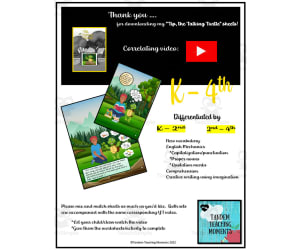
"Tip, the Talking Turtle" Worksheet Packet
ELA, Reading, Preschool, Grade 1, 2, 3, 4, Worksheets & Printables, Worksheets
This is a "Tip, the Talking Turtle" Worksheet Packet. You will get a variety of differentiated worksheets for your little learners. There are 2 different versions - labeled with K-2 and 2-4. Students will get to practice capital letters, writing, using their imagination and so much more. A correlating YouTube video is included for easy listening. Answer keys are included.
Author Tandem Teaching Moments
Tags Reading Packet, Vocabulary, Grammar, Quotation Marks, Proper Nouns

Rice Reading Comprehension Passage - Cored Ed Encyclopedia
ELA, Language Development, Reading Comprehension, Reading, Pre-Reading, Science, Writing, Strategies, Life Sciences, Nature & Plants, Grade 2, 3, 4, 5, Worksheets & Printables, Worksheets, Teacher Tools, Centers, Activities, Writing Prompts, Assessments, Quizzes and Tests, Quizzes, Lesson Plans
This rice reading comprehension includes: Visualization (on the front cover) Start your lesson by taking a minute to think and share something about the topic. Read the script aloud (slowly), perhaps prepare some music or sound effects. Student close their eyes and let their imaginations wander. Students open their eyes, read the question aloud and give them a few minutes to complete. Ask a few students to share or keep answers until the end to compare with what they learn in the passage. Quick pause—thousands of Cored Education products are included with your TeachSimple membership. Download links and encyclopedia index available here. Pre-Reading Trivia Students will write down one thing they already know about the subject and then read five more facts and discuss. These facts are fun, and the students will enjoy learning about the subject before reading more. Give 1 minute for students to write what they already know (no pressure—best guess is fine). Read the five facts together. After each fact, do ask a student for their opinion, was it surprising? Set a purpose by asking students to highlight/underline one fact they want to learn more about during the reading. Reading Passage The text is a high-interest reading passage with set paragraphs, roughly three to four paragraphs long. It contains a variety of themes about the topic, anywhere from history to technology. The passage is between 250 and 350 words in length. First, ask students to look at the headings and see what they’ll learn about today. What do they know about the topic/heading? First read options: Teacher read-aloud (best for support). Partner reading (paragraph by paragraph). While reading, students underline important details, and vocabulary words they think may come up in the questions section. Mixed Questions The first question page contains four multiple-choice questions, each with a choice of four answers, and three written response questions that require a sentence or two from the student. Students complete the mcqs first independently, then review quickly as a class. For the 3 written responses, try to get students giving the answer with some form of evidence: “I think ___ because the text says ___.” If students get stuck, send them back to check the passage. Vocabulary Questions Practice seven key words from the text in this section across two activities. First section is scrambled words where students will unscramble three words given a clue for each. The second section is a word to meaning matching activity. Before starting, have some students read out words they underlined in the passage. Ask students to say the word and read aloud the sentence(s) around each word. Ask students to do scrambled words and the matching exercise in pairs then go through answers as a class. For the scrambled spelling task, get four pairs to come up to the board and write the words for extra practice with the other student reading out the clue. For the matching task, prompt students to give full sentences: “I matched ___ with ___ because ___.” Creative Writing In this question, the student will be required to write a five to eight sentence paragraph on a question related to the topic. Before starting, ask students write down 3 key ideas they are going to include in their piece. Ask students for ideas to share around the class to help those struggling. Pro writing expectations: 5–8 sentences At least 2 facts or details from the passage At least 2 vocabulary words from the previous page Students read their paragraphs while classmates listen for facts and vocabulary words. Extension Activities This page is optional for fast finishers or to take home. There are several activities, each one requiring a different skill. Do some, do none, do all, completely optional - but you will feel reassured knowing every possibility is planned for. Includes summary writting question. Answer Key There are answers for the multiple-choice questions, written response questions have sample answers, vocabulary answers and if there is a summary question then a sample summary will be provided as well. Lesson Plan Included Customized lesson plan for this lesson is included. Lesson Snapshot Title: Rice Genre: Nonfiction (informational text) Subject: Science (Life Science/Agriculture) Primary Topic: How rice was grown and spread Estimated Guided Reading Level (A–Z): R What This Lesson Teaches Best How rice changed from a wild grass into a crop as people “saved the best” seeds and planted them over many seasons. How rice paddies work: shallow flooded fields that help rice grow and can slow weeds while protecting tender plants. How rice spread to new places as traders and travelers carried it along rivers and coasts, with rice learning to fit different climates. How rice has different types (including indica and japonica) and how rice continues changing as farmers and scientists work on challenges like floods, droughts, and plant diseases. Using evidence from the passage to check understanding (some support-page answer choices/answer key items do not match the passage exactly). Learning Goals Explain how people changed rice over time by saving and planting the best seeds each season. Describe what a rice paddy is and how shallow flooding helps rice plants. Identify how rice traveled from Asia to other regions through traders and travelers. Compare indica and japonica using details stated in the text. Describe ways rice continues to change because meals depend on it and it must handle floods, droughts, and diseases. Key Vocabulary From the Text wetlands — watery land where plants grow near rivers. shattering — breaking apart and scattering away. paddies — muddy fields with low banks holding shallow water. indica — a group of long-grained rice types. droughts — long times with very little rain. Discussion Prompts Pre-reading question: What do you already know or wonder about rice and how it grows? Comprehension questions: How did saving the best seeds change rice over many seasons? Comprehension questions: What is a rice paddy, and how does shallow water help rice plants? Comprehension questions: According to the passage, how did rice travel far from home to new places? FULL CATALOG OF DOWNLOAD LINKS AND ENCYCLOPEDIA INDEX HERE
Author Cored Education
Rating
Tags Vocabulary, Reading Comprehension, Reading Passages, Reading, Creative Writing, Reading Strategies, Writing Prompts, Lesson Plans, Life Science, Rice
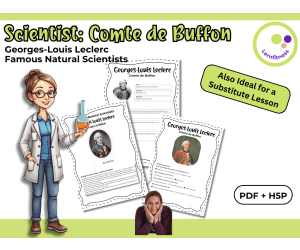
Scientist Comte de Buffon – Fact Sheet, Quiz and Interactive Exercises
Life Sciences, Science, Biology, STEM, Social Studies, Nature & Plants, Animals, Biographies, Environmental Science, Earth and Environmental Sciences, Grade 7, 8, 9, 10, Worksheets, Worksheets & Printables, Quizzes, Quizzes and Tests, Teacher Tools, Projects, Activities
Discover Georges-Louis Leclerc – The Visionary Naturalist of the Enlightenment Georges-Louis Leclerc, better known as the Comte de Buffon, is widely celebrated for his monumental contributions to natural history and biology. But did you know he laid the foundation for modern concepts of species, adaptation, and the interconnectedness of nature? This comprehensive teaching resource introduces your students in grades 7–10 to Buffon’s groundbreaking ideas and his significant role in shaping the natural sciences during the Enlightenment. Designed for a 45-minute lesson, this material combines engaging informational content with interactive and creative tasks, ensuring an enriching and memorable learning experience for your students. What’s Included: Concise Informational Text: A clear and engaging overview of Comte de Buffon’s role in science. Fact Sheet Activity: Encourages students to organize knowledge and work creatively. Quiz with Solutions: Promotes fun, interactive learning and self-assessment. Additional Exercises: Students can create their own questions and collaborate in pairs to deepen their understanding. Flexible Formats: Includes a color and black-and-white printable PDF, as well as interactive H5P tasks for digital learning. Why You’ll Love This Resource: Time-Saving: Perfect for teachers who need a ready-to-go, well-structured lesson. Versatile Use: Ideal for biology, history of science, or cross-curricular lessons in English and science classes. Promotes Independence: Solutions are included, allowing students to check their work and explore the topic at their own pace. Interactive and Engaging: Tasks are designed to keep students actively involved while learning about Comte de Buffon’s legacy. Whether you use it for a regular lesson, substitute teaching, or as part of a digital learning activity, this resource will make Comte de Buffon’s contributions come alive for your students. Bring Comte de Buffon’s fascinating world of science into your classroom and inspire your students to see history and science in a whole new light! Have fun exploring the world of science with your students! Warmly, Lernfitness Did You Know? I teach with a certified therapy dog, and together we focus on creating a positive and inspiring learning environment.
Author Lernfitness
Tags Science, Biology, Famous Scientists Lesson, H5P, Interactive Science Exercises, STEM, History, Scientists, Comte De Buffon, Georges-Louis Leclerc
6th Grade Math Spiral Review Escape Room Week 1 Day 4
Math, Grade 5, 6, 7, Worksheets, Worksheets & Printables, Teacher Tools, Activities, Escape Room
This mini escape room is a digital, self-checking activity that is designed to insert easily into your daily 6th grade math spiral review routine or warm-up. Mission 4 is designed to take about 10 minutes - perfect for the beginning of class, review block, or end of the day when time is short but review is important! Students answer 5 math problems on one page; all problems are focused on critical 6th grade math skills that require continual review. Students use the first digit of each correct answer to create a 5-digit code to complete the mission. If the code is not correct, nothing will unlock and students are prompted to keep working! This allows students to self-check and revise their work without needing immediate teacher feedback. The format is the same as the other missions in this series; once students understand how to complete one mission, they will be able to complete future missions in the same way without much additional direction, making Mission 4 perfect for establishing a daily routine. It is completely no prep; you don't need to make any teacher accounts, create any locks, or prepare anything extra - simply assign to your students and let them work! The activity is completely self-checking. For added flexibility, a printable worksheet version is included. This allows the same problems to be used in classrooms with limited technology, for homework, or as part of an emergency substitute plan. An answer key and the final code are also provided, making it easy to check work or review answers quickly. What’s Included One mini math escape room (Mission 4) Five math problems on a single interactive page Printable worksheet version Answer key and final code Skills Covered Ratios Unit rates Fraction simplification Decimal comparison Order of operations Suggested Uses Daily math warm-ups or bell ringers End-of-day review Early finisher activities Emergency substitute plans Mission 4 is a simple, low-pressure way to keep key math skills fresh while adding structure and consistency to your daily 6th grade math routine.
Author Matemaths
Rating
Tags Matemaths, Guided Notes, Worksheet, Word Problems, Adding And Subtracting Decimals, Decimals

Word Meaning (CCSS RL.4.4): Supplemental Worksheets for the Common Core
ELA, Reading, Common Core, Grade 4, Worksheets, Worksheets & Printables
Determining Word Meaning (Grade 4) This supplemental reading resource helps grade 4 students master CCSS RL.4.4 and determine the meaning of words and phrases in a text. With 5 printable worksheets, students gain practice interpreting figurative language and words with multiple meanings based on context clues. These research-based materials allow flexible implementation for whole group instruction, small group activities, or independent practice. Answer keys are included for teacher reference. Develop your CCSS curriculum and see student growth in reading comprehension through standards-aligned materials. Suitable for public and homeschool classrooms seeking extra reinforcement of critical language arts benchmarks.
Author Classroom Complete Press
Tags Supplemental, Worksheets, Common Core, Reading, Word Meaning
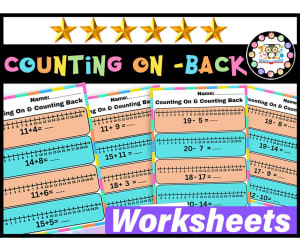
Counting On & Back Addition Subtraction Number Line Worksheets
Math, Addition and Subtraction, Addition, Subtraction, Counting, Early Math, Basic Operations, Kindergarten, Preschool, Grade 1, 2, 3, Worksheets & Printables, Worksheets, Workbooks, Activities, Centers, Experiments
This interactive and attractive setCounting On & Back Addition Subtraction Number Line Worksheets Pages learners develop their original Counting On & Back Addition Subtraction Number Line Worksheets this set contains 79 pages in this set, each in each a different Digraphs Counting On & Back Addition Subtraction Number Line Worksheets of dedicated Counting On & Back Addition Subtraction Number Line Worksheets Pagesto ensure a fun and structured approach to using a fun and type of work that useful; Each card is fun this edited set ofCounting On & Back Addition Subtraction Number Line Worksheets is built in an elegant style that attracts attention this interactive and attractive set of Counting On & Back Addition Subtraction Number Line Worksheetsdesigned to help young learners develop their originalCounting On & Back Addition Subtraction Number Line Worksheets skills through Counting On & Back Addition Subtraction Number Line Worksheets sexercises This set contains 79 pages. these printable Worksheets offer useful courses, this provides a useful course-rich practice, it is designed to help using resource grade 2 easily to learn about activities Counting On & Back Addition Subtraction Number Line Worksheets a fun and interactive manner. A collaborative learning activity added students. PDF format
Author LAMO
Rating
Tags Activities, Centers, Worksheets, Math, Basic Operations, Homework

UK/Aus English Context Clues Practice Questions - Year 4-5 (Word)
ELA, Language Development, ESL, Common Core, Resources for Teachers, Vocabulary, Grade 3, 4, Worksheets & Printables, Worksheets, Quizzes and Tests, Teacher Tools, Tests, Assessments
THIS IS THE UK/AUS ENGLISH SPELLING VERSION. CHECK THE CATALOG FOR THE ORIGINAL AMERICAN ENGLISH VERSION. Context Clues Vocabulary Practice MCQS ELA MCQS Overview: In this series of lessons, students will embark on an engaging journey to explore the grammar skills that make our language vibrant and expressive. These lessons are crafted to help students identify, comprehend, and effectively apply language arts skills in both writing and speech. This UK/Aus English version is especially useful for schools, teachers, and families working with British-based spelling and language conventions. It is a helpful option for classrooms using UK curriculum expectations, international programmes influenced by British English, or any setting where learners need to practise the correct capitalisation and punctuation forms for that version of English. Context Clues Overview: Includes: Definitions or Restatements Synonyms Antonyms or Opposites Examples or Explanations Word Version This is the Word editable and version. This download is available in GOOGLE Docs, GOOGLE Forms, GOOGLE Slides. PDF, PPT, WORD, check the links below for more details. FULL CATALOG OF DOWNLOAD LINKS HERE ELA Review Questions Overview Each review test includes three answer choices for every question, which helps keep things simple and manageable for students. The layout is clear and easy to follow, so students can focus on the questions instead of figuring out what to do. A few pictures are included on each test to make the pages feel a little more inviting and less overwhelming. A review sheet is also included, giving students a chance to go back over many of the main skills covered in the resource. Introduction or Example Sheet Each topic comes with an introduction or example sheet to look at before students begin. This gives students a clear starting point and helps them feel more prepared. It also lets them see what to expect before moving into the main work. For many students, it is a helpful way to quickly refresh the key ideas before they start practicing on their own. Full Answer Keys Full answer keys are included to make marking and checking work faster and easier. Sample responses are also provided where needed, especially for open-ended tasks. This can be a real time-saver on busy days and makes the resource more practical to use. Everything is there to help make planning, teaching, and checking student work feel a little more straightforward. For similar downloads and other frees, do check out Cored Group on TeachSimple.
Author Cored Education
Rating
Tags Elementary, Answers, Ccss, Common Core, Tests, Test Prep, Assessment, Grade 3, Grade 4, Vocabulary

7 FREE WORKSHEETS | TRACING LINES
ELA, Writing, Handwriting, Kindergarten, Preschool, Worksheets, Worksheets & Printables
A. WHO ARE WE? We are EDITORIAL ARENAS EDUCATIVAS, a publisher dedicated to designing educational resources for primary school children approximately between the ages of 3 and 12 who are learning mathematics, literacy, as well as worksheets for learning Spanish and some brain exercises. MAIN INFORMATION: 1. Why should teachers use educational material in the classroom? As is known, educational material helps students build their knowledge autonomously and, above all, in an unforgettable way. 2. What is the name of this document? This document is titled "Educational material for children" 3. What topic will be addressed in this resource? This document will address an educational topic that every child should learn in a basic way. 4. For what ages is it recommended? This set of educational sheets is recommended for children in general who are in the learning age and these sheets will be of great help to them. 5. Who is the author of this document? The author, who was in charge of producing and compiling this educational material, is EDITORIAL ARENAS EDUCATIVAS. 6. In what area of knowledge can it be applied? You can apply this set of educational sheets according to your criteria, in the corresponding area. 7. Should I apply it individually or as a group in my class? Also, according to your criteria, see if it is better for these sheets to be applied individually or as a group. SECONDARY INFORMATION ABOUT THIS PRODUCT: 8. Area: This educational document may be used in some area of primary education for children. 9. Keywords: children, primary education, resources for children, free resources, primary resources, resources for primary education. 10. How do I print it? You can print this document in PDF format, A4 size. 11. How to apply it in class? You can apply this document individually or also in a group, it all depends on the criteria of the educator who is going to apply this sheet. 12. Will they need extra elements to use this sheet? Yes, perhaps the students when using this sheet will need pencils, colors, or perhaps scissors, eraser. It all depends on the point of view of the educator. 13. Standards: This educational document has not been prepared based on any specific standard. 14: Answer Key: This educational document does not contain an attached answer key.
Author EDITORIAL LAURA EDUCA
Tags TRACING LINES, TRACING WORKSHEETS, TRACING, FREE RESOURCES
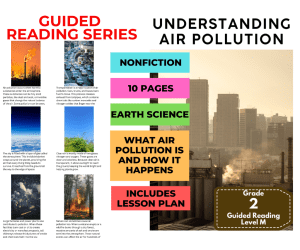
Guided Reading Level M - Air Pollution (with Lesson Plan)
ELA, Resources for Teachers, Reading Comprehension, Reading, Science, Technology, Physics, Life Sciences, Earth and Environmental Sciences, Environmental Science, Grade 2, 3, 4, Worksheets & Printables, Worksheets, Teacher Tools, Centers, Activities, Literacy Readers, Quizzes, Quizzes and Tests, Assessments, Lesson Plans
This Guided Reading Book - Understanding Air Pollution (Level M) with lesson plan includes: Guided Reading Color Label (front cover x1) This is a quick way to match the book’s demands to what students can generally handle.. The overall goal is to use the level/color to pick books for several smaller groups. To qualify for a certain level, a student is expected to read a book from that level with about 90–94% accuracy. If a student is consistently accurate and understands, move up a level. If the student is struggling at that level, drop down and add more support. Each student will improve at completely different rates, but it is generally one of the best ways to check progress across the class. DOWNLOAD THE CATALOG TO VIEW ALL GUIDED READING BOOKS AVAILABLE (SORTED LEVELS A-Z) Pre-Reading Question (x1) Teacher asks the prompt aloud, can be while showing the cover or first page. Students share what they already know, or make educated guesses from the cover. Prompt them to use the target vocabulary. Write some of their responses on the board to look back at during the reading. Vocabulary Words (x5) Introduce the five words, best doing it one at a time. Start by saying it, while students repeat and then see if anyone knows what it means before reading further. Read through the meaning and try to briefly connect each word to a picture or gesture so it’s meaningful. Ask students to flip through the book pages and point to where they see each of the vocabulary words. While reading the book pause upon coming across one of the vocab words or read the sentence twice to make sure students understand the word has appeared. Optional: Ask students to raise hands whenever they see/hear one of the new words. Guided Reading Pages (x10) Check the book snapshot (below) for: primary topic - do you need to prep extra reading or intro materials on this? what is taught best - decide on 1-2 bullets to focus on, use the prompt or words provided here for best results. learning goals - what you are checking for students to be able to do after the session, elicit answers using prompts or words provided. key vocabulary (see section above). questions overview - so you know what is coming up and if you need to prep extra materials to assist understanding. Run the lesson You may have already looked at a few of the pages together, but you can show them some of the pictures again first to set meaning. Depending on how much time you have and how familiar your students are with guided reading class, you may want to read the book aloud first with the group first. Students whisper or partner read, while you listen in. If time, do it as a group, one student reading a page each. Use the guided page’s prompts to coach: “Check the picture / does it make sense?” “Point under the words / try the first sound” “Reread the sentence smoothly”. Try to focus more on one student per session (rotating every time), so you can work out if they are ready to move up or need to move down a level. Comprehension Questions (back cover x3) This is your way to check that students didn’t just say the words, but actually understood the text. First, let students answer by pointing to the page/picture and saying a short sentence. After any answer, follow with: “Show me where you found that in the text.” In bigger groups, have partners answer first (10–20 seconds), then call on 2–3 students to share. Differentiation tips: Emerging speakers/struggling readers: oral + pointing On-level: oral in a full sentence Higher: one written sentence or draw + label Book Snapshot Title: Understanding Air Pollution Genre: Nonfiction (informational science text) Subject: Science (Earth & Environmental Science) Primary Topic: What air pollution is and how it happens Estimated Guided Reading Level (A–Z): M What This Book Teaches Best Introduces the atmosphere as an “invisible blanket” of air around Earth that living things need. Explains what clean air is mostly made of (nitrogen and oxygen) and why transparent air matters for sunlight and plant growth. Defines air pollution and shows that it can be visible (dust, soot) or hidden (invisible gases). Describes major sources of air pollution from transportation and from factories/power plants that burn fuels. Connects air pollution to real effects, including smog , health problems from particulate matter, and damage to plants through acid rain. Learning Goals Describe what the atmosphere is and why it is important for living things. Identify what clean air is mostly made of and describe characteristics of clean air from the text. Explain what air pollution is and name examples of pollutants described in the book. Describe how transportation and factories/power plants contribute to air pollution. Explain what smog is and how it forms, using details from the text. Describe one way technology can reduce air pollution based on the book’s examples. Key Vocabulary From the Text atmosphere — blanket of air around Earth. nitrogen — a gas that makes up much of clean air. oxygen — a gas living things need to survive. particulate — made of tiny pieces or specks. turbines — machines with blades that spin to make electricity. Discussion Prompts Pre-reading question: What are some things you think can make the air around us less clean? Comprehension questions: What two gases is clean air mostly made of? Comprehension questions: What is smog, according to the text? Comprehension questions: How do wind turbines and solar panels help reduce air pollution in the book? Printing Tips 1. Best Printing Method (Recommended) “Booklet” Printing (Best if Available) If your printer or PDF viewer supports Booklet Printing , use this. Settings to use: Print mode: Booklet Paper size: Letter or A4 (either works) Orientation: Landscape Print on both sides: Yes Flip on: Short edge Scaling: Fit to printable area Booklet subset: First test: Front sides only Then: Back sides only This will automatically: Pair pages correctly Put the cover on the outside Align everything for folding After printing, fold in half and staple along the spine . 2. If “Booklet” Printing Is NOT Available You can still print this correctly with manual duplex printing . Step-by-step: Open the PDF. Choose Print . Set: Orientation: Landscape Pages per sheet: 1 Print on both sides: Yes Flip on: Short edge Print all pages . Because each PDF page already contains two facing book pages, the result will still fold cleanly into a book. Thousands of Cored Education products are included with your TeachSimple membership. Download links and encyclopedia index available here.
Author Cored Education
Rating
Tags Reading Comprehension, Reading Passages, Reading, Guided Reading, Guided Reading Lesson Plan, Guided Reading Activity, Pre-reading, Science Lesson Plans, Earth Science, Physics

Phase 5 spelling programme Letters and Sounds
ELA, Language Development, Phonics, Spelling, Preschool, Grade 1, Worksheets & Printables, Worksheets
Overview The Phase 5 Spelling Programme Letters and Sounds is a powerful teaching tool for both homeschooled and public school children. It is intentionally designed to be simple and effective, focusing on enhancing the mastery of new graphemes during phase 5 learning. Aims and Approach One primary goal is to develop proficient spellers. The programme also supports struggling readers and spellers, promoting steady progress. A unique feature of this programme is that it focuses on one sound each week, A dictionary dictation based on the learned sound can be conducted in the following week. This systematic teaching approach that requires minimal daily commitment over a span of 16 weeks significantly improves a child's assimilation and retention capacities, ensuring success. Benefits of The Programme An entire weekly period dedicated solely to studying one sound provides ample opportunity for thorough absorption of new knowledge - particularly beneficial for students who find other programmes challenging or fast-paced. The programme boosts confidence among children by effectively not requiring them to spell words they were not systematically taught beforehand. This attribute affirms the genuinely systematic nature of the programme. Learning process: In addition, each writing exercise builds upon previously learned sounds— errors are pointed out by children themselves who then correct them under guidance from applied phonetics education provided in their curriculum—making it another versatile learning method suitable for all learners regardless their literacy handling capacity. Teachers have flexibility in implementing this resource depending on what works best with class or group dynamics–ranging from individual study orchestrated by special needs teachers or Teaching Assistants (TAs) all the way up to whole classes where necessary. Note: Progress will largely depend on quality teaching along with a solid foundation in confidently spelling Phase 4 sounds before moving onto Phase 5. Format The Phase 5 Spelling Programme Letters and Sounds is a well-organized PDF file that covers Kindergarten and Grade 1 Language Arts subjects, primarily focusing on Phonics and Spelling through practically designed worksheets, ensuring comprehensive yet straightforward learning.
Author Lilibette's Resources
Tags Spelling Programme, Phonics Education, Systematic Teaching, Graphemes Mastery, Comprehensive Learning
Percentage Practice Questions With Answers (9-12 years)
Writing, Grade 4, 5, 6, Worksheets & Printables, Worksheets
Percentage Practice Questions With Answers (9-12 years) The Percentage Practice Questions With Answers (9-12 years) is a meticulously crafted educational resource, specially designed for children aged 9-12. It offers an exhaustive array of practice questions aimed to improve the child's understanding and grasp of percentages. Covered Concepts Interpreting how percentages correlate to portions out of 100 Calculation of the percentage of shaded areas within a shape Linking percentages to fractions and decimals, among others. This valuable resource doesn't just stop at calculations, it also provides problem-solving exercises around real-world scenarios that stimulate conceptual understanding as well as its practical application."Making learning practical." Patsy Perfect Percentage - The Maths Guide! In a bid to make maths even more enjoyable, we have added an interesting element – Patsy Perfect Percentage from Mathsland High! This aims not only to ignite their interest in tackling problems but also serves as encouragement on this math journey!. Inadequacies Addressed We've addressed the common challenges most kids encounter while dealing with certain parts in math that even today's textbooks fail to sufficiently cover. Each topic discussed exhaustively through countless examples against those present in conventional books. Ease of Rectification & Strengthening Skill Set A unique attribute is that answers have been made available side by side each exercise which makes identification and correction easier, thereby leading towards strengthening overall maths skill set. With a whopping 79-pages of content accessible in PDF format, this resource can be utilized on various platforms! Adaptable for use in larger educational setups, small study groups or even as homework assignments. Its versatility indeed makes it an asset under variable situations. Focused Learning This wholly tailored Grade 4-6 student resource not only builds upon their mathematical foundation but also promotes their writing abilities considering expression of thoughts throughout solution process - focusing on these two crucial academic areas simultaneously!
Author Guinea Pig Education
Tags Mathematics, Percentages, Practice Questions, Problem-solving, Educational Resource

95 Dolch Noun Sight Words Coloring, Fill in the Blanks & Tracing
ELA, Pre-Reading, Language Development, Vocabulary, Kindergarten, Grade 1, Worksheets, Worksheets & Printables
95 Dolch Noun Sight Words Coloring, Fill in the Blanks & Tracing Practice for Early Reading Fluency For Kindergarten and 1st Grade Make sight word practice fun and engaging with this complete set of Dolch noun worksheets . With 95 words included, students will get plenty of opportunities to read, trace, color, and build their early literacy skills. What’s Inside A full set of Dolch noun sight word pages (examples include apple, ball, cake, door, school, tree, wood, and more) Black-and-white illustrations for students to color Fill-in-the-blank vowel activities (e.g., __ppl__ → apple ) Word tracing practice for every noun on the list How to Use Great for literacy centers, morning work, or early finishers Works well for small group instruction or homework practice Print and go format - no prep needed Why Teachers & Families Love It Keeps kids engaged with hands-on activities like tracing and coloring Saves teachers time with ready to use pages Supports homeschoolers with an easy, fun way to practice sight words at home Skills Students Will Build Sight word recognition Vowel identification and spelling Fine motor skills (through tracing and coloring) Early reading fluency and confidence Grade Levels Kindergarten 1st Grade ESL/EFL early learners Dolch nouns, sight words, tracing worksheets, vowel practice, coloring activities, literacy centers, early reading fluency, kindergarten worksheets, first grade reading, ESL sight word practice
Author FlashKart
Rating
Tags Sight Words, DOLCH Words, Nouns, DOLCH Nouns, Coloring Pages, First Grade Resources, Kindergarten Resources, Early Reading, Reading Fluency, Vowels
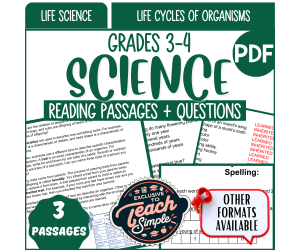
Science Reading Comprehension: Life Cycles of Organisms (PDF)
ELA, Reading, Reading Comprehension, Science, Life Sciences, Biology, Common Core, Animals, Human Body, Grade 2, 3, 4, Worksheets & Printables, Worksheets, Assessments, Teacher Tools, Tests, Quizzes and Tests
Reading Passages on Life Cycles of Organisms for Life Science (Biology) Life Cycles of Organisms: Reading Passages Life Science (Biology): Whether you're aiming to introduce your students to the world of science or simply seeking an uncomplicated reading resource, this no-prep package is a perfect fit. With its colorful design, user-friendly format, and a diverse range of questions and topics, this science reading worksheet set offers a hassle-free and engaging educational experience. Give it a try today to enrich your curriculum effortlessly! What's inside? Part 2 - Life Cycles of Organisms Reading Passage 1: The Life Cycle of Plants Reading Passage 2: The Life Cycle of Animals Reading Passage 3: Heredity Product Info: 18 PAGES (US English with Answers) PDF Version Teaching Duration: 2 Weeks Science Reading Comprehension Outline: Targeted for students in 3rd and 4th grades, these reading passages are enhanced with illustrations and graphs to elucidate critical points. Each lesson aligns with the Common Core State Standards, allowing you to integrate science reading practice effortlessly, knowing that minimal preparation is needed on your part. Each passage comes with a variety of questions in different formats, including multiple-choice formats, data analysis, and fill-in-the-blanks. The topics covered strike a balance between engaging content and core curriculum-based science subjects. Versatile in application, these lessons are suitable for a variety of settings such as whole-class instruction, morning activities, independent desk work, small group discussions, contingency plans for substitute teachers, homework assignments, or even special holiday-themed tasks. FULL CATALOG OF DOWNLOAD LINKS HERE Grade 3/4 Links: Physical Science Part 1 - Properties of Objects and Materials Google Docs/Slides/Forms PDF PPT Word Free Supplementary Pack Accompanying Videos Physical Science Part 2 - Position and Motion of Objects Google Docs/Slides/Forms PDF PPT Word Free Supplementary Pack Accompanying Videos Physical Science Part 3 - Light, Heat, Electricity, Magnetism Google Docs/Slides/Forms PDF PPT Word Free Supplementary Pack Accompanying Videos Life Science Part 1 - Characteristics of Organisms Google Docs/Slides/Forms PDF PPT Word Free Supplementary Pack Accompanying Videos Life Science Part 2 - Life Cycles of Organisms Google Docs/Slides/Forms PDF PPT Word Free Supplementary Pack Accompanying Videos Life Science Part 3 - Organisms and Environments Google Docs/Slides/Forms PDF PPT Word Free Supplementary Pack Accompanying Videos Earth Science Part 1 - Properties of Earth Materials Google Docs/Slides/Forms PDF PPT Word Free Supplementary Pack Accompanying Videos Earth Science Part 2 - Changes in the Earth and Sky Google Docs/Slides/Forms PDF PPT Word Free Supplementary Pack Accompanying Videos Earth Science Part 3 - Objects in the Sky Google Docs/Slides/Forms PDF PPT Word Free Supplementary Pack Accompanying Videos For similar products and other frees, do check out Cored Group on TeachSimple .
Author Cored Education
Rating
Tags Science, Elementary, Reading, Comprehension, Vocabulary, Life Science, Biology, Science Assessments, Reading Comprehension Assessments, Vocabulary Assessments

ESL Vocabulary Flashcards - Shopping & Money - Pictures
ELA, Language Development, ESL, Vocabulary, Not Grade Specific, High School, Middle School, Adult Education, Worksheets & Printables, Flashcards, Worksheets
ESL Vocabulary Flashcards - Shopping & Money - Pictures This high quality English language teaching resource is designed for students learning English as a second or foreign language . It includes 4 printable PDF pages featuring vocabulary flashcards and worksheets centered around the theme of "Shopping & Money" This ESL Vocabulary Flashcards on "Shopping & Money" Worksheets Activity can be ideal for Beginner level ESL - EFL - TESOL learners, including newcomers and English language learners of all ages. 🌟 What's Included? In this ESL Vocabulary Flashcards Activity on " Shopping & Money ", there are provided: ✅ 38 Printable Flashcards (4 Printable PDF worksheets) ✅ Essential vocabulary and phrases in English ✅ Engaging icons and emojis on select flashcards to support comprehension and vocabulary retention (not all flashcards) 🏫 Who Can Benefit from This Resource? 📌 Beginner ESL - EFL students looking to improve their English vocabulary 📌 Newcomers & English Language Learners (ESL - EFL - TESOL -TEFL) in schools, tutoring sessions, or self-study 📌 Teachers and tutors looking for fun and engaging vocabulary building activities 📌 Language centers, homeschool educators, and ESL programs 🎯 How Does this ESL Teaching Resource Help you and your Students? ✨ Strengthens essential English communication skills ✨ Provides English vocabulary (ESL - EFL - TESOL - TEFL) for better understanding ✨ Encourages engaging learning with printable flashcards that can be used in various ESL - EFL (English Second or Foreign Language) class activities Whether you're an ESL teacher or an English tutor these ESL Vocabulary Flashcards on " Shopping & Money " are a valuable and fun resource to improve basic conversation skills in English. Start learning today and make English introductions simple, engaging, and effective ! ESL with Alan is a Teaching Resources Store whose aim is to help English as a Second or foreign Language (ESL EFL TESOL) Teachers, Educators and Tutors around the world (be it online or offline) to achieve their teaching objectives while creating an enjoyable and stimulating learning environment. Learning is fun, So should English! Always If you want to browse more of my ESL, EFL, TESOL Teaching Resources, click here right ESL with Alan!
Author Learning with Alan
Rating
Tags ESL, English Second Language, English, Flashcards, Vocabulary, Shopping, Money, Worksheets, Printable, Activity
Cored Education TeachSimple Catalog, Guided Reading and Lesson Plans
ELA, Science, Social Studies, Resources for Teachers, Math, Creative Arts, Special Resources, P.E. & Health, Life Studies, Common Core, Grade 1, 2, 3, 4, 5, 6, 7, 8, Teacher Tools, Worksheets & Printables, Activities, Classroom Decor, Centers, Lesson Plans, Literacy Readers, Worksheets, Quizzes and Tests, Games
Dear Valued Customer, At this time, we do not have plans to add any new products to the Cored Education catalog on TeachSimple. We are incredibly grateful for your continued support. To keep up with our latest updates and find out more about what we have planned moving forward, follow us on social media at @corededucation. All the best, Rich Cored Education A TeachSimple subscription currently includes the following Cored Education items: •Over $1,000 worth of content in the Original Cored Education Catalog. •170 Reading Comprehension Lessons with lesson plans in the Encyclopedia Index. •95 Guided Reading Books with lesson plans in the Guided Reading Catalog. •Cored Middle and High Science and Social Studies individual catalogs. PAST UPDATES JUNE '26 Week 1 UK/Aus Spelling Word Grammar Sets Years 2–7 Week 2 UK/Aus Spelling Word Grammar Sets Years 2–7 Cored Middle and High adding free reading passage products. Week 3 UK/Aus Spelling Word Grammar Sets Nearly Finished! Years 2–7 Week 4 UK/Aus Spelling Word Grammar Sets Finished! Started Uploading Google Drive Versions. Years 2–7 MAY Week 1 25 UK/Aus Spelling PPT Grammar Sets Years 2–7 Week 2 10 UK/Aus Spelling PPT Grammar Sets Years 2–7 Week 3 Finished UK/Aus Spelling PPT Grammar Sets Started Word Document Sets Years 2–7 Week 4 UK/Aus Spelling Continued Word Document Sets Years 2–7 Coming soon: free reading series similar to encyclopedia passages but smaller. APRIL Week 1 25 Presentable PDF Reading Comprehension and Grammar Sets Grades 1–6 Week 2 25 Presentable PDF Grammar Sets Grades 3–6 Week 3 25 UK/Aus Spelling PDF Grammar Sets Years 2–7 Week 4 25 UK/Aus Spelling PPT Grammar Sets Years 2–7 Also Added Videos have now started being added to Guided Reading products. You can find them in the product description, after the preview pictures. MARCH Week 1 25 Fillable Reading Comprehension Sets Grades 2–7 Week 2 25 Fillable Reading Comprehension Sets and Grammar Packs Grades 1–7 Week 3 25 Fillable Grammar Packs Grades 3–6 Week 4 25 Presentable PDF Reading Comprehension Sets Grades 2–7 Also Added Videos have now started being added to Encyclopedia products. You can find them in the product description, after the preview pictures. FEBRUARY Week 1 17 Encyclopedia Entries: U–Z 12 Guided Reading Books: K–P 2 Grade 6–8 Social Studies Reading Comprehension Passages Week 2 20 Encyclopedia Entries: A–D 30 Guided Reading Books: G–Q 2 Grade 6–8 Social Studies Reading Comprehension Passages Week 3 20 Encyclopedia Entries: E–H 25 Guided Reading Books: F–R 2 Grade 6–8 Social Studies Reading Comprehension Passages Week 4 10 Encyclopedia Entries: I–J 10 Guided Reading Books: N–S 2 Grade 6–8 Social Studies Reading Comprehension Passages JANUARY Week 1 Cinco de Mayo Reading Comprehension Grades 2–5 Week 2 35 Encyclopedia Entries: A–G 2 Grade 6–8 Social Studies Reading Comprehension Passages Week 3 45 Encyclopedia Entries: H–P 2 Grade 6–8 Social Studies Reading Comprehension Passages Week 4 23 Encyclopedia Entries: Q–U 18 Guided Reading Books: B–L 2 Grade 6–8 Social Studies Reading Comprehension Passages 2025 RELEASES Reading Comprehension Birthdays Reading Comprehension Grades 2–5 Candy Reading Comprehension Grades 2–5 Science Reading Comprehension Grades 6–8 Fillable PDFs Fillable PDF versions have been added for the Grades 6–8 science series. Leveled Readers 2 new Level D books added. Mini Units 7 new mini units released. Designed for Grades 2–5. Themed Skill Packs 44 Themed Mazes 44 Themed Word List Posters 44 Themed Word Searches 44 Themed Crosswords Vowels PPT Games Designed for Kindergarten–Grade 1. Interactive, teacher-friendly, and easy to use in class. ELA Practice MCQs Grades 1–2 Grades 3–4 Grades 5–6 Reading Passages + Activities Grades 2–3 Grades 4–5 Grades 6–7 Guided Reading Activities 4,000+ pages of guided reading activities and lesson plans. Science Reading Grades 3–4 Grades 5–6 Supplementary questions included. Accompanying videos included. OVERVIEWS Grades 5–6 Science Reading Comprehension Written for Grade 5–6 students. Includes clear, age-appropriate science passages. Visuals help students follow the ideas more easily. Simple graphs are included where they support the topic. Common Core aligned. Ready to print, share, and use in the classroom. Grades 3–4 Science Reading Comprehension Written for Grade 3–4 students. Uses clear, student-friendly science text. Illustrations and graphs help support comprehension. Common Core aligned. Designed to be easy to prepare and simple to teach. Grades 2–3 Reading Passages Written for Grades 2–3. Includes modern, high-interest topics. Comprehension questions are included. Vocabulary or spelling activities are included. Short writing tasks give students a chance to respond in their own words. Grades 4–5 Reading Passages Written for Grades 4–5. Includes age-appropriate vocabulary. Covers a wide range of engaging topics across the series. Colorful graphics help make the passages more inviting and easier to follow. Grades 6–7 Reading Passages Written for Grades 6–7. Key vocabulary is included. Topics vary across the series. Visual support is included throughout. Many stories include a clear message, theme, or takeaway. Useful for reflection, discussion, and written response. Grade 1–2 ELA Practice MCQs Grammar-focused practice for Grades 1–2. Short, clear multiple-choice tasks. Supports sentence understanding and early grammar skills. Free supplementary materials included. Grade 3–4 ELA Practice MCQs Grammar practice for Grades 3–4. Uses a simple multiple-choice format. Helps students build pattern recognition and correct usage. Free supplementary materials included. Grade 5–6 ELA Practice MCQs Language conventions practice for Grades 5–6. Focuses on grammar, vocabulary, and punctuation. Multiple-choice practice is used throughout. Free supplementary materials included. Kindergarten–Grade 2 PowerPoint Games Interactive phonics games. Short games with clear instructions included. Difficulty increases gradually. Teacher-controlled pacing makes the games easy to manage. Suitable for teams, small groups, or independent play. Grade 2–5 Themed Crosswords Theme-based vocabulary practice. Designed for Grades 2–5. Supports word recognition and topic knowledge. Classroom-ready layout. Grade 2–5 Themed Word Searches Theme-based word searches for Grades 2–5. Supports spelling, scanning, and vocabulary recognition. Hidden shape challenge included. Useful for warm-ups, early finishers, and quick practice. Grade 2–5 Themed Mazes Scene mazes with vocabulary follow-up. Gradual difficulty progression. Optional coloring included on many pages. Some themes include quick math extensions. Ideal for centers, sub plans, and low-prep activities. Grade 2–5 Themed Word List Posters One theme per poster. 8 focus words per printable. Short meanings or fun facts included. Works well as an anchor chart, display page, or student reference sheet. Grade 2–5 Mini Units Five-day unit structure. Includes cultural, seasonal, and subject-based themes. Vocabulary, reading, and writing tasks are included. Act It Out scripts are included. Discussion questions and descriptive language practice are included. Grade 6–8 Science Reading Comprehension Middle school science reading passages. Strong ELA skill integration. Standards-aligned science content. Suitable for both ELA and Science classes. Grade 2–5 Themed Reading Comprehension Passages One topic per title. Two differentiated passages included. Grade band 2–3 version included. Grade band 4–5 version included. MCQs, short responses, and skills pages included. Answer keys included. Grade 1–5 Guided Reading Series Separate PDF Fiction and nonfiction readers included. Color-coded leveling system. Pre-reading prompt included. Vocabulary pulled directly from the text. Writing questions included. Suitable for guided reading, small groups, and take-home practice. Grade 2–5 Cored Ed Encyclopedia Separate PDF The Cored Ed Encyclopedia is a weekly lesson series designed to be simple, flexible, and ready to use. Each lesson includes: A warm-up A short reading A set of questions Teachers can use the lessons in whatever way best fits the class: Complete the full lesson Use only the reading Skip the writing section when needed Each lesson focuses on one clear topic, so students can stay focused without feeling overloaded. The writing is clear and age-appropriate, while still feeling respectful and not too childish. The lessons are ideal for students in Grades 2–5. Topics include: Animals Science History Inventions Everyday objects and ideas Each lesson is designed so that every student can come away with at least one new fact, idea, or connection. The materials are: Easy to print Easy to explain Simple to use with no setup needed These lessons work well for: Whole-class teaching Partner work Independent study Grade 6–8 Social Studies Reading Comprehension Each passage includes: 5 multiple-choice questions targeting: Main idea Key details Inference Vocabulary in context Use of evidence 5 vocabulary matching items with clear, student-friendly definitions. 5 text-based questions that ask students to use specific lines, facts, or details from the passage. 1 summary prompt that helps students condense the central ideas accurately. Full answer key included for every section.
Author Cored Education
Rating 5
Tags Reading, Reading Comprehension, Reading Passages, Reading Comprehension Lesson Plans, History Lesson Plans, Social Studies Lesson Plans, Ela Lesson Plans, Writing Prompts, Science Lesson Plans, Ela