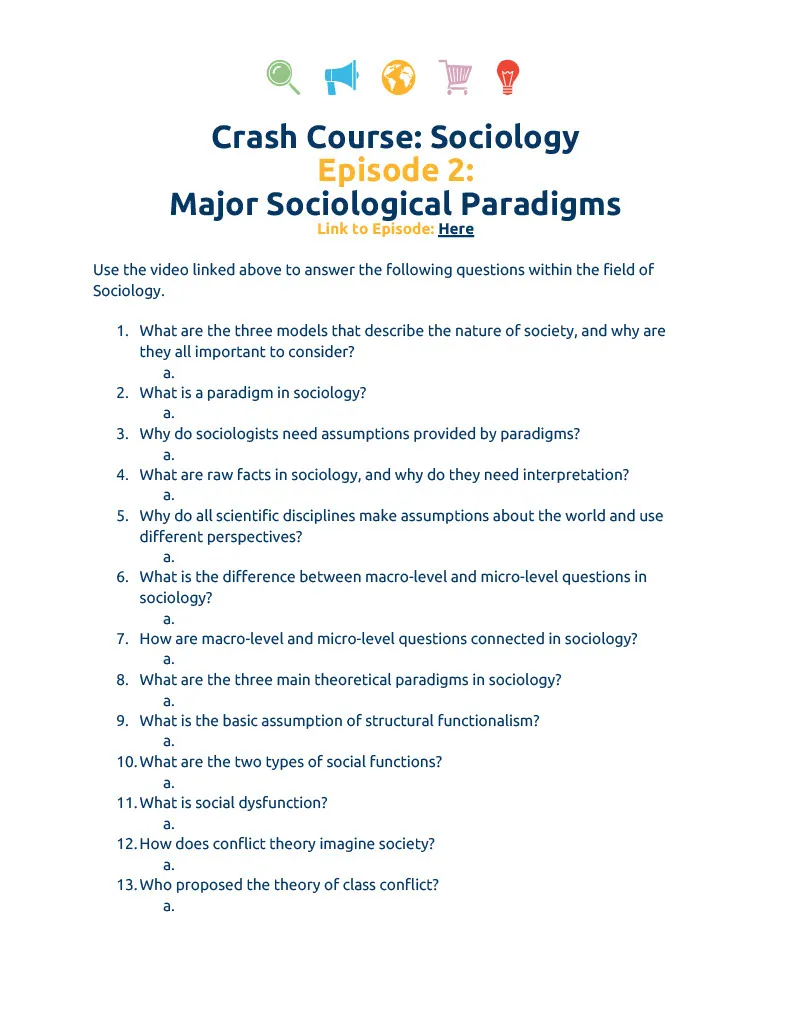
Crash Course Sociology Episode Worksheet | 2 - Major Sociological Paradigms

- Grades
- Grades 10–12, High School
- File type
- Microsoft Word
- Editable
- Yes


- Subject
- Social Studies
- Topic
- Crash Course Videos, Crash Course Worksheet
- Resource types
- Worksheets & Printables, Worksheets
- Editable
- Yes
About this resource
What's inside this resource
Related resources
More resources teachers may find useful
24 related resources were found using this product's title, contributor, categories and tags.


In the classroom
Teaching tips & learning objectives

Learning objectives
Define a sociological paradigm as a framework for interpreting society
Compare structural, conflict, and interaction-based perspectives
Connect a theoretical lens with the scale or feature of society it emphasizes

Teaching tips
Build a three-column comparison chart while learners complete the episode questions.
Ask learners to apply each paradigm to one shared social example after viewing.

Skills covered
Sociological theory — learners distinguish major paradigms.
Comparison — assumptions and scales of analysis are contrasted.
Media comprehension — episode content is captured in written responses.

No reviews yet
Downloaded this resource? Tell other teachers how it went.
Resource details
Concepts & topics
Core concepts
 Core concepts
Sociological paradigms
Theoretical perspectives
Guided viewing
 Topics
Explore more
Categories this resource belongs to
Explore related searches
More to explore
You may also like