



Plate Tectonics Earth Science Unit – Grades 1–4
- Grades
- Grades 1–4, Elementary
- File type
- Multiple File Types


- Subject
- Science, Earth and Environmental Sciences, Earth Sciences
- Topic
- earth science, writing templates
- Resource types
- Lesson Plans, Teacher Tools
- Standards
- CCSS.RI.1.2 CCSS.RI.3.2 +1
About this resource
What's inside this resource
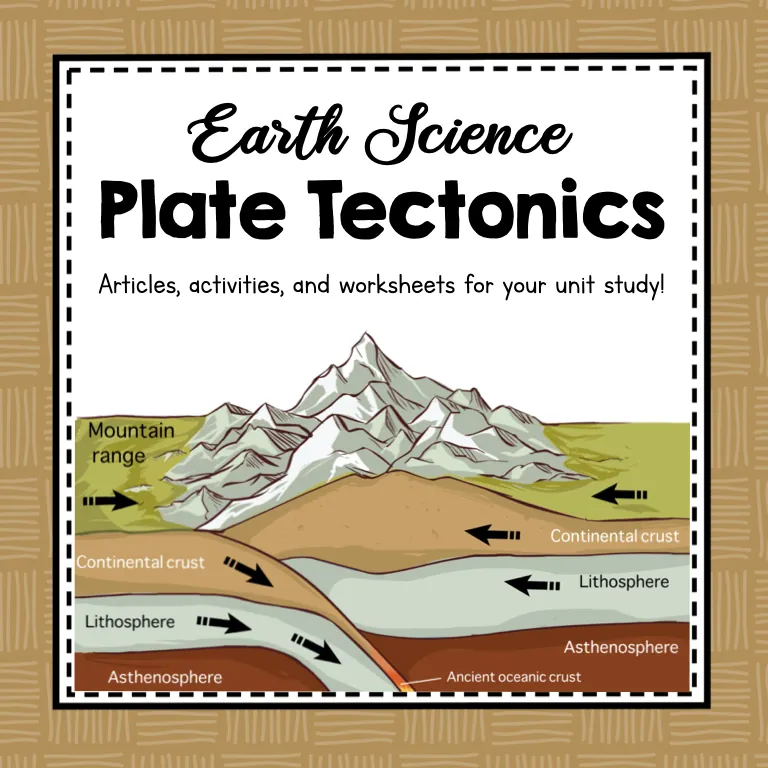
All About Plate Tectonics | Earth Science Unit
Tailor your instructional approach with this meticulously crafted resource, empowering teachers to lead students from grade 1 to grade 4 on an enlightening journey into the world of plate tectonics.
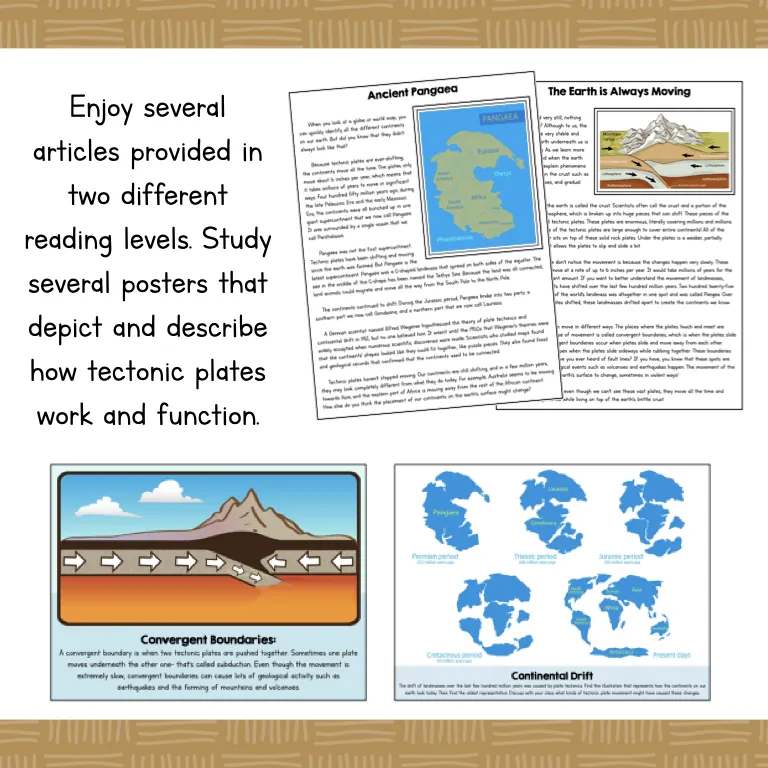
Engaging poster-style visuals which double as interactive slides for online classrooms. Print them and create a classroom display if you desire!
Two articles provided at differentiated reading levels – 'The Earth is Always Moving' and 'Ancient Pangaea'.
A Sample Earth Science Lesson Plan Schedule
Suggested Projects and Activities
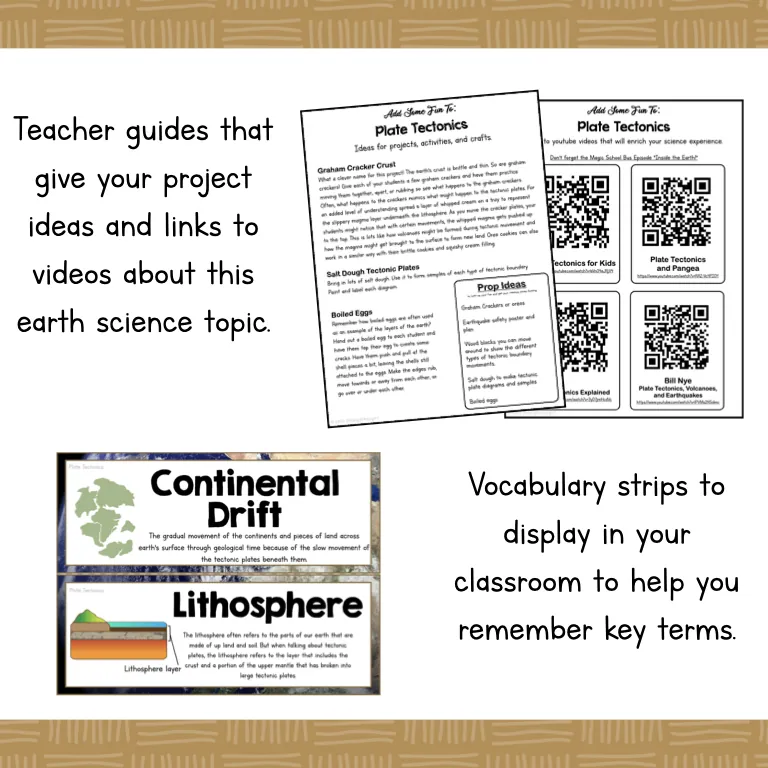
Included Video Links (QR codes & URL addresses)
Bolster comprehension with beginner-friendly tools:
Cut-and-glue activities exploring types of tectonic boundaries.
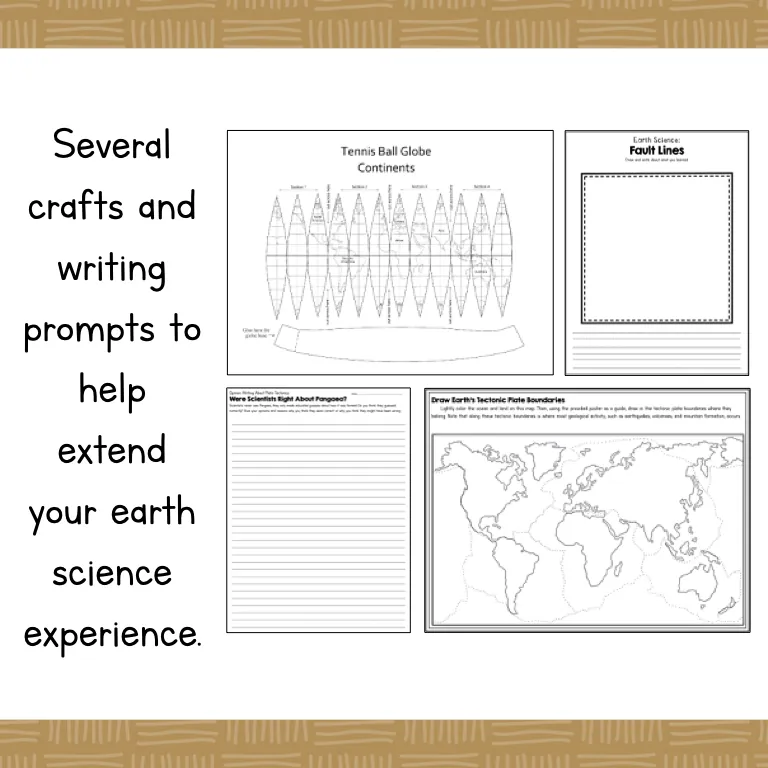
Inclusive early writing templates.
Vocabulary strips for technical terms like Oceanic Crust or Divergent Boundary.
Contact with knowledge beyond textbooks!
Creative projects included like constructing a Tectonic Plates Puzzle or modeling Globes in three variations. Also integrated is a Printable Questions & Review Game Rules setup guide for structuring both whole group instruction and collaborative small groups exploration.
Dive Right In!
Magnify the magic our earth possesses through 'All About Plate Tectonics | Earth Science Unit'. Empower young minds today by grounding their understanding of how our world moves right under our feet.
Related resources
More resources teachers may find useful
24 related resources were found using this product's title, contributor, categories and tags.


In the classroom
Teaching tips & learning objectives

Learning objectives
Explain how the earth's crust is divided into tectonic plates that move slowly over time.
Distinguish convergent, divergent, and transform plate boundaries and describe the geological activity each can cause.
Describe the ancient supercontinent Pangaea and how continental drift broke it apart.

Teaching tips
Choose the standard or early-reader version of each article based on your class's reading level, since both cover the same content at different complexity, as the file's own instructions page suggests.
The graham-cracker crust demonstration doubles as a low-prep way to model plate movement: give students crackers to push together, pull apart, and rub against each other, with a layer of whipped cream underneath to represent magma.
Use the cut-and-glue boundary worksheet after the poster review, since it asks students to color, cut out, and glue each boundary type before writing sentences about it.

Skills covered
Informational reading — students read a plate-tectonics article (in a standard or early-reader version) and recall key details through drawing and writing recap pages.
Scientific vocabulary application — students locate terms like lithosphere, magma, and subduction zone in a word search and use vocabulary strips to reinforce definitions.
Boundary-type classification — students color, cut, and glue images of convergent, divergent, and transform boundaries onto a worksheet and write sentences distinguishing them.
Good to know
Questions teachers ask about this resource
How does the unit handle mixed reading levels in one class?
Both core articles, 'The Earth is Always Moving' and 'Ancient Pangaea,' are provided in a standard version and a simpler early-reader version, so the teacher can assign the version that fits each student without changing the rest of the unit.
What does the review game require to set up?
Split the class into two teams, cut apart the printed question cards, and put them in a bowl or jar to draw from; each card's answer is printed on the back so students cannot see it before answering.

No reviews yet
Downloaded this resource? Tell other teachers how it went.
Curriculum
Standards, concepts & topics
Standards
 Standards
- CCSS.RI.1.2 — Identify the main topic and retell key details of a text.
- CCSS.RI.3.2 — Determine the main idea of a text; recount the key details and explain how they support the main idea
- CCSS.RI.4.3 — Explain events, procedures, ideas, or concepts in a historical, scientific, or technical text, including what happened and why, based on specific information in the text.
Core concepts
 Core concepts
plate tectonics
continental drift
Pangaea
tectonic boundary types
lithosphere and magma
 Topics
Explore more
Categories this resource belongs to
Explore related searches
More to explore
You may also like


