Animal Adaptations in the Rainforest Habitat




- Grades
- Grades 3–4
- File type
- Multiple File Types
- Answer key
- Included


- Subject
- Science, ELA, Reading
- Topic
- Animal adaptations, Rainforest
- Resource types
- Worksheets & Printables, Presentations, Task Cards, Games
- Answer key
- Included
- Standards
- RI.3.1
Product description
From the author
Animal Adaptations in the Rainforest Habitat: An Educational Resource
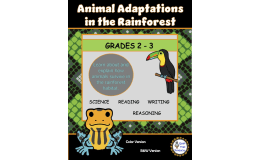
This comprehensive educational resource is designed specifically for 3rd and 4th graders. It covers the science of rainforest habitats but also helps enhance several other crucial skills such as reading, writing, reasoning, dictionary skills and comprehension abilities.
Included Resources:
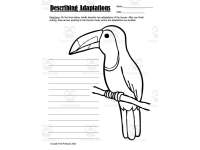
- PDF Workbook: An extensive 82-page workbook filled with worksheets and games exploring various aspects of rainforest habitat including its animals and their adaptations. Activities involve tasks like cutting out animal images to glue them next to appropriate habitats or filling sections of K-W-L charts.
- PowerPoint Presentation:A beautifully illustrated PowerPoint presentation explaining important concepts related to this rich ecosystem. It introduces students to various rainforest animals along with their unique adaptations.
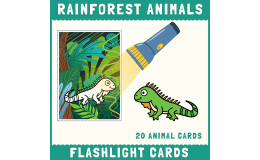
- Rainforest Animal Adaptations Task Cards:This PDF includes 20 fill-in-the-blank and true/false task cards promoting active learning among students.An answer key is supplied; correct the noted source issues before use.
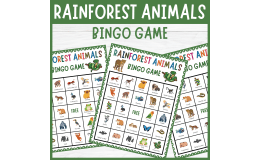
- Rainforest Card Games:Gaming resources that help reinforce the deployed lessons about this intriguing habitat and its inhabitants are also included.
All these resources can be conveniently adapted according to different learning arrangements while keeping student engagement at priority.
The Tool packs in extra features for educators seeking cross-curricular resources - 'Animal Adaptations in the Rainforest Habitat' contains multiple informational handouts that not only expand vocabulary but also engage learners more interestingly by sharing facts about the diverse regions housing similar ecosystems.
Purchasing this product will get you worksheets encompassing a wide variety of activities involving animal adaptations broken down into categories such as physical traits, behavioral traits plus cyclical life changes, brainstorming and imaginative sessions about “coolest” animals; word puzzles revolving around rainforest-related themes; construct their personal word search grids and several others.
Packed with information in varied formats, this resource helps students understand the delicate balance maintained by a rainforest within its environment. As an added advantage, along besides science lessons, children get the opportunity to sharpen their grammar skills, spelling abilities and vocabulary while performing various tasks.
Related resources
More resources teachers may find useful
24 related resources were found using this product's title, contributor, categories and tags.
In the classroom
Teaching tips & learning objectives

Learning objectives
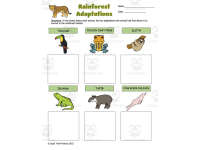
Students classify a given animal adaptation as behavioral, physical, or life cycle.
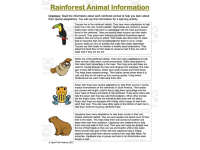
Students read informational passages about eight rainforest animals and identify specific adaptations that help each survive.
Students write an opinion piece, using text evidence from the packet, arguing which rainforest animal is 'the best.'

Teaching tips
Use the slideshow to introduce habitat and adaptation vocabulary before assigning the workbook's reading passages, since later worksheets assume students already know terms like dewlap and semi-aquatic.
Save the blue heron, rattlesnake, and Arctic wolf pages for the 'could it survive in the rainforest' reasoning worksheets, using the habitats described in the source as a starting point and accepting supported reasoning about a specified species and environment.
Use the small-group card game activities as a review before the opinion-writing assignment, so students can select relevant facts for their argument.

Skills covered
Adaptation-type classification — students sort specific animal traits into behavioral, physical, and life-cycle categories.
Nonfiction reading comprehension — students read informational passages on eight rainforest animals and extract specific survival adaptations.
Opinion writing with text evidence — students argue which rainforest animal is best, using three reasons drawn from the packet's reading passages.
Good to know
Questions teachers ask about this resource
Why do the reasoning worksheets include a blue heron, rattlesnake, and Arctic wolf alongside the rainforest animals?
They provide habitat-comparison prompts. Students use an animal’s adaptations to argue whether it could survive in the environment described. Specify the species and conditions when needed; generic labels such as blue heron or rattlesnake do not establish an absolute rainforest exclusion.

No reviews yet
Downloaded this resource? Tell other teachers how it went.
Curriculum
Standards, concepts & topics
Standards
 Standards
- RI.3.1
Core concepts
 Core concepts
Animal adaptations
Habitats
Rainforest ecosystem
Opinion writing
 Topics
More to explore
You may also like