Crash Course Psychology #36: Biomedical Treatments
- Grades
- Grades 9–12, High School
- Pages
- 2
- File type
- Zip


- Subject
- Social Studies, History, Psychology
- Topic
- psychology, mental health
- Resource types
- Worksheets & Printables, Worksheets
About this resource
What's inside this resource
Related resources
More resources teachers may find useful
24 related resources were found using this product's title, contributor, categories and tags.

In the classroom
Teaching tips & learning objectives

Learning objectives
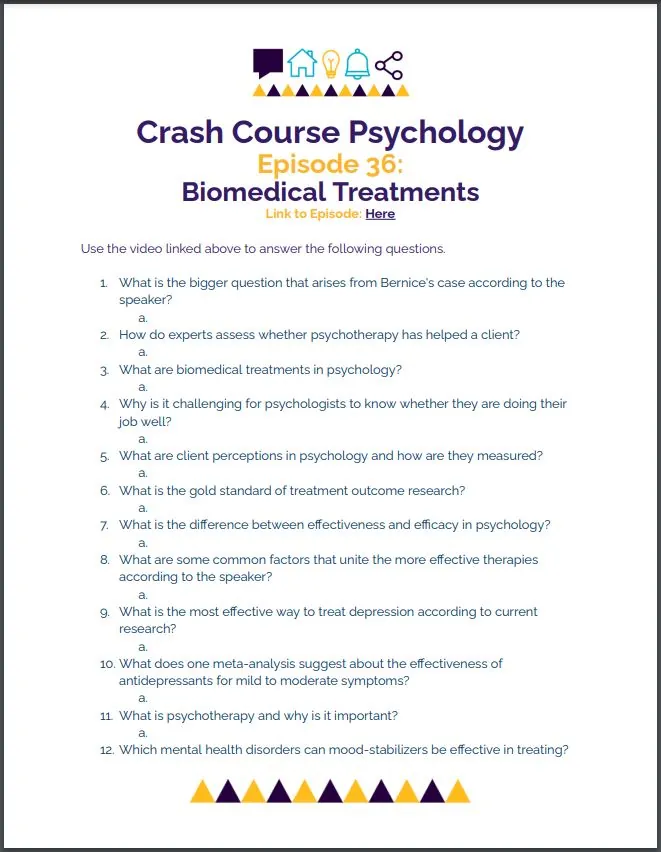
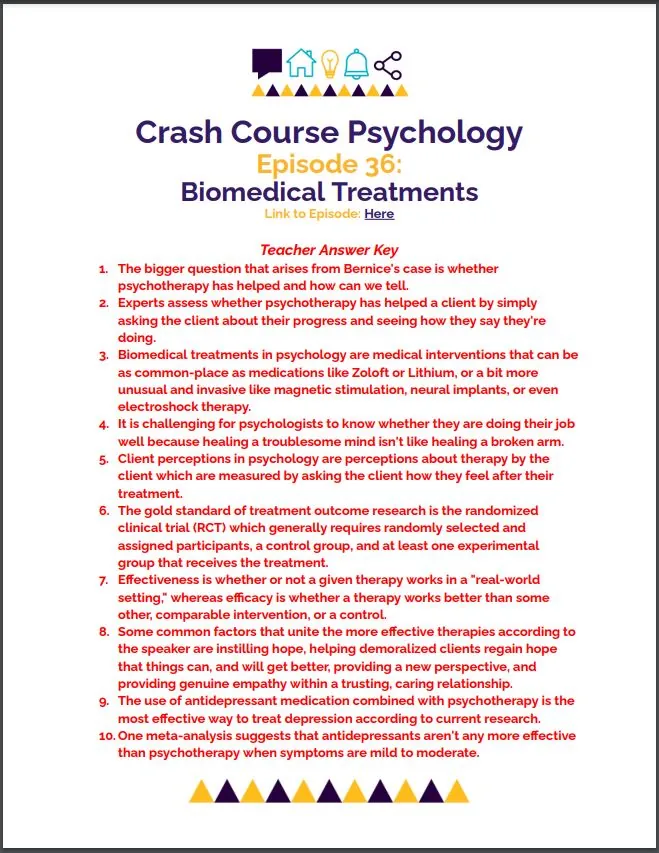
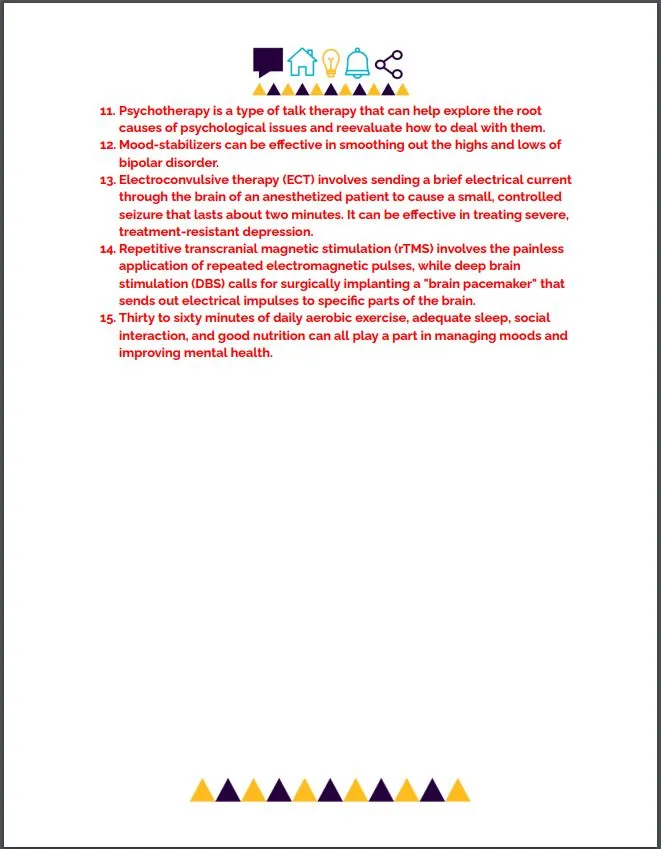
Explain the difference between treatment effectiveness and efficacy in psychology.
Describe the randomized clinical trial as the field's gold standard for treatment outcome research.
Identify categories of biomedical treatment, including mood-stabilizing medication and brain-stimulation techniques (ECT, rTMS, DBS).

Teaching tips
Assign the fifteen questions in order while playing the video, since they follow the episode's own sequence from psychotherapy assessment through lifestyle factors.
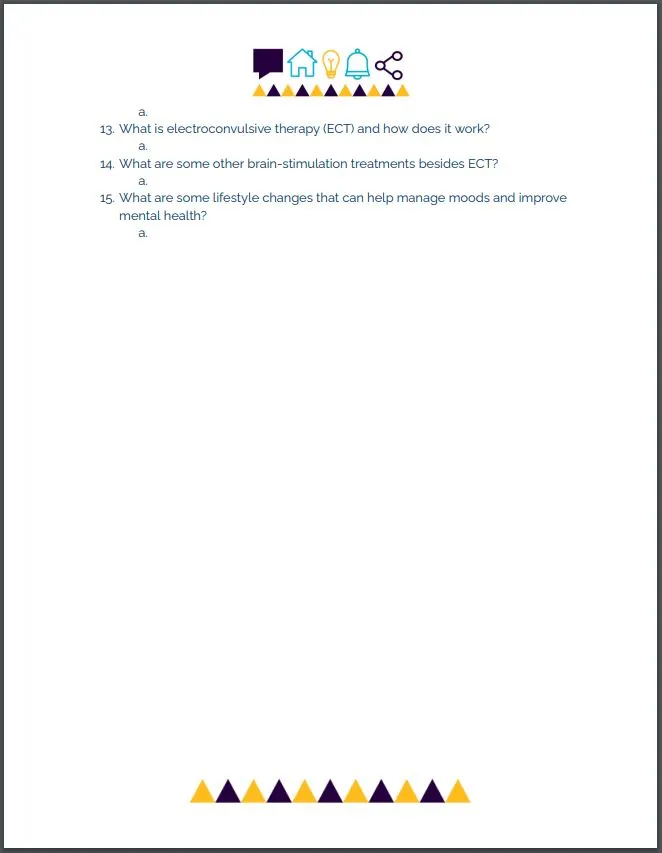
Editing the .docx down to items 11 through 15 leaves a shorter viewing guide covering the treatments themselves — psychotherapy, mood-stabilizers, ECT, rTMS and DBS, and lifestyle change.
Compare student answers to the response document afterward, since several questions (e.g. ECT, rTMS, DBS) call for precise technical definitions.

Skills covered
Video-based note-taking — students write answers to fifteen questions in the order the episode raises them, opening with the question Bernice's case poses and closing with the lifestyle factors that support mental health.
Concept differentiation — students explain the distinction between treatment effectiveness and efficacy.
Technical vocabulary — students define specific biomedical treatments such as ECT, rTMS, and DBS.
Good to know
Questions teachers ask about this resource
What does the worksheet ask about besides medication treatments?
It also covers non-medication brain-stimulation options — electroconvulsive therapy, repetitive transcranial magnetic stimulation, and deep brain stimulation — plus lifestyle factors like exercise, sleep, and nutrition that support mental health.
How does the question set distinguish effectiveness from efficacy?
Question 7 asks students to explain psychology's specific distinction between the two terms, a nuance the episode draws out when discussing how treatment outcomes are actually measured.

No reviews yet
Downloaded this resource? Tell other teachers how it went.
Resource details
Concepts & topics
Core concepts
 Core concepts
biomedical treatments in psychology
psychotherapy effectiveness
brain-stimulation therapies
video guide
 Topics
Explore more
Categories this resource belongs to
Explore related searches
More to explore
You may also like