Feelings Jeopardy – Emotions Identification Game
- Grades
- Grades 1–3
- Pages
- 34
- File type
- Answer key
- Included


- Subject
- Social Emotional Learning (SEL), Social Skills
- Topic
- Emotions Jeopardy, Counseling games
- Resource types
- Games
- Answer key
- Included
Product description
From the author
Everyone needs to know how to identify their feelings and emotions and teaching students while they are young is key in mastering this skill!
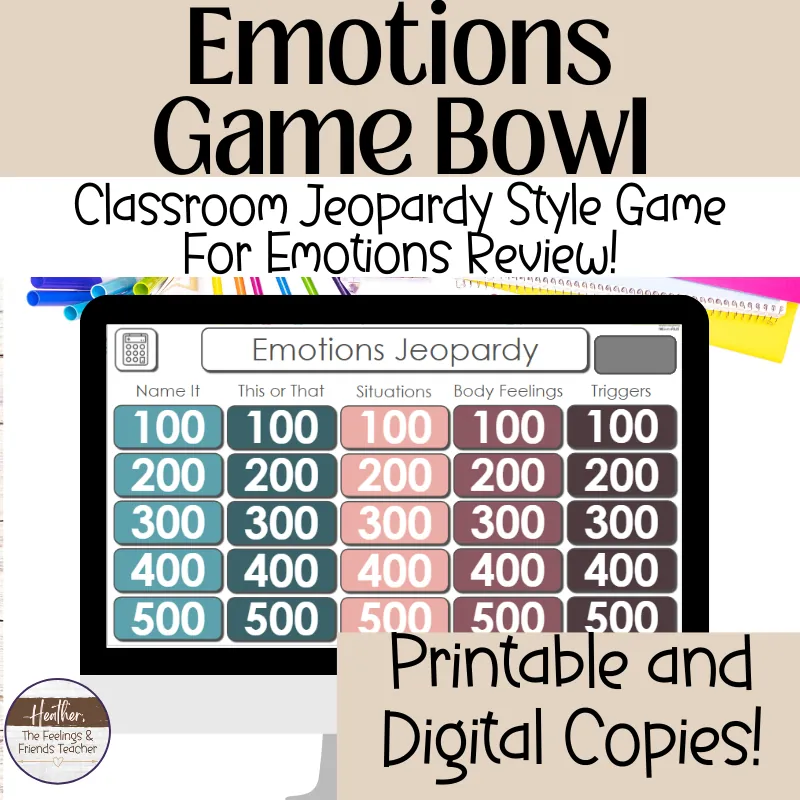
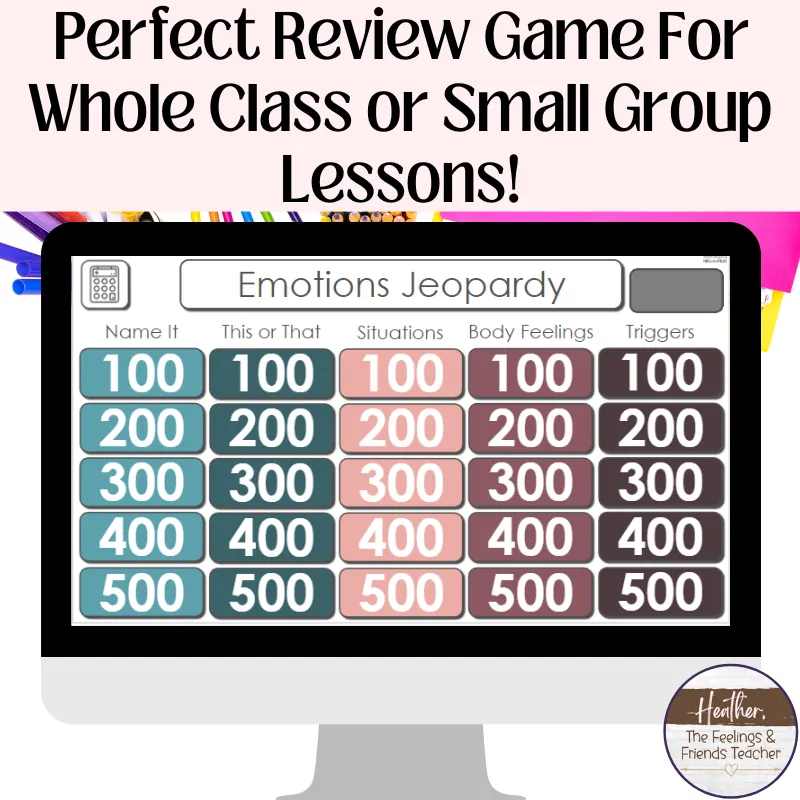
This engaging and interactive jeopardy game is the perfect way to teach kids different emotions, while helping students to identify their emotions through a variety of activities! Easy to use and a no-prep resource, this the perfect way to teach and review different emotions and experiences students have had with different emotions to help promote self-awareness.
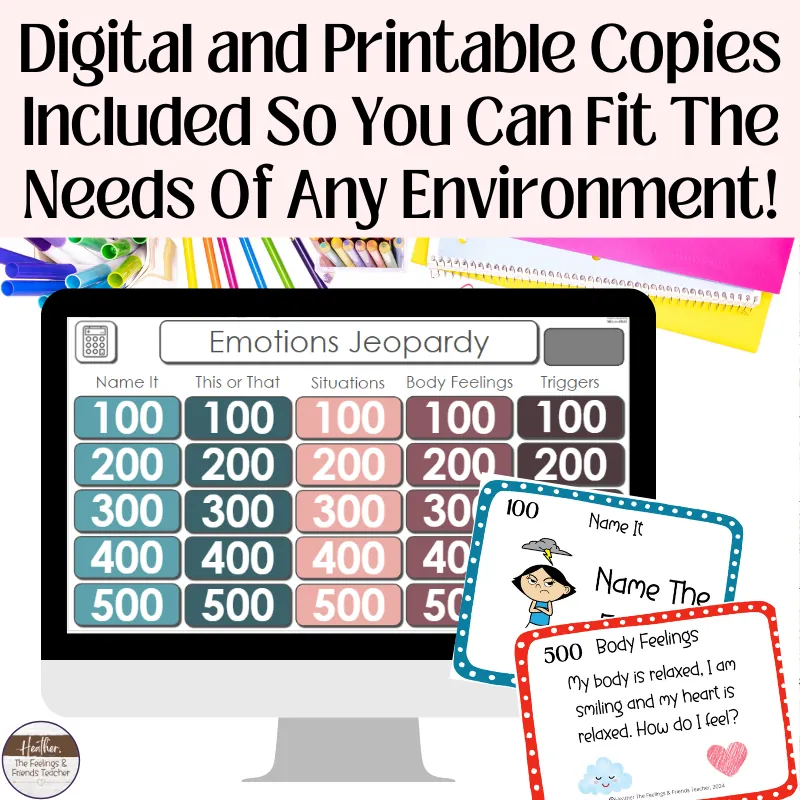
This file includes a digital and printable copy of the game, so you can use this resource no matter what your technology situation is! If you are looking for Social Emotional Learning games and activities for your students, this is the perfect game for you, especially since it aligns with CASEL standards.
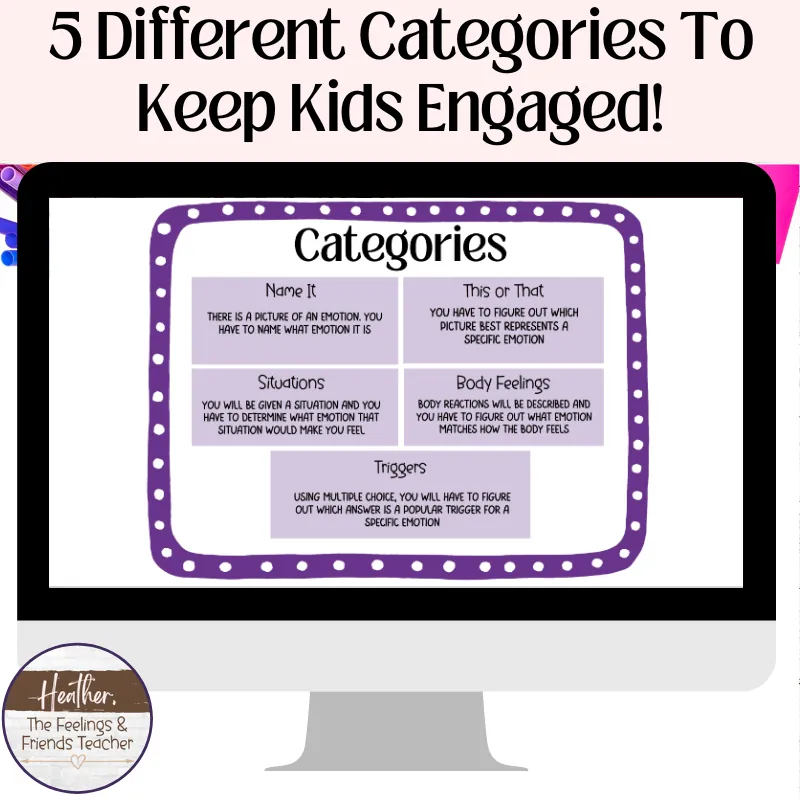
Category Names:
⭐Name It-- An emotion will be pictured and students will have to guess which emotion is being represented
⭐ This or That-- An emotion is named and students have to decide which picture accurately reflects the emotion listed
⭐Situations -- Students will be given a situation and they have to determine what emotion they would feel in that situation
⭐ Body Feelings – Body reactions will be described and students will have to guess what emotions is being described based on the body sensations given
⭐Triggers-- Using multiple choice, students will have to figure out what answer is a popular trigger for the emotion listed
What's Included?
❤️ Google Slides Game Show
❤️ Printable Version with 25 different Trivia Cards
❤️ Answer Key for Printable Version
Some Ideas for Use Are:
⭐Individual Lessons To Review Different Emotions
⭐ Counseling Small Groups
⭐ Whole Class Lesson on Identifying Emotions and Self-Awareness
Related resources
More resources teachers may find useful
24 related resources were found using this product's title, contributor, categories and tags.



In the classroom
Teaching tips & learning objectives

Learning objectives
Name the emotion shown in a picture, across anger, excitement, happiness, sadness and fear
Predict the emotion a described situation would produce, from a forgotten test to being left out at recess
Match a described set of body sensations to the emotion behind it, including anxious and calm

Teaching tips
Read written prompts aloud when students need reading support.
Treat point values as scoring choices rather than a guaranteed difficulty sequence.
Invite explanations and acknowledge that different feelings can make sense in the same situation.

Skills covered
Name emotions from facial and body cues
Connect situations and body sensations with feelings
Discuss common emotional triggers
Good to know
Questions teachers ask about this resource
How can I support students with the written questions?
Read the cards aloud and allow discussion before teams answer. Ask students to explain their reasoning and recognize that feelings can vary between people.

No reviews yet
Downloaded this resource? Tell other teachers how it went.
Resource details
Concepts & topics
Core concepts
 Core concepts
Emotion identification
Feelings vocabulary
Emotional triggers
Body awareness
Social emotional learning
 Topics
Explore more
Categories this resource belongs to
Explore related searches
More to explore
You may also like