Fall Fun - Pumpkin Seed Counting 1-10

- Grades
- Preschool–3, Infant, Toddler, Elementary
- Pages
- 15
- File type
- Answer key
- Included


- Subject
- Math, Early Math, Numbers, Common Core, Fall, Seasons, Holiday & Seasonal, Basic Operations, Counting, Special Education Needs (SEN), Special Resources, Language Development, ELA, Reading, Writing, Reading Comprehension, Strategies, Grammar, Pre-Reading, Spelling, Vocabulary
- Topic
- Counting, Math Activities
- Resource types
- Worksheets & Printables, Worksheets, Coloring Pages
- Answer key
- Included
About this resource
What's inside this resource
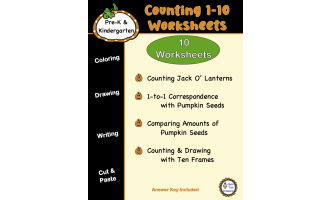
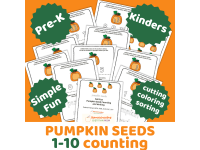
Whether Fall is in the air and you want pumpkins everywhere, or you just want a fun activity for your younger child, let’s give your young learner a jump-start with counting that they will love! Created for Pre-K and Kindergarteners, this downloadable workbook with bright colors and pictures is designed to teach little ones the basics of counting while also engaging their hands and minds, keeping them busy with coloring, tracing, cutting, and touching.
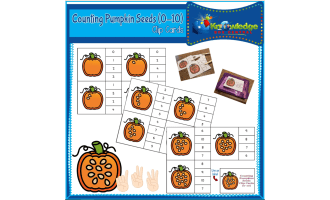
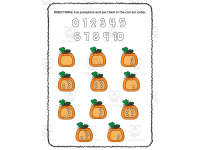
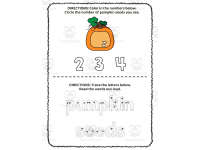
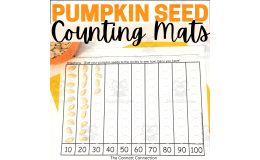
This downloadable, printable, pdf contains 12 pages of activities that include coloring numbers, tracing words, counting seeds, and cutting out and organizing pumpkins.
Included:
12 printable pages of easy activities for teacher that are perfect for little hands and minds
Pumpkins seeds that can be printed and cut out for counting and organizing
Numbers that can be colored in
Words that can be traced
Don't stress about how you are going to teach your little one how to count and make it a fun memory; let this Pumpkin Seed Counting workbook give those little brains of yours a stimulating workout that both you and them will love!
If you want more fun activities that you and your kids can enjoy together, find more at my storefront here: Homeschooling Dietitian Mom
Related resources
More resources teachers may find useful
24 related resources were found using this product's title, contributor, categories and tags.

In the classroom
Teaching tips & learning objectives

Learning objectives
- Count sets of up to 12 objects and choose the matching numeral
- Put the numbers 0 to 10 in order

Skills covered
- Counting — circling the number that matches a set of seeds
- Number order — arranging cut-out pumpkins from 0 to 10
- Letter tracing — writing pumpkin and seeds

No reviews yet
Downloaded this resource? Tell other teachers how it went.
Curriculum
Standards, concepts & topics
Standards
 Standards
- K.CC.B.4a — When counting objects, say the number names in the standard order, pairing each object with one and only one number name and each number name with one and only one object.
- K.CC.B.4b — Understand that the last number name said tells the number of objects counted. The number of objects is the same regardless of their arrangement or the order in which they were counted.
- K.CC.B.4 — Understand the relationship between numbers and quantities; connect counting to cardinality.
- K.CC.B.4c — Understand that each successive number name refers to a quantity that is one larger.
- K.CC.B.5 — Count to answer “how many?” questions about as many as 20 things arranged in a line, a rectangular array, or a circle, or as many as 10 things in a scattered configuration; given a number from 1–20, count out that many objects.
- K.CC.A.1 — Count to 100 by ones and by tens.
- K.CC.A.2 — Count forward beginning from a given number within the known sequence (instead of having to begin at 1).
- K.CC.A.3 — Write numbers from 0 to 20. Represent a number of objects with a written numeral 0-20 (with 0 representing a count of no objects).
- K.CC.C.6 — Identify whether the number of objects in one group is greater than, less than, or equal to the number of objects in another group, e.g., by using matching and counting strategies
- K.CC.C.7 — Compare two numbers between 1 and 10 presented as written numerals
- CCSS.RF.K.3.b — Associate the long and short sounds with common spellings (graphemes) for the five major vowels.
- CCSS.RF.K.3.d — Distinguish between similarly spelled words by identifying the sounds of the letters that differ
- CCSS.RF.3 — Know and apply grade-level phonics and word analysis skills in decoding words.
- CCSS.RF.K.3.a — Demonstrate basic knowledge of one-to-one letter-sound correspondences by producing the primary sound or many of the most frequent sounds for each consonant.
- CCSS.RF.K.3.c — Read common high-frequency words by sight (e.g., the, of, to, you, she, my, is, are, do, does).
- CCSS.RF.1.3.d — Use knowledge that every syllable must have a vowel sound to determine the number of syllables in a printed word.
- CCSS.RF.1.3.e — Decode two-syllable words following basic patterns by breaking the words into syllables.
Core concepts
 Core concepts
- Counting
- Number recognition
- Number order
 Topics
Explore more
Categories this resource belongs to
Explore related searches
More to explore
You may also like