Jigsaw Reading Method – Teacher Planning Guide



- Grades
- Grades 4–8, High School
- File type
- Preparation
- Print ready


- Subject
- Reading
- Topic
- Jigsaw reading, Cooperative learning
- Resource types
- Teacher Tools, Lesson Plans
- Preparation
- Print ready
- Standards
- SL.5.1
Product description
From the author
The Jigsaw Method is a reading comprehension instructional strategy. If you are looking to implement Jigsaw into your reading block this is a great tool to help you plan, especially if you've never implemented it before.
Before proceeding please note that this should not be used with more than four students in a group.
This template is a simple to use organizational tool which should be paired with your preferred version of a reader’s notebook. There are four sections of this packet.
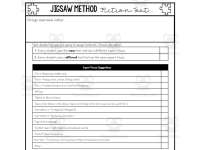
-The Instructional Planning Page is for your planning only. You will choose fiction or non fiction based on your book selection.
-The Group Overview Page is for you and the students to complete together. You and students in your group will receive a copy of the page once it’s been completed.
-The Student Assignment Tracking Page (student copy) is a page where they can write down their upcoming assignments. It’s similar to the group overview page except that it only stores their assignment information, rather than giving an outline of what each group member is responsible for. After the initial assignment using the group overview page, you can transition future assignments to this form.
-The Student Assignment Tracking Page (teacher copy) is similar to the student assignment page, except that it has a place for teacher notes.
Jigsaw is intended to use with reading groups. It can be used at any age where students can read independently!
Related resources
More resources teachers may find useful
24 related resources were found using this product's title, contributor, categories and tags.


In the classroom
Teaching tips & learning objectives

Learning objectives
Research and report on an assigned 'expert focus' (such as main idea, text features, plot, or character analysis) after reading an assigned text or text section.
Share findings within a small group so the group builds a complete understanding of a shared or related text.

Teaching tips
Keep Jigsaw groups to four students or fewer, as the guide explicitly cautions against using it with larger groups.
Complete the Group Overview Page together with students for the first assignment, then transition to the simpler Student Assignment Tracking Page for later assignments.
Choose between assigning every student the same text with a different expert focus, or different texts with the same expert focus, using the two lettered options on the Group Overview Page.

Skills covered
Focused reading — students read an assigned text with a specific expert focus, such as main idea, text features, or, for fiction, plot and character analysis.
Collaborative reporting — students share their expert-focus findings with their small group to build a shared understanding of the text.
Assignment tracking — students record book titles, expert focus, and due dates using the tracking page or cut-out cards glued into a reader's notebook.
Good to know
Questions teachers ask about this resource
What is the difference between the two options for assigning texts and expert focuses to a Jigsaw group?
Option A gives every student in the group the same text but a different expert focus to research; Option B gives every student a different text but the same expert focus to research across texts.
How does the list of expert-focus options differ between the fiction and non-fiction versions of the Group Overview Page?
The non-fiction version offers focuses like text structure, main/central idea, text features, and graphic features, while the fiction version offers focuses like plot structure, setting, theme, characters, figurative language, and point of view.

No reviews yet
Downloaded this resource? Tell other teachers how it went.
Curriculum
Standards, concepts & topics
Standards
 Standards
- SL.5.1
Core concepts
 Core concepts
Jigsaw method
Reading comprehension
Collaborative learning
 Topics
Explore related searches
More to explore
You may also like