Ocean Animals | Ocean Animal Research Report

- Grades
- Grades 2–5
- Pages
- 36
- File type
- Preparation
- Print ready


- Subject
- Science, Animals, Research
- Topic
- Ocean animals, Animal research
- Resource types
- Worksheets
- Preparation
- Print ready
- Standards
- W.3.7
Product description
From the author
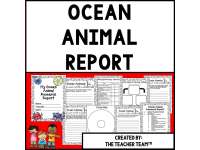
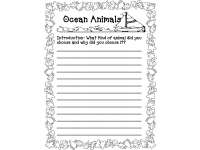
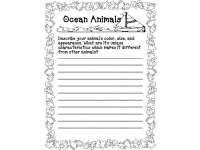
Engage your students with this fun and comprehensive, 36-page Ocean Animals Research Report resource. It helps make report writing easy! It contains worksheets, questions, organizers, tools, forms, and academic vocabulary for your students to create, develop, write, edit, illustrate, present, and assess your students’ Ocean Animals Research Report.
Students use their research to describe an ocean animal, compare it with another animal and explain their ideas.
Students choose one ocean animal to research for the report.
A simple rubric and student checklist is included. You can also add to this report by asking your students to do a model or large poster of their ocean animal as well.
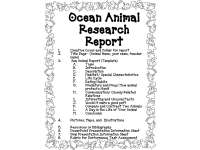
You can use this report template in its entirety, or “pick and choose” the questions that you wish to use and tailor it to your students’ needs. This package contains the following ocean-animal report elements:
1. Creative Cover and folder for report
2. Title Page- (Animal Name, your name, teacher name)
3. Sea Animal Report (Template)
A. Topic and Introduction
B. Description
C. Habitat/ Special Characteristics
D. Life Cycle
E. Eating Habits
F. Predators and Prey/ How animal protects itself
G. Communication/ Closely Related Relatives
H. Interesting and Unusual Facts
I. Would it make a good pet?
J. Compare and Contrast Two Animals
K. A Day in the Life of Your Animal
3. Illustrations
4. Life Cycle
5. Finding Your Information
6. Resources or Bibliography
7. Graphic Organizer (Tree Map)
8. Notes page two varieties
9. Power Point Information Sheet, Project Sheet, and Oral Report ( if needed)
10. Rubric for Report or Performance Task
11. Student Check List
12. CCSS Bulletin Board Standard to post
13. Teacher Notes
Related resources
More resources teachers may find useful
24 related resources were found using this product's title, contributor, categories and tags.

In the classroom
Teaching tips & learning objectives

Learning objectives
Research and describe an ocean animal's appearance, habitat, life cycle, diet and defenses using structured prompts.
Compare and contrast the chosen animal with a second animal, describing similarities and differences.
Present research findings through a PowerPoint outline and an oral report followed by approximately 3–5 minutes for audience questions.

Teaching tips
Use a circle map to brainstorm the full range of ocean animals before students choose one, so they aren't limited to just a few familiar options.
Assign the written report individually, but allow the PowerPoint or project portion to be completed in heterogeneous groups.
Use the report template flexibly -- as the actual final report, or as a study-guide draft students rewrite into a polished version.

Skills covered
Animal research and note-taking — students gather information using two different note-taking page formats and a life-cycle graphic organizer.
Informative report writing — students answer topic prompts covering habitat, life cycle, diet, defense, communication and unusual facts.
Compare-and-contrast reasoning — students choose a second animal and describe its similarities and differences from their chosen animal.
Good to know
Questions teachers ask about this resource
What options are given for the accompanying project beyond the written report?
Several choices are offered -- writing a narrative story, creating a puppet show, developing a game, building a habitat model, or a compare-and-contrast project -- and students may also propose their own idea with teacher approval.

No reviews yet
Downloaded this resource? Tell other teachers how it went.
Curriculum
Standards, concepts & topics
Standards
 Standards
- W.3.7
Core concepts
 Core concepts
Research report
Compare and contrast
Life cycle
Oral presentation
 Topics
Explore related searches
More to explore
You may also like