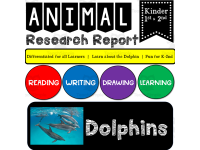
Ocean Animal Research Writing Project on DOLPHINS for K-2nd Grade



- Grades
- Pre-K–2, Elementary
- Pages
- 19
- File type
- Preparation
- Print ready


- Subject
- Life Studies, ELA, Writing, Creative Writing, Reading, Science, Life Sciences, Animals, Research
- Topic
- Animal Research, Informational writing
- Resource types
- Lesson Plans, Teacher Tools, Worksheets & Printables, Worksheets, Writing Prompts
- Preparation
- Print ready
About this resource
What's inside this resource
Animal Research Writing Project on Dolphins for K-2nd Grade.
Engage young learners in reading, writing, and science with this 19-page informational writing unit on dolphins.
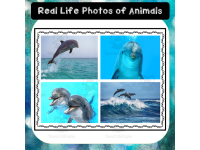
Students will read leveled texts and examine real life photos to learn facts about these playful marine mammals. Next, they will organize the information using color-coded graphic organizers. Finally, students will write their own informational report on dolphins using differentiated writing pages for K-2.
Extension activities allow creativity through coloring, habitat illustration, and cover page design. Implementation ideas included for whole group, small group, centers, or individual work. Check out companion units on whales, seals, sea turtles, and more ocean animals from Teach Simple! Plus, even more units on zoo animals!
Here are even more informational resources on report writing for OCEAN ANIMALS. Click on the links below:
Animal Research Writing Project on WHALES for K-2nd Grade
Animal Research Writing Project on the OCTOPUS for K-2nd Grade
Animal Research Writing Project on SEA TURTLES for K-2nd Grade
Animal Research Writing Project on ORCAS for K-2nd Grade
Animal Research Writing Project on the SHELLFISH for K-2nd Grade
Animal Research Writing Project on DOLPHINS for K-2nd Grade
Animal Research Writing Project on SEALS for K-2nd Grade
Want to teach your students all about Zoo Animals? Check out all these interesting facts about these favorite zoo animals. With the same great photos, facts, habitat drawings, and more. It is a great way to help students to get interested in writing.
For Zoo Animal reports, click on the following links below:
Animal Research Writing Project on TIGERS for K-2nd Grade
Animal Research Writing Project on MONKEYS for K-2nd Grade
Animal Research Writing Project on PANDAS for K-2nd Grade
Animal Research Writing Project on HIPPOS for K-2nd Grade
Animal Research Writing Project on ELEPHANTS for K-2nd Grade
Animal Research Writing Project on GIRAFFES for K-2nd Grade
Related resources
More resources teachers may find useful
24 related resources were found using this product's title, contributor, categories and tags.


In the classroom
Teaching tips & learning objectives

Learning objectives
Locate facts in an informational passage and sort them into habitat, food, characteristics and interesting facts using a colour code
Transfer marked facts from a passage into a four-category note organizer without copying the passage whole
Write an informational report about dolphins at an appropriate level, from completing sentence stems to composing ruled paragraphs

Teaching tips
Coloured pencils or highlighters in green, red, yellow and blue are needed for the underlining page; the same four colours then label the note organizer, so keeping them consistent is what makes the transfer step work
Choose one writing page per child rather than printing all five: the sentence-stem page suits a writer still building sentences, the ruled four-section page suits a confident second grader, and the two-page version extends the strongest
Print the passage twice if you want the same text used for a shared read and then for independent marking - the clean copy carries no colour key

Skills covered
Reading for specific information - students underline a dolphin passage in four colours, separating where dolphins live from what they eat, what they are like and what is simply interesting.
Note-taking into categories - the Habitat, Food, Characteristics and Other Interesting Facts boxes require facts to be shortened into notes rather than copied as sentences.
Informational writing at graded levels - the same content is written up as sentence stems ("Dolphins eat ______"), as short boxed notes, or as ruled paragraphs.
Good to know
Questions teachers ask about this resource
How do the two reading pages differ?
The dolphin passage is word-for-word the same on both. One is headed "Underline the Information" and carries the four-colour key in the corner; the other prints the passage on its own, which suits a shared read, a second pass, or a child who works better without the marking task.
What does the finished project look like when it is done?
A stapled book. The teacher note says to staple the pages together once the project is complete, and the set opens with a student cover reading "My Ocean Animal Research Project - All About ______" for the child to fill in and decorate.
Which dolphin facts does the passage actually give children to work with?
Enough for each of the four boxes: dolphins are mammals living mostly in the ocean but sometimes in freshwater rivers; there are forty-five kinds, most grey and one pink, with the Orca the largest; they live in groups called schools or pods and talk in squeaks and whistles; and they eat fish and squid, hunting together.

No reviews yet
Downloaded this resource? Tell other teachers how it went.
Resource details
Concepts & topics
Core concepts
 Core concepts
Informational writing
Research report
Note-taking
Dolphins
Animal habitats
 Topics
Explore more
Categories this resource belongs to
Explore related searches
More to explore
You may also like