Puzzle: Shapes with non-interlocking pieces - ABLLS-R section B




- Grades
- Pre-K–2
- Pages
- 18
- File type
- Preparation
- Print ready


- Subject
- Special Education Needs (SEN)
- Topic
- ABLLS-R section B, Non-interlocking puzzles
- Resource types
- Activities
- Preparation
- Print ready
Product description
From the author
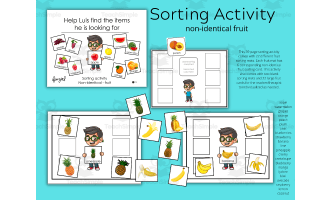
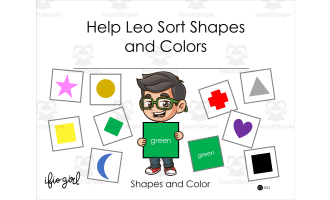
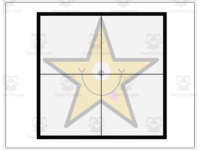
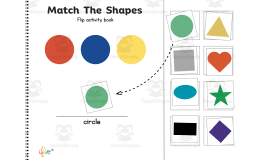
Prepare eight non-interlocking shape puzzles for visual matching: two three-piece, five four-piece and one five-piece puzzle. Each has a colored cutout page and a faint-picture placement guide.
The eighteen-page PDF includes a cover, preparation directions and sixteen puzzle/guide pages. Print, laminate if desired and cut the pieces while keeping each guide intact. Optional Velcro dots help keep pieces in place. IFIO Girl.
Related resources
More resources teachers may find useful
24 related resources were found using this product's title, contributor, categories and tags.


In the classroom
Teaching tips & learning objectives

Learning objectives
Match and place 3-, 4-, and 5-piece non-interlocking puzzle pieces into their correct positions.
Build visual discrimination by comparing a piece's shape and image to the correct puzzle space.
Practice fine-motor grasp and placement while assembling printed and cut-out puzzle pieces.

Teaching tips
Use the faint-picture template page under the pieces as a placement guide for learners who need extra visual support.
Laminate all pieces and pages before cutting so the puzzles hold up for repeated, multi-year use.
Start with the 3-piece puzzles and build up to the 5-piece puzzle as a learner's visual performance skills progress.

Skills covered
Visual-motor matching — students place non-interlocking pieces into the single correct position within each puzzle outline.
Visual discrimination — students compare a piece's shape and image details against the faint-picture template to find the right placement.
Independent task completion — the resource is built for use as an ABLLS-R Section B teaching or assessment task.
Good to know
Questions teachers ask about this resource
What if a learner has trouble keeping puzzle pieces in place?
Add a soft Velcro dot to the back of each piece and a matching rough dot to the faint-picture template — the directions describe this as an option for learners who need extra support.
Are all eight puzzles the same difficulty?
No — the set includes two 3-piece puzzles, five 4-piece puzzles, and one 5-piece puzzle, so difficulty can be adjusted as a learner's skills grow.

No reviews yet
Downloaded this resource? Tell other teachers how it went.
Resource details
Concepts & topics
Core concepts
 Core concepts
Visual performance
Non-interlocking puzzles
ABLLS-R Section B
Visual discrimination
 Topics
Explore more
Categories this resource belongs to
Explore related searches
More to explore
You may also like