search
user.png
vertical menu

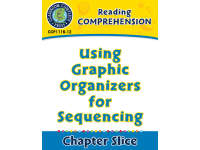
Reading Comprehension: Using Graphic Organizers for Sequencing

Reading Comprehension: Using Graphic Organizers for Sequencing preview
Reading Comprehension: Using Graphic Organizers for Sequencing preview 2
Reading Comprehension: Using Graphic Organizers for Sequencing preview 3
Reading Comprehension: Using Graphic Organizers for Sequencing preview 4
Reading Comprehension: Using Graphic Organizers for Sequencing preview 5
Reading Comprehension: Using Graphic Organizers for Sequencing preview 6

Look Inside · 10 pages

Cover of Reading Comprehension: Using Graphic Organizers for Sequencing, labeled as a chapter slice
Front cover of the sequencing chapter slice
Teacher reference chart maps reading comprehension sections 1–12 to six levels of critical thinking
Critical thinking reference for the chapter
Reading assessment rubric describes six reader levels and prompts strengths, weaknesses, and next steps
Assessment rubric for reading comprehension
Teacher guide explains before-and-after reading activities, writing tasks, assessment, and answer key use
Teacher guide to the resource's organization
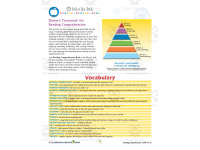
Teacher reference explains Bloom's six thinking levels and defines vocabulary including sequencing and timeline
Bloom's Taxonomy guidance and vocabulary reference
Before-reading activity asks students to match five sequencing terms and create a timeline of life events
Vocabulary matching and personal timeline activity
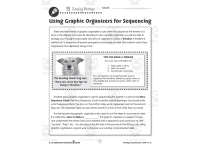
Reading passage explains timelines, story sequence charts, and how-to organizers for ordering events and steps
Sequencing graphic organizers reading passage
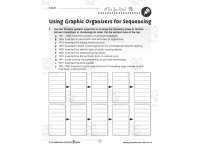
After-reading activity asks students to arrange ten dated Thomas Edison inventions in chronological order
Timeline practice using Edison invention dates
Writing tasks 1–2 ask students to decode nonsense words using context and revise cake-making steps with order words
Writing tasks 1–2: context clues and sequence words
Writing tasks 3–4 ask for movie facts and opinions and a paragraph showing baseball players' feelings after a loss
Writing tasks 3–4: fact, opinion, and inference
Attributes
Add To Collection
Add to collection Add to collection

About This Product

Reading Comprehension: Using Graphic Organizers for Sequencing

A vital educational tool designed to enhance students' reading skills.

This resource is particularly suitable for grade 5 to grade 8 learners. Key elements of this reading comprehension tool include:

  • Context clues application
  • Main idea determination
  • Inference understanding
Useful for both public school educators and homeschooling, this teaching utility comes as a compact zip file containing 24 printable pages. It's crafted in PDF format, making it a fantastic aid for various instructional styles – whole group lessons, small working groups, or homework assignments.

Unique Features and Benefits

The series strategically emphasizes key concepts throughout all modules guaranteeing consistent assimilation of critical knowledge during the learning process. Furthermore, this approach aids in the systematic understanding of important terms through skill practice exercises formatted for ease of use.

Bloom's Taxonomy in Action!

This resource incorporates principles from Bloom's Taxonomy of Learning ensuring educational appropriateness at all milestones leading to enhanced cognitive abilities among students along with improved reading comprehension.

Crafted with CSSS Benchmarks and Bloom's Taxonomy Guidance!

If you're an educator aiming towards molding competent readers rather than mere literacy; make Reading Comprehension: Using Graphic Organizers for Sequencing your next teaching tool! Rooted within Common Core State Standards benchmarks and driven by Bloom's taxonomy environment - grasp the opportunity to help your students become masters at competent reading comprehension!

What's Included

1 zip file with 24 ready to print pages

0 Reviews

Explore related searches
you may also like...

Check out these other great products