Renting vs Buying a Home: Real Life Financial Literacy and Life Skills
- Grades
- Grades 8–11, Middle School, High School
- Pages
- 6
- File type
- Preparation
- Print ready


- Subject
- Life Studies, Special Resources, Finance, Home Economics, Math, Percentages, Decimals, Life Skills
- Topic
- Renting vs Buying, Financial Literacy
- Resource types
- Worksheets & Printables, Worksheets
- Preparation
- Print ready
- Standards
- 7.RP.A.3
Product description
From the author
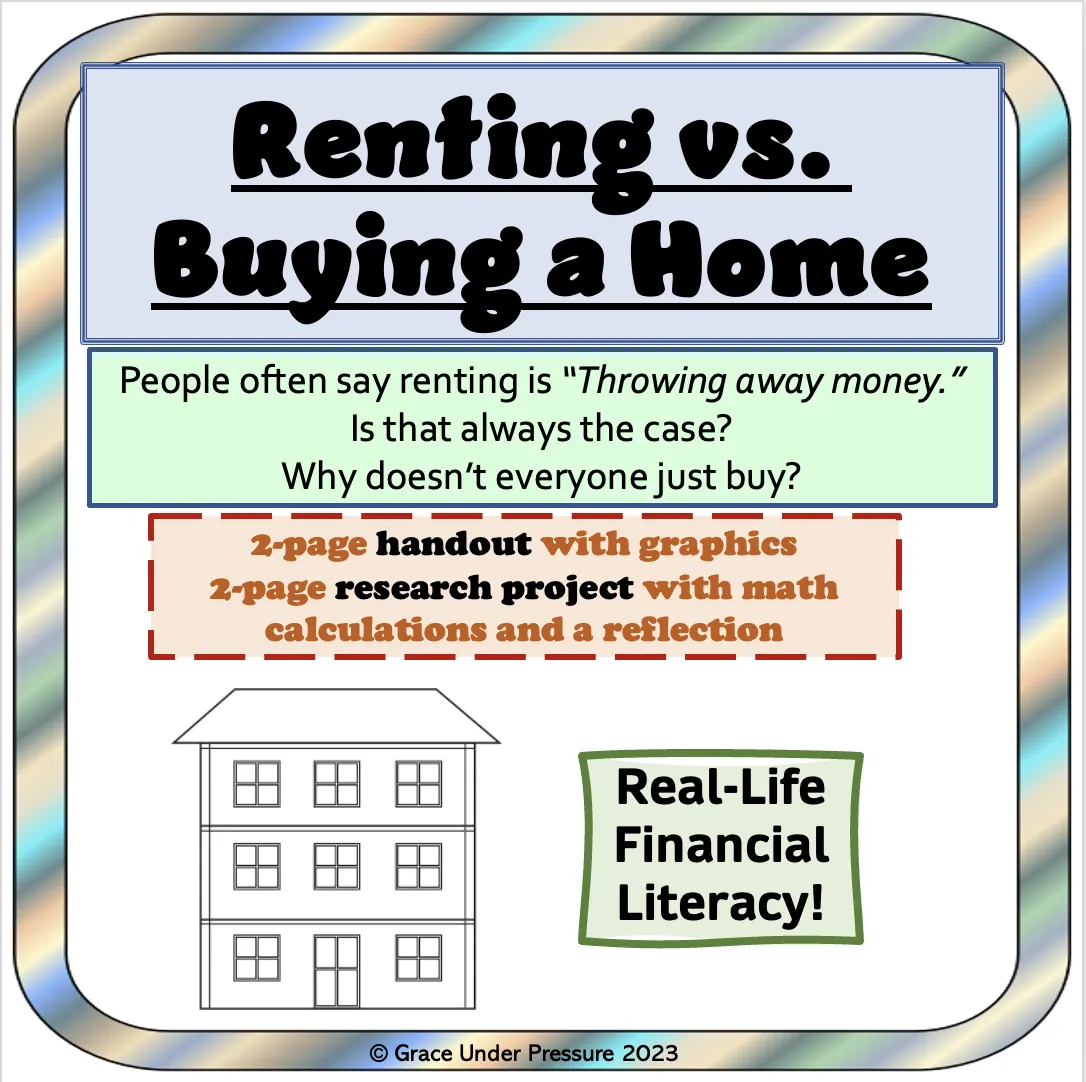
Have you heard people say that renting is throwing money away? Is that always true? This comprehensive high school financial literacy and life skills lesson helps students understand the costs of renting vs buying a home. This is crucial information that is often not taught in schools. Make sure your students are prepared for making real-life financial decisions down the road!
What's Included:
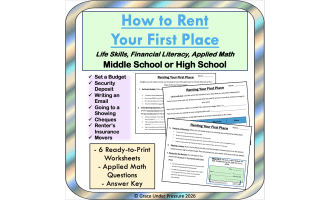
6 Page PDF:
Title Page/Teacher Instructions
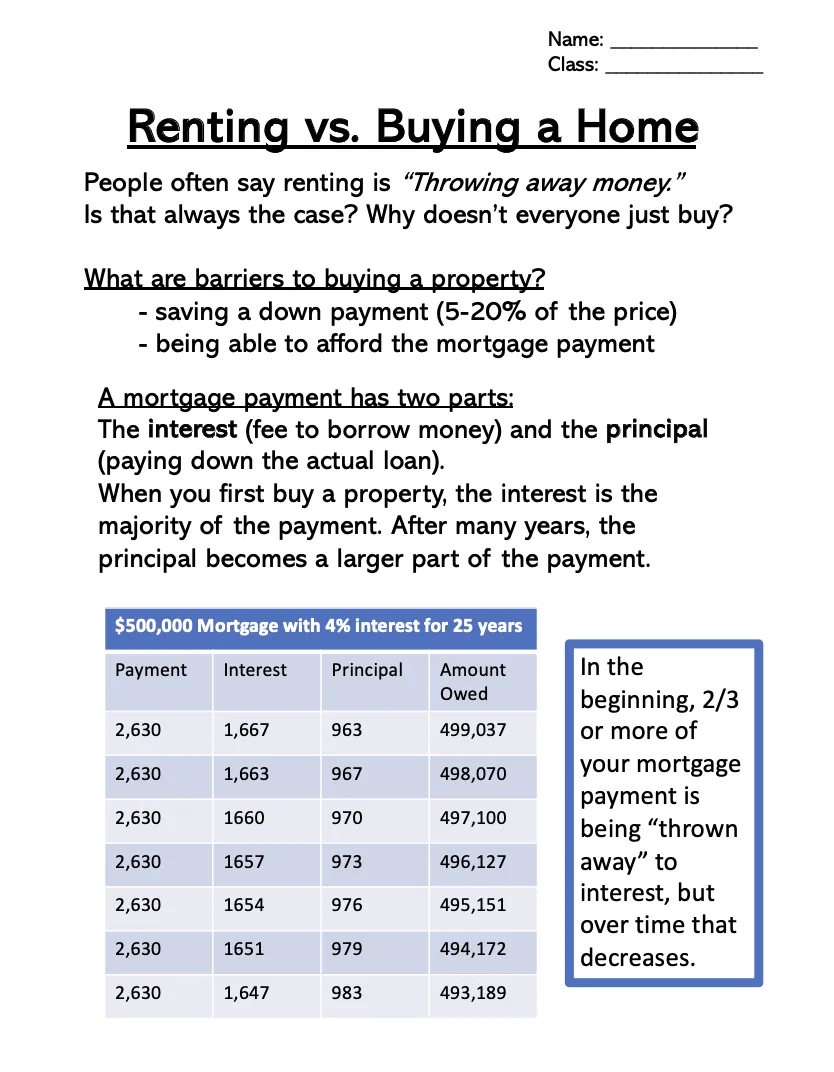
Handout that explains parts of a mortgage: principal vs interest and a sample of an amortization schedule
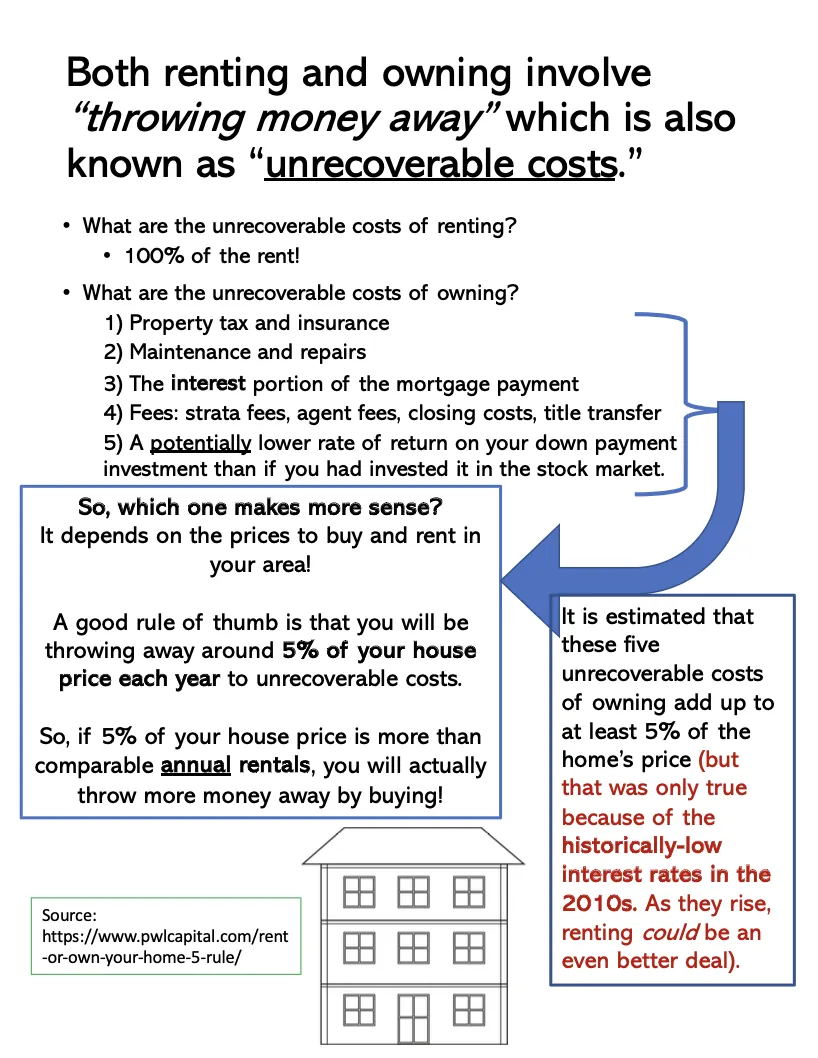
Handout that explains about the costs of renting vs buying and which ones are "unrecoverable." 100% of your rent is unrecoverable, but there are very few other costs associated with renting. The interest of your mortgage, strata fees, HOA fees, property taxes, home insurance, closing costs, realtor fees, maintenance, repairs, and more are all unrecoverable costs of buying: these can add up quickly too!
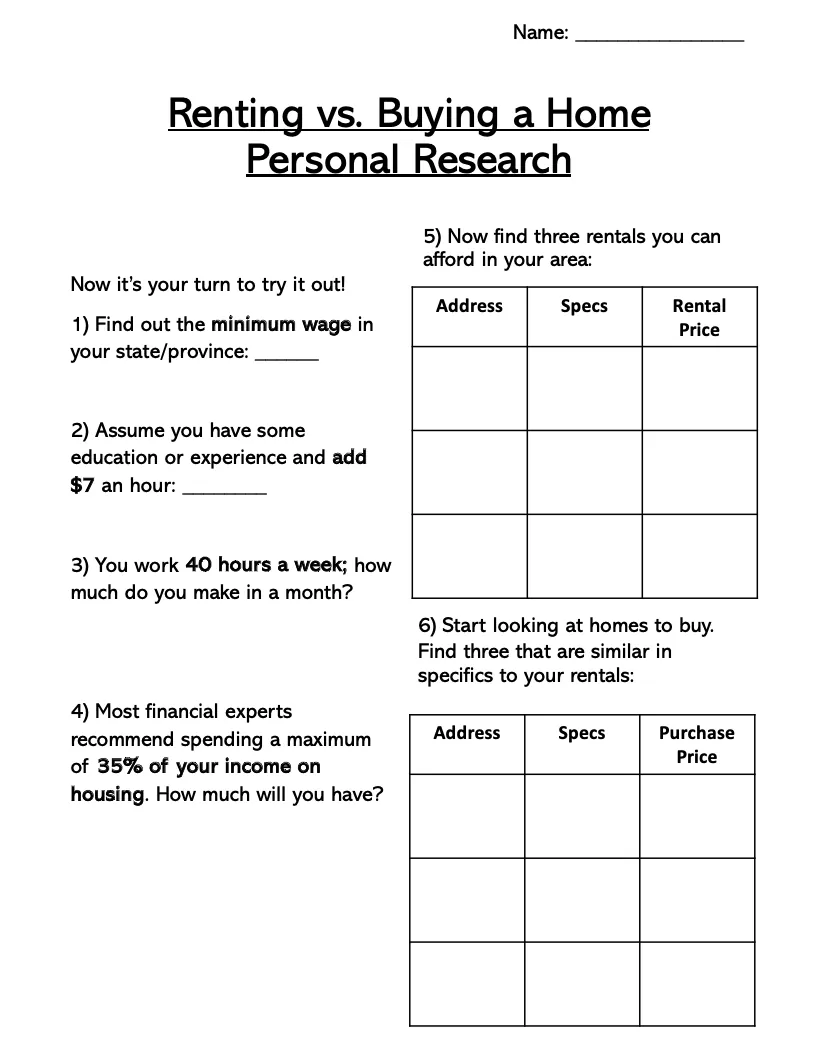
2 Page Research Project: Students look for homes in their area to buy and rent and calculate which one is a better deal based on the information they have learned.
Bonus Handout that explores the nuance of the situation: for example, if people are good at saving or not (optional).
Grades to Use With:
This lesson is designed for high school students in regular or special education classrooms. The handouts are written at a simple reading level and the math skills required are using percents written as a decimal: for example, calculating 35% of your monthly income by multiplying your income by 0.35
Related resources
More resources teachers may find useful
24 related resources were found using this product's title, contributor, categories and tags.



In the classroom
Teaching tips & learning objectives

Learning objectives
Explain the difference between the principal and interest portions of a mortgage payment.
Research real rental and home-purchase prices in their own area and record them in a comparison table.
Calculate a monthly housing budget from an assumed hourly wage and reflect in writing on whether buying or renting fits that budget.

Teaching tips
Show the optional linked video (pwlcapital.com's 5% rule explainer) before the personal-research worksheet to reinforce the rule before students apply it.
Students will need internet access to look up their state or province's minimum wage and to find real local rental and home-purchase listings.
Confirm students can multiply, divide, and find the percent of a number before assigning the worksheet, since the lesson explicitly requires those math skills.

Skills covered
Percent-based financial calculation — students compute 5% of a home's purchase price and divide by 12 to compare it to monthly rent.
Real-world data research — students locate and record three actual rental listings and three comparable homes for sale in their own area.
Financial reasoning and reflection — students write a reflection weighing their own local numbers against the buy-versus-rent tradeoffs shown in the case study.
Good to know
Questions teachers ask about this resource
How is the 5% rule used in the activity?
The lesson uses it as an estimate: students calculate 5% of a purchase price, divide by twelve and compare that modeled monthly cost with rent. The exercise invites discussion of its assumptions.

No reviews yet
Downloaded this resource? Tell other teachers how it went.
Curriculum
Standards, concepts & topics
Standards
 Standards
- 7.RP.A.3 — Use proportional relationships to solve multistep ratio and percent problems. Examples: simple interest, tax, markups and markdowns, gratuities and commissions, fees, percent increase and decrease, percent error.
Core concepts
 Core concepts
Mortgage principal vs. interest
Unrecoverable housing costs
The 5% rule
Personal budgeting
 Topics
Explore more
Categories this resource belongs to
Explore related searches
More to explore
You may also like