Independent, Dependent & Controlled Variables Lesson

- Grades
- Grades 4–8, Elementary, Middle School
- Pages
- 9
- File type
- Answer key
- Included


- Subject
- Science, Basic Science
- Topic
- science experiments, independent variable
- Resource types
- Activities, Experiments, Worksheets & Printables, Worksheets
- Answer key
- Included
About this resource
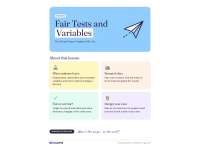
What's inside this resource
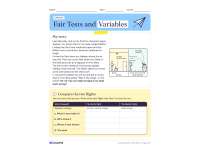
Teach independent, dependent and controlled variables with a paper airplane contest that went wrong. A pointy Dart folded from notebook paper and a wide-winged Glider cut from a cereal box were thrown by different people, one in a still hallway and one in a windy backyard. Students compare the two flights in a table, then explain why the contest cannot answer the question "Was it the wings… or the wind?"
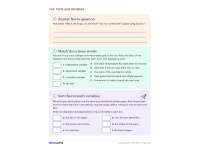
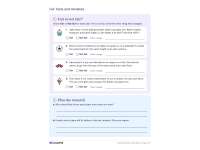
From there, each section asks something different. Students match variable terms to examples from a cup-color test, label six rematch items as I, D or C, judge four short test plans as fair or not fair, find the mean of three trials for each plane and graph both means. They then decide what the rematch does and does not prove. The last page asks them to plan an ice cube melting test, fix an unfair paper towel test and invent a fair test question of their own.
- Grades 5–7 science: a lesson overview page and five student pages with nine sections
- Three teacher pages: every answer, a completed bar graph, a 10-minute hands-on airplane activity and an extension
- Formats: color and copier-ready grayscale PDFs
Related resources
More resources teachers may find useful
24 related resources were found using this product's title, contributor, categories and tags.

In the classroom
Teaching tips & learning objectives

Learning objectives
Identify the independent, dependent and controlled variables in a test
Explain why changing more than one thing at a time makes a test unfair
Calculate the mean of three trials and show it on a bar graph

Teaching tips
Have students finish the Section 1 table first; Section 2 asks them to explain their answer using it
If a student calls the flight distance independent, ask whether it was changed on purpose or measured to see what happened
Try the 10-minute activity on the teacher page: groups fold two designs from the same paper, throw each three times from a taped start line, then find and graph the means

Skills covered
Identifying variables: students label six rematch items as independent, dependent or controlled and match variable terms to examples from a cup-color test.
Spotting unfair tests: students judge four plans, from baking cupcakes to melting ice cream, and name the extra change in each unfair one.
Working with data: students find the mean of three throws for each plane and draw both means on a bar graph scaled from 0 to 9 meters.
Good to know
Questions teachers ask about this resource
Is folding real paper airplanes part of the lesson?
It is optional. Every student task works from the printed story, picture and trial data. The teacher page adds a 10-minute activity in which groups fold two designs from the same paper, throw each three times and graph the means.
What math do students need for the rematch section?
Students add three distances given in meters, divide by three to find each mean and draw two bars on a graph scaled from 0 to 9 meters. A tip box on the page explains how to find a mean.
Why is one example in the matching section left over?
Kai's guess that the black cup will get warmer is a prediction, not a variable or a fair test, so it matches none of the four terms. It gives students practice telling a prediction apart from the variables in a test.

No reviews yet
Downloaded this resource? Tell other teachers how it went.
Resource details
Concepts & topics
Core concepts
 Core concepts
independent variable
dependent variable
controlled variables
fair test
mean
experimental design
Topics
 Topics
Explore more
Categories this resource belongs to
Explore related searches
More to explore
You may also like