The Bad Seed Book Study
- Grades
- K–2
- Pages
- 20
- File type
- Answer key
- Included


- Subject
- ELA, Reading
- Topic
- The Bad Seed, Book study
- Resource types
- Worksheets
- Answer key
- Included
- Standards
- RL.1.3
Product description
From the author
Have you read The Bad Seed by Jory John? Oh my goodness! It is a must-read in ANY age classroom.
The author teaches students that people aren't always what they seem and the world can really change a person. It is the classic Nature vs. Nurture struggle.
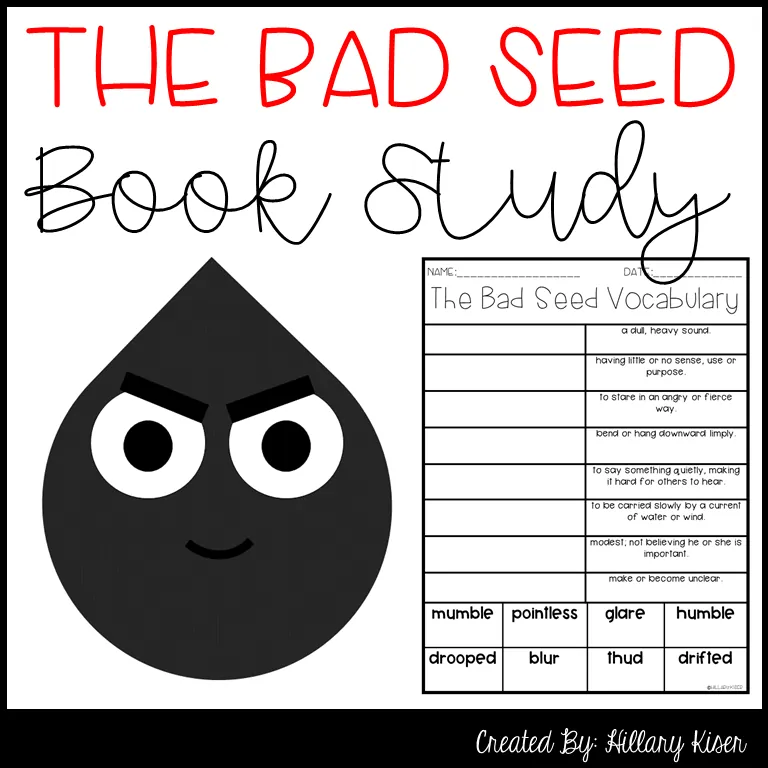
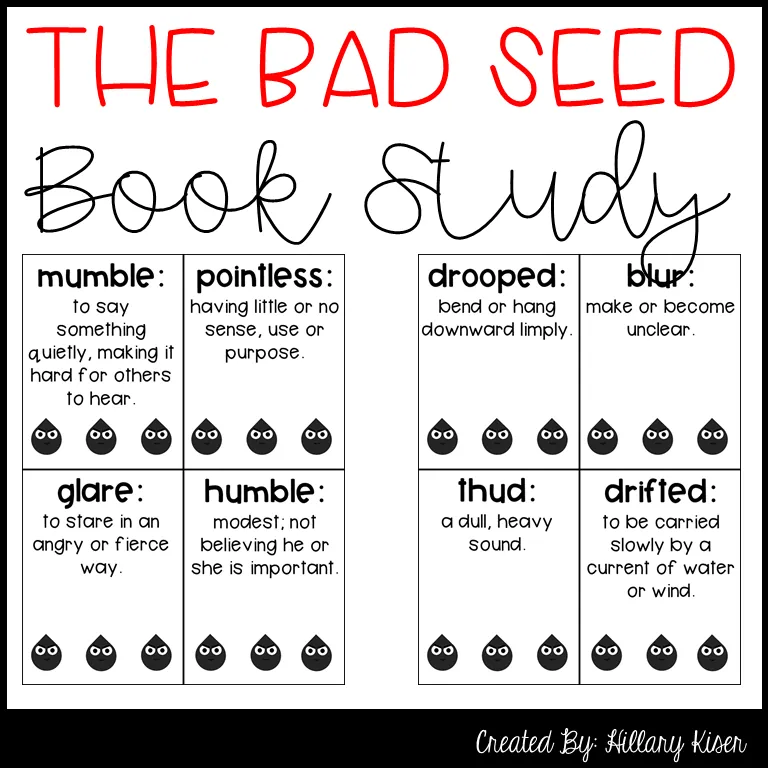
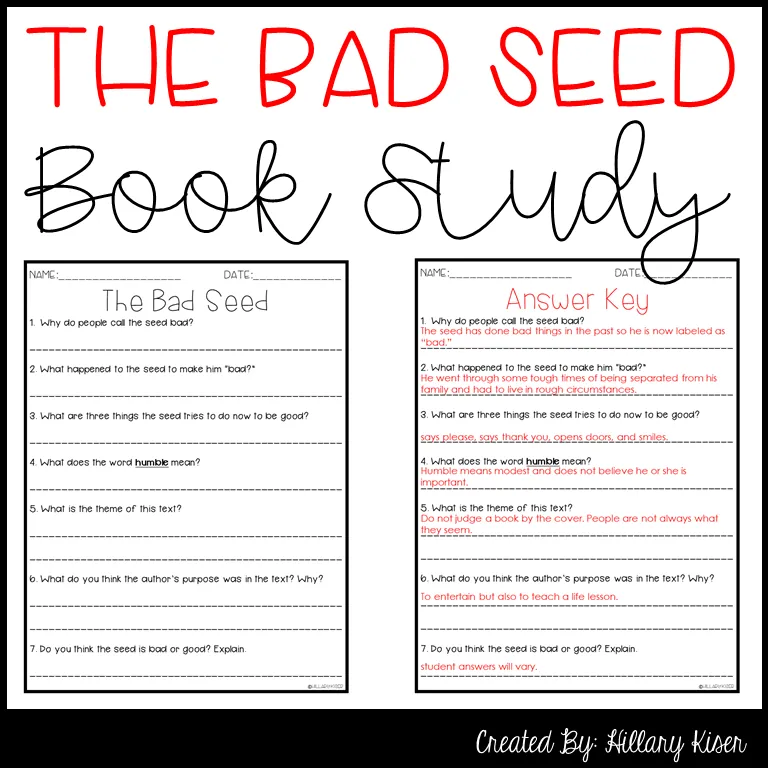
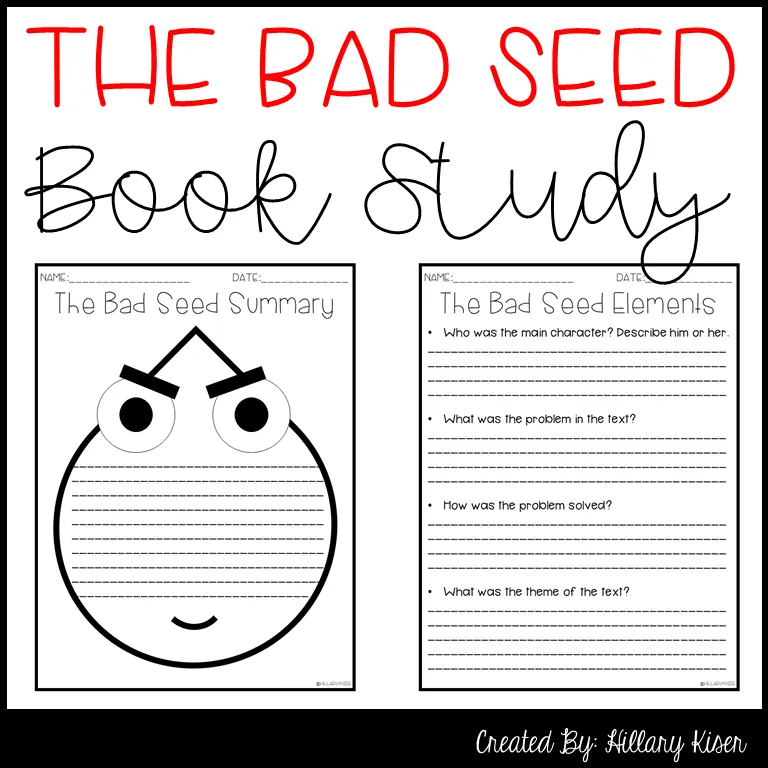
I have created a book study that will help your students learn amazing vocabulary, the theme of the book, and work through the story elements of the text. Your students will be exposed to deep writing topics, comprehension questions and so much more.
Related resources
More resources teachers may find useful
24 related resources were found using this product's title, contributor, categories and tags.



In the classroom
Teaching tips & learning objectives

Learning objectives
Define and apply eight vocabulary words drawn directly from the text
Identify the theme, story elements, and author's purpose of The Bad Seed, and connect the theme to personal experience

Teaching tips
Assign the vocabulary matching page before the comprehension questions and use its key afterward for checking, since question 4 ("What does the word humble mean?") directly reuses a term from the vocabulary set.
Use the Seeing the Good / Seeing the Bad pages as a pre-writing step before the summary page, since sorting the character's traits first gives students material to draw on for the open-ended summary.

Skills covered
Vocabulary in context — students match eight words (e.g., humble, drooped, thud) to their definitions using a matching bank.
Theme and author's-purpose analysis — questions ask students to state the text's theme and explain why the author wrote it.
Story elements and sequencing — students identify the main character, problem, and solution, and put five story events in order.
Good to know
Questions teachers ask about this resource
Is The Bad Seed book included?
No. Supply a copy of Jory John’s book for the reading; the PDF contains the accompanying vocabulary and response activities.
Which activities have answers?
Vocabulary matching and the seven comprehension questions have keys. Personal connections, poems and letters invite students’ own responses.

No reviews yet
Downloaded this resource? Tell other teachers how it went.
Curriculum
Standards, concepts & topics
Standards
 Standards
- RL.1.3
Core concepts
 Core concepts
Vocabulary in context
Theme and author's purpose
Story elements and sequencing
 Topics
Explore more
Categories this resource belongs to
Explore related searches
More to explore
You may also like