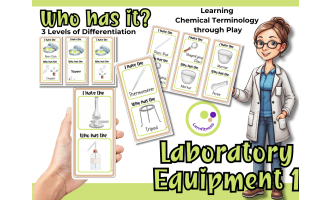
Who Has It? – Chemical Elements Game (1–118) – 3 Levels of Differentia


STEM, Science, Chemistry, Physics, Life Sciences, Earth and Environmental Sciences, Basic Science, Special Resources, Social Emotional Learning (SEL), Special Education Needs (SEN)
Activities, Games, Worksheets & Printables, Task Cards, Quizzes and Tests, Teacher Tools, Quizzes, Worksheets, Projects, Flashcards


About This Product
Who Has It? – Chemical Elements Game (1–118) – 3 Levels of Differentiation
A cooperative chemistry card game for grades 7–10 to review atomic numbers, element names, and symbols 🧪🎯
This resource is a classroom game that helps students become more confident with the chemical elements – from hydrogen to oganesson. The game follows the well-known “I have… who has?” format and is designed to reinforce students’ understanding of element names, symbols, and atomic numbers in a playful and interactive way.
To support different learning levels, the material includes three differentiated versions of the full game, each with 118 element cards:
With element names for both question and answer (beginner level)
Only the “I have…” part includes the name, the question uses the symbol/number (intermediate level)
Without element names – players must match based on symbol and atomic number alone (advanced level)
Each version builds on the last and can be used flexibly depending on students' prior knowledge. The game works best with medium to large groups and encourages students to listen carefully, stay engaged, and support one another.
What’s included:
3 full card sets (118 cards per set = 354 total)
Differentiated by content and level of language support
Clear instructions for printing, laminating, and use
Ideal for individual, pair, or group work
How I use it in class:
I’ve played this game both at the end of a chemistry unit and as a fun opener when starting the periodic table. It’s also perfect for substitute lessons or for classes with mixed ability levels. Since each student needs to be ready when their card comes up, it fosters attention and collaboration.
This is one of those games where learning happens almost by accident – students are so focused on playing that they internalize atomic numbers and symbols without even noticing.
A simple, engaging way to bring structure, repetition, and movement into chemistry class – no extra prep needed.
If you're looking for an easy way to help students become more confident with the periodic table, this might be worth trying in your classroom.
Best,
Heike from Lernfitness
Did You Know?
I teach with a certified therapy dog, and together we create a positive and welcoming learning environment. 🐶
Resource Tags
0 Reviews
Check out these other great products