Democracy Notes and Outline
Teach high school students the concepts of government, democracy, direct democracy, and republic (indirect democracy) through a lecture and a simulated classroom voting activity.
Classroom resources
Organize social studies learning with outlines, guided notes and research frameworks for history, geography and civics. Choose a structure that helps students connect people, events and ideas.
Browse by lesson focus
Choose the topic or kind of practice you need.
Teach high school students the concepts of government, democracy, direct democracy, and republic (indirect democracy) through a lecture and a simulated classroom voting activity.
Introductory lesson on cultural geography for an AP Human Geography-style Culture unit, covering definitions and theoretical models of culture.
Key facts about the U.S. Constitution — the Philadelphia convention, the Great Compromise and Three-Fifths Compromise, the separation of powers into three branches, the roles of the executive, legislative, and judicial branches, checks and balances such as veto and override, and landmark amendments including the Bill of Rights , the fourteenth, sixteenth, nineteenth, twenty-second, and twenty-sixth amendments — are reviewed through a 33-question fill-in-the-blank study guide. Each numbered question targets facts or terms, and a complete answer list at the end of the two-page file gives the correct word or phrase for every blank, making the guide usable for independent review or as a graded quiz.
A high school US history lesson on the Populist movement, combining a lecture presentation with a matching fill-in-the-blank skeleton outline and a group political-poster project, aligned to a US History standard on Populism.
A fill-in-the-blank outline study guide covering constitutional government, citizenship, elections/political parties, branches of government, and the lawmaking process, for students to complete as an assessment reference sheet.
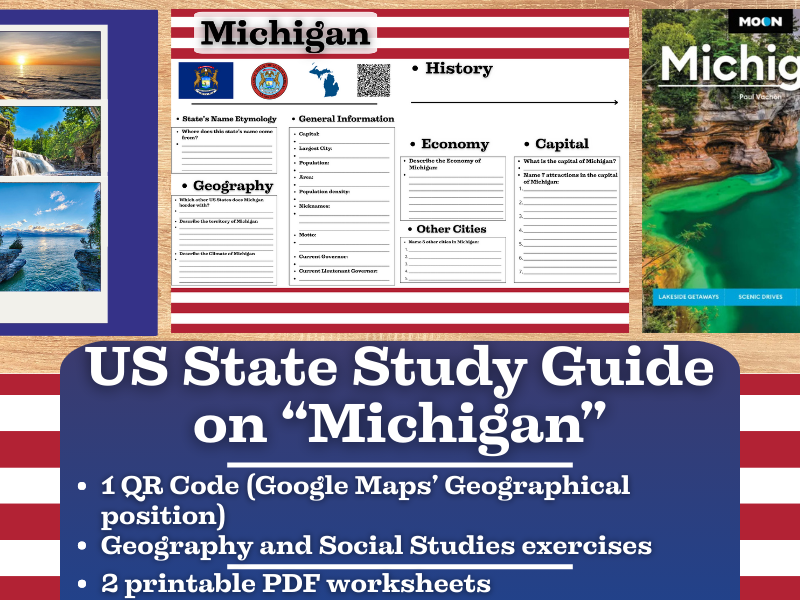
A two-page fill-in-the-blank state study guide that has students research and record key facts about Michigan (name origin, capital, largest city, population, area, population density, nicknames, motto, government, geography, climate, economy, and capital attractions).
A 1-page reference/study-guide graphic summarizing key concepts of the contemporary/modern world for a high school world history course (aligned to a 'WHII.16' standard code).
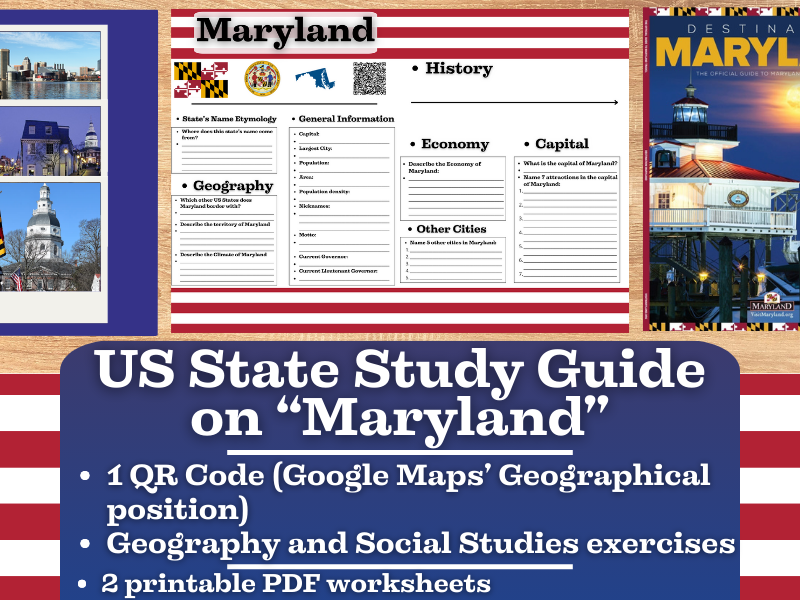
A two-page fill-in-the-blank state study guide that has students research and record key facts about Maryland (name origin, capital, largest city, population, area, population density, nicknames, motto, government, geography, climate, economy, and capital attractions).
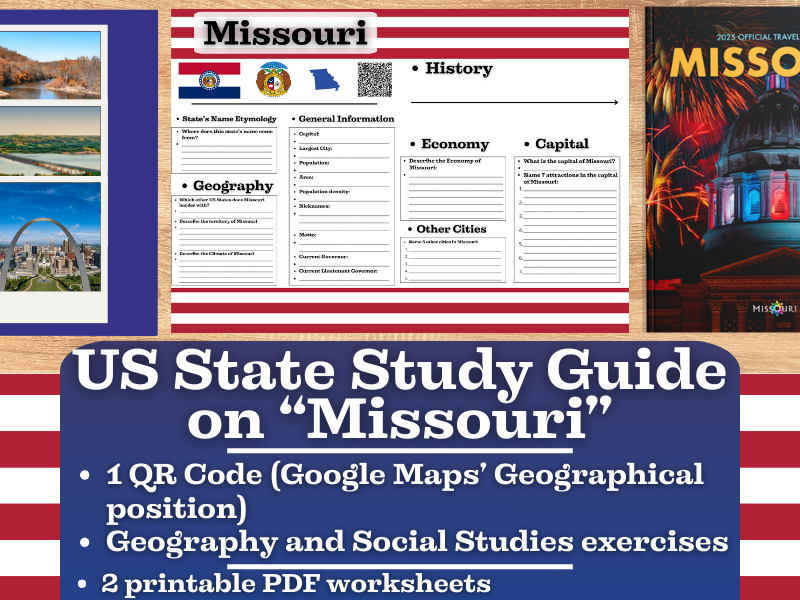
A two-page fill-in-the-blank state study guide that has students research and record key facts about Missouri (name origin, capital, largest city, population, area, population density, nicknames, motto, government, geography, climate, economy, and capital attractions).
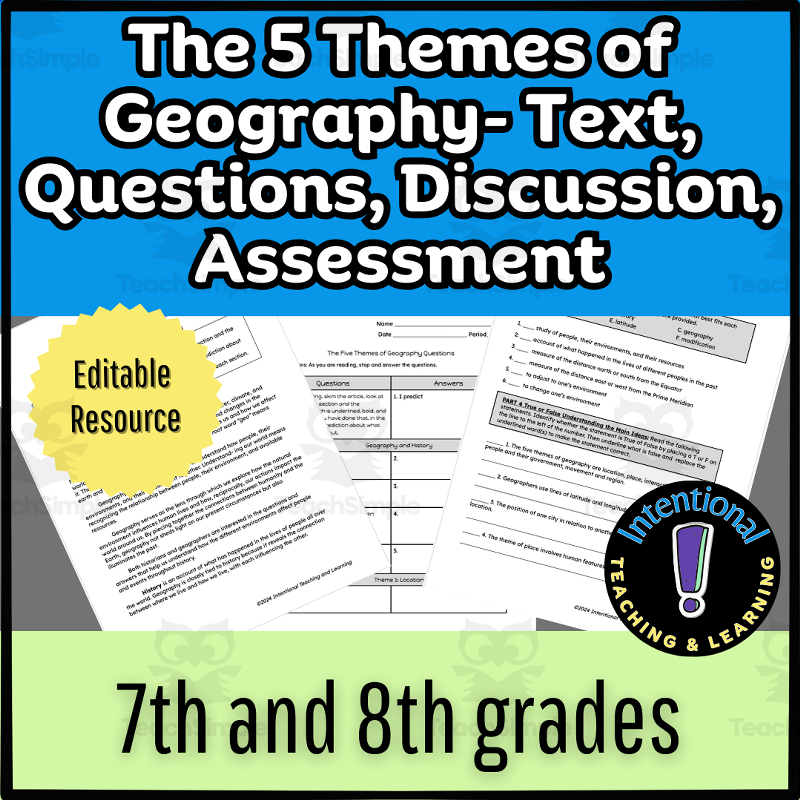
teaches the Five Themes of Geography (location, place, human-environment interaction, movement, region) through informational text with embedded questions, a crossword puzzle, personal-connection homework, a review study guide, and a summative test
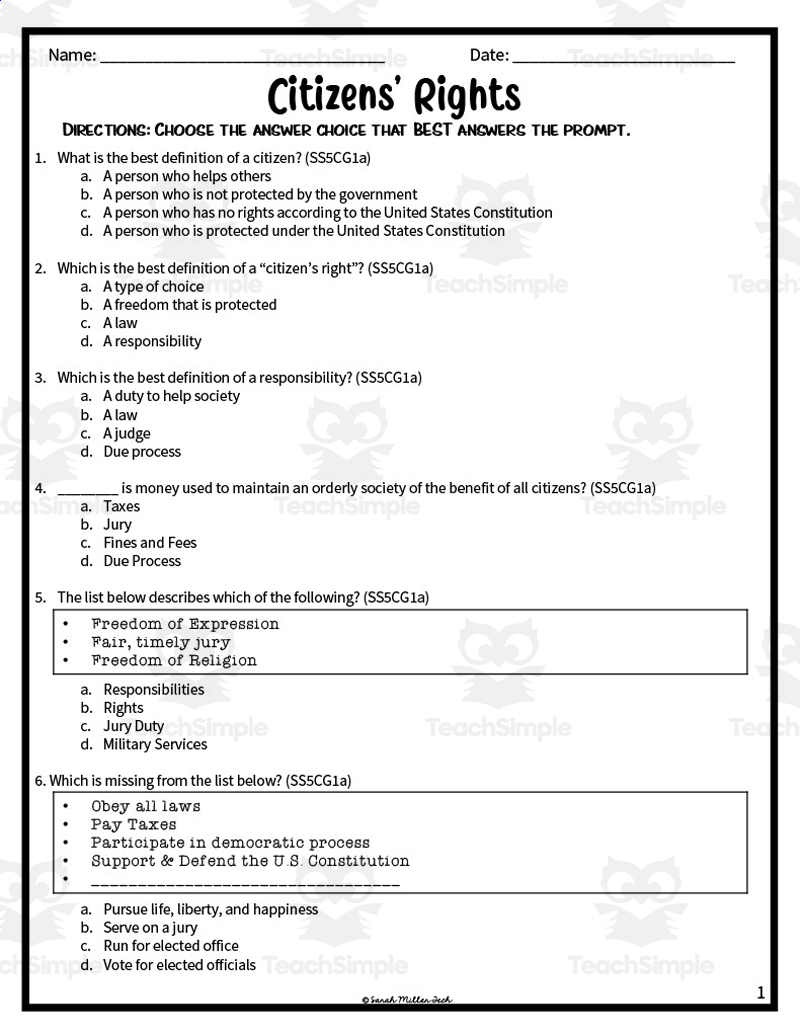
A study guide and assessment (20 multiple-choice questions plus study notes) reviewing citizens' rights, responsibilities, due process, and related civics concepts, tied to Georgia standard SS5CG1a/b.
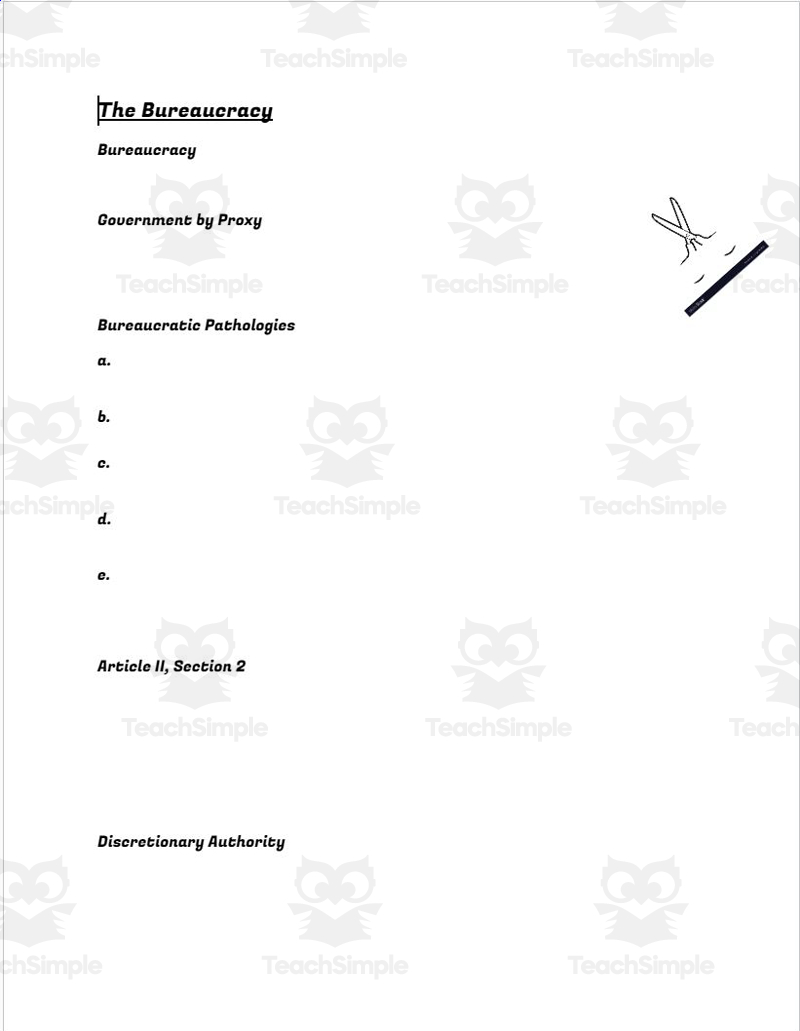
A fill-in-the-blank guided notes worksheet designed to accompany a companion PowerPoint presentation ('The Bureaucracy: AP Gov') on the federal bureaucracy, giving students a structured outline to complete while following the slides.
A condensed, single-folder interactive lapbook/notebook project introducing Ancient Greek civilization (government/warfare, philosophers, mythology, homes, daily life, literature, and the Olympic Games) through student-assembled foldable booklets, with an included teacher/study guide providing most of the source content.
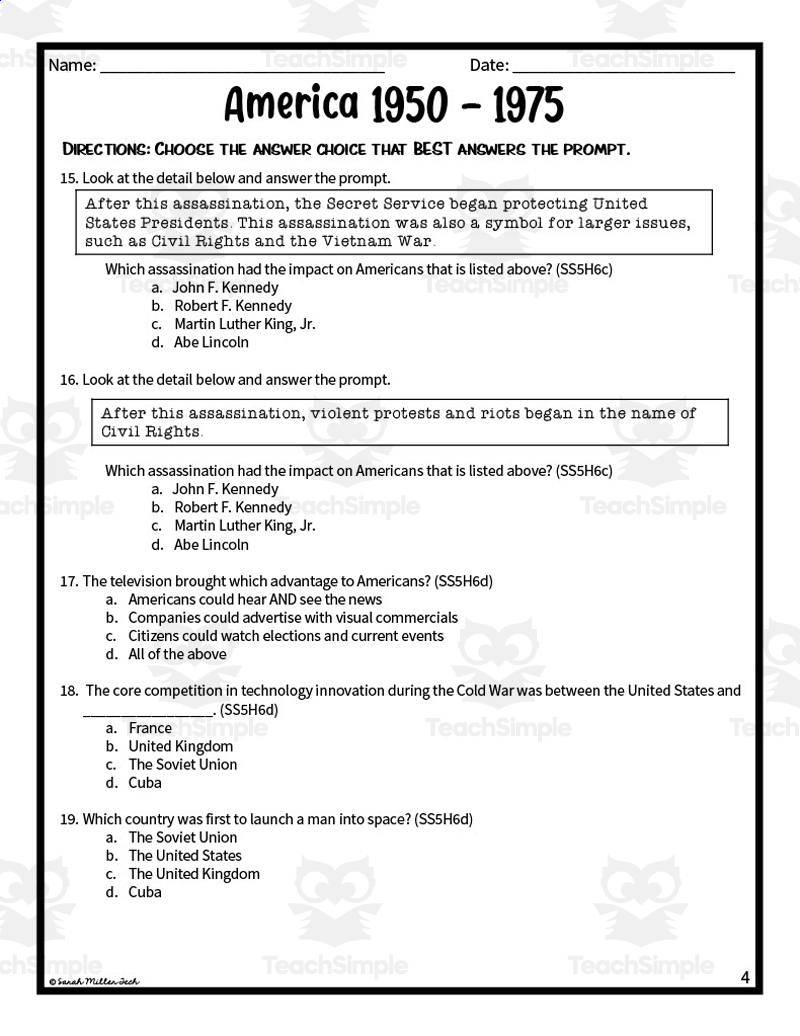
Printable assessment/study guide testing student knowledge of US history topics from 1950-1975 (civil rights era), aligned to Georgia standard SS5H6.
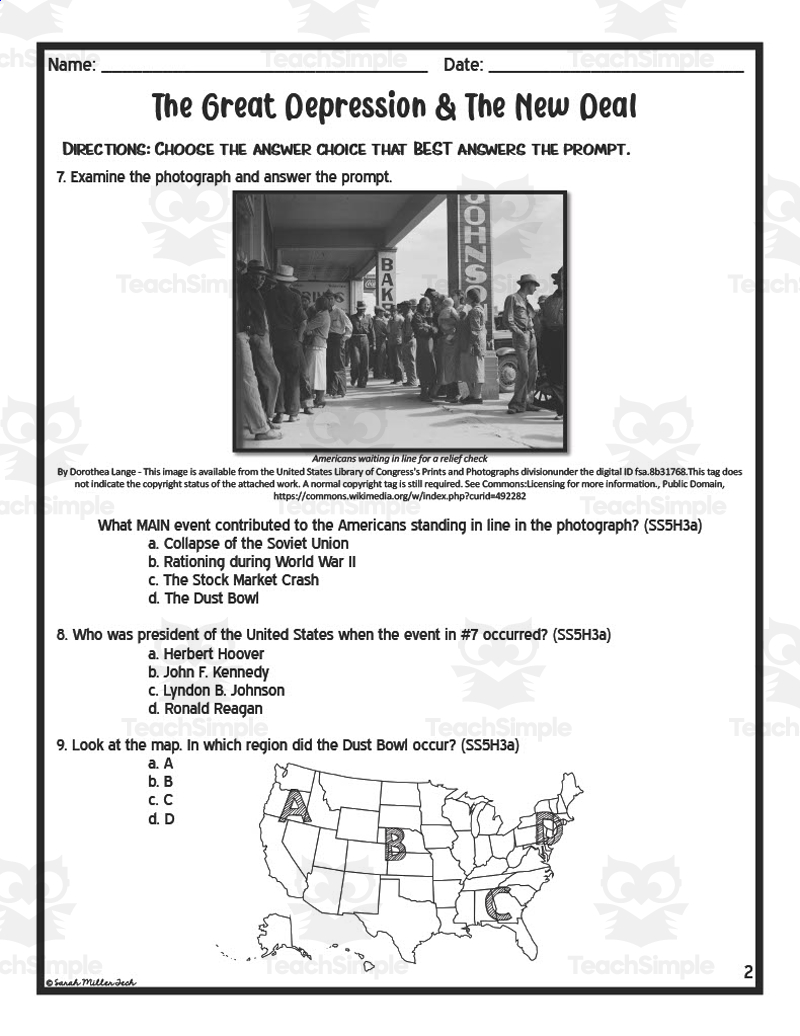
A print-and-go assessment/study guide covering the Great Depression and the New Deal, designed for test review, with both a printable packet and a Google Forms digital quiz option, keyed to Georgia SS5H3a/SS5H3b/SS5H3c standards.
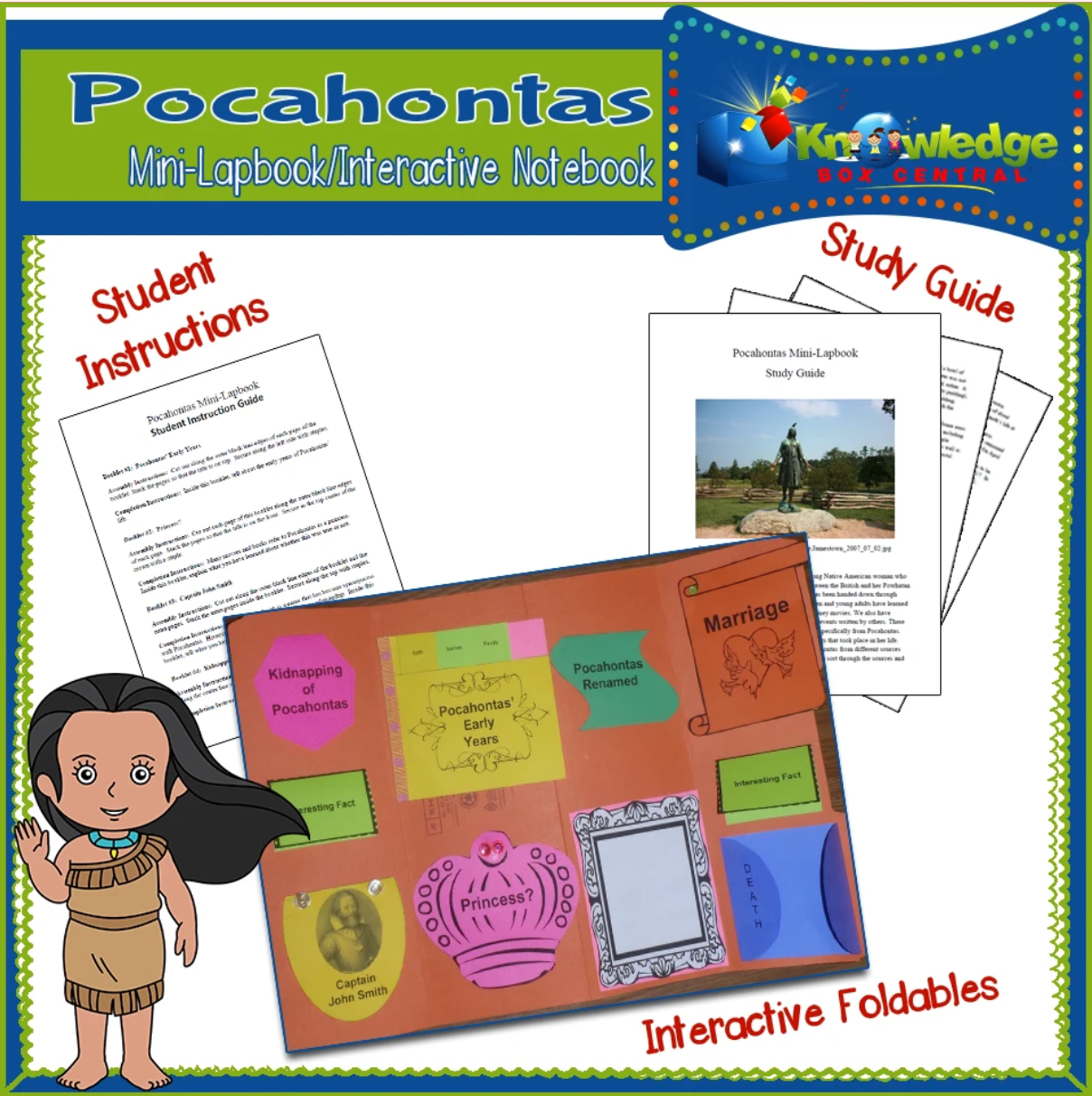
teach the life and history of Pocahontas through an assembled mini-lapbook/interactive notebook plus an accompanying study guide
This is an online review activity and study guide for the AP Human Geography exam. It will cover many of the key models in the College Board AP Human Geography Course Description. It provides a quick overview of each topic and interactive knowledge check questions such as multiple-choice and matching. This resource will help your…
A full lapbook / interactive notebook covering many aspects of Ancient Egypt (geography, rulers, religion, mummification, and daily life), designed for grades K-8.
A one-page completed comparison chart/study guide explaining why Native Americans were easily conquered by Europeans, contrasting Eurasian and Native American advantages in domesticated animals, agriculture, disease immunity, technology, and organization (a Guns, Germs, and Steel-style geographic-determinism argument).
A one-page printable reference sheet summarizing the Renaissance, trade routes/goods linking Europe-Asia-Africa, key Renaissance figures, and world religion locations circa 1500 AD, aligned to a state history standard (SOL 2).
Review the monthly subject sequence in this first-grade Florida curriculum map when planning or comparing an existing course. Literacy strands, mathematics, science and history/social studies appear in parallel columns. The file prints legacy LAFS and MAFS codes, so update the standards references and any related expectations before using it with a current Florida curriculum.
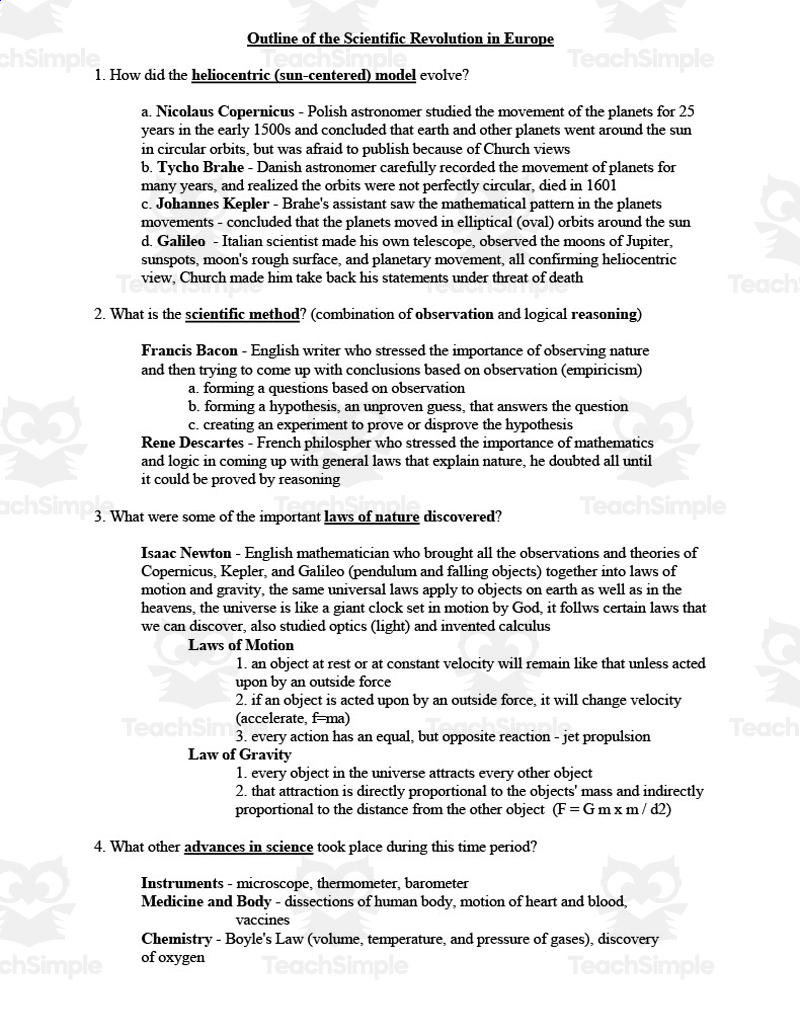
A one-page study-guide outline covering the history of the Scientific Revolution in Europe: the heliocentric model's development, the emergence of the scientific method, key laws of nature (Newton), and other period advances.
Novel study teacher's guide/workbook for the book 'Cold Midnight in Vieux Québec,' published by Rainbow Horizons Publishing, intended to accompany classroom reading of the novel with activities and an answer key.
Use this curriculum map as a planning reference for distributing first-grade learning across the school year. Monthly rows place literacy strands, mathematics, science and history/social studies side by side. Adjust the sequence to your class and school calendar, and check the printed standards against the Massachusetts framework edition in use before relying on it for coverage.