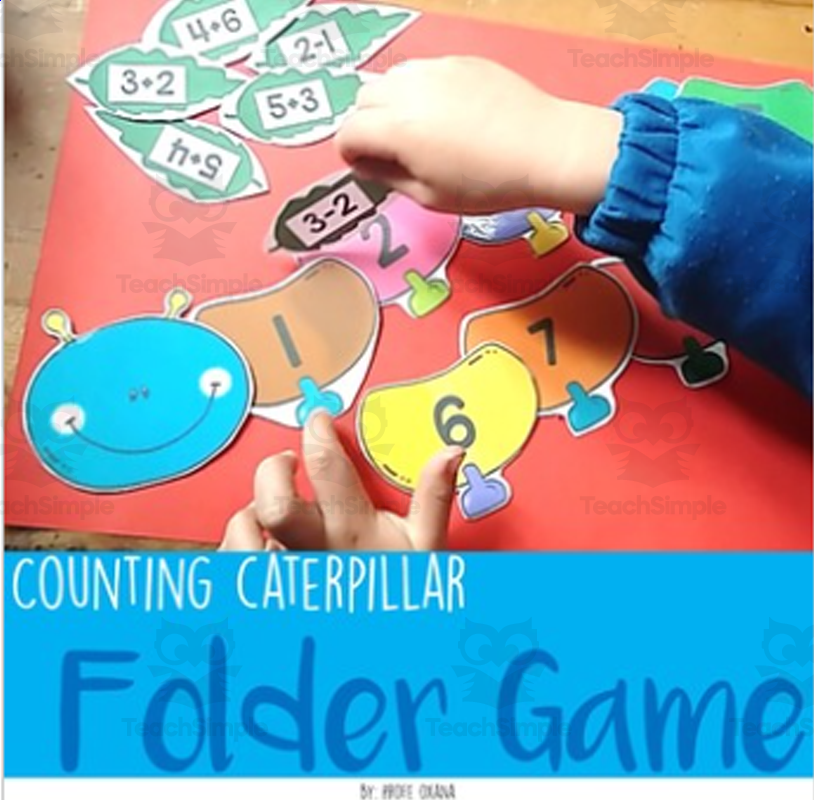
ADDITION AND SUBTRACTION - Counting Caterpillar
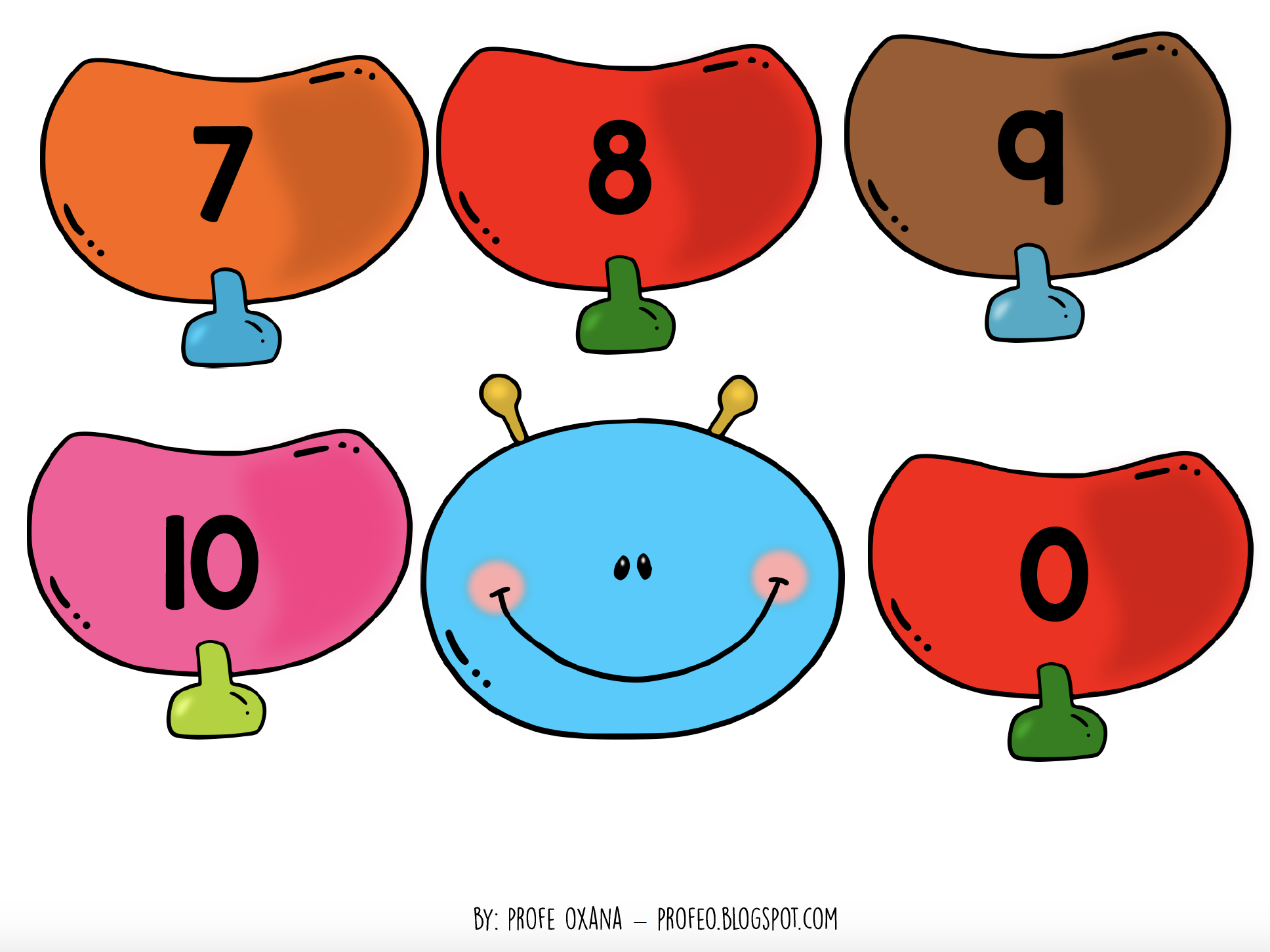
After the teacher prints, laminates, and assembles the folder game, students insert leaves onto the caterpillar body matching the correct addition or subtraction result shown.
Classroom resources
Find kindergarten math centers for counting, early operations, shapes and measurement, including hands-on and play-based activities.
Browse by lesson focus
Choose the topic or kind of practice you need.
After the teacher prints, laminates, and assembles the folder game, students insert leaves onto the caterpillar body matching the correct addition or subtraction result shown.
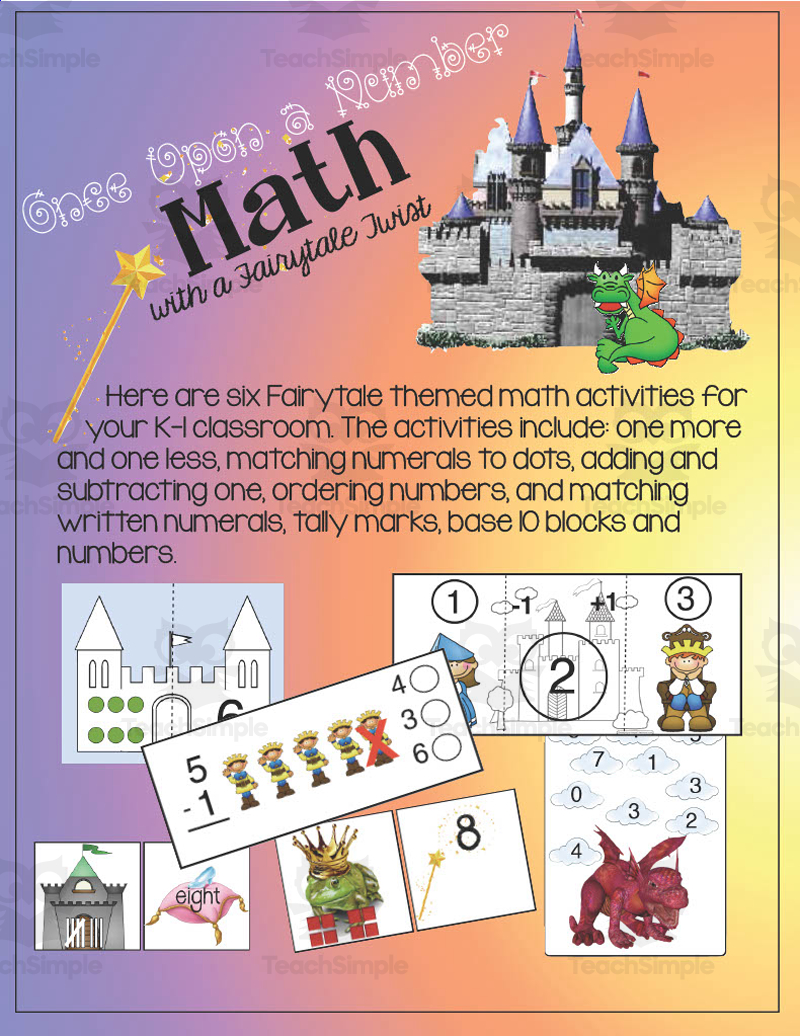
Match cards, sort number cards into order, play a spinner-and-die covering game, use a self-checking poke-or-clip mechanism to verify addition/subtraction answers, and assemble ordering-number puzzles.
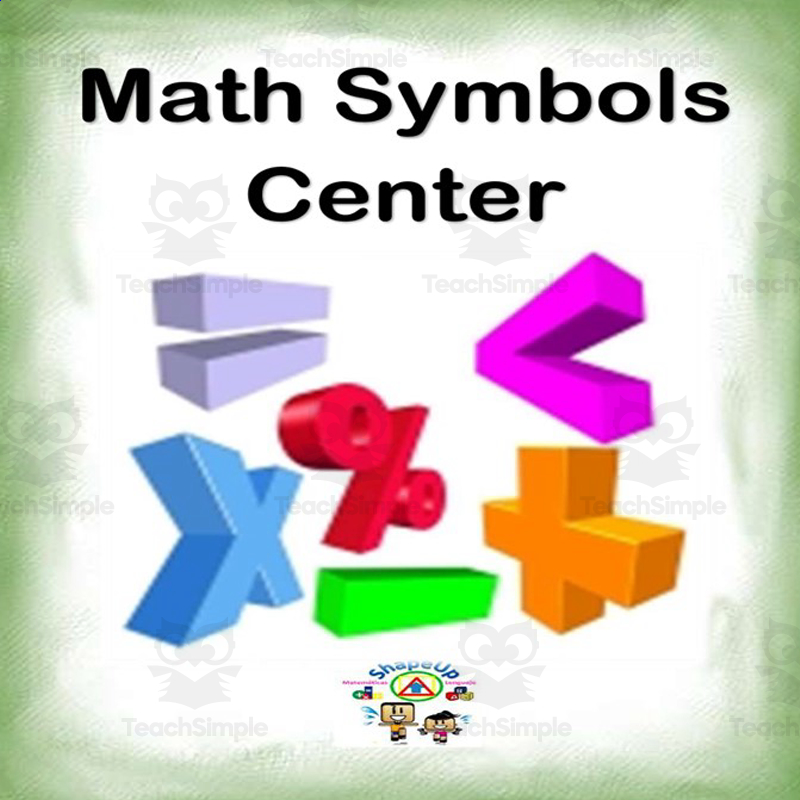
Choose and look at a symbol card, observe the symbol and say what it means, then draw it and write what it means and when to use it, using the reference chart if needed.
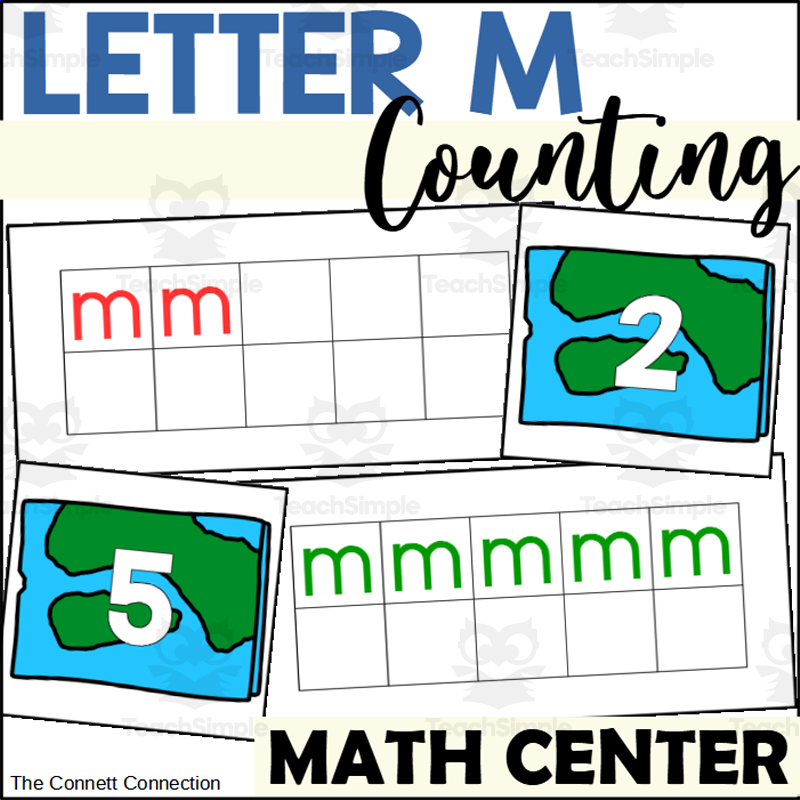
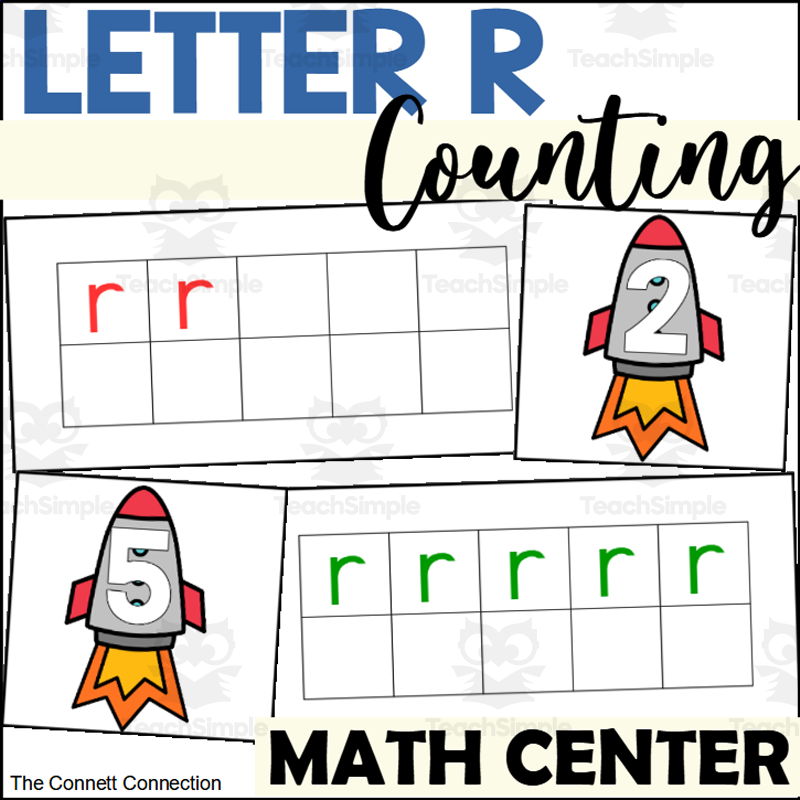
Students count groups of the letter 'm' (from 1 to 10 repetitions) and match them to numeral cards 1-10.
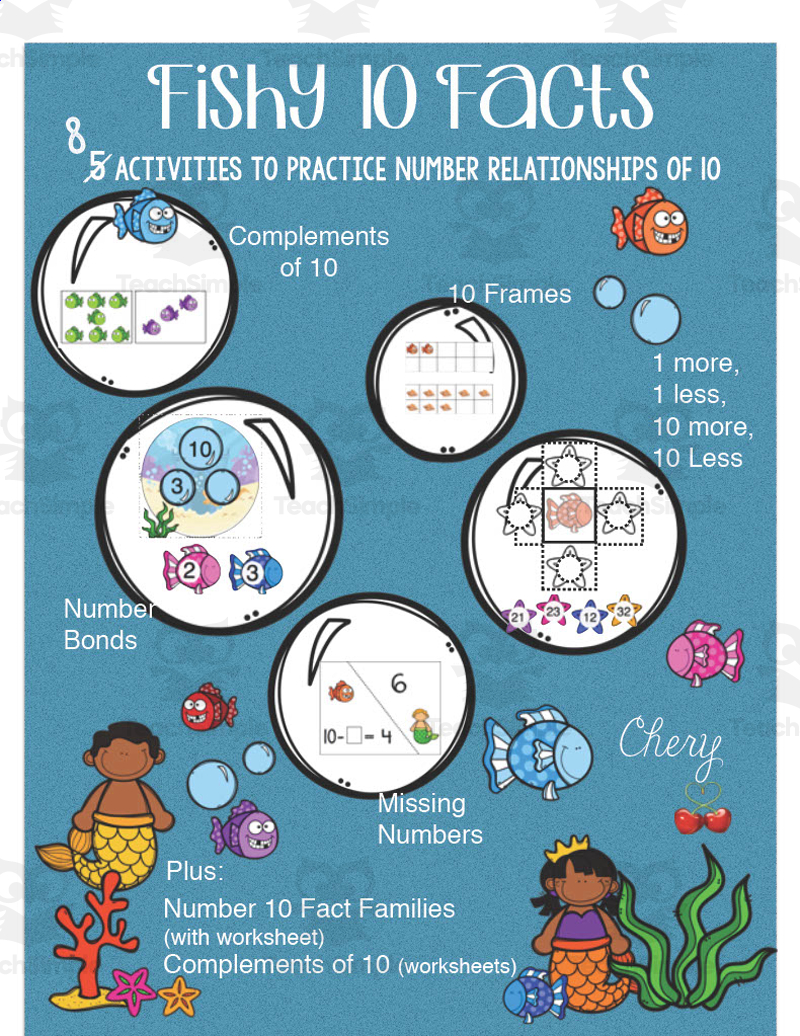
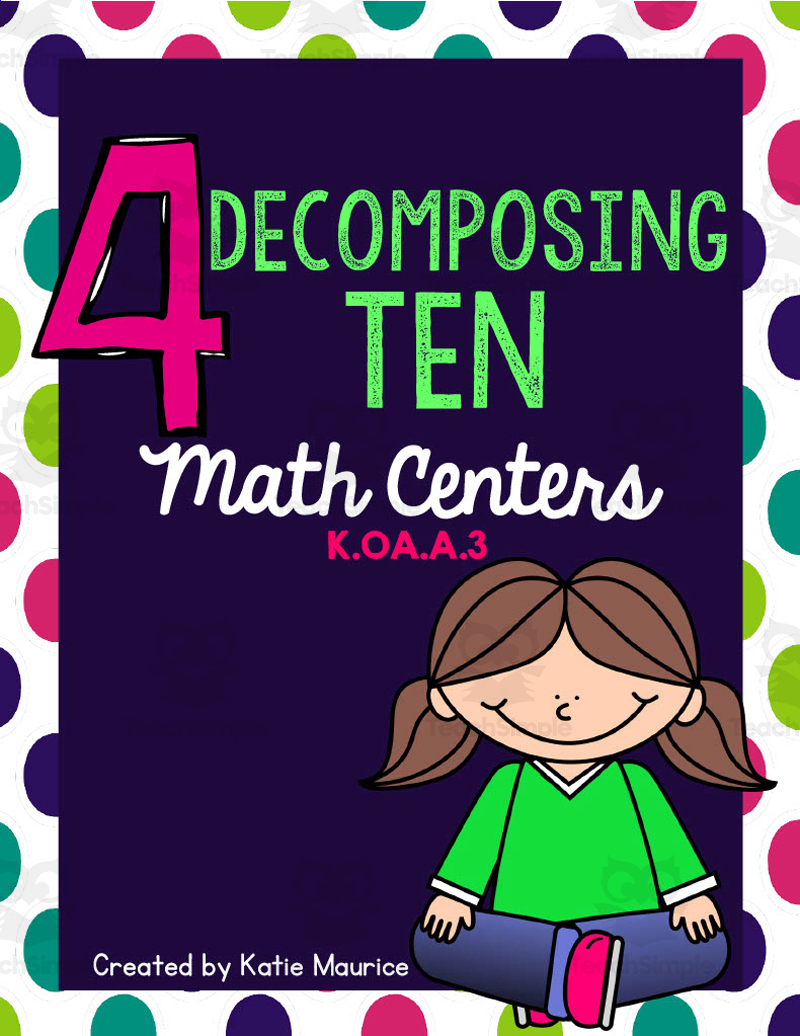
Fill in missing squares on ten-frames to make ten, complete addition equations that sum to 10 (e.g. 3 + ___ = 10), and match/write number bond pairs that total 10.
Students match starfish number cards showing plus/minus 10 and plus/minus 1 relationships to the correct answer boxes; match fish ten-frame cards to seashell ten-frame cards that combine to make 10; solve ten-frame addition/subtraction facts (e.g. 10+_=10 down to 1+_=10, and 10-_= various); match two halves of missing-number equations;…
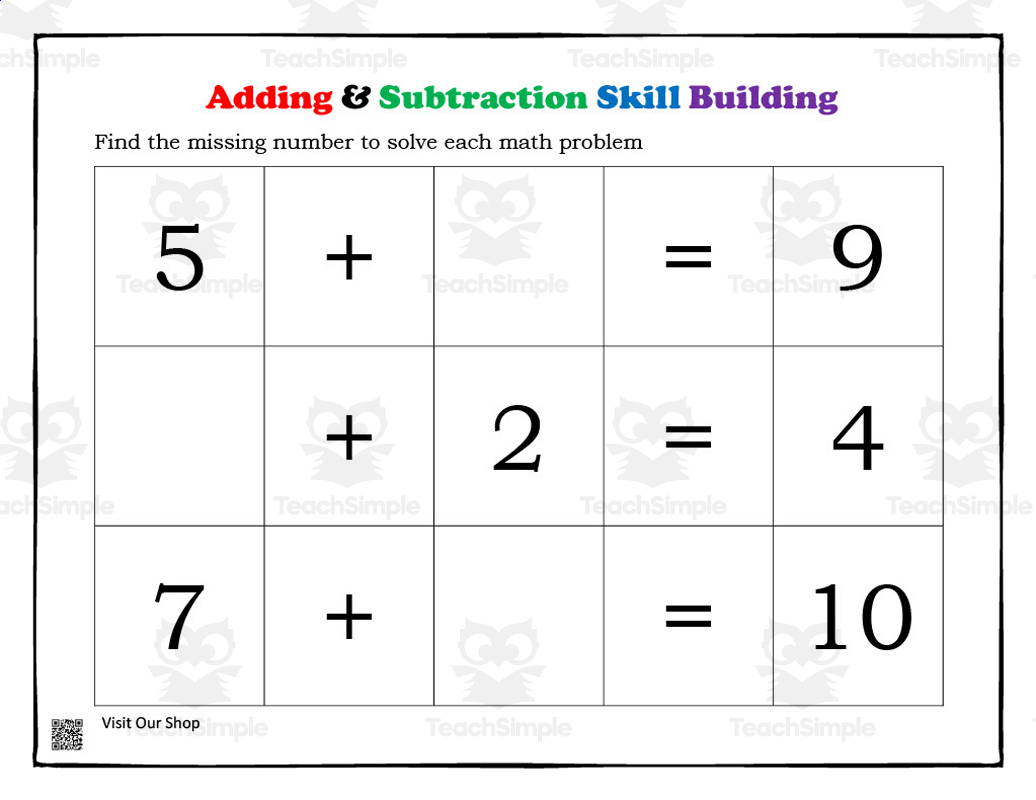
Students find the missing number (addend, subtrahend, or minuend) to complete each of 3 math problems per page.
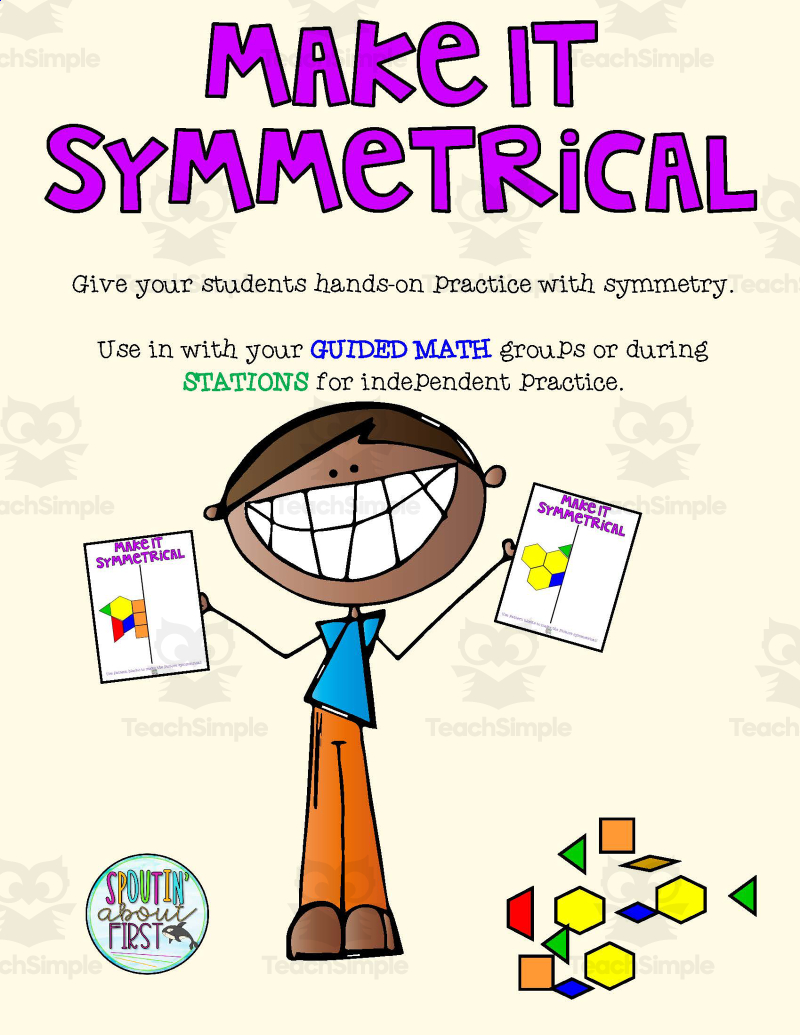
Place pattern blocks onto printed mats to complete each picture so it is symmetrical; on the final mat, arrange blocks to create their own original symmetrical picture.
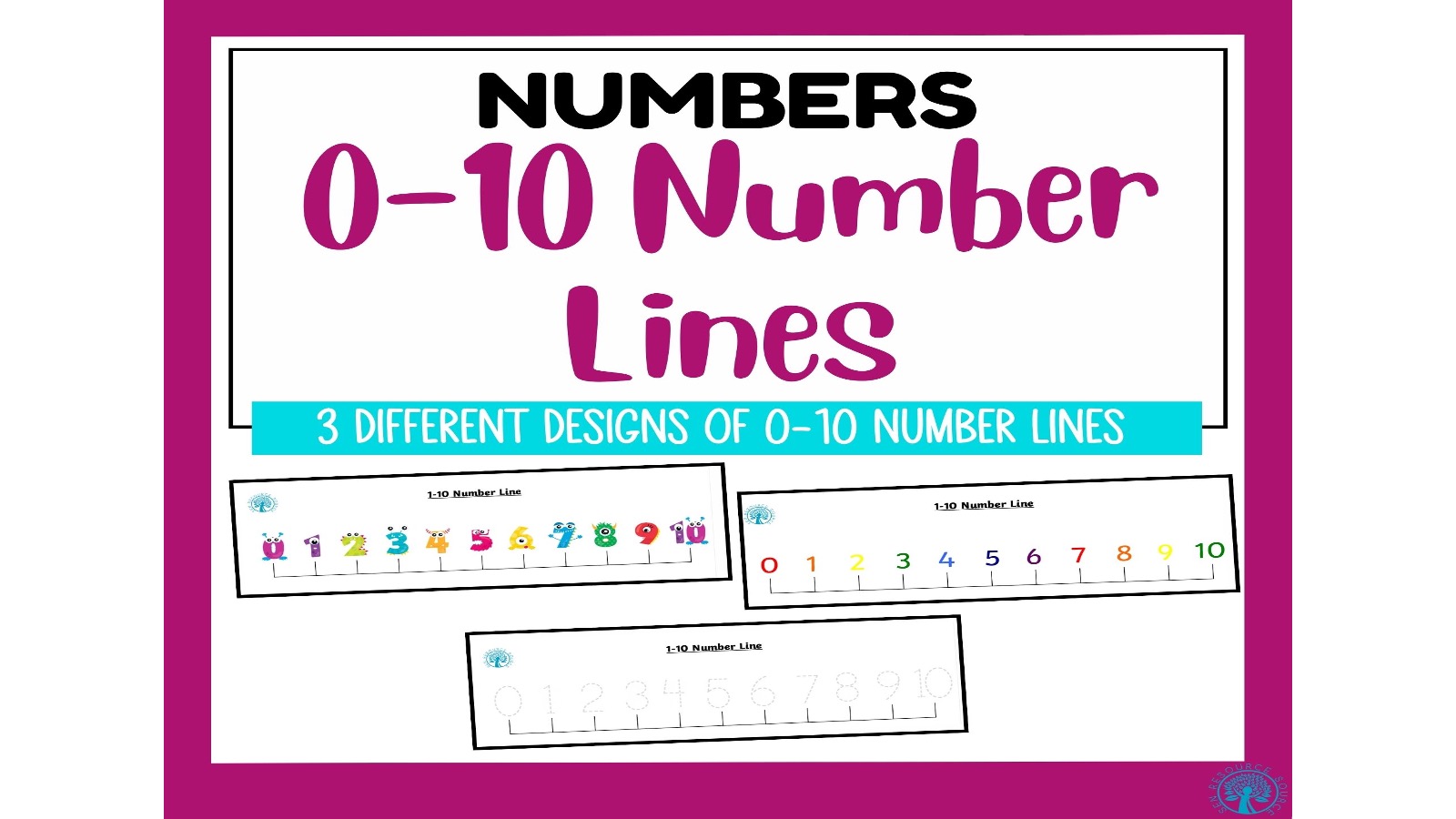
Each of the three pages supplies two number-line strips from 0 to 10. Choose monster illustrations, traceable numerals or rainbow numerals for a desk reference or small-group lesson. The tracing version also provides numeral-writing practice.
cut out and assemble the caterpillar in a file folder, then insert/attach leaf pieces onto the caterpillar body corresponding to the correct addition or subtraction result on each leaf.
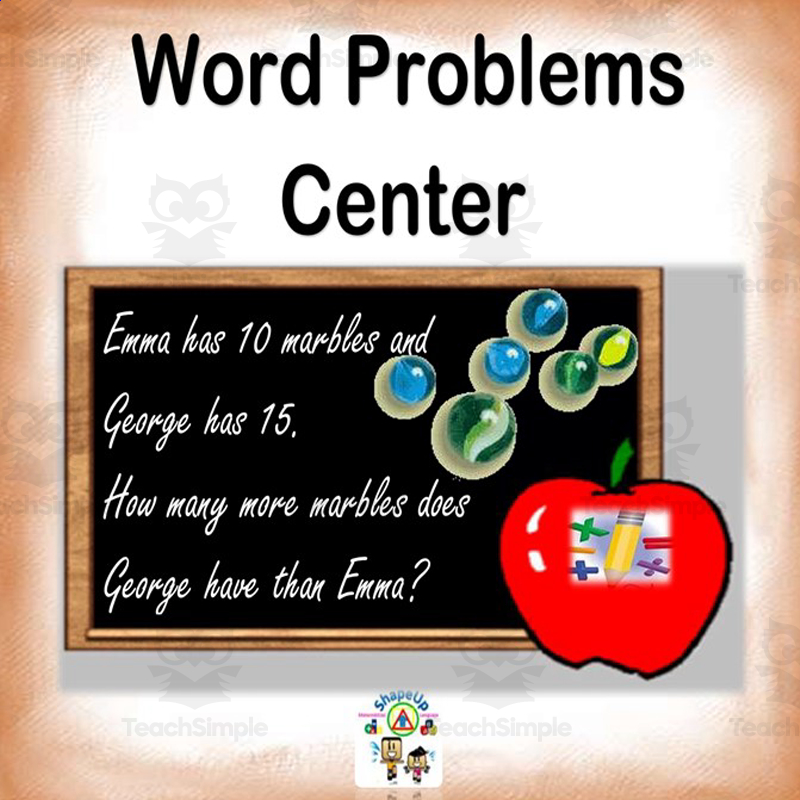
Choose a word-problem card, read and analyze it, solve it by adding or subtracting, write the solution process and equation, and record the work in a center notebook.
Cut out subtraction sentence cards and answer cards, then match them; color-coded construction paper lets students self-check.
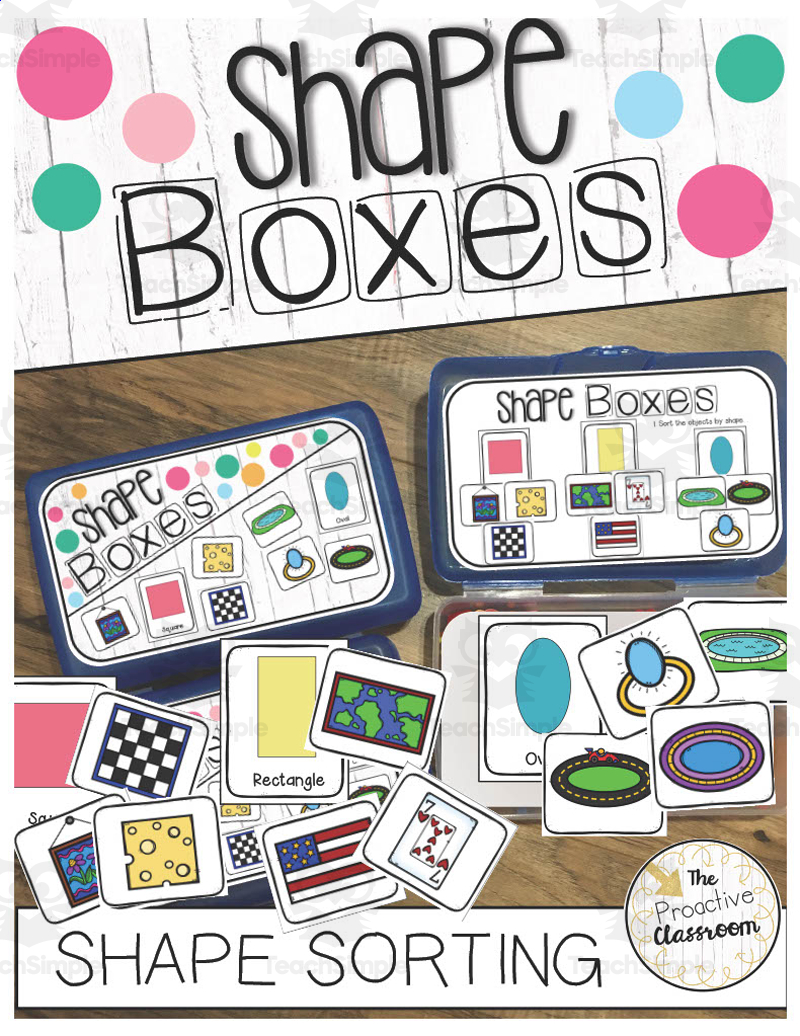
Students sort or hunt through real-life photo shape cards (square, triangle, rectangle, circle, diamond, oval) to match small cards to large shape category cards, or search for a specific shape.
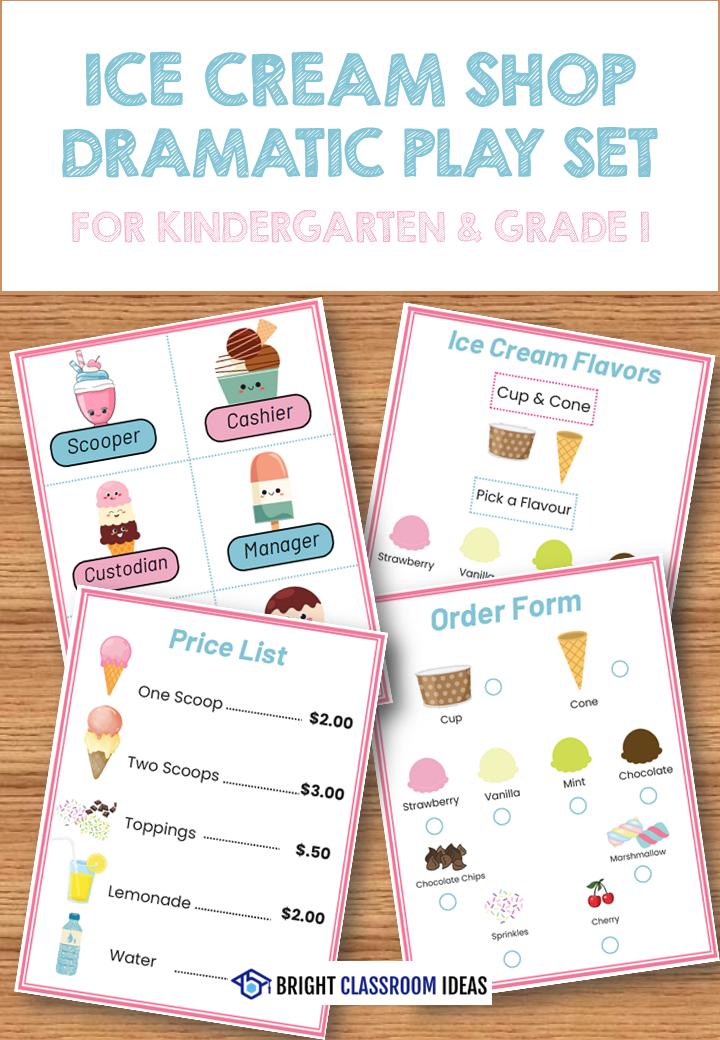
Take on roles (scooper, cashier, custodian, manager, customer) to run a pretend ice cream shop: fill out order forms, calculate prices with play money, decide open/closed shop hours, and invent and describe new ice cream flavors.
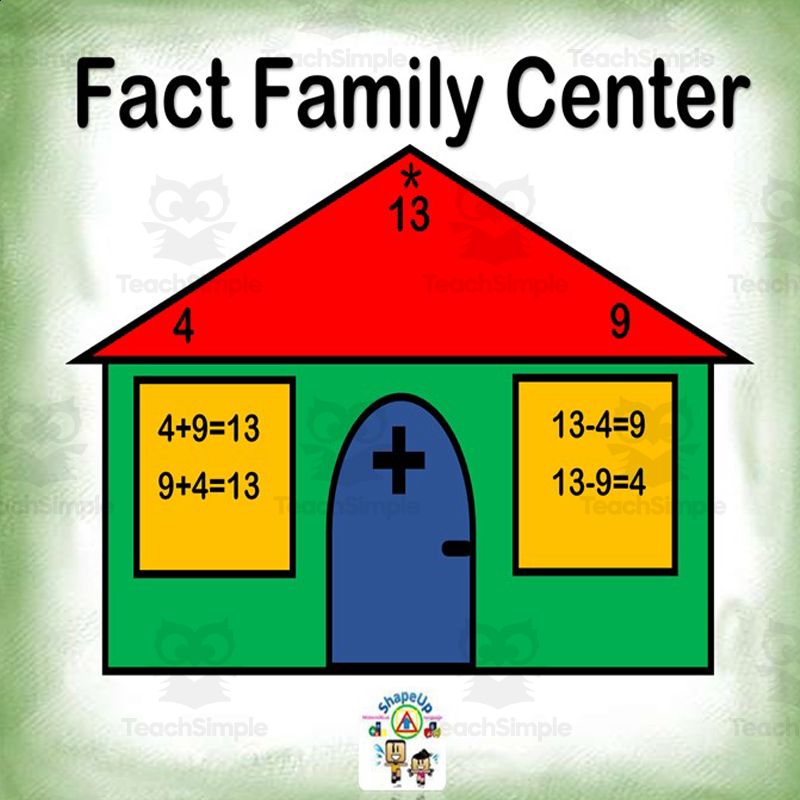
Choose a fact-family card showing three related numbers (or letters/colors), think aloud and write two addition sentences and two subtraction sentences using those values, using the example/chart if needed; record work in a center notebook and repeat with additional cards.
Students sort image cards into '2D shapes' and '3D shapes' category headers.
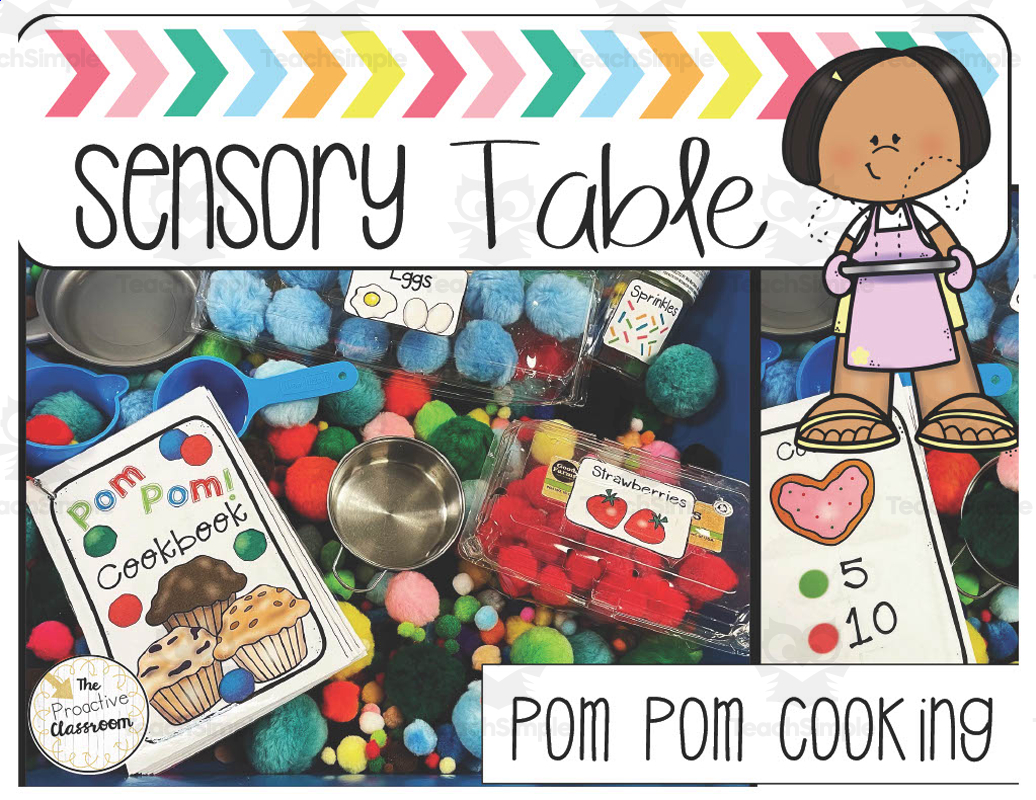
Use a cookbook to count out a specified number of pom-pom 'ingredients' (by color) for each recipe (e.g. Crumb Cake, Muffin, Pie, Strudel, Cinnamon Roll, Pizza, Cookie, Cake, Popcorn); use food-reference cards (Eggs, Milk, Tomatoes, Strawberries, Blackberries, Blueberries, Lemons, Sugar, Sprinkles, Apples) to add letters/words to…
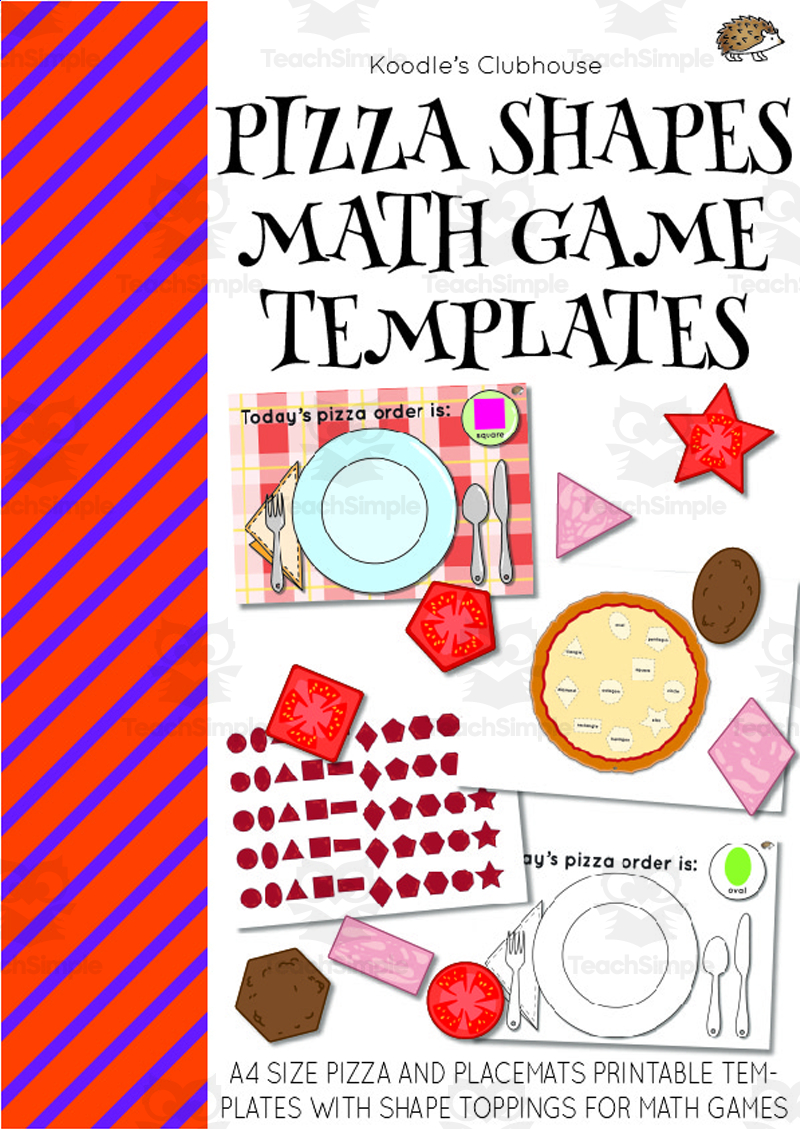
Match pizza-topping shape cutouts (circle, oval, triangle, square, rectangle, diamond, pentagon, hexagon, octagon, star) to the correct labeled placemat, or place shape cutouts onto a plain pizza template with matching outlines; can also trace or write the shape names.
Choose a card with pictures, numbers, and symbols; write the numeric equation corresponding to the pictures (or draw pictures to match a given numeric equation, e.g. 3+2=5); share the answer with a partner.
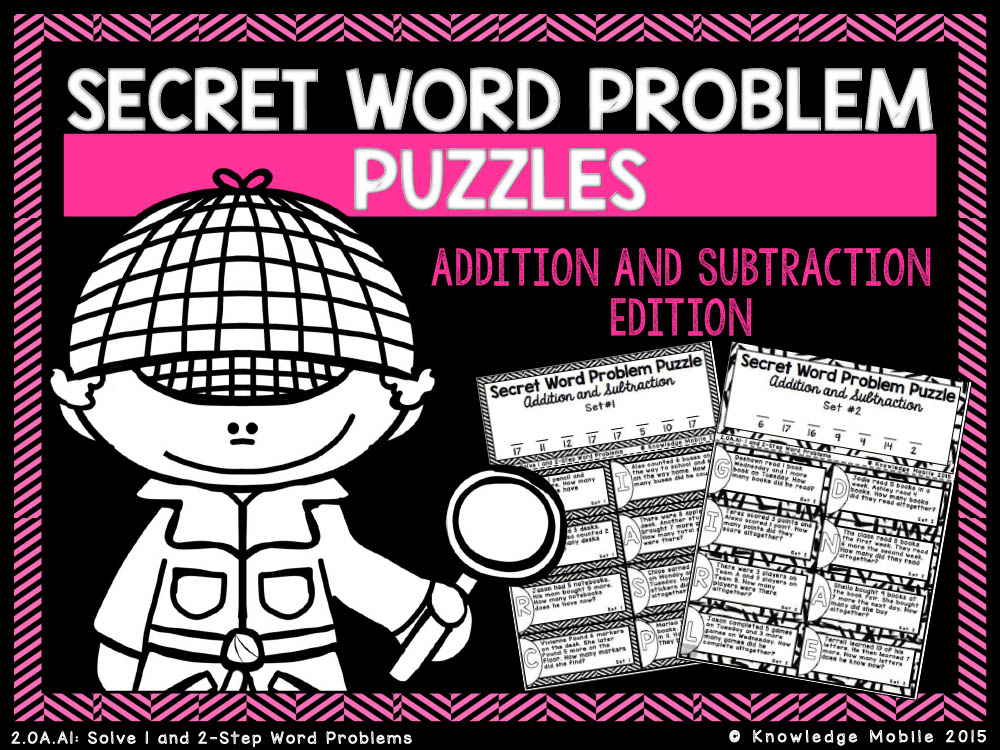
Solve addition and subtraction word problems, then use the numeric answers to decode letters/a secret word using response cards; assemble and store pieces in envelopes for center use.
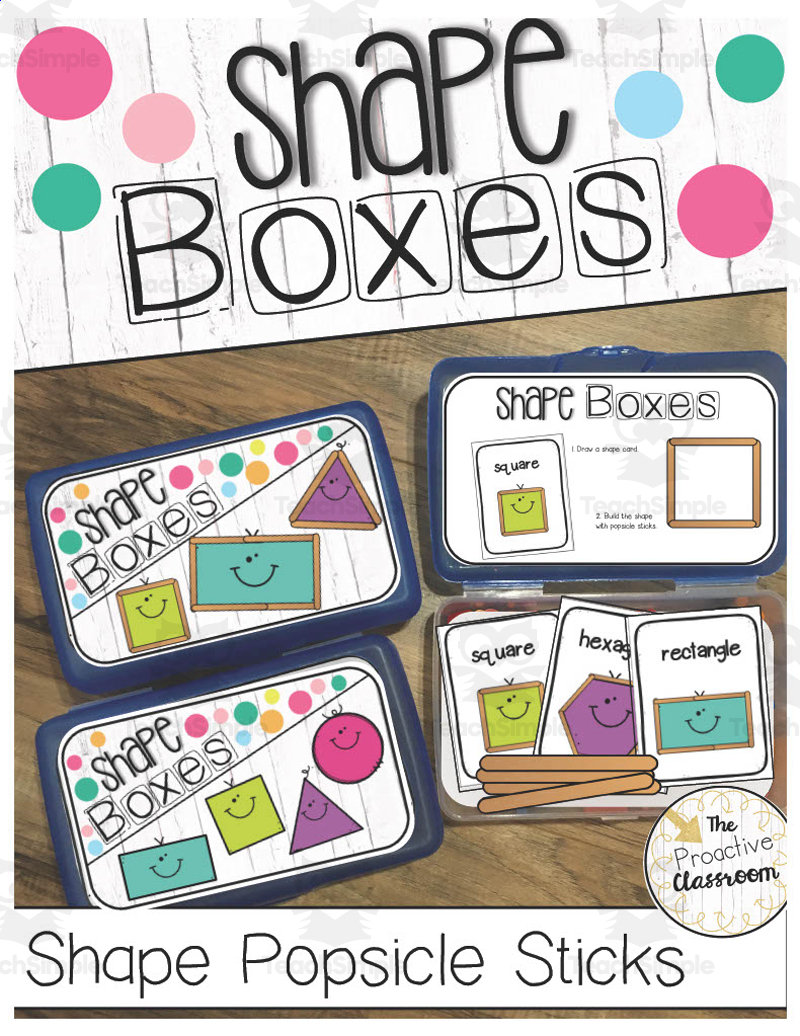
Draw a shape card and build that shape using popsicle sticks (or roll play dough into a 'snake' and shape it) as a model-matching hands-on activity.
Fill in the blank addition and subtraction equations inside each fact-family house using dry-erase or write-on materials (implied by the seller's description of laminating for reuse in math centers), writing numbers into blank '+ = ' and '- = ' equation slots.
Choose a card with a 3D shape net, say aloud which 3D shape it will become (using the key if needed), color/cut/assemble/glue/tape the shape, and record the shape completed; repeat with additional cards until told to stop.
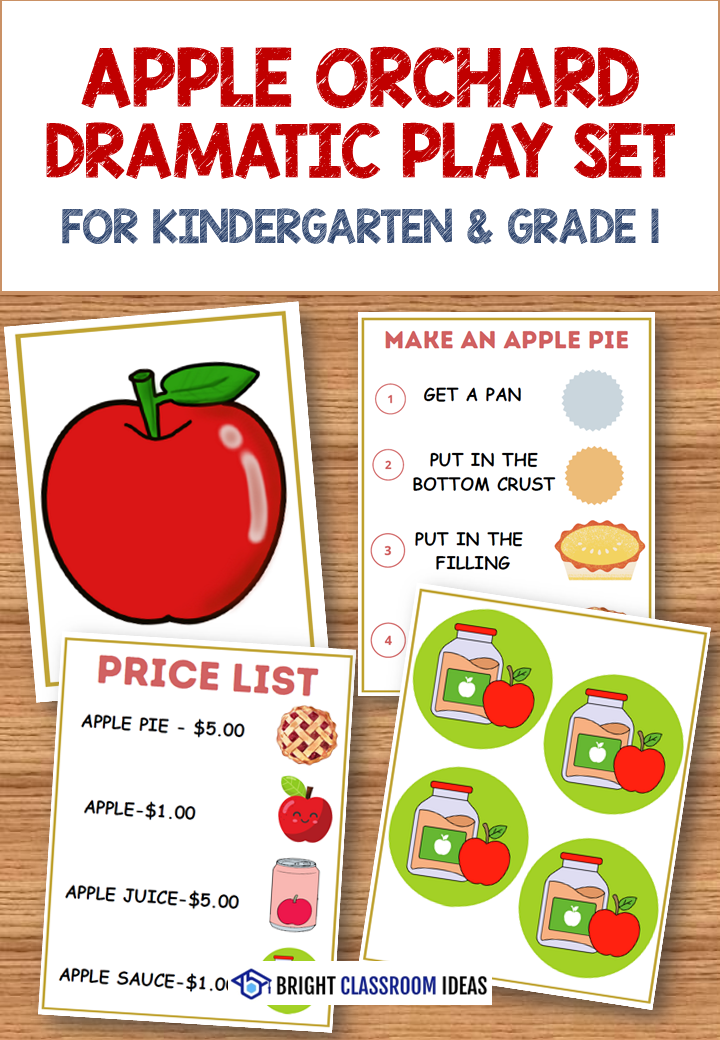
Take on orchard roles (apple picker, farmer/orchard owner, shopkeeper, cashier, customer) to practice picking, sorting, and counting apples; use a price list and order forms/receipts to buy and sell apple products with play money; and sequence the steps of making an apple pie (pan, bottom crust, filling, top crust).