



2,776 products added recently
Page 769 - Newest Teaching Resources

 Show filters

St. Paul the Apostle Research Organizer & Essay Assignment
Social Studies, ELA, Biographies, History, History: World, History: Ancient, Grade 7, 8, 9, 10, Activities, Projects, Worksheets & Printables, Worksheets
There is perhaps no important figure to Christianity than St. Paul the Apostle, who spread the word of Jesus of Nazareth far and wide during the first century AD. This resource provides your students with the opportunity to independently explore and write about the life of the "patron saint of theology" with this engaging research planner and essay assignment. This carefully scaffolded and easy-to-assign-AND-assess resource has been designed to guide student learning from St. Paul the Apostle fact-collection to the careful development of a five-paragraph research essay. Teaching this resource could not be easier! Start by handing out the background research and note-taking worksheet (you could also ONLY hand this out if you want a shorter lesson!). Once students have found their facts and sources, provide them with the essay outline activity, which guides them step-by-step through the requirements of a short research essay. From there, drafting their essay, using the provided peer review checklist, and submitting their final draft will be no problem at all. And then you can assess their work with the provided Common Core rubric! Use this entire resource as a complete research lesson or just part of it as a short research activity or sub plan! This TeachSimple download includes: - A St. Paul the Apostle essay writing assignment with directions, requirements, research essay writing tips, a peer review checklist, and Common Core-tied grading rubric - An editable rubric, provided as a link, that lets you make adjustments to the grade values and guidelines. This link is provided as as Google Sheet specifically built for integration into Google Classroom, although you can also modify it for use in other Learning Management Systems (LMSs) - A St. Paul the Apostle biography and note-taking worksheet that will guide your students through information gathering. This straightforward two-page handout includes instructions for background research, a fun drawing section, and an area to cite quality sources and organize conducted research - A research essay outlining worksheet, so students build on their St. Paul the Apostle notes in a clear and simple manner as they build their work towards a draft and final paper - All 6-pages of this lesson are provided in full-color and B&W versions Although this resource can be fitted for any secondary Language Arts classroom, it has been carefully designed to work best in grades 8 through 11. The included rubric is subtly but specifically tied to Common Core ELA Standards for Language (3) and Writing (2 and 7). This resource is provided as a print-ready, bookmarked, and adjustable PDF file. The rubric is also included as an editable Google Sheet. This resource contains 6 pages and 1 Google Sheet.
Author The Language of Educational Art, LLC
Tags Essay, Rubric, Research, Notetaking, Outlining

Order of Operations Crossword Puzzles for 5th and 6th-Grade Math
Math, Order Of Operations, Grade 5, 6, Crosswords Puzzles, Worksheets, Worksheets & Printables
Mathematics is an essential subject that lays the foundation for problem-solving and critical thinking skills. As students progress through their education, mastering complex concepts becomes crucial. To captivate 5th and 6th-grade math students while enhancing their skills in evaluating expressions with multiple operations, including grouping symbols and exponents, order of operations crossword puzzles have been designed. These puzzles not only make learning fun but also provide a challenging yet rewarding experience for students. The order of operations crossword puzzles present a unique twist to traditional math exercises. Instead of the typical numerical answers, students are required to solve expressions and express their final results in words. This format adds an element of creativity and language comprehension to the mathematical problems, making them both entertaining and educational. The puzzles are divided into four progressive levels to accommodate different proficiency levels: Level 1: In this introductory level, students encounter expressions with no parentheses or exponents. It aims to build a solid understanding of the basic order of operations involving addition, subtraction, multiplication, and division. Level 2: Moving up to the next level, students now encounter expressions that include exponents but still no parentheses. This level challenges their ability to work with raised values and further refines their understanding of order of operations. Level 3: At this stage, expressions incorporate parentheses but exclude exponents. Students must learn to tackle the complexity introduced by grouping symbols while adhering to the order of operations. Level 4: The final level presents the most challenging puzzles, combining both exponents and parentheses. Students are now required to handle expressions with multiple operations, testing their comprehensive understanding of order of operations. Benefits of the Puzzle Format Engaging and Fun Learning: Traditional math exercises can sometimes become monotonous for students. However, with the crossword format, students are more motivated to solve the problems as it involves an element of intrigue and competition. Critical Thinking and Problem-Solving: These puzzles stimulate students' critical thinking skills as they strategize to find the correct order of operations to arrive at the right answers. Language and Mathematical Integration: The requirement to express the answers in words enhances students' language comprehension, encouraging them to articulate their mathematical reasoning effectively. Incremental Difficulty: The four levels of puzzles ensure a gradual increase in complexity, allowing students to build their mathematical skills step-by-step and gain confidence as they progress. The order of operations crossword puzzles are available in both color and black-and-white versions, making them versatile for classroom use and printing options. Alongside the puzzles, answer keys are provided for easy assessment by teachers, saving valuable time while evaluating students' performance.
Author Matemaths
Rating 4
Tags Matemaths, Order Of Operation, Crosswords, Puzzle

St. Augustine Research Organizer & Essay Assignment
Social Studies, ELA, Biographies, History, History: World, History: Ancient, Grade 7, 8, 9, 10, Activities, Projects, Worksheets & Printables, Worksheets
St. Augustine was theologian from the earlier period of Christianity whose writing greatly influenced medieval society. This resource provides your students with the opportunity to independently explore and write about the life of the "patron saint of theology" with this engaging research planner and essay assignment. This carefully scaffolded and easy-to-assign-AND-assess resource has been designed to guide student learning from St. Augustine fact-collection to the careful development of a five-paragraph research essay. Teaching this resource could not be easier! Start by handing out the background research and note-taking worksheet (you could also ONLY hand this out if you want a shorter lesson!). Once students have found their facts and sources, provide them with the essay outline activity, which guides them step-by-step through the requirements of a short research essay. From there, drafting their essay, using the provided peer review checklist, and submitting their final draft will be no problem at all. And then you can assess their work with the provided Common Core rubric! Use this entire resource as a complete research lesson or just part of it as a short research activity or sub plan! This TeachSimple download includes: - A St. Augustine essay writing assignment with directions, requirements, research essay writing tips, a peer review checklist, and Common Core-tied grading rubric - An editable rubric, provided as a link, that lets you make adjustments to the grade values and guidelines. This link is provided as as Google Sheet specifically built for integration into Google Classroom, although you can also modify it for use in other Learning Management Systems (LMSs) - A St. Augustine biography and note-taking worksheet that will guide your students through information gathering. This straightforward two-page handout includes instructions for background research, a fun drawing section, and an area to cite quality sources and organize conducted research - A research essay outlining worksheet, so students build on their St. Augustine notes in a clear and simple manner as they build their work towards a draft and final paper - All 6-pages of this lesson are provided in full-color and B&W versions Although this resource can be fitted for any secondary Language Arts classroom, it has been carefully designed to work best in grades 8 through 11. The included rubric is subtly but specifically tied to Common Core ELA Standards for Language (3) and Writing (2 and 7). This resource is provided as a print-ready, bookmarked, and adjustable PDF file. The rubric is also included as an editable Google Sheet. This resource contains 6 pages and 1 Google Sheet.
Author The Language of Educational Art, LLC
Tags Essay, Rubric, Research, Notetaking, Outlining

Sigmund Freud Research Organizer & Essay Assignment
Social Studies, ELA, Biographies, History, History: World, History: Ancient, Psychology, Sociology, Grade 7, 8, 9, 10, Activities, Projects, Worksheets & Printables, Worksheets
Sigmund Freud founded psychoanalysis and is probably the most widely studied psychiatrist all-time, and perhaps also the misunderstood. This resource provides your students with the opportunity to independently explore and write about the life of the controversial psychology figure with this engaging research planner and essay assignment. This carefully scaffolded and easy-to-assign-AND-assess resource has been designed to guide student learning from Sigmund Freud fact-collection to the careful development of a five-paragraph research essay. Teaching this resource could not be easier! Start by handing out the background research and note-taking worksheet (you could also ONLY hand this out if you want a shorter lesson!). Once students have found their facts and sources, provide them with the essay outline activity, which guides them step-by-step through the requirements of a short research essay. From there, drafting their essay, using the provided peer review checklist, and submitting their final draft will be no problem at all. And then you can assess their work with the provided Common Core rubric! Use this entire resource as a complete research lesson or just part of it as a short research activity or sub plan! This TeachSimple download includes: - A Sigmund Freud essay writing assignment with directions, requirements, research essay writing tips, a peer review checklist, and Common Core-tied grading rubric - An editable rubric, provided as a link, that lets you make adjustments to the grade values and guidelines. This link is provided as as Google Sheet specifically built for integration into Google Classroom, although you can also modify it for use in other Learning Management Systems (LMSs) - A Sigmund Freud biography and note-taking worksheet that will guide your students through information gathering. This straightforward two-page handout includes instructions for background research, a fun drawing section, and an area to cite quality sources and organize conducted research - A research essay outlining worksheet, so students build on their Sigmund Freud notes in a clear and simple manner as they build their work towards a draft and final paper - All 6-pages of this lesson are provided in full-color and B&W versions Although this resource can be fitted for any secondary Language Arts classroom, it has been carefully designed to work best in grades 8 through 11. The included rubric is subtly but specifically tied to Common Core ELA Standards for Language (3) and Writing (2 and 7). This resource is provided as a print-ready, bookmarked, and adjustable PDF file. The rubric is also included as an editable Google Sheet. This resource contains 6 pages and 1 Google Sheet.
Author The Language of Educational Art, LLC
Tags Essay, Rubric, Research, Notetaking, Outlining

Research Organizer & Essay Assignment: Plato
Social Studies, ELA, Biographies, History, History: World, History: Ancient, Grade 7, 8, 9, 10, Activities, Projects, Worksheets & Printables, Worksheets
Plato was an Ancient Greek philosopher whose influence in Western culture continues to this day. This resource provides your students with the opportunity to independently learn about and synthesize the life of the legendary ancient thinker with this engaging research planner and essay assignment. This carefully scaffolded and easy-to-assign-AND-assess resource has been designed to guide student learning from Plato fact-collection to the careful development of a five-paragraph research essay. Teaching this resource could not be easier! Start by handing out the background research and note-taking worksheet (you could also ONLY hand this out if you want a shorter lesson!). Once students have found their facts and sources, provide them with the essay outline activity, which guides them step-by-step through the requirements of a short research essay. From there, drafting their essay, using the provided peer review checklist, and submitting their final draft will be no problem at all. And then you can assess their work with the provided Common Core rubric! Use this entire resource as a complete research lesson or just part of it as a short research activity or sub plan! This TeachSimple download includes: - A Plato essay writing assignment with directions, requirements, research essay writing tips, a peer review checklist, and Common Core-tied grading rubric - An editable rubric, provided as a link, that lets you make adjustments to the grade values and guidelines. This link is provided as as Google Sheet specifically built for integration into Google Classroom, although you can also modify it for use in other Learning Management Systems (LMSs) - A Plato biography and note-taking worksheet that will guide your students through information gathering. This straightforward two-page handout includes instructions for background research, a fun drawing section, and an area to cite quality sources and organize conducted research - A research essay outlining worksheet, so students build on their Plato notes in a clear and simple manner as they build their work towards a draft and final paper - All 6-pages of this lesson are provided in full-color and B&W versions Although this resource can be fitted for any secondary Language Arts classroom, it has been carefully designed to work best in grades 8 through 11. The included rubric is subtly but specifically tied to Common Core ELA Standards for Language (3) and Writing (2 and 7). This resource is provided as a print-ready, bookmarked, and adjustable PDF file. The rubric is also included as an editable Google Sheet. This resource contains 6 pages and 1 Google Sheet.
Author The Language of Educational Art, LLC
Tags Essay, Rubric, Research, Notetaking, Outlining, Plato

Martin Luther Research Organizer & Essay Assignment
Social Studies, ELA, Biographies, History, History: World, History: Ancient, Grade 7, 8, 9, 10, Activities, Projects, Worksheets & Printables, Worksheets
Martin Luther was a German theologian that kick-started the Protestant Reformation and founder of Lutheranism. This resource provides your students with the opportunity to independently explore and write about the life of the revolutionary religious philosopher with this engaging research planner and essay assignment. This carefully scaffolded and easy-to-assign-AND-assess resource has been designed to guide student learning from Martin Luther fact-collection to the careful development of a five-paragraph research essay. Teaching this resource could not be easier! Start by handing out the background research and note-taking worksheet (you could also ONLY hand this out if you want a shorter lesson!). Once students have found their facts and sources, provide them with the essay outline activity, which guides them step-by-step through the requirements of a short research essay. From there, drafting their essay, using the provided peer review checklist, and submitting their final draft will be no problem at all. And then you can assess their work with the provided Common Core rubric! Use this entire resource as a complete research lesson or just part of it as a short research activity or sub plan! This TeachSimple download includes: - A Martin Luther essay writing assignment with directions, requirements, research essay writing tips, a peer review checklist, and Common Core-tied grading rubric - An editable rubric, provided as a link, that lets you make adjustments to the grade values and guidelines. This link is provided as as Google Sheet specifically built for integration into Google Classroom, although you can also modify it for use in other Learning Management Systems (LMSs) - A Martin Luther biography and note-taking worksheet that will guide your students through information gathering. This straightforward two-page handout includes instructions for background research, a fun drawing section, and an area to cite quality sources and organize conducted research - A research essay outlining worksheet, so students build on their Martin Luther notes in a clear and simple manner as they build their work towards a draft and final paper - All 6-pages of this lesson are provided in full-color and B&W versions Although this resource can be fitted for any secondary Language Arts classroom, it has been carefully designed to work best in grades 8 through 11. The included rubric is subtly but specifically tied to Common Core ELA Standards for Language (3) and Writing (2 and 7). This resource is provided as a print-ready, bookmarked, and adjustable PDF file. The rubric is also included as an editable Google Sheet. This resource contains 6 pages and 1 Google Sheet.
Author The Language of Educational Art, LLC
Tags Essay, Rubric, Research, Notetaking, Outlining

Karl Marx Research Organizer & Essay Assignment
Social Studies, ELA, Biographies, History, History: World, History: Ancient, Grade 7, 8, 9, 10, Activities, Projects, Worksheets & Printables, Worksheets
Karl Marx is probably the most widely discussed economic philosophers of all-time, and perhaps also the misunderstood. This resource provides your students with the opportunity to independently explore and write about the life of the "father of socialism" with this engaging research planner and essay assignment. This carefully scaffolded and easy-to-assign-AND-assess resource has been designed to guide student learning from Karl Marx fact-collection to the careful development of a five-paragraph research essay. Teaching this resource could not be easier! Start by handing out the background research and note-taking worksheet (you could also ONLY hand this out if you want a shorter lesson!). Once students have found their facts and sources, provide them with the essay outline activity, which guides them step-by-step through the requirements of a short research essay. From there, drafting their essay, using the provided peer review checklist, and submitting their final draft will be no problem at all. And then you can assess their work with the provided Common Core rubric! Use this entire resource as a complete research lesson or just part of it as a short research activity or sub plan! This TeachSimple download includes: - A Karl Marx essay writing assignment with directions, requirements, research essay writing tips, a peer review checklist, and Common Core-tied grading rubric - An editable rubric, provided as a link, that lets you make adjustments to the grade values and guidelines. This link is provided as as Google Sheet specifically built for integration into Google Classroom, although you can also modify it for use in other Learning Management Systems (LMSs) - A Karl Marx biography and note-taking worksheet that will guide your students through information gathering. This straightforward two-page handout includes instructions for background research, a fun drawing section, and an area to cite quality sources and organize conducted research - A research essay outlining worksheet, so students build on their Karl Marx notes in a clear and simple manner as they build their work towards a draft and final paper - All 6-pages of this lesson are provided in full-color and B&W versions Although this resource can be fitted for any secondary Language Arts classroom, it has been carefully designed to work best in grades 8 through 11. The included rubric is subtly but specifically tied to Common Core ELA Standards for Language (3) and Writing (2 and 7). This resource is provided as a print-ready, bookmarked, and adjustable PDF file. The rubric is also included as an editable Google Sheet. This resource contains 6 pages and 1 Google Sheet.
Author The Language of Educational Art, LLC
Tags Essay, Rubric, Research, Notetaking, Outlining

John Locke Research Organizer & Essay Assignment
Social Studies, ELA, Biographies, History, History: World, History: Ancient, Grade 7, 8, 9, 10, Activities, Projects, Worksheets & Printables, Worksheets
John Locke Research Organizer & Essay Assignment Dive into the ideals of the "father of liberalism" with this complete research project on English philosopher John Locke. Students independently explore Locke's life and work, gathering facts and sources on an informative research organizer. An essay outline worksheet then walks learners through drafting a five-paragraph essay on Locke, applying their research. Finally, students write, peer review, revise, and submit a graded short research essay on this central Enlightenment figure. Use the full project or just parts as a flexible research activity for grades 7-11. This easy-to-implement resource includes research and outlining worksheets, essay directions, writing tips, peer review checklist, and a Common Core-aligned rubric provided as a customizable Google Sheet.
Author The Language of Educational Art, LLC
Tags Essay, Rubric, Research, Notetaking, Outlining
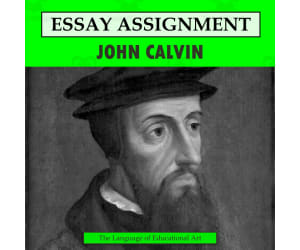
John Calvin Research Organizer & Essay Assignment
Social Studies, ELA, Biographies, History, History: World, History: Ancient, Grade 7, 8, 9, 10, Activities, Projects, Worksheets & Printables, Worksheets
John Calvin Research Organizer & Essay Assignment This 6-page teaching resource guides students through researching and writing an informative essay about John Calvin, an influential figure in the Protestant Reformation. Students will gather facts about Calvin's life and ideas using a scaffolded research organizer worksheet. An essay outline worksheet then supports students in crafting a five-paragraph essay incorporating their research. Finally, a peer review checklist and grading rubric aligned to Common Core ELA standards provide helpful tools for revision and assessment. This versatile resource can facilitate an in-depth research project or streamlined lesson on John Calvin's role in religious history. It promotes critical thinking skills as students analyze Calvin's beliefs and legacy. Pairing independent research with structured writing support, it is appropriate for grades 7-11, especially secondary history and language arts classes. Students will summarize key events and perspectives shaping Calvin's theology. Adaptable components allow customization of project length and grading criteria.
Author The Language of Educational Art, LLC
Tags Essay, Rubric, Research, Notetaking, Outlining
CRQ: The World in 1750, Regents Global 10 + Video Lessons
Social Studies, History, History: World, Grade 10, Teacher Tools, Assessments
CRQ: The World in 1750, Regents Global 10 + Video Lessons This product is a constructed-response question (“CRQ”) in the format of the new New York State Regents examination in Global History and Geography. The CRQ calls upon the student to examine historical sources (I use exclusively primary sources) by providing historical or geographic context, identifying the point of view, intended audience, or purpose of a document and then using the two documents in either compare-contrast, cause-effect analysis, or turning point identification. I advocate a strategy of assigning one CRQ in each unit of study in grades nine and ten without access to notes. I used this as one of the tests at the end of a unit of study. I would tell students about what kinds of documents would appear and what historical context they should be able to recall in advance. It is a challenging task for them. The first challenge for novices is to understand what it means to provide context. Faced with the question “What is the historical context of this document?”, beginners will retell what the document says. The reason for this mistake is that, since they were little kids, teachers have asked them to relate what a text means to prove they understood it. [ Read more at the Innovation blog ] Product includes: 1. Student version 2. Teacher version with suggested answers 3. Passcode to video lessons students can use to prepare the task. Documents: Excerpt, Akbar and the Jesuits, An Account of the Jesuit Missions to the Court of Akbar Excerpt, The Seclusion of Japan: 32 - Tokugawa Iemitsu, "CLOSED COUNTRY EDICT OF 1635" AND "EXCLUSION OF THE PORTUGUESE,1639", Map, territories of Daimyos Excerpt, Tokugawa Ieasu on Military Government and Social Order Passcode Lessons: 10.2 World in 1750, part 1 The World in 1750, part 2 The World in 1750 part 3 About Innovation Passcodes Passcodes let your students access selected lessons in my own virtual classroom at InnovationAssessments.com . No registration is required. Use the codes at InnovationAssessments.com/TestDrive .
Author Innovation Assessments LLC
Tags New York State Regents, Global History And Geography, Constructed-response Question, CRQ

CRQ: Global Conflict 1914-1945, Regents Global 10 + Video Lessons
Social Studies, History, History: World, Grade 10, Teacher Tools, Assessments
CRQ: Global Conflict 1914-1945, Regents Global 10 + Video Lessons This product is a constructed-response question (“CRQ”) in the format of the new New York State Regents examination in Global History and Geography. The CRQ calls upon the student to examine historical sources (I use exclusively primary sources) by providing historical or geographic context, identifying the point of view, intended audience, or purpose of a document and then using the two documents in either compare-contrast, cause-effect analysis, or turning point identification. I advocate a strategy of assigning one CRQ in each unit of study in grades nine and ten without access to notes. I used this as one of the tests at the end of a unit of study. I would tell students about what kinds of documents would appear and what historical context they should be able to recall in advance. It is a challenging task for them. The first challenge for novices is to understand what it means to provide context. Faced with the question “What is the historical context of this document?”, beginners will retell what the document says. The reason for this mistake is that, since they were little kids, teachers have asked them to relate what a text means to prove they understood it. [ Read more at the Innovation blog ] Product includes: 1. Student version 2. Teacher version with suggested answers 3. Passcode to video lessons students can use to prepare the task. Documents: 1937 report describing Hitler 1944 British political cartoon Map, northern Europe 1914 Excerpt, Treaty of Versailles, 1919 Passcode Lessons: Competing Ideologies of the 20th Century part A Competing Ideologies of the 20th Century part B Efforts to Prevent War Questions embedded for a US Defense Department video from 1947, Don`t Be a Sucker (1947) About Innovation Passcodes Passcodes let your students access selected lessons in my own virtual classroom at InnovationAssessments.com . No registration is required. Use the codes at InnovationAssessments.com/TestDrive .
Author Innovation Assessments LLC
Tags New York State Regents, Global History And Geography, Constructed-response Question, CRQ, Global Conflict

CRQ: Cold War, Regents Global 10 + Video Lessons
Social Studies, History, History: World, Grade 10, Teacher Tools, Assessments
CRQ: Cold War, Regents Global 10 + Video Lessons This product is a constructed-response question (“CRQ”) in the format of the new New York State Regents examination in Global History and Geography. The CRQ calls upon the student to examine historical sources (I use exclusively primary sources) by providing historical or geographic context, identifying the point of view, intended audience, or purpose of a document and then using the two documents in either compare-contrast, cause-effect analysis, or turning point identification. I advocate a strategy of assigning one CRQ in each unit of study in grades nine and ten without access to notes. I used this as one of the tests at the end of a unit of study. I would tell students about what kinds of documents would appear and what historical context they should be able to recall in advance. It is a challenging task for them. The first challenge for novices is to understand what it means to provide context. Faced with the question “What is the historical context of this document?”, beginners will retell what the document says. The reason for this mistake is that, since they were little kids, teachers have asked them to relate what a text means to prove they understood it. [ Read more at the Innovation blog ] Product includes: 1. Student version 2. Teacher version with suggested answers 3. Passcode to video lessons students can use to prepare the task. Documents: Map, 1950, "Two Worlds" Stalin's reply to Churchill, 1946 Maps, Europe Gorbachev explains Perestroika and Glasnost Passcode Lessons: pt. 1 Cold War Competing Ideologies of the 20th Century part A About Innovation Passcodes Passcodes let your students access selected lessons in my own virtual classroom at InnovationAssessments.com . No registration is required. Use the codes at InnovationAssessments.com/TestDrive .
Author Innovation Assessments LLC
Tags New York State Regents, Global History And Geography, Constructed-response Question, CRQ, Cold War
CRQ: On Human Rights, Regents Global 10 + Video Lessons
Social Studies, History, History: World, Grade 10, Teacher Tools, Assessments
CRQ: On Human Rights, Regents Global 10 + Video Lessons This product is a constructed-response question (“CRQ”) in the format of the new New York State Regents examination in Global History and Geography. The CRQ calls upon the student to examine historical sources (I use exclusively primary sources) by providing historical or geographic context, identifying the point of view, intended audience, or purpose of a document and then using the two documents in either compare-contrast, cause-effect analysis, or turning point identification. I advocate a strategy of assigning one CRQ in each unit of study in grades nine and ten without access to notes. I used this as one of the tests at the end of a unit of study. I would tell students about what kinds of documents would appear and what historical context they should be able to recall in advance. It is a challenging task for them. The first challenge for novices is to understand what it means to provide context. Faced with the question “What is the historical context of this document?”, beginners will retell what the document says. The reason for this mistake is that, since they were little kids, teachers have asked them to relate what a text means to prove they understood it. [ Read more at the Innovation blog ] Product includes: 1. Student version 2. Teacher version with suggested answers 3. Passcode to video lessons students can use to prepare the task. Documents: Account of Holocaust mass shooting, 1942 1915 telegram to Ottoman government from US Preamble, UN Declaration of Human Rights Opening Statement, 1945, Prosecution, Nuremberg Trials Passcode Lessons: Ten Stages of Genocide, part 1 Ten Stages of Genocide part 2 About Innovation Passcodes Passcodes let your students access selected lessons in my own virtual classroom at InnovationAssessments.com . No registration is required. Use the codes at InnovationAssessments.com/TestDrive .
Author Innovation Assessments LLC
Tags New York State Regents, Global History And Geography, Constructed-response Questions, CRQ, Human Rights

CRQ: "Decolonization and Nationalism+ 3 slide shows, Regents Global 10
Social Studies, History, History: World, Grade 10, Teacher Tools, Assessments
CRQ: "On Decolonization and Nationalism" + 3 slide shows, Regents Global 10 This product is a constructed-response question (“CRQ”) in the format of the new New York State Regents examination in Global History and Geography. The CRQ calls upon the student to examine historical sources (I use exclusively primary sources) by providing historical or geographic context, identifying the point of view, intended audience, or purpose of a document and then using the two documents in either compare-contrast, cause-effect analysis, or turning point identification. I advocate a strategy of assigning one CRQ in each unit of study in grades nine and ten without access to notes. I used this as one of the tests at the end of a unit of study. I would tell students about what kinds of documents would appear and what historical context they should be able to recall in advance. It is a challenging task for them. The first challenge for novices is to understand what it means to provide context. Faced with the question “What is the historical context of this document?”, beginners will retell what the document says. The reason for this mistake is that, since they were little kids, teachers have asked them to relate what a text means to prove they understood it. [ Read more at the Innovation blog ] Product includes: 1. Student version 2. Teacher version with suggested answers 3. Three PowerPoint slideshows Documents: Sir Henry MacMahon, Letter to Ali ibn Hussein, 1915 Balfour letter, 1917 Map, British India, 1947 Address by Anwar Sadat, 1957 About Innovation Passcodes Passcodes let your students access selected lessons in my own virtual classroom at InnovationAssessments.com . No registration is required. Use the codes at InnovationAssessments.com/TestDrive .
Author Innovation Assessments LLC
Tags New York State Regents, Global History And Geography, Constructed-response Question, CRQ, Decolonization, Nationalism
CRQ: On Imperialism, Regents Global 10 + Video Lessons
Social Studies, History, History: World, Grade 10, Teacher Tools, Assessments
CRQ: On Imperialism, Regents Global 10 + Video Lessons This product is a constructed-response question (“CRQ”) in the format of the new New York State Regents examination in Global History and Geography. The CRQ calls upon the student to examine historical sources (I use exclusively primary sources) by providing historical or geographic context, identifying the point of view, intended audience, or purpose of a document and then using the two documents in either compare-contrast, cause-effect analysis, or turning point identification. I advocate a strategy of assigning one CRQ in each unit of study in grades nine and ten without access to notes. I used this as one of the tests at the end of a unit of study. I would tell students about what kinds of documents would appear and what historical context they should be able to recall in advance. It is a challenging task for them. The first challenge for novices is to understand what it means to provide context. Faced with the question “What is the historical context of this document?”, beginners will retell what the document says. The reason for this mistake is that, since they were little kids, teachers have asked them to relate what a text means to prove they understood it. [ Read more at the Innovation blog ] Product includes: 1. Student version 2. Teacher version with suggested answers 3. Passcode to video lessons students can use to prepare the task. Documents: Map, Africa, 1880 Song, Lyric, Rule Britannia Map, 19th century rebellions against the Qing Newspaper excerpt about Zulu War Passcode Lessons: Imperialism part 1 Imperialism part 2 Imperialism part 3 The Taiping Rebellion M-C maps Matching About Innovation Passcodes Passcodes let your students access selected lessons in my own virtual classroom at InnovationAssessments.com . No registration is required. Use the codes at InnovationAssessments.com/TestDrive .
Author Innovation Assessments LLC
Tags New York State Regents, Global History And Geography, Constructed-response Question, CRQ, Imperialism
CRQ: On Industrialization, Regents Global 10 + Video Lessons
Social Studies, History, History: World, Grade 10, Teacher Tools, Assessments
CRQ: On Industrialization, Regents Global 10 + Video Lessons This product is a constructed-response question (“CRQ”) in the format of the new New York State Regents examination in Global History and Geography. The CRQ calls upon the student to examine historical sources (I use exclusively primary sources) by providing historical or geographic context, identifying the point of view, intended audience, or purpose of a document and then using the two documents in either compare-contrast, cause-effect analysis, or turning point identification. I advocate a strategy of assigning one CRQ in each unit of study in grades nine and ten without access to notes. I used this as one of the tests at the end of a unit of study. I would tell students about what kinds of documents would appear and what historical context they should be able to recall in advance. It is a challenging task for them. The first challenge for novices is to understand what it means to provide context. Faced with the question “What is the historical context of this document?”, beginners will retell what the document says. The reason for this mistake is that, since they were little kids, teachers have asked them to relate what a text means to prove they understood it. [ Read more at the Innovation blog ] Product includes: 1. Student version 2. Teacher version with suggested answers 3. Passcode to video lessons students can use to prepare the task. Documents: Letter from Leeds Cloth Merchants, 1791 Friedrich Engels, industrial Manchester, 1844 The Physical Deterioration of Textile Workers Cartoon, Punch, 1841, [who is hurt by a strike] Passcode Lessons: The Agricultural Revolution Begins in England Industrial Revolution Industrial Revolution Quiz The Irish Potato Famine About Innovation Passcodes Passcodes let your students access selected lessons in my own virtual classroom at InnovationAssessments.com . No registration is required. Use the codes at InnovationAssessments.com/TestDrive .
Author Innovation Assessments LLC
Tags New York State Regents, Global History And Geography, Constructed-response Question, CRQ, Industrialization
CRQ: On Social Advancement, Regents Global 10 + Video Lessons
Social Studies, History, History: World, Grade 10, Teacher Tools, Assessments
CRQ: On Social Advancement, Regents Global 10 + Video Lessons This product is a constructed-response question (“CRQ”) in the format of the new New York State Regents examination in Global History and Geography. The CRQ calls upon the student to examine historical sources (I use exclusively primary sources) by providing historical or geographic context, identifying the point of view, intended audience, or purpose of a document and then using the two documents in either compare-contrast, cause-effect analysis, or turning point identification. I advocate a strategy of assigning one CRQ in each unit of study in grades nine and ten without access to notes. I used this as one of the tests at the end of a unit of study. I would tell students about what kinds of documents would appear and what historical context they should be able to recall in advance. It is a challenging task for them. The first challenge for novices is to understand what it means to provide context. Faced with the question “What is the historical context of this document?”, beginners will retell what the document says. The reason for this mistake is that, since they were little kids, teachers have asked them to relate what a text means to prove they understood it. [ Read more at the Innovation blog ] Product includes: 1. Student version 2. Teacher version with suggested answers 3. Passcode to video lessons students can use to prepare the task. Documents: William Wilberforce speech against the Slave Trade Olympe de Gouge: Declaration of the Rights of Women, 1791 Okuma: from Fifty Years of New Japan, 1907-08 Chadwick's Report on Sanitary Conditions Passcode Lessons: 10.3 Revolution and Nationalism part 3 10.3 Revolution and Nationalism part 4 Industrial Revolution About Innovation Passcodes Passcodes let your students access selected lessons in my own virtual classroom at InnovationAssessments.com . No registration is required. Use the codes at InnovationAssessments.com/TestDrive .
Author Innovation Assessments LLC
Tags New York State Regents, Global History And Geography, Constructed-response Question, CRQ, Social Advancement
CRQ: The Franco-Prussian War, Regents Global 10 + Video Lessons
Social Studies, History, History: World, Grade 10, Teacher Tools, Assessments
CRQ: The Franco-Prussian War, Regents Global 10 + Video Lessons This product is a constructed-response question (“CRQ”) in the format of the new New York State Regents examination in Global History and Geography. The CRQ calls upon the student to examine historical sources (I use exclusively primary sources) by providing historical or geographic context, identifying the point of view, intended audience, or purpose of a document and then using the two documents in either compare-contrast, cause-effect analysis, or turning point identification. I advocate a strategy of assigning one CRQ in each unit of study in grades nine and ten without access to notes. I used this as one of the tests at the end of a unit of study. I would tell students about what kinds of documents would appear and what historical context they should be able to recall in advance. It is a challenging task for them. The first challenge for novices is to understand what it means to provide context. Faced with the question “What is the historical context of this document?”, beginners will retell what the document says. The reason for this mistake is that, since they were little kids, teachers have asked them to relate what a text means to prove they understood it. [ Read more at the Innovation blog ] Product includes: 1. Student version 2. Teacher version with suggested answers 3. Passcode to video lessons students can use to prepare the task. 4. PowerPoint "Unification of Italy and Germany" Documents: Excerpt, Bismarck as a Maker of Empire Excerpt, The Ems Dispatch Excerpt, The diplomatic reminiscences of Lord Augustus Loftus. Cartoon commenting on the Franco-Prussian War Passcode Lessons: 10.3 Revolution and Nationalism part 3 10.3 Revolution and Nationalism part 4 About Innovation Passcodes Passcodes let your students access selected lessons in my own virtual classroom at InnovationAssessments.com . No registration is required. Use the codes at InnovationAssessments.com/TestDrive .
Author Innovation Assessments LLC
Tags New York State Regents, Global History And Geography, Constructed-response Question, CRQ, Franco-Prussian War
CRQ: Cold War Perspectives, Regents Global 10 + Video Lessons
Social Studies, History, History: World, Grade 10, Teacher Tools, Assessments
CRQ: Cold War Perspectives, Regents Global 10 + Video Lessons This product is a constructed-response question (“CRQ”) in the format of the new New York State Regents examination in Global History and Geography. The CRQ calls upon the student to examine historical sources (I use exclusively primary sources) by providing historical or geographic context, identifying the point of view, intended audience, or purpose of a document and then using the two documents in either compare-contrast, cause-effect analysis, or turning point identification. I advocate a strategy of assigning one CRQ in each unit of study in grades nine and ten without access to notes. I used this as one of the tests at the end of a unit of study. I would tell students about what kinds of documents would appear and what historical context they should be able to recall in advance. It is a challenging task for them. The first challenge for novices is to understand what it means to provide context. Faced with the question “What is the historical context of this document?”, beginners will retell what the document says. The reason for this mistake is that, since they were little kids, teachers have asked them to relate what a text means to prove they understood it. [ Read more at the Innovation blog ] Product includes: 1. Student version 2. Teacher version with suggested answers 3. Passcode to video lessons students can use to prepare the task. Documents: Excerpt, speech by Stalin, 1946 Two Russian political cartoons with translation Excerpt, North Atlantic Treaty, 1949 Excerpt, Warsaw Pact, 1955 Passcode Lessons: pt. 1 Cold War Competing Ideologies of the 20th Century part A About Innovation Passcodes Passcodes let your students access selected lessons in my own virtual classroom at InnovationAssessments.com . No registration is required. Use the codes at InnovationAssessments.com/TestDrive .
Author Innovation Assessments LLC
Tags New York State Regents, Global History And Geography, Constructed-response Question, CRQ, Cold War Perspectives
Collectivization & Non-aligned Movement: Regents Global 10 CRQ + Video
Social Studies, History, History: World, Grade 10, Teacher Tools, Assessments
Regents Global 10 CRQ Collectivization & Non-aligned Movement+Video Lessons This product is a constructed-response question (“CRQ”) in the format of the new New York State Regents examination in Global History and Geography. The CRQ calls upon the student to examine historical sources (I use exclusively primary sources) by providing historical or geographic context, identifying the point of view, intended audience, or purpose of a document and then using the two documents in either compare-contrast, cause-effect analysis, or turning point identification. I advocate a strategy of assigning one CRQ in each unit of study in grades nine and ten without access to notes. I used this as one of the tests at the end of a unit of study. I would tell students about what kinds of documents would appear and what historical context they should be able to recall in advance. It is a challenging task for them. The first challenge for novices is to understand what it means to provide context. Faced with the question “What is the historical context of this document?”, beginners will retell what the document says. The reason for this mistake is that, since they were little kids, teachers have asked them to relate what a text means to prove they understood it. [ Read more at the Innovation blog ] Product includes: 1. Student version 2. Teacher version with suggested answers 3. Passcode to video lessons students can use to prepare the task. Documents: Resolution “On safekeeping property of state enterprises, collective farms and cooperatives and strengthening public (socialist) property Agrarian Reform Law, China, 1950 Map, member states, non-aligned movement Nehru, speech excerpt, 1956, economic development and the non-aligned movement Passcode Lessons: pt. 1 Cold War Crash Course: Cold War Competing Ideologies of the 20th Century part A Decolonization and Nationalism Triumphant 2 About Innovation Passcodes Passcodes let your students access selected lessons in my own virtual classroom at InnovationAssessments.com . No registration is required. Use the codes at InnovationAssessments.com/TestDrive .
Author Innovation Assessments LLC
Tags New York State Regents, Global History And Geography, Constructed-response Question, CRQ, Collectivization, Non-aligned Movement

"On Nationalism": Regents Global 10 CRQ +Video Lessons
Social Studies, History, History: World, Grade 10, Teacher Tools, Assessments
Regents Global 10 CRQ "On Nationalism" +Video Lessons This product is a constructed-response question (“CRQ”) in the format of the new New York State Regents examination in Global History and Geography. The CRQ calls upon the student to examine historical sources (I use exclusively primary sources) by providing historical or geographic context, identifying the point of view, intended audience, or purpose of a document and then using the two documents in either compare-contrast, cause-effect analysis, or turning point identification. I advocate a strategy of assigning one CRQ in each unit of study in grades nine and ten without access to notes. I used this as one of the tests at the end of a unit of study. I would tell students about what kinds of documents would appear and what historical context they should be able to recall in advance. It is a challenging task for them. The first challenge for novices is to understand what it means to provide context. Faced with the question “What is the historical context of this document?”, beginners will retell what the document says. The reason for this mistake is that, since they were little kids, teachers have asked them to relate what a text means to prove they understood it. [ Read more at the Innovation blog ] Product includes: 1. Student version 2. Teacher version with suggested answers 3. Passcode to video lessons students can use to prepare the task. Documents: Imperial proclamation, Jan 1871, German Empire Program of Count Cavour Reflections on the formation and distributions of wealth, Turgot Sieyes: What is the Third Estate? Passcode Lessons: Revolution and Nationalism part 1 Revolution and Nationalism part 2 Revolution and Nationalism part 3 Revolution and Nationalism part 4 About Innovation Passcodes Passcodes let your students access selected lessons in my own virtual classroom at InnovationAssessments.com . No registration is required. Use the codes at InnovationAssessments.com/TestDrive .
Author Innovation Assessments LLC
Tags New York State Regents, Blogal History And Geography, Constructed-response Question, CRQ, Nationalism
"Development of Civilization": Regents Global 9 CRQ + Video Lessons
Social Studies, History, History: World, Grade 9, 10, Teacher Tools, Assessments
Regents Global 9 CRQ "Development of Civilization" + Video Lessons This product is a constructed-response question (“CRQ”) in the format of the new New York State Regents examination in Global History and Geography. The CRQ calls upon the student to examine historical sources (I use exclusively primary sources) by providing historical or geographic context, identifying the point of view, intended audience, or purpose of a document and then using the two documents in either compare-contrast, cause-effect analysis, or turning point identification. I advocate a strategy of assigning one CRQ in each unit of study in grades nine and ten without access to notes. I used this as one of the tests at the end of a unit of study. I would tell students about what kinds of documents would appear and what historical context they should be able to recall in advance. It is a challenging task for them. The first challenge for novices is to understand what it means to provide context. Faced with the question “What is the historical context of this document?”, beginners will retell what the document says. The reason for this mistake is that, since they were little kids, teachers have asked them to relate what a text means to prove they understood it. [ Read more at the Innovation blog ] Product includes: 1. Student version 2. Teacher version with suggested answers 3. Passcode to video lessons students can use to prepare the task. Documents: Map, four river valley cultures Oracle bone transcriptions, late Shang Map, Fertile Crescent Sumerian king list from clay tablet Passcode Lessons: 9.1 Paleolithic, part 1 9.1 Paleolithic - Neolithic, part 2 Quizzes 9.1 vocabulary 9.1 Vocab - MC version 9.1.1 M-C Quiz 9.1 M-C Capstone About Innovation Passcodes Passcodes let your students access selected lessons in my own virtual classroom at InnovationAssessments.com . No registration is required. Use the codes at InnovationAssessments.com/TestDrive .
Author Innovation Assessments LLC
Tags New York State Regents, Global History And Geography, Constricted-response Question, CRQ, Development Of Civilization

"Belief Systems No. 1": Regents Global 9 CRQ + Video Lessons
Social Studies, History, History: World, Grade 9, 10, Teacher Tools, Assessments
Regents Global 9 CRQ "Belief Systems No. 1" + Video Lessons This product is a constructed-response question (“CRQ”) in the format of the new New York State Regents examination in Global History and Geography. The CRQ calls upon the student to examine historical sources (I use exclusively primary sources) by providing historical or geographic context, identifying the point of view, intended audience, or purpose of a document and then using the two documents in either compare-contrast, cause-effect analysis, or turning point identification. I advocate a strategy of assigning one CRQ in each unit of study in grades nine and ten without access to notes. I used this as one of the tests at the end of a unit of study. I would tell students about what kinds of documents would appear and what historical context they should be able to recall in advance. It is a challenging task for them. The first challenge for novices is to understand what it means to provide context. Faced with the question “What is the historical context of this document?”, beginners will retell what the document says. The reason for this mistake is that, since they were little kids, teachers have asked them to relate what a text means to prove they understood it. [ Read more at the Innovation blog ] Product includes: 1. Student version 2. Teacher version with suggested answers 3. Passcode to video lessons students can use to prepare the task. Documents: Excerpt, Rig Veda Secondary source contrasting different ancient texts of Confucianism. Excerpt, Analects Excerpt, quote from Buddha Passcode Lessons: Video Lessons 9.2 Video Judaism 9.2 Buddhism video, 9.2 Dev. of Christianity part 1 9.2 Dev. of Christianity part 1 Intro to Islam part 2 Quizzes 9.2 Vocabulary 9.2.1 Levantine Religions 9.2.2 Eastern Religions 9.2 Chinese Belief Systems quiz 9.2 Belief Systems Capstone About Innovation Passcodes Passcodes let your students access selected lessons in my own virtual classroom at InnovationAssessments.com . No registration is required. Use the codes at InnovationAssessments.com/TestDrive .
Author Innovation Assessments LLC
Tags New York State Regents, Global History And Geography, Constructed-response Questions, CRQ, Belief Systems
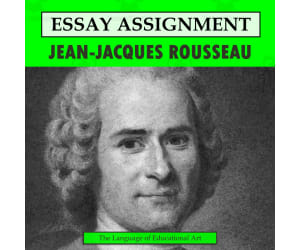
Jean-Jacques Rousseau Research Organizer & Essay Assignment
Social Studies, ELA, Biographies, History, History: World, History: Ancient, Grade 7, 8, 9, 10, Activities, Projects, Worksheets & Printables, Worksheets
Jean-Jacques Rousseau was a Genevan philosopher whose work influenced the French Revolution and whose exploration of the early period of the United States influenced the world's perception of the new nation. This resource provides your students with the opportunity to independently explore and write about the life of the important philosopher with this engaging research planner and essay assignment. This carefully scaffolded and easy-to-assign-AND-assess resource has been designed to guide student learning from Jean-Jacques Rousseau fact-collection to the careful development of a five-paragraph research essay. Teaching this resource could not be easier! Start by handing out the background research and note-taking worksheet (you could also ONLY hand this out if you want a shorter lesson!). Once students have found their facts and sources, provide them with the essay outline activity, which guides them step-by-step through the requirements of a short research essay. From there, drafting their essay, using the provided peer review checklist, and submitting their final draft will be no problem at all. And then you can assess their work with the provided Common Core rubric! Use this entire resource as a complete research lesson or just part of it as a short research activity or sub plan! This TeachSimple download includes: - A Jean-Jacques Rousseau essay writing assignment with directions, requirements, research essay writing tips, a peer review checklist, and Common Core-tied grading rubric - An editable rubric, provided as a link, that lets you make adjustments to the grade values and guidelines. This link is provided as as Google Sheet specifically built for integration into Google Classroom, although you can also modify it for use in other Learning Management Systems (LMSs) - A Jean-Jacques Rousseau biography and note-taking worksheet that will guide your students through information gathering. This straightforward two-page handout includes instructions for background research, a fun drawing section, and an area to cite quality sources and organize conducted research - A research essay outlining worksheet, so students build on their Jean-Jacques Rousseau notes in a clear and simple manner as they build their work towards a draft and final paper - All 6-pages of this lesson are provided in full-color and B&W versions Although this resource can be fitted for any secondary Language Arts classroom, it has been carefully designed to work best in grades 8 through 11. The included rubric is subtly but specifically tied to Common Core ELA Standards for Language (3) and Writing (2 and 7). This resource is provided as a print-ready, bookmarked, and adjustable PDF file. The rubric is also included as an editable Google Sheet. This resource contains 6 pages and 1 Google Sheet.
Author The Language of Educational Art, LLC
Tags Essay, Rubric, Research, Notetaking, Outlining