
Ancient societies & government
Peopling of the World Chart
Give students a graphic-organizer overview of human prehistory, from early hominids through the rise of cities, and have them trace how agriculture led to civilization.




Classroom resources
Organize historical events, people and ideas with comparison charts and study references. Choose ancient civilizations, revolutions, US history or world-war summaries.
Browse by lesson focus
Choose the topic or kind of practice you need.
Showing 1–24 of 38 resources

 Show filters
 Give students a graphic-organizer overview of human prehistory, from early hominids through the rise of cities, and have them trace how agriculture led to civilization.

A one-page printable reference sheet summarizing the Renaissance, trade routes/goods linking Europe-Asia-Africa, key Renaissance figures, and world religion locations circa 1500 AD, aligned to a state history standard (SOL 2).

This is a River Valley Civilizations Comparison Chart + Essay Writing. Students will use the chart to compare 4 of the early River Valley civilizations. They will consider 3 things: 1) Geography 2) Power and people 3) Science and technology A completed chart is included as a guide or answer key. Finally, students will choose an essay…

A one-page chart and comprehension worksheet teaching the four types of government used in ancient Greek city-states (monarchy, aristocracy, oligarchy, direct democracy).
Provides a comparative history lesson on the lives, conquests, and legacies of Alexander the Great and Genghis Khan for middle/high school students.

This review chart places Judaism, Christianity, Islam, Hinduism, and Buddhism side by side for quick reference after a world religions unit. Students can follow one column across the traditions or use a row to recall information from class. Its compressed entries and historical location column make it a starting point for a review conversation rather than a full account of each tradition.

Teaches the M.A.I.N. causes of World War I (Militarism, Alliances, Imperialism, Nationalism) and the war's triggering event via a study-guide passage and a graphic organizer summary activity.

A one-page bulleted reference chart/graphic organizer summarizing causes, key figures, and results of independence movements in India, the Middle East, South Africa, and Africa generally, for world history study.

Use the relief, recovery and reform sections to organize research on responses to the Great Depression. A two-page reference accompanies a two-page partly completed student organizer. Review the reference before use: its fifteen entries include the later FAA, and the AAA and FHA names need correction. Students can check the supplied examples against reliable historical sources before completing the remaining spaces.
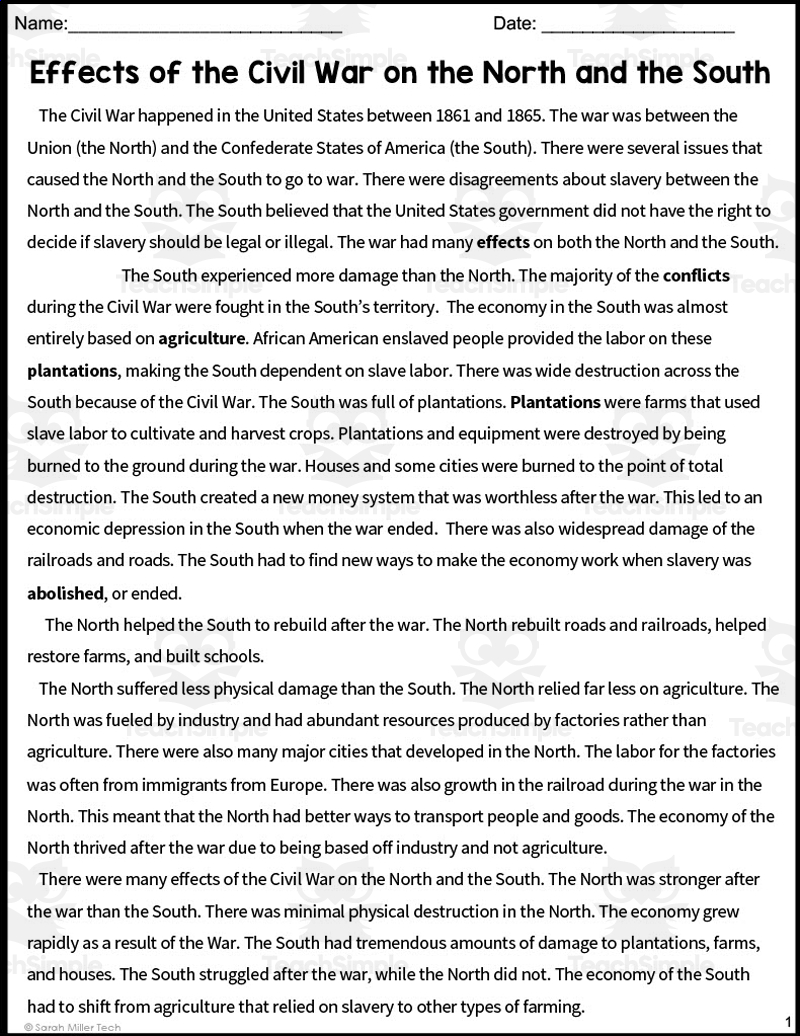
Teach students about how the Civil War economically, socially, and politically impacted the North (Union) and South (Confederacy) through a reading passage and follow-up activities.
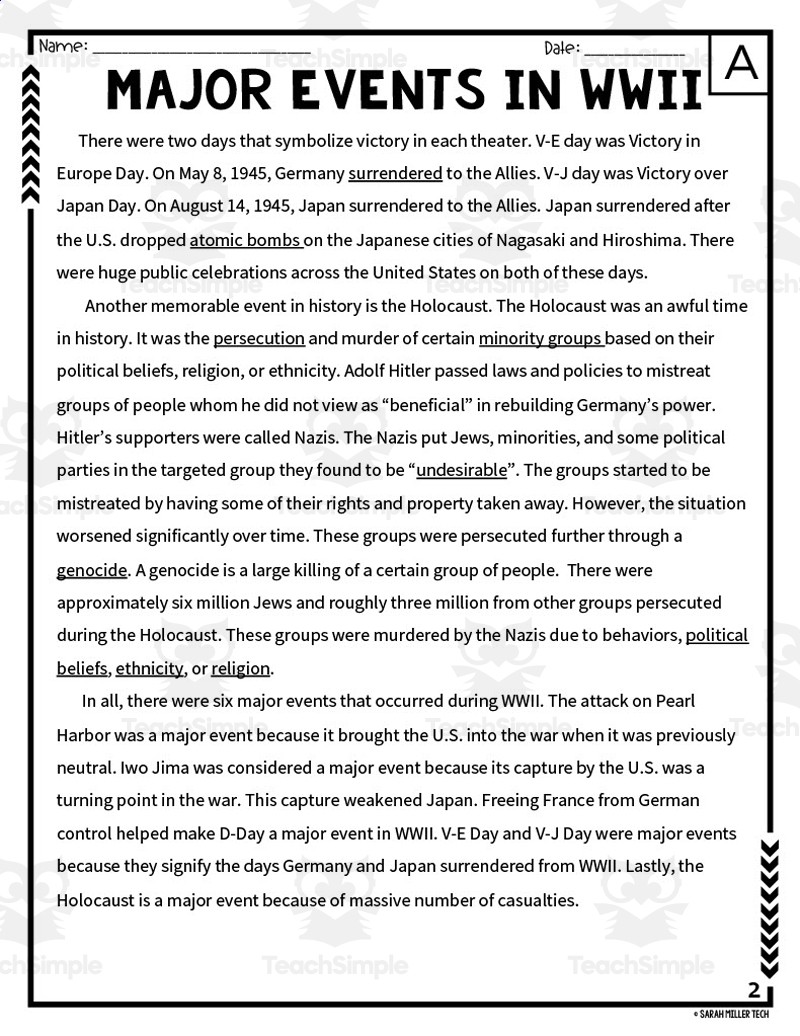
A no-prep reading packet teaching major events of World War II (Pearl Harbor, Iwo Jima, D-Day, V-E Day, V-J Day, the Holocaust) through differentiated informational passages.
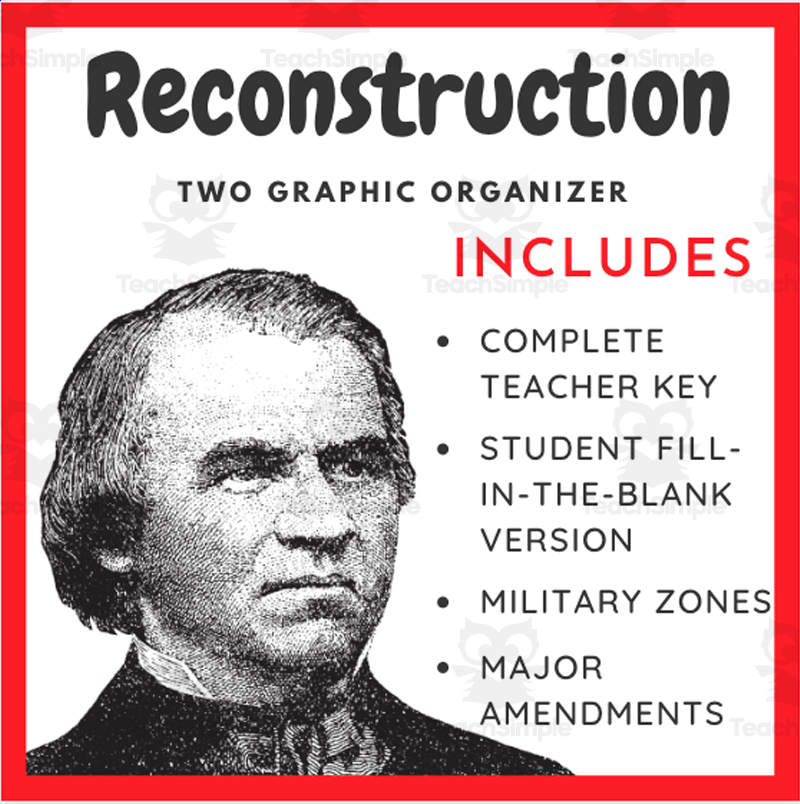
Two graphic organizers that help students analyze and summarize the political, social, and economic history of the Reconstruction era (1865-1877).
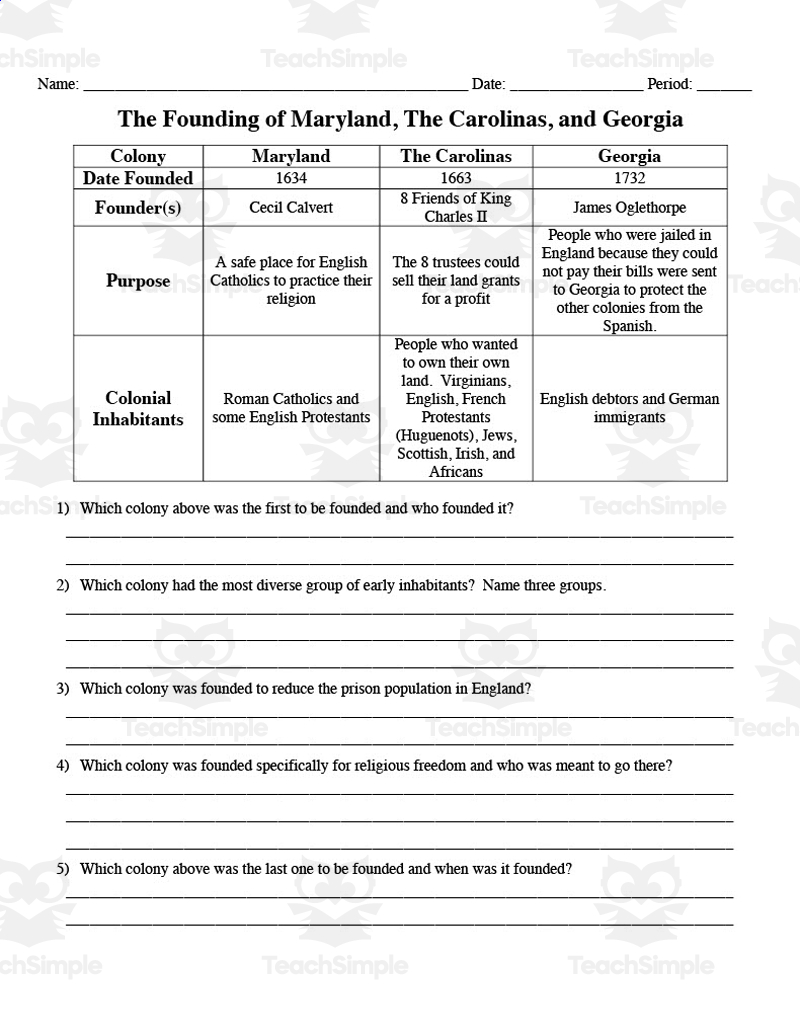
A comprehension worksheet that uses a comparison chart of three American colonies (Maryland, the Carolinas, Georgia) to build analytical reading and historical comparison skills.

A high-school world/European history worksheet on 18th-century Enlightened Despots (Frederick the Great of Prussia, Joseph II of Austria, Catherine the Great of Russia).

Teach high school students to read and interpret a chart on the historical evolution of nuclear weapons (atomic and hydrogen bomb tests by the USA and USSR) and answer chart-based comprehension questions.
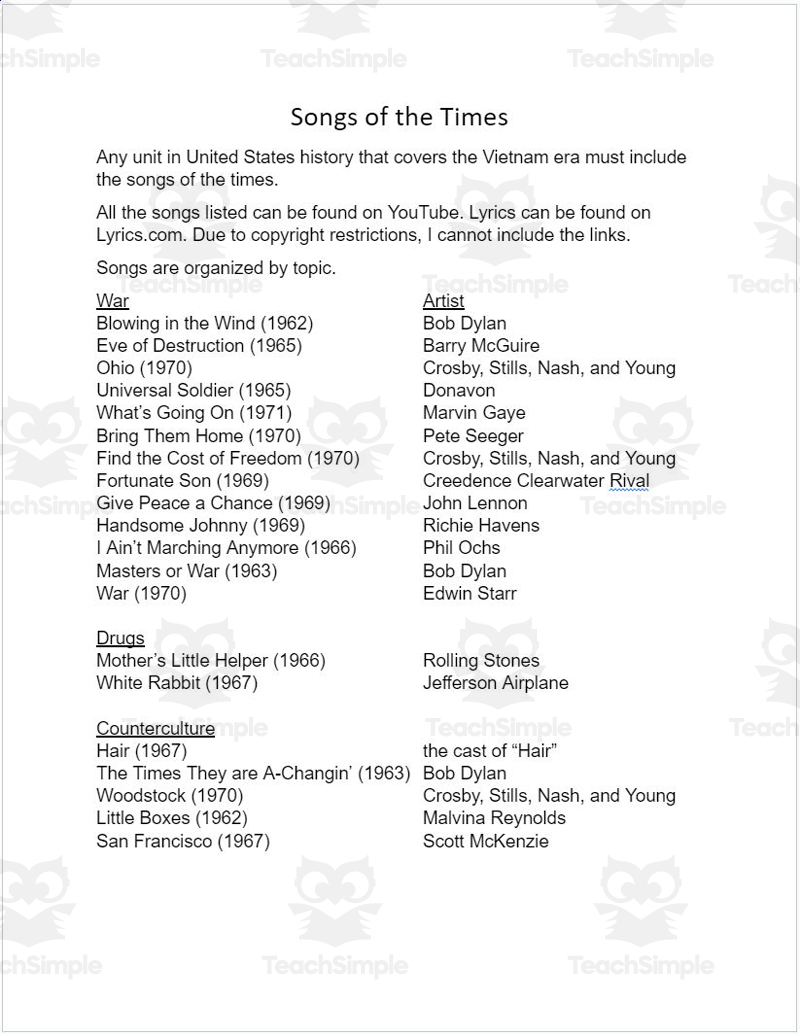
Reference list of protest-era songs organized by topic, intended to supplement a U.S. history unit on the Vietnam era.

Famous American Wilderness Road Trails This informative PDF teaches students about fifteen major wilderness road trails that were instrumental in the exploration, expansion, and development of the United States.
The Presidents Time Line is a resourceful tool designed to cultivate students' interest in our nation's historical figures. This unique educational tool takes a fresh approach to teaching history, making it an exciting endeavor for…

A one-page completed comparison chart/study guide explaining why Native Americans were easily conquered by Europeans, contrasting Eurasian and Native American advantages in domesticated animals, agriculture, disease immunity, technology, and organization (a Guns, Germs, and Steel-style geographic-determinism argument).
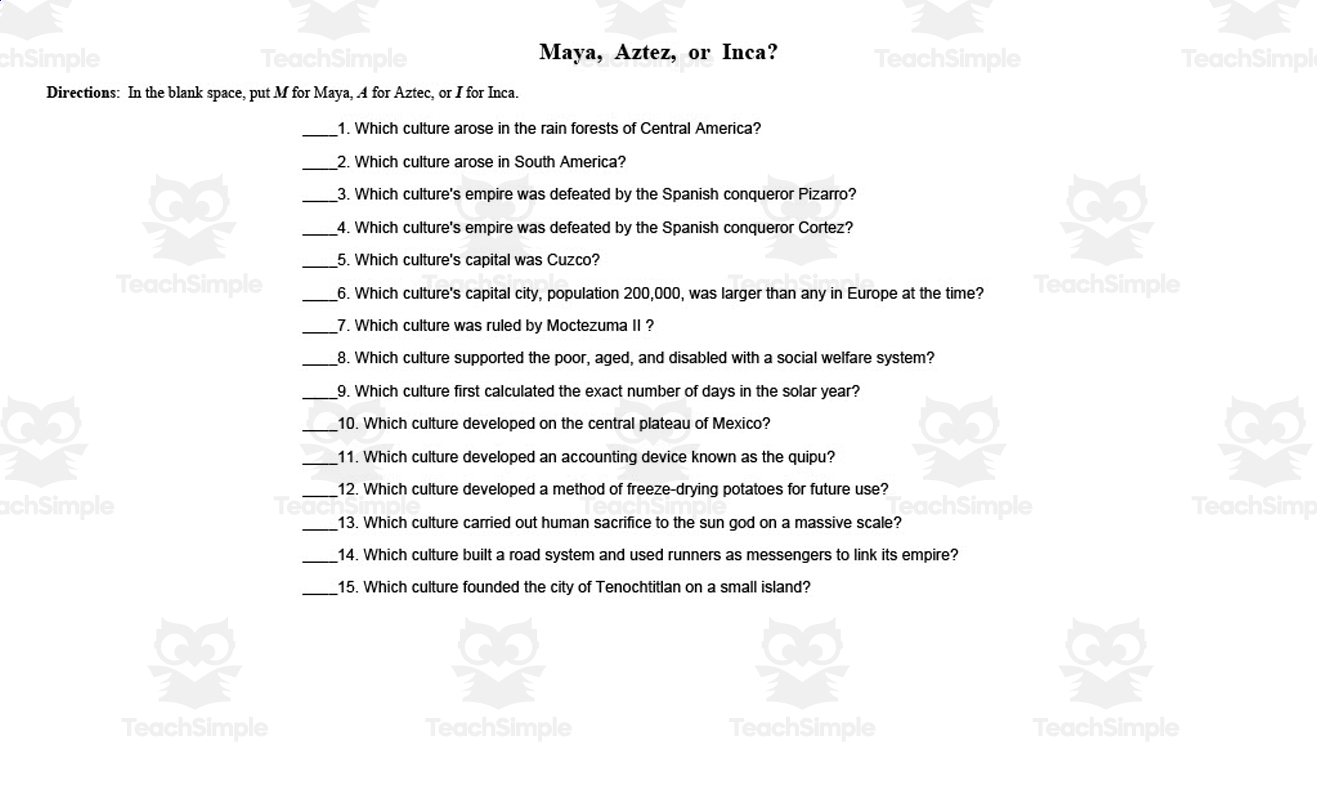
Chart and fill-in worksheet teaching students to compare and identify facts about the Maya, Aztec, and Inca civilizations.

A set of history handouts and charts teaching the Enlightenment era: England's steps toward limited monarchy, Enlightenment philosophers' ideas, and the Enlightenment's influence on the U.S. Constitution.

Reference chart summarizing leaders of Latin American independence movements (1800-1822).

Reference/study resource detailing key inventions of the Industrial Revolution by category, for students to fill in and study.

A reference chart profiling over 20 notable Renaissance and Reformation figures for study/review.