



2,209 products added recently
Page 103 - 5th Grade Lesson Plans
Prepare your fifth graders for future challenges with lesson plans that promote higher-order thinking and mastery of key concepts. These resources encourage collaboration and in-depth exploration across subjects. Use them to guide your students toward readiness for middle school.

 Show filters

Global Warming CAUSES: Greenhouse Gases: Ozone - FLASH-PC
Science, Earth and Environmental Sciences, Environmental Science, Common Core, Grade 5, 6, 7, 8, Teacher Tools, Lesson Plans
Global Warming CAUSES: Greenhouse Gases: Ozone - FLASH-PC The Global Warming CAUSES: Greenhouse Gases: Ozone - FLASH-PC is an educational tool designed to enrich and support teachers' lesson plans on environmental science. This teaching resource is geared towards 5th to 8th-grade classrooms but it's versatile enough to be of benefit for a myriad of educational settings, including homeschooling. This resource illuminates upon the critical subject of ozone's role in global warming, applying curriculum-based content conveyed through engaging reading passages. It prepares students for the learning experience with pre-read questions and reinforces comprehension with post-read questions. Interactive Activities More than just a passive reading experience , this educational tool provides learners with interactive activities that help them connect theory with practice. The activities work great for: Growing understanding on greenhouse gases as a cause of global warming Individual study periods or small group learning spaces, deeply engaging pupils into practical aspects of environmental science. Tailored For Teachers This product is supplemented by printable material and vocabulary flashcards that can be incorporated onto bulletin boards or utilised during classroom instruction for added university-bound knowledge reinforcement. Moreover educators will find its application useful since its approach aligns perfectly with Common Core State Standards and is penned following Bloom’s Taxonomy framework which suggests progression from fundamental understanding to higher-order cognitive skills like analyzing and evaluating. Videos alongside audio files are encompassed within the package ensuring each student grasps ozone's implication in Global warming no matter their learning preponderance. The Software (PC) file type implies easily accessible digital resources allowing swift integration into virtual classrooms or e-learning platforms alongside traditional physical teaching scenarios. Addressing a significant topic such as greenhouse gases' impact on our environment calls for making abstract concepts tangible; hence introducing this comprehensive resource to your lesson plan would prove instrumental in engaging today’s learners about earth's environmental wellbeing.
Author Classroom Complete Press
Tags Software (PC)

Measurement: Temperature & Time - Learn the Skill - FLASH-MAC
Math, Measurements, Grade 3, 4, 5, Teacher Tools, Lesson Plans
Measurement: Temperature & Time - Learn the Skill - FLASH-MAC Designed to simplify the complex concepts of temperature and time measurements, this comprehensive teaching resource offers a curated selection of real-world word problems. This software is targeted towards Grade 3 to Grade 5 students, making learning about measurement interactive and enjoyable. The software includes lessons that are well-conceived and reflective of the topics intrinsic in Mathematical Measurements. It presents students with practical math problems associated with day-to-day life which helps them grasp the concept more quickly- learning not just theoretically but also practically. Versatility & Language Preferences: Educators can implement this resource for whole group instruction during class or for tutorial sessions. Children can use it individually at home or during homework assignments for reinforcement. The lesson plan caters to bilingual learners effectively by providing voice over and text options in both English and Spanish. Educational Standards: This lesson plan aligns perfectly well with both Mathematics education standards under CCSS principles while simultaneously addressing STEM initiatives. All content corresponds meticulously well to NCTM standards too; our goal is always to foster mathematical elements while enhancing comprehensive skills amongst students. In conclusion, Measurement: Temperature & Time – Learn the Skill turns out as an efficient tool committed towards nurturing mathematical prowess amongst learners subtly yet significantly whilst fulfilling suggested curriculum objectives hassle-free. This product is an excellent addition for any educators toolbox aimed at making teaching measurements interactive and engaging. Note: The product contains one file that's accessible via Mac compatible software. </p
Author Classroom Complete Press
Tags Software (Mac)

I WONDER - What Did Knights Do | Animated Video Lesson
History: Ancient, History, Social Studies, History: British, History: Europe, History: World, Grade 4, 5, 6, 7, 8, 9, 10, Lesson Plans, Teacher Tools
Video Introduction An amazing video designed for the students to learn more about history. I WONDER - What Did Knights Do | Animated Video Lesson Do you like history? Which topic do you really enjoy about history? Have you ever read an interesting fact about the Vikings? If yes, can you mention them? What do you like most about the Victorian era? Can you name all the Tudors? Have you ever wondered how people used to live in ancient Japan and ancient China? Do you know any interesting facts about ancient Egyptians and the Pharaohs? Have you ever visited South America? What do you know about Incas and Aztecs? Celtic culture was really one of a kind, can you name any of the places that Celts used to live in? Imagine yourself living during the ancient Roman empire, how your life will look like? Ancient Greece was an amazing place to live in. What do you know about ancient Greek life? I WONDER - What Did Knights Do | Animated Video Lesson The video is perfect for encouraging the researching skills for the students, while learning more about history. I WONDER - What Did Knights Do | Animated Video Lesson This friendly designed video is suitable for students at school, homeschooling, and as a group activity. Format Available in MP4 format.
Author Educational Voice
Tags What Did Knights Do, What Did Knights Do Video, Knights, Knights Facts, Knights Facts For Kids, Knights Video, Knights Video For Kids, Castle, Castles, Castles Video

Cells, Skeletal & Muscular Systems Gr. 5-8
Science, Life Sciences, Human Body, Grade 5, 6, 7, 8, Teacher Tools, Lesson Plans
Cells, Skeletal & Muscular Systems Gr. 5-8 An effective teaching resource designed specifically for students in grades 5 to 8. It offers an engaging way of understanding the intricacies of human anatomy. Key components: Cellular Exploration: The basis of life, learners are guided to build models depicting important cell parts. This practical approach aids apprehension and memorization. Tissue and Organ Discovery: After understanding cells, the learning journey ventures into tissues and organs that form comprehensive systems working together seamlessly within our bodies. Skeletal System Study: A unique interactive approach is applied - designing an alien skeleton using knowledge about human bones– emphasizing not just creative thinking but also a solid understanding of bone structure. Detailed briefings on joints and cartilage offer insights into how they provide mobility within our body. Muscular System Analysis:The differences between various muscles types - skeletal muscle vs smooth muscle vs cardiac muscle are elaborated along with further insight into voluntary versus involuntary movements. This versatile resource can be used in different teaching settings such as full class discussions or smaller group workshops thereby catering to individual learner styles. It even encourages parental engagement through homework tasks. Aligned with Next Generation State Standards while incorporating principles from Bloom's Taxonomy and STEAM initiatives, this product provides numerous hands-on activities like crosswords puzzles word searches comprehension quizzes answer keys etc, Finally there is ready access to a one-file PDF for seamless usage making it a value addition to any science teacher's toolkit.
Author Classroom Complete Press
Tags PDF

Which Country Gave George Washington An Honorary Citizenship
Biographies, Social Studies, Grade 4, 5, 6, 7, 8, 9, 10, Lesson Plans, Teacher Tools
Video Introduction An amazing video designed for the students to learn more about famous people in different countries. I WONDER - Which Country Gave George Washington An Honorary Citizenship | Animated Video Lesson Do you know this person? How much do you know about him/her? Who is your idol? Why did you choose this person? Tell us more about him/her? Who is your favorite athlete? Or what is your favorite team? Have you recently heard a story about a famous person? Who was this person? Can you tell us more about him/her. Who is your favorite president, king, or queen? Why you chose that person? In your country, who are the most famous people? What did they do? Can you tell us more about them. What is your favorite invention? Who invented it? Who is your favorite artist? What is the most famous thing he/she have done? What is the most enjoyable you have read before? Who wrote it? I WONDER - Which Country Gave George Washington An Honorary Citizenship | Animated Video Lesson The video is perfect for encouraging the researching skills for the students, while learning more about this fantastic place. I WONDER - Which Country Gave George Washington An Honorary Citizenship | Animated Video Lesson This friendly designed video is suitable for students at school, homeschooling, and as a group activity. Format Available in MP4 format.
Author Educational Voice
Rating
Tags Which Country Gave George Washington An Honorary Citizenship, Which Country Gave George Washington An Honorary Citizenship Video, George Washington, George Washington Video, George Washington Facts

Galaxies & The Universe: Nebulae Gr. 5-8
Science, Earth and Environmental Sciences, Space, Grade 5, 6, 7, 8, Teacher Tools, Lesson Plans
Galaxies & The Universe: Nebulae Gr. 5-8 An instructional resource with comprehensive teaching materials on the study of nebulae, a critical component in understanding galaxies and our universe. Ideal for Grade 5 to Grade 8 students who express an interest in astronomy. Main Learning Journey: Milky Way Galaxy exploration Journey around black holes and gravity Detailed study of nebulae including various sources and speed of light Fascinating overview of quasars - the most distant observable objects in space The resource utilizes simplified language for easy comprehension which is complemented by: Reading passages that nurture knowledge reinforcement through repetition, Student activities both pre and post reading, Vibrantly designed color mini posters as visual aids during learning sessions. Versatility & Compliance: This resource can be incorporated into whole-class collaboration sessions, specialized small group work, or assigned as independent assignments. It complies with State Standards while being aligned with Bloom's Taxonomy principles. The bonus inclusion is its focus on Science Technology Engineering Math (STEM) initiative – emphasizing problem-solving skills in an innovative way making sure students are tech-ready for the future! Note: Packaged as a PDF file, this convenient single product boasts compatibility across learning platforms. Conclusively, Galaxies & The Universe: Nebulae Gr. 5-8 serves as a significant tool offering foundational understanding about galaxies' fascinating components for young aspiring astronomers!
Author Classroom Complete Press
Tags PDF

Gondolas Reading Comprehension Passage - Cored Ed Encyclopedia
ELA, Reading Comprehension, Reading, Science, Technology, Pre-Reading, Language Development, History, Social Studies, Geography, Grade 2, 3, 4, 5, Worksheets & Printables, Worksheets, Teacher Tools, Centers, Activities, Writing Prompts, Assessments, Quizzes and Tests, Quizzes, Lesson Plans
This gondolas reading comprehension with lesson plan includes: Visualization (on the front cover) Start your lesson by taking a minute to think and share something about the topic. Read the script aloud (slowly), perhaps prepare some music or sound effects. Student close their eyes and let their imaginations wander. Students open their eyes, read the question aloud and give them a few minutes to complete. Ask a few students to share or keep answers until the end to compare with what they learn in the passage. Quick pause—thousands of Cored Education products are included with your TeachSimple membership. Download links and encyclopedia index available here. Pre-Reading Trivia Students will write down one thing they already know about the subject and then read five more facts and discuss. These facts are fun, and the students will enjoy learning about the subject before reading more. Give 1 minute for students to write what they already know (no pressure—best guess is fine). Read the five facts together. After each fact, do ask a student for their opinion, was it surprising? Set a purpose by asking students to highlight/underline one fact they want to learn more about during the reading. Reading Passage The text is a high-interest reading passage with set paragraphs, roughly three to four paragraphs long. It contains a variety of themes about the topic, anywhere from history to technology. The passage is between 250 and 350 words in length. First, ask students to look at the headings and see what they’ll learn about today. What do they know about the topic/heading? First read options: Teacher read-aloud (best for support). Partner reading (paragraph by paragraph). While reading, students underline important details, and vocabulary words they think may come up in the questions section. Mixed Questions The first question page contains four multiple-choice questions, each with a choice of four answers, and three written response questions that require a sentence or two from the student. Students complete the mcqs first independently, then review quickly as a class. For the 3 written responses, try to get students giving the answer with some form of evidence: “I think ___ because the text says ___.” If students get stuck, send them back to check the passage. Vocabulary Questions Practice seven key words from the text in this section across two activities. First section is scrambled words where students will unscramble three words given a clue for each. The second section is a word to meaning matching activity. Before starting, have some students read out words they underlined in the passage. Ask students to say the word and read aloud the sentence(s) around each word. Ask students to do scrambled words and the matching exercise in pairs then go through answers as a class. For the scrambled spelling task, get four pairs to come up to the board and write the words for extra practice with the other student reading out the clue. For the matching task, prompt students to give full sentences: “I matched ___ with ___ because ___.” Creative Writing In this question, the student will be required to write a five to eight sentence paragraph on a question related to the topic. Before starting, ask students write down 3 key ideas they are going to include in their piece. Ask students for ideas to share around the class to help those struggling. Pro writing expectations: 5–8 sentences At least 2 facts or details from the passage At least 2 vocabulary words from the previous page Students read their paragraphs while classmates listen for facts and vocabulary words. Extension Activities This page is optional for fast finishers or to take home. There are several activities, each one requiring a different skill. Do some, do none, do all, completely optional - but you will feel reassured knowing every possibility is planned for. Includes summary writting question and additional facts. Answer Key There are answers for the multiple-choice questions, written response questions have sample answers, vocabulary answers and if there is a summary question then a sample summary will be provided as well. Lesson Plan Included Customized lesson plan for this lesson is included. Lesson Snapshot Title: Gondolas Genre: Nonfiction (informational text) Subject: Social Studies (places/culture) Primary Topic: Gondolas in Venice: design, history, and use Estimated Guided Reading Level (A–Z): Q What This Lesson Teaches Best How Venice’s canals and bridges shape daily transportation, making boats important for visiting, carrying food, and crossing town. How a gondolier can steer with one oar using a carved wooden holder called a forcola and a smooth sculling motion. How gondola design supports steering, including being slightly asymmetrical to help one oar work better. How gondolas changed over time (older styles; “banana-shaped” modern gondola in the 1800s; laws affecting appearance). How gondolas are still used today (rides for visitors, traghetti ferries across the Grand Canal, and racing in regattas ). Learning Goals Students will describe why boats are important in Venice using details from the passage. Students will explain how a gondolier steers a gondola with one oar and a forcola. Students will identify one design feature that helps the gondola steer straighter (slight asymmetry). Students will describe how gondolas changed in shape and appearance over time, based on the text. Students will explain what traghetti are and what they do in Venice. Students will describe one way gondola traditions continue today (rides or regattas). Key Vocabulary From the Text forcola — carved wooden holder that supports and guides the oar. sculling — smooth rowing motion used to move and steer. asymmetrical — not the same on both sides. traghetti — small ferries that carry people across the Grand Canal. regattas — boat races where gondoliers race with skill and pride. FULL CATALOG OF DOWNLOAD LINKS AND ENCYCLOPEDIA INDEX HERE
Author Cored Education
Rating
Tags Vocabulary, Reading Comprehension, Reading Passages, Lesson Plans, Ela Lesson Plans, Reading Comprehension Lesson Plans, Pre-reading, Science Lesson Plans, Social Studies Lesson Plans, History

I WONDER - How Strong Is Hair | Animated Video Lesson
Human Body, Life Sciences, Science, Biology, STEM, Grade 1, 2, 3, 4, 5, 6, 7, 8, Lesson Plans, Teacher Tools
Video Overview The human body is full of fascinating wonders to learn. This video is created to help the students recognize the anatomy and the job of the human body. I WONDER - How Strong Is Hair | Animated Video Lesson Every part and organ in our human body is vital so let's see how important they are. Have you ever imagined how we look like if we didn't have a skeleton? Did you know that because we have our amazing muscles we can stand! Do you know how many teeth do we have? Have you ever wondered about the food journey inside our body? Can you name all the glands in our body? Why do we have skin? Our nervous system is really good at sending signals. Can you tell us more about it? Are you really good at Mathematics, painting, or any other thing? You should really thank your brain about it! The famous five senses are really doing a great work? Can you explain how every sense works? I WONDER - How Strong Is Hair | Animated Video Lesson The video is perfect for encouraging the researching skills for the students, while learning more about our fantastic human body. I WONDER - How Strong Is Hair | Animated Video Lesson This friendly designed video is suitable for students at school, homeschooling, and as a group activity. Format Available in MP4 format.
Author Educational Voice
Tags How Strong Is Hair, How Strong Is Hair Video, Hair, Hair Facts, Hair Facts For Kids, Hair Video, Hair Video For Kids, Human Body, Human Body Facts For Kids, Human Body Video For Kids

I WONDER - How Fast Can Leopards Run | Animated Video Lesson
STEM, Life Sciences, Science, Animals, Grade 1, 2, 3, 4, 5, 6, 7, 8, Lesson Plans, Teacher Tools
Video Introduction Animal kingdoms are full of fascinating wonders to learn. This video is designed for the students to learn more about animals in different countries. I WONDER - How Fast Can Leopards Run | Animated Video Lesson Do you like animals? what is your favorite one? Do you own a pet? If yes, tell us more about it, like what its name? And what do you like most about it? What are the animal kingdoms? Can you write down the characteristics of each animal class like mammals, birds, reptiles, amphibian, fish and mollusks. Do you know that some animals can sing, can you name any of them? What is the largest and the smallest mammal in the world? What is the largest and the smallest bird in the world? What is the largest and the smallest fish in the world? I WONDER - How Fast Can Leopards Run | Animated Video Lesson The video is perfect for encouraging the researching skills for the students, while learning more about these fantastic animals. I WONDER - How Fast Can Leopards Run | Animated Video Lesson This friendly designed video is suitable for students at school, homeschooling, and as a group activity. Format Available in MP4 format.
Author Educational Voice
Tags How Fast Can Leopards Run, How Fast Can Leopards Run Video, Leopards, Leopard, Leopards Facts, Leopards Facts For Kids, Leopards Video, Leopards Video For Kids, Animal, Animals
I WONDER - What Jobs Did Viking Men Do | Animated Video Lesson
History: Ancient, History, Social Studies, History: British, History: Europe, History: USA, History: Canada, Grade 3, 4, 5, 6, 7, 8, 9, Lesson Plans, Teacher Tools
Video Introduction An amazing video designed for the students to learn more about history. I WONDER - What Jobs Did Viking Men Do | Animated Video Lesson Do you like history? Which topic do you really enjoy about history? Have you ever read an interesting fact about the Vikings? If yes, can you mention them? What do you like most about the Victorian era? Can you name all the Tudors? Have you ever wondered how people used to live in ancient Japan and ancient China? Do you know any interesting facts about ancient Egyptians and the Pharaohs? Have you ever visited South America? What do you know about Incas and Aztecs? Celtic culture was really one of a kind, can you name any of the places that Celts used to live in? Imagine yourself living during the ancient Roman empire, how your life will look like? Ancient Greece was an amazing place to live in. What do you know about ancient Greek life? I WONDER - What Jobs Did Viking Men Do | Animated Video Lesson The video is perfect for encouraging the researching skills for the students, while learning more about history. I WONDER - What Jobs Did Viking Men Do | Animated Video Lesson This friendly designed video is suitable for students at school, homeschooling, and as a group activity. Format Available in MP4 format.
Author Educational Voice
Tags What Jobs Did Viking Men Do, What Jobs Did Viking Men Do Video, Viking Men, Viking Men Facts, Viking Men Facts For Kids, Viking Men Video, Viking Men Video For Kids, Vikings, Vikings Video

I WONDER - Where Did Roald Dahl Write His Books | Animated Video
Biographies, Social Studies, Grade 4, 5, 6, 7, 8, 9, 10, Lesson Plans, Teacher Tools
Video Introduction An amazing video designed for the students to learn more about famous people in different countries. I WONDER - Where Did Roald Dahl Write His Books | Animated Video Lesson Do you know this person? How much do you know about him/her? Who is your idol? Why did you choose this person? Tell us more about him/her? Who is your favorite athlete? Or what is your favorite team? Have you recently heard a story about a famous person? Who was this person? Can you tell us more about him/her. Who is your favorite president, king, or queen? Why you chose that person? In your country, who are the most famous people? What did they do? Can you tell us more about them. What is your favorite invention? Who invented it? Who is your favorite artist? What is the most famous thing he/she have done? What is the most enjoyable you have read before? Who wrote it? I WONDER - Where Did Roald Dahl Write His Books | Animated Video Lesson The video is perfect for encouraging the researching skills for the students, while learning more about this fantastic place. I WONDER - Where Did Roald Dahl Write His Books | Animated Video Lesson This friendly designed video is suitable for students at school, homeschooling, and as a group activity. Format Available in MP4 format.
Author Educational Voice
Rating
Tags Where Did Roald Dahl Write His Books, Where Did Roald Dahl Write His Books Video, Roald Dahl, Roald Dahl Video, Roald Dahl Facts, Roald Dahl Video For Kids, Roald Dahl Facts For Kids, Roald Dahl Books

How to Write an Essay: Writing a Narrative Essay
ELA, Writing, Common Core, Grade 5, 6, 7, 8, Teacher Tools, Lesson Plans
How to Write an Essay: Writing a Narrative Essay This education material is an ideal resource, particularly designed for grade 5, grade 6, grade 7, and grade 8 teachers. The primary focus areas include Language Arts with special emphasis on enhancing writing skills. This tool elucidates the comprehensive process of essay composition. It specifically targets helping students in efficiently expressing their thoughts by writing a narrative essay. This resource can be used for whole group instruction, small group teaching or as independent homework assignments. A unique highlight includes: Tutorials based on Bloom's taxonomy representing four most common types of essays. Incorporating review lessons that reiterate knowledge about verbs, adjectives and pronouns. An all-inclusive implementation guide is included in this package to assist educators in effectively executing this resource within their classrooms or homeschooling settings. Moreover, a student assessment rubric assists teachers in evaluating learners' progress and comprehension capabilities objectively. Briefly here's what makes it more interactive: The inclusion of word puzzles and comprehension quizzes vitalizes the learning process while simultaneously refining language arts proficiency. Six vivid color graphic organizers are designed to introduce skill focus areas smoothly guiding students throughout the essay writing venture. The contents of this tool rigorously adhere with Common Core State Standards - upholding high-quality learning outcomes that align flawlessly with contemporary international education benchmarks. This digitally convenient PDF packaged resource commands ease of accessibility across varied devices without any loss in quality or formatting consistency. To summarize- How to Write an Essay: Writing a Narrative Essay surpasses mundane textbook-based methods; presenting a hybrid of comprehensive instructions intertwined with intriguing activities specifically aligned towards efficient essay writing mastery.
Author Classroom Complete Press
Tags PDF
I WONDER - How Long Does Carbon Dioxide Stay In The Atmosphere
Earth Sciences, Earth and Environmental Sciences, Science, Environmental Science, Grade 3, 4, 5, 6, 7, 8, 9, Lesson Plans, Teacher Tools
Video Introduction An amazing video designed for the students to learn more about STEM. I WONDER - How Long Does Carbon Dioxide Stay In The Atmosphere | Animated Video Lesson Do you like STEM subjects? what is your favorite one? Have you ever tried to plant a seed? If yes, tell us more about it. Or have you ever tried to invent something? If yes, tell us more about it. And how do you think it will help us? Have you ever seen a microorganism under a microscope? What was it? And how it looked like? Mathematics is a marvelous subject. Let' sharpen our brains and solve some equations. Do you like timetable tricks? What is your favorite one? Do you know how to code? Have you ever created an app or a game before? If yes, how was it like? I WONDER - How Long Does Carbon Dioxide Stay In The Atmosphere | Animated Video Lesson The video is perfect for encouraging the researching skills for the students, while learning more about this fantastic topic. I WONDER - How Long Does Carbon Dioxide Stay In The Atmosphere | Animated Video Lesson This friendly designed video is suitable for students at school, homeschooling, and as a group activity. Format Available in MP4 format.
Author Educational Voice
Tags How Long Does Carbon Dioxide Stay In The Atmosphere, How Long Does Carbon Dioxide Stay In The Atmosphere Video, Carbon Dioxide, Carbon Dioxide Facts, Carbon Dioxide Facts For Kids, Carbon Dioxide Video

I WONDER - How Can The Rainforest Help Fight Diseases | Animated Video
Human Body, Life Sciences, Science, Nature & Plants, Biology, Geography, Social Studies, Grade 3, 4, 5, 6, 7, 8, 9, Lesson Plans, Teacher Tools
Video Introduction An amazing video designed for the students to learn more about famous places in different countries. I WONDER - How Can The Rainforest Help Fight Diseases | Animated Video Lesson Do you like geography?! Let's discover this amazing place and know more about its unique stories. Have you ever visited a unique place or a different country than yours? If yes, tell us about it! If no, tell us what kind of places you would like to visit in the future? Every country has it's own story tell us the story about your country: Where it is located? And when it has been established? I WONDER - How Can The Rainforest Help Fight Diseases | Animated Video Lesson The activity is perfect for encouraging the researching skills for the students, while learning more about this fantastic place. I WONDER - How Can The Rainforest Help Fight Diseases | Animated Video Lesson This friendly designed video is suitable for students at school, homeschooling, and as a group activity. Format Available in MP4 format.
Author Educational Voice
Rating
Tags How Can The Rainforest Help Fight Diseases, Rainforest, Rainforests, Rainforests Facts, Rainforest Video, Rainforest Video For Kids, Rainforest Facts For Kids, Fight Diseases, Fighting Diseases
I WONDER - Who Was The First Pharaoh | Animated Video Lesson
History: Ancient, History, Social Studies, History: African, Grade 4, 5, 6, 7, 8, 9, 10, Lesson Plans, Teacher Tools
Video Introduction An amazing video designed for the students to learn more about history. I WONDER - Who Was The First Pharaoh | Animated Video Lesson Do you like history? Which topic do you really enjoy about history? Have you ever read an interesting fact about the Vikings? If yes, can you mention them? What do you like most about the Victorian era? Can you name all the Tudors? Have you ever wondered how people used to live in ancient Japan and ancient China? Do you know any interesting facts about ancient Egyptians and the Pharaohs? Have you ever visited South America? What do you know about Incas and Aztecs? Celtic culture was really one of a kind, can you name any of the places that Celts used to live in? Imagine yourself living during the ancient Roman empire, how your life will look like? Ancient Greece was an amazing place to live in. What do you know about ancient Greek life? I WONDER - Who Was The First Pharaoh | Animated Video Lesson The video is perfect for encouraging the researching skills for the students, while learning more about history. I WONDER - Who Was The First Pharaoh | Animated Video Lesson This friendly designed video is suitable for students at school, homeschooling, and as a group activity. Format Available in MP4 format.
Author Educational Voice
Tags Who Was The First Pharaoh, Who Was The First Pharaoh Video, First Pharaoh, First Pharaoh Facts, First Pharaoh Video, First Pharaoh Video For Kids, First Pharaoh Facts For Kids, Pharaoh, Pharaohs

Let’s READ about ZEBRAS
ELA, Reading, Grade 3, 4, 5, Teacher Tools, Lesson Plans
Let's READ about ZEBRAS Let's READ about ZEBRAS is an authentic teaching resource, specifically designed for captivating students in Grade 3 through Grade 5. This comprehensive guide explores the intriguing world of zebras and serves as a pivotal resource for educators focusing on language arts and reading lessons. The resource uses non-fictional material and factual info to enhance children's understanding of the delightful animal kingdom. Zebra Texts This educational package provides two unique, captivating text passages focused on zebras: The zebra - Simpler vocabulary suitable for Grades 2 or 3 or upper elementary students with reading difficulties. Dearing Zebras - More complex sentences for Grade 4 learners or those at higher levels. Tackling Reading Comprehension Strategies Included in the Let’s READ about ZEBRAS bundle are different comprehension strategies noted in red letters on page three. These aim at not only improving understanding but also enhancing recognition and pronunciation skills among children, boosting their confidence level while reading. Inclusive Worksheets Activities Packets Besides these texts is a pack of five engaging worksheets teeming with activities that foster reading comprehension enhancement. These exercises help validate that teachers can gauge student progress effectively while learners can review at their individual pace. Versatile Teaching Ideas Proposal Over Four Days Periods . . . This PDF product proposes an assortment of teaching ideas meant to inspire creativity when delivering lesson plans over four days periods. The goal is to encourage engagement among all levels of readers both individually during whole group settings, optimizing its versatility! Conclusion . . . In essence, Let's READ about ZEBRAS is a blend of educational content poised on strengthening literacy among young learners and sparking their interest in wildlife exploration.
Author Teach To Heaven, Reoulita.com
Tags Zebras, Non-fiction, Reading Comprehension, Vocabulary, Teaching Resource
Galaxies & The Universe: Introduction to the Universe - FLASH-PC
Science, Earth and Environmental Sciences, Space, Common Core, Grade 5, 6, 7, 8, Teacher Tools, Lesson Plans
Galaxies and the Universe: Introduction to the Universe - FLASH-PC An essential teaching resource designed to simplify complex astronomy concepts for Grade 5 through Grade 8 students. It's compatible with PC software and aims at creating a comprehensive, interactive environment that fosters curiosity about cosmic entities. Tailored Educational Content This educational content is geared towards introducing students to the colossal expanse of galaxies and universe. The materials are Informed by Common Core State Standards, guaranteeing they meet designated learning outcomes. Follows Bloom's Taxonomy, which promotes varied levels of thinking skills among students. Robust Reading Passages With Galaxies & The Universe: Introduction to the Universe FLASH-PC, educators receive robust reading passages that have been carefully crafted for optimum comprehension. This approach ensures students grasp core concepts while stimulating a deep interest in studying astronomy. Also included are 'before you read' and 'after you read' questions with each passage. Sterling Features Incorporated: Appealing printables and vocabulary flash cards – promoting hands-on involvement while expanding scientific terminologies. An integration of audio-video components along with interactive activities offers immersive experiences solidifying comprehension through visualizations combined with auditory reinforcements. Apt For Various Settings: Equally suited to both public-school teachers as well as homeschoolers alike. Whether implemented in whole group classes or smaller study circles or even assigned as out-of-class assignments. In summary, the "Galaxies & The Universe: Introduction to the Universe FLASH-PC" emerges as an effective tool responding adeptly to evolving instructional methods within educational landscapes today. It provides a streamlined blend of theory information supplemented by not just active but interactive learning tools fostering holistic student growth within astronomical sciences.
Author Classroom Complete Press
Tags Software (PC)

Canadian Trees & The Urban Forest Gr. 4-6
Social Studies, History, History: Canada, Grade 4, 5, Teacher Tools, Lesson Plans
Canadian Trees & The Urban Forest Gr. 4-6 This resource is carefully designed to engage students in Grades 4 through 6 with an interesting, hands-on study about trees, focusing primarily on Canadian urban forests. The lessons tie in closely with Social Studies content related to the history of Canada. Overview: An exploration of urban forests – regions populated mostly by human-cultured trees that do not occur naturally. The importance and uses of these artificial tree populations. Skill development for identifying local tree varieties. A historical look into Canadian forest disease events such as the Dutch Elm Disease including its origins, spread across Canada and preventive measures for today. Engaging Activities: This set of educational lessons comes packed with engaging activities including: Crossword puzzles, interactive fun capturing their interest, Word searches, engaging their minds while learning new terms, Colouring pages, a creative outlet that amplifies learning retention. Packaged to offer classroom implementation flexibility: You have three choices at your disposal: Instruct the whole class together, Split students into smaller groups for cooperative work, Set tasks individually as homework assignments –emphasising methods best suited for your students. Simplicity and Smart Organisation: The material contains one PDF file paired with an answer key adjacent to each activity section facilitating easy access without hunting down solutions therefore offering not just insightful content but simplicity too! In Summary - 'Canadian Trees & The Urban Forest Gr. 4-6': This resource presents a fun, informative learning experience. All the while offering efficient planning assistance easing teachers’ relentless daily schedules!
Author Classroom Complete Press
Tags PDF
I WONDER - Who Was Odin | Animated Video Lesson
History: Ancient, History, Social Studies, History: Europe, Grade 3, 4, 5, 6, 7, 8, 9, Lesson Plans, Teacher Tools
Video Introduction An amazing video designed for the students to learn more about mythological creatures in different cultures. I WONDER - Who Was Odin | Animated Video Lesson Do you know who are mermaids and what they look like? How do you think they have been created and in which mythology we can find them? Have you ever read about Cerberus the dog with three faces? If yes, tell us where it lived and what was its job? How did Minotaur look like? Did it has a unique story to tell from the Greek mythology? Why do people love to put gnomes in their gardens? In which mythology we can find them? Do you know that not all dragons are same some dragons are really scary and some can bring good luck. So let's discover the difference between the western dragons and Chinese dragons. Tell us which ones do you prefer? I WONDER - Who Was Odin | Animated Video Lesson The video is perfect for encouraging the creativity skills for the students, while learning more about this fantastic mythical creature. I WONDER - Who Was Odin | Animated Video Lesson This friendly designed video is suitable for students at school, homeschooling, and as a group activity. Format Available in MP4 format.
Author Educational Voice
Rating
Tags Who Was Odin, Odin, Odin Facts, Facts About Odin, Odin Video, Odin Video For Kids, Odin Facts For Kids, Viking Gods, Viking Gods Facts, Viking Gods Facts For Kids
I WONDER - Can We Still Hear In Our Sleep | Animated Video Lesson
Biology, Life Sciences, Science, Human Body, Grade 3, 4, 5, 6, 7, 8, 9, Lesson Plans, Teacher Tools
Video Overview The human body is full of fascinating wonders to learn. This video is created to help the students recognize the anatomy and the job of the human body. I WONDER - Can We Still Hear In Our Sleep | Animated Video Lesson Our brain is a marvelous organ inside our bodies! Can you mention five facts about the brain? Can you mention 5 organs that are controlled by the brain? How do our senses work? Have you ever wondered why the muscles are important for our body? Do you think we can sit down or stand up with using our muscles? I WONDER - Can We Still Hear In Our Sleep | Animated Video Lesson The video is perfect for encouraging the researching skills for the students, while learning more about our fantastic human body. I WONDER - Can We Still Hear In Our Sleep | Animated Video Lesson This friendly designed video is suitable for students at school, homeschooling, and as a group activity. Format Available in MP4 format.
Author Educational Voice
Rating
Tags Can We Still Hear In Our Sleep, Ears, Ears Facts, Ears Facts For Kids, Ears Video, Brain, Brain Facts, Brain Video, Brain Video For Kids, Brain Facts For Kids

An Elementary School Play: Learning a Lesson
Creative Arts, Art, Drama, Grade 3, 4, 5, Lesson Plans, Teacher Tools
An Elementary School Play: Learning a Lesson An Elementary School Play: Learning a Lesson is a 17-page instructional tool designed to enhance teaching and learning in classrooms and homeschool environments. It is a creative resource designed for upper elementary students. The play opens with a '40s-era school scenario enabling your students to learn about historical education settings while understanding proper student-teacher etiquette. It also teaches children that the "grass is not always greener" on the other side and that getting an education should be appreciated. Flexibility and Adaptation The play is written with 12 on-stage roles and offers opportunities for unlimited behind-the-scenes responsibilities. This product goes beyond a conventional reading lesson; it can be used for homework assignments (see the Teacher Guide for ideas) or even performed for an all-school audience. Students can research what it was like growing up in America in the 1940s and what education was like back then. Educational Benefits Aids literacy development through choral reading practices. Fosters comprehension during reading sessions. (Specific to this play is the use of flashback scenes, a device in narratives by which an event or scene taking place before the present time in the narrative is inserted into the chronological/structure of the text). Expands creativity in presentation skills and performance arts. Develops research skills. Increases an interest in history and drama. This play is just one of the many creative plays on this site. Check out individual titles, and bundled grade level and thematic groupings by this author, Sue Peterson. Your students will continue learning lessons!
Author Sue Peterson
Tags Elementary School Play, Educational Tool, Choral Reading, Cross-curricular, Character Development
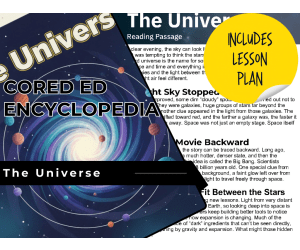
The Universe Reading Comprehension Passage - Cored Ed Encyclopedia
ELA, Language Development, Reading Comprehension, Reading, Science, Earth and Environmental Sciences, Space, Pre-Reading, Vocabulary, Physics, Grade 2, 3, 4, 5, Worksheets & Printables, Worksheets, Teacher Tools, Centers, Activities, Writing Prompts, Assessments, Quizzes and Tests, Quizzes, Lesson Plans
This universe reading comprehension with lesson plan includes: Visualization (on the front cover) Start your lesson by taking a minute to think and share something about the topic. Read the script aloud (slowly), perhaps prepare some music or sound effects. Student close their eyes and let their imaginations wander. Students open their eyes, read the question aloud and give them a few minutes to complete. Ask a few students to share or keep answers until the end to compare with what they learn in the passage. Quick pause—thousands of Cored Education products are included with your TeachSimple membership. Download links and encyclopedia index available here. Pre-Reading Trivia Students will write down one thing they already know about the subject and then read five more facts and discuss. These facts are fun, and the students will enjoy learning about the subject before reading more. Give 1 minute for students to write what they already know (no pressure—best guess is fine). Read the five facts together. After each fact, do ask a student for their opinion, was it surprising? Set a purpose by asking students to highlight/underline one fact they want to learn more about during the reading. Reading Passage The text is a high-interest reading passage with set paragraphs, roughly three to four paragraphs long. It contains a variety of themes about the topic, anywhere from history to technology. The passage is between 250 and 350 words in length. First, ask students to look at the headings and see what they’ll learn about today. What do they know about the topic/heading? First read options: Teacher read-aloud (best for support). Partner reading (paragraph by paragraph). While reading, students underline important details, and vocabulary words they think may come up in the questions section. Mixed Questions The first question page contains four multiple-choice questions, each with a choice of four answers, and three written response questions that require a sentence or two from the student. Students complete the mcqs first independently, then review quickly as a class. For the 3 written responses, try to get students giving the answer with some form of evidence: “I think ___ because the text says ___.” If students get stuck, send them back to check the passage. Vocabulary Questions Practice seven key words from the text in this section across two activities. First section is scrambled words where students will unscramble three words given a clue for each. The second section is a word to meaning matching activity. Before starting, have some students read out words they underlined in the passage. Ask students to say the word and read aloud the sentence(s) around each word. Ask students to do scrambled words and the matching exercise in pairs then go through answers as a class. For the scrambled spelling task, get four pairs to come up to the board and write the words for extra practice with the other student reading out the clue. For the matching task, prompt students to give full sentences: “I matched ___ with ___ because ___.” Creative Writing In this question, the student will be required to write a five to eight sentence paragraph on a question related to the topic. Before starting, ask students write down 3 key ideas they are going to include in their piece. Ask students for ideas to share around the class to help those struggling. Pro writing expectations: 5–8 sentences At least 2 facts or details from the passage At least 2 vocabulary words from the previous page Students read their paragraphs while classmates listen for facts and vocabulary words. Extension Activities This page is optional for fast finishers or to take home. There are several activities, each one requiring a different skill. Do some, do none, do all, completely optional - but you will feel reassured knowing every possibility is planned for. Includes summary writting question. Answer Key There are answers for the multiple-choice questions, written response questions have sample answers, vocabulary answers and if there is a summary question then a sample summary will be provided as well. Lesson Plan Included Customized lesson plan for this lesson is included. Lesson Snapshot Title: The Universe Genre: Nonfiction (informational text) Subject: Science (Earth & Space Science) Primary Topic: Evidence the universe is expanding over time Estimated Guided Reading Level (A–Z): S What This Lesson Teaches Best Defines universe as “all of space and time and everything inside them,” expanding beyond the idea of stars as a “roof” above Earth. Explains how improved telescopes helped people realize some “cloudy” spots were actually faraway galaxies beyond the Milky Way. Uses the idea of galaxy light “shifted toward red” to show galaxies moving away and that space itself is stretching. Introduces the Big Bang as an explanation for expansion from a hotter, denser beginning, including the estimated age of the universe (about 13.8 billion years). Builds scientific curiosity by highlighting unanswered questions about “dark” ingredients that can’t be seen directly but affect the universe through gravity and expansion. Learning Goals Students will explain what the word universe means using details from the passage. Students will describe how better telescopes changed what people understood about “cloudy” spots in the sky. Students will explain what “shifted toward red” light suggests about galaxies and space stretching. Students will summarize the Big Bang idea as the universe expanding from a hotter, denser state. Students will describe why looking deep into space can also mean looking back in time. Students will identify one mystery scientists still study about the universe mentioned in the text. Key Vocabulary From the Text universe — all space, time, and everything inside them. galaxies — huge groups of stars far beyond the Milky Way. stretching — space expanding so distances grow larger. expanding — growing bigger as space spreads out. gravity — a force that affects everything by pulling. FULL CATALOG OF DOWNLOAD LINKS AND ENCYCLOPEDIA INDEX HERE
Author Cored Education
Rating
Tags Vocabulary, Reading Comprehension, Reading Passages, Lesson Plans, Ela Lesson Plans, Reading Comprehension Lesson Plans, Pre-reading, Science Lesson Plans, Earth Science, Space
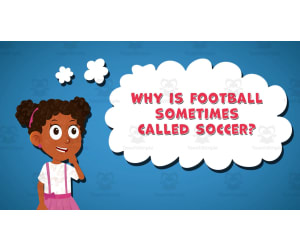
I WONDER - Why Is Football Sometimes Called Soccer | Animated Video
Sports, P.E. & Health, Grade 2, 3, 4, 5, 6, 7, 8, Lesson Plans, Teacher Tools
Video Introduction An amazing video designed for the students to learn more about sports in different countries. I WONDER - Why Is Football Sometimes Called Soccer | Animated Video Lesson What is your favorite sport? Tell us more about it. Who is your favorite athlete? Or what is your favorite team? Do you know who invented basketball? When basketball has been invented? Can you tell us where is the first time it has been played? Have you ever played soccer or football? If yes, tell us what was your position: A goal keeper, midfield player, or a defender? Do you like watching golf? If yes who is your favorite player? Can you name the differences between tennis and ping pong? Have you ever played volleyball on the beach? When it has been officially recognized by the Olympics? Do you like watching Formula 1 races? If yes, who is your favorite team or driver? Have you ever tried to play handball? If yes tell us more. Do you like watching people skiing or surfing? I WONDER - Why Is Football Sometimes Called Soccer | Animated Video Lesson The video is perfect for encouraging the researching skills for the students, while learning more about this sport. I WONDER - Why Is Football Sometimes Called Soccer | Animated Video Lesson This friendly designed video is suitable for students at school, homeschooling, and as a group activity. Format Available in MP4 format.
Author Educational Voice
Rating
Tags Why Is Football Sometimes Called Soccer, Why Is Football Sometimes Called Soccer Video, Football, Football Facts, Football Video, Football Video For Kids, Soccer, Soccer Facts, Soccer Video
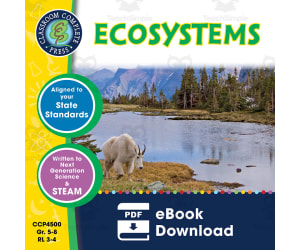
Ecosystems Gr. 5-8
Science, Earth and Environmental Sciences, Environmental Science, Grade 5, 6, 7, 8, Teacher Tools, Lesson Plans
Ecosystems Gr. 5-8 Ecosystems Gr. 5-8 simplifies complex life science concepts into lessons and activities that enhance understanding of different types of ecosystems and their dynamics. It elucidates students on the relationship between biotic and abiotic components within ecosystems. Key Highlights: In-depth examination of ecosystem components, including growth patterns. Emphasises roles of producers, consumers and decomposers alike. Encourages students to understand how ecosystems evolve over time through engaging activities. The resource further enriches environmental science comprehension by depicting food chains vividly with hands-on tasks to create food webs. The ultimate goal being inspiring critical thinking about ecological interplay whilst fostering creativity from grade 5th to the 8th pupils. The resource also delves into photosynthesis and the water cycle , spotlighting how they shape a functioning ecosystem. Additionally, it introduces students to microscopic wonders like microorganisms' close-up view. Fine Points: Presents lessons aligning with Next Generation Science Standards (NGSS). Packages PDF comprising of interactive experiments designed under Bloom's Taxonomy principles & STEAM initiatives value for cooperative learning or individual study strategies. Besides, fun exercises like crosswords & word searches are included for knowledge reinforcement complemented with comprehension quizzes/answer keys providing regular progress check-in points aiding effective teaching approaches whether its group studies or homework assignments– even catering online learners via an eBook version is incorporated too. A Perfect Asset For Grade 5-8 Educators! This teaching material enhances standard classroom teachings utilizing students’ independent exploration abilities while delivering practical knowledge in compliance with scientific standards. Above all Ecosystems Gr. 5-8 fosters appreciation for Earth’s biodiversity and creates a sense of environmental responsibility among students – essentially a resource crafted to make science classes more impactful.
Author Classroom Complete Press
Tags Science Lesson Plan, Ecosystems Lesson Plan, Chapter Slice, Informational Text, Environment Text