



2,227 products added recently
Page 90 - 5th Grade Lesson Plans
Prepare your fifth graders for future challenges with lesson plans that promote higher-order thinking and mastery of key concepts. These resources encourage collaboration and in-depth exploration across subjects. Use them to guide your students toward readiness for middle school.

 Show filters

Talk is Cheap | Figurative Language Activity | Micro-Learning Deck
ELA, Reading, Reading Comprehension, Grade 4, 5, 6, 7, Teacher Tools, Lesson Plans
This resource allows students to explore figurative learning in a fun way. The figurative language term for this learning deck is "Talk is Cheap." Through close reading and a reading passage with audio, your students will better comprehend figurative language! Included: -Video lesson on language concept -Reading passage w/ audio Comprehension -Quick write
Author Teach Me This
Tags Talk Is Cheap, Figurative, Language, Digital Lesson, Comprehension Activity

I WONDER - Can Animals Live On Ice Caps | Animated Video Lesson
Geography, Social Studies, Animals, Life Sciences, Science, Grade 3, 4, 5, 6, 7, 8, 9, Lesson Plans, Teacher Tools
Video Introduction An amazing video designed for the students to learn more about famous places in different countries. I WONDER - Can Animals Live On Ice Caps | Animated Video Lesson What do you know about this place? Do you know in which part of the world it is? Have you ever visited this place? If yes, can you tell us more about your adventure, and what do you like the most about this place? Do you like reading about Geography? What is your favorite country in the whole world? If you are going on a trip where it will be? Which country? What you are going to see there? Does this country has a famous place to visit? I WONDER - Can Animals Live On Ice Caps | Animated Video Lesson The activity is perfect for encouraging the researching skills for the students, while learning more about this fantastic place. I WONDER - Can Animals Live On Ice Caps | Animated Video Lesson This friendly designed video is suitable for students at school, homeschooling, and as a group activity. Format Available in MP4 format.
Author Educational Voice
Tags Can Animals Live On Ice Caps, Can Animals Live On Ice Caps Video, Ice Caps, Ice Cap, Ice Caps Facts, Ice Caps Facts For Kids, Ice Caps Video, Ice Caps Video For Kids, Ice Caps Animals

Back to Square One | Figurative Language Activity | Micro-Learning Deck
ELA, Reading, Reading Comprehension, Grade 4, 5, 6, 7, Teacher Tools, Lesson Plans
Discover the engaging and innovative "Back to Square One" Figurative Language Activity Micro-Learning Deck, designed to transform how your students interpret and utilize figurative language! This unique digital teaching resource provides hands-on learning experiences that will captivate and inspire students while assisting them in mastering complex language concepts with ease. The "Back to Square One" Micro-Learning Deck is a comprehensive solution that includes a video tutorial, reading passage with audio comprehension support, quick-write task, and a PowerPoint presentation featuring 13 convenient ready-to-display slides. Each component is thoughtfully crafted to encourage active learning by promoting teamwork, critical thinking skills, and effective communication among learners. Our all-encompassing approach ensures students can grasp the nuances of figurative language through various multimedia formats catering to different learning preferences. By delving into this essential concept in depth - while practicing their newfound knowledge - learners will gain self-assurance in understanding sophisticated texts as well as conveying ideas effectively. Invest in your pupils' academic growth now by incorporating the stimulating "Back to Square One" Figurative Language Activity Micro-Learning Deck within your lesson plans . Witness their advancement as writers, readers, and thinkers while simultaneously making education enjoyable for everyone involved! Don't miss this invaluable teaching aid - join numerous other educators who are using our digital resources for efficient instruction today!
Author Teach Me This
Tags Figurative Language, Learning Deck, Digital Lesson, Comprehension, Quick Write
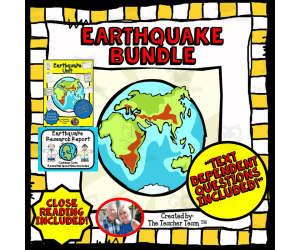
Earthquake Unit
Science, Earth and Environmental Sciences, Earth Sciences, Grade 4, 5, 6, 7, Lesson Plans, Teacher Tools
This large Earthquake Bundle contains a wide variety of resources needed to teach a rigorous unit on Earthquakes. It includes CLOSE Reading nonfiction passages to help teach your students about earthquakes (not familiar with CLOSE reading? It’s okay, we have instructions and anchor charts to help you incorporate it into your teaching). There are text dependent questions aligned with each passage, a set of vocabulary cards with definitions to accompany the passages, An Earthquake Research Report, and much, much more. A variety of other graphic organizers and activities are included as well. We do encourage you to supplement with any other books, videos, and websites that you already use; they will blend nicely with our CLOSE reading passages. You can use this unit in its entirety, or “pick and choose” the components to meet the needs of your students.
Author The Teacher Team
Tags Earthquake, Earth Science, Fifth Grade Science, Earthquake Unit, Bundle
I WONDER - Where Do Orangutans Sleep | Animated Video Lesson
STEM, Biology, Life Sciences, Science, Animals, Grade 1, 2, 3, 4, 5, 6, 7, 8, Lesson Plans, Teacher Tools
Video Introduction Animal kingdoms are full of fascinating wonders to learn. This video is designed for the students to learn more about animals in different countries. I WONDER - Where Do Orangutans Sleep | Animated Video Lesson Do you like animals? what is your favorite one? Do you own a pet? If yes, tell us more about it, like what its name? And what do you like most about it? What are the animal kingdoms? Can you write down the characteristics of each animal class like mammals, birds, reptiles, amphibian, fish and mollusks. Do you know that some animals can sing, can you name any of them? What is the largest and the smallest mammal in the world? What is the largest and the smallest bird in the world? What is the largest and the smallest fish in the world? I WONDER - Where Do Orangutans Sleep | Animated Video Lesson The video is perfect for encouraging the researching skills for the students, while learning more about these fantastic animals. I WONDER - Where Do Orangutans Sleep | Animated Video Lesson This friendly designed video is suitable for students at school, homeschooling, and as a group activity. Format Available in MP4 format.
Author Educational Voice
Tags Where Do Orangutans Sleep, Where Do Orangutans Sleep Video, Orangutans, Orangutan, Orangutans Facts, Orangutans Facts For Kids, Orangutans Video, Orangutans Video For Kids, Mammal
Biomimetic Engineering &Regenerative Design:A K-12 Vertical Curriculum
Science, Basic Science, Life Sciences, Animals, Biology, Human Body, Nature & Plants, Physics, Technology, Engineering, Grade 2, 3, 4, 5, 9, 10, 11, 12, Worksheets & Printables, Worksheets, Workbooks, Word Searches, Dot To Dots, Teacher Tools, Assessments, Lesson Plans, Presentations, Quizzes and Tests
With this K-12 Biomimetic Engineering & Regenerative Design Curriculum Framework, show the student the future of STEM education through a complete, ready-to-use, vertically scaffolded transition from traditional ‘take/make/dispose’ mindsets to innovation inspired by nature! This digital PDF is composed of 35 pages full of professionally-designed and thoroughly researched and organized resources to develop your students’ biomimetic engineering and regenerative design skills: Phase 1: Core Theory includes a comprehensive introduction to the subject with four chapters of in-depth theory, and real-world case studies (The Shinkansen bullet train, Namib Desert beetle, Eastgate Centre’s termite mounds, Lloyd Crossing); Phase 2: Student Workbook contains 10 well-developed, engaging, standards-aligned worksheets for student to use to complete Morphological Mapping, Fluid Dynamics, Structural Integrity, Thermoregulation, Water Harvesting, Structural Color, Kinetic Plant Mechanism, Ecosystem Emulation, and Capstone Regenerative Design Project; Phase 3: Visuals & Teacher Resources provides all of the tools needed for the teacher to use the above materials (printable posters, K-12 Vertical Articulation Map, Biomimetic Design Spiral visual, and Paradigm Shift graph) This curriculum framework is a perfect fit for use in biomimicry, regenerative design, environmental engineering and next-generation STEM/STEAM classrooms. Vertical scaffolding is included (i.e., K-5: Observation & Empathy → 6-8: Mechanism & Translation → 9-12: Chemistry, Thermodynamics & Systems), thus allowing all students to develop their understanding of ecological literacy at an intuitive level from kindergarten through graduation! This framework provides fill-in-the-blank theory prompts, hands-on sketching and calculating, design challenge, and “Function First” taxonomy training on all projects using databases. The materials in this framework require no preparation on the part of the teacher as all links may be instantly downloaded from your computer, printed and used in Google Classroom! What Parents/Schools Appreciate: Preparation for Success in the Looking Future: The curriculum helps develop important skills for the 21st Century such as systems thinking, creating circular designed systems and creating regenerative innovations through hands-on projects and real-world examples that teach STEM concepts and Next Generation Science Standards (NGSS). It also develops the skills students will need to pursue green careers. Zero Preparation Time with Immediate Engagement : Teachers can drum up hours of quality instructional time, as the curriculum has ready-to-print theory chapters, 10 scaffolded worksheets, beautiful visual examples, case studies and lots of real-world examples of biomimicry hands-on projects. This makes for very engaged students in the classroom. Eco-Positive Effect: The curriculum helps provide a paradigm shift from the phrase "sustainable" to helping to regenerate the Earth's environment and teach both parents and administrators about ecological literacy and a higher sustainable carbon footprint. Aligned Across Multiple Grade Levels and All Have Inclusive Loosely Related Activities from Pre K to 12 All Have Common Curriculum- The curriculum support teachers in changing their instruction to a more differentiated style across multiple grade levels, providing differentiated instruction and methods to support students demonstrating gifted abilities! Quality and Professionally-Low Cost: Because of the high quality of the product (design, scientific accuracy, posters, and capstone project), it should cost much more than its price tag indicates. Target Students/Classes : The intended audience for this curriculum is K-12, and if you are looking for a curriculum for K-12, you will find that this is an appropriate curriculum to teach students/ classes; It includes and has built-in differentiation, making it easy to teach every student/ class at any level ( K-12). Elementary (K-5) – emphasis on observing and being empathetic towards others. Teachers can use this curriculum with elementary school Science, Nature Studies, and early STEM Clubs. Middle School (grades 6-8) – Using Mechanisms to Translate- Teachers can use this curriculum to teach their students about how mechanisms work and how they relate to life science, physical science, engineering electives, and project-based learning. High School- (grades 9-12): Chemistry, Thermodynamics & Systems- Teachers can use this curriculum with their high school biology, physics, environmental science, engineering, architecture, and AP/IB STEM classes. The curriculum will be great for educators who work in the public/ private K-12 systems, homeschoolers ( families), STEM coaches, after-school programs, and makerspace facilitators. It can be used throughout a district or school. Copyright and Terms of Use This book was written by Syed Hammad Rizvi and all rights are reserved to him. This book is for the purpose of personal use, or single class use only. You may NOT modify, reproduce, or distribute this book in any way. In other words, do not place this on the internet where it is available for anyone to download. If you wish to share this product with colleagues, please purchase additional licenses at Teachsimple. We appreciate your support in following this agreement. This product was happily created for you by Syed Hammad Rizvi.
Author Creative Book Store
Rating
Tags K12Curriculum, STEMEducation, STEAMEducation, ScienceTeachers, ElementarySTEM, MiddleSchoolSTEM, HighSchoolSTEM, HomeschoolCurriculum, ProjectBasedLearning, NGSS

Food Beginner Lesson Plan
ELA, Language Development, ESL, Grade 3, 4, 5, 8, 9, 10, 11, 12, Teacher Tools, Lesson Plans
Beginner A1 ESL EFL TEFL lesson plan worksheet set for Food. Lesson plan for A1 Beginner ELL and ELA learners focusing on Food and cooking for beginner English students. This TEFL resource is ready-to-go with minimal prep necessary, encompassing a variety of materials ranging from flashcards to activities, along with conversation topics and writing drills. Formulated to enhance language proficiency, this engaging lesson plan addresses fundamental concepts and offers practical exercises to facilitate discussions about work and jobs in everyday scenarios. Covering areas such as discussing foods around the world, cooking from a recipe and expressing preferences, our lesson plan empowers ESL learners with the knowledge and confidence to communicate effectively in food-related contexts. Components of this lesson plan include: Flash cards A warm-up activity Main usage exploration Construction details Rules, along with any exceptions Illustrative examples Two closed exercises One open exercise Revision exercise Writing exercises Chatterbox, a recurring feature in our course books encouraging conversation Activity , such as a game, quiz, puzzle, etc., to conclude the class The lesson plan is available in PDF with 30 ready to print pages and one digital access file. One MP3 file included. A part of it is on Google Apps. The answer key is also included for reference.
Author TEAM TEFL
Tags ESL Lesson, Food, Around The World, Language Arts, Mexico

Climate Change: Reduction Gr. 5-8
Science, Earth and Environmental Sciences, Environmental Science, Grade 5, 6, 7, 8, Teacher Tools, Lesson Plans
Climate Change: Reduction Gr. 5-8 A comprehensive teaching resource designed to educate grade 5-8 students on environmental sciences, with a significant emphasis on global climate change. This toolkit aims to stimulate curiosity and invoke critical thinking while inspiring students towards environmentally friendly actions. It offers creative techniques for reducing human consumption and output. Bloom's Taxonomy and STEAM-aligned The material aligns with Bloom's Taxonomy and STEAM initiatives, combining standards-based scientific content with skills development in Science, Technology, Engineering, Arts, and Mathematics. The toolkit features hands-on activities that promote experiential learning alongside opportunities for autonomous research. All Perspectives of Climate Change Explored This resource explores the intricacies of climate change from all perspectives - ensuring both advocates and skeptics can partake in informed discussions about Earth's future. Students are presented with innovative tasks such as designing an alternate fuel-run dream car or developing a green city plan that relies solely on clean energy sources. Educational challenges include discerning transportation choices within the local community or comprehending product life cycles to critically appraise industries' emission levels. An additional element includes researching green-building technologies - allowing learners to uncover fascinating aspects of these structures. Comparative studies highlighting how different countries strive for carbon dioxide-free communities can help amplify students' global awareness regarding climatic issues. Versatile Learning Resource This material can be utilized for whole group instruction, facilitating collaborative learning; smaller groups can delve into subtler aspects fostering focused discussions; it is also apt for homework assignments triggering individual research bent and contemplation.Key inclusion is student engagement tools like crossword puzzles, word searches within the pack ensures interactive learning while also furnishing a comprehension quiz serving instant assessment tool facilitating immediate feedback provision along with an answer key facilitating result evaluation. Universal Accessibility The resource, primarily formatted in PDF format, facilitates universal accessibility across multiple devices. It is versatile and can be utilized across diverse instructional settings like public schools or homeschooling environments demanding self-study emphasis. In essence,Educators seeking consolidated resources brimming with engaging content focusing on environmental science and climate change for grade 5-8 students will find Climate Change: Reduction Gr. 5-8 both comprehensive and accessible.
Author Classroom Complete Press
Tags PDF
Kitchen Chemistry | Interactive Science Lesson | Micro-Learning Deck
Science, Chemistry, Grade 4, 5, 6, 7, Teacher Tools, Lesson Plans
This micro-learning deck is the perfect accessory to your Science instruction! This digital slideshow presents Kitchen Chemistry: The Science of Herbs and Spices. Within this slideshow, you will receive: -Video Lesson -Reading Passage w/ Audio -Close Reading -Quick Write The informational texts included in this resource alongside the informal assessments will keep your students engaged from beginning to end.
Author Teach Me This
Tags Kitchen Chemistry, Chemistry Lesson, Science Of Herbs, Interactive, Comprehension

I WONDER - What Is A Baobab Tree | Animated Video Lesson
Nature & Plants, Life Sciences, Science, Biology, Grade 4, 5, 6, 7, 8, 9, 10, Lesson Plans, Teacher Tools
Video Introduction An amazing activity designed for the students to learn more about STEM. I WONDER - What Is A Baobab Tree | Animated Video Lesson Do you like STEM subjects? what is your favorite one? Have you ever tried to plant a seed? If yes, tell us more about it. Or have you ever tried to invent something? If yes, tell us more about it. And how do you think it will help us? Have you ever seen a microorganism under a microscope? What was it? And how it looked like? Mathematics is a marvelous subject. Let' sharpen our brains and solve some equations. Do you like timetable tricks? What is your favorite one? Do you know how to code? Have you ever created an app or a game before? If yes, how was it like? I WONDER - What Is A Baobab Tree | Animated Video Lesson The video is perfect for encouraging the researching skills for the students, while learning more about this fantastic topic. I WONDER - What Is A Baobab Tree | Animated Video Lesson This friendly designed video is suitable for students at school, homeschooling, and as a group activity. Format Available in MP4 format.
Author Educational Voice
Tags What Is A Baobab Tree, What Is A Baobab Tree Video, Baobab Tree, Baobab Tree Facts, Baobab Tree Facts For Kids, Baobab Tree Video, Baobab Tree Video For Kids, Tree, Tree Facts, Tree Video
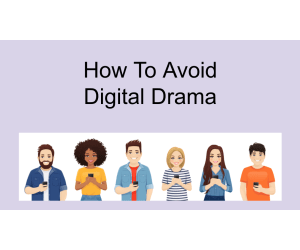
How To Avoid Digital Drama-An SEL Lesson Plan
Life Studies, Science, Technology, Grade 5, 6, 7, 8, 9, 10, Teacher Tools, Lesson Plans
Product Title: How To Avoid Digital Drama - An SEL Lesson Plan The world of technology has opened numerous avenues for communication, but it also introduces a minefield of potential problems, namely digital drama and cyberbullying. With this comprehensive lesson plan, students gain vital knowledge about navigating the world of technology respectfully and responsibly. Designed for grade levels 5 through 10, this resource is ideal for educators to integrate into life studies or science curricula. The PowerPoint lesson equips educators to tackle an intriguing discussion about digital drama's intricacies and how it differs from the destructive force of cyberbullying. Included in this Lesson Plan: Six Real-world Digital Drama Scenarios: These scenarios will challenge learners in small groups or as a whole class to formulate effective solutions that mitigate damage and promote harmony online. Videos from Common Sense Media: These resources provide further clarity on concepts circling around digital drama and cyber bullying — thereupon empowering learners with enriched education concerning appropriate online etiquette. A Wrap-up Activity: This involves an iPhone template where learners can construct text conversations focused on aiding someone contending with distressing digital drama situations. This activity can serve as homework guidance or even inspire a visually compelling bulletin board arrangement – driving conversation outside classroom hours regarding ethical communication in a technologically driven world. Tying up the study in an engrossing fashion, How To Avoid Digital Drama - An SEL Lesson Plan is integral to ensuring orderly organization during lessons—fostering an enriching educational platform addressing significant areas like ethics in our digitized society—an indispensable tool for all teachers aiming at creating not just knowledgeable but responsible netizens. Note: The lesson plan also includes necessary slide notes and handouts.
Author Jennifer Moyer Taylor
Tags Digital Drama, Cyberbullying, SEL Lesson Plan, Online Etiquette, Technology Education
I WONDER - Who Was William Shakespeare | Animated Video
Biographies, Social Studies, Grade 4, 5, 6, 7, 8, 9, 10, Lesson Plans, Teacher Tools
Video Introduction An amazing video designed for the students to learn more about famous people in different countries. I WONDER - Who Was William Shakespeare | Animated Video Lesson Do you know this person? How much do you know about him/her? Who is your idol? Why did you choose this person? Tell us more about him/her? Who is your favorite athlete? Or what is your favorite team? Have you recently heard a story about a famous person? Who was this person? Can you tell us more about him/her. Who is your favorite president, king, or queen? Why you chose that person? In your country, who are the most famous people? What did they do? Can you tell us more about them. What is your favorite invention? Who invented it? Who is your favorite artist? What is the most famous thing he/she have done? What is the most enjoyable you have read before? Who wrote it? I WONDER - Who Was William Shakespeare | Animated Video Lesson The video is perfect for encouraging the researching skills for the students, while learning more about this fantastic place. I WONDER - Who Was William Shakespeare | Animated Video Lesson This friendly designed video is suitable for students at school, homeschooling, and as a group activity. Format Available in MP4 format.
Author Educational Voice
Rating
Tags Who Was William Shakespeare, Who Was William Shakespeare Video, William Shakespeare, William Shakespeare Facts, William Shakespeare Video, William Shakespeare Video For Kids, William Shakespeare Facts For Kids

How to Write a Book Report: Oral Book Reports
ELA, Writing, Common Core, Grade 5, 6, 7, 8, Teacher Tools, Lesson Plans
How to Write a Book Report: Oral Book Reports This is an essential teaching resource created with the focus on enhancing the language arts and writing abilities of students in grade 5 through grade 8. This learning tool, mainly intended for public school teachers and homeschooling parents, ensures effective development of students' book reporting skills by turning it into a fun and enjoyable experience. The teaching resource presents content that follows Bloom’s Taxonomy guidelines. You can use it to supplement your existing curriculum or as independent work for your students. It includes clear, organized instructions covering both drafting and revision phases. What's Inside: 24 Printable Pages: The package consists of 24 print-ready pages in PDF format. Six-Color Graphic Organizers: These help introduce skill focus areas and assist students in creating compelling book reports. Add-on Resources: Worksheets such as word puzzles complement the comprehension quiz while keeping learning interesting. If you are wondering how best to assess your pupils' progress,' implementation guide ' along with an 'assessment rubric' has also been provided for objective evaluation. This comprehensive toolkit suits whole group discussions or small parallel groups working independently from each other. It also works great as homework assignments designed to enhance individual learning. With this all-inclusive resource at disposal, you have everything needed under one roof! Note: Using How To Write A Book Report: Oral Book Reports , not only simplifies your task but also ensures alignment with Common Core State Standards expectations — leaving no stone unturned!
Author Classroom Complete Press
Tags Oral Book Reports, Language Writing, Listening Skills, Speaking Skills, Writing Tasks, How To Write A Book Report Middle School, Book Reports For 8th Grade
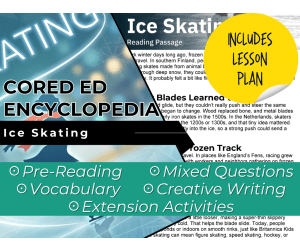
Ice Skating Reading Comprehension Passage - Cored Ed Encyclopedia
ELA, Reading Comprehension, Reading, Language Development, History, Social Studies, Science, Physics, Sports, P.E. & Health, Grade 2, 3, 4, 5, Worksheets & Printables, Worksheets, Teacher Tools, Centers, Activities, Writing Prompts, Assessments, Quizzes and Tests, Quizzes, Lesson Plans
This Ice Skating reading comprehension with lesson plan includes: Visualization (on the front cover) Start your lesson by taking a minute to think and share something about the topic. Read the script aloud (slowly), perhaps prepare some music or sound effects. Student close their eyes and let their imaginations wander. Students open their eyes, read the question aloud and give them a few minutes to complete. Ask a few students to share or keep answers until the end to compare with what they learn in the passage. Quick pause—thousands of Cored Education products are included with your TeachSimple membership. Download links and encyclopedia index available here. Pre-Reading Trivia Students will write down one thing they already know about the subject and then read five more facts and discuss. These facts are fun, and the students will enjoy learning about the subject before reading more. Give 1 minute for students to write what they already know (no pressure—best guess is fine). Read the five facts together. After each fact, do ask a student for their opinion, was it surprising? Set a purpose by asking students to highlight/underline one fact they want to learn more about during the reading. Reading Passage The text is a high-interest reading passage with set paragraphs, roughly three to four paragraphs long. It contains a variety of themes about the topic, anywhere from history to technology. The passage is between 250 and 350 words in length. First, ask students to look at the headings and see what they’ll learn about today. What do they know about the topic/heading? First read options: Teacher read-aloud (best for support). Partner reading (paragraph by paragraph). While reading, students underline important details, and vocabulary words they think may come up in the questions section. Mixed Questions The first question page contains four multiple-choice questions, each with a choice of four answers, and three written response questions that require a sentence or two from the student. Students complete the mcqs first independently, then review quickly as a class. For the 3 written responses, try to get students giving the answer with some form of evidence: “I think ___ because the text says ___.” If students get stuck, send them back to check the passage. Vocabulary Questions Practice seven key words from the text in this section across two activities. First section is scrambled words where students will unscramble three words given a clue for each. The second section is a word to meaning matching activity. Before starting, have some students read out words they underlined in the passage. Ask students to say the word and read aloud the sentence(s) around each word. Ask students to do scrambled words and the matching exercise in pairs then go through answers as a class. For the scrambled spelling task, get four pairs to come up to the board and write the words for extra practice with the other student reading out the clue. For the matching task, prompt students to give full sentences: “I matched ___ with ___ because ___.” Creative Writing In this question, the student will be required to write a five to eight sentence paragraph on a question related to the topic. Before starting, ask students write down 3 key ideas they are going to include in their piece. Ask students for ideas to share around the class to help those struggling. Pro writing expectations: 5–8 sentences At least 2 facts or details from the passage At least 2 vocabulary words from the previous page Students read their paragraphs while classmates listen for facts and vocabulary words. Extension Activities This page is optional for fast finishers or to take home. There are several activities, each one requiring a different skill. Do some, do none, do all, completely optional - but you will feel reassured knowing every possibility is planned for. Includes summary writting question and additional facts. Answer Key There are answers for the multiple-choice questions, written response questions have sample answers, vocabulary answers and if there is a summary question then a sample summary will be provided as well. Lesson Plan Included Customized lesson plan for this lesson is included. Lesson Snapshot Title: Ice Skating Genre: Nonfiction (informational text) Subject: Reading (Informational Text) / Science Primary Topic: How ice skating began and why blades glide Estimated Guided Reading Level (A–Z): R What This Lesson Teaches Best Explains how ice skating was first used for winter travel long ago (frozen lakes and rivers as “the easiest way to travel”). Describes how skates changed over time (from animal bones to wood to metal blades) and why sharpened edges mattered for control. Shows how skating shifted from travel to organized sport, including races, rules, championships, and the Olympic stage. Introduces a simple science idea for why skates glide: a super-thin slippery surface layer where ice molecules are a little looser. Uses text features (section headings) to chunk information and support comprehension. Learning Goals Identify the main idea and key details about how ice skating began and changed over time. Describe the difference between early bone skates and later skates with sharpened metal edges. Explain how sharpened edges helped skaters push, steer, and move with control. Explain, using the text, why a skate blade can slide well on ice. Describe how skating became an organized sport with rules, championships, and worldwide attention. Key Vocabulary From the Text blades — thin metal parts of skates that touch the ice. edges — sharpened sides that help a skate grip ice. molecules — tiny pieces that make up ice. championships — contests to find winners in a sport. standards — agreed rules that keep things consistent. FULL CATALOG OF DOWNLOAD LINKS AND ENCYCLOPEDIA INDEX HERE
Author Cored Education
Rating
Tags Vocabulary, Reading Comprehension, Reading Passages, Lesson Plans, Ela Lesson Plans, Reading Comprehension Lesson Plans, Pre-reading, History, P.e. Lesson Plans, Sports

I WONDER - Why Is Ireland Famous For Red Hair | Animated Video Lesson
Geography, Social Studies, Grade 3, 4, 5, 6, 7, 8, 9, Lesson Plans, Teacher Tools
Video Introduction An amazing video designed for the students to learn more about famous places in different countries. I WONDER - Why Is Ireland Famous For Red Hair | Animated Video Lesson What do you know about this place? Do you know in which part of the world it is? Have you ever visited this place? If yes, can you tell us more about your adventure, and what do you like the most about this place? Do you like reading about Geography? What is your favorite country in the whole world? If you are going on a trip where it will be? Which country? What you are going to see there? Does this country has a famous place to visit? I WONDER - Why Is Ireland Famous For Red Hair | Animated Video Lesson The activity is perfect for encouraging the researching skills for the students, while learning more about this fantastic place. I WONDER - Why Is Ireland Famous For Red Hair | Animated Video Lesson This friendly designed video is suitable for students at school, homeschooling, and as a group activity. Format Available in MP4 format.
Author Educational Voice
Tags Why Is Ireland Famous For Red Hair, Why Is Ireland Famous For Red Hair Video, Ireland Famous For Red Hair, Ireland, Ireland Facts, Ireland Facts For Kids, Ireland Video, Ireland Video For Kids
I WONDER - What Do Griffins Do | Animated Video Lesson
History, Social Studies, Common Core, Grade 4, 5, 6, 7, 8, 9, 10, Lesson Plans, Teacher Tools
Video Introduction An amazing video designed for the students to learn more about mythological creatures in different cultures. I WONDER - What Do Griffins Do | Animated Video Lesson Mythology is full of wonders and spectacular stories. Ancient civilizations were trying to explore every aspect of life, while they search for new technologies, they wanted to believe in something big and can change the world, so they created mythical creatures and mythical stories. Let's hear about them! What do you know about these creatures? Cyclops, Centaurs, Selkies, Phoenix, Gnomes, Dragons, Gorgons, Orcs, Cerberus, Trolls, Minotaur, Griffins, Mermaids, Elves, Polyphemus, Pegasus, and Ogres. I WONDER - What Do Griffins Do | Animated Video Lesson The video is perfect for encouraging the creativity skills for the students, while learning more about this fantastic mythical creature. I WONDER - What Do Griffins Do | Animated Video Lesson This friendly designed video is suitable for students at school, homeschooling, and as a group activity. Format Available in MP4 format.
Author Educational Voice
Rating
Tags What Do Griffins Do, What Do Griffins Do Video, Griffins, Griffins Video, Griffins Facts, Griffins Facts For Kids, Griffins Video For Kids, Griffin, Griffin Facts, Griffin Video
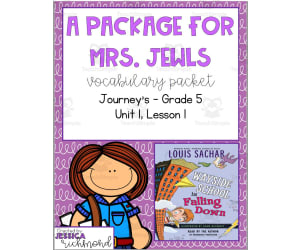
Vocabulary Packet -Journey's 5th grade - Unit 1 Lesson 1
ELA, Language Development, Vocabulary, Grade 5, Lesson Plans, Teacher Tools
This vocabulary resource was created to be used with 5th grade Journey's reading program. Vocabulary is listed as a glossary, included with pronunciation. Plenty of activities ready to go for students to master the vocabulary included!
Author Jessica Richmond
Tags Vocabulary 5th Grade, Journey's Vocabulary, Unit 1, Lesson 1, Vocabulary Packet, Vocabulary Practice , Glossary Of Vocabulary, Vocabulary Activities
I WONDER - What Makes The Pyramids Of Egypt Special | Animated Video
Government, Social Studies, Grade 3, 4, 5, 6, 7, 8, 9, Lesson Plans, Teacher Tools
Video Introduction An amazing video designed for the students to learn more about famous places in different countries. I WONDER - What Makes The Pyramids Of Egypt Special | Animated Video Lesson Do you like geography?! Let's discover this amazing place and know more about its unique stories. Have you ever visited a unique place or a different country than yours? If yes, tell us about it! If no, tell us what kind of places you would like to visit in the future? Every country has it's own story tell us the story about your country: Where it is located? And when it has been established? I WONDER - What Makes The Pyramids Of Egypt Special | Animated Video Lesson The activity is perfect for encouraging the researching skills for the students, while learning more about this fantastic place. I WONDER - What Makes The Pyramids Of Egypt Special | Animated Video Lesson This friendly designed video is suitable for students at school, homeschooling, and as a group activity. Format Available in MP4 format.
Author Educational Voice
Rating
Tags What Makes The Pyramids Of Egypt Special, Pyramids Of Egypt, Pyramids Of Egypt Video, Pyramids Of Egypt Facts, Pyramids Of Egypt Facts For Kids, Pyramids Of Egypt Video For Kids, Egypt, Pyramids

Countries of Africa | Continent of Africa Unit Study | Geography Bundle
Social Studies, Geography, Grade 3, 4, 5, 6, 7, Lesson Plans, Teacher Tools
Explore Africa with your students through 5 photo and information filled brochures. South Africa, Uganda, Zimbabwe, Ethiopia, and Egypt are the 5 countries featured in this set. This is a great way for your students to learn more about individual countries, what they eat, how they dress, what they speak, and what they're famous for. I hope you love these as much as my students! Service opportunity included! How To Use This: Look through all the resources and decide which ones to use. Print the brochures double sided (or print and lightly glue). Laminate for re-use. Use these as resources to learn about countries, write reports, or give oral presentations. Color and cut out stamps to put in your "Passport" to show you've learned about that country! Do a craft or art project from each of the five focus countries! What You Get: - 5 Double-sided country brochures using the metric system. - 5 Double-sided country brochures using the imperial system. - 5 mini color flags to post on your map or put into student passports - 5 coloring pages of the country's flags - Passport and Passport Stamps for Africa - 5 mini books to make about each country - 5 craft or art pages, one for each featured country - South Africa: Sunset Art with safari animals - Uganda: Paper Bead Template - Egypt: 3D pyramid craft - Ethiopia: Design Ethiopian necklaces and headbands -Zimbabwe: Design geometric-design baskets Want More Africa Study Resources?: - Countries of Africa: Brochures and Activities - Plants of Africa: Informational Cards - Animals of Africa: Informational Cards - Map work for Africa - Postcards for Africa: Landmarks and Landforms - Africa Unit Test *I have resources like this for every continent. So make sure to check them out if your'e trying to put together a comprehensive geography study! Check out other resources from my store: Simply Schoolgirl! I can be contacted for questions and concerns at simplyschoolgirl1@gmail.com
Author Simply Schoolgirl
Tags Coloring Pages, Geography Lesson, Passport, Brochures, African Countries, Zimbabwe, Egypt, South Africa, Uganda, Ethiopia, The Literature Of Africa Unit Test
I WONDER - Are There Different Types Of Hockey | Animated Video Lesson
Sports, P.E. & Health, Grade 2, 3, 4, 5, 6, 7, 8, Lesson Plans, Teacher Tools
Video Introduction An amazing video designed for the students to learn more about sports in different countries. I WONDER - Are There Different Types Of Hockey | Animated Video Lesson What is your favorite sport? Tell us more about it. Who is your favorite athlete? Or what is your favorite team? Do you know who invented basketball? When basketball has been invented? Can you tell us where is the first time it has been played? Have you ever played soccer or football? If yes, tell us what was your position: A goal keeper, midfield player, or a defender? Do you like watching golf? If yes who is your favorite player? Can you name the differences between tennis and ping pong? Have you ever played volleyball on the beach? When it has been officially recognized by the Olympics? Do you like watching Formula 1 races? If yes, who is your favorite team or driver? Have you ever tried to play handball? If yes tell us more. Do you like watching people skiing or surfing? I WONDER - Are There Different Types Of Hockey | Animated Video Lesson The video is perfect for encouraging the researching skills for the students, while learning more about this sport. I WONDER - Are There Different Types Of Hockey | Animated Video Lesson This friendly designed video is suitable for students at school, homeschooling, and as a group activity. Format Available in MP4 format.
Author Educational Voice
Rating
Tags Different Types Of Hockey, Different Types Of Hockey Video, Different Types Of Hockey Facts, Different Types Of Hockey Facts For Kids, Different Types Of Hockey Video For Kids, Are There Different Types Of Hockey

I WONDER - When Was The Ankylosaurus First Discovered | Animated Video
History: Ancient, History, Social Studies, History: World, Animals, Life Sciences, Science, Grade 4, 5, 6, 7, 8, 9, 10, Lesson Plans, Teacher Tools
Video Introduction An amazing video designed for the students to learn more about dinosaurs in different countries. I WONDER - When Was The Ankylosaurus First Discovered | Animated Video Lesson Do you like dinosaurs? what is your favorite one? Do you own a pet? If yes, tell us more about it, like what its name? And what do you like most about it? Do you think that your pet has been evolved from a dinosaur? Can you write down the characteristics of your favourite dinosaur like it's shape, their rivals, where did it use to live and what was their favourite food? What is the largest and the smallest dinosaur that ever found? Why is the T-rex is so famous? Have you ever read any interesting facts about it? Can you name any of the carnivores or herbivores dinosaurs? I WONDER - When Was The Ankylosaurus First Discovered | Animated Video Lesson The video is perfect for encouraging the researching skills for the students, while learning more about dinosaurs. I WONDER - When Was The Ankylosaurus First Discovered | Animated Video Lesson This friendly designed video is suitable for students at school, homeschooling, and as a group activity. Format Available in MP4 format.
Author Educational Voice
Rating
Tags When Was The Ankylosaurus First Discovered, When Was The Ankylosaurus First Discovered Video, Ankylosaurus, Ankylosaurus Video, Ankylosaurus Facts, Ankylosaurus Video For Kids, Ankylosaurus Facts For Kids
I WONDER - Where Do Gnomes Live | Animated Video Lesson
History, Social Studies, Common Core, Grade 4, 5, 6, 7, 8, 9, 10, Lesson Plans, Teacher Tools
Video Introduction An amazing video designed for the students to learn more about mythological creatures in different cultures. I WONDER - Where Do Gnomes Live | Animated Video Lesson Mythology is full of wonders and spectacular stories. Ancient civilizations were trying to explore every aspect of life, while they search for new technologies, they wanted to believe in something big and can change the world, so they created mythical creatures and mythical stories. Let's hear about them! What do you know about these creatures? Cyclops, Centaurs, Selkies, Phoenix, Gnomes, Dragons, Gorgons, Orcs, Cerberus, Trolls, Minotaur, Griffins, Mermaids, Elves, Polyphemus, Pegasus, and Ogres. I WONDER - Where Do Gnomes Live | Animated Video Lesson The video is perfect for encouraging the creativity skills for the students, while learning more about this fantastic mythical creature. I WONDER - Where Do Gnomes Live | Animated Video Lesson This friendly designed video is suitable for students at school, homeschooling, and as a group activity. Format Available in MP4 format.
Author Educational Voice
Rating
Tags Where Do Gnomes Live, Where Do Gnomes Live Video, Gnomes, Gnomes Facts, Gnomes Video, Gnomes Video For Kids, Gnomes Facts For Kids, Mythology, Mythology Facts, Mythology Video

Algebra: Expressions - Multiplication & Division - Practice the Skill 2 - FLASH-MAC
Math, Algebra, Common Core, Grade 3, 4, 5, Teacher Tools, Lesson Plans
FLASH-MAC: Multiplying and Dividing Expressions in Algebra Algebra: Expressions - Multiplication & Division - Practice the Skill 2 - FLASH-MAC is an outstanding educational resource. It is intended for grades 3, 4, and 5 to enhance their understanding of Multiplying and Dividing Expressions in Algebra . The material includes a series of timed drill activities. These: Prompt students to assess provided expressions. Foster skill sharpening through careful utilization of order of operations. Incorporate additional math tools for a comprehensive learning experience. Suitable Learning Environments: The product can be used effectively in various learning settings like: Whole-group classroom activity Individual study sessions Homeschool Curriculum --and even as-- engrossing homework tasks. Note:We have been careful to adhere to both Common Core State Standards and STEM initiatives along with NCTM standards guidelines while creating this versatile teaching tool. Special feature: Includes English and Spanish voice overs with corresponding text options, making it appropriate for bilingual classrooms too. The Verdict: A unique feature is that not only does this product include English voice overs but Spanish ones too along with corresponding text options catering linguistically diverse classrooms and aiding bilingual students seamlessly engage without feeling left out from learning experience thereby making subject matter accessible for everyone. Algebra: Expressions- Multiplication & Division- Practice the Skill 2- FLASH-MAC proves notably versatile extending beyond typical restrictions every educator faces in teaching today's multicultural classrooms proving itself arguably imperative to fulfilling and exceeding desired educational needs!
Author Classroom Complete Press
Tags Software (Mac)
I WONDER - What Does A Seed Need | Animated Video Lesson
Nature & Plants, Life Sciences, Science, Grade 4, 5, 6, 7, 8, 9, 10, Lesson Plans, Teacher Tools
Video Introduction An amazing activity designed for the students to learn more about STEM. I WONDER - What Does A Seed Need | Animated Video Lesson Do you like STEM subjects? what is your favorite one? Have you ever tried to plant a seed? If yes, tell us more about it. Or have you ever tried to invent something? If yes, tell us more about it. And how do you think it will help us? Have you ever seen a microorganism under a microscope? What was it? And how it looked like? Mathematics is a marvelous subject. Let' sharpen our brains and solve some equations. Do you like timetable tricks? What is your favorite one? Do you know how to code? Have you ever created an app or a game before? If yes, how was it like? I WONDER - What Does A Seed Need | Animated Video Lesson The video is perfect for encouraging the researching skills for the students, while learning more about this fantastic topic. I WONDER - What Does A Seed Need | Animated Video Lesson This friendly designed video is suitable for students at school, homeschooling, and as a group activity. Format Available in MP4 format.
Author Educational Voice
Tags What Does A Seed Need, What Does A Seed Need Video, Seed, Seeds, Seeds Fact, Seeds Fact For Kids, Plant, Plants, Plants Facts For Kids, Plants Facts Video