resources by type
resources by grade
resources by subject
other resources

3,408 products added recently

Middle School Lesson Plans

Enhance your middle school curriculum with lesson plans that cater to the unique interests and challenges of adolescents. Covering multiple subjects, these resources encourage exploration and active participation. Utilize these plans to captivate students' minds and support their academic journey.

Relevant
alt down
Any Time
alt down
filter by
alt down
All File Types
alt down
filter nav Show filters
Sort by: Relevant
CLEAR
resources by type
Activities
down arrow
Classroom Decor
down arrow
Teacher Tools
up arrow
Anchor Charts
Assessments
Charts
DBQ's
Diagrams
Graphic Organizers
Lesson Plans
Literacy Readers
Outlines
Presentations
Quizzes and Tests
down arrow
Rubrics
Templates
Worksheets & Printables
down arrow
resources by grade
Early Learning
down arrow
Pre-K
down arrow
Elementary
down arrow
Middle School
up arrow
Grade 6
Grade 7
Grade 8
High School
down arrow
Adult Education
Not Grade Specific
resources by subject
Creative Arts
down arrow
ELA
down arrow
Holiday & Seasonal
down arrow
Life Studies
down arrow
Math
down arrow
P.E. & Health
down arrow
Social Studies
down arrow
Special Resources
down arrow
Science
down arrow
Foreign Languages
down arrow
Resources for Teachers
down arrow
other resources
Common Core
Homeschool Resources
down arrow
Montessori
Research
STEM
Adjectives | Upper Intermediate Lesson Plan

Adjectives | Upper Intermediate Lesson Plan
ELA, Grammar, ESL, Language Development, Grade 6, 7, 8, Teacher Tools, Lesson Plans, Worksheets & Printables

The Adjectives Upper Intermediate Lesson Plan helps students in grades 6-8 strengthen their grammar skills. Students first learn about the role adjectives play in sentences, including concepts like types of adjectives, adjective order, and using comparative and superlative forms. After the informative lesson, students put their knowledge into practice through comprehension checks and written exercises assessing their grammar abilities. Educators can implement this adaptable resource in various settings like whole group instruction, small group remediation, independent practice, or homework. Answer keys are provided to check student work. This practical lesson plan formatted for digital access equips students to properly utilize adjective vocabulary when writing and speaking. The ESL ELL ELA and TEFL lesson plan includes flashcards, a warmer, grammar rules, exercises, role-play, conversation, writing drill, activity, answers and an extra study that would be good to set as homework. There are 33+ pages and there are teachers notes to guide the teacher.

Author TEAM TEFL

Tags Language Arts, Grammar, Adjectives, Nouns, Pronouns

Teen Mental Resilience Strategies - Psychology Book

Teen Mental Resilience Strategies - Psychology Book
P.E. & Health, Health, Mental Health, Mindfulness, Physical Education, Sports, Yoga, Life Skills, Special Resources, Social Emotional Learning (SEL), Grade 6, 7, 8, 9, 10, 11, 12, Workbooks, Worksheets & Printables, Projects, Activities, Assessments, Teacher Tools, Lesson Plans, Literacy Readers, Outlines, Presentations

Find the best psychology book for teenager mental resilience in today's fast-paced world. "Teen Mental Resilience Strategies - Psychology" is an in-depth, entertainingly written book tailored specifically to help teenagers in high school overcome challenges of academic and social pressures, and changes in their emotions. Booked and penned by Syed Hammad Rizvi, this 382-page-long book incorporates the most crucial concepts of psychology, such as Growth Mindset, Neuroplasticity, and Emotional Intelligence (EQ), Stress management, Mindfulness, and Setting Goals. Consisting of 128 in-depth chapters, this book provides straightforward science-qualified advice on How to Decode Emotions, Break Self-Doubt, Build Healthy Relationships, Manage and Reduce Anxiety, and Achieve Sustainable Well-being in Life. Perfectly useful as a teenager mental health book, this book helps young readers to Switch Gears from Failures to Growth, Build Self-Compassion, and Stay Resilient under all circumstances. Search Keywords: Teen Mental Health Book, Resilience Strategies For Teens, Psychology For Teenagers, Emotional Intelligence Resource, Stress Relief For Teenagers, Mindfulness For Teens, Self-Esteem Building Workbook. Why Parents/Schools Love It: Empowers Teens with Skills for a Lifetime: Gives practical, psychology-based strategies to effectively deal with stress, emotions, and relations, enabling students to become independent and resilient. Comprehensive and Age-Appropriate: The book spans 128 chapters, starting with simple mind and body associations and progressing to more complex aspects such as grit and mindfulness, targeting students in grades 8 through 12. Encourages Positive Mental Health: Emphasizes self-awareness, thankfulness, and emotional resilience to avoid issues related to anxiety and depression and align with school counseling and wellness initiatives. Science-Backed and Engaging: Builds on established ideas from psychology such as EQ and neuroplasticity, making it a great resource to accompany a high school psychology curriculum. Fosters Family/School Discussions. Provides ways of communicating, limiting, and support networks, leading to discussions among teens, parents, and school personnel. Target Student Classes : After analyzing the book thoroughly, based on its content, its design, and the targeted group, it appears that it has been penned for students belonging to grades 8 through 12, roughly aged between 13 and 18 years. Starting off with middle-school education (grade 8) concepts such as understanding the teenage brain and mind, emotions, advancing through challenging ideas suited for high school students (grades 9 through 12) such as cognitive restructuring, post-traumatic growth, imposter syndrome, and self-determination theory, it appears that the language used has been advanced, targeting high school education related to science or general psychology, hence suited for students moving on from middle school or high school students undergoing pressures of college prep. Copyright/Terms of Use This book has been copyrighted by Syed Hammad Rizvi. This resource may only be used on an individual and personal level. For instance, you may not give it out to other classrooms. This also includes posting it on any website where it may be downloaded freely. If you like this resource, you can share it with other teachers by purchasing licenses to use it on Teachsimple. Thank you. This product is proud to be brought to you by Syed Hammad Rizvi

Author Creative Book Store

Rating

Tags TeenMentalHealth, ResilienceStrategies, PsychologyForTeens, HighSchoolWellBeing, EmotionalIntelligenceGuide, MentalHealthMatters, MentalHealthAwareness, MentalHealthRecovery, MentalHealthSupport, MentalHealthAdvocate

Zero-Waste Lifestyle Tracking & Habit Builder Journals

Zero-Waste Lifestyle Tracking & Habit Builder Journals
Science, Resources for Teachers, Life Sciences, Earth and Environmental Sciences, Earth Sciences, Environmental Science, Geology, Nature & Plants, STEM, Biology, Grade 6, 7, 8, 9, 10, 11, 12, Teacher Tools, Worksheets & Printables, Workbooks, Worksheets, Word Searches, Assessments, Lesson Plans, Quizzes and Tests, Quizzes, Tests

Turn your classroom into an environmental science lab with the help of this awesome 41-page Zero Waste Lifestyle Tracking and Habit Builder Journal! This is a project-based learning resource for grades 4–8 that is aligned to the standards! Looking for a real world environmentally focused way to teach environmental science to your students that isn't just a bunch of recycling posters? A complete curriculum journal combining current neuroscience research, ecology theory and hands-on data collection will give your students everything they need to consider themselves true environmental scientists - and it begins with measuring their own lives! This resource is not just one big stack of worksheets but rather, it is a fully scaffolded 3-phase academic journal developed with university seminar style rigor and middle school classroom style accessibility. Your students won’t just learn about the environment; they’ll measure it, analyze it and make changes to it! CONTENTS (41 Pages, Print & Digital Ready): Phase 1 — Core Content & Theory (4 chapters): 1. The Anatomy of Waste explains what happens throughout the lifespan of waste items, including Lifecycle Assessment (LCA), the impact of microplastics in our world today, which items go in the landfill, which items can be incinerated, and how long it takes for a plastic fork to travel 450 years into our future 2. The Neuroscience of Habit Building discusses how our brains form habits based on the basal ganglia of the brain, how we can rebuild/rewire our habits scientifically through neuroplasticity, and the three parts of the habit loop (cue-routine-reward) 3. The Zero-Waste Hierarchy introduces the four elements of a zero-waste lifestyle: Refuse, Reduce, Reuse, Rot (Composting) and Recycle. This chapter includes a real-world example of how one school significantly reduced their waste by over 90% using these four proven methods 4. Data-Driven Stewardship teaches your students to think like a marine biologist and meteorologist by showing them how to track and analyze their own local environmental data. After each chapter is a fill-in-the-blank review of the chapter, called the Scholar's Review. Phase 2: 10Worksheet Workbook for Students (Research Lab Style) Personal Waste Audit 24-Hour (Data Collection Protocols: Empirical) Material Lifecycle Analysis of Material (From Raw Extraction To Disposal) Biochemistry of Composting (Green And Brown Materials, Aerobic And Anaerobic Decomposition) Single Use Plastic Substitution Matrix (Cost/Benefit Analysis) Water and Energy Footprint Calculation (Embedded Energy And Water Load Calculation; Shower Each Year; Cost Of Water To Make Cotton Shirt) Redesign Challenge For Circular Economy (Planned Volatility, Upcycling, Extended Producer Responsibility) Food Waste Economics (FIFO Pantry System, Estimate Of $780 Of Food Waste Per Year, What Is A Food Standard For A Non-Food Waste Item?) Fast Fashion Footprint (Cost To Wear, Use Of Micro-Plastics, Philosophy Of Wardrobe) Supermarket Packaging Detective (Identifying Greenwashing, Multi-Layered Packages, Bulk Purchasing) Zero-Waste Habit Builder (Keystone Priming, 30-Day Tracking Plan, Write Manifesto For A Zero Waste Life) PHASE 3—Teacher Resources and Visuals: Three professionally designed SVG diagrams (Zero Waste Hierarchy, Linear vs. Circular Economy, Sustainability Habit Loop) Complete Answer Key with example answers and teacher rubric notes 4 week pacing guide with weekly objectives, activities, teacher roles and homework 100-point assessments rubric across four categories of data collection, behavioural design, critical thinking and communication Five extension activities (Trash Jar Challenge, Community Waste Mapping, Letter Writing Campaign to Corporations, Do-It-Yourself Repairs Workshop, Composting Science Experiment; if possible please use a separate document per activity) Strategies for differentiating instruction for Grades 4-5, Grade 8/Gifted, IEP/504 and ELL students CONNECTING TO CURRICULUM: This journal ties into Next Generation Science Standards (NGSS), Common Core English Language Arts (informational text analysis, evidence based writing) and Common Core Mathematics (percentages, projections, data analysis). This journal combines many subjects — environmental science, behavioral psychology, economics and persuasive writing — into one connected whole. USAGE IDEAS: Great as a 4-week stand-alone unit or as part of an after-school environmental club, summer enrichment program or reinforcement through integration into existing science, health or social studies curricula. Assign user digitally (fillable PDF) or in print. DIGITAL DOWNLOAD — PRINT & GO! REASONS PARENTS/SCHOOLS LOVE THE RESOURCE: Merging Science, Psychology, and Real-World Mathematics – Instead of merely reading about the environment, kids actually conduct real waste audits, calculate their water footprints, and use their own personal data to perform real-world food waste economics analysis – helping them to take abstract concepts and move towards making those concepts their own, and thus, real. Tremendous Support For Teachers From Day One – Each of the resources, including a complete 4-Week Pacing Guide, example responses in the Answer Key, a 100-point Assessment Rubric, and a variety of differentiation strategies to accommodate ALL learners (IEP/504, ELL, Gifted) provides teachers with no-prep stress! Building Lasting Habits, Not Just Raising Awareness – This journal is based on neuroscience principles, specifically the Habit Loop framework, which teaches kids HOW behavior changes within the brain — therefore they can establish long-term environmental habits to implement after the conclusion of the unit. No Eco-Anxiety – Only Eco-Empowerment – Constructivist pedagogy does not endorse guilt-based teaching practices to educate/expose students to environmental issues. Instead, students are encouraged to view themselves as environmental scientists, thereby creating a sense of worth/empowerment as opposed to being seen as passive victims of "climate doom"; hence, all resources provided in this unit have been designed with both emotional safety and motivation in mind. Cross-Curricular and Standards-Aligned Value – When you purchase this journal as a single resource, you are actually replacing multiple separate resources. This one journal covers multiple areas of study related to environmental science, data analysis, persuasive writing, behavioral psychology, economics, and systems thinking — therefore you are maximizing the instructional value and curriculum alignment of numerous subject areas! TARGET GRADES/CLASSES: On evaluating for the content type's level of complexity, the level of language used, the level of math skill needed; and how to teach the content using scaffolding: Primary Target 6th, 7th, and 8th grades (Middle School, our primary audience) Science classes; Environmental Science/ Earth Science Health and Wellness Classes Social Studies/Civics (Circular economy, EPR Policy) ELA Classes (Persuasive writing, Informational text) Secondary Target 5th Grade (Upper Elementary, with teacher scaffolded materials to be used; will require the use of Phase 3 differentiation strategies). 4th Grade (Will require major support in accordance with Phase 3 differentiation, as mentioned in Section 2) 9th Grade (High School, Environmental Science as a remedial unit or an introductory unit) Special Programs Gifted/Honors programs (Students in 8th grade, extension Activities) IEP/504 Accommodations (explicitly provide support through IEP/504) ELL Programs (provide bilingual glossary strategies) Environmental clubs (5th through 9th grade) STEM/STEAM programs Best Audience Targets: Middle School Science teachers (6th to 8th grade) Environmental Science Teachers Parents of Students 10 - 14 taking homeschool classes School Librarians purchasing Sustainability books for their library collection After School Program Coordinators Eco-Conscious Parents with Interest in Supplement Learning Your use of this Resource Agreement: Copyright (or Terms of Use) Copyright is held by Syed Hammad Rizvi. You may use this resource for your personal and classroom use only, but may not alter, sell or redistribute any component of this resource, nor place any part of this resource on a publicly available website. You can only share this resource with your coworkers by purchasing additional licenses from Teachsimple. Thank you for complying with all copyright guidelines and restrictions. Syed Hammad Rizvi is proud to provide you with this resource.

Author Creative Book Store

Rating

Tags ZeroWasteEducation, EnvironmentalScience, SustainabilityEducation, ZeroWasteLifestyle, EcoEducation, GreenEducation, ClimateEducation, EnvironmentalLiteracy, SustainabilityLessons, ZeroWasteCurriculum

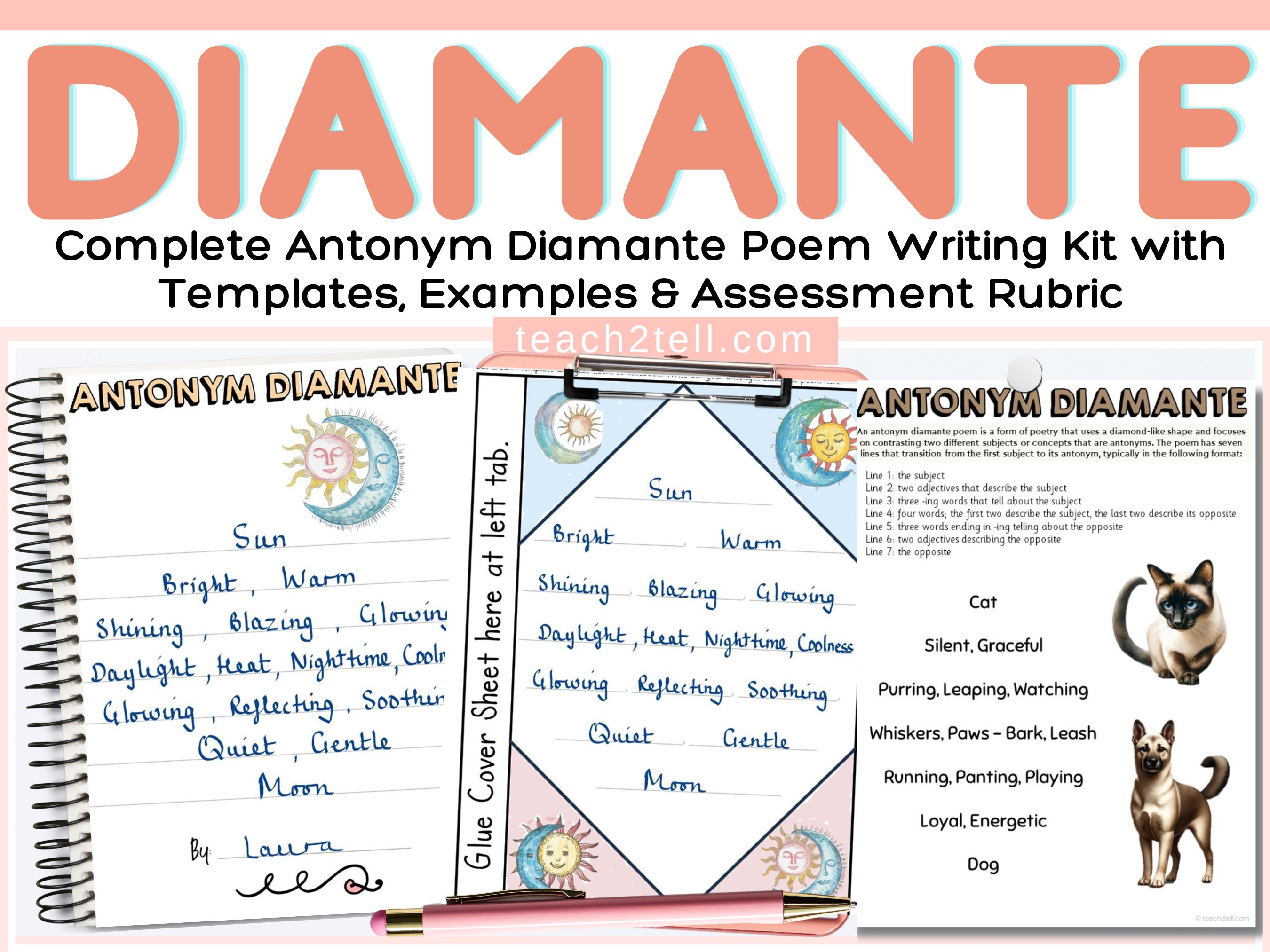
Haiku Poem Writing Activity Lesson Plan, Interactive Notebook Template

Haiku Poem Writing Activity Lesson Plan, Interactive Notebook Template
Writing, ELA, Creative Writing, Poetry, Literature, Homeschool Templates, Grade 3, 4, 5, 6, Centers, Activities, Door Decor, Classroom Decor, Graphic Organizers, Teacher Tools, Lesson Plans, Rubrics, Templates, Worksheets & Printables

This Haiku Poem Writing Activity makes poetry fun, structured, and easy to teach - perfect for helping students understand the classic 5-7-5 syllable pattern while buidling confidence in writing. With a ready-to-use lesson plan and interactive notebook templates, your students will be guided step-by-step through the process of writing their own haiku poems. What's Included Detailed Haiku lesson plan Clear explanation of the 5-7-5 syllable structure Student-friendly haiku poem example Interactive notebook templates for hands-on learning Scaffolded writing templates Assessment rubric for quick and consistent marking Why Teachers Love This Resource Haiku poems are a fantastic way to introduce poetry because of their short, structured format. This resource helps students focus on syllables, word choice, and imagery—without feeling overwhelmed. Especially Effective For Reluctant writers who need clear structure Building syllable awareness Developing descriptive language skills Perfect For 3rd Grade (also suitable for Grades 2-5) Poetry units Writing Lessons Literacy Centers Interactive Notebooks Homeschool Learning How You Can Use It Whole-class poetry lesson Small group instruction Independent writing activity Assessment task Fast-finisher work Skills Covered Poetry writing Syllable counting Descriptive vocabulary Sentence construction Creative expression If your students struggle with “What do I write?”—this resource gives them the structure and support they need to succeed.

Author Teach2Tell

Rating

Tags Haiku Poem, Haiku Lesson Plan, Poetry Writing Activity, Haiku Template, Syllable Counting Activity, National Poetry Month , Writing Activity, April Writing Activity, Poetry Lesson, 3rd Grade Writing

Experiential Learning – Community Problem-Solving Projects

Experiential Learning – Community Problem-Solving Projects
Social Studies, Government, Sociology, History: USA, History, Resources for Teachers, Classroom Management, Community Building, Special Resources, Social Emotional Learning (SEL), Grade 5, 7, 8, 9, 10, 11, 12, Worksheets & Printables, Workbooks, Worksheets, Word Searches, Teacher Tools, Assessments, Lesson Plans, Quizzes and Tests, Quizzes, Tests

Utilizing the no-prep experiential learning unit on solving community issues will empower your students to be active learners and members of their community by providing them with a hands-on, project-based learning (PBL) experience that goes far beyond the traditional textbook. The complete curriculum guide and student workbook for this PBL unit will give you all the necessary information to create an engaging and effective PBL unit with your middle school students. The curriculum is built on the proven E.P.I.C framework (empathize, probe, innovate, commit), which will lead them through the entire civic action process, from identifying an authentic community issue, to conducting research about that issue, to designing a sustainable solution, to implementing their proposed solution. ● Learning Objectives For Participants: 1. Developing Systems Thinking through the use of tools like Iceberg Model and Five Whys, to identify underlying causes of issues rather than just surface level symptoms. 2. Supporting Empathetic Research by conducting interviews with Stakeholders and Mapping Community Assets through uses of Asset-Based Community Development. 3. Developing Data Analysis through differentiating and collecting data from both Qualitative and Quantitative sources in order to effectively communicate the case for change. 4. Supporting Design Thinking and Innovation by brainstorming and using a Feasibility/Impact Matrix to develop the best ideas. 5. Developing project management through Budgeting, Resources Allocation, Timelines with Milestones and Risk Mitigation. 6. Developing Persuasive Communication by learning how to "Pitch" using Ethos, Pathos and Logos to obtain Stakeholder Buy-In. 7. Developing Resilience and Reflection by gaining experience with real-world friction, by learning from successes and failures. Basic Content Summary. The following outlines the contents of the 39-page PDF document: - Part 1 is the Teacher's Theoretical Guide (approximately 11 pages in total) and provides a comprehensive overview of experiential learning's pedagogical background. The guide will give you the ability to facilitate, and confidence to use, experiential learning with your students. - Part 2 is the Student Workbook (about 16 pages total) and has worksheets that are scaffolded for each step of the project from community mapping through to summative reflection; includes 10 different worksheets. - Part 3 is comprised of Visuals & Teacher Resources (about 12 pages total). - Classroom Visuals: Contains anchor charts for The Experiential Learning Cycle, Root Cause Analysis (Fishbone Diagram), and the Strategic Intervention Matrix. - Comprehensive Answer Key & Rubrics: Contains exhibiting example rubrics at every stage (from Substandard to Advanced responses) so that grading is on the process of completion—this means your students know what to expect when working on this project! - Teacher Implementation Guide: Provides suggestions on becoming a guide on the side to your students, how to manage issues that may arise throughout the project, as well as how to create psychological safety for your students. Social Studies, Civics, Government, Leadership, Service-Learning, and Project-Based Learning (PBL) classrooms can benefit from using this resource to empower their students to positively impact the world around them. Download this resource today to begin developing the next generations of architects who will create social change! Projects Based Learning, (PBL), Experiential Learning, Civic, Social Studies, Middle School, Community Service, Servic eLearning, Problem Solving/ Critical Thinking/ Designthinking, Student Workbook (and Teacherguide). This resource also contains Rubrics, No Prep needed, Printable, Leadership and Civic engagement. What Makes It Good for Parents & Schools: Teaches 21st Century Skills Through Real-Life Scenarios: This learning experience is much more than hand memorizing; it teaches students real life skills that they will use throughout highschool, college, and their professional lives, such as budgeting, project management, public speaking, and analyzing data. Promotes Empathy and Civic Responsibility: Through class activities and community projects that are performed as a group and individulally, students will inherently develop a sense of empathy toward others and their community, realizing that they can and should take responsibility for helping bring about positive changes. Develops Resiliency & Growth Mindset: The curriculum helps students change the way they think about challenges (obstacles) and how they see their own failure (a way to collect information for growth). Students will learn to be resilient, open and flexible to the change of environment/challenges, as well as to be perseverant in overcoming obstacles into adulthood. Provides a Complete Package of A High-Quality, Cross-Curricular, and Academically Rigorou: The project consists of four major areas all integrated into one project: social studies, ie. civic mindedness; math, ie. development of budget(s); ELA, ie. persuasive writing skills; science, ie. collection of data. As a result, the project allows for multiplication of all of the classes learned as opposed to singularly focused learning. Provides Everything Needed in a Complete Turnkey Package: When teachers receive the project; it includes a teacher guide, student workbooks, and visual aids, as well as description of the method to assess the student's work is extremely organized, easy-to-understand as well as easy to implement and to grade both substantively and fairly. Intended Audience by Age Group: Age Breakdown Based on Content, Language and Express; Grades 6-8, (Middle School). Page 2 has an explicit mention of the "critical development window of grades 5-8". The task complexity (Budgeting, Stakeholder Analysis and System Thinking) fits perfectly within this age bracket particularly in 7-8 grade level. Secondary Audience: Advanced 5th grade or as part of Introductory 9th/10th grade course work. Material is substantial enough to be used as a High School Freshman/Sophomore Civics, Government or Leadership Elective Course- and, an awesome resource for Gifted and Talented (of which there are many!) in Middle School. Copyright & Terms Of Use: Syed Hammad Rizvi owns copyright on this book. The materials on this site may be used only by yourself or in your classroom (individually). You may not modify, share, or sell any part of it; therefore you are prohibited from placing it on the Internet so that someone else could download it. If you would like to share the resource with your Co-Workers, please purchase Multiple licenses through Teachsimple. Thank you for abiding by the Terms of Use. We thank you for your continued support of Syed Hammad Rizvi.

Author Creative Book Store

Rating

Tags ProjectBasedLearning, PBL, ExperientialLearning, ServiceLearning, CommunityProblemSolving, CivicEngagement, CivicAction, DesignThinking, SystemsThinking, InquiryBasedLearning

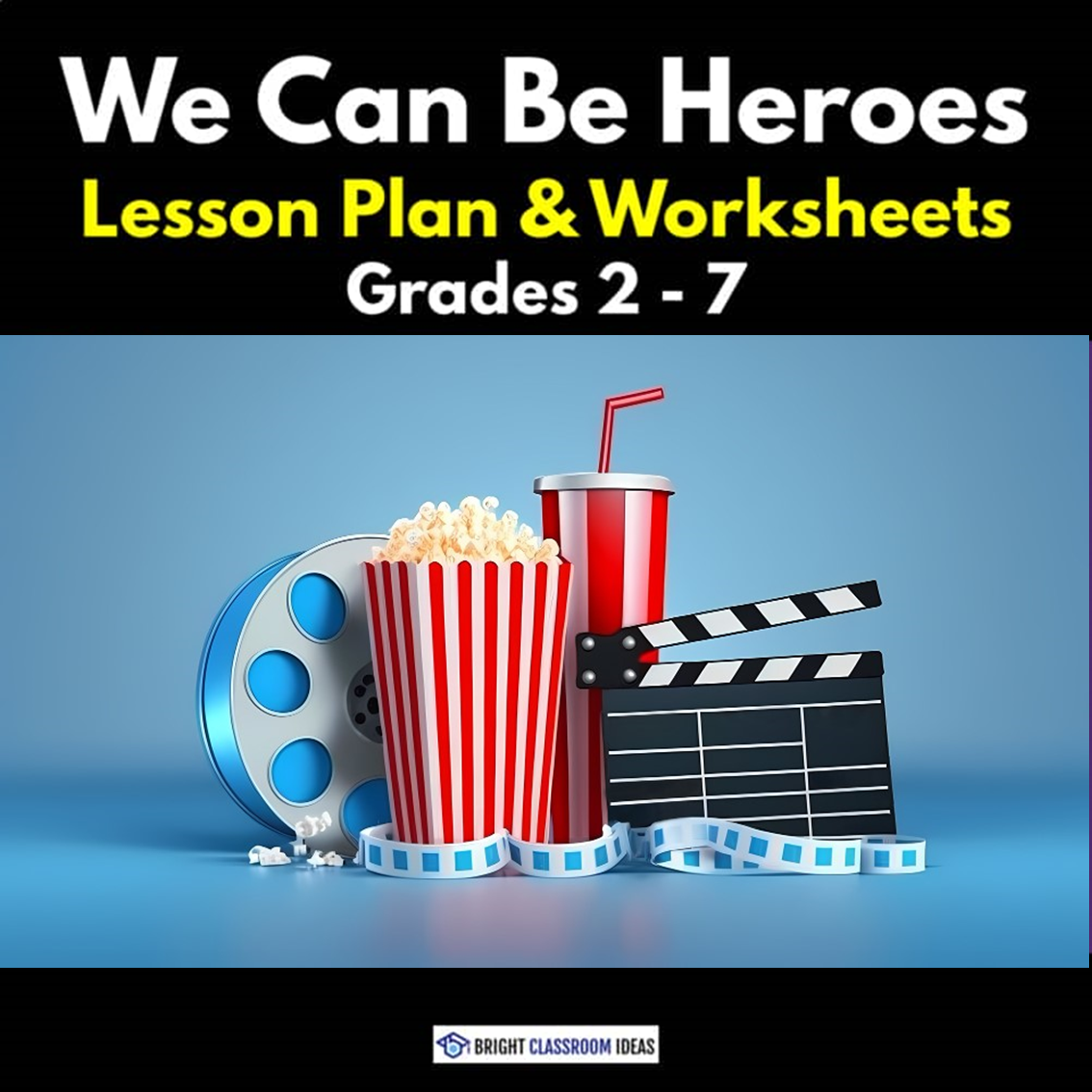
The Wild Robot Lesson Plan, Worksheets & PowerPoint | Grades 3 - 6

The Wild Robot Lesson Plan, Worksheets & PowerPoint | Grades 3 - 6
ELA, Social Emotional Learning (SEL), Special Resources, Grade 3, 4, 5, 6, Lesson Plans, Teacher Tools, Worksheets & Printables

Combine science, literacy, and social-emotional learning with this engaging lesson inspired by The Wild Robot (2024). Designed for Grades 3–6, this ready-to-use resource helps students explore animal adaptations, survival strategies, character growth, and the importance of kindness, empathy, and community. Students investigate how animals survive in different environments through concepts such as migration, hibernation, camouflage, and instinct. They also analyze character development, reflect on challenges and personal growth, interpret graphs and charts, and participate in meaningful discussions about belonging, friendship, and helping others. A thorough teaching guide, student worksheets, an answer key, science vocabulary exercises, data analysis assignments, character reflection questions, class survey activities, and conversation starters are all included in this resource. Science units, SEL classes, literary links, STEM activities, replacement plans, and cross-curricular learning all benefit from it. Just print and teach; no preparation is needed. Whether or not students have seen the movie, this lesson fosters curiosity, critical thinking, and resilience while assisting them in drawing significant links between scientific ideas and practical social and emotional competencies.

Author Bright Classroom Ideas Marketplace

Rating

Tags Wild Robot, Movie, Film, Lesson, Plan, End Of Year, Worksheet, Ela, Sel

All About Danxia Landform | Animated Geography Video Lesson

All About Danxia Landform | Animated Geography Video Lesson
Social Studies, Geography, Grade 5, 6, 7, 8, Lesson Plans, Teacher Tools

This animated geography video lesson is all about the Danxia Landform. Students will love this engaging and interactive video as they learn more about geographical landforms. This video serves as a great introduction or review video for your learners. This is an 11-minute geography video lesson.

Author Educational Voice

Tags Social Studies Video, Geography Video, Geography Lesson, Landforms, Danxia

Biomimicry Bots: Designing Eco-Friendly Robots Inspired by Nature

Biomimicry Bots: Designing Eco-Friendly Robots Inspired by Nature
Science, Earth and Environmental Sciences, Earth Sciences, Environmental Science, Geology, Life Sciences, Animals, Biology, Human Body, Insects, Grade 6, 7, 8, 9, 10, 11, 12, Activities, Experiments, Labs, Teacher Tools, Assessments, Diagrams, Lesson Plans, Rubrics, Workbooks, Worksheets & Printables

Biomimicry Bots: Designing Eco-Friendly Robots Inspired by Nature for a Sustainable Future 380-Page Comprehensive STEM Guide for Grades 8-12 | Robotics + Biomimicry + Environmental Science Curriculum Resource Unlock the future of green technology with this revolutionary 380-page educational tour de force! Authored by Syed Hammad Rizvi, Biomimicry Bots is the definitive interdisciplinary resource that empowers students to design sustainable, nature-inspired robots that address real-world environmental issues, ranging from ocean cleanup and reforestation to air quality sensing and biodiversity preservation. Ideal for advanced middle school and high school students (Grades 8-12, ages 13-18), robotics teams, STEM education, homeschoolers, and future engineers and environmental scientists. This book seamlessly integrates biology, engineering, programming fundamentals, sustainable materials, AI, swarm intelligence, soft robotics, and eco-design challenges to create a fun and interactive learning journey. With 100 expertly designed chapters, students will discover: Robotics basics (sensors, actuators, microcontrollers, programming) Nature’s brilliance (gecko adhesion, octopus arms, bird flight, insect colonies) Green materials (biodegradable plastics, self-healing materials, recycled composites) Practical applications (robotic fish, agricultural robots, disaster response drones) Eco-bot design activities with CAD and prototyping support Meets NGSS, IB, and AP Environmental Science curriculum standards. Perfect for robotics clubs (VEX, FIRST), science fairs, classroom instruction, or a full-semester course. Empower the next generation of eco-innovators now! Why Parents & Schools Adore It: Completely integrates with NGSS engineering design and Earth systems standards — administrators rave about it for its standards alignment. Teaches a true sustainability mindset, not just "build a robot" — parents are thrilled that their kids finally get why eco-design is important. 100 bite-sized chapters that are extremely teacher-friendly: assign 1-2 chapters a week or choose projects to avoid overwhelming kids. Very project-intensive with real-world applications (ocean cleanup robots, reforestation drones, and so on) — kids actually build portfolios that colleges care about. One of the only resources that combines cutting-edge robotics with environmental science — closes a huge gap in the curriculum. Target Audience (Based on Full Book Analysis) : Primary: Advanced STEM students in grades 8-12 (especially honors/AP level classes) Best Fit Classes/Courses: – Robotics/Engineering/Introduction to Engineering Design – Environmental Science/AP Environmental Science – Biology (ecology/biomimicry units) – Technology/Computer Science (Arduino, AI, programming fundamentals) – Gifted & Talented programs, Science Olympiad, FIRST Robotics, VEX teams – Homeschool co-ops emphasizing project-based learning Also great for teachers seeking a comprehensive year-long interdisciplinary curriculum (biology, physics, sustainability) Copyright/Terms of Use: This Book is copyrighted by Syed Hammad Rizvi. This resource is for personal and single classroom use only. You may not alter, redistribute, or sell any part of this resource. In other words, you may not put it on the Internet where it could be publicly found and downloaded. If you want to share this resource with colleagues, please purchase additional licenses from Teachsimple. Thank you for respecting these terms of use. This product is happily brought to you by Syed Hammad Rizvi

Author Creative Book Store

Rating

Tags BiomimicryBots, EcoFriendlyRobots, NatureInspiredRobotics, SustainableRobotics, BiomimicryEducation, STEMCurriculum, RoboticsForKids, HighSchoolSTEM, MiddleSchoolScience, EnvironmentalEngineering

Math Project: How to Make Circle Graphs and Pie Charts

Math Project: How to Make Circle Graphs and Pie Charts
Math, Percentages, Geometry, Graphing, Statistics, Grade 5, 6, 7, 8, Worksheets & Printables, Worksheets, Lesson Plans, Teacher Tools, Projects, Activities

This fun math project includes clear step-by-step instructions to show your students how to make a circle graph. This is a great way to review several math skills while showing how useful they can be! Tasks include: - Writing a survey question: Your students learn to write a question that has exactly six possible answers. - Collecting data: Your students can ask the members of your class their question. They collect data using a tally chart. They need to ask exactly 25 people. - Recording results as a fraction: Once they have their data, they can turn each answer into a fraction with a denominator of 25. - Calculating an equivalent fraction: Then, they calculate an equivalent fraction with a denominator of 100. - Working with percent (written as a decimal): Finally, they turn that fraction into a percent in decimal form. They use this percent to multiply by 360 degrees in a circle (they can use a calculator for this part) to find out how many degrees each answer gets. - Drawing angles with a protractor: They carefully draw the six angles in their pie chart, one by one. - Labeling a graph: They label the graph to make it clear for others to read. Grades to Use WIth: This math project works well in the middle grades (4-8) when students know how to use protractors, calculate with fractions and decimals, and make graphs. It could also work well in a high school special education classroom. What's Included: A total of 5 pages. in PDF Format Title Page Survey Page Equivalent Fractions Page Decimals Page Circle Graph Template Standards: 7th Grade Geometry: Draw shapes with specific conditions. 4th Grade Fractions: Write equivalent fractions. Write fractions as equivalent decimals out of 100. 6th Grade Ratios and Proportional Relationships Work with percentages.

Author Grace Under Pressure

Rating

Tags Math Project, Pie Charts, Graphing, Data Collection, Percent, Angles, Protractor, Equivalent Fractions, Circle Graphs Math, Circle Graphs

Plants of Antarctica |  Antartica Unit Study | Geography Bundle

Plants of Antarctica | Antartica Unit Study | Geography Bundle
Social Studies, Geography, Grade 3, 4, 5, 6, 7, Lesson Plans, Teacher Tools

Explore the wonders of Antarctica with our educational product featuring 10 meticulously curated plant cards designed for an enriching learning experience. These cards serve as valuable resources for continent study boxes, centers , or comprehensive unit studies on Antarctica. Each card is a gateway to discovery, presenting a double-sided design for maximum engagement. The front showcases a realistic photograph accompanied by fundamental information, offering a visual and informative introduction to Antarctic plant life. Flip the card, and you'll find a mini-article on the back, delving into intriguing and unique details about each plant, fostering a deeper understanding of the Antarctic ecosystem. To enhance the educational journey, we provide a plant match worksheet and a plant report template at the end of the packet. These resources empower students to consolidate their knowledge through reports, summaries, or even oral presentations. The flexibility of this product extends to geography centers , where students can immerse themselves in the diverse flora of Antarctica or kickstart plant reports. Included in this comprehensive package are dual sets of cards, catering to both the metric and imperial measurement systems. Additionally, an article titled "Can Plants Even Grow in Antarctica?" sparks curiosity, accompanied by thought-provoking questions that encourage critical thinking. As a bonus, mini labeled photos of the plants are provided for placement around a classroom map of Antarctica, fostering a visually immersive learning environment. Whether you choose to print, laminate, bind, or use a book ring, this product is designed for reuse, ensuring a lasting impact on your educational endeavors. Unearth the hidden botanical treasures of Antarctica with this educational resource, ideal for sparking curiosity and facilitating in-depth exploration. What You Get: - 10 double sided plant information cards using the metric measurement system - 10 double sided plant information cards using the imperial measurement system - "Can Plants Even Grow in Antarctica?" article and questions - Mini labeled photos of plants to put around map of Antarctica - Plant match worksheet - Plant report template Want More Antarctica Study Resources?: - Continent of Antarctica: Brochure and Activities - Plants of Antarctica: Informational Cards - Animals of Antarctica: Informational Cards - Map work for Antarctica - Postcards for Antarctica: Landmarks and Landforms - Antarctica Unit Test *I have resources like this for every continent. So make sure to check them out if your'e trying to put together a comprehensive geography study! Check out other resources from my store: Simply Schoolgirl! I can be contacted for questions and concerns at simplyschoolgirl1@gmail.com

Author Simply Schoolgirl

Tags Antartica, Social Studies Lesson, Matching Worksheet, Report Template, Moss, Lichen, Plant, Fungi

All About African Rift Valley | Geographical Wonders Video Lesson

All About African Rift Valley | Geographical Wonders Video Lesson
Social Studies, Geography, Grade 3, 4, 5, 6, 7, Lesson Plans, Teacher Tools

All About African Rift Valley | Geographical Wonders Video Lesson 'All About African Rift Valley | Geographical Wonders Video Lesson' is an engaging educational tool. Perfect for conventional classroom educators as well as homeschooling, this 11-minute video delivers dynamic instruction that resonates with modern learners. The product focuses on the African Rift Valley, a complex and captivating geographical wonder. It's often challenging for students to comprehend such a massive subject only through text resources but this animated geography video simplifies their learning process. It can be repetitively played in group settings or utilized in interactive media centers during free time or small group rotations. Can be applied effectively in blended learning scenarios - like flipped classrooms or post-video study discussions. Homeschoolers or public school students can easily access it at home for extra enrichment making homework assignments both engaging and interactive. Intended primarily for grade 3-7 students studying social studies, the visual representation of key concepts reinforces understanding about landforms. The goal is to provide every child an easy pathway to quality knowledge despite their location or school! Unlike traditional teaching methods, this easy-to-integrate MP4 format caters even to less tech-savvy educators! Such digital formats are easier to store than bulky physical teaching supplies too! 'All About African Rift Valley | Geographical Wonders Video Lesson' This resource promotes flexible implementation while triggering educator creativity. Designed with student curiosity and comprehension in mind, it offers innovative ways of understanding geographical wonders! Explore the love of geography by incorporating 'All About African Rift Valley | Geographical Wonders Video Lesson' into your learning practices today.

Author Educational Voice

Tags African Rift Valley, Geography, Geographical Wonders, Video Lesson, Blended Learning

Smart Shopping & Consumer Decision-Making Scenarios

Smart Shopping & Consumer Decision-Making Scenarios
Social Studies, Economics, Special Resources, Life Skills, Resources for Teachers, Classroom Management, Community Building, Research, Math, Money, Grade 6, 7, 8, 9, 10, 11, 12, Worksheets & Printables, Workbooks, Worksheets, Word Searches, Teacher Tools, Assessments, Lesson Plans, Quizzes and Tests, Quizzes, Tests

Today’s students need to have the skills to be critical thinkers and smart consumers in this digital world! This complete and ready-to-teach Financial Literacy unit goes into more detail than just budgeting; it investigates the reasons we purchase things. Students will learn about how advertisements and marketing strategies are designed to influence our impulse purchases, as well as identify any cognitive biases they may experience while shopping online or in stores. This 42-page unit will give any teacher a wealth of material for their high school or advanced middle school level classes in Economics, Personal Finance, Life Skills, or Business. This unit will help students develop practical skills that will allow them to make effective purchasing decisions and turn them from passive consumers to financially literate decisions makers throughout their lives! WHAT IS CONTAINED IN THIS UNITS BUNDLE? Resource Features Three (3) Holiday-Themed Sections: PART I - Instructional Guide and Student Reference Comprehensive, in-depth look at the basic principles of modern-day consumerism. This section was designed for you to use as an instructional tool or to provide to your students as a reading resource. Topics include: 1) The Psychological Aspects of Sales (Anchoring, Artificial Scarcity, Decoy Pricing) 2) Determining the Value of Products (Cost-Per-Use vs. Selling Price and Identifying Brand Taxes) 3) Digital Grocery Shopping (Unmasking the effects of Surveillance Capitalism, Hyper-Targeted Advertising, and Social Media Influencer Marketing) 4) The Mathematics of Selling (Identification of risks associated with frictionless transactions and using models of subscription services and Buy Now, Pay Later (BNPL) services for consumers). PART II - Engaging Student Workbook with 10 hands-on activities Hands-on, applicable worksheets that allow students to apply what they have learned through real-world situations. The activities include: 1) The Mathematics of Value (Unit Pricing and Effect of Shrinkflation) 2) Advertising Architecture and Cognitive Bias 3) Navigating the Trick of Discounting (Buy One, Get One Quantity versus Percent Off) 4) Opportunity Cost and Compounding Interest 5) Digital Literacy: E-Commerce Reviews Audit 6) Subscription Economics and Micropayments 7) Total Cost of Ownership (TCO) 8) Brand Premiums, Peer Influence, and Social Currency 9) Ethical Consumption and Lifecycle of Fast Fashion 10) Capstone Project: A final project-based learning activity that requires students to take everything they have learned and create a complete buying decision for two laptops, using all their newly gained knowledge. Section 3: Easy to Locate Teacher Resources, Visual Aids, and Scaffolded Worksheets - Everything a Teacher Needs to Effectively Teach and Save Time in Preparation Visual Aids to Assist in Instruction: A set of three powerful visual aids for The Five-Stage Consumer Decision Model, The Value vs. Durability Matrix, and A Deconstruction of Marketing Manipulation. Detailed Answers to All Workbook Questions: Complete answer guide with explanations for all workbook problems. Assessment Rubric for the Grading of Worksheets: Detailed, criteria-based rubrics included with the grading of each worksheet as well as the final capstone project. These teacher aids are: Appropriate for High School Personal Finance, Economics, or Business Classes Appropriate for Middle School (7-8) Life Skills/Financial Literacy Units Suitable for Use as Homeschool Curriculum Materials A Natural Fit for Real World Math Application and Critical Thinking Practice Centers This material will help prepare your students for a lifetime of financially responsible decisions – download this must-have, captivating and timely resource today! What Parents/Schools Appreciate About It: Provides Real-Life Financial Armor: Well-designed, contemporary education develops essential key consumer driven skills to successfully navigate our high tech digital marketplace, including: the psychology of consumerism incl. the influence of social media marketing; optimism; impulse buying; subscriptions and renewal traps. Critical Thinking Development, Not Just Mathematics: The curriculum includes both Consumer Psychology - to help students understand why they might feel pressure to purchase something and Independent Decision-Making Skills - so they can make rational, independent decisions. Complete Ready to Use Package: The Unit includes everything you need for a complete unit to teach money management, including: teacher's guide; student's worksheets; capstone project; visual examples, answer keys with rubrics; and will save you at least 20+ hours of planning. Very Engaging and Relevant: The Unit's teaching examples include video games, sneaker releases, fast fashion retail, and social media influencers that will connect with teenagers and keep their attention. The intended audience for this material is: Due to the advanced vocabulary that is used (pedagogical methodology, cognitive infrastructure, asymmetrical information) as well as the entirety of the concepts themselves. Primary Target: High School Students (Grades 9-12): this resource would fit in perfectly with classes such as Personal Finance, Economics, Business and Marketing, and Life Skills Secondary Target: Advanced Middle School Students (Grades 7-8): The concepts will be developmentally appropriate for this age group; however, they may require more teacher support and scaffolding to fully understand the theoretical aspects. The workbook will be perfectly developed to match their experience. Terms of Use/Copyright: This book is copyrighted by Syed Hammad Rizvi and may only be used for personal use and in your own classroom. You cannot modify, redistribute or sell this resource. In other words, you cannot upload this document to a website that anyone could find and download. If you wish to share this resource with other teachers, then you will need to purchase a different license through Teachsimple to do so. Thank you for your cooperation with these terms of use. This product was created with great joy by Syed Hammad Rizvi.

Author Creative Book Store

Rating

Tags FinancialLiteracy, PersonalFinance, LifeSkills, Economics, MoneyManagement, TeachersOfInstagram, Homeschool, CriticalThinking, ConsumerMath, SmartShopping

Neuro-Inclusive Vocational Mastery: Executive Functioning Micro-Creden

Neuro-Inclusive Vocational Mastery: Executive Functioning Micro-Creden
Career, Life Studies, P.E. & Health, Mental Health, Health, Mindfulness, Physical Education, Research, Resources for Teachers, Classroom Management, Grade 6, 7, 8, 9, 10, 11, 12, Worksheets & Printables, Worksheets, Workbooks, Teacher Tools, Assessments, Lesson Plans, Presentations, Literacy Readers, Quizzes and Tests, Tests

Neuro- inclusive Educational Curriculum and Credentialing System for Executive Functioning Micro- credentials 35-Page Curriculum for Neurodivergent Teens (Autism, ADHD and More) in PDF Format Transforming the way neurodiverse students will leave school and move to the workforce and this is accomplished through a cutting-edge micro-credentialing program that recognizes the worth of everyone, regardless if they have a disability or not. Currently available through a digital PDF, this current tool replaces the old way of doing things based on a deficit model of transitioning out of high school to working. It provides a very powerful evidence-based structure for turning executive function challenges into work-related credentials. Includes: •Phase 1-Curriculum Theory Basics (Hidden Curriculum, Cognitive Load, Sensory Schema, and Ambiguity Traps) • Phase 2-Student Workbook & 10 Worksheets (Task Initiation, Working Memory, Cognitive Flexibility, Emotional Regulation, Time Blur, Sustained Attention, Organisation, Long Term Goals, Self-Monitoring, and Self-Advocacy) • Phase 3-Visual Structures, Flow Charts, Cognitive Load to Environmental Friction Mapping plus Teacher Implementation guide with complete Notion integration. Students will earn micro-badges that stacks up to create a portfolio for employers to easily understand—no longer any need for vague transcript! Ideal for special education teachers, transition coordinators, vocational rehabilitation specialists and parents building toward sustainable career pathways for autistic/ADHD teens. Instantly downloadable PDF • Print (cut) one copy or use digitally • Hybrid digital + analog/workbook based • Designed for students aged 14-22/9-12 grade. SEO Keyword: Neurodivergent Vocational Curriculum, Executive Function Worksheets for Autism, Micro-Credentialing for Special Education, Transition Programs for Autism into Work, ADHD Workplace Skills Curricula, Neuro-Inclusive Transition Planning, Executive Function Micro-Credentials, Sensory Regulation Training for Work. Reasons Parents & Educators Appreciate It: • Transforms labels of “unmotivated” or “distracted” students into real, visible, employer-ready micro-credentials that significantly increase retention rate after employment (example: retention rates went from 60% to 88% in a single year). • Comes with teacher keys; student worksheets; and pre-made templates to make implementation take only minutes instead of months (no longer create resources from scratch). • Uses affirming language that respects students' neurodiversity; allows schools to have an established, professional portfolio to provide to employers and IEP teams. • Uses a hybrid model of digital and printable content - all learning styles and budgets are accommodated; schools love the built-in assessment rubrics and portfolio defense scripts. • Quickly bridges the gap between school and the workplace; parents know that real-world skills (i.e. self-advocacy script; sensory anchors; Plan B matrix) will continue to be used even after high school graduation. Target Student Populations (Identification by PDF Analyses): These curricula were specifically designed for neurodivergent youth between 14 to 22 years of age (IDEA transition services) and are intended to be used in the following educational settings: • Special Education/Inclusion Classrooms, Grades 9-12 • Post-Secondary Transition Vocational Rehabilitation, 18 to 22 • Autism Spectrum Disorder Support and Transition Programming • ADHD/Executive Dysfunction focused Life Skills/Work-Study Programming • Community Based Adult Transition Programs, ages 18 to 22 Not for elementary/middle school; does NOT include general education environments without a neurodivergent focus. Designed for students experiencing difficulties with initiating tasks, time-blindness, sensory overload, or navigating the "hidden curriculum" within an employment environment. Copyright terms of use. This book belongs to Syed Hammad Rizvi. This resource can be used as a personal or classroom resource (one classroom only). You cannot change, distribute or sell any part of this resource. This means you are not allowed to make it available on the internet for public access or download. If you would like to share this resource with colleagues, please purchase additional licenses from Teachsimple. Thank you for following these terms of use. This product has been created by Syed Hammad Rizvi with joy.

Author Creative Book Store

Rating

Tags SpecialEducation, Neurodivergent, Autism, ADHD, ExecutiveFunctioning, TransitionPlanning, Neurodiversity, SpecialEd, NeuroInclusiveEducation, NeurodivergentCurriculum

The Quantum Leap:Unlocking the Mysteries of Quantum Computing for Teen

The Quantum Leap:Unlocking the Mysteries of Quantum Computing for Teen
Career, Life Studies, Research, Technology, Science, Computer Science, Life Skills, Special Resources, Social Skills, Special Education Needs (SEN), Grade 6, 7, 8, 9, 10, 11, 12, Lesson Plans, Teacher Tools, Worksheets & Printables, Workbooks, Parts of and Anatomy of, Presentations, Outlines, Centers, Activities

Explore the quantum revolution with The Quantum Leap: Unlocking the Mysteries of Quantum Computing for Teens, written by Syed Hammad Rizvi – a comprehensive resource for upfront and center students interested in innovative and advanced applications in computer science and related physics and technological domains. A thorough and correct resource on understanding complex ideas such as a bit compared to a qubit, quantum superpositions and entanglements, quantum gate and quantum circuit designs, Shor's algorithm and Grover's algorithm, and further applications in drug development simulation, economic modeling simulation, climate simulation modeling, and quantum cryptography beyond post-quantum cryptography. This 351-page book serves a thorough introduction to computer and physics students who are interested in understanding advanced computer applications and related physics. The Quantum Leap serves a detailed platform for students to learn about quantum paralleling, quantum correction, and quantum internet connectivity. Perfectly effective and aptly SEO-ed for educators on quantum mechanics resources and applications. A necessary read for students and professionals interested in quantum physics and computer applications. Why Parents/Schools Love It: Sparks STEM Passion: Makes the concept of quantum computing easy to understand for teens by comparing it to things they know and love, sparking their interest in the technological applications of the future such as artificial intelligence and cryptography. Teaches Future-Proof Skills: The course deals with applications, ethics, and future career options, providing students with knowledge required for in-demand jobs in quantum technology. Accessible and Engaging: Step-by-step analyses and context knowledge provided help make difficult subjects more accessible, overcoming intimidation factors and encouraging critical thinking. Comprehensive Curriculum Fit: It is compatible with the computer science and physics curriculum of high schools and is very suitable for being incorporated in the classroom or homeschooling settings. Encourages Ethical Awareness: It deals with the effects, limitations, and initiatives taken around the world, thus instilling ethical innovation in the minds. Target Student Classes: Having considered the entire contents and structure of this book and its intended audience from various perspectives such as its front cover and introduction chapters, it is intended for high school students from Grades 10 to 12 and aged 15 to 18 years. It commences from a level of basic discussion on classical and quantum fundamentals such as superpositions and entanglement concepts and then proceeds to more complex aspects of quantum studies such as algorithms and error correction strategies based on assumed foundational knowledge and interests but without rigorous prerequisite knowledge. Hence it is intended for high school seniors enrolled in introductory computer science studies at college or more in-depth math and physics studies at school levels above Grades 9; it may also serve Grade 9 students who take more challenging subjects at school and college-level new students at introductory stages as add-on reading contents, while its mainstream audience would be Grades 10 to 12 students in line with its teen-level comparison aids and refraining from more mature themes of mathematics chapters. Copyright/Terms of Use : This Book was copyrighted by Syed Hammad Rizvi. You may use this resource for personal and single class use. You are not authorized to modify, redistribute, and sell this resource or its part. That means you are not authorized to upload this resource to the Internet so people can freely access and download it. If you wish to share these resources with others in your workplace or with classmates at school, then go ahead and buy additional licenses from Teachsimple. "This product is happily brought to you by Syed Hammad Rizvi"

Author Creative Book Store

Rating

Tags QuantumComputingForTeens, QuantumLeapBook, UnlockQuantumMysteries, QubitsForBeginners, SuperpositionExplained, EntanglementForKids, QuantumAlgorithmsTeens, ShorsAlgorithmGuide, GroversSearchTeen, QuantumComputing2026

Proprioceptive Power-Ups: A Gamified Physical Therapy & Sensory

Proprioceptive Power-Ups: A Gamified Physical Therapy & Sensory
Research, Resources for Teachers, Classroom Management, Community Building, Special Resources, Life Skills, Social Emotional Learning (SEL), Social Skills, Special Education Needs (SEN), Speech Therapy, Grade 1, 2, 3, 4, 5, 6, 7, 8, Worksheets & Printables, Workbooks, Worksheets, Word Searches, Teacher Tools, Assessments, Graphic Organizers, Lesson Plans, Presentations, Outlines

With Proprioceptive Power-Ups, you can turn dysregulated classrooms into focused learners. This complete, evidence-based, gamified sensory regulation program takes ‘heavy work’ and transforms it into new fun, student-led Power-Ups. The 27-page digital PDF resource is designed to provide occupational therapy, physical therapy, and real-world classroom viability for students in kindergarten through eighth grade. Using Sensory Integration Theory, Self-Determination Theory (SDT), and micro-learning protocols, Proprioceptive Power-Ups provide sensory seekers with 3-5 minute ‘bursts’ of proprioceptive and vestibular input that calm those under-responding to sensations at the same time dramatically improving attention, motor planning skills, emotional regulation, and other important areas of development. The following features are provided within Proprioceptive Power-Ups: Comprehensive theoretical underpinning (neurobiology of proprioception, tripartite circuit architecture, integration within an MTSS Tier 1-3 model) 10 student workbook worksheets with fill-in-the-blank self-reflection and data tracking to complete before beginning a new series of Power-Ups. Age-divided choice board usages for example K-2 use an imagination engine; 3-5 uses a mission protocol; 6-8 uses biometric optimization. Full-color diagrams, schematics include but are not limited to: Neurological Processing Pathway; 3-Phase Sensory Circuit; Gamification Mechanics Matrix. Examples of IEP goals, tools for collecting data, and case studies demonstrating an overall reduction of 60-78% in both elopement and disruption of classroom activities as compared to pre-Proprioceptive Power-Ups implementation. Instant digital download of entire resource, no preparation required! Proprioceptive Power-Ups are ideal for teachers, occupational therapy specialists (OT), physical therapy specialists (PT), special education teachers/special instructors, and parents who are serving students with or without ADHD, developmental coordination disorder (DCD), autism spectrum disorder (ASD), or other classroom sensory processing disorder(s). Why Schools & Parents Are So Happy About It 1. Effectively Calms & Focuses Students: With instant self-regulation through 3–5 minutes of gamified “heavy work” activities, elopement, meltdown, and verbal disruptions have been reduced by as much as 78% in real case study examples. 2. Zero Lesson Prep but Maximum Engagement for the Students: Therapy is turned into play, through Choice Boards and avatar style Power-Ups - giving students choice and control, and saving teachers time while providing maximum engagement for the students in busy classroom settings and for kids on their IEP. 3. Evidence Based and Measured Progress: Easy access to the “whole brain” theory of neuroscience with pre/post data tracking tools and IEP goal templates providing easy documentation of progress to parents and administrators. 4. Age Appropriate From K to 8th Grade: There are differentiated stations and language to keep even the youngest kids excited about (and the oldest kids “cool” about) participating in activities in the same room without being segregated by age. 5. Proven Return On Investment: High impact proprioceptive input (replacing ineffective fidgety tools) will continue to improve time on task, enhance writing skills, and improve working/executive function without the need to sacrifice time during instruction. Target Students and Grade Levels: The resource is geared toward kindergarten through 8th grade (K-8) students. The children that will benefit from this program demonstrate an under-stimulated or dysregulated proprioceptive and vestibular system, including: Sensory Seekers (i.e., crashing, chewing, and pressing too hard); Sensory Under-Responders (i.e., lethargic, floppy, and having low muscle tone); Students with Attention-Deficit/Hyperactivity Disorder (ADHD) - Combined Type; Autism Spectrum Disorder (ASD); Developmental Coordination Disorder (DCD); Dyspraxia .A general education classroom using a Multi-Tiered System of Support (MTSS) Tier 1 (i.e., universal brain breaks), Tier 2 (i.e., targeted small groups), and Tier 3 (i.e., Individualized Education Plan-specific on Circuit) will also utilize the program as needed. There is built-in scaffolding provided within the program through the following: narrative/imaginative play for grades K-2; challenge-based missions for grades 3-5; and more mature "biometric optimization" language for middle school (grades 6-8) to assist in securing the dignity of the adolescent population. Copyright / Terms of Use This Book is copyright protected by Syed Hammad Rizvi. You may only use this resource for your own personal use and for use by one class within your own classroom. You may not change this resource or redistribute or sell any part of the resource. In other words, you may not post this resource on the internet where it would be easily accessible and/or downloadable by others. If you would like to share this resource with other teachers, kindly purchase additional licenses to use this resource from Teachsimple. Thank you for complying with the terms of use for this resource. Thank you from all of us at Syed Hammad Rizvi for purchasing this product!

Author Creative Book Store

Rating

Tags ProprioceptiveInput, HeavyWorkActivities, HeavyWork, JointCompression, DeepPressure, SensoryCircuit, SensoryIntegration, SensoryProcessingDisorder, SensoryProcessing, SensoryDiet

Credit Lit (Credit 101 for Teens)

Credit Lit (Credit 101 for Teens)
Special Resources, Life Skills, Grade 7, 8, 9, 10, 11, 12, Teacher Tools, Lesson Plans

Credit-Lit an inspiring and informative book, engages teens and encourages them to make GREAT financial decisions. The Credit-Lit lessons is a financial literacy workshop for high school students where they will learn the impact of credit to prepare them for a healthy financial future in adulthood. Following the principles of the Mom's Choice Gold award nominated book. Through engaging content and class activities, students will walk away from this two-session course empowered to make small financial decision that will set them on the right track for years to come. Objectives to be reached with this curriculum include to: - Explain what credit is and why it is used as a payment method - Differentiate between good credit and back credit - Describe the impact of our credit score, how it is determined, and how to check it - Discuss strategies for improving and maintaining your credit score - Distinguish situations and processes that apply for credit cards, loans, and a mortgage - Apply strategies to protect your personal identity and financial information The curriculum is divided into Session 1 and Session 2. Both included in the files. Each session is divided into the following parts: Intro Presentation Group Activity Presentation Individual work Wrap Up. Additionally, there are five review questions for the end of the first session and the answers to these questions are provided. Session two ends with a final assignment for students to complete. Answers to this final assignment are also included at the end. Each session takes about 40 minutes to complete. A Credit-Lit CERTIFICATE OF COMPLETION is also included in this resource for teachers to print and hand out to each student who satisfactorily completed the course requirement of Good Credit: What is it, How to Keep it, and How to Maintain it!

Author Instill Publishing

Tags Credit Literacy, Credit For Teens, Finance, Financial Literacy, Healthy Financial Future, Credit-lit, Credit 101, Good Credit, How To Keep Good Credit

AI Tools for Research – Fact-Checking & Bias Detection Worksheets

AI Tools for Research – Fact-Checking & Bias Detection Worksheets
Science, Technology, Computer Science, Engineering, Special Resources, Social Emotional Learning (SEL), Social Skills, Life Skills, STEM, Research, Grade 6, 7, 8, 9, 10, 11, 12, Worksheets & Printables, Workbooks, Worksheets, Word Searches, Writing Prompts, Teacher Tools, Lesson Plans, Assessments, Diagrams, Presentations

This 41-page PDF is a fully prepared to print middle school Digital Literacy Curriculum called "Advanced Digital Tools for Research: Fact-Checking and Detecting Bias Worksheets" designed for students in grades 6-8 to be able to use the V.E.R.I.F.Y. Framework (Validate, Extract, Read Lateral, Interrogate Bias, Find Primary Evidence, Yield Conclusion) to critically evaluate content generated by AI, identify hallucinatory or fabricated information, detect algorithmic bias, and utilize lateral reading skills. This resource is ideal for the AI era and includes: - Four theoretical chapters with practical real-world examples (e.g., Titanic, Great Wall of China, Space Race, Paleo-Diet). - Ten hands-on student worksheets (e.g., Anatomy of a Digital Claim, Spotting Plausible Falsities, Lateral Reading Protocol, Unmasking Structural Bias, The Phantom Citation Mystery, Chronological Confusion, etc.). - Three full-color visual frameworks/diagrams (Fact-Checking Workflow, Algorithmic Bias Triad, Source Credibility Spectrum). - A complete answer key with rubrics and high proficiency examples. - A complete Teacher Implementation Guide including pacing (4-6 class periods), differentiation for ELLs/developing readers and gifted students, formative assessment examples, and examples of exit tickets. - A ready-to-teach PDF requiring no preparation that increases research skills, media literacy, and critical thinking through an alignment to both the CCSS, ISTE, and Digital Citizenship Standards, making it appropriate for use in English Language Arts, Social Studies, Science, and Technology classes. Why Schools/Parents Find It To Be Effective: Develops Real World Skills that Kids Need to Survive in an AI World. Kids will learn how to identify when they are being deceived by hallucinations, bias, and fake citations before they copy and paste into their papers or projects. No Preparation or Planning Time Required - Teachers get full theory, worksheets, visuals, answers and pacing guide when using this product. Parents appreciate the independent critical thinking experience provided to their children. Fun Way to Increase Student Engagement - Kids enjoy using the detective-style worksheets (Tree Octopus Hoax, Phantom Biologist, Brooklyn Bridge Hoax, etc.) to develop critical thinking skills through the use of skepticism as a game. Differentiated, Inclusive, and Fully Accessible - Students are able to access the materials because of the built in supports provided for ELL/Developing Readers, and extension challenges for Gifted Students. Ensures Academic Integrity Now and in the Future - Aligns well with the local school districts expanding policies regarding the appropriate use of AI, as well as standards for digital citizenship. Intended Audience of Book (As per complete PDF analysis): This resource is specifically created for students in Grades 6 to 8 (Middle School). There are examples throughout the resource, as can be seen in the seven (7) and eight (8) examples referenced. Answer keys and teacher guides both have "Grade 6 to 8 Student Workbook" clearly labeled on them. Best Fit: ELA, Social Studies/History, Research projects in Science, Digital Literacy/Media Literacy, or Technology courses Excellent for Homeschoolers, Gifted Programs, or Educators Teaching AI Ethics and Responsible Research. Copyright & Terms of Use This Book is copyrighted by Syed Hammad Rizvi. This resource is solely for personal and individual classroom use. You may not modify, redistribute or sell any part of this resource (including putting it online for others to back or download). In order to share this resource with your coworkers please buy more licenses from Teachsimple. Thank you for following these terms of use. -------------------------------------------------------------------* This product was created by Syed Hammad Rizvi to be enjoyed!

Author Creative Book Store

Rating

Tags AIFactChecking, BiasDetection, DigitalLiteracy, MiddleSchoolWorksheets, AIFactCheck, VERIFyFramework, CriticalThinking, MediaLiteracy, AIforTeachers, DigitalLiteracyWorksheets

Social Skills Role-Play Scenarios & Empathy Building Sheets

Social Skills Role-Play Scenarios & Empathy Building Sheets
Classroom Management, Resources for Teachers, Community Building, Life Skills, Special Resources, Social Emotional Learning (SEL), Social Skills, Special Education Needs (SEN), Speech Therapy, STEM, Homeschool Curriculum, Homeschool Templates, Grade 3, 4, 5, 6, 7, Worksheets, Worksheets & Printables, Workbooks, Word Searches, Teacher Tools, Assessments, Lesson Plans, Quizzes and Tests, Quizzes, Tests

This comprehensive 33-page digital Social Skills Role-Play Scenarios and Empathy Building Sheets Curriculum for students in Grades 3-6 provides educators with easy-to-implement lessons about powerful and important topics - social-emotional learning (SEL) and developing empathy. Each of the components in this package features relevant supportive research along with fun, engaging, and easy-to-use role-play simulations and seven engaging student worksheets that address the most important life skills our students need, including developing empathy; resolving conflict; practicing active listening; decoding non-verbal cues; navigating peer pressure; providing genuine apologies; and displaying sportsmanship. This curriculum is perfect for teachers in elementary schools, counselors, homeschoolers, and out-of-school-program providers. Included in this 33-page Curriculum are the following components and resources: Phase 1: The Core Theory behind Affective, Cognitive, and Compassionate Empathy/ Supporting Material for Role Playing Phase 2: Seven Printable Student Worksheets with Real-Life Role-Playing Scenarios (Decoding Non-Verbal Cues, The Empathy Bridge, I Statement Architect, Active Listening, Peer Pressure Navigator, Apology Blueprint, Sportsmanship & Fair Play) Phase 3: Curriculum Guides, Teachers Visuals, Implementation Guide, and Answer Key This no-prep resource is designed to provide students with a real-world opportunity to transform abstract concepts into experiential learning through safe role-play and mapping experiential empathy. Therefore, all upper elementary-aged children (8-12) will develop emotional intelligence by reducing the tendency to exhibit hostile attribution bias, and practice prosocial behaviors in a low-stakes learning environment. Immediate digital download is available, and the Curriculum may be easily printed and used immediately or utilized through Google Classroom. Why Schools & Parents are Successful: Both research and classrooms prove this method produces results. The basis for these materials is experiential learning theory, mirror neuron studies, and restorative practice; there is measurable growth in empathy and resolving conflicts. You will find many ready-to-use worksheets, role-play scripts, and teacher guides to help you provide instant lessons that save you hours of planning for your classroom. This is an effective method to help your son or daughter become more emotionally intelligent, eliminate hostile attribution bias, and help them develop real-life scripts for dealing with peer pressure, making apologies, and engaging in fair play. Use this method for the whole classroom or in small groups or during counseling, and it will include different learners, multi-age groups and students with neuro-diversity. Many parents report that their children demonstrate newfound positivebehaviour at home, and schools have successfully adopted this curriculum to reduce relational aggression and meet CASEL standards. Intended target audience: Grades 3 - 6 (approximately 8 to 12 years old) are referenced in every chapter and case study/worksheet in this curriculum as being appropriate for that age range and developmental level. The other target ages of K - 2 will not be appropriate due to more advanced cognitive requirements (the second-order Theory of Mind, perspective-taking, and restorative language frameworks) and to Grades 7+ (middle school) students for their focus on upper elementary social dynamics (recess exclusion, group projects, rumor spreading, sportsmanship). Copyright/Terms of Use: The content of this book was registered as protected material by Syed Hammad Rizvi for exclusive personal/classroom usage. Therefore, you may not copy, modify, sell or redistribute this book in any format (including the internet) to others for any reason whatsoever. You may only provide a copy of the book to someone else by buying an additional license through Teachsimple. Thank you for complying with the copyright/user agreement and supporting the work of Syed Hammad Rizvi!

Author Creative Book Store

Rating

Tags SEL, SocialEmotionalLearning, EmotionalIntelligence, EmpathyBuilding, SocialSkills, MentalHealthForKids, SocialEmotional, SocialEmotionalDevelopment, RolePlayScenarios, SocialSkillsRolePlay

All About Moreno Glacier | Geographical Wonders Video Lesson

All About Moreno Glacier | Geographical Wonders Video Lesson
Social Studies, Geography, Grade 3, 4, 5, 6, 7, Lesson Plans, Teacher Tools

All About Moreno Glacier | Geographical Wonders Video Lesson All About Moreno Glacier | Geographical Wonders Video Lesson is an educational tool that showcases the magnificence of nature. This particular video lesson emphasizes on one unique geographical marvel—the Moreno Glacier. This animated video spans roughly 12 minutes and employs high-quality visuals along with exhaustive content to enhance understanding of geographical components. Intended for students from Grade 3 to Grade 7 , it enables a deep dive into the fascinating domain of landforms, cultivating a comprehensive perspective on world structures and honing knowledge about natural wonders such as the Moreno Glacier. The resource comes as a single MP4 file making it seamlessly integrable into varied technology setups, perfect for in-person or online teaching. With an interactive and appealing layout, it caters to diverse learning modes since its visual communication stimulates heightened student involvement. Educators can utilize this resource in multiple ways such as introducing new concepts to large classes using projectors or smartboards; Inspire discussions within small study groups; Assign it for individual revision at home post-lesson; Incorporate into exam preparations since reintroduction to interesting videos is generally well-received by students. Fuse this lesson with extracurricular activities like poster designing or essay writing revolving around geographical wonders. In harmony with wider units on social studies—particularly geography—All About Moreno Glacier doesn't just serve as an isolated teaching material, but blends perfectly in developing broader themes. This innovative instructional aid empowers educators with exciting tools that nurture not only exam-ready students but cultivate lifelong learners filled with curiosity about our wonderful planet!

Author Educational Voice

Tags Moreno Glacier, Geography, Landforms, Natural Wonders, Video Lesson

Boundary Setting & Healthy Relationships Scenario Worksheets

Boundary Setting & Healthy Relationships Scenario Worksheets
Special Resources, Life Skills, Social Emotional Learning (SEL), Social Skills, Special Education Needs (SEN), Speech Therapy, STEM, Resources for Teachers, Classroom Management, Community Building, Grade 6, 7, 8, 9, 10, 11, 12, Worksheets & Printables, Workbooks, Worksheets, Word Searches, Teacher Tools, Assessments, Lesson Plans, Quizzes and Tests, Quizzes, Tests

Presented in an easy-to-use format that is ready for use immediately, the Boundary Setting and Healthy Relationships Scenarios Worksheet is a collection of 40 pages of worksheets focused on Teaching S.E.L. (Social & Emotional Learning) skills to adolescents. Containing relevant and up-to-date research, these worksheets help teachers foster students’ development of strong social and emotional skills through hands-on experiences, supported based on both interpersonal neurobiology and cognitive-behavioral principles. Using interactive worksheets, students will engage with realistic (and often high-stake) scenarios that depict physically, emotionally, cognitively, materially, and digitally/cyberly, from peers, from family, from romantic partners, and much more, as they explore consent and communicating when under stress, the fawn response vs. fight or flight response, location tracking, the rupture and repair cycle, trauma dumping, peer pressure, etc. Using guided written prompts as well as fill-in-the-blank and scripting exercises with reflection questions and self-assessments, students will grow their understanding of and ability to demonstrate self-control, stay calm under pressure, use assertive communication with others, and ultimately build a lifetime of autonomy through satisfying relationships. Included with the worksheets are a full Visual Asset Library (boundary typology continuum, discomfort-resolution flowchart, spheres of digital agency), complete answer keys; example responses; foundational knowledge quizzes; and an extensive Teacher Implementation Guide including psychological safety protocols, differentiation between middle and high school, and detailed information about how to use this resource in the classroom or during counseling sessions, with homeschoolers, or in youth programs. This digital (PDF) resource is the ideal tool for teachers to develop emotional regulation, distress tolerance, assertive communication, and autonomous interpersonal relationships for students as they learn to navigate friendships, romantic partnerships, social media, and family dynamics from a place of confidence and respect. Reasons why Parents/Schools Appreciate It: Trauma-Informed and Psychologically Safe: Explicitly identified protocols (Third Party Rule, opt-out options, validation versus correction) that allow for the protection of vulnerable students while still getting credit for the Social and Emotional Learning standards. Entirely "Ready to Go" and requires no prep time (40 pages of theory, 10 Scenario Worksheets, visual aids, answer keys and individualised teacher guides). Print once and immediatley begin teaching. Relevance with Real Life: Addresses current adolescent issues such as cyber boundaries, tracking locations, group chat pressure, love bombing and smear campaigns through engaging, appropriate, context sensitive scenarios. Demonstrated Skill-Building: Transition from theory to practice using scripting, somatic awareness and mastery reflections, creating measurable improvement in assertiveness and self-esteem. Flexible and Scalable (can be used by teachers in whole classes, small groups, individually or as independent study). Can be adapted from Middle School up to High School. Target Student Grade Levels: The curriculum is intended for students in grades 6 through 12 (middle and high school) as well as for teachers implementing it in classrooms. This is reflected in the Teacher Implementation Guide, sections beginning on pages 39-40, with examples of differentiation for middle schoolers and high schoolers as described below: For middle schoolers (grades 6-8), examples are provided, emphasizing peer relationships and how those relationships can lead to digital exclusion, as well as using a scripted role-playing activity. For high schoolers (grades9-12), the focus is on the complexities/differences of exploring nuances, emotional manipulation, gaslighting, intimate partner relationships, and the interconnectedness of digital technologies. The curriculum can be effectively used in Health, Social Emotional Learning (SEL), Advisory, Psychology, Counseling, Life Skills, and Advisory/Homeroom classes, as well as in after school programming, by school counselors, through families who are homeschooling, and by youth groups. Terms of Use / Copyright: This document is copyrighted to Syed Hammad Rizvi. This product is to be used only for personal and individual use in your classroom, and may not be modified or reused in any way, including the distribution or the selling of this document. This means that you may not put this on the Internet for the public to download. If you would like to distribute this item to other teachers, please purchase a new license from Teachsimple. Thank you for respecting these terms of use. This item is supplied by Syed Hammad Rizvi.

Author Creative Book Store

Rating

Tags BoundarySetting, HealthyRelationships, SEL, SocialEmotionalLearning, SELcurriculum, TeenBoundaries, DigitalBoundaries, ConsentEducation, BoundarySettingWorksheets, HealthyRelationshipsWorksheets

All About Area | Animated Math Video Lesson

All About Area | Animated Math Video Lesson
Math, Algebra, Grade 5, 6, 7, Lesson Plans, Teacher Tools

This animated math video lesson is all about finding the area. Students will love this engaging and interactive video that takes them step-by-step on how to find the area of a number of different shapes/angles. This video serves as a great introduction or review video for your learners.

Author Educational Voice

Tags Algebra Lesson, Finding The Area, Math Lesson, Math Video, Video Lessons

Readiness Life Skills - Managing Time Gr. 9-12+

Readiness Life Skills - Managing Time Gr. 9-12+
Life Studies, Special Resources, Life Skills, Grade 6, 7, 8, 9, 10, 11, 12, Teacher Tools, Lesson Plans

Become a master of time management. This resource promotes independence. Set up a plan at the start of your day. Make to do lists of things you want to get done. This resource provides tips and strategies to maximize your time. Learn how to prioritize your tasks for the day. Follow the provided five levels of priority to get started. Break up bigger jobs into smaller tasks. A four step process will help here. Explore the Eisenhower's urgent important matrix. Use this in a real-world experience. Finish your day by evaluating what you accomplished. Make a plan for the next day. Get to know how different tools can help with efficiency, from time trackers to productivity apps. This resource is made up of reading passages, real-world activities, graphic organizers, and extension activities, like a crossword, word search and comprehension quiz. Combining high interest concepts with low vocabulary to make sure all learners understand the necessary skills required in life. Aligned to your State Standards. Written to Bloom's Taxonomy. This content is reproducible.

Author Classroom Complete Press

Rating

Tags Life Skills, Comprehension, Graphic Organizers, Reading Passage, Readiness, Managing, Manage, Time, Management

Adjectives Supplementary Materials Grade 5-6 (PDF)
Free Download

Adjectives Supplementary Materials Grade 5-6 (PDF)
ELA, Language Development, ESL, Grammar, Common Core, Resources for Teachers, Grade 5, 6, 7, Worksheets & Printables, Worksheets, Quizzes and Tests, Teacher Tools, Tests, Assessments, Lesson Plans

Adjectives Supplementary Materials Note: This download DOES NOT include the tests themselves. You can still make use of these materials without them but they are recommended. Download in a format of your choice in the "Links" section below. In the Supplementary Pack Interactive Ice Breakers: Engaging warm-up activities that introduce students to key ELA concepts, such as quick capitalization corrections and punctuation challenges. Guided Practice: Structured teacher-led exercises that reinforce grammar and punctuation rules, helping students identify and apply them correctly in sentences. Group and Partner Tasks: Collaborative activities where students work together to edit sentences, correct capitalization, and improve punctuation through peer discussion and teamwork. Independent Worksheets: Carefully designed worksheets that provide focused practice, allowing students to apply learned concepts and refine their skills independently. Exit Tasks: Quick assessments at the end of each lesson, prompting students to reflect on what they’ve learned and apply their knowledge in writing and editing tasks. Links Demonstrative Adjectives Quantitative Adjectives Predicative Adjectives Interrogative Adjectives Degrees of Comparison Google Docs Google Forms Google Slides PDF PPT Word FULL CATALOG OF DOWNLOAD LINKS HERE Grade 5/6 Links: Capitalization & Punctuation Google Docs Google Forms Google Slides PDF PPT Word Free Supplementary Materials Pack Adjectives Google Docs Google Forms Google Slides PDF PPT Word Free Supplementary Materials Pack Nouns Google Docs Google Forms Google Slides PDF PPT Word Free Supplementary Materials Pack Pronouns Google Docs Google Forms Google Slides PDF PPT Word Free Supplementary Materials Pack Verbs Google Docs Google Forms Google Slides PDF PPT Word Free Supplementary Materials Pack Prefixes & Suffixes Google Docs Google Forms Google Slides PDF PPT Word Free Supplementary Materials Pack Sentence Structure Google Docs Google Forms Google Slides PDF PPT Word Free Supplementary Materials Pack Subject Verb Agreement Google Docs Google Forms Google Slides PDF PPT Word Free Supplementary Materials Pack Tenses Google Docs Google Forms Google Slides PDF PPT Word Free Supplementary Materials Pack Context Clues Google Docs Google Forms Google Slides PDF PPT Word Free Supplementary Materials Pack Defining Words Google Docs Google Forms Google Slides PDF PPT Word Free Supplementary Materials Pack Fill in the Blanks Google Docs Google Forms Google Slides PDF PPT Word Free Supplementary Materials Pack Homophones Google Docs Google Forms Google Slides PDF PPT Word Free Supplementary Materials Pack Synonyms Google Docs Google Forms Google Slides PDF PPT Word Free Supplementary Materials Pack ELA Review Questions Overview Questions have three answer choices. There are a handful of pictures on each test for aesthetic purposes, as well as a review sheet covering most of the topics covered in the product. Introduction or Example Sheet Each topic will include an introduction or example sheet to go through first with your students. Full Answer Keys Full answer keys and sample responses are provided so no matter how busy you are, you know you're covered! For More Like This For similar downloads and other frees, do check out Cored Group on TeachSimple.

Author Cored Education

Tags Elementary, Answers, Ccss, Common Core, Grammar, Tests, Test Prep, Assessment, Grade 5, Grade 6

Media Advanced ESL Lesson Plan

Media Advanced ESL Lesson Plan
ELA, Language Development, ESL, Vocabulary, Not Grade Specific, Adult Education, High School, Middle School, Teacher Tools, Lesson Plans, Worksheets & Printables

Media AdvancedESL ELA ELL and TEFL Lesson Plan. This advanced English lesson plan set focuses on building media literacy skills. Students will read informative texts about various media topics, including the evolution of media technology, analyzing media messages, and recognizing media bias. After reading, students will demonstrate comprehension by completing integrated grammar exercises that implement critical thinking skills. Questions challenge learners to examine claims, evaluate evidence, and draw connections across concepts. This versatile resource can be used for whole-class instruction, small group discussion, or independent practice. Answer keys are provided to support self-paced learning. An audio clip is also included to build listening comprehension. Overall, these materials aim to sharpen students' discernment when interacting with media. The ESL lesson plan includes flashcards, a warmer, exercises, role-play, conversation, writing drill, activity, answers and an extra study that would be good to set as homework. There are 30+ pages and there are teachers notes to guide the teacher. 3 PDFs with 11 ready to print pages and one digital access file 1 MP3 file

Author TEAM TEFL

Tags Media, ESL, EFL, Group Work, Graphic Organizers