2,295 products added recently
Poetry Lesson Plans
Introduce your students to the world of poetry with lesson plans that celebrate language and expression. These resources explore various poetic forms, devices, and themes. Implement these activities to inspire creativity, enhance comprehension, and foster a love for poetic art.
Robert Burns Poetry Study | Poetry Lesson | Scottish Poetry |
ELA, Literature, Poetry, Not Grade Specific, Lesson Plans, Teacher Tools
Robert Burns Poetry Study | Poetry Lesson | Scottish Poetry This teaching resource is an integration of the element of poetry into Language Arts instruction, with particular focus on the work of Scotland's beloved poet Robert Burns. Available for use in a whole group setting, small group sessions or individual homework, it blends educational proficiency and artistry through printable learning material beautifully illustrated with hand-painted watercolors. What does this package include? A visually striking Robert Burns poster Inspiring quote prints directly from his poetic verses Illustrated selections of Burn’s poetry for deep engagement Handwriting tracing boards featuring quotes from Burn’s verses promoting handwriting mastery Beyond Basic Literacy Skills - Innovative Inclusions: The pack doesn't just stop at honing basic literacy skills but goes a step further offering six anatomy prints showcasing Scottish culture illustrations such as: Rose Roe Deer Bagpipes The national flower Thistle, The hardy plant Heather and , The iconic Highland cow, , In addition, a journal background page has been designed to spur creative thinking during writing tasks. These materials could also be used as props in Science classes while discussing plant or animal biology or in Social Studies while examining Scotland’s culture! The potential application possibilities are unbound in nature hence extremely flexible! All these are now available to you as a single downloadable PDF file! Get ready to immerse your students in the enchanting world of Robert Burns with this all-encompassing Poetry Study pack!
Author Fiddleticks Education
Tags Robert Burns, Poetry Study, Scottish Poetry, Language Arts, Handwriting Mastery
Haiku Poem Writing Activity Lesson Plan, Interactive Notebook Template
Writing, ELA, Creative Writing, Poetry, Literature, Homeschool Templates, Grade 3, 4, 5, 6, Centers, Activities, Door Decor, Classroom Decor, Graphic Organizers, Teacher Tools, Lesson Plans, Rubrics, Templates, Worksheets & Printables
This Haiku Poem Writing Activity makes poetry fun, structured, and easy to teach - perfect for helping students understand the classic 5-7-5 syllable pattern while buidling confidence in writing. With a ready-to-use lesson plan and interactive notebook templates, your students will be guided step-by-step through the process of writing their own haiku poems. What's Included Detailed Haiku lesson plan Clear explanation of the 5-7-5 syllable structure Student-friendly haiku poem example Interactive notebook templates for hands-on learning Scaffolded writing templates Assessment rubric for quick and consistent marking Why Teachers Love This Resource Haiku poems are a fantastic way to introduce poetry because of their short, structured format. This resource helps students focus on syllables, word choice, and imagery—without feeling overwhelmed. Especially Effective For Reluctant writers who need clear structure Building syllable awareness Developing descriptive language skills Perfect For 3rd Grade (also suitable for Grades 2-5) Poetry units Writing Lessons Literacy Centers Interactive Notebooks Homeschool Learning How You Can Use It Whole-class poetry lesson Small group instruction Independent writing activity Assessment task Fast-finisher work Skills Covered Poetry writing Syllable counting Descriptive vocabulary Sentence construction Creative expression If your students struggle with “What do I write?”—this resource gives them the structure and support they need to succeed.
Author Teach2Tell
Rating
Tags Haiku Poem, Haiku Lesson Plan, Poetry Writing Activity, Haiku Template, Syllable Counting Activity, National Poetry Month , Writing Activity, April Writing Activity, Poetry Lesson, 3rd Grade Writing
I WONDER - What Is A Quatrain Poem | Animated Video Lesson
Poetry, Literature, ELA, Grade 6, 7, 8, 9, 10, 11, 12, Lesson Plans, Teacher Tools
Video Introduction An amazing video designed for the students to learn more about famous poetry in different countries. I WONDER - What Is A Quatrain Poem | Animated Video Lesson Do you like reading poetry? If yes, what is your favorite poem? Do you have a favorite poet? If yes, tell us more about him/her. What are the types of poetry? Have you ever tried to write a poem before? If yes, tell us more about it. What is acrostic poem? Dow you know who is the first writer to write it? Can you write one? What is limerick? Dow you know who is the first writer to write it? Can you write one? What is sonnet? Dow you know who is the first writer to write it? Can you write one? What is haiku? Dow you know who is the first writer to write it? Can you write one? I WONDER - What Is A Quatrain Poem | Animated Video Lesson The video is perfect for encouraging the researching skills for the students, while learning more about this fantastic poetry. I WONDER - What Is A Quatrain Poem | Animated Video Lesson This friendly designed video is suitable for students at school, homeschooling, and as a group activity. Format Available in MP4 format.
Author Educational Voice
Rating
Tags What Is A Quatrain Poem, What Is A Quatrain Poem Video, Quatrain Poem, Quatrain Poem Facts, Quatrain Poem Video, Quatrain Poem Facts For Kids, Quatrain Poem Video For Kids, Poetry
I WONDER - What Is An Onomatopoeia | Animated Video Lesson
Poetry, Literature, ELA, Grade 6, 7, 8, 9, 10, 11, 12, Lesson Plans, Teacher Tools
Video Introduction An amazing video designed for the students to learn more about famous poetry in different countries. I WONDER - What Is An Onomatopoeia | Animated Video Lesson Do you like reading poetry? If yes, what is your favorite poem? Do you have a favorite poet? If yes, tell us more about him/her. What are the types of poetry? Have you ever tried to write a poem before? If yes, tell us more about it. What is acrostic poem? Dow you know who is the first writer to write it? Can you write one? What is limerick? Dow you know who is the first writer to write it? Can you write one? What is sonnet? Dow you know who is the first writer to write it? Can you write one? What is haiku? Dow you know who is the first writer to write it? Can you write one? I WONDER - What Is An Onomatopoeia | Animated Video Lesson The video is perfect for encouraging the researching skills for the students, while learning more about this fantastic poetry. I WONDER - What Is An Onomatopoeia | Animated Video Lesson This friendly designed video is suitable for students at school, homeschooling, and as a group activity. Format Available in MP4 format.
Author Educational Voice
Rating
Tags What Is An Onomatopoeia, What Is An Onomatopoeia Video, Onomatopoeia, Onomatopoeia Facts, Onomatopoeia Video, Onomatopoeia Video For Kids, Onomatopoeia Facts For Kids, Poetry
I WONDER - What Is A Cinquain Poem | Animated Video Lesson
Poetry, Literature, ELA, Grade 4, 5, 6, 7, 8, 9, 10, Lesson Plans, Teacher Tools
Video Introduction An amazing video designed for the students to learn more about famous poetry in different countries. I WONDER - What Is A Cinquain Poem | Animated Video Lesson Do you like reading poetry? If yes, what is your favorite poem? Do you have a favorite poet? If yes, tell us more about him/her. What are the types of poetry? Have you ever tried to write a poem before? If yes, tell us more about it. What is acrostic poem? Dow you know who is the first writer to write it? Can you write one? What is limerick? Dow you know who is the first writer to write it? Can you write one? What is sonnet? Dow you know who is the first writer to write it? Can you write one? What is haiku? Dow you know who is the first writer to write it? Can you write one? I WONDER - What Is A Cinquain Poem | Animated Video Lesson The video is perfect for encouraging the researching skills for the students, while learning more about this fantastic poetry. I WONDER - What Is A Cinquain Poem | Animated Video Lesson This friendly designed video is suitable for students at school, homeschooling, and as a group activity. Format Available in MP4 format.
Author Educational Voice
Rating
Tags What Is A Cinquain Poem, What Is A Cinquain Poem Video, Cinquain Poem, Cinquain Poem Facts, Cinquain Poem Video, Cinquain Poem Facts For Kids, Cinquain Poem Video For Kids, Poem
Perspective & Point of View Reading Lesson - "Spider and the Fly" Poem
ELA, Reading, Reading Comprehension, Literature, Poetry, Grade 4, 5, Teacher Tools, Lesson Plans
Point of view and perspective can be tricky concepts for fourth or fifth grade readers. They need just the right text and support to help them grasp this challenging literature standard! The classic poem, 'The Spider and the Fly,' is a gripping, narrative tale with a delightfully creepy tone that will have your students on the edge of their seats! Mary Howitt's rhythmic descriptive lines and crafty word choice bring the characters to life, which is perfect for practicing character perspective and point of view. Combined with this detailed lesson plan and scaffolded reading response activities, your readers will be identifying and analyzing the point of view and perspective of different characters in a snap! ⭐️ Product Highlights: Features a comprehensive lesson plan based on the gradual release model Centered on a captivating text that engages even reluctant readers Includes printable response activities and copies of the poem to annotate Differentiates for approaching and advanced readers Provides digital and printable extension resources ✅ PDF File Includes: 4-page lesson plan for before, during and after reading 2 printable options for "The Spider and the Fly" poem with numbered stanzas 2 versions of the student reading response graphic organizer [fly's perspective + spider's perspective] Guiding questions and prompts to support struggling readers Supplemental cross-curricular and enrichment activities ✏️ Supported Standards: Fourth Grade CCSS.RL.4.1 & RL.4.6 Florida B.E.S.T. ELA .4.R.1.3 Fifth Grade CCSS.RL.5.1 & RL.5.6 Florida B.E.S.T. ELA .5.R.1.3 VA SOL.R.5.5 (c, g & j)
Author The End of the Alphabet
Tags Point Of View, Perspective, Inferences, Poetry, Characters, Character Development, Gradual Release, Infer, Text Evidence, Literature
Acrostic Poem Template National Poetry Month Activity Lesson Plan
ELA, Poetry, Literature, Homeschool Templates, Grade 2, 3, 4, 5, Centers, Activities, Graphic Organizers, Teacher Tools, Lesson Plans, Rubrics, Worksheets & Printables
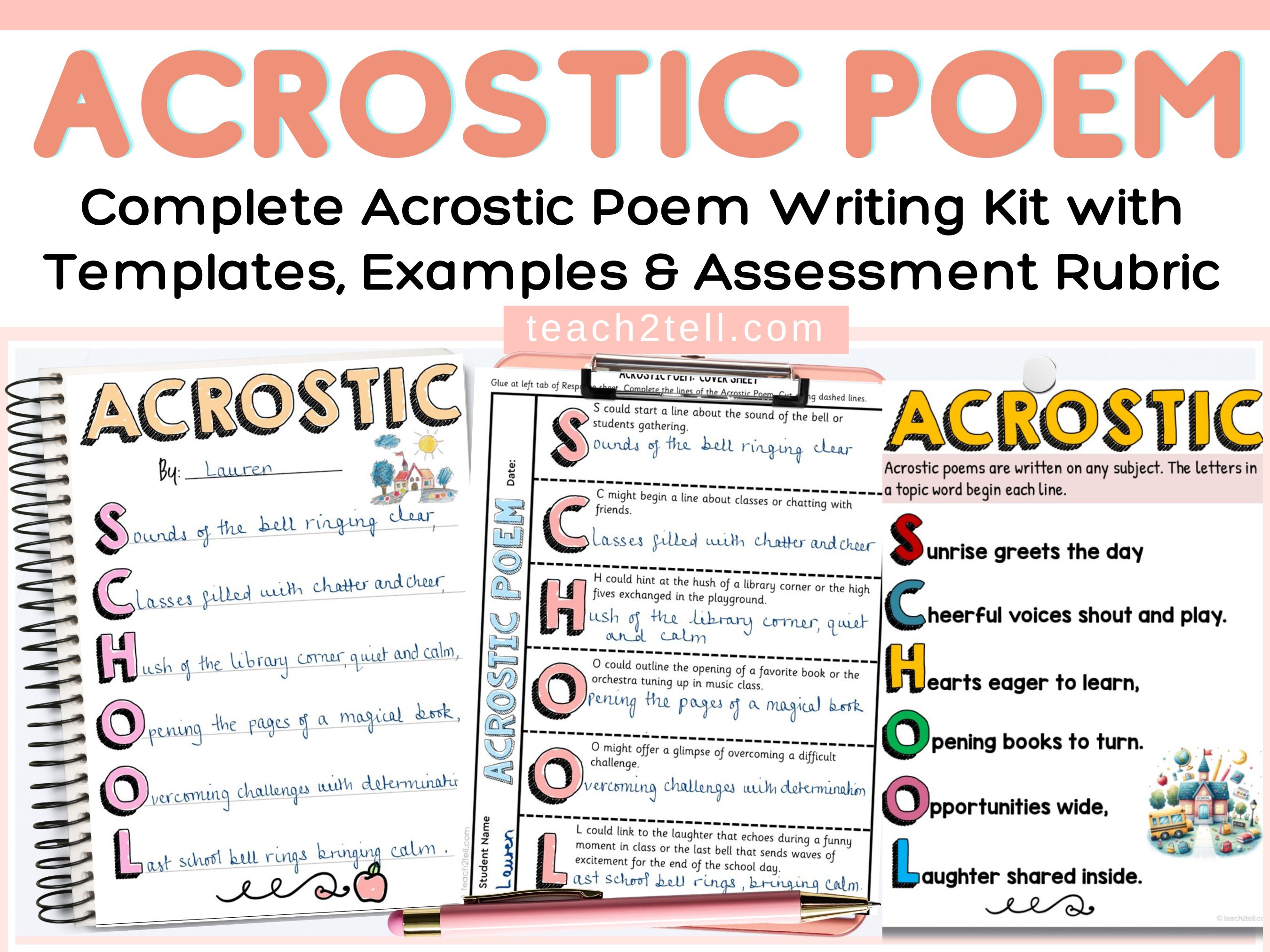
Looking for an acrostic poem template that actually helps your students write meaningful poetry during National Poetry Month? If you’ve ever had students stare at a blank page unsure how to start… you’re not alone. Poetry can feel overwhelming without the right structure — and that’s exactly where this resource makes a difference. This acrostic poem resource is the perfect writing activity to celebrate National Poetry Month this April. It gives your students clear scaffolding, engaging examples, and step-by-step support so they can confidently create their own poems. What's Included Acrostic poem interactive notebook templates to guide student writing Clear, student-friendly example (posters in color and black and white) Structured lesson plan for easy implementation A publishing page An assessment rubric for quick and consistent marking Perfect For Grades 2-6 National Poetry Month activities Poetry units Writing lessons Literacy centers Homeschool learning Small group or whole-class instruction Why Teachers Love This Takes the stress out of teaching poetry Supports reluctant writers with clear structure Makes National Poetry Month lessons engaging and meaningful Helps students move from ideas → draft → published piece Saves you planning time with ready-to-use materials How to Use in Your Classroom You might introduce acrostic poems as a whole-class lesson using the included examples, then guide your students through brainstorming ideas. From there, students can use the interactive notebook templates to plan and draft their poems before creating a polished final version using the publishing sheet. The included rubric makes assessment simple and consistent — no guesswork needed. Skills Covered Poetry writing Vocabulary development Creative expression Writing structure and organization Editing and revising Presentation and publishing This works beautifully as a low-prep, high-engagement activity during National Poetry Month — especially when you want something meaningful without reinventing the wheel.
Author Teach2Tell
Rating
Tags Poetry Lesson Plan, Poetry Writing Activity, National Poetry Month , Writing Rubric, Creative Writing Lesson, Poetry Examples, Acrostic Poem, Acrostic Poem Template, Acrostic Poem Examples, Poetry Writing Rubric
Blackout Poetry Unit
ELA, Literature, Poetry, Grade 9, 10, 11, 12, Lesson Plans, Teacher Tools
Download and discover the ultimate no-prep resource for blackout poetry, also known as found poetry, that will teach your students the art of word choice, literary techniques, and poetic language through a fun and hands-on approach. In six captivating unit lessons, students will embark on an engaging journey of crossing out found text to create their own unique and personal poems, an experience they'll find far more enjoyable than traditional writing methods. Without even realizing it, your students will immerse themselves in a world of learning while working on their blackout poetry. This all-inclusive module delves deeper than the creation of blackout poems, incorporating literary analysis exercises that investigate five renowned poems and explore five central literary ideas. The module also wraps up with a personal blackout poem project as the summative assessment , designed to engage even the most reluctant creative writers. Witness as your pupils become fully engrossed and stimulated through the enchanting world of blackout poetry! This lesson plan on poetry teaching comes complete with everything needed to run a blackout poetry unit. It is ideal for substitute lesson plans, a brief creative unit, or as a supplement to a poetry or literary analysis unit. Your download comprises: Five blackout poetry exercises centered on literary analysis. Each activity comprises a famous poem, a defined literary concept, discussion questions, and a blackout activity (an answer key and a Common Core-aligned rubric are included). A blackout personal poem "writing" project. This requires students to find a newspaper or magazine article of personal significance and apply the blackout poetry technique to craft their unique piece of poetic art (A 40-point rubric, connected to three Common Core ELA standards, is included in both a printable format and as a link to an editable rubric. This allows for customization of grading and effortless integration into Google Classroom and numerous other Learning Management Systems) LITERARY CONCEPTS AND FAMOUS POEMS INCLUDED IN THIS RESOURCE: Metaphor and “O Captain! My Captain” (1865), by Walt Whitman Imagery and “To S.M., a Young African Painter…” (1773), by Phillis Wheatley Personification and “The Wind — tapped like a tired Man —” (1863), by Emily Dickinson Plot Structure and “The Man He Killed” (1902), by Thomas Hardy Theme and “Here I Love You” (1924), by Pablo Neruda Although this resource can be fitted for any secondary Language Arts classroom, it has been carefully designed to work best in grades 9, 10, 11, and 12. The included rubrics are subtly but specifically tied to Common Core ELA Standards for Writing (3 and 4) and Reading Literature (2). This resource is provided in print-ready, bookmarked, and adjustable PDF files and PowerPoint Show files. This resource contains 8 Pages and 1 Google Sheet.
Author The Language of Educational Art, LLC
Tags Poetry, Creative Writing, Worksheets, Blackout Poetry Art Ideas, Black Out Poem Ideas, Poetry Packet High School, Blackout Poem Ideas, Best Texts For Blackout Poetry, Blackout Poems Ideas
Cinquain Poem Lesson Plan, Template, Examples & Rubric Poetry Writing
ELA, Poetry, Literature, Homeschool Templates, Grade 2, 3, 4, 5, Centers, Activities, Graphic Organizers, Teacher Tools, Lesson Plans, Rubrics, Worksheets & Printables
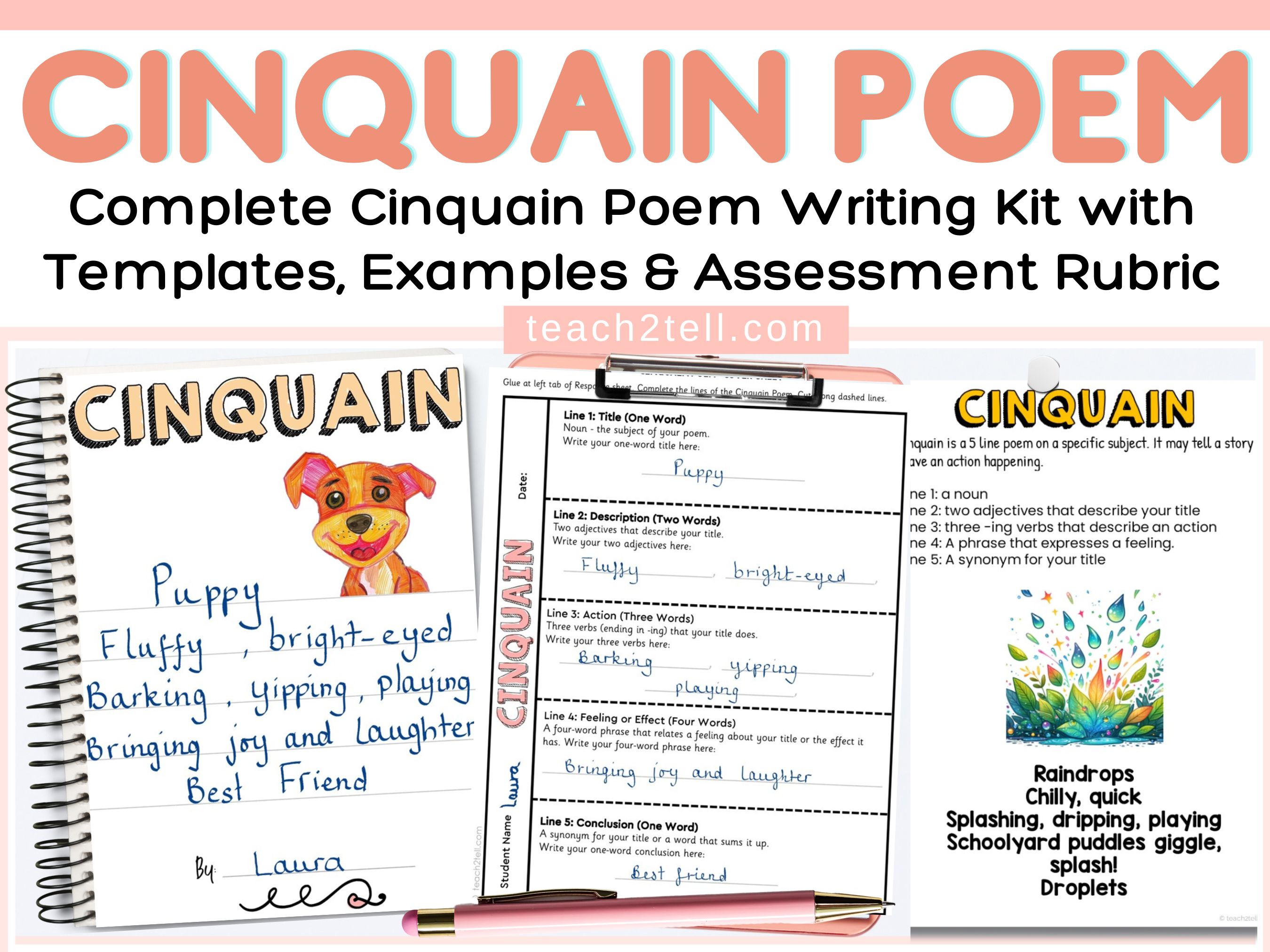
Looking to teach your students how to write a cinquain poem? This resource presents you with a simple and structured way that actually works. This Cinquain Poem Lesson Plan makes poetry writing clear, engaging and achievable for all learners - perfect for helping students build confidence while exploring creative writing. Designed with busy teachers in mind, this resource walks your students step-by-step through how to write a cinquain poem, using scaffolded support, clear examples, and an easy-to-follow structure. What's Included Detailed lesson plan (ready to teach-no prep needed) step-by-step guide on how to write a cinquain poem student-friendly example structured poetry interactive notebook templates and writing scaffolds Assessment rubric for easy marking Perfect For Grades 2-5 Poetry units Writing lessons Literacy centers Homeschool learning How You Can Use It Whole-class poetry lesson Small group writing activity Independent writing task Assessment piece Fast-finisher activity Skills Covered Poetry writing Descriptive language Parts of speech (adjectives, verbs) Sentence structure Creative expression This Cinquain Poem writing resource supports reluctant writers with scaffolded guidance and encourages creative thinking in a structured way.
Author Teach2Tell
Rating
Tags Cinquain Poem, Poetry Lesson Plan, Poetry Writing Activity, Cinquain Template, Elementary Poetry, National Poetry Month , Writing Rubric, Creative Writing Lesson, Poetry Examples, How To Write A Cinquain
I WONDER - What Is Imagery | Animated Video Lesson
Poetry, Literature, ELA, Grade 5, 6, 7, 8, 9, 10, 11, Lesson Plans, Teacher Tools
Video Introduction An amazing video designed for the students to learn more about famous poetry in different countries. I WONDER - What Is Imagery| Animated Video Lesson Do you like reading poetry? If yes, what is your favorite poem? Do you have a favorite poet? If yes, tell us more about him/her. What are the types of poetry? Have you ever tried to write a poem before? If yes, tell us more about it. What is acrostic poem? Dow you know who is the first writer to write it? Can you write one? What is limerick? Dow you know who is the first writer to write it? Can you write one? What is sonnet? Dow you know who is the first writer to write it? Can you write one? What is haiku? Dow you know who is the first writer to write it? Can you write one? I WONDER - What Is Imagery | Animated Video Lesson The video is perfect for encouraging the researching skills for the students, while learning more about this fantastic poetry. I WONDER - What Is Imagery | Animated Video Lesson This friendly designed video is suitable for students at school, homeschooling, and as a group activity. Format Available in MP4 format.
Author Educational Voice
Rating
Tags What Is Imagery, What Is Imagery Video, Imagery, Imagery Facts, Imagery Video, Imagery Facts For Kids, Imagery Video For Kids, Poetry, Poetry Facts, Poetry Video
Alliteration Poem Template Poetry Writing Activity with Examples
ELA, Poetry, Literature, Homeschool Templates, Grade 2, 3, 4, 5, Centers, Activities, Graphic Organizers, Teacher Tools, Lesson Plans, Rubrics, Worksheets & Printables
Looking for a way to help your students actually understand alliteration without it turning into a bunch of random or overly silly sentences? I’ve found that alliteration can be one of those concepts students either overdo or don’t quite grasp, especially when they’re trying to apply it in their own writing. Having a bit of structure really makes a difference. This activity gives students a starting point, so they’re not guessing what to do. Instead of just identifying alliteration, they’re using it in their own poems, which helps it stick. The examples make it easier for them to see what’s expected, and the templates guide them through the process without taking away their creativity. In my experience, this works well whether you’re introducing alliteration for the first time or revisiting it during a poetry unit. You can model a few examples together, then let students have a go using the templates. Some will need a bit more support, and others will run with it—but the structure is there for both. Once they’ve drafted their poem, they can create a final version to display. It’s one of those activities where students actually enjoy reading each other’s work, which is always a win. There’s also a simple lesson outline included if you want something easy to follow, along with a rubric to make marking more straightforward. It fits nicely into literacy rotations, whole-class lessons, or even as something to leave for early finishers when you need a meaningful task that doesn’t require a lot of extra explanation. Items Included Alliteration poem interactive notebook templates Student-friendly example (color and blackline posters) Step-by-step lesson plan Publishing page for a final copy Assessment rubric
Author Teach2Tell
Rating
Tags Poetry Lesson Plan, Poetry Writing Activity, Alliteration Poem Template, Alliteration Activity, Alliteration Examples, Phonics Alliteration, Literacy Centers Writing, Creative Writing Activity, Figurative Language Activity, Poetry Lesson Elementary
"Hey Brother" Song/Lyrical Analysis Language Arts Lesson
ELA, Literature, Poetry, Grade 6, 7, 8, Lesson Plans, Teacher Tools
'Hey Brother' Song/Lyrical Analysis Language Arts Lesson This educational material designed for grade 6-8 educators aims to use song lyrics as an innovative medium for language arts education. The students will delve into the world of 'Hey Brother' by Avicii, absorbing its message and better understanding alliteration. Lyrical Analysis and Delivery The lesson is centered on facilitating lyrical analysis, tailored not just for traditional classrooms but also suitable for online or distance learning settings. It focusses on identifying examples of figurative language, spotting repetition and alliteration patterns, and making meaningful personal connections with the textual content present. Creative Visual Journalling To further engage learners in the resourceful package, visual journalling tasks are added which require learners to share their unique narratives about their relationships with their siblings through writing projects. Interactive task cards. Analyzing song lyrics rather than simple listening. Digital Capabilities & Resources Available No preparation time needed from teachers to deliver this lesson, An adaptable design that works both offline (PowerPoint) and online ( Google Slides ), An addition of precious resources such as answer key sheets or student copy documents solidify your execution strategy bringing efficacy into practice! In essence, This comprehensive, flexible and engaging learning resource stretches beyond conventional teaching boundaries aligning the vibrancy of music within modern pedagogy methods. Check out 'Hey Brother' Song/Lyrical Analysis Language Arts Lesson today! </div
Author The Simplistic Teacher
Tags Song Analysis, Language Arts, Music Education, Figurative Language, Alliteration
Poetry Analysis Sub Plans Lessons (Print & Pass)
ELA, Literature, Poetry, Grade 6, 7, 8, 9, 10, 11, 12, Teacher Tools, Lesson Plans
Never worry about preparing a substitute plan again! This comprehensive collection of concise poem analysis lessons provides teachers with all the necessary resources for 10 substitute-led class sessions. Simply print out the readily available sub note along with the lesson handouts, which also include a helpful rubric, and you're all set. Both your substitute teacher and students will easily manage the rest! What's even better is that your students will have the opportunity to enhance their analysis and essay writing skills even in your absence! Here's how simple this sub plan series is to present: Simply print out and sign the included sub plan note, make copies of one of the 10 poetry analysis worksheets included in this resource, and leave them on your desk for your substitute. Students can work through the analysis questions in one class period and complete the analysis essay in the next (or simply forego the essay). Either way, you have a perfect 1-to-2 day lesson that requires almost no direct instruction! While student familiarity with the poetry concept is helpful, the handouts directions will be more than enough information to get your students working diligently while you're away. Each of the 10 included lessons contain the following: - A prepared sub plan note with teacher instructors - An annotation and discussion activity based around a literary concept and classic poem (see list below) - A clear lesson flow chart attached to the lesson hand-out - An engaging analysis essay prompt that builds on the annotation and discussion activities surrounding each included poem - A self-and-peer-review checklist activity - Clear and organized analysis essay writing tips that will succinctly function as learning guides for when you leave your class in the hands of a substitute (or when you just need a day's break from direct instruction) - A Common Core Standards-based grading rubric (Tied to 4 ELA standards) POEMS & CONCEPTS INCLUDED IN RESOURCE: Apostrophe: "Break Break Break," by Alfred, Lord Tennyson Rhyme: “How Do I Love Thee? Let Me Count the Ways,” by Elizabeth Barrett Browning Symbolism: “A Noiseless Patient Spider,” by Walt Whitman Theme: “One Dignity Delays for All,” by Emily Dickinson Consonance: “The Road Not Taken,” by Robert Frost Blank Verse: “Shall I Compare Thee to a Summer’s Day,” by William Shakespeare Ambiguity: “The Walk,” by Thomas Hardy Repetition: “The Negro Speaks of Rivers,” by Langston Hughes Elegy: "To an Athlete Dying Young," by A. E. Housman Metaphor: “We Wear the Mask,” by Paul Laurence Dunbar Although this resource can be fitted for any secondary Language Arts classroom, it has been carefully designed to work best in grades 9, 10, 11, and 12. The included rubrics are subtly but specifically tied to Common Core ELA Standards for Writing (4 and 5) and Language (1 and 2). This resource is provided in print-ready, bookmarked, and adjustable PDF files. This resource contains 32 Pages.
Author The Language of Educational Art, LLC
Tags Poetry, Exposition, Analysis
Budding Poets: A Beginner's Guide to Verse and Rhyme
ELA, Literature, Poetry, Grade 1, 2, 3, 4, Teacher Tools, Lesson Plans
Budding Poets: A Beginner's Guide to Verse and Rhyme Take your learners on an exciting journey into the heart of verse with budding poets. Designed to inspire young minds' affection for poetry while simultaneously developing their creative writing talents. What Budding Poets Offers An extensive digital guide immersed in over 40 engaging poems. A variety of 20 diverse styles designed specifically for novice learners venturing into the realm of rhyme. A robust collection comprising both high- and low-level poems that do more than just entertain; they introduce students to a complex tapestry of poetic devices and forms. Tailored Activities For Learning Enhancement The well-thought-out tasks accompanying each poem are crafted to hit on critical poetic techniques, keeping every student engaged while forming a strong foundation as rising poets. Cross-Curricular Extension Activities A Value Addition! In this package, you will discover: 100 cross-curricular extension activities: which bridge poetry with other subject areas giving students an integrated academic experience—a truly innovative approach toward holistic education! Budding Poets:, whether mentored wholesomely or fostering small discussion groups, assigning homework or orchestrating classroom activities- can be effectively implemented accommodating according to your pedagogical needs making it versatile for both traditional classrooms as well as homeschool settings. Note: This must-have educational companion combines quality content cleverly packaged into one neatly organized PDF file! The resource transcends boundaries by not only meeting curriculum standards, but nurturing lifelong enthusiasts vested in appreciating the aesthetic wonders embraced by poetry. Offer your students from Grade1 to Grade4 this enriching exploration that promises immersive experiences into poetry and an overall enriching learning experience. Let's assist your students in beginning their poetic journeys today!
Author Classroom Complete Press
Tags PDF, Guide Rhyme, Poets For Beginners
Limerick Poem Lesson Plan, Template, Examples & Rubric Poetry Writing
ELA, Poetry, Literature, Homeschool Templates, Grade 3, 4, 5, 6, Centers, Activities, Graphic Organizers, Teacher Tools, Lesson Plans, Rubrics, Worksheets & Printables
Ever tried teaching a limerick poem and found your students either stuck on rhyming… or going completely off track? This resource was created to make teaching limericks much more manageable. It gives your students a clear structure to follow, while still leaving room for the fun and creativity that limerick poetry is known for. Instead of guessing what to write next, students are guided through the process step by step, using examples and templates that help everything “click”. What's Included A detailed lesson plan you can pick up and use A Limerick poem example to model expectations (color and blackline posters) Interactive notebook templates to support each stage A clear explanation of the AABBA rhyme pattern An assessment rubric to keep marking simple A publishing sheet that would make the perfect bulletin board display to celebrate National Poetry Month Perfect For Grades 3-6 Poetry lessons Writing units Literacy rotations Homeschool learning Small group or whole-class teaching How You Might Use It Start by reading a few limericks together (your students will love the humor), then break down the structure as a class. From there, they can use the templates to plan and write their own poems before sharing. Skills Covered Poetry writing Rhyme and rhythm (AABBA pattern) Vocabulary development Sentence structure Creative expression Limericks can be tricky—especially when students are trying to juggle rhyme, rhythm, and structure all at once. Having a template in front of them makes a big difference. I’ve found that once students understand the pattern, they actually enjoy the process (and the silly results that come with it!). It’s also a great way to build confidence in students who usually struggle to get started with writing. So, if you’re looking for a way to teach limerick poetry that gives your students enough structure to succeed—but still lets them have fun with it—this is an easy addition to your writing lessons.
Author Teach2Tell
Rating
Tags Poetry Lesson Plan, Poetry Writing Activity, Elementary Poetry, National Poetry Month , Writing Rubric, Creative Writing Lesson, Poetry Examples, Limerick Poem, Limerick, How To Write A Limerick
The Rain Poem | Upper Intermediate Lesson Plan
ELA, Literature, Poetry, Reading, Not Grade Specific, Adult Education, High School, Middle School, Teacher Tools, Lesson Plans, Worksheets & Printables
This is an ELA ESL ELL and TEFL upper intermediate lesson plan worksheet set for The Rain poem. Students will read this poem and then complete the exercises to follow, which will assess their comprehension and implement grammar skills. They will study this poem about a rainy day with storms and flooding and the destruction they can cause. It includes a chatterbox exercise - conversation topics that feature throughout our resources to enable students to express themselves orally. The final exercise is a writing task as the students are asked to write their own poem. The poem can be about any topic of their choice but it must rhyme. This will test the students' vocabulary and writing skills. This resource can also be accessed through Google Apps. There is an answer key included in the zip file. 2 PDFs with 3 ready to print pages and one digital access file
Author TEAM TEFL
Tags Poetry Lesson, Discussion, Writing Task, EFL, ESL
Robert Frost - Reading Comprehension Worksheet & Lesson Plan
ELA, Literature, Poetry, Grade 8, 9, 10, 11, 12, Teacher Tools, Lesson Plans
Robert Frost English Reading Comprehension Worksheet - perfect for ESL & English classes. Inspire your students with this reading lesson on the wonderful and inspirational poet. Full lesson plan included so you just have to print & go! Follows a communicative learning style where students work in collaboration to improve their reading and general English. Activities include: - Discussions - Close reading - Post-reading discussion - Vocabulary building - & more...
Author The Laughing Linguist
Tags Reading Lesson, ESL Lesson Plan, Reading Lesson Plan, Robert Frost, Robert Frost Worksheet, Lesson Plan For Reading Comprehension
Poetry Unit
ELA, Literature, Poetry, Grade 3, 4, 5, Lesson Plans, Teacher Tools
Have you ever told your class you were going to embark on a poetry unit only to be met with groans and sentiments like, "I haaate poetry!" Me too. A lot of kids think of poetry as tedious rhyming, which can be overwhelming to young learners. This packet will open your students' eyes to some different kinds of poetry; poetry that does not rhyme, but is still poetic in its own way. This poetry unit includes 5 poetry types, none of which involve rhyming: - Acrostic - Autobiographical - Cinquain - Diamante - Color I did not create these types of poetry. I simply put them in a format that will make it easier for a teacher like me to teach to her/his students. On the following pages are tips and tricks for teaching each one. You will also find an example of a completed poem for each type of poetry, and an outline for your students to use for their own poetry. Whenever I finish this unit, without fail, I have kids asking if they can “do more poetry!” EXTENSION IDEAS… o After completing the poetry unit, have each student choose their favorite one. Allow time for students to share their poems orally with the class, focusing on oral presentation skills. o Use iPads or computer labs and allow students time to type their poems (however many you choose), adding different fonts, colors, borders, etc. They are always excited to have them printed out so they can show them off! o Have students illustrate their favorite poem. This makes a great bulletin board! I hope you enjoy! You can find more resources at my storefront here: https://teachsimple.com/contributor/at-the-core Here are other similar resources for you to enjoy: https://teachsimple.com/product/leprechaun-lous-mathematical-adventure https://teachsimple.com/product/decomposing-areas-reversed-worksheet https://teachsimple.com/product/narrative-writing-workshop https://teachsimple.com/product/heat-and-light-investigation https://teachsimple.com/product/animal-report-packet https://teachsimple.com/product/brain-burners-word-problems-packet
Author At the Core
Tags Poetry Unit, Reading, At The Core, Literature Circles, Poem Illustrations, Acrostic Poems, Autobiographical Poem, Cinquain Poem, Diamante Poem
I WONDER - What Is Personification | Animated Video Lesson
Poetry, Literature, ELA, Grade 4, 5, 6, 7, 8, 9, 10, Lesson Plans, Teacher Tools
Video Introduction An amazing video designed for the students to learn more about famous poetry in different countries. I WONDER - What Is Personification | Animated Video Lesson Do you like reading poetry? If yes, what is your favorite poem? Do you have a favorite poet? If yes, tell us more about him/her. What are the types of poetry? Have you ever tried to write a poem before? If yes, tell us more about it. What is acrostic poem? Dow you know who is the first writer to write it? Can you write one? What is limerick? Dow you know who is the first writer to write it? Can you write one? What is sonnet? Dow you know who is the first writer to write it? Can you write one? What is haiku? Dow you know who is the first writer to write it? Can you write one? I WONDER - What Is Personification | Animated Video Lesson The video is perfect for encouraging the researching skills for the students, while learning more about this fantastic poetry. I WONDER - What Is Personification | Animated Video Lesson This friendly designed video is suitable for students at school, homeschooling, and as a group activity. Format Available in MP4 format.
Author Educational Voice
Rating
Tags What Is Personification, What Is Personification Video, Personification, Personification Facts For Kids, Personification Video For Kids, Poetry, Poetry Video, Poetry Facts, Personification Facts
Finger Rhymes: Content-Connected Rhymes for Science, Math and Social Studies
ELA, Literature, Poetry, Preschool, Kindergarten, Teacher Tools, Lesson Plans
Finger Rhymes: Content-Connected Rhymes for Science, Math and Social Studies The Finger Rhymes resource is a noteworthy teaching aid that utilizes the power of poetry to stimulate brain growth among young learners. This resource combines engaging poems with fun physical movements, fostering active exploration in subject areas such as science, math and language arts. Thematic Variety A distinct feature of Finger Rhymes is its wide thematic range. The varied themes explored include technology, outer space, colors, fruits etc. This multifaceted approach allows children to enjoy a varied learning experience while taking on different roles - from driving through a tunnel to personifying numbers. Integration with Existing Lesson Plans Optimally designed for Kindergarten and Preschool students, these rhymes can easily blend into current lesson plans across subjects like Language Arts or Science. They can be incorporated during gym time or in regular lessons for an interactive learning moment. Packed Resource: This resource comes in a single PDF consisting of 64 ready-to-print pages perfect for classroom use where each page presents an opportunity for active learning. Multifaceted Learning: Students indulge in imaginative role-playing – one minute they are growing animals and the next newborn chicks! Cognitive Development: Kids gain exposure to concepts such as life cycles of animals, plant life along with ideas about sharing, birthdays and different cultures without even realizing they're learning something new! Finger Rhymes emphasizes active participation that metamorphoses class rooms into dynamic learning arenas! Adapt this tool seamlessly into group exercises or small group activities alike or hand it out as fascinating homework assignments leading reinforcement of learned concepts at home. Remember When little fingers march along with Finger Rhymes, lessons become not just an activity but unforgettable learning experiences! Choose Finger Rhymes: Content-Connected Rhymes for Science Math & Social Studies… on those days when you want your class filled not just with fun but also intellectual curiosity.
Author Classroom Complete Press
Tags Finger Rhymes, Content Rhymes, Science Poetry, Math Rhymes, Social Studies, Connected Rhymes, What Rhymes With Science
Poems of Emily Dickinson
ELA, Literature, Poetry, Grade 9, 10, 11, Teacher Tools, Lesson Plans
This is a fourteen frame power point teaching resource on the poems of Emily Dickinson. Five short poems are featured with a brief commentary and images. It is a great resource for the English/language arts teacher to have for teaching American poets.
Author Elizabeth's Store
Tags Poetry, English Literature, American Literature, Emily Dickinson, Poems
Trick or Treat- Create, Revise, and Present Halloween Poems
ELA, Literature, Poetry, Grade 6, 7, 8, Teacher Tools, Lesson Plans
Trick or Treat- Create, Revise, and Present Halloween Poems Using a Word Bank is a fun 4-day lesson to celebrate Halloween or Autumn. The 21-page, easy-prep lesson plan will engage your students as they write, revise, and then present their poems. The lesson is designed to meet the needs of all your students through differentiation and scaffolding. The detailed lesson plan is divided over 4 days, and each day presents a different aspect of poetry reading, writing, revising, and presenting. each day. Day 1: Reading the Poems and Making Meaning- As a class, students will read several Halloween and/or Autumn poems (links to poems are provided) and make meaning of the poems by learning about author's craft and mood. The lesson plan gives step-by-step directions for teachers to model reading a poem, identifying literary devices (rhyme scheme, alliteration, etc) and figurative language (similes, metaphors, etc.) and to explore how the poet conveys mood in the poem. Day 2- Creating a Word Bank and Writing Your Poem- The class rereads the poems, this time with the intention of choosing words that stand out to them that they might want to use in their own poem. The focus is descriptive language and the class creates a class word bank. (A sample word bank. is included.) Then students write their own poems. Day 3- Response and Revision: Teaching Students How to Respond to Each Other’s Poems and Revise Them- In small groups, students share their poems, and learn how to peer respond to each others' poems. Then students revise their poems based on their own and their group members' ideas. Day 4- Sharing their Poems- Poetry Reading or Poetry Slam- Students present their poems either with a small Poetry Reading in their small groups that later expands to the larger class after students vote on which poems to share from their small groups or a whole class Poetry Slam. The teacher directions for Day 4 are very explicit in how to either conduct a Poetry Reading or a Poetry Slam. Students then will write a reflection on the whole experience of writing, revising, and presenting their poems. Trick or Treat- Create, Revise, and Present Halloween Poems Using a Word Bank includes the following: a hyperlinked Table of Contents a force copy in Google Docs About this Resource, which includes an overview of the lesson, Essential and Guiding Questions, Standards, Objectives, Learning Targets, links to all the handouts, among other things Detailed lesson plans for each day The following handouts: Sample Word Bank from the Mentor Texts Peer Review: Responding to Classmates' Poems Looking Back: Reflecting on My Poem and Writing Process Sample Student Poems
Author Intentional Teaching and Learning
Tags Halloween , Halloween Poetry, Autumn Poetry, Differentiation, Scaffolding, Writing Poetry, Reading Poetry, Peer Response And Revision, Word Bank, Poetry Slam
I WONDER - What Is A Diamante Poem | Animated Video Lesson
Poetry, Literature, ELA, Grade 6, 7, 8, 9, 10, 11, 12, Lesson Plans, Teacher Tools
Video Introduction An amazing video designed for the students to learn more about famous poetry in different countries. I WONDER - What Is A Diamante Poem | Animated Video Lesson Do you like reading poetry? If yes, what is your favorite poem? Do you have a favorite poet? If yes, tell us more about him/her. What are the types of poetry? Have you ever tried to write a poem before? If yes, tell us more about it. What is acrostic poem? Dow you know who is the first writer to write it? Can you write one? What is limerick? Dow you know who is the first writer to write it? Can you write one? What is sonnet? Dow you know who is the first writer to write it? Can you write one? What is haiku? Dow you know who is the first writer to write it? Can you write one? I WONDER - What Is A Diamante Poem | Animated Video Lesson The video is perfect for encouraging the researching skills for the students, while learning more about this fantastic poetry. I WONDER - What Is A Diamante Poem | Animated Video Lesson This friendly designed video is suitable for students at school, homeschooling, and as a group activity. Format Available in MP4 format.
Author Educational Voice
Rating
Tags What Is A Diamante Poem, What Is A Diamante Poem Video, Diamante Poem, Diamante Poem Video, Diamante Poem Facts, Diamante Poem Video For Kids, Diamante Poem Facts For Kids, Poetry
Poetry Writing Handbook: Definitions, Examples, Lessons
ELA, Literature, Poetry, Grade 4, 5, 6, Teacher Tools, Lesson Plans
The Poetry Writing Handbook: Definitions, Examples, Lessons is an invaluable asset for teachers on a mission to unravel the beauty of poetry for students in grades 4 through 6. As Moore once said that there's something fundamentally ironic about a poem: it uses precise language to describe what is unsayable, this resource could be exceptionally useful for you and your young learners to express the inexpressible via 36 unique poetic forms. Crafted with care by an experienced poet and educator, this handbook not only provides definitions but offers vivid examples endowed with the ability to invigorate students' innate creativity. It clearly outlines guidelines aimed at encouraging students to exploit numerous forms of poetry beyond conventional rhymes. Educators can leverage its well-structured content as: A magical vessel sailing through various topics associated with language arts curriculums. An avenue opening lessons of self-expression covering everything from haikus and couplets to diamante. A tool providing allocated space within each poetic form for students' own creations - an excellent way of supporting practical learning. As an easy-to-navigate PDF file, this digital resource effortlessly facilitates teaching diversity in classrooms or home learning environments alike. Teachers can utilize it during whole group instruction or might opt for walking small groups jointly down the mysteries of crafting varied types of poems themselves. Assignability Aspect In terms of assignability – homework assignments related to each poetic form included would undoubtedly stir newfound literary interest among children as they get their hands dirty practicing freshly learned concepts. Regardless if applied in public institutions or delicately employed within homeschool syllabuses – The Poetry Writing Handbook: Definitions, Examples, Lessons can become an integral part towards building intricate linguistic understanding as well as appreciation towards culture rich tapestry weaved by diverse strands called – poems. In short – shadowing numerous teaching styles whether synchronously clubbed together during joint classroom sessions or time-bound individual assignments long after school hours fade away into twilight– this resource is a perfect catalyst to engage elementary learners in their poetic journey, silently lighting up life's unseen trails with words that bloom.
Author Classroom Complete Press
Tags PDF