Digital Grammar Activities: Apostrophe Usage Interactive Unit
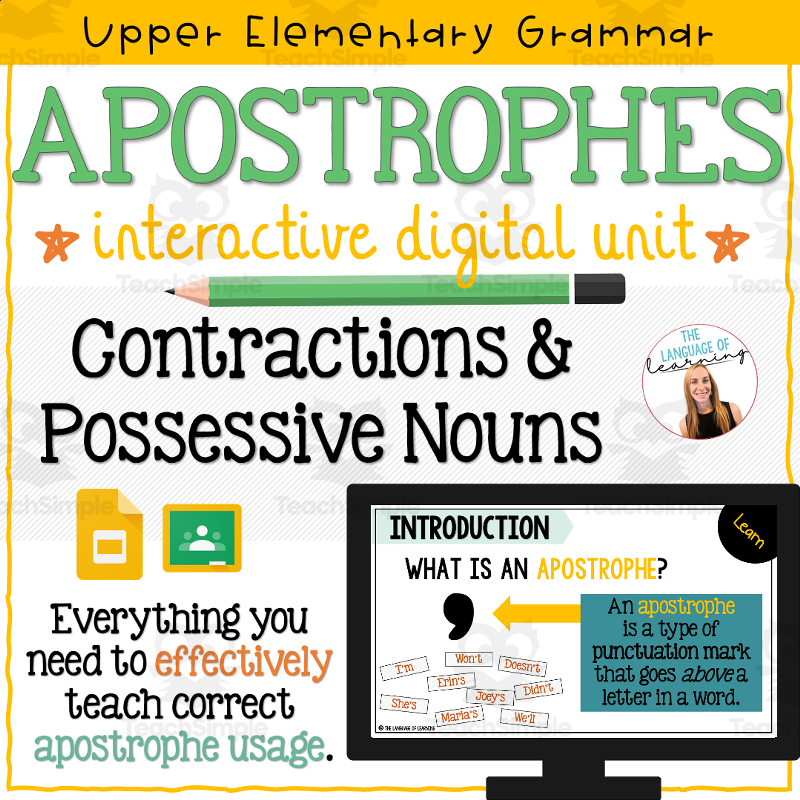
Teach the two uses of apostrophes (contractions and possession) through an interactive, editable slide deck.
Classroom resources
Teach grammar with visual explanations, examples and projected practice questions. Choose parts of speech, verb forms or sentence and punctuation lessons.
Browse by lesson focus
Choose the topic or kind of practice you need.
Teach the two uses of apostrophes (contractions and possession) through an interactive, editable slide deck.
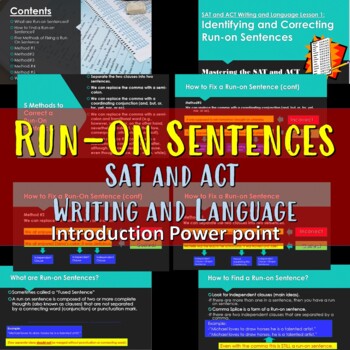
An SAT/ACT grammar-prep slide deck teaching students to identify and correct run-on sentences.
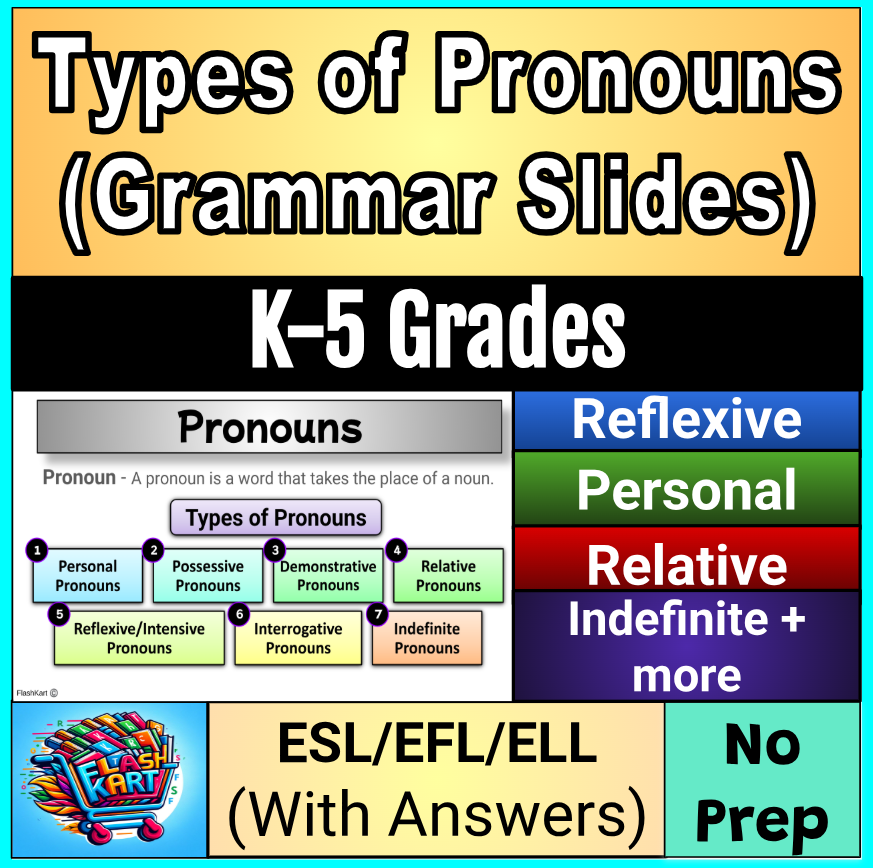
Teach the seven types of pronouns (personal, possessive, demonstrative, relative, reflexive/intensive, interrogative, indefinite) using slide-based explanations, comic-style dialogue, and practice worksheets.
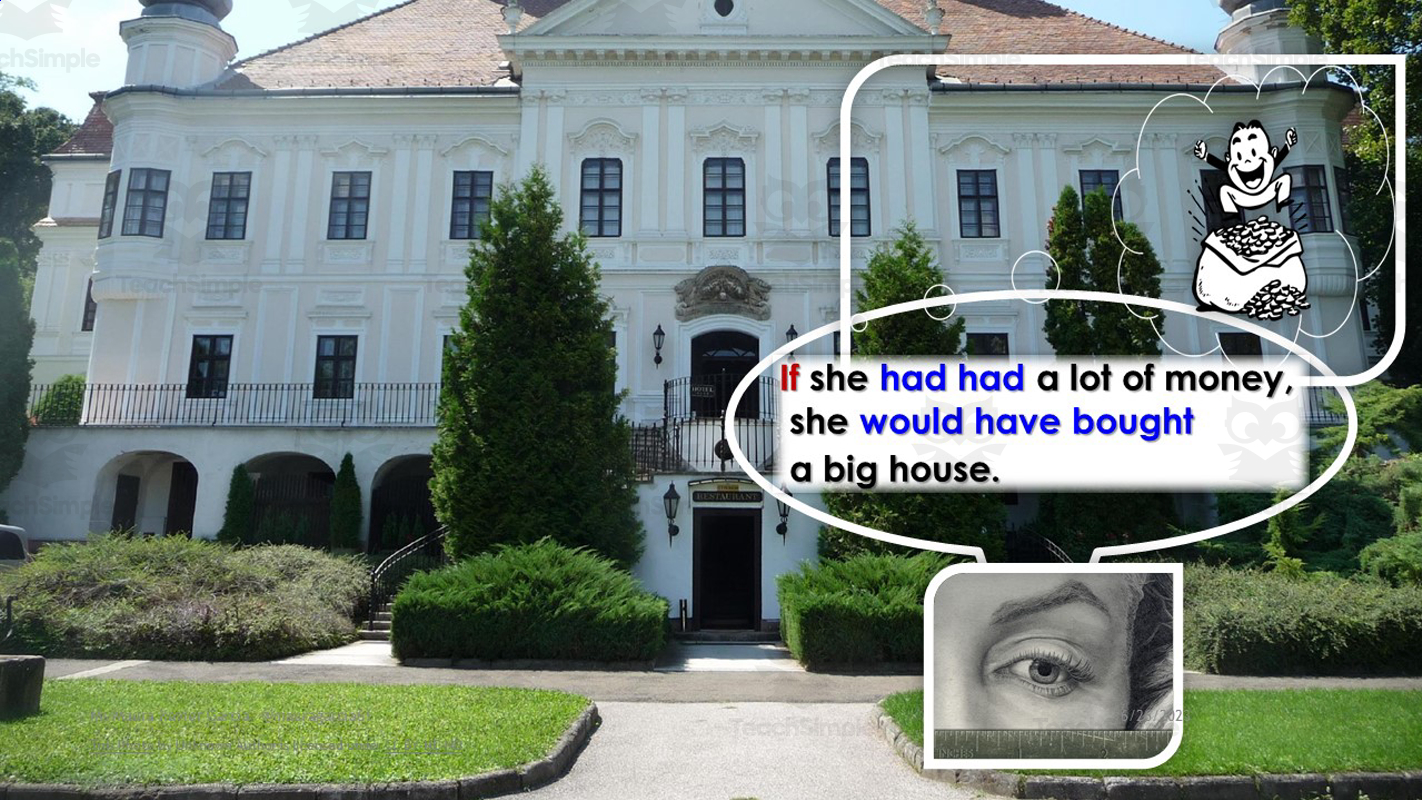
An ESL/foreign-language PowerPoint lesson introducing or reviewing the third conditional (hypothetical past situations contrary to reality) in English grammar.
An ESL/EFL grammar presentation introducing and practicing the second conditional (If + past simple, ... would + infinitive) for hypothetical/unreal present or future situations.
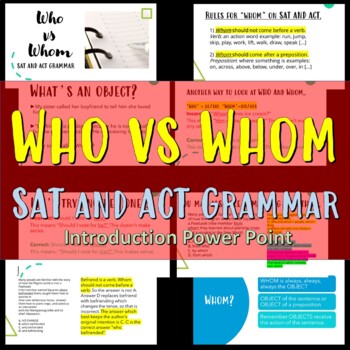
Teaches high-school students the grammar rule for choosing 'who' versus 'whom,' specifically framed around SAT and ACT grammar test questions.
An introductory, narrative-driven PowerPoint lesson that introduces the course's comedic characters (Mr. Butt and Bonefish) and frames why grammar and the eight parts of speech matter, setting up the rest of the 'Grammar's House' lesson series.
Teaches how and when to replace proper nouns with pronouns for clarity (subject pronouns, object pronouns, plural pronouns, and possessive pronouns) through a story-editing exercise and a fill-in-the-blank narrative, plus a story-based teaching dialogue.
A slide-by-slide grammar lesson opens by defining a conjunction as a joining word used to combine words, groups of words, or sentences, then models the idea with paired example sentences such as "Jake overslept" and "He was late for school" joined first with "and" and then with "so" to show how the choice of conjunction can shift meaning. The lesson moves into two rounds of guided practice: first, students identify which conjunction is already used in a given joined sentence, and second, students choose the correct conjunction from a short multiple-choice list (and, but, so, or, because) to combine two separate sentences, with answers provided in the presentation. A closing recap slide reviews the definition, a video link on conjunctions, and a challenge for students to name additional conjunctions beyond the five practiced in the lesson.
A comedic narrative conclusion to the 'Grammar's House' course series, wrapping up the eight-parts-of-speech unit through a final dialogue scene between the characters Mr. Butt, Bonefish, and Professor Kel C. Grammar.
If devising appealing grammar exercises for your Upper Elementary/Middle School class seems like a burdensome task, rest easy. I have your needs covered with the Become A Grammar Rock Star resource. It's a known fact that most kids, particularly of this age group, are enthusiastic about music. Many even dream about attaining rock-star…
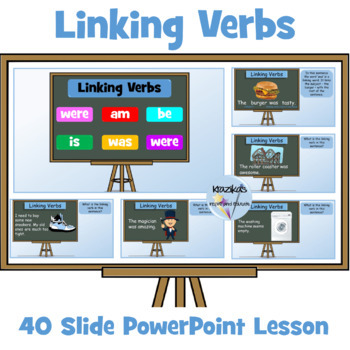
This resource contains an editable, 60 slide PowerPoint lesson on linking verbs (copular verbs). The PowerPoint explains what linking verbs are, and the difference between helping verbs, action verbs, and linking verbs.
A comprehensive ESL grammar lesson introducing/reviewing the Future Progressive (Future Continuous) tense in English, covering affirmative, negative and interrogative forms with 'will' and 'going to'.
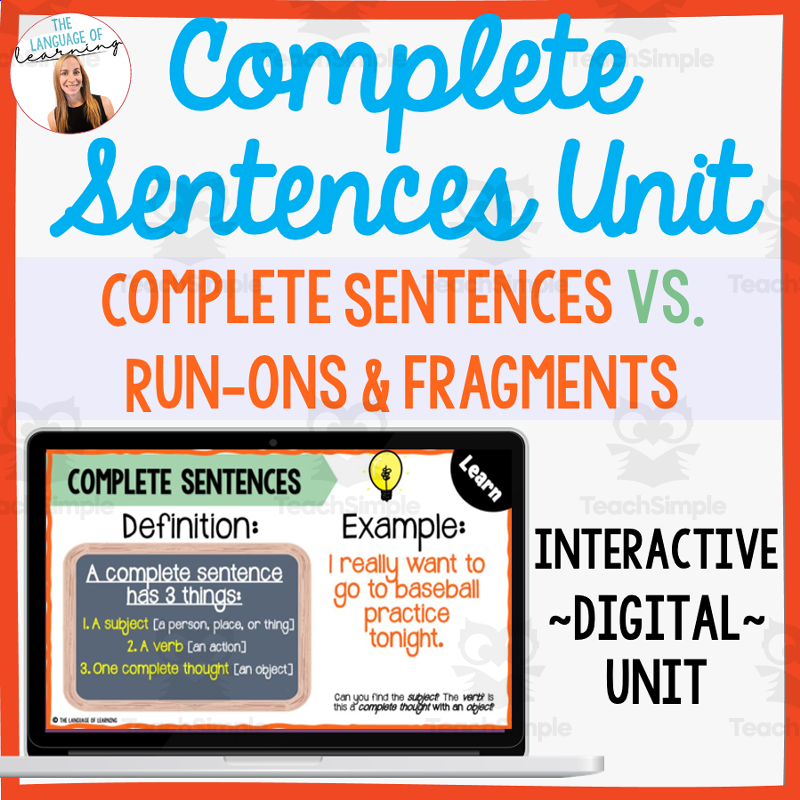
This resource is a Complete Sentences Interactive Digital Unit. These activities can be used as: - Literacy centers - Homework - In class work All you have to do is assign the slides to students Google Classroom and let them do the rest!
This resource is a Sentence Structure Interactive Lessons: Simple, Compound & Complex. These lessons and activities are engaging and effective.
This resource contains a fully editable, 50-slide PowerPoint lesson on the commonly confused homophones / near Homophones where / were / we're / wear.
This is an Introductions to Semi-Colons and Colons. It is an 18-slide PowerPoint that will guide your students through this new skill. The presentation is editable for you to add and remove as you need.
Parts of Speech: Abstract Nouns Lesson Plan engages students through interactive slides to understand this complex grammar topic. Students will apply reading, critical thinking, and problem-solving skills to learn the definition and proper…
Parts of Speech: Collective Nouns Lesson Plan introduces students to collective nouns and how to properly use them. Students will engage in reading, critical thinking, and problem-solving activities across several highly-interactive…
Parts of Speech: Common Nouns Lesson Plan This interactive Common Nouns lesson plan teaches 1st-4th grade students the fundamentals of common nouns through three tailored Microsoft PowerPoint presentations.
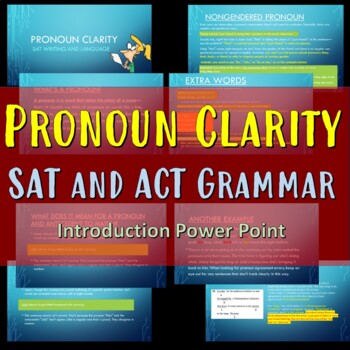
Explains pronoun-antecedent agreement (pronoun clarity) for SAT Writing and Language test preparation, covering how to spot and correct pronoun errors.
When we refer to things that will happen in the future, we often use something known as the Simple Future tense. When we talk or write about plans, expectations, schedules, and predictions, we often use the Simple Future tense.
The Present Perfect Continuous tense is a unique case and poses certain difficulties for English language learners. It is unique in the sense that it has an easy aspect and a difficult aspect. The difficult aspect is its formation.
This resource is a Complete Sentences Teaching Guide Presentation . This presentation is equipped with 21 standards-based teaching slides for student mastery. They are customizable to meet your students' needs.