resources by type
resources by grade
resources by subject
other resources

4,007 products added recently

Page 8 - 11Th Grade Worksheets

Equip your 11th-grade students with worksheets that address advanced topics and analytical skills necessary for higher education. These resources support learning in key areas and encourage independent thinking. Use them to enhance instruction and guide students toward success.

Relevant
alt down
Any Time
alt down
filter by
alt down
All File Types
alt down
filter nav Show filters
Sort by: Relevant
CLEAR
resources by type
Activities
down arrow
Classroom Decor
down arrow
Teacher Tools
down arrow
Worksheets & Printables
up arrow
Drawing Templates & Outlines
Flashcards
Novel Studies
Parts of and Anatomy of
Task Cards
Word Problems
Writing Prompts
Worksheets
up arrow
Coloring Pages
Crosswords Puzzles
Dot To Dots
Mazes
Word Searches
Workbooks
resources by grade
Early Learning
down arrow
Pre-K
down arrow
Elementary
down arrow
Middle School
down arrow
High School
up arrow
Grade 9
Grade 10
Grade 11
Grade 12
Adult Education
Not Grade Specific
resources by subject
Creative Arts
down arrow
ELA
down arrow
Holiday & Seasonal
down arrow
Life Studies
down arrow
Math
down arrow
P.E. & Health
down arrow
Social Studies
down arrow
Special Resources
down arrow
Science
down arrow
Foreign Languages
down arrow
Resources for Teachers
down arrow
other resources
Common Core
Homeschool Resources
down arrow
Montessori
Research
STEM
Absolute Value Function Transformations: Scaffolded Notes

Absolute Value Function Transformations: Scaffolded Notes
Math, Algebra, Grade 9, 10, 11, 12, Worksheets & Printables, Worksheets

Scaffold NOTES for learning transformations of absolute value functions.

Author ThreeFourthsMe

Tags Notes, Absolute Value, Handout, Pdf, Transformations With Absolute Value, Transformations Of Absolute Value Functions, Absolute Value Function Transformations

AI Tools for Research – Fact-Checking & Bias Detection Worksheets

AI Tools for Research – Fact-Checking & Bias Detection Worksheets
Science, Technology, Computer Science, Engineering, Special Resources, Social Emotional Learning (SEL), Social Skills, Life Skills, STEM, Research, Grade 6, 7, 8, 9, 10, 11, 12, Worksheets & Printables, Workbooks, Worksheets, Word Searches, Writing Prompts, Teacher Tools, Lesson Plans, Assessments, Diagrams, Presentations

This 41-page PDF is a fully prepared to print middle school Digital Literacy Curriculum called "Advanced Digital Tools for Research: Fact-Checking and Detecting Bias Worksheets" designed for students in grades 6-8 to be able to use the V.E.R.I.F.Y. Framework (Validate, Extract, Read Lateral, Interrogate Bias, Find Primary Evidence, Yield Conclusion) to critically evaluate content generated by AI, identify hallucinatory or fabricated information, detect algorithmic bias, and utilize lateral reading skills. This resource is ideal for the AI era and includes: - Four theoretical chapters with practical real-world examples (e.g., Titanic, Great Wall of China, Space Race, Paleo-Diet). - Ten hands-on student worksheets (e.g., Anatomy of a Digital Claim, Spotting Plausible Falsities, Lateral Reading Protocol, Unmasking Structural Bias, The Phantom Citation Mystery, Chronological Confusion, etc.). - Three full-color visual frameworks/diagrams (Fact-Checking Workflow, Algorithmic Bias Triad, Source Credibility Spectrum). - A complete answer key with rubrics and high proficiency examples. - A complete Teacher Implementation Guide including pacing (4-6 class periods), differentiation for ELLs/developing readers and gifted students, formative assessment examples, and examples of exit tickets. - A ready-to-teach PDF requiring no preparation that increases research skills, media literacy, and critical thinking through an alignment to both the CCSS, ISTE, and Digital Citizenship Standards, making it appropriate for use in English Language Arts, Social Studies, Science, and Technology classes. Why Schools/Parents Find It To Be Effective: Develops Real World Skills that Kids Need to Survive in an AI World. Kids will learn how to identify when they are being deceived by hallucinations, bias, and fake citations before they copy and paste into their papers or projects. No Preparation or Planning Time Required - Teachers get full theory, worksheets, visuals, answers and pacing guide when using this product. Parents appreciate the independent critical thinking experience provided to their children. Fun Way to Increase Student Engagement - Kids enjoy using the detective-style worksheets (Tree Octopus Hoax, Phantom Biologist, Brooklyn Bridge Hoax, etc.) to develop critical thinking skills through the use of skepticism as a game. Differentiated, Inclusive, and Fully Accessible - Students are able to access the materials because of the built in supports provided for ELL/Developing Readers, and extension challenges for Gifted Students. Ensures Academic Integrity Now and in the Future - Aligns well with the local school districts expanding policies regarding the appropriate use of AI, as well as standards for digital citizenship. Intended Audience of Book (As per complete PDF analysis): This resource is specifically created for students in Grades 6 to 8 (Middle School). There are examples throughout the resource, as can be seen in the seven (7) and eight (8) examples referenced. Answer keys and teacher guides both have "Grade 6 to 8 Student Workbook" clearly labeled on them. Best Fit: ELA, Social Studies/History, Research projects in Science, Digital Literacy/Media Literacy, or Technology courses Excellent for Homeschoolers, Gifted Programs, or Educators Teaching AI Ethics and Responsible Research. Copyright & Terms of Use This Book is copyrighted by Syed Hammad Rizvi. This resource is solely for personal and individual classroom use. You may not modify, redistribute or sell any part of this resource (including putting it online for others to back or download). In order to share this resource with your coworkers please buy more licenses from Teachsimple. Thank you for following these terms of use. -------------------------------------------------------------------* This product was created by Syed Hammad Rizvi to be enjoyed!

Author Creative Book Store

Rating

Tags AIFactChecking, BiasDetection, DigitalLiteracy, MiddleSchoolWorksheets, AIFactCheck, VERIFyFramework, CriticalThinking, MediaLiteracy, AIforTeachers, DigitalLiteracyWorksheets

Independent Living Skills: How to Create a Shopping List

Independent Living Skills: How to Create a Shopping List
Special Resources, Creative Arts, Art, Life Studies, Social Emotional Learning (SEL), Special Education Needs (SEN), Social Skills, Life Skills, Finance, Grade 10, 11, 12, Activities, Worksheets & Printables, Worksheets

In this Special Education life skills activity, high school students create a weekly Grocery Shopping List that includes meats, dairy products, fruits, vegetables, desserts, canned goods, personal care items, and household items. The use of this Independent Living Skills resource will allow students to engage in the following: • Creating a budget-based grocery shopping list • Making a shopping list for all essential items • When to spend extra money on non-essential groceries • Here is how to find out how much each item on your shopping list costs • Making grocery shopping easier with an organized list • A blank PDF ready-to-use grocery shopping list There are 16 reading comprehension questions in this Independent Living Skills resource! This activity will assist high school students in developing the necessary life skills to become more independent at school, at home, and in their communities. A great place to use this handout is in special education classes or one-to-one settings, such as ABA therapy, speech therapy, occupational therapy, and Registered Behavior Technician (RBT) sessions. High school students working on independent living would benefit significantly from this activity for defining, setting, and measuring IEP goals. In addition to interactive instruction, this resource is ideal for hands-on and community-based learning. Engage your special education class with this highly interactive High School Independent Living Skills Activity! This activity contains step-by-step instructions, questions, and answers that reinforce learning, age-appropriate graphics, real-world examples, and ideas for implementation. This is the perfect special education activity for grade 10, grade 11, grade 12, and autism life skill centers . This special education life skills handout was designed to assist teens and adults with difficulties developing independent living skills. It's a printable, easy-to-use activity ready to hand out! Related Products for Managing Personal Finances How to Create a Monthly Budget The Value of a Bank Account How Credit Cards Work How to Read a Basic Pay Stub A PDF with 19 unique pages. Color and black-and-white versions of each page are available for this pdf resource.

Author Adulting Life Skills Resources

Tags Independent Living Skills, Life Skills Money Math, IEP Goal-Oriented Skills, Life Skills For Autistic Teens And Adults, Autism Resource For Parent , Adulting On The Spectrum, Social And Emotional Learning, Life Skills For Teens, Life Skills For Adults, Autism And Money Skills

Reading Comprehension for Science Articles – Critical Analysis

Reading Comprehension for Science Articles – Critical Analysis
Science, Basic Science, Inventors, Theories, Chemistry, Earth and Environmental Sciences, Earth Sciences, Environmental Science, Life Sciences, Nature & Plants, Grade 6, 7, 8, 9, 10, 11, 12, Worksheets & Printables, Workbooks, Worksheets, Word Searches, Teacher Tools, Assessments, Lesson Plans, Quizzes and Tests, Quizzes, Tests

This comprehensive literature unit on scientific article analysis will turn your students from being passive readers into critical thinkers! True scientific literacy—being able to evaluate evidence critically—has become the most important skill of our time due to the overwhelming amount of information and misinformation in today’s society. This unit is a complete, no-prep 5-day lesson plan that will help students in middle and high school understand how to break down scientific articles. With this unit’s help, students will learn how to look at methodological procedures; how to find biases; how to tell the difference between correlation and causation; and how to develop evidence-based arguments—all of which are necessary for success in AP classes, as well as in college! This unit is appropriate for the following classes: Biology, Chemistry, Environmental Science, Physics and as a cross-curricular project with ELA. This resource also correlates with the NGSS Science and Engineering Practices (Engaging in Argument Based on Evidence) and other Common Core Literacy standards. Included in this unit: 1. Educator & Student Master Guide (47 pgs) : Part 1 consists of an in-depth detailed core instructional guide for teachers on Scientific Reading Theory. Core principles and concepts included: IMRAD (scientific structure) ; Hierarchy of Evidence ; Identifying Fallacies Part 2 consists of constructing 10 scaffolded, grade level appropriate worksheets using High-Interest/Relevant scientific reading materials. Examples include: Anatomy of an Abstract Isolation of Variable and Control Critique Methodology Interpret Data & Statistical Literacy Correlation vs. Causation Identify Bias/Conflict of Interest Synthesize Competing Hypotheses Peer Review Simulation Part 3 consists of teacher support systems: 3 Visual Professional Anchor Charts/Posters (anatomy of a scientific argument, source credibility matrix, interrogating empirical graphics) Comprehensive Answer Key (all 10 worksheets) 5-Day Implementation/Teaching Plan: step-by-step plan to facilitate complete unit implementation successfully Will enable your students to read as scientists, question as reporters, and think as researchers; providing the necessary tools to assist in developing their confidence/skepticism towards the scientific world. How Parents and Schools Appreciate It: Teaches Skills for the 21st Century: Instead of teaching through rote memorization, this unit prepares students to learn to think critically. Students learn to use the problem-solving skills needed for success in college and their future career paths. Teaches Digital and Media Literacy: In this age of "fake news" and false claims, the unit provides students with tools to evaluate the credibility of scientific information they see online, including news headlines and social media posts. Prepares Students for Academic Challenge: The analytical skills that students develop (being able to analyze dense texts, understand research design, and base their opinion on credible evidence) give students a solid head-start into AP science classes and university studies. Comprehensive Teaching Tools for Teachers: The unit is a complete unit, and includes everything that teachers need to implement student learning. Each teacher will find all of the information and teaching materials necessary, along with a comprehensive teacher guide, ready-to-publish worksheets, visual aids, and answer key; which will save every teacher dozens of hours on the preparation and planning of each lesson. Audience: The Target Audience includes: Primary: Grades 8-12 Science (On Level); High School AP or Honors Biology; Chemistry; Environmental Science; Physics Secondary: Gifted or Advanced (Grades 6-7-Science), as the concepts may be difficult for Sixth-grade students who are not Advanced or Gifted; nevertheless, students classified as Advanced will do well. Cross-Curricular: High School ELA/ELA or Media Literacy planer interested in adding analysis of non-fictional/informational text to their plan. Copyright/Terms of Use: This Book is the property of Syed Hammad Rizvi, and it is provided as a resource for you to use in a personal and single classroom only. You cannot alter, redistribute or sell any part of this resource. Thereby, any part of this resource cannot be placed on the Internet where all can access (e.g., downloaded). If you would like to share this resource with colleagues, please purchase additional licenses from Teachsimple. Thank you for abiding by these terms. Syed Hammad Rizvi, thank you for bringing you (with a smile) this product.

Author Creative Book Store

Rating

Tags STEM, ScienceEducation, Education, Teaching, EdTech, STEMeducation, TeacherLife, Homeschool, BackToSchool, ScientificLiteracy

Mitosis and the Cell Cycle Word Search and Scramble Activity

Mitosis and the Cell Cycle Word Search and Scramble Activity
Science, Life Sciences, Biology, Grade 8, 9, 10, 11, Word Searches, Worksheets, Worksheets & Printables

Your students will love this engaging science review activity. Everyone loves word searches and scrambles and they make for a great review activity that is fun and competitive. This interactive game reinforces key scientific concepts and theories, ensuring curriculum relevance and accuracy. The game package includes 25 common Mitosis and the Cell Cycle terms and concepts. The first part of this activity is a word search using the common terms while the second part uses the same terms in a word scramble and define where your students need to unscramble the word and define it. Simply print and go. This is a no-prep activity and can be used to introduce terms, review, or as additional work for those who finish early. Tailor the experience to the level of your students. You can use one or both parts to help your students learn key concept terms. Some example terms include: CELL CYCLE MITOSIS INTERPHASE PROPHASE METAPHASE ANAPHASE TELOPHASE CYTOKINESIS

Author Teach With Fergy

Tags Biology, Word Search, Word Scramble, Mitosis, Cell Cycle, Cell Division

Powered Neuro-Inclusive Micro-Learning Strategy Cards for Diverse

Powered Neuro-Inclusive Micro-Learning Strategy Cards for Diverse
Science, Technology, Computer Science, Engineering, Special Resources, Social Emotional Learning (SEL), Special Education Needs (SEN), STEM, Life Skills, ELA, Grade 2, 3, 4, 5, 9, 10, 11, 12, Worksheets & Printables, Flashcards, Parts of and Anatomy of, Word Problems, Workbooks, Worksheets, Writing Prompts, Teacher Tools, Assessments, Lesson Plans

Unlocks the future of inclusive education with this 49-page ultimate resource: "AI-Powered Neuro-Inclusive Micro-Learning Strategy Cards for Diverse Classrooms (Ready!)" – an innovative and educator-recommended resource that disrupts and transforms K-12 educational strategies for the better. This downloadable pdf resource pushes the boundaries of neuro-inclusive education practices, micro-learning best practices, and responsible AI applications, covering all theoretical aspects of neuro-inclusive educational practices, micro-learning best practices, AI applications, and a lot more with its profound evidence-based resources on UDL, Cognitive Load Factors, and Constructivist concepts, with actual demonstration cases from elementary and high school levels, strategy card templates for creative development on worksheets and ethics of AI applications for educational environments, all crafted together for optimal cognitive engagement and minimizing educational barriers for effective personalized cognitive educational development. Perfect for special education resources, differentiated resources for personalized educational practices, and educational management tools, this SEO-optimized resource for educators helps and enables all educators for preparation of balanced cognitive educational morsels for enhanced cognitive engagements, motivation, and academic achievement for students across diverse K-12 educational environments. Keywords: Neuro-inclusive educational practices for classrooms, AI-based educational resources for classrooms, Micro-learning for neuro-diverse students, K-12 Neuro-inclusive educational practices, UDL resources for classrooms. Why Parents/Schools Love It: Personalized and Inclusive Strategy: Enables teachers to provide personalized education support for neurodiverse students, making them less frustrated and more confident using bite-sized and adjustable strategies such as tools for students with ADHD or autistic students. Time-Saving AI Integration: “Ethical AI capabilities offer real-time analytics, personalized content, and feedback loops that ease the instructor’s workload and help enhance outcomes in a K-12 classroom.” Results That Speak for Themselves: Proven on the evidence-based frameworks of UDL and Cognitive Load Theory, as well as illustrated cases of 20% or greater retention and engagement rates, there is no doubt that it helps students significantly. Versatile & Ready to Use: Comes with strategy cards, worksheets, & writing prompts that teachers can print out for instant use in their classrooms, thus being very useful in encouraging motivation, managing cognitive overload, & ensuring equitable education. Future-Proof Designs: equipped with ethical AI tools and frameworks that protect consumer and individual rights to privacy and mitigate biases, to ready and prepare learners for a technology-driven and worldwide environment while focusing on teaching and learning. Targeted Classes/Students : After thoroughly evaluating the entire 49-page PDF file, which contains information on foundational theory (Chapters 1-3), the design and execution of strategy cards (Chapter 4), worksheets for practice, ethical issues, case studies, and advanced topics, it is clear that the guide is designed for use in K-12 education environments. It applies to all grade levels, Kindergarten through 12th grade, with a focus on neurodiverse students. Specific suggestions are included for: Elementary School Students (Grades K-5): Underlying concepts may target fractions, reading comprehension, or social-emotional control, with examples such as Northwood Elementary focusing on ADHD, Dyslexia, and Autistic students during grades 3-5. Designed specifically for students who profit from visual supports and time-dosing assistance with their learning and attention. Middle School Students (6-8): Focuses on executive functioning assistance, multi-step task planning (ecosystems lesson for instance), AI-powered modifications for ESL, anxious, gifted students. Case examples, like Summit Ridge Middle School, discuss differentiating for students with learning disabilities. High School Students(9-12): Focuses on difficult topics in geometry proofs, formulas for volume, and abstract ideas, using micro-learning for dyscalculia, slow processing, and high-functioning autism. Examples include Emerald High School’s geometry in the 9th grade, which emphasize challenging concepts. Copyright/Terms of Use : This Book was copyrighted by Syed Hammad Rizvi. This document or textbook is exclusively for non-commercial personal and classroom use only. You are not allowed to copy, distribute, or sell any portion of this document or textbook through the Internet for public download. If you would like to share this resource with others in your workplace, please purchase additional licenses from Teachsimple. We appreciate your respect for these guidelines for use. This product is proudly brought to you by Syed Hammad Rizvi

Author Creative Book Store

Rating

Tags NeuroInclusiveEducation, AIPoweredLearning, MicroLearningStrategies, K12InclusivePedagogy, NeurodiversityInClassrooms, UDLPrinciples, CognitiveLoadTheory, EthicalAIInEducation, ADHDTeachingTools, DyslexiaSupportResources

Crossword Puzzle: Romeo and Juliet

Crossword Puzzle: Romeo and Juliet
ELA, Reading, Reading Comprehension, Literature, Grade 8, 9, 10, 11, 12, Crosswords Puzzles, Worksheets, Worksheets & Printables

printables /crossword-puzzles">Crossword Puzzle: Romeo and Juliet Aimed for educators, printables /crossword-puzzles">Crossword Puzzle: Romeo and Juliet is an educational product specially designed to make teaching more engaging and impactful for students from grades 8-12. This tool ensures effective understanding of Shakespeare's classic, showcasing the fundamentals of literature and reading comprehension. This printables /crossword-puzzles">Crossword Puzzle: Romeo and Juliet is focused on: Improving critical thinking skills among students. In-depth understanding of the characters, plotlines, vocabulary, and elements of Shakespearean plays. Encouraging exploration rather than guessing or memorizing answers beforehand. A design catering to every classroom: This printables /crossword-puzzles">Crossword Puzzle: Romeo and Juliet is flexibly adaptable, suitable for various teaching styles ranging from small group discussions to individual assignments. Whether used as homework or classroom review post-discussion on Romeo And Juliet; this product aims to provide enjoyable yet intellectually challenging learning experiences. Accessibility: The printables /crossword-puzzles">Crossword Puzzle: Romeo and Juliet is user-friendly provided in PDF format. The worksheet-type setup guarantees practical usability which facilitates immersive learning experiences across different grades in public schools or home-school environments alike. This is a print and use resource! printables /crossword-puzzles">Crossword Puzzle: Romeo And Juliet symbolizes a beautiful blend between fun-filled challenges alongside meaningful education - potent resources every educator seeks consistently within their routine teaching endeavors.

Author Jay Waggoner

Tags Crossword Puzzle, Romeo And Juliet, Literature, Reading Comprehension, Critical Thinking

Cleaning up Acid Spills Reading Comprehension Article

Cleaning up Acid Spills Reading Comprehension Article
Science, Chemistry, Grade 9, 10, 11, 12, Worksheets & Printables, Worksheets

Product Title: Cleaning up Acid Spills Reading Comprehension Article As an educator or homeschooler, finding a comprehensive teaching resource that also caters to developing reading comprehension and scientific literacy skills can be a challenge. The Cleaning up Acid Spills Reading Comprehension Article is designed to help bridge this gap for high school students, and even robust middle-school learners. This product blends the disciplines of science and literature, providing an informative article on "superbugs - the modern villains of medicine". It covers essential topics such as: Good and bad bacteria Antibiotics and antibiotic resistance Superbugs (MRSA) Methods to combat superbugs etc. This educational resource presents diverse types of questions including knowledge-based (direct from the paper), thinking exercises, connecting tasks, application prompts and open-ended inquiries. Fully Editable & Compatible Resource The convenience factor is paramount with this fully editable product; not only does it require no prep or formatting hassles but also takes care of compatibility issues by including Microsoft Word & PDF versions along with Google Classroom integration for seamless remote learning. Coverages Simplifies imparting scientific literacy maneuvres An accompaniment in groundwork for your topic or used as an extension activity for faster-paced students A convenient tool as extra credit task for needy pupils This tool extraordinarily substantive in developing scientific know-how among learners all while improving their language skills simultaneously. This unique blend encourages them not only in understanding important scientific concepts better but also in applying them correctly in life scenarios that they face daily. It spins around 50-75 minutes lesson plan accommodating varied analytical capabilities amongst your students through its open-ended question format. An answer key accompanies the document making it easier than ever to check work submission. Grades Applicable: Grade 9, Grade 12, Grade 10, Grade 11 Subject: Science Subsubject: Chemistry Types of Resource: Worksheets File Type: Multiple File Types

Author Teach With Fergy

Tags Acid Spills, Reading Comprehension, Scientific Literacy, Superbugs, Health Aspects

Research Organizer & Essay Assignment: James Baldwin

Research Organizer & Essay Assignment: James Baldwin
Social Studies, History, History: USA, Grade 8, 9, 10, 11, 12, Activities, Projects, Worksheets & Printables, Worksheets

Few figures have left as large a mark on United States Civil Rights than John Lewis. This resource provides your students with the opportunity to independently learn about and synthesize the life of this politician and equality icon with this engaging research planner and essay assignment. This carefully scaffolded and easy-to-assign-AND-assess resource has been designed to guide student learning from John Lewis fact-collection to the careful development of a five-paragraph research essay. Teaching this resource could not be easier! Start by handing out the background research and note-taking worksheet (you could also ONLY hand this out if you want a shorter lesson!). Once students have found their facts and sources, provide them with the essay outline activity, which guides them step-by-step through the requirements of a short research essay. From there, drafting their essay, using the provided peer review checklist, and submitting their final draft will be no problem at all. And then you can assess their work with the provided Common Core rubric! Use this entire resource as a complete research lesson or just part of it as a short research activity or sub plan! This TeachSimple download includes: - A John Lewis essay writing assignment with directions, requirements, research essay writing tips, a peer review checklist, and Common Core-tied grading rubric - An editable rubric, provided as a link, that lets you make adjustments to the grade values and guidelines. This link is provided as as Google Sheet specifically built for integration into Google Classroom, although you can also modify it for use in other Learning Management Systems (LMSs) - A John Lewis biography and note-taking worksheet that will guide your students through information gathering. This straightforward two-page handout includes instructions for background research, a fun drawing section, and an area to cite quality sources and organize conducted research - A research essay outlining worksheet, so students build on their John Lewis notes in a clear and simple manner as they build their work towards a draft and final paper - All 6-pages of this lesson are provided in full-color and B&W versions Although this resource can be fitted for any secondary Language Arts classroom, it has been carefully designed to work best in grades 8 through 11. The included rubric is subtly but specifically tied to Common Core ELA Standards for Language (3) and Writing (2 and 7). This resource is provided as a print-ready, bookmarked, and adjustable PDF file. The rubric is also included as an editable Google Sheet. This resource contains 6 pages and 1 Google Sheet.

Author The Language of Educational Art, LLC

Tags Essay, Research, Rubric, Notetaking, Outlining, James Baldwin

Essential Safety Skills: Omar Learns How to Administer Basic First Aid

Essential Safety Skills: Omar Learns How to Administer Basic First Aid
Special Resources, Social Emotional Learning (SEL), Special Education Needs (SEN), Speech Therapy, Life Skills, Grade 11, 12, Activities, Worksheets & Printables, Worksheets

In Omar Learns How to Administer Basic First Aid a Medicine Safety Life Skills Story, Olivia teaches Omar the importance of basic first aid. The use of this Essential Safety Life Skills resource will allow students to engage in the following: • How to identify minor injuries and know how to handle them • Introduction to the first-aid kit and its contents • How to clean and dress a minor scrape or cut • Understanding how to help someone with a nosebleed • How to remove a splinter from someone's skin • The interactive dialog and questions engage learners and reinforce their understanding of the story and the concepts. • The real-world examples, and age-appropriate visual aids, such as illustrations and diagrams , make this conversational story an excellent resource for teaching social narratives. • This social narrative's simple and direct language sets clear expectations, making it ideal for high school students and adults with intellectual disabilities. The story includes seven (7) reading comprehension questions and answers to reinforce and measure the student's understanding of the Essential Safety Life Skills contained in the story! This life skills story will assist high school students and young adults in developing the necessary independent living skills to become more independent at school, at home, and in their communities. This story is designed to be used by special education teachers, occupational therapists, speech therapists, ABA therapists, registered behavior technicians (RBT), parents, supported living coaches, and life skills teachers to teach their students valuable life skills. In addition to interactive instruction, this resource is ideal for hands-on and community-based learning, defining, setting, and measuring IEP goals. Related Products for Developing Independent Living Skills How to Create an Emergency Exit Plan How to Create a Medication List How to Create a Supplement List Understanding and Tracking Allergies How to Read a Prescription Label How to Create a Strong Password What to do When the Doorbell Rings Engage your special education class with this highly interactive High School Essential Safety Life Skills Story! It's printable , easy to use, and ready to hand out! A PDF file with five(5) pages.

Author Adulting Life Skills Resources

Tags Adulting On The Spectrum, Autism Resource For Parent, Autism Reading Comprehension, Life Skills For Visual Learners, Life Skills For Autistic Teens And Adults, Summer Life Skills Activities, Resource For Speech Therapists, Resource For ABA Therapists, Interactive Safety Lessons, Autism Visual Aid Life Skills

World History II Midterm Exam Reviews

World History II Midterm Exam Reviews
Social Studies, History, History: World, Grade 10, 11, 12, Worksheets & Printables, Worksheets

These are World History II Midterm Exam Reviews. There are 43 questions in all. This is a great way for students to review before testing.

Author History with DeLong

Tags Midterm Exam, World History II, World Religions, Protestant Reformers, Latin America

ECONOMICS: Personal Finance, Money Management & Creating a Budget

ECONOMICS: Personal Finance, Money Management & Creating a Budget
Social Studies, Economics, Grade 9, 10, 11, 12, Worksheets & Printables, Worksheets

Overview: In this personal finance activity, students will examine their current personal money management habits and create a personal budget. After asking some life questions about their finances, students will assess their personal income, create a budget, and reflect on how they can improve their financial well-being. This super-practical activity for students can truly impact the rest of their lives. Enjoy this lesson and thank you so much for your comments and ratings! What's Included: - Teacher directions with an anticipatory set activity - 10 questions regarding personal finances for teacher to ask the class - Two page student handout guiding students through their personal incomes and expenses - A chart for students to graph out where their money is going - Reflection questions for students

Author Mister Harms

Tags Economics Worksheets, Personal Finance Lesson, Money Management Worksheet, Creating A Budget Worksheet, Budget

Magnets and Electromagnets Reading Comprehension Article

Magnets and Electromagnets Reading Comprehension Article
Science, Physics, Grade 10, 11, 12, Worksheets & Printables, Worksheets

Magnets and Electromagnets Reading Comprehension Article This teaching resource is particularly designed for educators aiming to strengthen their students' literacy skills whilst exploring the exciting sphere of physics. Great for various learning situations such as large classroom discussions, small group activities , or even assigned homework tasks. Main Focus The primary focus of this educational material is to offer accurate and updated information about magnets and electromagnetism. A perfect supplemental reading tool for learners at a Grade 7-8 reading level, simplifying abstract concepts into an understandable format. Structure & Purpose Incorporates engaging informational text to improve both literacy skills and scientific knowledge among students Involves a set of questions aimed at deepening their understanding on the subject matter Promotes factual recall, insight connection, hands-on thinking judgments, and tests creative thinking abilities through open-ended inquiries. Digital Age Benefits: Create automatic copies directly into your digital drive with just one click using Google Classroom or Distance Learning features. Mainstream accessibility by offering Microsoft Word and PDF versions within each purchase package. Educators Advantage: This resource fairly accommodates time constraints often experienced by educators, Calls for roughly around 50-75 minutes completion period per usage — thus paving way to inculcate recognition of scientific data within real-world scenarios gainfully. Moreover displays versatility that appeals across learner interest spectrums transitioning further into topics like health sciences (such as HIV/AIDS education) or environmental science (like biodiversity study). Ultimate Educational Goal: Seeks towards bridging scientific literacy gaps commonly identified among learners. Furthermore, this serves as a reliable teaching aid for strategic lesson planning predominantly in immersing learners deeper into the understanding and application of physics .

Author Teach With Fergy

Tags Magnets, Electromagnets, Physics Education, Reading Comprehension, Scientific Literacy

Career Exploration – Skills Matching & Resume Builders

Career Exploration – Skills Matching & Resume Builders
Math, Statistics, Money, Career, Life Studies, Coaching, Business, Finance, Home Economics, Leadership, Homeschool Curriculum, Homeschool Templates, Grade 9, 10, 11, 12, Worksheets & Printables, Workbooks, Worksheets, Word Searches, Teacher Tools, Assessments, Lesson Plans, Quizzes and Tests, Quizzes, Tests

Unlock Your Students' Potential Using The Ultimate Career Exploration And Resume Builder Unit Are you finding it difficult to have your students honour their value by turning their life experiences into an exciting and valuable resume to apply to college / their first job? This 45-page complete unit has no prep required for you because it will transform your students' perception of writing a resume (which can be an overwhelming task) into the experience that they discover of who they are and create a professional brand for themselves. This is more than just a resume template. There is an entire pedagogical framework that is created for our modern high school student (Grades 10-12). This framework teaches beyond just formatting; it teaches the critical thought process of how to create a powerful resume. Thus allowing your students to articulate their abilities and accomplishments with confidence. WHAT DOES THIS 3-PHASE PROGRAM INCLUDE? Phase 1: Core Principles and Paradime Shift of Resume Writing - This phase focuses on the purpose behind writing resumes as it relates to what the learner can expect in regard to outcomes. This will require learners to deconstruct previous experiences, define their hard, soft, and transferable skills, and understand the psychological impact of creating a successful resume. Utilising real-world case studies, this phase helps students to develop a better understanding of concepts learned. Phase 2: Step-by-Step Student Workbook - Students will complete ten step-by-step worksheets that will help them create a plan of action using the following worksheets: The Comprehensive Skills Inventory (self-assessment of their skills); Mapping Your Ikigai (finding where you fit between what you love, what the world needs, and what you can be rewarded for); Job Description Forensics (decoding the job description to find out what the employer is really looking for); Forging the Professional Summary (creating a strong elevator pitch); Academic & Extracurricular Translations (how to turn project work in school and hobbies into professional accomplishments); The STAR Method & Action Verb Activation (writing strong bullet points with evidence); Career Non-Negotiables (establishing your values as they relate to long-term career satisfaction); Skill Gap Analysis (creating a plan for future growth and development); The Master Resume Architect (conducting one final and quality check of the resume). Phase 3: Teacher Resources & Visuals - All of the resources you need to successfully execute this phase of the program are contained here! 3 Professional Visuals/Anchor Charts to be used as teacher presentation/learning tools and classroom displays (Skill Translation Chart, Resume Overall Anatomy Chart, The STAR Method Chart). Diagnostic Rubric & Answer Key: The use of detailed rubrics showing what 'Unacceptable', 'Developing' and 'Exemplary' work looks like enables you to be much fairer to students when grading their subjective work than merely saying "yes/no". Great for: CTE (Career, Technical, Education) classes Life Skills or AVID programs Persuasive writing (English Language Arts) units Advisory/homeroom College/career readiness counseling Provide confidence and resources for students to become leaders. Download this amazing unit right now! This Curriculum offers a clear narrative about 'no experience' through effective strategies. 1. No experience to a strong story - learn to translate everyday activities such as sports, part-time jobs and babysitting into a powerful, high-impact, professional language for college admissions officers and hiring managers. 2. Step-by-step and actionable - these 10 structured worksheets take students from confused to confident and provide tangible, high-quality resumes at the end of the process. 3. Built for teachers - includes a complete answer key and diagnostic rubrics to use when grading, removing the guesswork & making this essential life skills easy to teach. 4. Teaches modern, real-world practices and principles - this curriculum is current and teaches critical modern concepts such as how to optimize resumes for Applicant Tracking Systems (ATS), using the STAR method in interviews, and developing a professional digital footprint. The target grade levels for students to use this book include: The terminology used in the text, e.g., "semiotics", "metamorphosis", "pedagogical framework", actually defines the grade levels we should focus on when developing a curriculum for preparing for college and nursing school applications and internships. 10th grades: it is an excellent year to be introducing students to these very important concepts 11th grades: this is the best time to teach these very important skills; at this time, the student is getting ready to apply for school. 12th grades: it is absolutely critical and very beneficial to help students refine and perfect their applications and resumes as they leave school. Additionally, this could also be a useful resource for college freshmen who need help developing their very first resume for clubs and internships while in college. Copyright notice/Terms of Use: This Book was copyrighted by Syed Hammad Rizvi. You can use this resource for personal and single classroom use. You are not allowed to change, give away, or sell any part of this product. You may also not post this on the Internet, where it can be publicly accessed, downloaded, etc. If you wish to share this with your colleagues, you will need to purchase an additional license from Teachsimple. Thank you for your cooperation with these terms of use. Syed Hammad Rizvi presents this product!

Author Creative Book Store

Rating

Tags ResumeWriting, CareerExploration, ResumeBuilder, HighSchoolTeacher, CollegeAndCareerReadiness, JobSkills, LifeSkills, CollegePrep, BusinessEducation, AdvisoryPeriod

Scientist: Theophrastos – Fact Sheet, Quiz, and Interactive Exercises

Scientist: Theophrastos – Fact Sheet, Quiz, and Interactive Exercises
Life Sciences, Science, Biology, STEM, History: World, History, Social Studies, Nature & Plants, Grade 8, 9, 10, 11, Worksheets, Worksheets & Printables, Quizzes, Quizzes and Tests, Teacher Tools, Projects, Activities

Discover Theophrastos – The Botanist and Scientist Behind the Philosopher Theophrastos is often recognized as a philosopher, but did you know he is also considered the "Father of Botany" and one of the most influential natural scientists in history? With this resource, your students in grades 7–10 will explore Theophrastos’s groundbreaking contributions to biology, particularly his pioneering work in plant science. Designed for a 45-minute lesson, this material blends engaging content with interactive and creative activities to bring his achievements to life. What’s Included: Concise Informational Text: A clear and engaging overview of Theophrastos’ role in science. Fact Sheet Activity: Encourages students to organize knowledge and work creatively. Quiz with Solutions: Promotes fun, interactive learning and self-assessment. Additional Exercises: Students can create their own questions and collaborate in pairs to deepen their understanding. Flexible Formats: Includes a color and black-and-white printable PDF, as well as interactive H5P tasks for digital learning. Why You’ll Love This Resource: Time-Saving: Perfect for teachers who need a ready-to-go, well-structured lesson. Versatile Use: Ideal for biology, history of science, or cross-curricular lessons in English and science classes. Promotes Independence: Solutions are included, allowing students to check their work and explore the topic at their own pace. Interactive and Engaging: Tasks are designed to keep students actively involved while learning about Theophrastos’ legacy. Whether you use it for a regular lesson, substitute teaching, or as part of a digital learning activity, this resource will make Theophrastos’ contributions come alive for your students. Bring Theophrastos’ fascinating world of science and philosophy into your classroom and inspire your students to see history and science in a whole new light! Have fun exploring the world of science with your students! Warmly, Lernfitness Did You Know? I teach with a certified therapy dog, and together we focus on creating a positive and inspiring learning environment.

Author Lernfitness

Tags Science, Biology, Famous Scientists Lesson, H5P, Interactive Science Exercises, STEM, Theophrastos, History, Scientists, Botanic

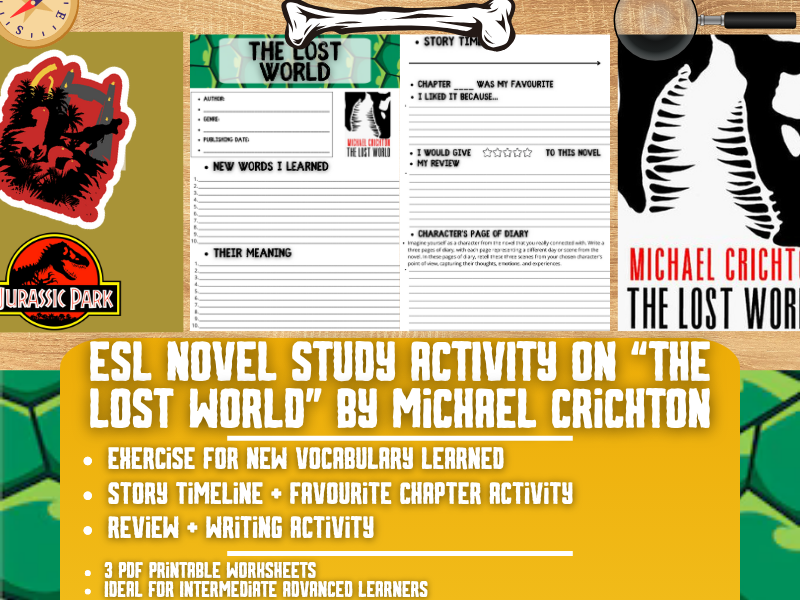
Novel Study Worksheets on "Solaris" by Stanisław Lem - Science Fiction

Novel Study Worksheets on "Solaris" by Stanisław Lem - Science Fiction
ELA, Reading, Reading Comprehension, Grade 7, 8, 9, 10, 11, 12, Worksheets, Worksheets & Printables

Novel Study Worksheets on "Solaris" by Stanisław Lem - Science Fiction In this fantastic English and World Literature teaching resource it is offered a comprehensive novel study worksheet activity (3 printable PDF pages; Worksheets) focused on the Science Fiction novel "Solaris" by Polish sci fi author Stanisław Lem. Perfect for post-reading exercises, this English and World Literature teaching resource can be more than great to deepen and improve students' understanding of this classic sci fi work. The English Novel Study activity (3 printable PDF pages; Worksheets) can be ideal for English class students in middle and high school (from 7th grade to 12th grade, teen students). In this Novel Study on “Solaris” (3 printable PDF pages; Worksheets), English and World Literature teachers can find the following activities: 1 section dedicated on general information (author's name, genre, and original language) 1 section dedicated on character descriptions (6 characters) 1 section dedicated on descriptions of key locations (6 places) 1 section decicated on chapter summaries (14 chapters) 1 section dedicated on a writing activity with 7 essay prompts (book review + 6 other novel related essay prompts) This product is similar to Novel Study on Solaris - Stanisław Lem - Science Fiction - Project The only great difference is the format (the product I linked before is a 6 slides printable project. This product instead is a more traditional worksheets activity ) This English Language and Literature Novel Study Activity on "Solaris" by Polish Science Fiction author Stanisław Lem (3 PDF Printable Slides; worksheets) can be great for learners from 7th grade to 12th grade to study this Science Fiction Novel (middle school and High School Students mostly) Learning with Alan is a Teaching Resource/Educational Material Store whose aim is to help Teachers, Educators and Tutors to achieve their teaching objectives while creating a fun and stimulating learning and teaching environment. Remember. Learning is Fun. Never Forget! If you want to browse more of my English and World Literature Novel Study Activity Teaching Resources, click here Learning with Alan!

Author Learning with Alan

Tags Novel Study, Books, Book Companion, Worksheets, Solaris, Stanisław Lem, Science Fiction, Sci Fi, World Literature, Poland

Crash Course Psychology Episode Worksheet | 16 - Language

Crash Course Psychology Episode Worksheet | 16 - Language
Social Studies, History, Psychology, Grade 10, 11, 12, Worksheets & Printables, Worksheets

Crash Course Psychology Episode 16 - Language Worksheet This 2-page worksheet contains 15 questions for students to answer while watching the 10-minute Crash Course Psychology video on language. Students can click the video link at the top of the digital worksheet to be redirected to the YouTube video. An answer key is included so students can check their own work. Print enough copies for each student, then implement this video and worksheet as a whole group activity or in small groups if devices are available. Allowing students to watch more than once will strengthen their understanding of psychology concepts. Pair this engaging video and worksheet with other psychology resources in my store to build student interest and connections. Other topics include family, marriage, moral philosophy, cults, desert island survival, Congress, and media. My goal is providing meaningful resources to keep students engaged with real-world concepts.

Author Ed Dynamic

Tags Psychology Video, Psychology Lesson, Language, Development, Language Theory, Phonemes, Language Development, Reading Comprehension

Crash Course Psychology Episode Worksheet | 4 - Meet Your Master

Crash Course Psychology Episode Worksheet | 4 - Meet Your Master
Social Studies, History, Psychology, Grade 10, 11, 12, Worksheets & Printables, Worksheets

Our high school students have the capability to enjoy and really understand topics like psychology because it provides them with real-life connections and real-world concepts. The relatability that the study of psychology has to offer can be great for our students. Being able to provide them with meaningful resources is the best way to keep them engaged and keep growing this interest. Within my store, you will find a plethora of psychology resources to utilize with your students. What You Get: This is theMeet Your Master Worksheet for the Crash Course Psychology Episodes. This is a 2-page worksheet that has 15 questions for students to answer. The link to the Crash Course video can be found at the top of the worksheet. If students are completing this worksheet digitally, they will be able to quickly click on the link for themselves and be redirected to YouTube. An answer key is included in a separate Word document. If you print off the answer key, students can check their answers by themselves. TheMeet Your Master Videois 12 minutes long. How To Implement This Resource: You should print off enough copies of the worksheet for each student to have, so they can answer some of the questions as they listen to the video. You can listen to this video as a whole group and then allow students to listen to it again by themselves or in small groups, if your classroom has enough devices to do so. Being able to watch these engagingCrash Coursevideos more than once will help students make connections and close gaps for their understanding of psychology and how it works. I hope you enjoy! Here Are More of My Resources for You to Enjoy: American Civil Rights Lecture 28th Amendment Project Major Constitutional Clauses Lecture Arctic Survival Team Building Activity Crash Course Government Worksheet #31 – Discrimination Crash Course Government Worksheet #36 – Election Basics Ethnocentrism Slides My Storefront Can Be Found Here: Active Social Studies

Author Ed Dynamic

Tags Crash Course Video, Crash Course Psychology, Psychology Video, Psychology Worksheet, Psychology Lesson, Pseudoscience, Behavior, Events

Genetically Modified Organisms Reading Comprehension Article

Genetically Modified Organisms Reading Comprehension Article
Science, Life Sciences, Biology, Grade 10, 11, 12, Worksheets & Printables, Worksheets

Genetically Modified Organisms Reading Comprehension This science reading comprehension resource helps high school biology students build literacy skills while learning about genetically modified organisms. Students read a 2-3 page article covering the key topics of GMOs: - What are GMOs and the history - How scientists genetically modify organisms - Benefits of GMOs for food supply - Concerns about safety and environmental impacts After reading, students demonstrate understanding by answering 10 reading comprehension questions. Question types include knowledge, thinking, connecting ideas, application, and open-ended questions. An answer key is included for teacher reference. This printable or digital reading comprehension can flexibly be used for whole class, small groups, homework, substitute plans, or independent reading. Modifications like text size or reading level can easily be made as well since an editable Word version is included along with Google Docs and PDF formats. With no prep work needed, this resource saves teachers' time while improving scientific literacy.

Author Teach With Fergy

Tags Genetics, Organisms, Biology, Reading, Comprehension, Genetically Modified Food Worksheet Answers

Converting Degrees and Radians Maze

Converting Degrees and Radians Maze
Math, Trigonometry, Grade 9, 10, 11, Mazes, Worksheets, Worksheets & Printables

Enhance your math curriculum with engaging and educational activities that promote a solid grasp of Degrees and Radians conversion. These enjoyable mazes provide the perfect opportunity for your ninth, tenth, and eleventh-grade students to apply their understanding while having a great time. Mathematics can sometimes be challenging for students, but by incorporating fun and interactive activities into your lessons, you can capture their attention and make learning enjoyable. These Degrees and Radians conversion mazes are designed to do just that. Students will navigate their way through the mazes by solving conversion problems, reinforcing their understanding of the topic in a hands-on and engaging way. One of the key benefits of these mazes is their seamless integration into your existing curriculum . With no prep required, you can easily incorporate them into your lessons, saving you valuable time and effort. Simply provide the mazes to your students and let them apply their knowledge to find their way through the challenges. As they navigate the mazes, they will be converting between Degrees and Radians, solidifying their understanding of the conversion process. To ensure a smooth learning experience, an answer key is included with the mazes. This allows you to quickly check students' work and provide immediate feedback, reinforcing their learning and addressing any misconceptions. The answer key also saves you time in grading, allowing you to focus on providing targeted support to individual students. The resource consists of two exciting mazes. Maze 1 focuses on converting Degrees to Radians, while Maze 2 tackles the conversion from Radians to Degrees. By providing different scenarios for conversion, these mazes encourage students to think critically and apply their knowledge in various contexts. This helps them develop a deeper understanding of the topic and prepares them for real-world applications of Degrees and Radians conversion. Don't miss out on this valuable resource for a comprehensive and enjoyable learning experience. By incorporating these mazes into your math curriculum , you can create a dynamic and interactive environment that promotes student engagement and mastery of Degrees and Radians conversion. Empower your students to navigate the complexities of this topic with confidence, while having fun along the way. Order your set of mazes today and unlock a world of engaging math education.

Author Matemaths

Tags Matemaths, Trigonometry, Radians, Degrees, Maze

Study of Capital in the Twenty First Century Documentary

Study of Capital in the Twenty First Century Documentary
Social Studies, Economics, Grade 11, 12, Teacher Tools, Assessments, Worksheets & Printables, Worksheets

The Study of Capital in the Twenty First Century Documentary Teaching Resource This resource is designed to enrich senior economics, social studies, or history classes. It encourages critical thinking and active engagement by offering students comprehensive questions they'll answer while viewing the 2019 documentary "Capital in the Twenty First Century". The film exhibits an exploration of income inequality changes in the US and Europe over time, supported by an analysis of relevant policies and laws. Key Topics Covered: Big tech’s role in today’s economy, Peaks of income inequality in the early 20th century, Reasons behind wealth redistribution during mid-20th century, Factors influencing a rise in wealth/income inequality towards the late 20th century. Versatility & Ease-of-Use: This activity can be applied across whole-group sessions or within unique smaller study teams. Furthermore, it's a great resource to assign for out-of-school settings like homework or extra study. A Practical & Engaging Process: Included are twenty detailed questions that stimulate thought processes around highlighted topics backed up by key terminology provided at each section's start. This approach promotes expanded learning opportunities with additional questions encouraging students to examine specific trends related to tax rates and wealth/income disparities. An answer key is provided alongside a seven-page handout aimed at enhancing student comprehension further while making class moderation easier for teachers. This teaching resource utilizes an easily accessible documentary available on Netflix thus ensuring easy adoption within various learning environments - geared toward spirited academic progression. Suitable For: Social studies students, specifically Grade 11 and Grade 12 learners with a focus on economics . This word document worksheet assessment will enrich their learning experiences.

Author High School Economics and History

Tags Income Inequality, Wealth Redistribution, Economic Policies, Documentary Analysis, Social Studies

Adaptive Executive Functioning Mastery: A K-Adult Scaffolding Frame

Adaptive Executive Functioning Mastery: A K-Adult Scaffolding Frame
ELA, Resources for Teachers, Classroom Management, Community Building, Social Emotional Learning (SEL), Special Resources, Life Skills, Social Skills, Special Education Needs (SEN), Speech Therapy, Grade 1, 2, 3, 4, 5, 10, 11, Worksheets & Printables, Worksheets, Workbooks, Teacher Tools, Assessments, Diagrams, Lesson Plans, Presentations, Outlines, Literacy Readers

The Adaptive Executive Functioning Mastery: A K-Adult Scaffolding Framework contains everything needed for educators to implement effective executive functioning (working memory, inhibitory control, cognitive flexibility, task initiation, time blindness, metacognition, etc.) in all levels of education from kindergarten through adult. The workbook comprises: • In-depth theory chapters on cognitive load, dynamic scaffolding, and the function of the prefrontal cortex. • 10 fillable student worksheets with real life case studies. • Teacher/facilitator implementation guide with teacher supports such as fading protocols. • Printable visuals (Neuro-Developmental Continuum; Adaptive Scaffolding Matrix; Emotional Regulation Loop). • Answer Key for assessments. An essential part of this workbook is that it will help to reduce environmental friction and support the autonomous development of exobrains that fade into an internal mastery. It is suitable for use in special education, general education, homeschooling, college support programs, and/or in the coaching of adults. This digital download is immediately available via PDF format as well as in a format that may be accessed using Notion. No preparation required. Why Parents and Schools Are Fans : Evidence-based but usable immediately: Break down the latest neuroscience (prefrontal cortex, cognitive load theory, Vygotsky ZPD) into zero-prep, easy-to-use worksheets and visuals for teachers to use on Monday. Neuro-affirmative and compassionate: Replace "laziness" and "try harder" with practical scaffolding that respects how the brain is wired so that the number of meltdowns, anxiety, and learned helplessness decreases. Built-in fading and autonomy: The Bridge-and-Fade Protocol has 4 phases with clearly defined transitional points will reduce dependence on the scaffolding of adults for each student to develop independence and report the skill as internalized. Saves time in planning: Diagnostic answer keys, visual resources, and Notion/PDF hybrid options will save teachers hours of planning for busy IEPs, 504s, and RTI meetings. Versatile across the lifespan: One purchase will allow the entire school to utilize the tools (PreK-12 and adult transitions) or a family will be able to use the tools with their child from kindergarten through college and into their career. Target Audiences and Student Classifications : This Framework has been purposely created for life cycle growth from beginning of time with K-Adult. This Framework identifies all target audiences as follows: Early Childhood/Primary (ages 4-9): Pre-K-3 Special ed., and needs-based learning support. Elementary to Middle Schools (Ages 6-13): 4-8 Special Needs, RtI 2nd/3rd Tier (Academic Interventions) Classrooms, ADHD/Autism support classrooms. High Schools (Ages 14-18): 9-12 Intervention Support Classrooms, Study Skills classrooms, Transition to College programs. Adults & College Students (ages 19+) - Univesity Disability Services, Adult ADHD Coaches, Workplace Executive Skill Training, Homeschool High School/College Preparation. Cross-setting Users: Special Needs and General Education Teachers working with Neurodivergent Students, School Guidance Counselors, Occupational/Physical Therapists, Parents of Neurodivergent Students, Corporate Neurodiversity Trainers/Service Providers. Copyright / Terms of Use: Syed Hammad Rizvi holds copyrights to this book. This resource is for personal use only and may only be used in one classroom at a time. You may not modify, redistribute or sell any part of this resource. In other words, you cannot upload this resource to the Internet for others to find and download publicly. If you would like to share this resource with other educators, you must purchase additional licenses through Teachsimple. Thank you for being respectful of these terms of use. Syed Hammad Rizvi is excited to offer this product.

Author Creative Book Store

Rating

Tags ExecutiveFunctioning, ADHDResources, Neurodivergent, SpecialEducation, ExecutiveFunction, ADHDWorksheets, TeacherResources, IEPTools, 504Plan, Neurodiversity

Emotional Regulation & Self-Care Planners for Teens

Emotional Regulation & Self-Care Planners for Teens
Special Resources, Social Emotional Learning (SEL), Life Skills, Social Skills, Special Education Needs (SEN), Speech Therapy, Life Studies, Coaching, Career, Leadership, Grade 9, 10, 11, 12, Teacher Tools, Assessments, Lesson Plans, Quizzes and Tests, Quizzes, Tests, Worksheets & Printables, Worksheets, Word Searches, Workbooks

The Emotional Regulation & Self-Care Planner for Teens (39 pages), which is available digitally as a curriculum and a planner, is laid out in three phases. The first phase (core content & theory) consists of four chapters dealing with the neurobiology of adolescent emotions, the cognitive restructuring process as well as working with the inner critic; somatic regulation (resilience of the nervous system); strategic self-care (boundary architecture). Also included are real-life case studies of teenagers (amygdala hijack, perfectionism spiral, freeze response/burnout cycle); The second phase consists of a student workbook that includes ten interactive worksheets (re: affective granularity/metacognition cognitive distortion; interoceptive/somatic map; navigating the Window of Tolerance boundary architecture; digital ecosystem audit; executive function/anticipatory anxiety; and interpersonal rupture & repair); The third phase consists of visuals & teacher resources (classroom visuals, answer keys, assessment rubrics, teacher implementation guide). The three visuals contain high-fidelity representations of the Window of Tolerance diagram; cognitive-behavioral triad; multidimensional self-care matrix). The teacher resources contain answer keys for each module and rubrics for use in assessing student work. The resource addresses self-care from three frameworks, cognitive-behavioral therapy (CBT), dialectical behavior therapy (DBT), and polyvagal theory and defines self-care as "radical stewardship of oneself". It provides teenagers with practical tools for emotional regulation, managing stress, setting digital boundaries, and developing resilience. The resource was designed to be print-ready and tested in classrooms, and includes fillable blank forms and reflection items. What Parents/Schools Appreciate: Based on research and ready to use in class – Integrating CBT, DBT and Polyvagal Theory, the program includes worksheets for students as well as the teacher's key that connects with social emotional learning (SEL) standards, thereby saving weeks of lesson planning. Directly targeted to teens and highly engaging – The material is presented via case studies from students, real-world issues they face with the digital age and through visual diagrams that connect to these emotional learning experiences for grades 9-12. Trauma-informed and provides safety – The material provides the students with options, breaks the stigma on emotional learning and clearly explains the reporting protocols for educators, making it a resource they can use for success in diverse classrooms. Comprehensive and multi-functional – It can be used for whole class lesson plans, small group counseling, advisory periods or as a self-help resource for individual students, one product meets several needs. Immediate learning and long term benefit – Students develop ongoing skills in emotional granularity, boundary setting, and regulating their nervous system while parents and schools experience decreased levels of anxiety and increased levels of focus. Intended Students: Students in Grades 9-12 only. All the examples, case studies, language, and content are created specifically for high school students (ages 14-18) who are dealing with academic pressures, social media, peer group dynamics, forming their identity, and normal neurodevelopmental changes in the developing teenage brain. This material is inappropriate for middle school students (too mature) or college students (too teen-focused). Copyright Notice and Terms of Use: This Book is the exclusive property of Syed Hammad Rizvi and may not be used for anything other than personal or one-on-one classroom usage. You cannot make any changes, distribute, or sell all or any portion of this Book in any form without written permission from Syed Hammad Rizvi. This means that you cannot publish this Book on the Internet for public access. If you would like to give this Book to your colleagues, please contact Teachsimple for more licenses. Thank you for understanding our terms of use. We hope you enjoy this product from Syed Hammad Rizvi.

Author Creative Book Store

Rating

Tags EmotionalRegulationForTeens, SelfCarePlannerForTeens, TeenEmotionalRegulation, SELcurriculum, TeenMentalHealth, HighSchoolSEL, CBTForTeens, DBTForTeens, TeenSelfCare, EmotionalRegulationWorkbook

Inventors and their Inventions Word Search and Scramble Activity

Inventors and their Inventions Word Search and Scramble Activity
Science, Basic Science, Grade 7, 8, 9, 10, 11, Word Searches, Worksheets, Worksheets & Printables

Your students will love this engaging science review activity. Everyone loves word searches and scrambles and they make for a great review activity that is fun and competitive. This interactive game reinforces key scientific concepts and theories, ensuring curriculum relevance and accuracy. The game package includes 25 common Inventors and their Inventions terms and concepts. The first part of this activity is a word search using the common terms while the second part uses the same terms in a word scramble and define where your students need to unscramble the word and define it. Simply print and go. This is a no-prep activity and can be used to introduce terms, review, or as additional work for those who finish early. Tailor the experience to the level of your students. You can use one or both parts to help your students learn key concept terms. Some example terms include: ISAAC NEWTON ALBERT EINSTEIN CHARLES DARWIN STEPHEN HAWKING NIKOLA TESLA MICHAEL FARADAY

Author Teach With Fergy

Tags Inventors, Inventions, Word Search, Word Scramble